
Quick Take
- Queen bumblebees can survive underwater for up to eight days by drastically reducing their metabolic needs during diapause.
- Tiny hair structures trap air around their bodies, creating a “physical gill” that allows them to extract oxygen while submerged.
- This adaptation may help bumblebees endure increasing flooding and extreme weather linked to climate change.
Did you ever wonder how bumblebees survive all of winter, even underneath snow and ice? And when the spring thaw arrives, how do they survive floods and rain? A recent study published in Proceedings of the Royal Society B: Biological Sciences may hold the answer. We know that bumblebees avoid flying in heavy rain to keep their wings dry. But evidence now shows that during hibernation, queen bumblebees are capable of doing what was thought to be impossible.
The Study Proves Queen Bees Have the Ultimate Survival Skill
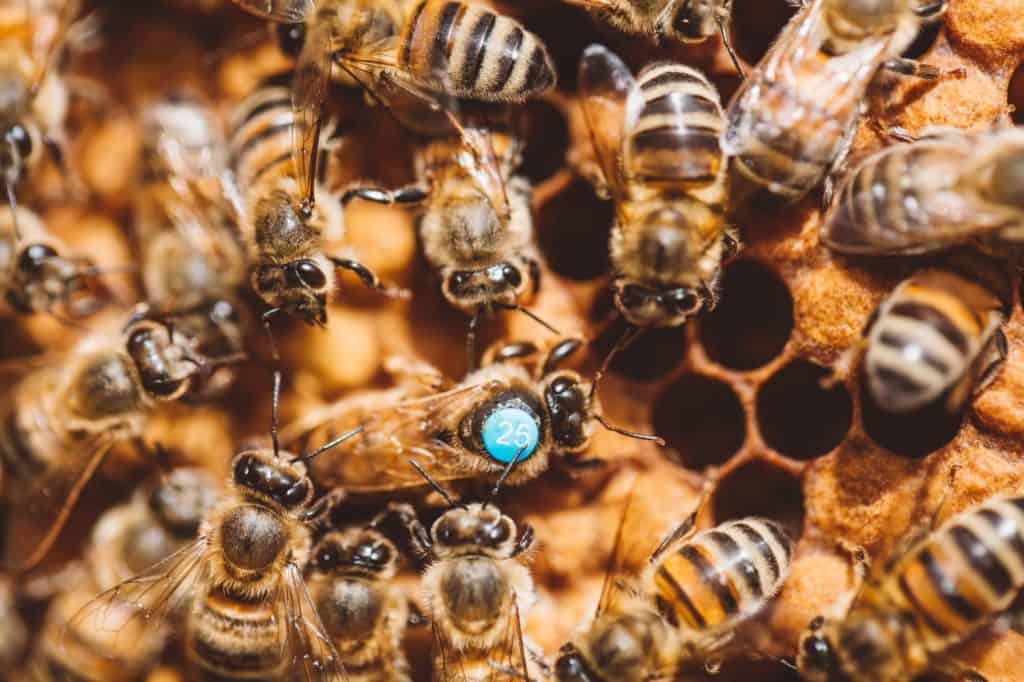
The newly chosen queen bee carries a heavy responsibility on her shoulders. It’s her responsibility to survive the winter and ensure a new generation of bumblebees is born. To do this, she may need to survive harsh weather, including blizzards, torrential rain, flooding, and ice storms. Exposure to these elements would spell certain death for many other insects, but not the queen bee. She is the only one of her former colony that has the evolutionary adaptation to weather each storm.

Queen bees are known to survive underwater, but this study reveals precisely how they do so.
©IanRedding/Shutterstock.com
In the most recent study, researchers from the Department of Biology at the University of Ottawa took four teams of queen bees through a series of tests. These measured the bees’ vital signs and body condition as they were exposed to conditions that mimic winter diapause. This is a form of hibernation for bees that slows their heart rate and metabolism. When this occurs, they burn few to no calories, do not defecate, and can store energy to re-emerge in the spring.
To recreate this condition, researchers dropped the temperature by placing the bees in a refrigerator. While this may seem cruel, it merely mimics winter conditions, when bees typically enter diapause. No harm came to the bees during this process. However, the result of what happened next astounded even the research team.
Queen Bees Can Breathe Underwater
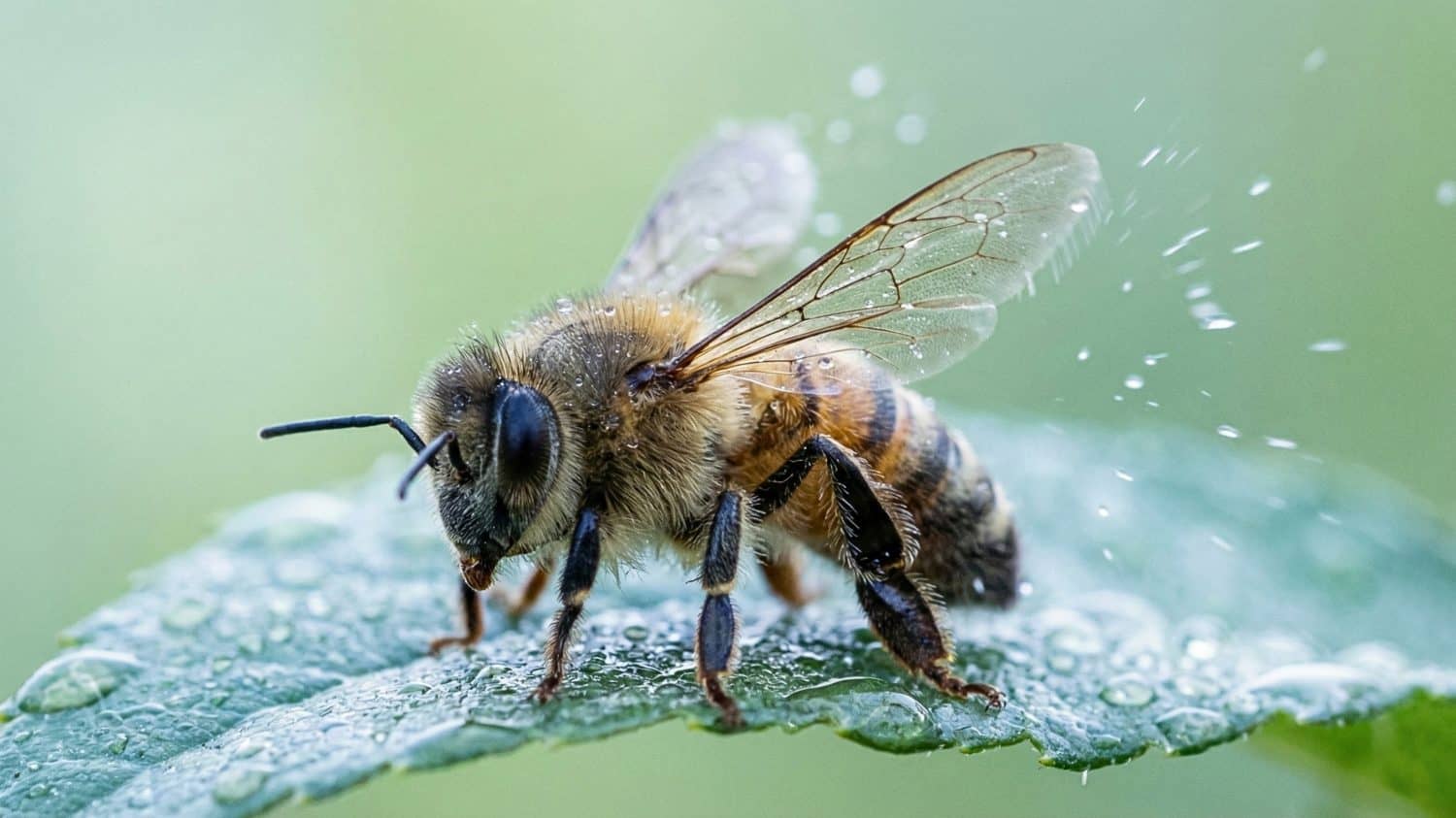
During induced diapause, researchers filled each airtight chamber with water. No one was certain about what this test would reveal. While it was theorized that queen bees might have a special adaptation to survive damp conditions, exactly how they did so remained a mystery. Some of the bees in the chambers were kept submerged for only a few hours, while others were kept underwater for up to eight days. Diapause lasts 6 to 9 months for a queen bee; therefore, eight days was not that significant compared to a full hibernation cycle.
The queen bees survived the experiment, proving just how much they can overcome while in diapause.
©PHOTOCREO Michal Bednarek/Shutterstock.com
This was the nerve-wracking part of the experiment. As the fate of the queen bees hung in the balance, researchers carefully monitored their oxygen levels and vital signs. They discovered that when underwater, these queen bees exhaled 75% less carbon dioxide than those out of the water. After the first day, this percentage continued to decrease. By doing this, the submerged queen bees were able to survive with minimal oxygen. Another significant finding was the increase in lactate in the bees’ systems. During this induced diapause, the submerged bees switched partially to anaerobic metabolism. This allowed them to slow their bodies down even further, essentially inducing an underwater suspended animation.
But Did the Queen Bees Survive?
When the tests were complete and all the results had been recorded, it was time to wake the bees. Researchers admitted that watching the queens come back to life was a mixture of relief and excitement. Charles Darveau, a physiologist at the University of Ottawa, says, “The extent to which they can withstand those conditions is quite remarkable.” Indeed, the study results echoed this, as even the queen bees that underwent eight days of submersion survived the tests.
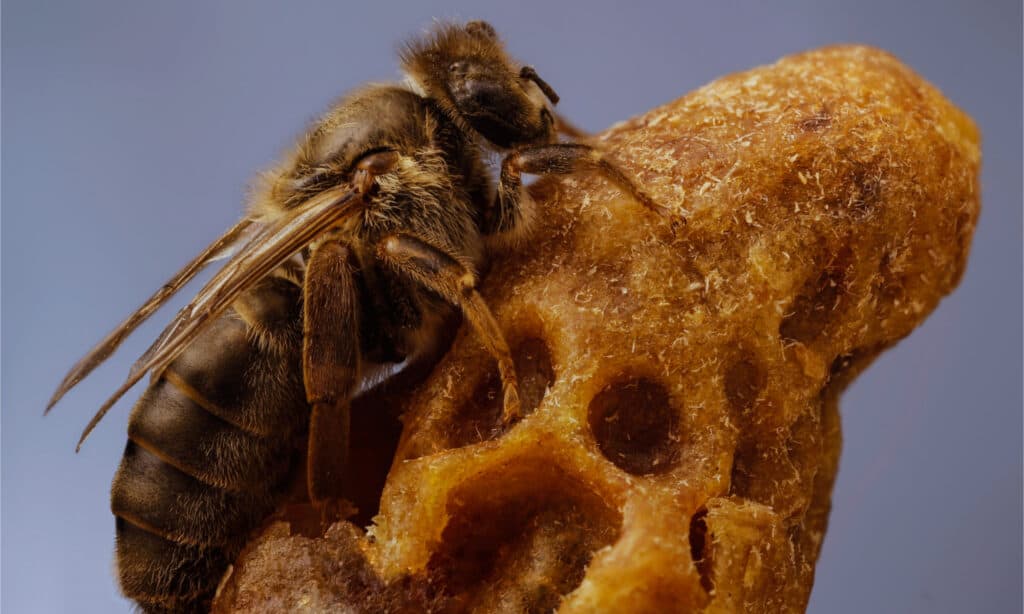
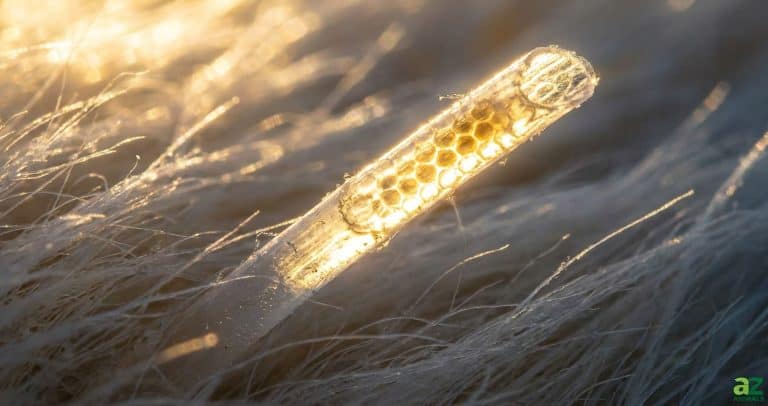
Tiny hairs called setae trap air bubbles, creating a “physical gill” that functions as an air tank.
©tuncarif/Shutterstock.com
Researchers attribute a significant part of this survival to the thin layer of air around the bumblebee’s body. This layer, called the physical gill, traps air during the process of exchanging carbon dioxide for oxygen. The resulting air bubbles become pinned to the bumblebee’s body as it breathes, forming a continuous “air chamber” that protects it from moisture. Through this mechanism, queen bees literally breathe underwater. Their fur layer—called setae—plays a role in this process by trapping air during gas exchange.
This Evolutionary Adaptation Is a Survival Mechanism
When the queen bees emerged from their submerged tanks, researchers also noted a significant spike in metabolism. This implies that when emerging from diapause, bees instinctively seek to recover their oxygen loss. This is evidence of a highly evolved system that allows bees to temporarily alter their physiology to ensure survival. The fact that this occurs is a testament to the resilience of bees, but they’re not the only pollinators that use this survival strategy.
Giant water bugs survive underwater in two ways: by using a snorkel-like device on their abdomens, and by trapping air underneath their wings. The latter closely resembles the temporary “air tank” used by queen bumblebees during diapause. Giant water bugs trap air bubbles as they dive underwater, which functions as an oxygen reserve. Due to the shape and size of their wings, this is an effective way to remain submerged for long periods. This is also known as a physical gill, a trait it shares with queen bees.
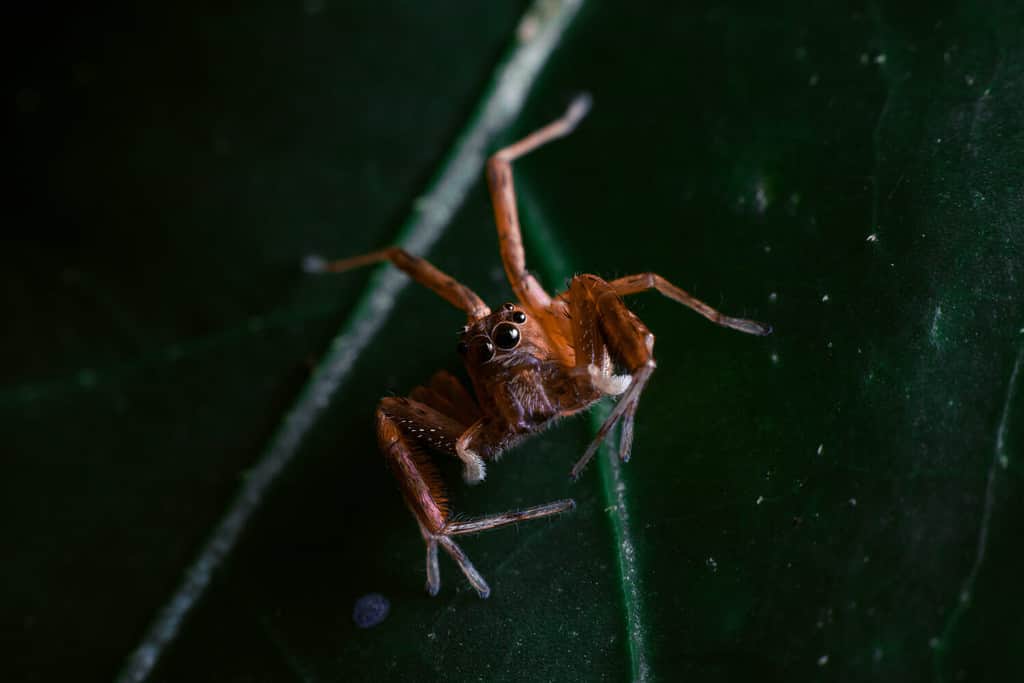
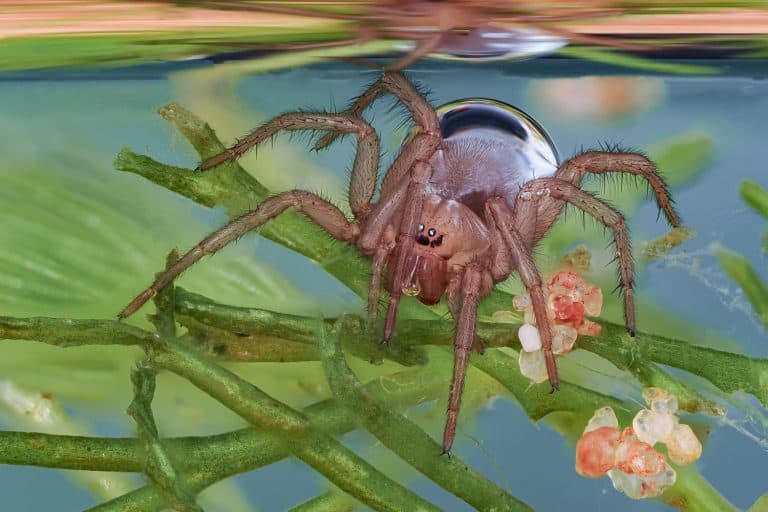
The diving bell spider (Argyroneta aquatica), also known as the water spider, is the only aquatic spider in the world.
©RajatHegde/Shutterstock.com
Diving bell spiders also share the physical gill commonality. Their “air tanks” come in the form of air bubbles trapped within spun silk. These air bubbles become trapped by the spider’s fur, similar to how bumblebees trap air in their setae. As they dive, the spiders protect this air supply with spun silk. This gill allows the spider to breathe underwater by extracting oxygen from the surrounding water while releasing carbon dioxide.
How Physical Gills Help Insects Survive Climate Change
As the Earth’s temperature warms, storms and flooding become even more unpredictable. This spells trouble for humans, but also for the small insects we live amongst. Survival skills such as breathing underwater or creating physical gills have now become essential adaptations. For bumblebees, many of which are at risk or declining—with some species like the rusty patched and Franklin’s bumble bees officially listed as endangered—this ability is more important than ever.

Flooding has become more severe with climate change, and the survival of pollinators is now a concern.
©JivkoM/Shutterstock.com
Studies show that the Northeastern U.S. has experienced a 60% increase in extreme precipitation events in recent decades. This means more severe flooding, particularly in parts of the Northeast that experience heavy spring thaws. In Vermont, recent years have brought catastrophic flooding during springtime. This has damaged countless agricultural and forested lands, where queen bees also remain dormant until diapause ends. Being able to breathe underwater during these events and survive until the land dries gives the species a chance at survival.
In the Pacific Northwest, monsoons are forecasted to become stronger and longer-lasting. This means heavy rain may last longer than it has in previous years, causing rapidly changing conditions for slumbering insects. It’s estimated that annual precipitation in the Pacific Northwest may increase by up to 10-20% by 2100. Additionally, extreme precipitation events will intensify. Within the next century, breathing underwater may become second nature to insects such as bumblebees. Without this ability, they would drown before spring, effectively killing the species before it could create new colonies.