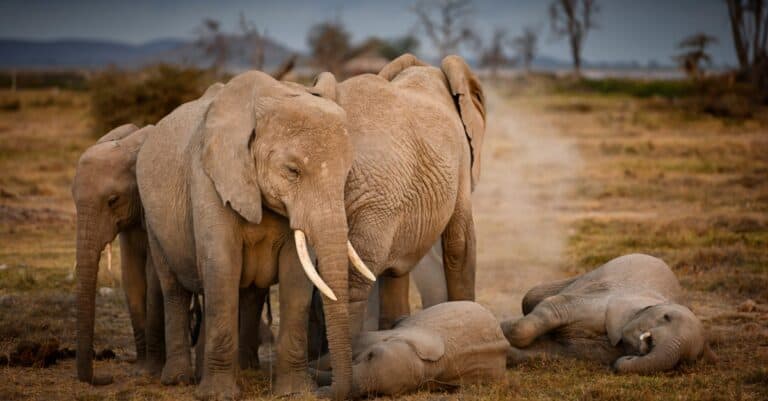
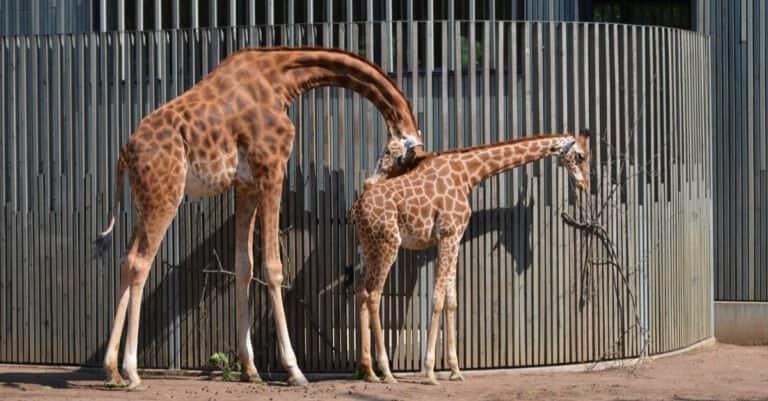
Cats are famous for their ability to nap anywhere and everywhere, but horses have a cool naptime trick too. They can get some shut-eye while standing up! (Why couldn’t humans have inherited this amazing skill?) Whether you’ve seen them standing in a field with their eyes closed or snoozing in the stable without lying down, chances are, you’ve been curious as to how horses can sleep standing up. The reason makes a lot of sense — as does the reason they sometimes need to lie down and sleep.
How Horses Sleep Standing Up
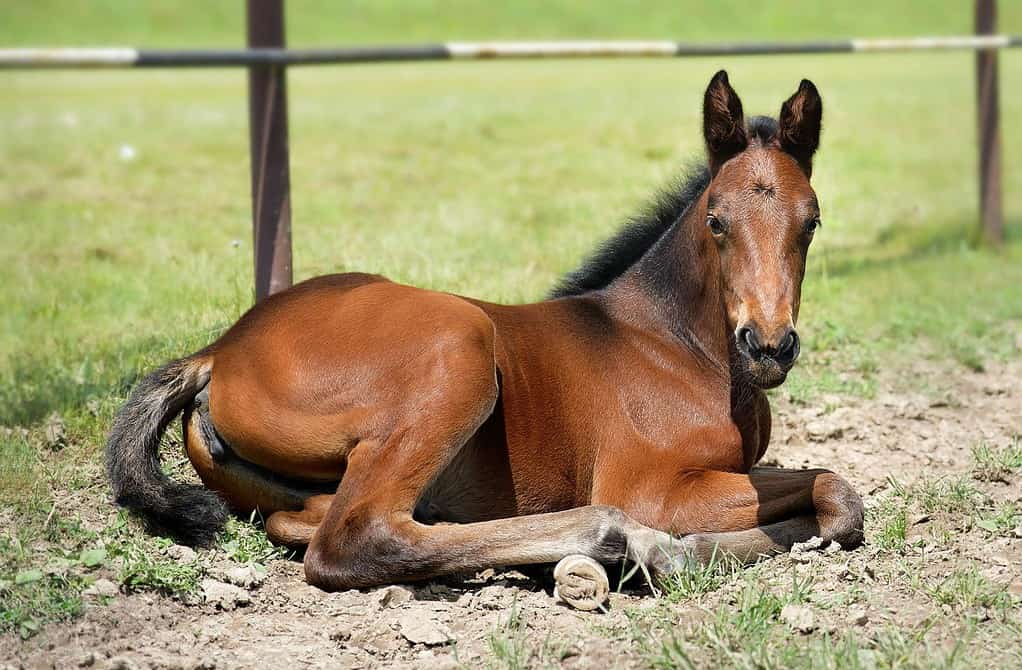
Horses have to sleep standing up and lying down.
©marinat197/Shutterstock.com
It’s all about how horses are built. Their muscles, tendons, and ligaments stabilize their front and hind legs with very little energy required to help them stay upright, according to Kentucky Equine Research (KER). Basically, a bone locks the biceps tendon in place, while other tendons lock the shoulder blade and elbow in the correct position. This mechanism, known as the stay apparatus, helps the horse balance while standing.
If humans lock their legs for too long, they might pass out. Horses, however, can lock the joints in their hindquarters to help them balance and can maintain this position for extended periods without much effort.
Why Do Horses Sleep While Standing?
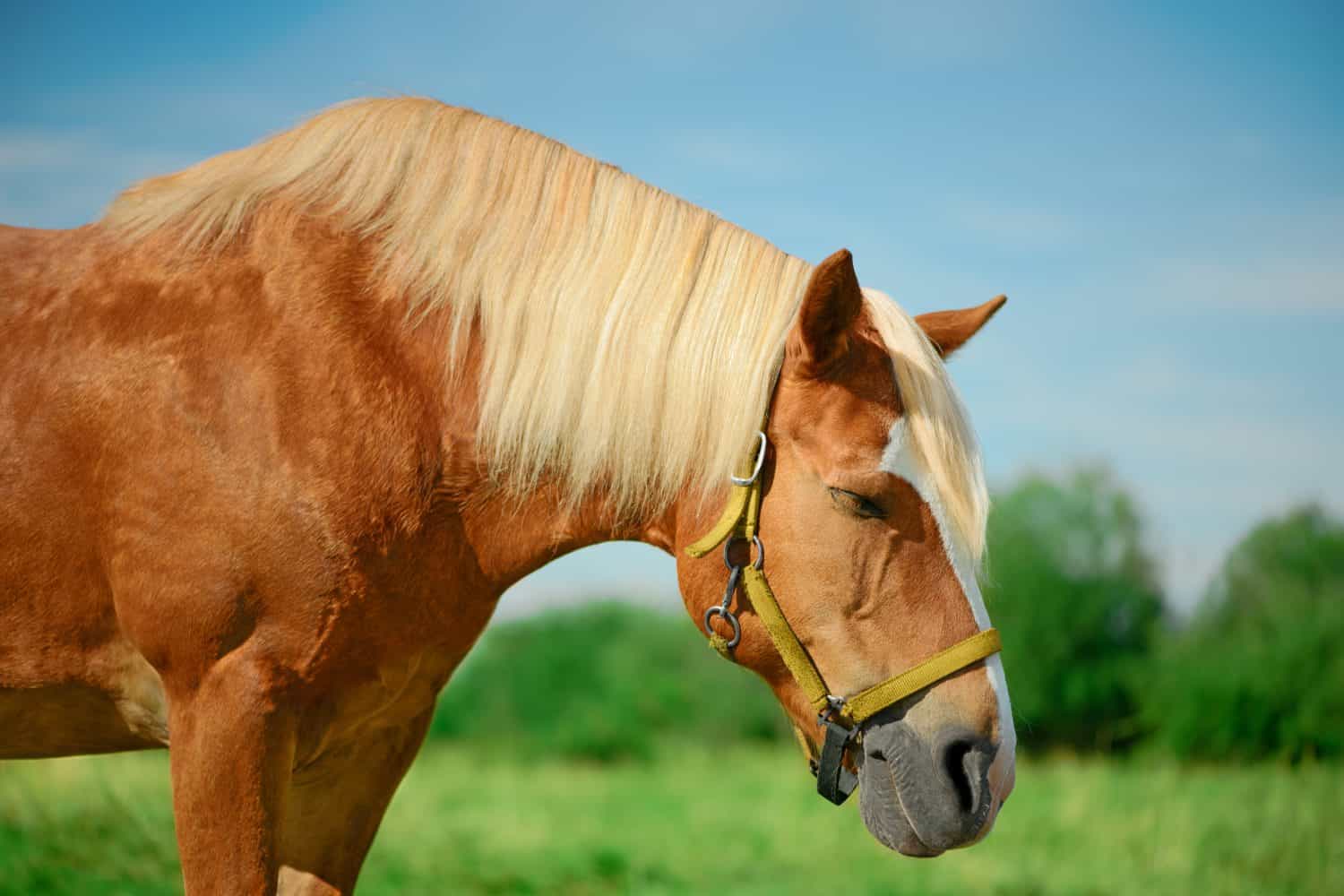
If a horse is standing up and snoozing, it can stay alert for predators.
©IRINA ORLOVA/Shutterstock.com
This tendency to stand for shorter bursts of sleep likely came about as a defense mechanism. Horses also have difficulty getting up from a lying-down position (or jumping out of their metaphorical beds), so sleeping while standing up makes it easier for them to escape danger. Other mammals do this as well, per BBC Science Focus, including zebras, elephants, cows, and birds. This allows them to wake up instantly and flee from predators if the need arises.
“Dozing horses may appear to be completely unconscious of what is going on around them, but they can rouse almost instantly if a strange or threatening sound or other stimulus is perceived,” stated KER.
By staying in the upright position, even while catching some shut-eye, horses can better protect themselves against predators. This habit helps horses survive in the wild.
“Standing gives them a literal jump on predators and a better chance of getting away than if they were [lying] down,” Karen Waite, an equine specialist at Michigan State University, told Live Science in 2023.
Horses Have Polyphasic Sleep
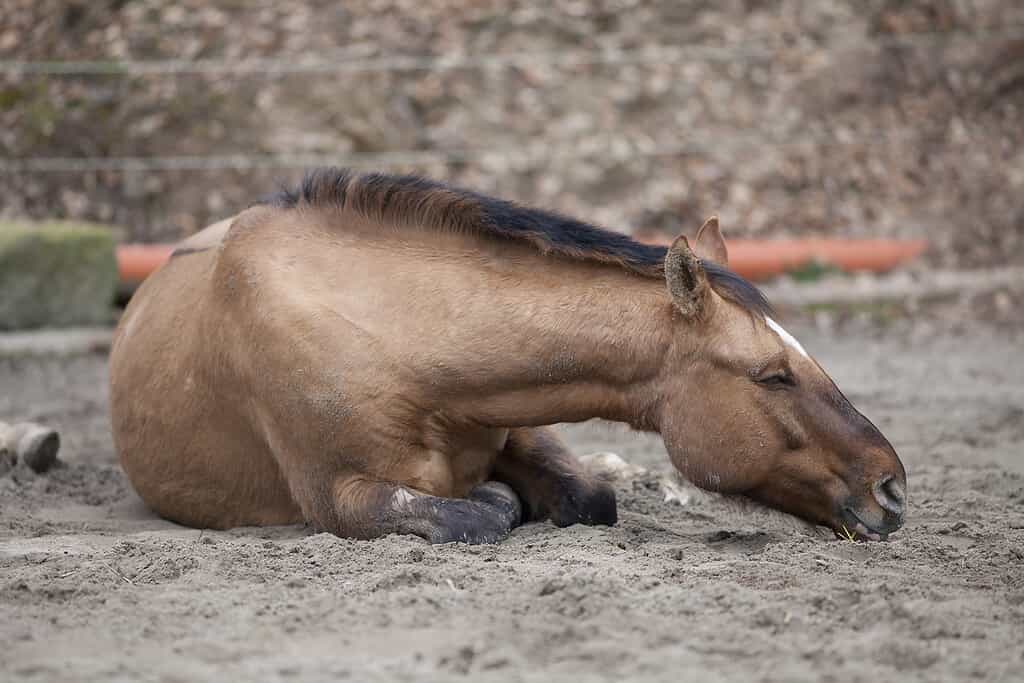
Horses enjoy short bursts of micro sleep throughout the day.
©anjajuli/iStock via Getty Images
Horses sleep approximately 3.8 hours over a 24-hour period, which is nearly half the total sleep duration in humans. Sleep is divided into about 77% NREM (non-rapid eye movement) sleep and 17% REM (rapid eye movement) sleep, according to a 2022 study in Frontiers in Veterinary Science. Horses experience multiple short sleep episodes throughout the day and night, rather than consolidated sleep cycles like humans. (People have 4-6 sleep cycles a night, lasting about 120 minutes each.) This type of sleep is called polyphasic, which means it is fragmented because they wake up frequently.
Despite these micro-sleeps, horses still need to enter deeper REM sleep — the stage of sleep where you dream, your brain consolidates and processes information, your mental concentration and mood regulation improve, and your overall health, including brain function and cellular repair, is supported. During REM cycles, the muscles are paralyzed, making it impossible for horses to sleep standing up during this stage. The horse must lie down to completely relax its muscles in order to reach REM sleep, which is critical for its brain function and overall health, according to The Equine Institute. The organization stated, “REM sleep is crucial for [horses’] health and well-being.”
Other Factors That Can Influence a Horse’s Sleep
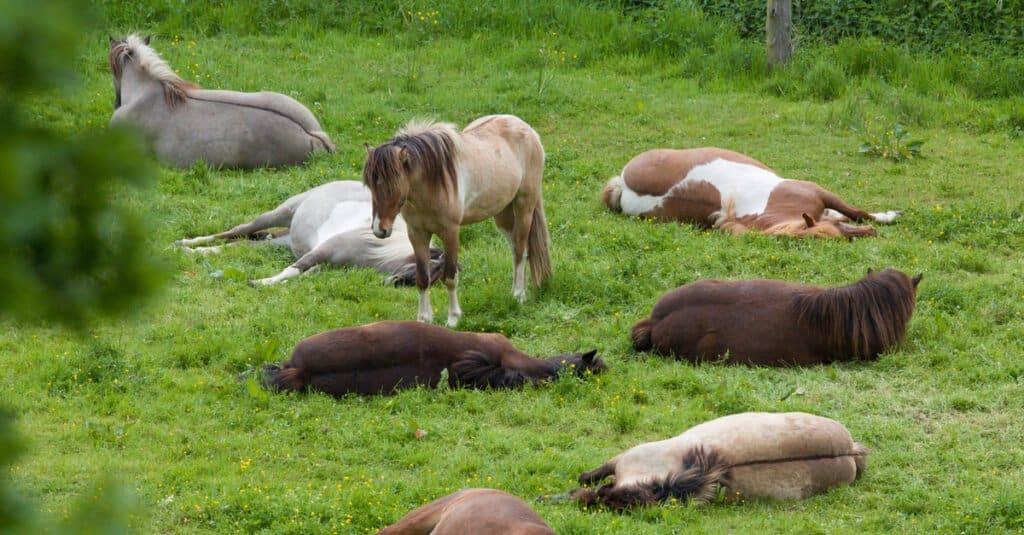
Many horses in a herd will lie down for REM sleep if one horse remains standing.
©malafo/Shutterstock.com
Much like light sleepers, many horses are sensitive to their environment while sleeping. To help your horse reach REM sleep, make sure to provide a safe, comfortable environment with enough space for them to spread out and sleep. If horses are in a group, they will only lie down to sleep if at least one horse remains standing to keep watch.
Noise levels, lighting, stall comfort, and more can affect their ability to get good rest. Proper nutrition, a balanced diet, and drinking enough water also help. If they have pain from injuries or health conditions, your horse is less likely to achieve deep sleep. Additionally, the social hierarchy within the herd can temporarily disrupt sleep patterns. Horses need between 2 to 5 hours of sleep in a 24-hour period, spread out over several short bursts, and at least 30 minutes, but typically less than 1 hour, of REM sleep every day.
Do Horses Dream?
It’s unknown whether horses dream, but if they do, it would be during their REM cycle, like humans. However, if you dream about a horse, it could have a deeper meaning, according to the Bay Area Equestrian Network. Dreaming about a horse could symbolize freedom and independence, like a longing to break free from something in life. It can also represent power and strength, encouraging you to pursue your goals; fear and anxiety, symbolizing something unsettling running wild in your life; or a carefree spirit, reminding you to have more fun. White horses can symbolize something positive in your life, whereas black horses may represent mystery or something hidden.