
Quick Take
- Horses have a forward-only digestive system that prevents burping or vomiting but supports constant grazing.
- A powerful soft palate seal makes horses obligate nasal breathers, protecting airflow during endurance running.
- These traits evolved for survival on open plains but require careful management in modern environments.
If you’ve ever spent time around horses—or perhaps even if you haven’t—you may have heard a strange but true fact: horses can’t burp, vomit, or breathe through their mouths. This is not an urban legend; it is an equestrian fact. It sounds like a design flaw. After all, burping helps to move uncomfortable gas along, vomiting can be lifesaving when something toxic is swallowed, and mouth breathing is a handy backup when your nose is clogged.
But the horse’s body was shaped by millions of years on open grasslands, where survival depended on speed, stamina, and constant grazing. From the throat to the lungs to the stomach, the equine body is built to move air and food in only one direction: forward. One way. This may seem like a limitation, but it is actually the result of a remarkably efficient, ‘one-way’ system, fine-tuned for life on the ancient plains.
The One-Way Digestive Highway
Let’s start with the digestive system, because this is where the ‘no burping, no vomiting’ rule matters most. In mammals that can vomit, the esophagus connects to the stomach through a relatively relaxed opening, called the lower esophageal sphincter. In horses, that sphincter is unusually strong. It forms a tight seal between the esophagus and the stomach, acting almost as a one-way valve. Food and water can pass into the stomach easily, but the stomach can’t create enough pressure to force material back up.
Anatomically, this sphincter sits at an acute angle where the esophagus enters the stomach. Combined with thick muscular tissue, that angle makes reverse flow extremely difficult. Even when a horse’s stomach becomes dangerously distended with gas or fluid, the contents cannot escape upward. This is why horses can neither burp to relieve gas pressure nor vomit to expel spoiled or toxic material.
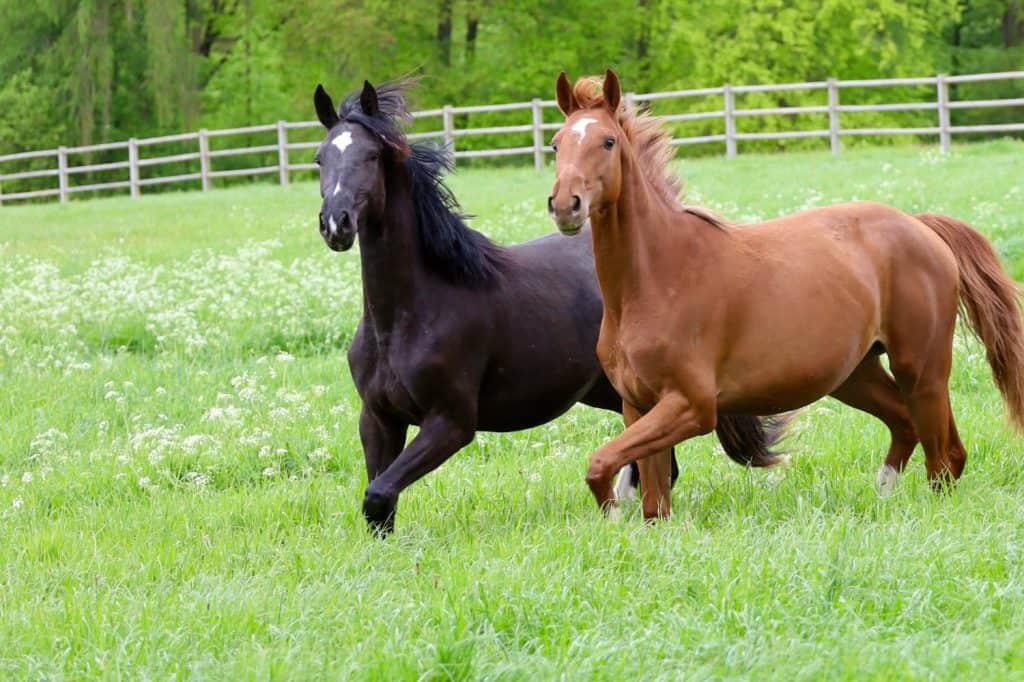
Horses evolved for forward motion, with bodies built to move food and air one way.
©c_brcknr/Shutterstock.com
This feature wasn’t an accident. Horses evolved as continuous grazers. Unlike predators that eat large meals and then rest, horses are designed to eat small amounts of fibrous plant material for many hours each day. A tight esophageal seal helps keep stomach acid where it belongs, even as the animal moves, runs, and lowers its head to graze. It reduces the risk of acid reflux damaging the esophagus and helps digestion proceed efficiently in a single direction.
However, there is a serious downside: when gas builds up or the stomach becomes overfilled, there is no pressure release valve. This contributes to colic, a broad term for abdominal pain and one of the leading causes of death in horses. This one-way system helped ancient horses thrive on tough grasses, but it can be a liability in modern feeding situations that involve rich feeds, irregular meals, or limited movement.
Why a Grazing Lifestyle Demanded This Design
Let’s take a step back. To understand why this system made sense, it helps to picture the environment in which horses evolved. Early horses lived on wide, open plains. Food was abundant but not very dense in nutrition.
Grasses are tough, fibrous, and slow to digest. This contributes to colic, a broad term for abdominal pain and one of the leading causes of death in horses. Their digestive system became optimized for steady intake and continuous forward movement of food.

Despite their size, a horse’s stomach holds only about 2 to 4 gallons.
©LembiBuchanan/iStock via Getty Images
A strong esophageal sphincter supported this lifestyle by preventing backflow while the stomach churned and acid broke down plant material. Horses also have relatively small stomachs for their body size, holding only about 2 to 4 gallons.
To put that in context, cows—who are relatively close in size—have multi-compartmental stomachs that can hold 40 to 50 gallons! Instead of relying on the stomach for prolonged digestion, they pass food quickly into the intestines, where fermentation by microbes releases energy from fiber. This assembly-line approach works beautifully when food keeps moving. Anything that interrupts this flow can cause problems, but under natural grazing conditions, the system usually runs smoothly.
Nose-Only Breathing
Now let’s take a look at breathing, where horses follow another strict one-way rule. Horses are obligate nasal breathers, meaning they breathe only through their noses, not their mouths. The reason lies in the structure of the soft palate—a muscular flap of tissue at the back of the mouth.
In humans, the soft palate lifts and lowers to allow both breathing and swallowing through the mouth. In horses, the soft palate forms a tight seal beneath the epiglottis, separating the oral cavity from the airway. This seal prevents food from entering the trachea, but it also prevents air from getting in there, forcing all breathing to occur through the nose. The mouth is dedicated to eating, while the nose is dedicated to breathing. Air flows from the nostrils, through long nasal passages, and directly into the lungs. Thus, the mouth plays no role in respiration.
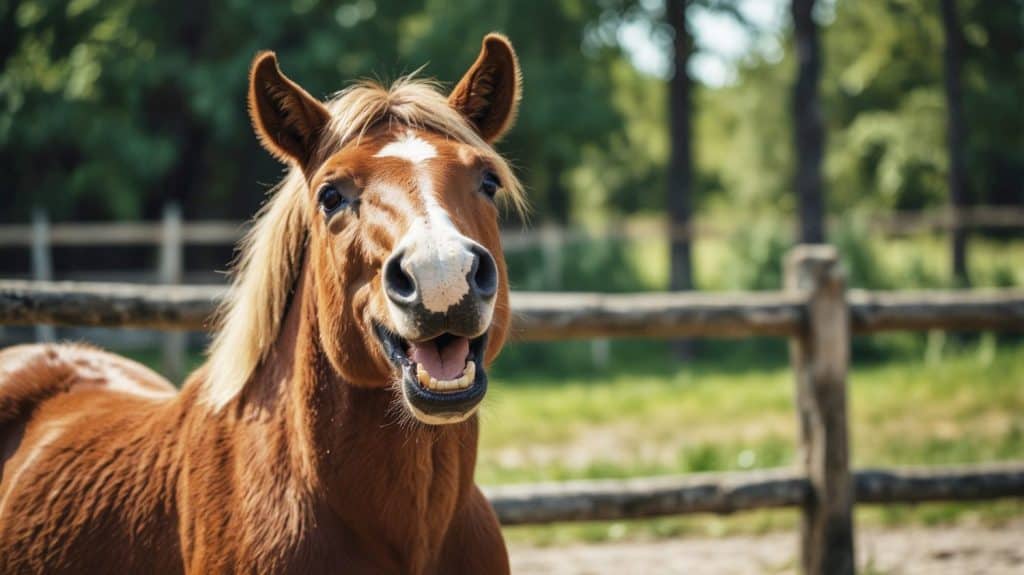
A sealed soft palate forces horses to breathe exclusively through their nostrils.
©Sajedul Islam Alif/Shutterstock.com
This arrangement has important benefits. The nasal passages warm, humidify, and filter incoming air before it reaches the lungs. For an animal built for endurance running, this function is critical. Cold, dry, dusty air can damage delicate lung tissue. By forcing all air through the nose, horses protect their respiratory system during long bouts of exercise.
The tradeoff is that if a horse’s nasal passages are blocked by swelling, mucus, or structural problems, the animal cannot simply switch to mouth breathing. This is why respiratory distress in horses is always considered a medical emergency.
Built for Speed, Not Flexibility
The same features that restrict horses to nasal breathing also support their athletic abilities.
When a horse gallops, its breathing is closely synchronized with its stride. As the forelegs extend and the body stretches, the lungs expand, and air is drawn in. As the legs gather beneath the body, air is pushed out. This mechanical coupling between stride and breath allows horses to move large volumes of air efficiently while running at high speeds.

Horses synchronize breathing with stride, maximizing oxygen intake during fast, sustained running.
©Kwadrat/Shutterstock.com
A stable, sealed airway makes this system more reliable. Air still moves in and out with every breath, but it is locked into a single route through the nostrils and nasal passages. There is no option to reroute airflow through the mouth, which keeps breathing consistent and protected during long-distance running.
Modern Problems from Ancient Solutions
Many of the health issues horses face today stem from a mismatch between ancient biology and modern management. Because horses cannot vomit, ingestion of spoiled feed, toxic plants, or foreign objects is especially dangerous. Because they cannot burp, gas accumulation can quickly become painful or deadly. Because they cannot breathe through their mouths, respiratory infections or allergic reactions can escalate rapidly.
Veterinarians are keenly aware of these limitations, which is why horse care emphasizes prevention. Consistent diets, plenty of forage, gradual feed changes, and ample movement all help keep that one-way system running smoothly. Additionally, signs of colic or breathing difficulty must be treated with urgency. Discomfort that could be relieved with a simple belch in other animals can become life-threatening in a horse.
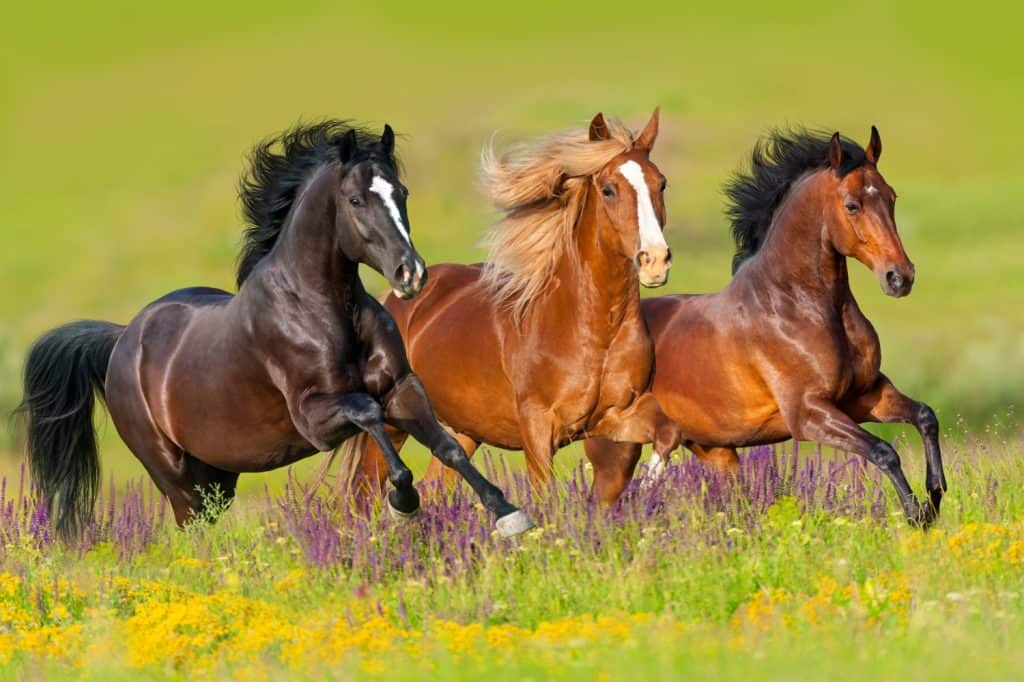
Traits that once ensured survival can increase health risks in modern domesticated horses.
©Kwadrat/Shutterstock.com
Built for the Plains
We should not judge animal anatomy by human standards, though we often do. A body that can’t burp, vomit, or mouth-breathe sounds bizarre to us. In reality, it reflects a system shaped for a very specific lifestyle. On open plains, where food was eaten steadily and danger was escaped at a run, efficiency was incredibly important.
By locking digestion and breathing into forward-only pathways, horses gained endurance, stability, and speed. In the modern world, those traits do require careful management, but this does not change the fact that the horse’s body is not weird or poorly designed—it is precisely built for the world in which it evolved.