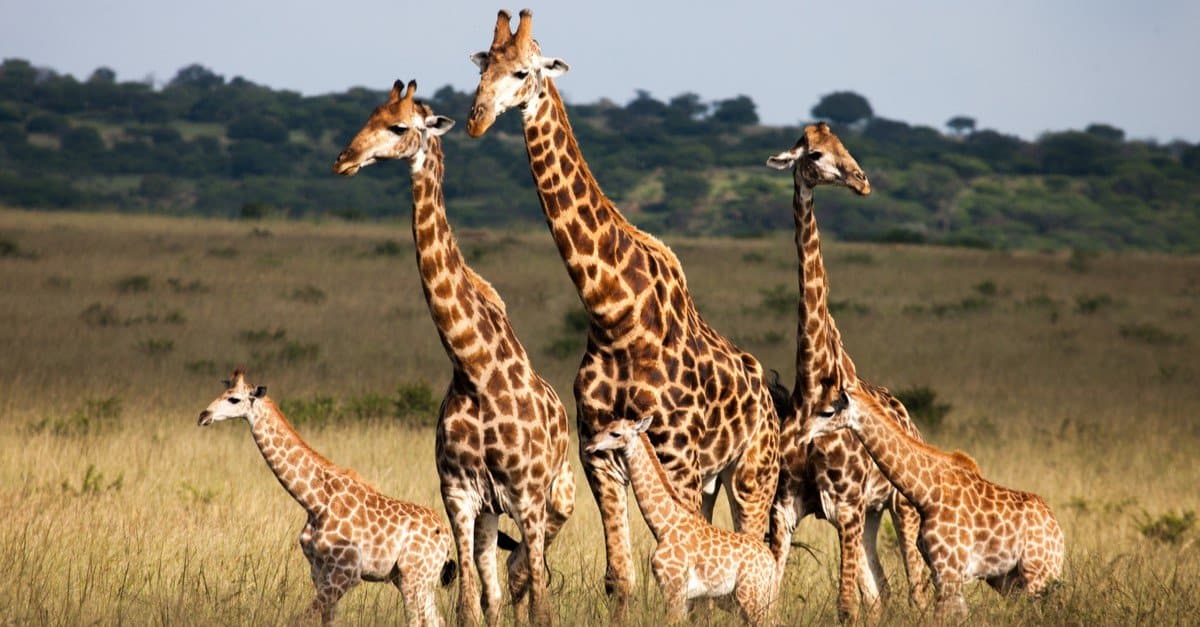

When it comes to animals giving birth, it’s understandable if we immediately assume that they give birth lying down in a quiet or protected area. However, the reality is actually very different for many species. Rather than lying down, many animals actually give birth while standing up. Although this may seem like a harsh introduction to the world for the baby, it’s an act born of necessity that prioritizes the safety of both the mother and her offspring. Keep reading to discover why some animals give birth standing up and which species need to do it.
Why Do Some Mammals Give Birth Standing Up?
Although many animals give birth lying down, there are actually many species of mammals that give birth while standing up. There are a few reasons why this method is favored. One of the most important factors is gravity, which plays a key role in the birthing process. By standing, gravity helps the baby move through the birth canal and out into the world. This is particularly important for large or unusually shaped babies, such as giraffes and elephants.
Giving birth in the standing position also causes the baby to fall away from the mother, which has a twofold effect. First, the swift movement usually causes the umbilical cord to break naturally. Secondly, the action of landing on the floor helps to stimulate breathing and movement in the newborn. This is imperative for species that need their newborn to be able to stand and walk soon after birth in order to avoid predators.
Why Is It Dangerous to Give Birth Lying Down?
Females are incredibly vulnerable to predators if they lie down to give birth.
©Tony Campbell/Shutterstock.com
For many large mammals, giving birth while standing up doesn’t just have benefits for the baby — it’s essential for the mother. Most of the animals that give birth this way are prey species, such as giraffes, zebras, and wildebeest. As prey species, they are constantly under threat from predators such as lions, cheetahs, leopards, and wild dogs. Many of these animals typically live in open habitats, where predators are quickly attracted to the sight, sound, and scent of an animal giving birth.
Herds don’t stay in one place for long, as they are constantly moving in search of fresh grazing and water. Females often isolate themselves from the herd during the birth and are therefore incredibly vulnerable while they are in labor, and lying down only increases this risk. As well as not being able to spot predators as easily while prone, they may not be able to rise to their feet quickly if a predator approaches. Therefore, standing means that they can be more alert to their surroundings and are ready to flee if the need arises.
Which Animals Give Birth Standing Up?
There are several species of animals that give birth while standing up. Here are a few of them, along with information about why their lifestyle makes lying down to give birth a poor option.
Camels
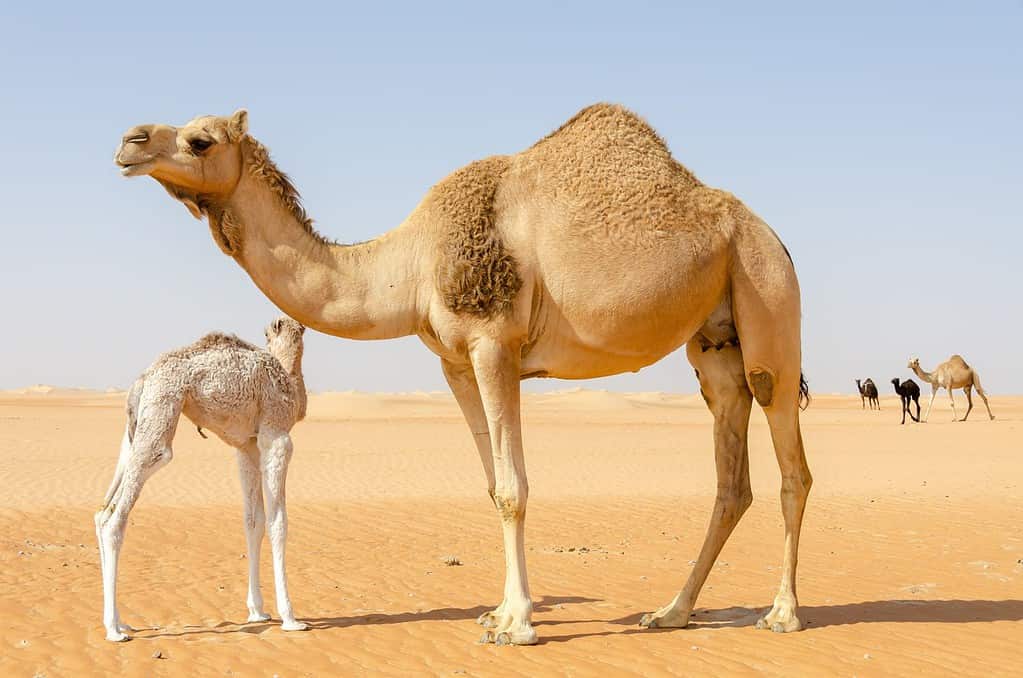
Female camels separate from the herd to give birth.
©Lotta Axing/Shutterstock.com
Camels give birth to a single calf after a 13-month gestation period. Prior to giving birth, the female separates herself from the herd. Camels have several predators, including wolves and leopards. The female is at her most vulnerable at this point, when she doesn’t have the protection of the herd. Camels give birth standing up, and the calf can typically walk within just half an hour.
Deer

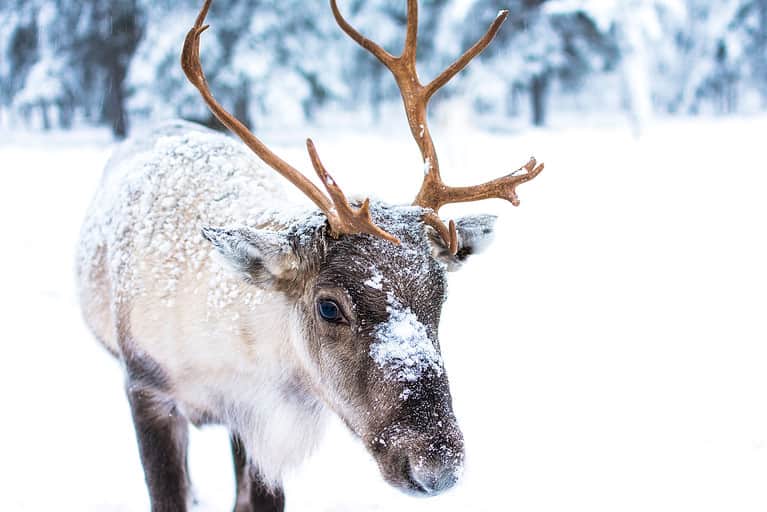
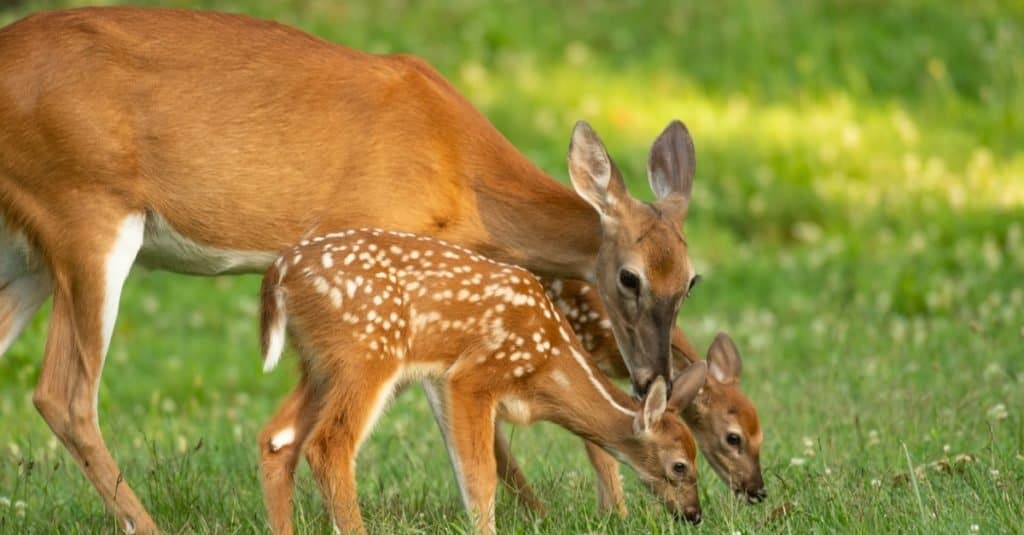
Most species of deer give birth while standing so they can remain alert to danger.
©Amy Lutz/Shutterstock.com
Many species of deer around the world also give birth while standing. Deer often give birth away from the herd, usually in concealed areas such as forests. As prey animals, deer are particularly vulnerable to predators when they are isolated from the herd, so standing up means that they can remain mobile and alert to any danger.
Elephants
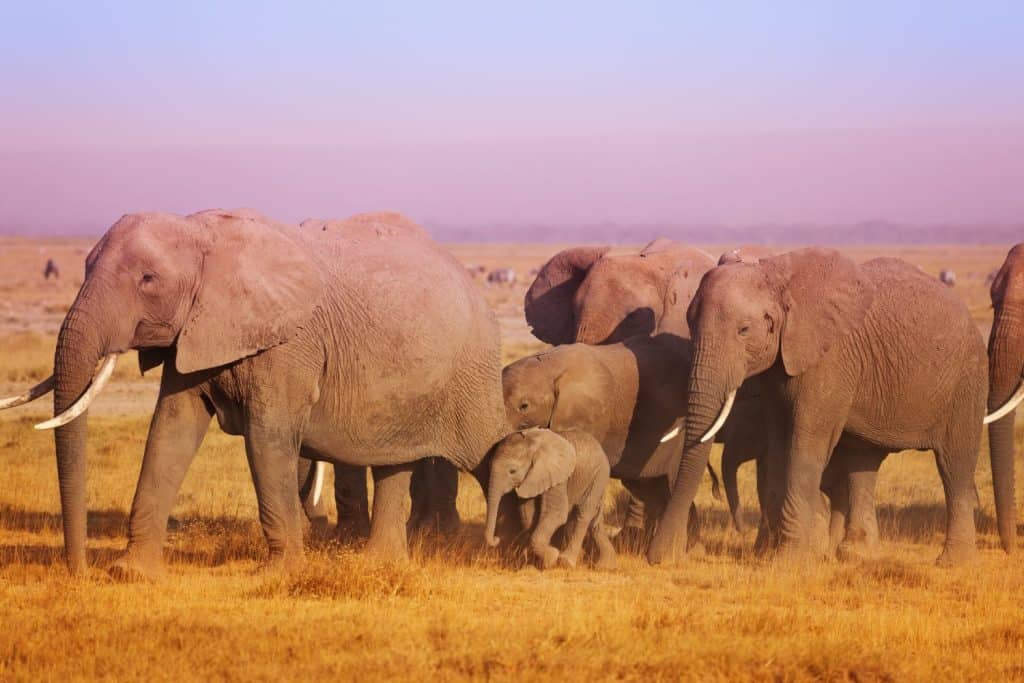
Newborn elephant calves weigh up to 200 pounds, so gravity helps them slide out during birth.
©Sergey Novikov/Shutterstock.com
Elephants are widely known as having the longest gestation period of any mammal, giving birth after 22 months. Unlike many of the other animals on the list, which give birth on their own, away from their herd, several members of the herd actually assist the female elephant during the birth. As well as offering protection, they assist the mother with encouraging the newborn calf to its feet after birth. Newborn elephants can weigh as much as 200 pounds at birth. This immense size means that the female needs to give birth while standing so that gravity can assist with the delivery.
Giraffes
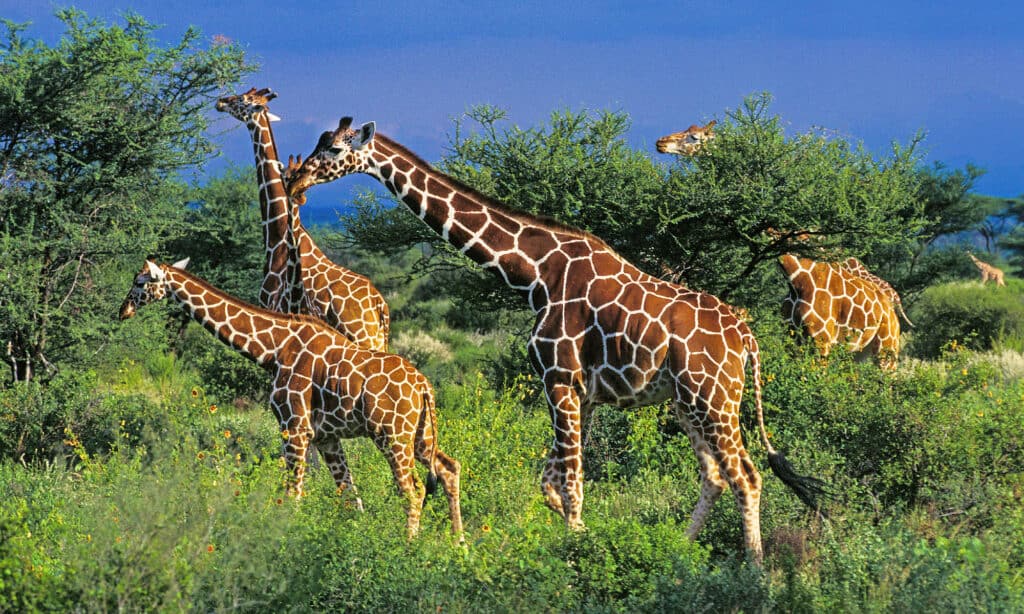
The length of a giraffe’s neck and legs makes it difficult for them to lie down and get up quickly.
©iStock.com/slowmotiongli
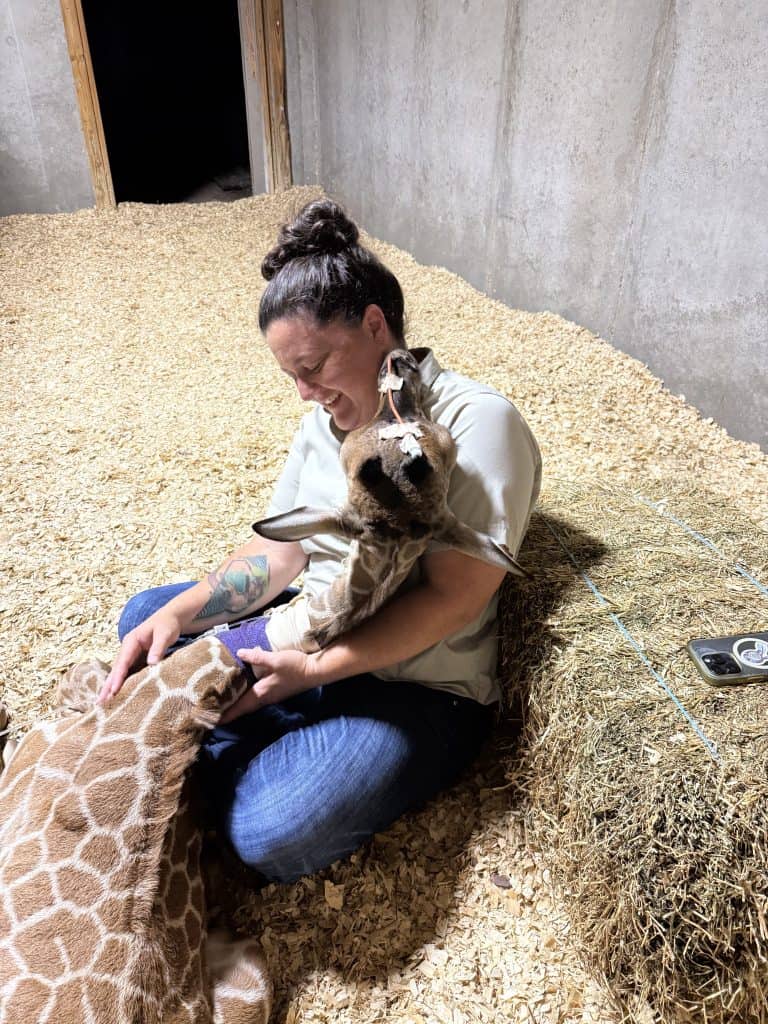
Giraffes have one of the most challenging birth experiences in the animal kingdom. Their unique physical characteristics mean that their babies are born with a long neck and long legs and are as much as six feet tall at birth. Lying down and getting up is a challenge for a giraffe. Therefore, if a predator appears when they are lying down, then they are at a serious disadvantage, as they may not get up in time to escape. Adding to this, the long neck of the juvenile giraffe makes the birth extremely difficult, as it can easily become damaged during the process. By giving birth standing up, gravity helps the neck to move out through the birth canal, and also helps the long body to follow through.
Horses
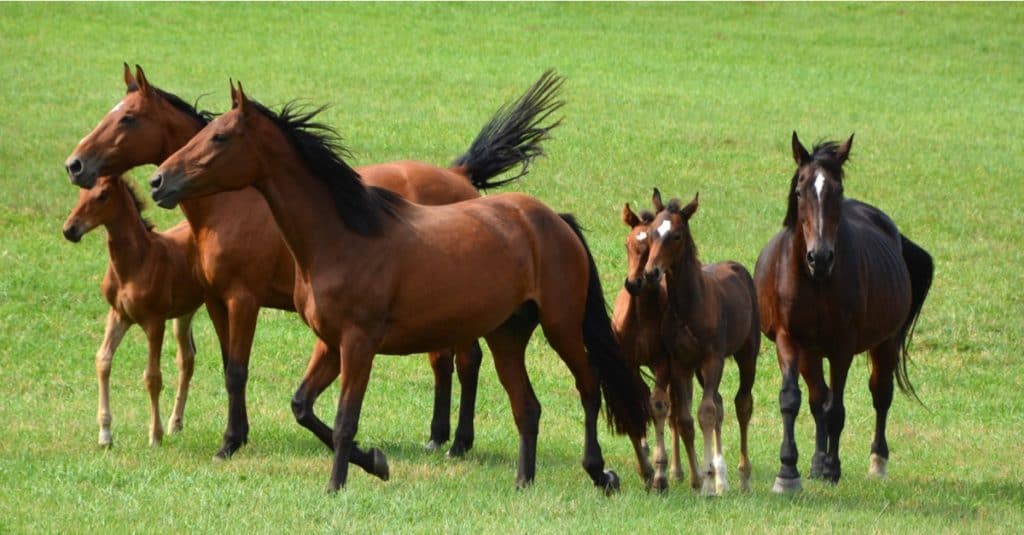
Most horses give birth while standing.
©meunierd/Shutterstock.com
Horses are traditionally a prey species, with herds still roaming wild in many different countries. As a result, they typically give birth while standing. Many domesticated horses now lie down to give birth when they are in the safety of a stable. However, in the wild, they will often get up and lie down several times during labor before standing as the foal eventually appears. Females typically move away to a quieter spot to give birth, but they don’t leave the protection of the herd entirely.
Impala
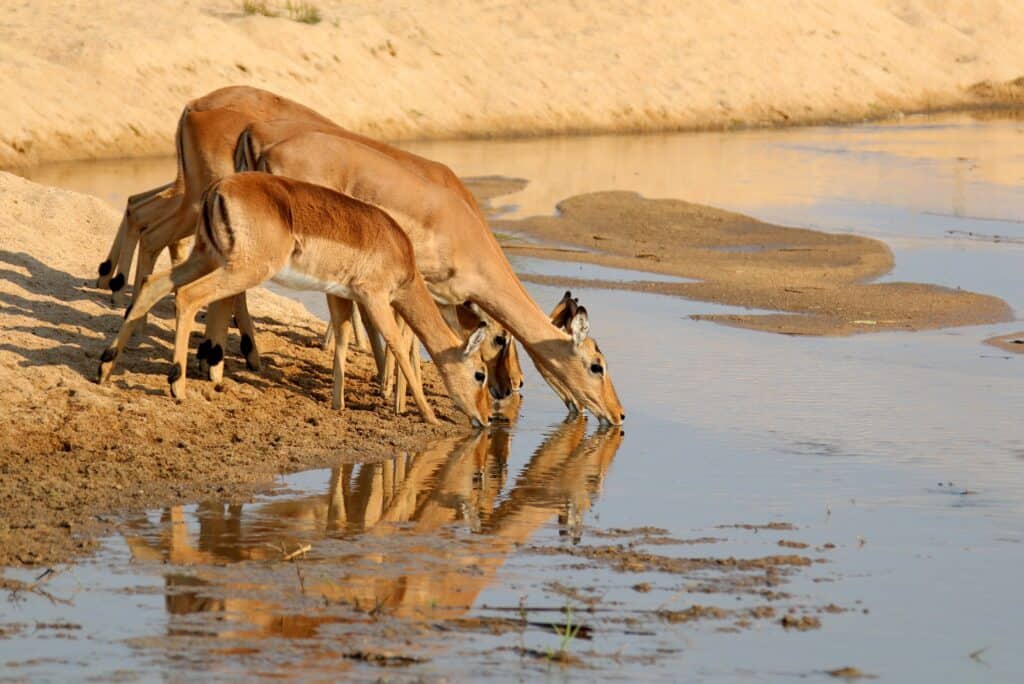
Female impalas typically isolate themselves from the herd to give birth.
©Khalil Ahmed/Shutterstock.com
Impalas are another of Africa’s prey species, with a vast array of predators that regularly hunt them. Although impalas live in herds, the females typically isolate themselves in a quiet spot to give birth. This means that vigilance is the key to staying alive, as she has only herself to rely on when it comes to spotting danger. Therefore, they give birth standing up, as the alternative is simply far too dangerous.
Okapi
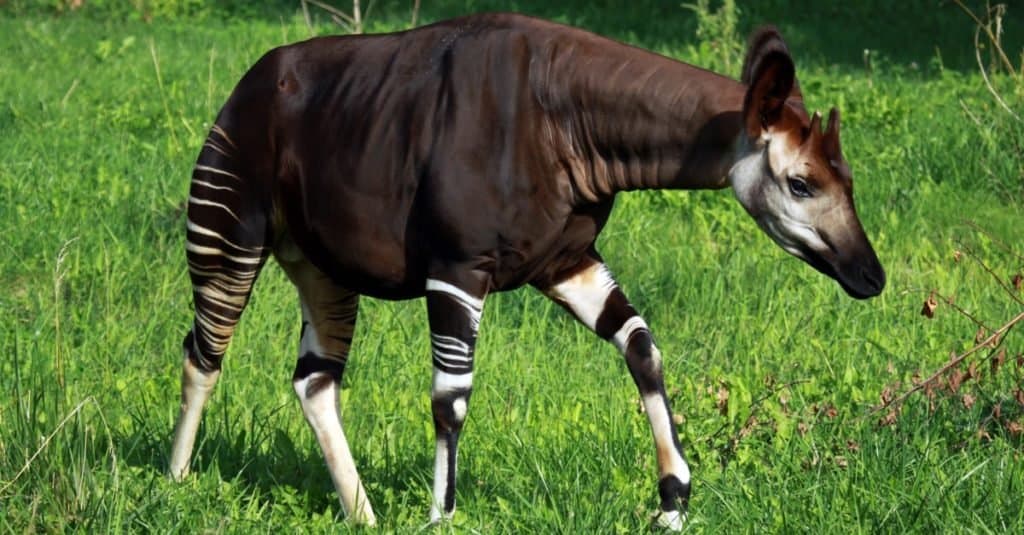
Okapi calves are born after a 15-month gestation period.
©Michal Sloviak/Shutterstock.com
Like giraffes, okapis (also known as forest giraffes) give birth standing up. Okapis live in the rainforests of the Democratic Republic of the Congo. They are solitary animals, so females give birth entirely alone. The calf is born after a 15-month gestation period, and labor can take several hours. Leopards are the main predators of okapi, so the female must remain vigilant. She may lie down occasionally during the birth, but typically remains standing throughout the process. Okapi calves can stand 30 minutes after being born and weigh between 30 and 60 pounds.
Wildebeest
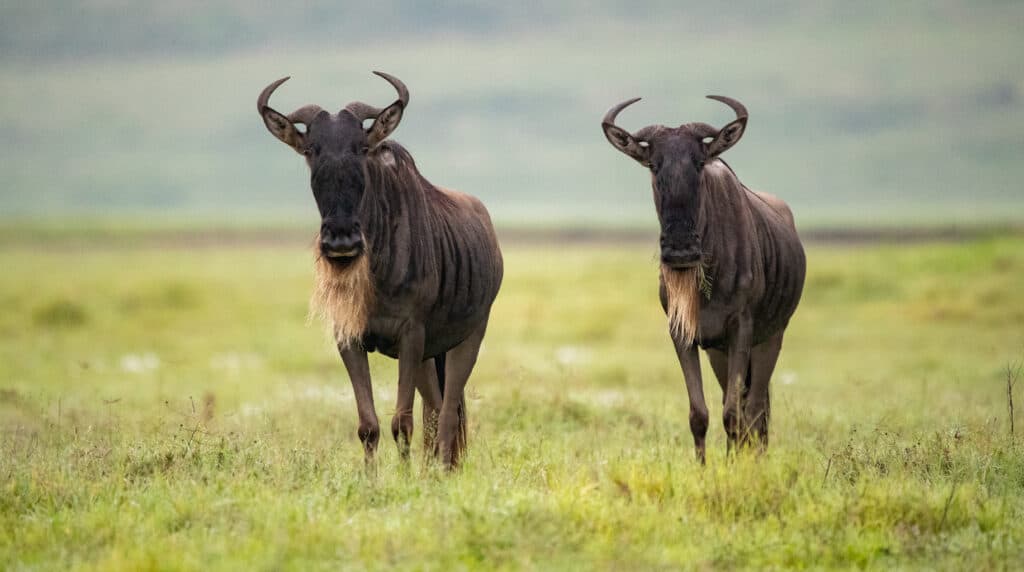
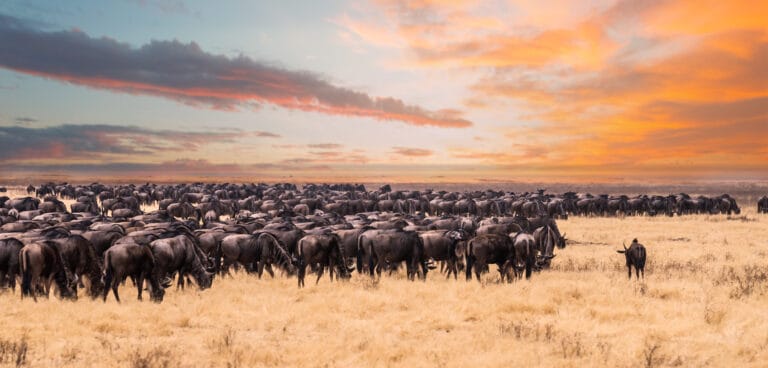
Most wildebeest calves are born within a one to three-week period.
©iStock.com/Scott Canning
Wildebeest are one of the most populous prey species in Africa, with key predators including lions, cheetahs, and wild dogs. They give birth after an 8.5-month gestation period. Most wildebeest calves are born within a short three-week window. This is known as “synchronized birthing” and is intended to “flood” the area with calves, which can confuse predators. Unlike some of the other animals mentioned, wildebeest typically give birth in the middle of the herd, rather than isolating themselves. This means that they have the herd for protection while they’re giving birth. However, they still give birth standing up, as they need to be ready to move quickly if a threat occurs.
Zebras
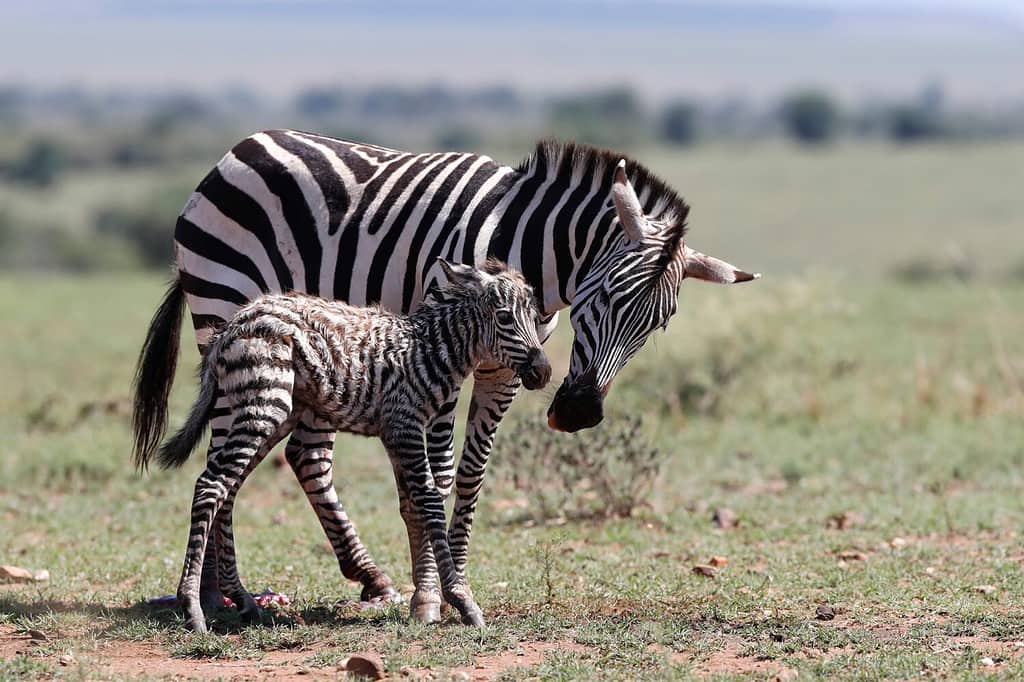
Zebras give birth alone away from the rest of the herd.
©godongphoto/Shutterstock.com
Finally, zebras also make the list, as they give birth while standing up. Like impala, female zebra give birth on their own away from the herd, meaning that they need to give birth while standing so they can remain alert for predators. She may remain isolated for a few days to a week to allow the foal to fully bond with her. Zebra foals are quick to rise to their feet and can stand within 10 to 20 minutes of birth.