
When most mammals go to sleep, they lie their weary heads on a pillow, the ground, or curl up in a ball. From there, they enter a state of rest, usually for several hours at a time. You know that cycle well, considering you do it every night. Reptiles like turtles, however, venture into the land of nod in a decidedly different way than mammals. As shown in this Instagram video, a turtle lies on a bed of coral. Its eyes are at half-mast, and a steady stream of small bubbles leaves its mouth and head up toward the surface. Without that stream of bubbles, you might mistake it for a dead turtle. It turns out, however, that turtles have one of the more interesting sleep styles of any reptile.
It’s hard to say if turtles dream, and if they do, exactly what their dreams are about. What can be said about their sleep is that it is a fascinating mix of styles, shaped by their environment, their physiology, and evolutionary needs. Several different types of turtles manage to stay alive and get enough rest while remaining underwater throughout the entirety of their daily slumber. Not only can they sleep underwater with ease, but they do so through an unlikely body part: their butt. Let’s learn more about how turtles sleep underwater, what role their body parts play, and how their sleep cycles differ from those of mammals.
Sea Sleepin’

The way turtles sleep underwater is similar to the way bears enter torpor during the long winter months.
©J nel/Shutterstock.com
Humans cycle through different stages of sleep, all the way down to Rapid Eye Movement (REM) sleep. REM, however, is not in the cards for seafaring reptiles like turtles. Instead, they sleep by entering a state of reduced metabolic activity akin to deep rest or a bear’s winter torpor. This slows their heart rate to a crawl, drops their energy usage considerably, and requires less oxygen than usual. Such a confluence of factors allows turtles to stay underwater for extended periods.
It seems like turtles are alone in this arena, as most marine mammals—including dolphins, whales, and porpoises—cannot breathe underwater and must surface regularly for air.
In the Instagram video, a turtle lies on a bed of coral in an inactive state. It doesn’t move a muscle. Its mouth is slacked, but a slow, steady stream of bubbles rises toward the surface. As we will soon discover, this underwater mouth breathing suggests the turtle in the video is a sea turtle. That’s because freshwater turtles often rely on a decidedly more gluteal method of underwater oxygenation.
Types of Turtles
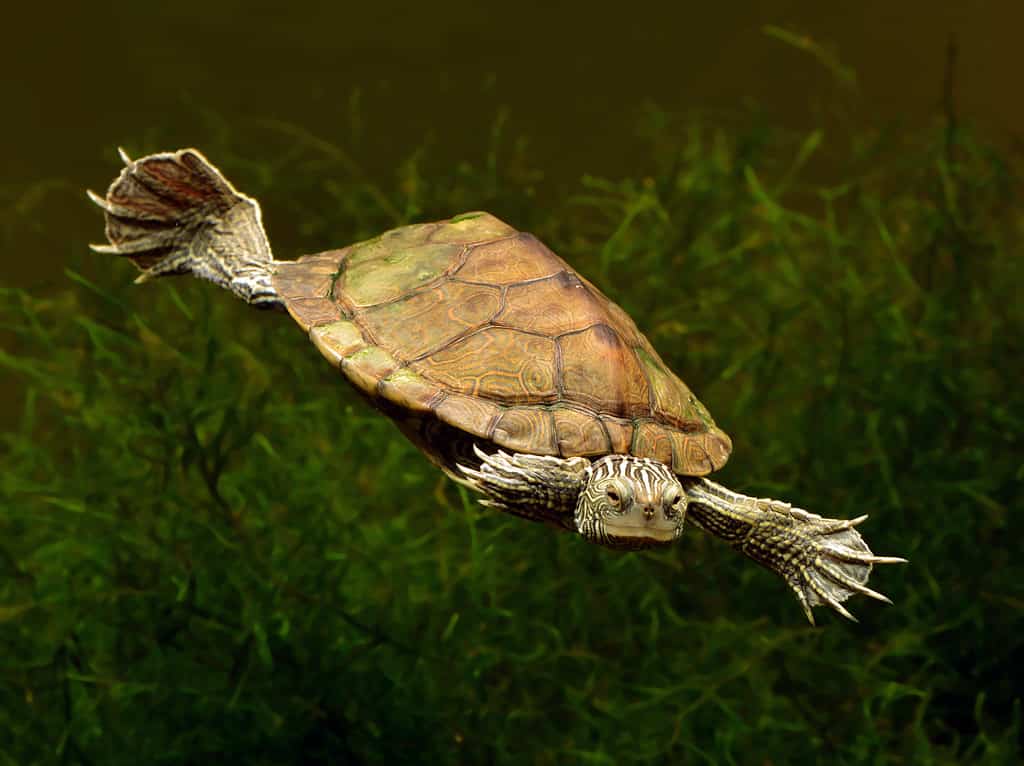
Some types of aquatic freshwater turtle use their cloaca to grab dissolved oxygen from the water in a form of ‘butt breathing.’
©damann/Shutterstock.com
Sleeping the night away underwater is something that many species of turtle prefer, but do not necessarily require. Aquatic freshwater turtles arguably sleep underwater the most often. Sea turtles also sleep underwater, but they do require a little bit of fresh air once in a while. Other turtles, like box turtles, sleep on land even if they like to soak in pools as we do in bathtubs. Semi-aquatic turtles like mud or musk turtles usually use a hybrid of underwater and land resting.
When it comes time for sleep, sea turtles slow their heart rates down to a crawl. Indeed, their heart rates can get so low that they may beat only a few times per minute, and in some cases, as little as once every nine minutes! This not only reduces their metabolism but also requires far less oxygen. They do this by taking shallow ‘breaths’ through their mouth, as seen in the Instagram video.
Freshwater turtles, on the other hand, often facilitate underwater sleep through their butts. Often called butt breathing, cloacal respiration uses an opening normally reserved for waste and reproduction to get oxygen. They pull this off because their cloacas feature a lining with highly vascularized tissues. These tissues can absorb dissolved oxygen from the water. Their cloacas can’t take in as much oxygen as their lungs, but this allows them to stretch their time between breaths, and therefore, their time sleeping underwater.
Record Holders
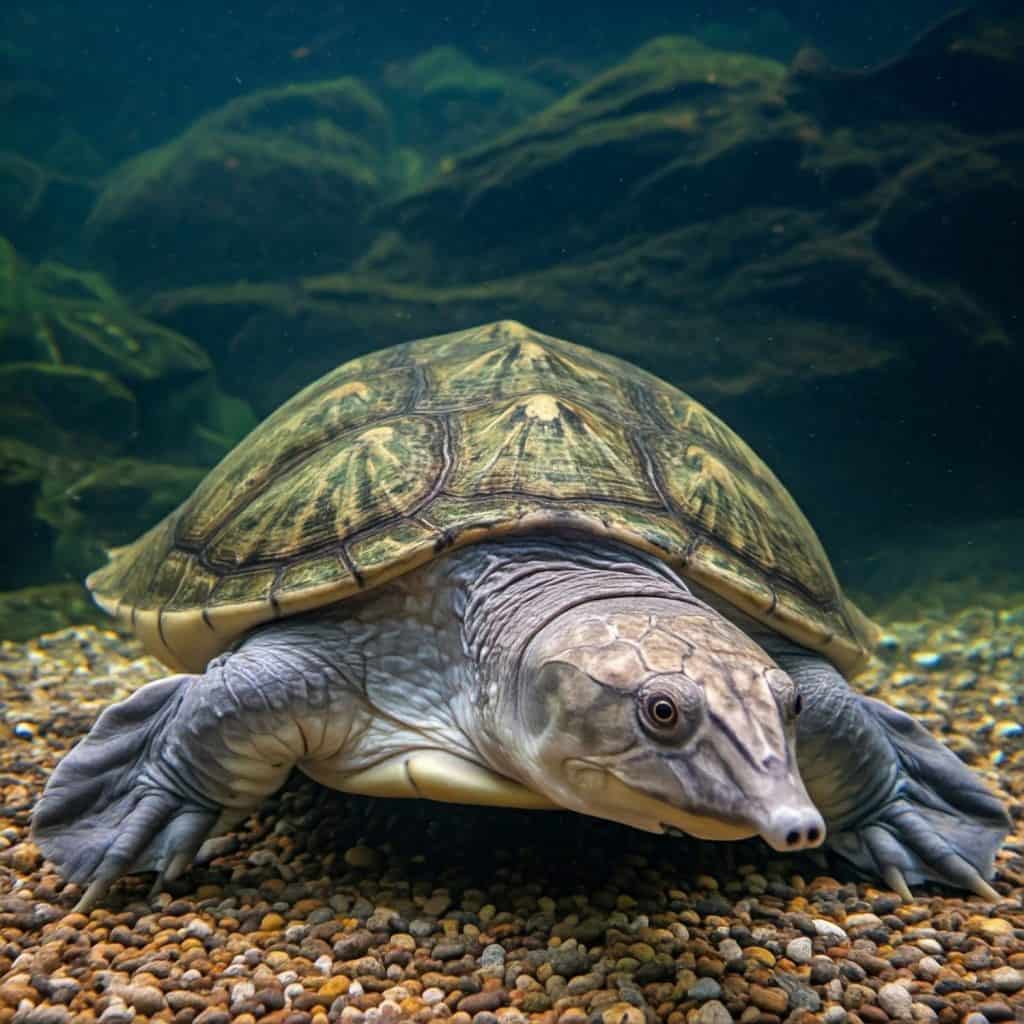
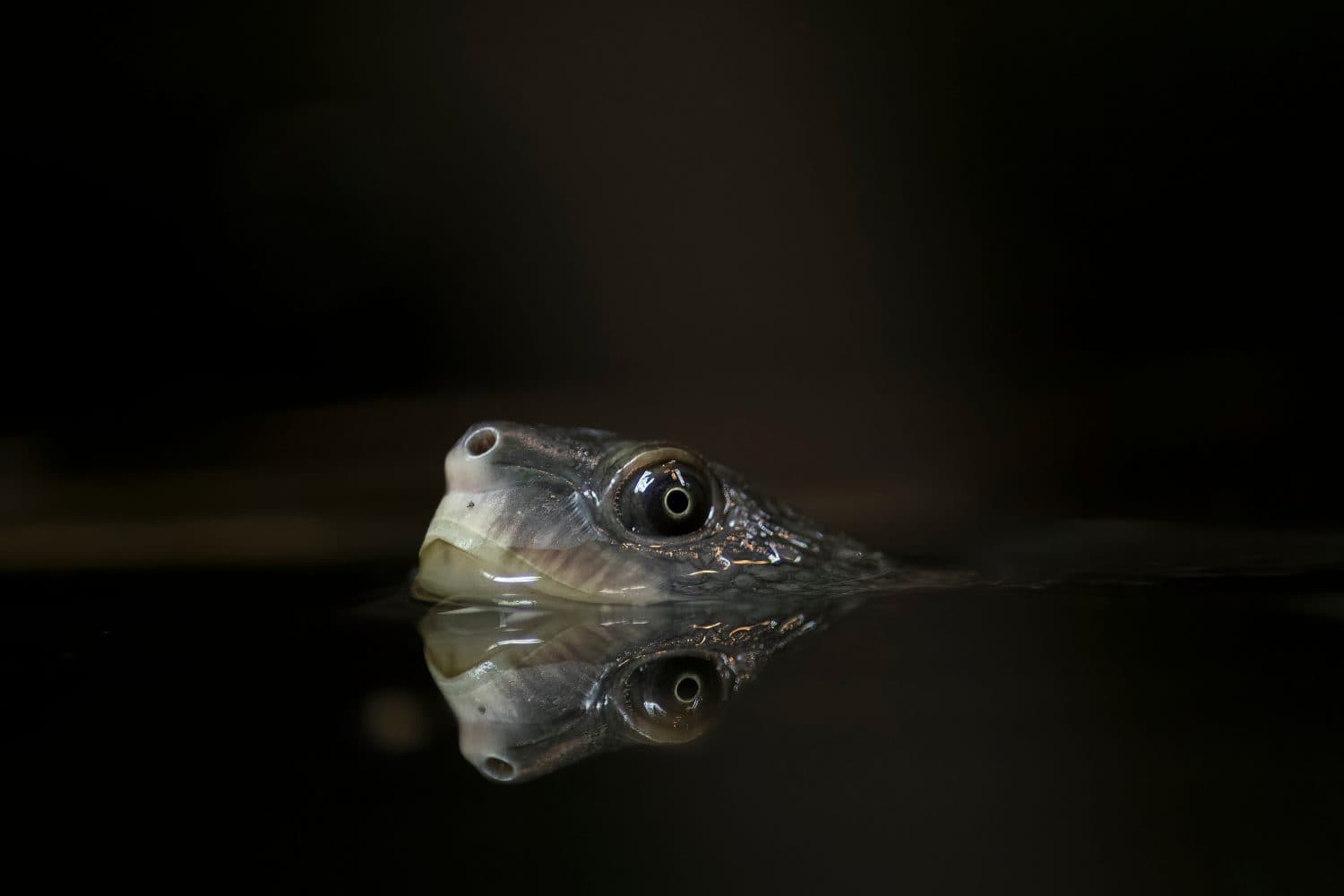
Softshell turtles often use their long snouts as a kind of organic snorkel when hanging out in shallow bodies of water.
©Thidsavanh seetanak/Shutterstock.com
The time spent sleeping underwater depends on the type of turtle. Interestingly, temperature also plays a role in the time a turtle can catch some shut eye without coming up for air. While cold water allows turtles to reduce their metabolic rate and sleep longer, warm water speeds their metabolism up. Put simply, warmer temperatures make their body too kinetic to keep a torpor state going for long.
Freshwater turtles like sliders or cooters can usually stay underwater for up to five hours at a time while sleeping. However, when the water is cold enough during winter, their metabolic rates get so low that they can stay submerged for several weeks at a time. Softshell turtles, too, sleep underwater for significant periods. While some freshwater turtles use their cloacas, softshell turtles usually use their long snouts as organic snorkels in shallow parts of the water.
Location, Location, Location
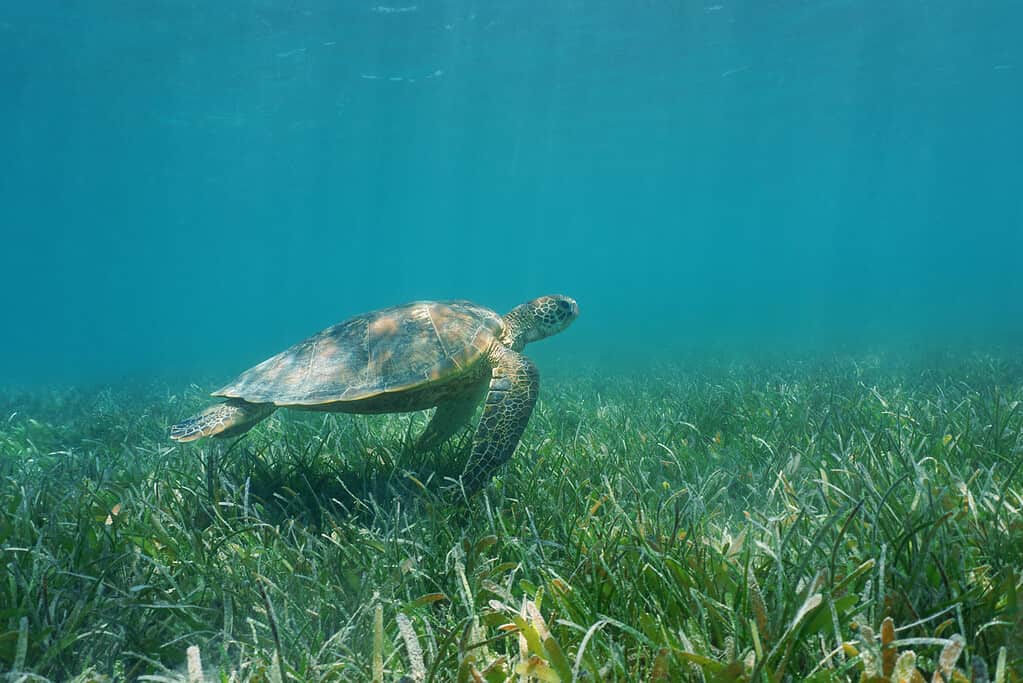
Some turtles like to sleep underwater by submerging themselves in aquatic vegetation. Such foliage provides them with a stable bed and enough cover to remain obscured in case any predators swim by.
©Damocean/iStock via Getty Images
When turtles decide to take a snooze under the surface, the locations they choose depend on the type of turtle. Aquatic turtles like sliders typically choose the bottom of ponds or hidden spots under logs where they can slow their metabolism and stay asleep for extended periods. As seen in the video, sea turtles usually make beds out of underwater ledges or coral. These spots are quiet but open enough that they can settle in and drop their heart rates down to a few beats per minute.
Regardless of the turtle species, they all pick spots with plenty of protection and safety. Prime underwater sleeping locations include spots under logs and rocks, submerged in mud, wrapped in aquatic vegetation, or even tucked inside the crevices of coral reefs. Such locations allow turtles to slumber while staying concealed from any potential predators.
Mammal Sleep
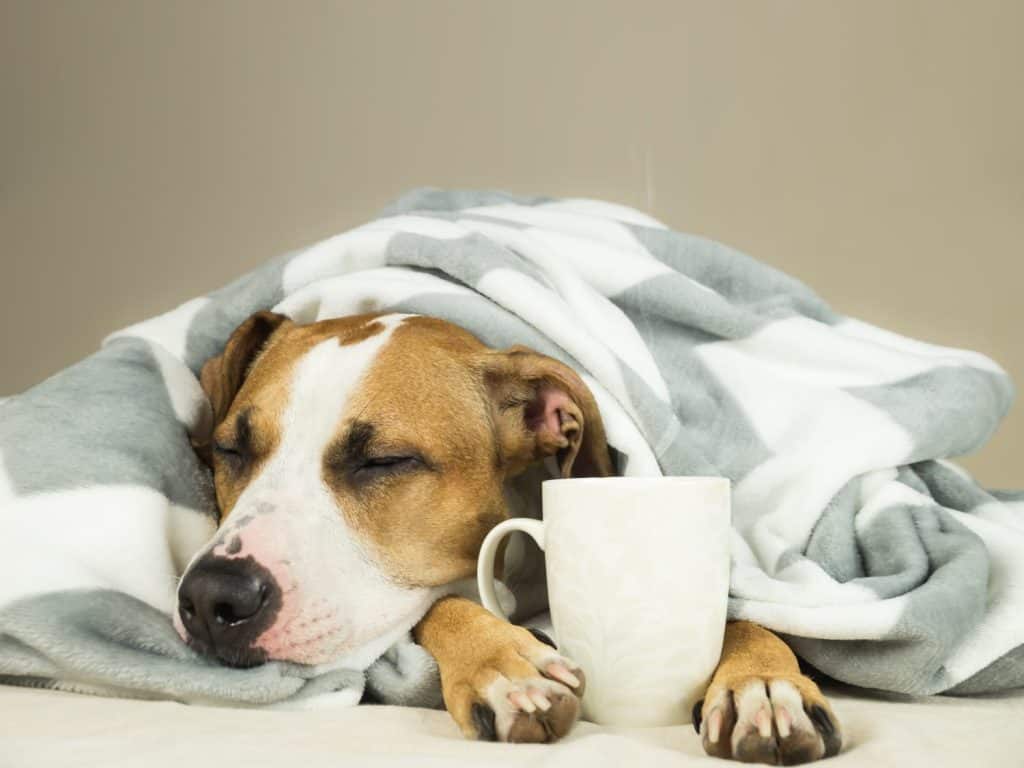
Mammals sleep in a different way than reptiles like turtles.
©Aleksey Boyko/Shutterstock.com
There are several differences between the way that mammals sleep and the way turtles sleep. For one, mammals are endothermic. Reptiles are ectothermic. Endothermic creatures maintain a constant internal temperature, but ectothermic creatures rely on the environment to adjust their temperature. This means that mammals use more continuous energy. It also makes their sleep restorative; it balances hormones, consolidates memory, and rejuvenates immune system health. Ectothermic creatures like turtles, however, match the temperatures of their environment. That’s why turtles sleep longer or shorter depending on the temperature of the water they are in. Ectothermic creatures also sleep to save energy instead of for the purpose of restoring their bodies.
There are pros and cons to both ways of sleeping. Mammals enter different stages of sleep depending on the time of night. Turtles, however, remain semi-alert all night. They never enter REM sleep, nor do they have bursts of brain activity associated with dreaming or muscle paralysis. Mammals follow sleep routines, but turtles shift their sleep schedules depending on temperature, water oxygen levels, and habitat. Their reptilian nature also allows them to drop their heart rates and suspend their breathing for hours.
As seen in the video, turtles sleep in their own unique way. It may be less restful than mammal snoozing, but it certainly allows them to go with the flow of the water temperature. It also makes for an impressive, heart-slowing feat of evolutionary adaptation.