
Giraffes are the tallest land animals, and height shapes nearly everything they do, including rest. Because predators hunt at night, cover is sparse, and rising from the ground takes time, giraffes have evolved a strategy that favors short, careful sleep. Researchers who track wild herds with cameras and sensors report that giraffes sleep for a total of well under two hours per day, with some nights totaling as little as thirty minutes. Although this amount is small compared to other mammals, it fits the daily survival needs of life on the open savanna. Short, repeated bouts of sleep allow the brain to recover without leaving the body exposed for long periods. As a result, giraffes live a life paced by brief periods of rest, frequent scanning of the horizon, and quick responses to danger in the dark.
Giraffe Sleep Basics
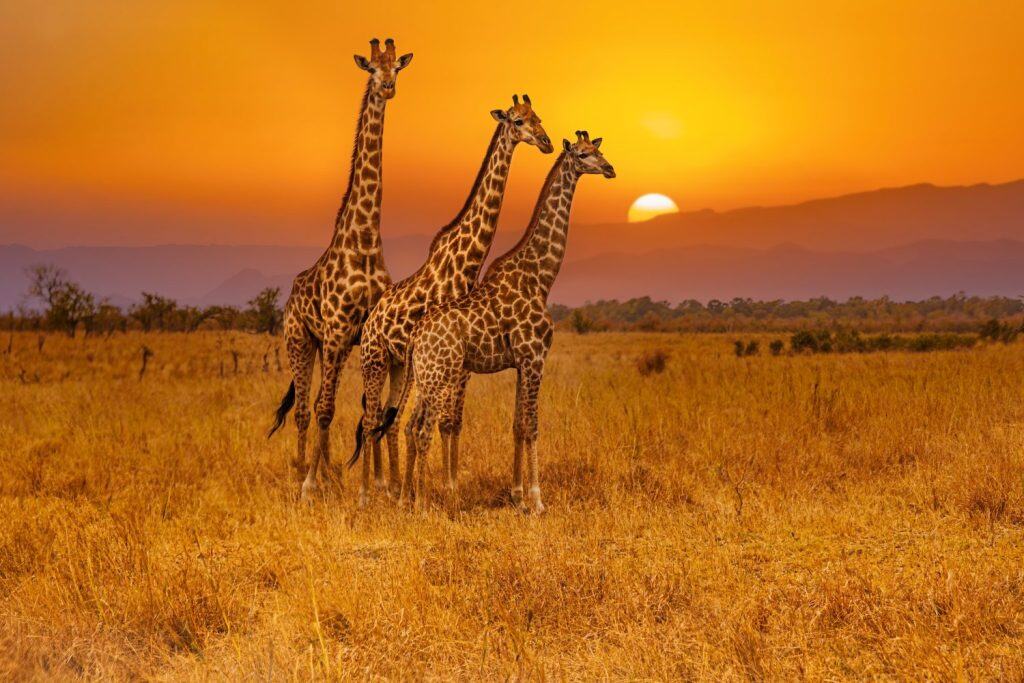
Giraffes take short naps through the night rather than long, deep sleep cycles.
©Framalicious/Shutterstock.com
Field work on free-ranging giraffes shows sleep that is brief and chopped into many tiny pieces. Adults take numerous short bouts of sleep at night, especially after sunset and before dawn, with a few scattered during the day when the herd pauses. Individual bouts often last one to three minutes. Calves sleep longer than adults, and giraffes in safe sites sleep longer than those near lions or hyenas. Totals across a full twenty-four hours vary, but in the wild, the range usually sits between about thirty minutes and two hours. Studies of giraffes in captivity often show higher sleep totals, reflecting the increased security, consistent feeding, and quiet enclosures. The key pattern remains the same everywhere: short stretches, frequent arousals, and rapid transitions back to alert standing.
How Do Micro-Sleep Cycles Work?
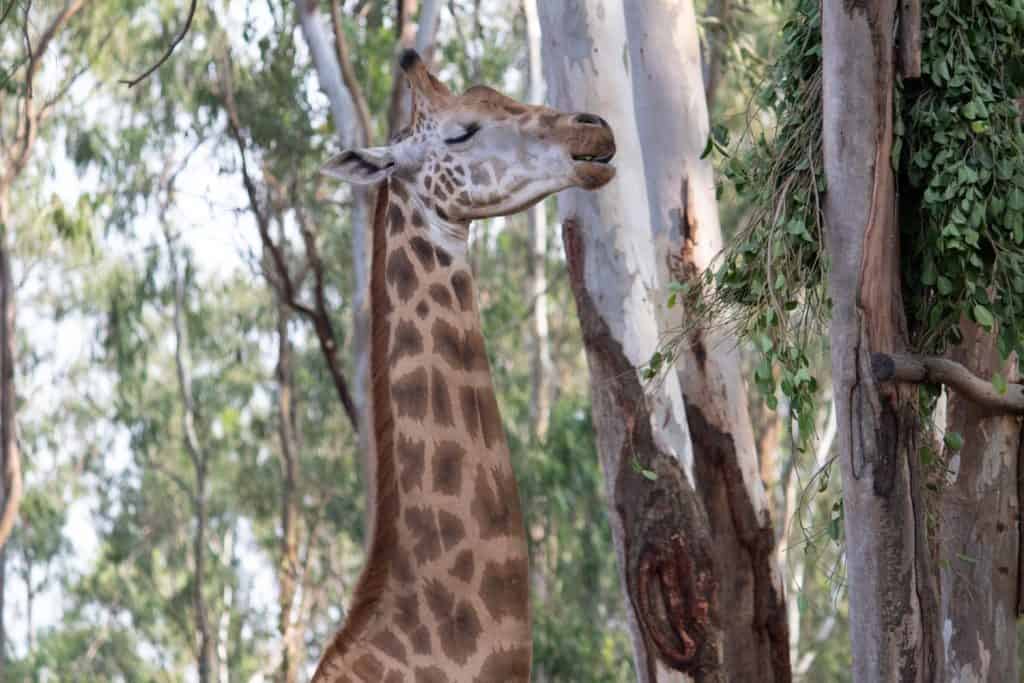
Most of the giraffe’s naps are taken standing up.
©Balamurugan veerabathiran/Shutterstock.com
Scientists describe giraffe sleep as polyphasic, meaning it occurs many times across the night instead of in one long block. Accelerometers, thermal cameras, and direct observation agree on the core pattern. A bout begins, the animal softens its posture, eyelids droop, ear flicks slow, and head angle shifts. After a minute or two, the giraffe lifts again to scan, adjust its feet, or change position. Bouts repeat dozens of times through the night. The animal sacrifices deep sleep for safety, treating sleep as a series of short ‘sips’ rather than a single long ‘drink.’ This approach keeps the giraffe’s muscles ready for a quick escape and limits the chance that a predator can approach while the giraffe is lying down.
Standing Rest and Lying Rest
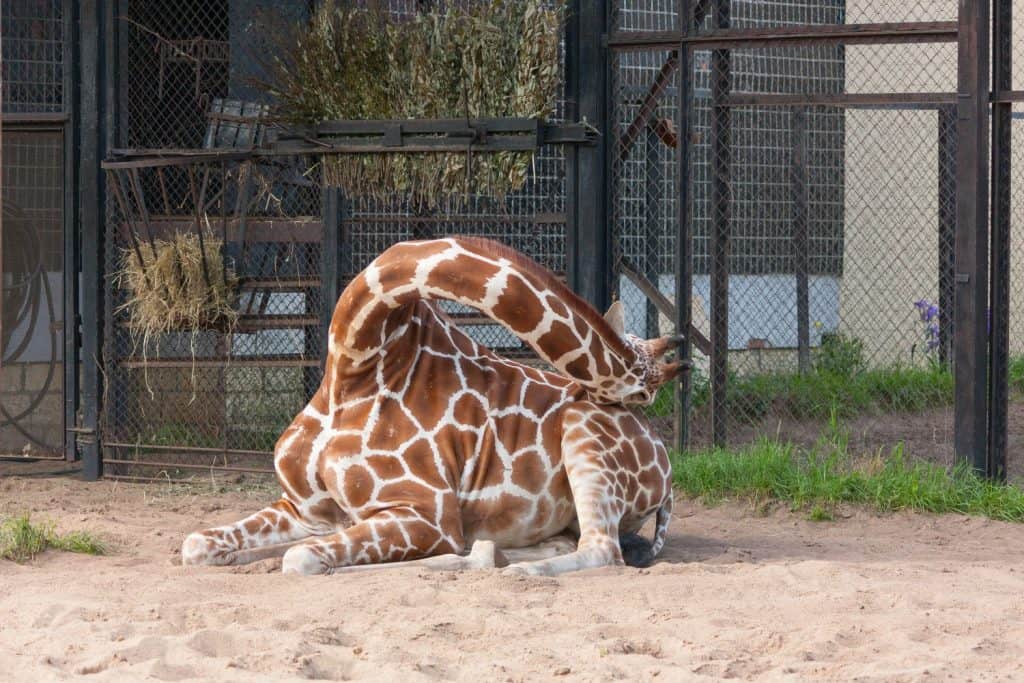
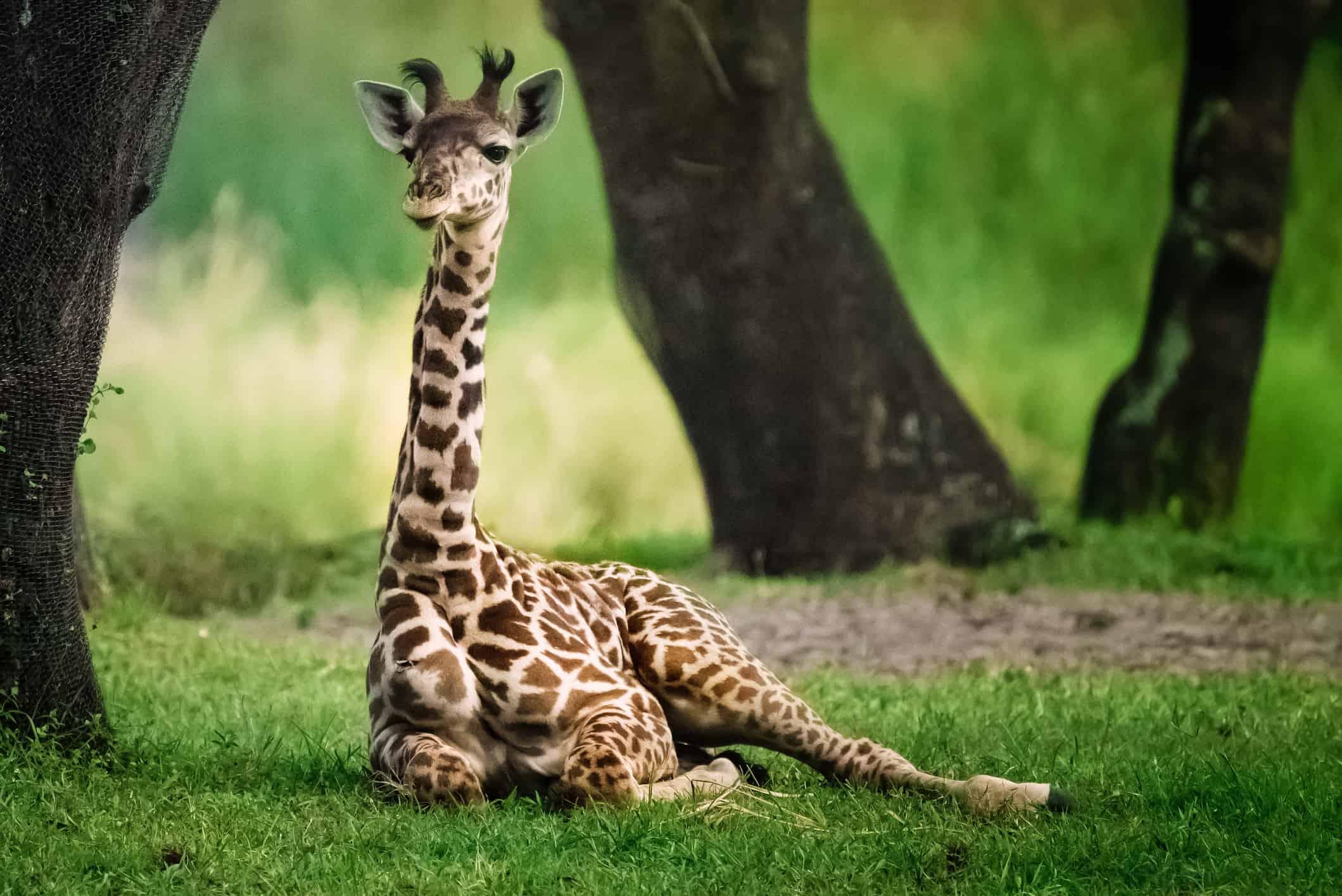
In safe environments, giraffes sleep in a crouching position.
©RU4077/Shutterstock.com
Giraffes rest in two main postures. Light sleep and drowsy states often happen while standing. The legs stay locked, the neck tilts, and the eyes close for seconds at a time. This posture allows a quick break without losing the ability to flee. Deeper sleep needs a seated posture. The giraffe folds its legs beneath its body and lowers its chest to the ground. Many adults then twist the long neck so the head rests on the hip or thigh. Rising from this position takes a sequence of pushes and shifts, which costs precious seconds. Because of this delay, adults choose to lie down only in spots with good visibility or among companions who can serve as lookouts.
REM Sleep and Posture
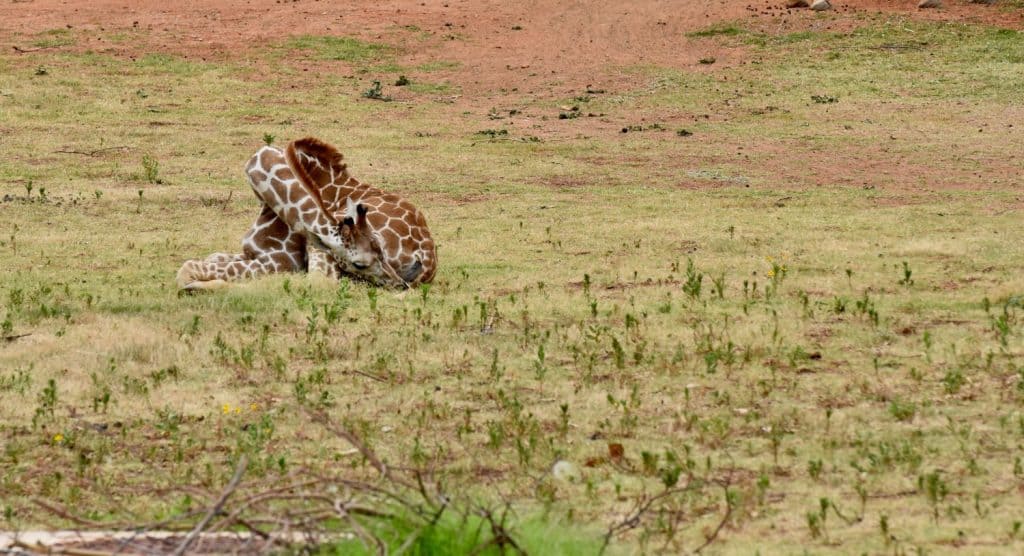
Giraffes get much less REM sleep than humans and many other mammals.
©Comunc8/Shutterstock.com
Rapid eye movement sleep supports memory work, brain development, and emotional processing in mammals. In giraffes, REM happens almost entirely while the animal lies down with the head supported on the body. These episodes are very short, frequently tens of seconds, and the total across a night for adults adds up to only a few minutes. Calves gain more REM than adults while they grow, and adults show more REM on calm nights in a secure habitat. Researchers sometimes film a telltale sign, a soft curl of the neck with loose facial muscles and small twitches around the eyes. Because REM is linked to learning, that small but steady dose may help calves map social bonds, routes to water, and the ever-changing web of threats on the plain.
Vigilance and Predators

Short bouts of sleep keep the animals safer from predators.
©JT Platt/Shutterstock.com
Night belongs to ambush hunters. Lions stalk by sound and scent. Hyenas range widely and test herds for weakness. Leopards take small calves when they can. These factors shape the giraffe’s sleep schedule. The longer it lies down, the longer it needs to stand up, and the greater the risk that a predator arrives at the worst moment. Standing bouts trim that risk. So do group tactics. In a mixed herd, one or two animals often stay alert while others slip into short rest. Wind direction, moonlight, and recent predator activity all influence where and how long giraffes sleep. The strategy is simple. Keep recovery brief, keep senses near the surface, and keep a clear path for escape.
Age, Sex, and Habitat Differences
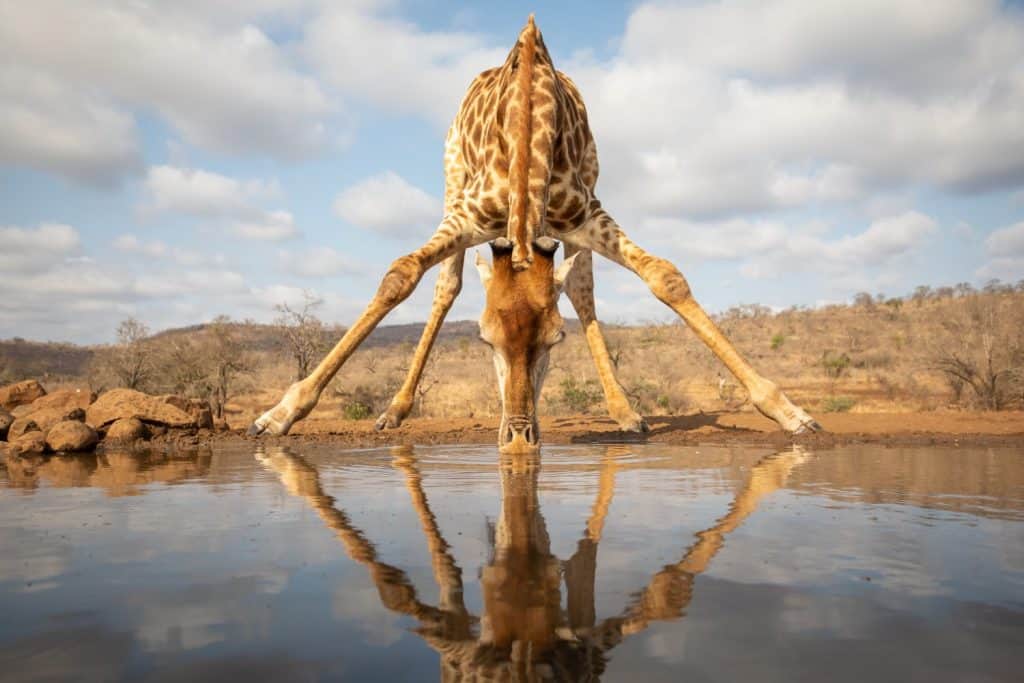
The age, sex, and terrain conditions all affect how much a giraffe sleeps.
©Peter van Dam/Shutterstock.com
Not all giraffes sleep the same way. Calves need more total sleep and more REM, and they secure it under the protection of adults. Subadults, newly independent, cut totals as they learn local threats and travel more. Males that roam for mates may spend more nights in unfamiliar ground, which reduces lying bouts. Females with calves choose sleeping sites with open sightlines and nearby companions. Habitat matters as well. Thorn scrub provides some visual cover but limits quick movement. Open savanna gives clear views but little concealment. Human activity adds pressure. Fences, lights, dogs, and roads shape movement and can fragment safe resting zones. All of these factors influence the balance between minutes spent asleep and minutes spent on alert each night.
How Do Other Savanna Mammals Sleep?
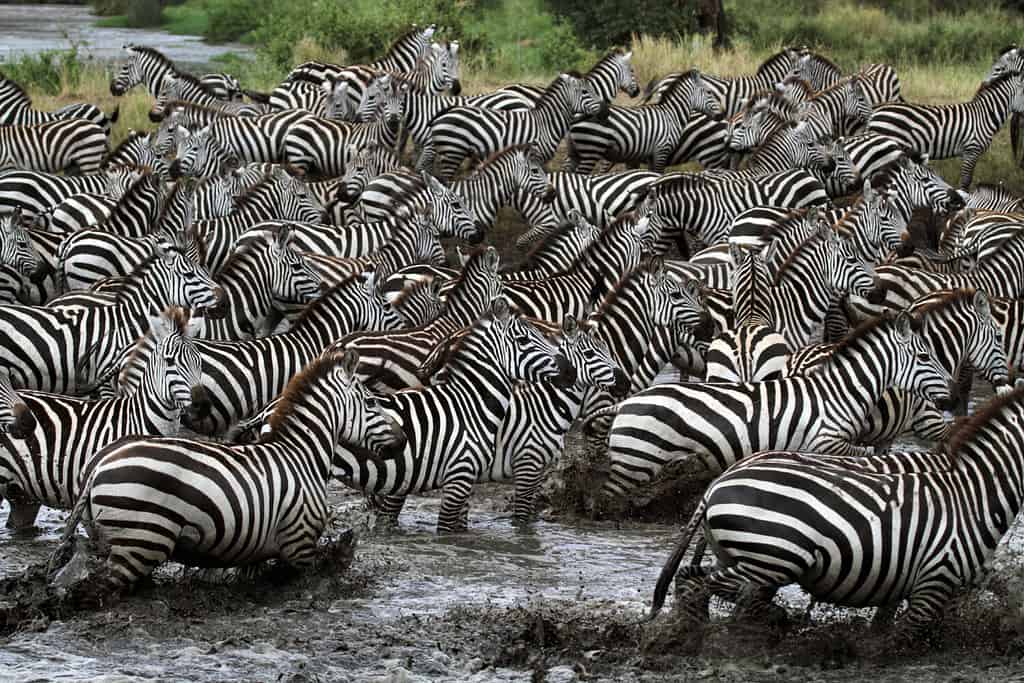
Prey species have shorter sleep sessions than predator species.
©Mogens Trolle/Shutterstock.com
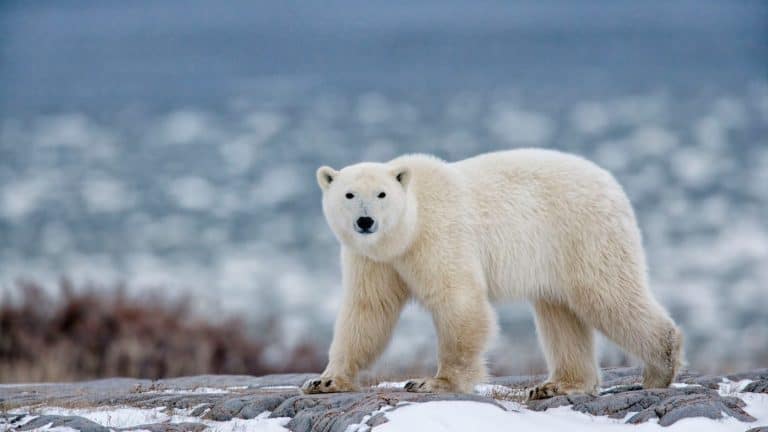
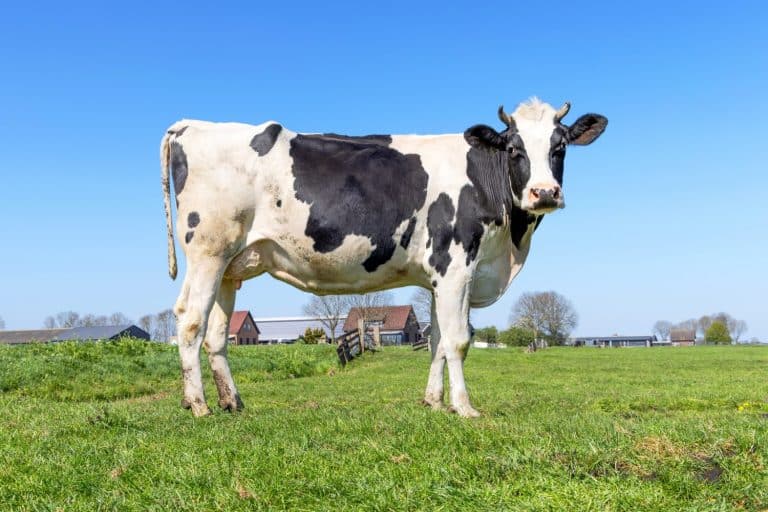
Predators and prey show very different sleep budgets. Lions can rest and sleep for most of the day because few animals hunt them. They sprawl in open areas and rouse when temperatures drop. Hyenas stockpile rest inside dens and mix it with long foraging runs. Zebras take longer rests than giraffes and often rely on tight group formation, where many eyes and ears divide the work of scanning. Antelopes vary by species and terrain, but many use short bouts that look similar to the giraffe pattern. The rule of thumb is straightforward: species at the top of the food chain can afford long, deep sleep, while prey species need shorter, lighter bouts and must be ready to wake quickly at any sign of danger.
Conservation and Welfare
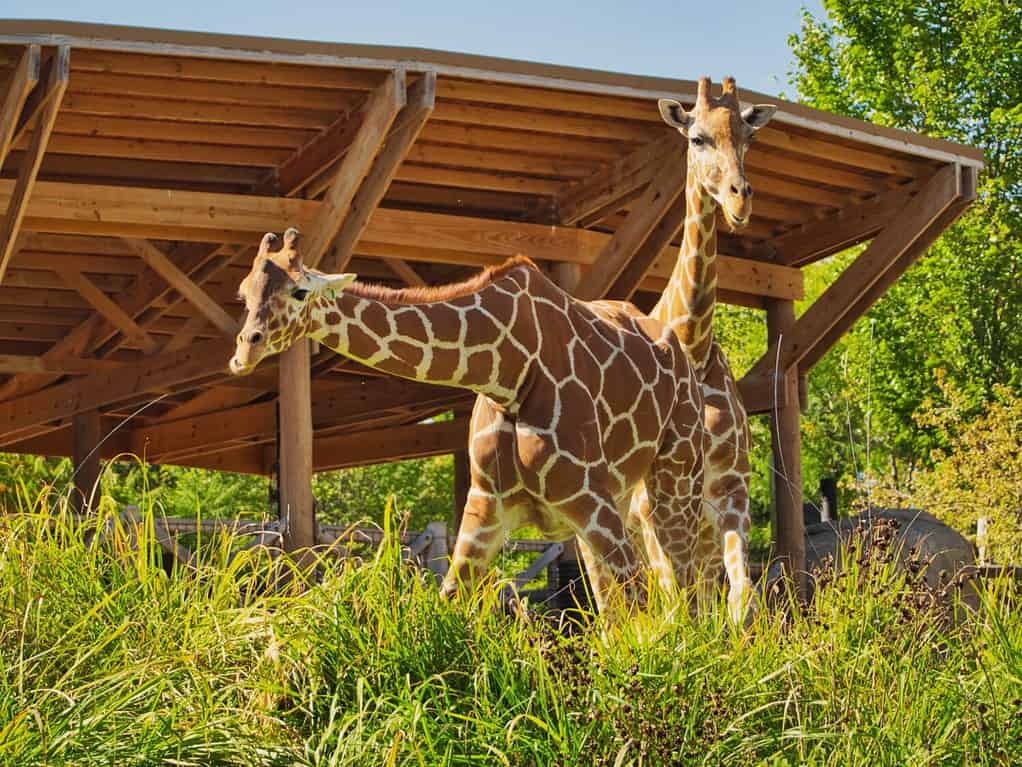
Giraffes are a top attraction at many zoos.
©Wirestock Creators/Shutterstock.com
Sleep reflects the quality of a habitat. When space shrinks or predators concentrate near water, giraffes cut lying bouts and rely on standing rest. That trade can affect growth and reproduction across seasons. Conservation plans that protect travel corridors and reduce night disturbance help restore normal patterns. Rangers and researchers read sleep like a vital sign. Camera traps, accelerometers on collars, and drone footage provide data on bout length, timing, and posture. In managed reserves, staff reduce light and noise near key resting areas. In zoos, designers include soft, level substrates so joints tolerate rising without injury. A herd that can rest in brief, predictable cycles is more likely to thrive and raise calves to independence.
A Life Tuned to Brief Rest
The giraffe’s schedule can look strange beside ours. The animal strings together many tiny sleeps, then snaps back to alert standing when a scent shifts or grass whispers. It adds a few small REM servings while curled on the ground, head tucked on the hip, and then lifts again to survey the horizon. But the plan works for them.