
Quick Take
- Gorillas face habitat loss from coltan mining in the DRC and Rwanda, with armed groups and roads increasing poaching and disease risks.
- Consumers can help gorillas by repairing, reusing, and recycling phones to cut e-waste and limit mining pressure.
- Stopping exploration in areas likely to hold 20+ apes could prevent the development of about 38% of ape-habitat mining projects.
In an episode of the Amazing Wildlife podcast, we found out that the San Diego Zoo Safari Park is collecting cellphones for recycling to save gorillas. Numerous other U.S. zoos, such as Zoo Atlanta, Oklahoma City Zoo, Louisville Zoo, Pittsburgh Zoo & Aquarium, and Little Rock Zoo, are participating in cellphone recycling programs for gorilla conservation. Even zoos abroad, like the Wilder Calgary Zoo in Alberta, Canada, are collecting cellphones to “help protect gorillas in the wild.” Given that gorillas are critically endangered in the wild, the widespread belief among these organizations that cellphone recycling can help is worth exploring. Let’s examine how gorilla conservation relates to digital devices, especially cellphones.
Coltan
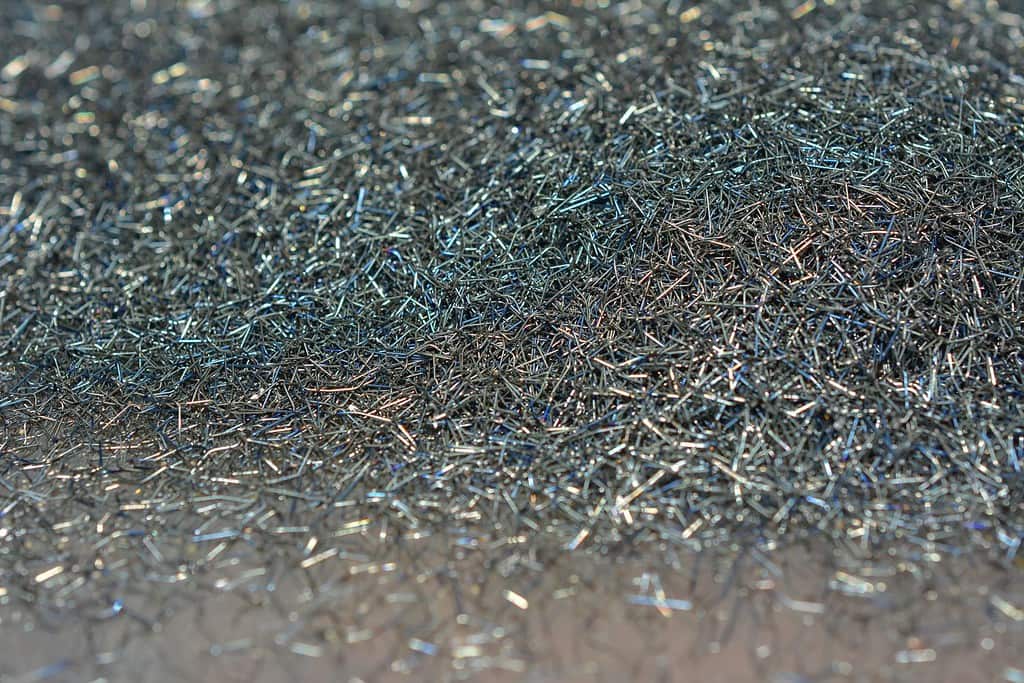
Tantalum wire is valuable in electronics for its unique properties.
©beejung/Shutterstock.com
Coltan is the ore from which the mineral tantalum is extracted. Just a smidgeon of tantalum is needed in your smartphone—like 0.04 grams—but it’s essential for the workings of the device. Tantalum capacitors (which accumulate and hold electricity) function at high temperatures and have excellent electronic properties, including efficiency and the ability to retain a charge. Tantalum is also a component of the acoustic wave filters in phones that ensure high-quality sound and video output.
However, coltan is mostly mined in the Democratic Republic of Congo (DRC) and also in Rwanda, in areas that are gorilla habitat. Furthermore, some of its mines in eastern DRC are now under the control of the armed M23 rebel group, which is at the center of ongoing conflicts in the region. Despite the ongoing presence of the UN peacekeeping mission (MONUSCO), which began in 1999 and is set to expire soon, the regions containing coltan mines remain plagued by violence and oppression of workers, creating a volatile situation not conducive to protecting people, let alone gorillas. Thousands of people work in open mining pits in unsafe and poorly regulated conditions.
Gorillas in the DRC and Surroundings
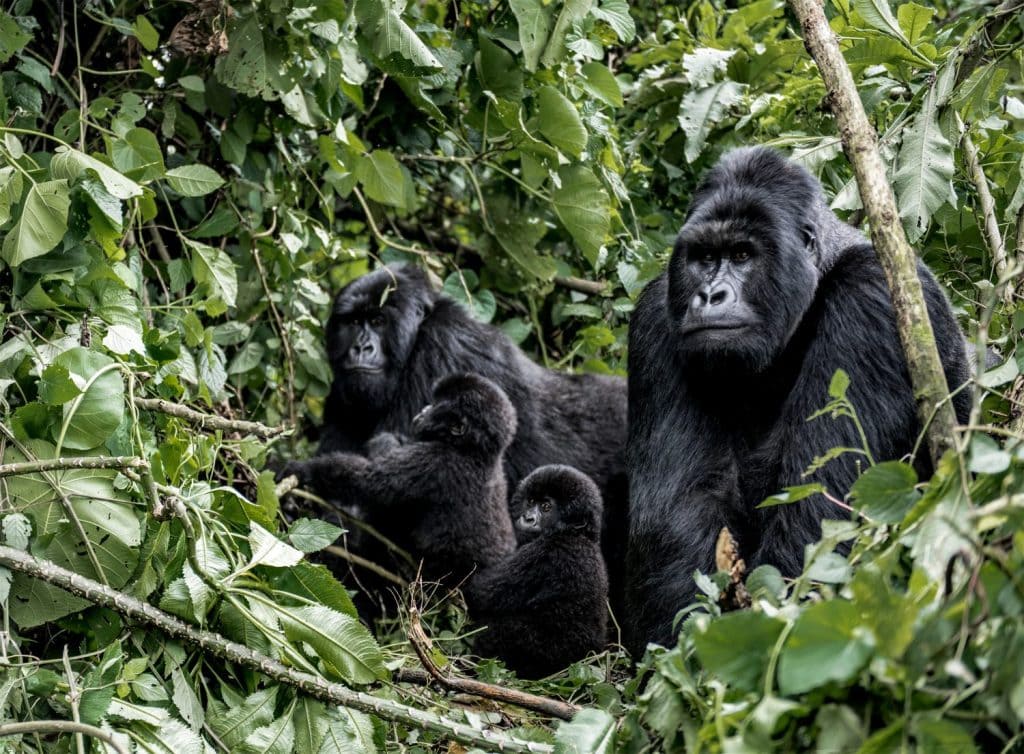
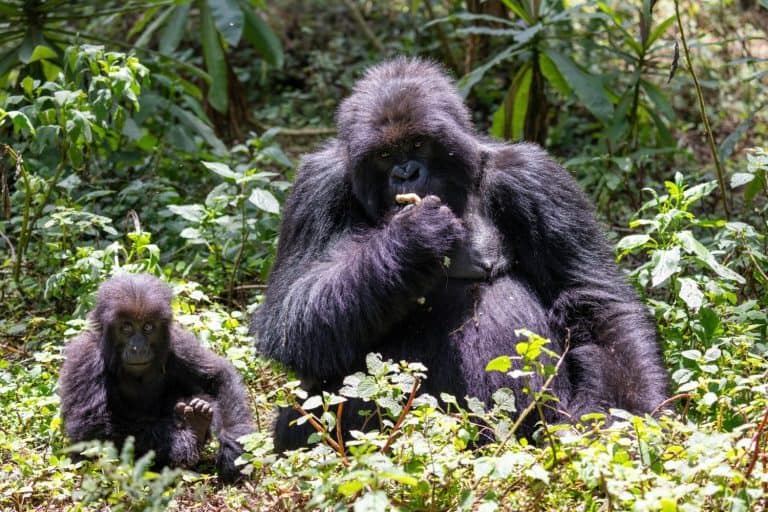
This family of mountain gorillas lives in Virunga National Park, DRC, Africa
©Eric Isselee/Shutterstock.com
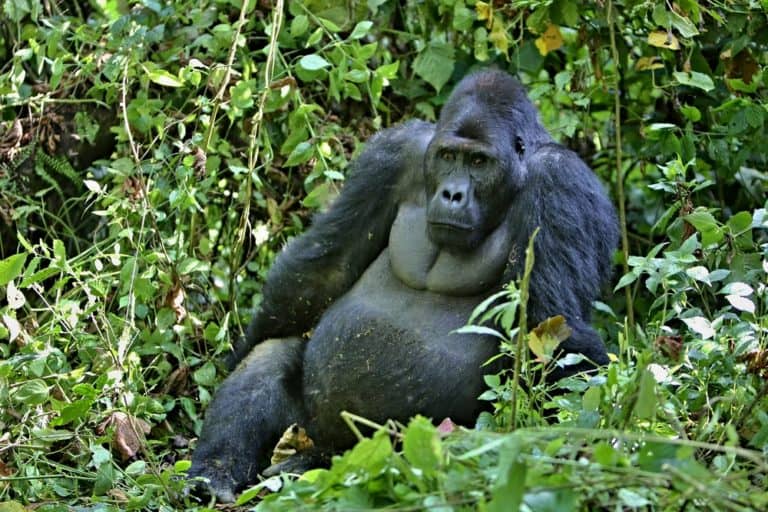
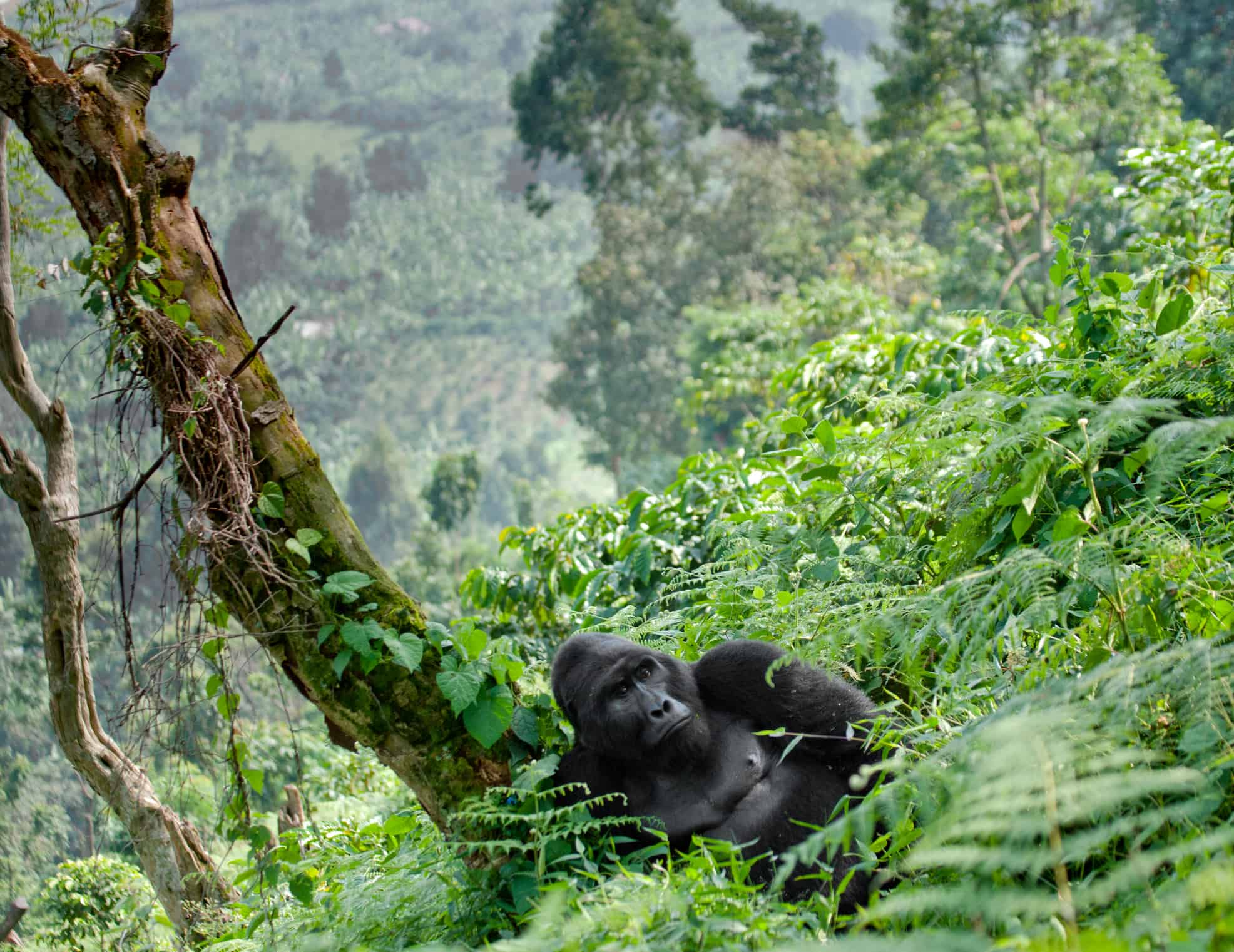
All gorillas are endangered, according to the International Union for the Conservation of Nature, most of them critically so. The eastern or “mountain” gorilla (Gorilla beringei) lives in the DRC as well as portions of Rwanda and neighboring Uganda. One subspecies (G. beringei beringei) survives in just two populations totaling about 1,060 individuals, which are now separated by intensively farmed land. The other subspecies (Grauer’s Gorilla, G. beringei graueri), totaling about 6,800 remaining individuals as of 2025, lives in portions of the eastern DRC forests and is considered one of the most endangered primates in the world.
The western gorilla (Gorilla gorilla) also extends across Central Africa, including into the DRC. It’s also divided into two subspecies, separated by the Sanaga River. The western lowland gorilla (G. gorilla gorilla), totaling between 150,000 and 316,000 individuals, is found in protected areas and some of the logging areas. In contrast, surveys of the cross river gorilla (G. gorilla diehli)find just 200-300 individuals living in a single forested area of about 12,000 km.² These cross-river gorillas appear to favor steep, remote areas, likely avoiding the human activities in the lowlands. Both subspecies are critically endangered, having suffered population reductions of more than 80 percent over three generations.
Gorillas Under Pressure
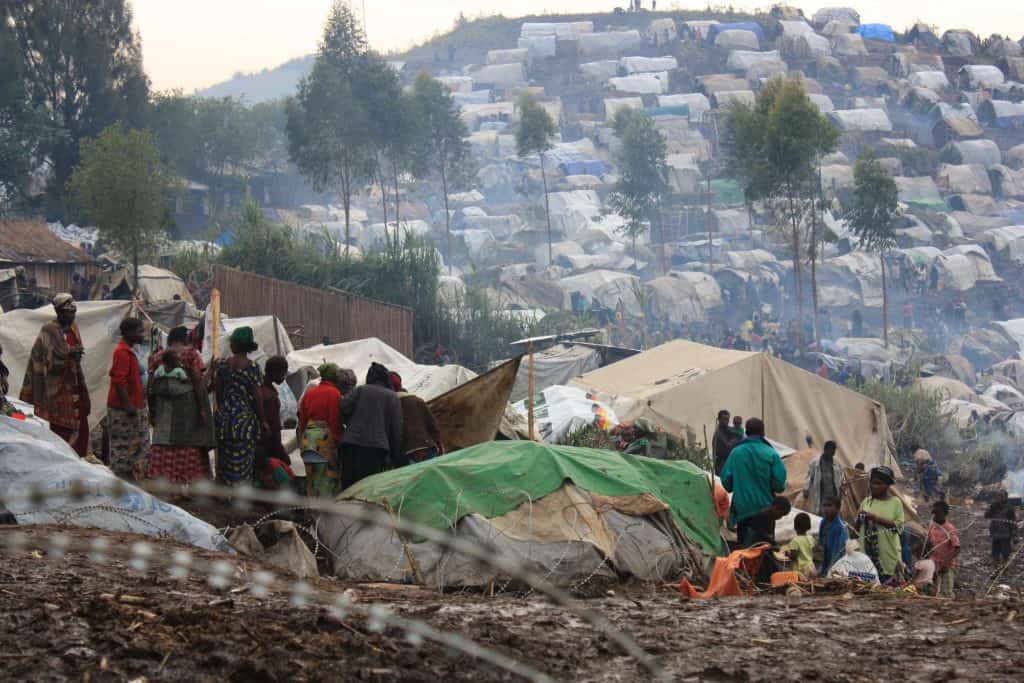
Refugees from conflicts in the DRC squeeze into encampments on what used to be forested slopes
©EU Civil Protection and Humanitarian Aid, CC BY-NC-ND – Original / License
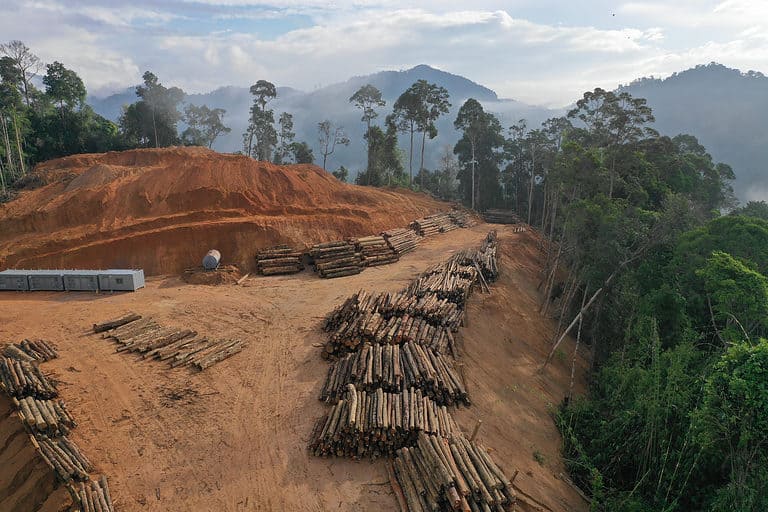
For more than two decades now, the forested habitats that gorillas depend on have been under harvest pressure from the armed groups and displaced people who have become conflict refugees. Trees are harvested for firewood, charcoal, and timber production, while rebel mining groups have seized control of areas formerly managed under conservation as national parks. For example, illegal mining in the Kahuzi-Biega National Park continues to degrade gorilla habitat. A recent study published in Biological Conservation found that deforestation extends up to 50km around mining areas.
Meanwhile, gorillas have been intensively hunted for bushmeat. As mining has expanded in the DRC and Central Africa in general, the previously remote gorilla forests are now crisscrossed by roads. Poachers and displaced immigrants have easier access to gorilla hunting from the road network. A study published in Science Advances showed that gorilla densities are lowest near roads unless forest guards block people’s entry.
Furthermore, incursions of people may introduce diseases that can spread into gorilla populations. The Ebola virus has been a driver of the western lowland gorilla’s decline. Surveys conducted since the 1980s have found several massive gorilla die-offs in the forested areas between northwestern DRC and neighboring Gabon. One study published in Science estimated a loss of 95 percent of western lowland gorillas to Ebola from 1995 to 2000. Eastern gorilla populations have also suffered from human-transmitted diseases, such as an outbreak of deadly respiratory infections in a population of mountain gorillas, reported in a study published in Emerging Infectious Diseases.
So, mining for coltan brings both the direct impacts of gorilla habitat loss and secondary impacts from the increased human presence in their ecosystems.
Other Cell Phone Minerals
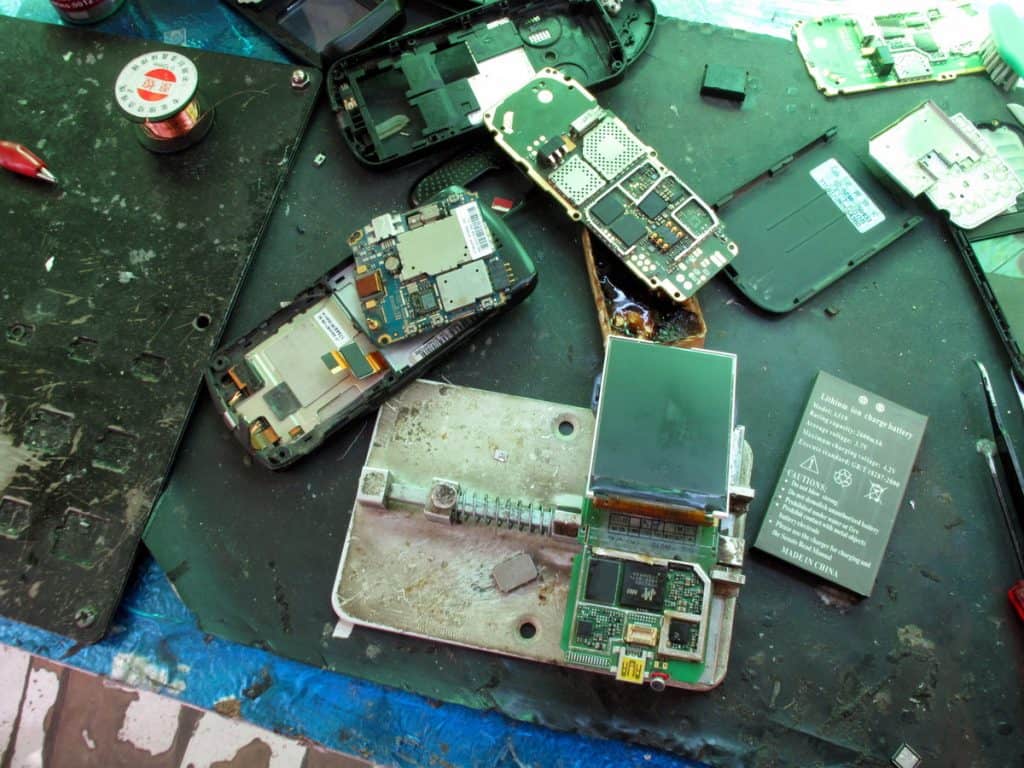
Cell phones contain dozens of minerals in their interior and exterior parts.
Between their electronics, speakers, displays, microphones, and other components, cell phones are made with as many as 42 minerals. Some of those minerals are rare but essential to the workings of the phone, driving intensive mining around the world. Most of the cell phone minerals are mined in countries other than the U.S.:
- Cobalt is needed for rechargeable batteries, as well as other parts, and is produced by smelting. Over 70% of the world’s cobalt supply comes from the Democratic Republic of Congo as of 2025.
- Copper conducts electricity well, so it’s used in wires and connectors, making it the most common cell phone metal. Chile is the largest producer; Peru and China also mine significant amounts.
- Gallium is used to make LED backlighting on phones. It is primarily obtained as a byproduct of aluminum and zinc production, with China being the dominant producer as of 2025.
- Germanium is a material used for semiconductors in phones. The U.S. mostly imports germanium from China, but also from countries such as Canada and Belgium.
- Gold is chemically stable and can conduct electricity. It’s used in circuit boards, and mined primarily in China, Australia, Russia, and the United States.
- Indium is used to make the material indium tin oxide, which conducts electricity well, so it’s used to coat touch screens.
- Lithium is in the lithium-ion batteries used in most rechargeable devices, allowing them to charge faster and last longer. As of 2025, Australia is the largest producer, followed by Chile and China.
- Manganese is in TV circuit boards and next-generation rechargeable batteries. It’s abundant and mined across the world, including in South Africa, Australia, and Gabon.
- Potassium is used to make touch screens and coatings that make the screens more durable. It’s mined mostly in Russia, Canada, and Belarus.
- Silica is used for the manufacture of chips and microprocessors in phones and other electronics. It is mined worldwide, with major producers including China, the United States, and Australia.
- Tellurium improves the strength and hardness of other metals and retards corrosion. It mostly comes as a byproduct of copper refining in China, followed by Russia and Canada.
- Tin, derived from cassiterite, is used to solder circuit boards as well as create transparent circuits in the display. The main producers of tin are China, Indonesia, and Myanmar.
- Tungsten is dense and durable, even harder than titanium, providing ballast in electronics that vibrate like cell phones. China produces over 80% of the world’s tungsten as of 2025.
- Yttrium is used to make colors on smartphone screens, as well as camera lenses.
Collectively, these minerals used to make our cell phones drive a globally destructive and unsustainable mining industry.
Mining Impacts Broadly
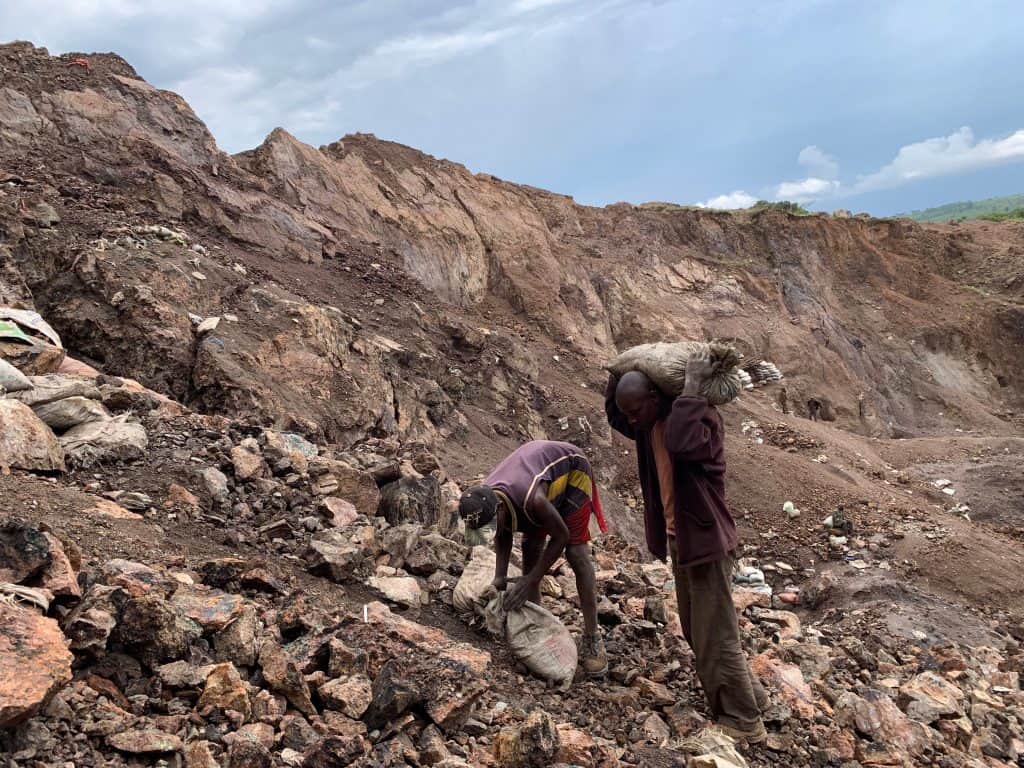
Artisanal cobalt miners in the DRC pick up rocks off a degraded hillside.
©The International Institute for Environment and Development, CC-BY – Original / License
Mining has numerous negative impacts on African great apes, including gorillas and chimpanzees. During the exploration phase, drilling and blasting create noise and cause local ecosystem destruction. Once a site is identified and mining begins, heavy machinery causes widespread destruction and pollution. Mining areas fragment and degrade forests, not to mention the additional impacts caused by increased roads and human activity in these regions. Once extracted, minerals incur additional impacts for transport to wherever they’ll be shipped off for use in cell phones and other electronics.
According to a recent study published in Science Advances, “The extent of the potential threats of mining on apes in Africa has been grossly underestimated.” Because mining areas often coincide with gorilla habitat, and protection measures are inadequate, apes do not fare well. The researchers estimated that as much as a third of the entire great ape population in Africa (which also includes chimpanzees) will be directly or indirectly impacted by mining now and in the near future.
What Can Be Done?

The complex social interactions of gorillas make them unlikely to fare well if moved to new habitats.
©LuckyBusiness/iStock via Getty Images
Because gorillas have complex societies, translocating them to new, less disturbed sites is not considered a feasible option. Restoring their habitats is particularly challenging, given the ongoing armed conflicts. Avoiding further damage to gorilla habitats may be the only solution to stem their decline.
In the Science Advances study, the researchers recommend measures like companies reconsidering where they explore for minerals to avoid gorilla habitats; lending banks refusing to fund mining in critical gorilla areas; and mining companies offsetting forest degradation with improvements to existing gorilla habitats. They state that, “if corporations ceased their exploratory activities in areas likely to contain a minimum of 20 apes, this would result in 38% (22 of 58) of putative mining projects situated within the African ape habitat to remain undeveloped.”
Legislation is critical for achieving the changes necessary to sustain gorillas. A 2020 Agreement on the Conservation of Gorillas and their Habitats adopted a framework to guide all ten countries containing gorilla habitats in stemming the decline. The multilateral agreement forged action plans targeted at protecting and recovering each of the four species of gorilla.
What Can I Do as a Consumer?

If you break your cell phone, you may be able to have it repaired.
©Dragana Gordic/Shutterstock.com
Every cell phone, laptop, or electronic device we buy contains minerals. By resisting phone companies’ continual marketing of upgrades and instead holding onto your device for longer, you’re reducing your role in driving destructive mining that may harm gorilla habitats. You’re also reducing the growing environmental problem of e-waste. Even better, used phones have become common in online marketplaces, often coming in certified refurbished conditions with warranties. Buying second-hand phones is not only a huge money saver, but also a kind move for gorillas and other wildlife.
Fortunately, thanks to consumer pressure, the movement to recycle the materials in cellphones is growing. Still, according to the UN Global E-Waste Monitor, “The world’s generation of electronic waste is rising five times faster than documented e-waste recycling.” Their predictions for annual global e-waste by the year 2030 are a staggering 82 million tonnes (metric tons). So, anything you can do to limit your contributions to the e-waste stream is a plus.
When your phone is broken, try to get it repaired. Screens, for example, can now be replaced either with a do-it-yourself screen kit or by a professional screen repair technician. Aside from electronics box stores that offer phone repairs, there’s a growing market in phone repair shops or even repair trucks that come to you. If your phone’s battery no longer holds a charge, you can often revive it by replacing the battery. Repairing a phone is typically much cheaper than buying a new one, making it a worthwhile effort that also reduces e-waste.
Once your phone really needs to be discarded, look for locales that collect used phones for recycling. Phones are collected by zoos that are partnered with companies like Ecocell, but also by some electronics stores and phone manufacturers, including Google, Samsung, and Apple. By making these choices, you can save money and help improve the chances that gorillas remain on the planet.