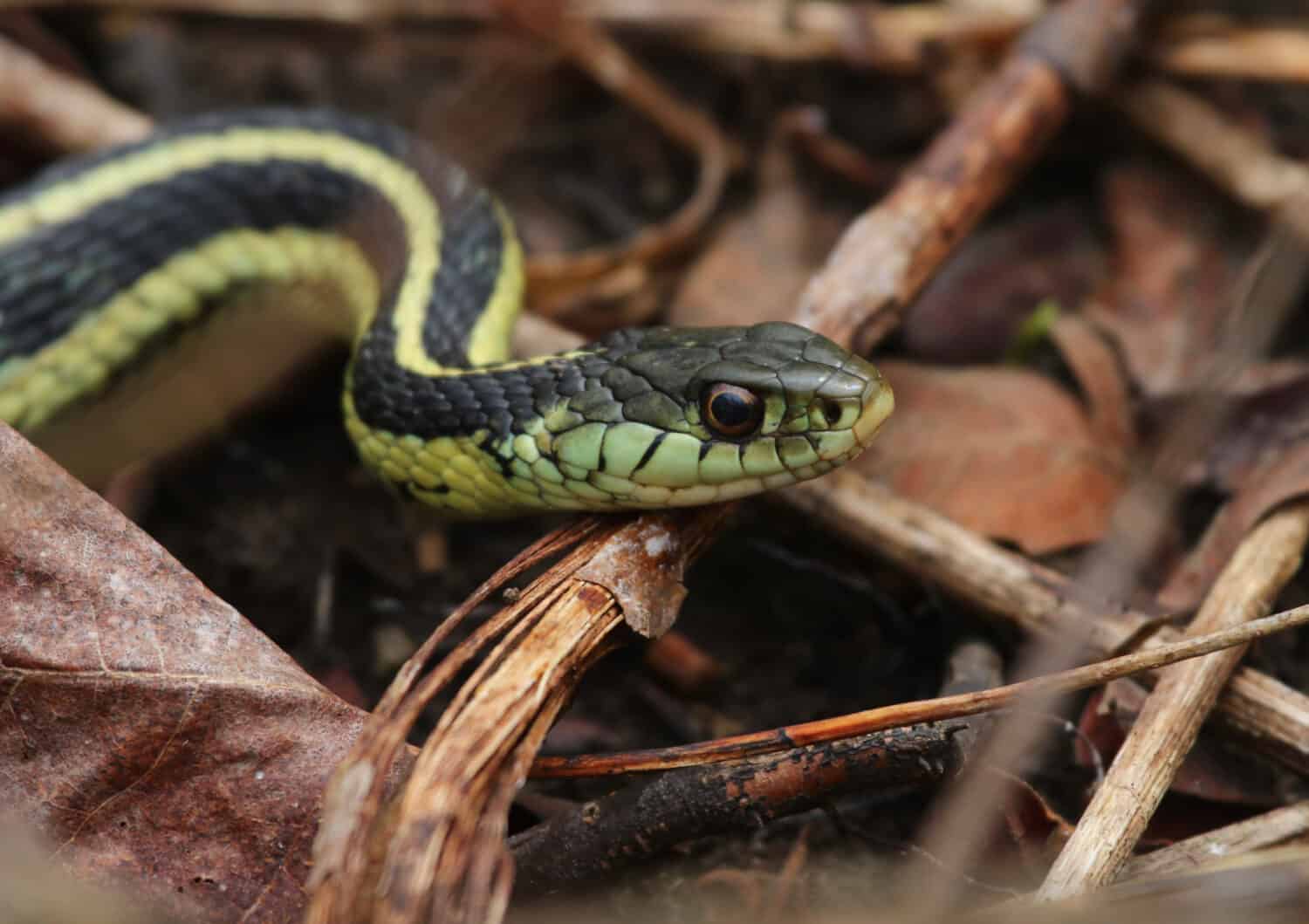

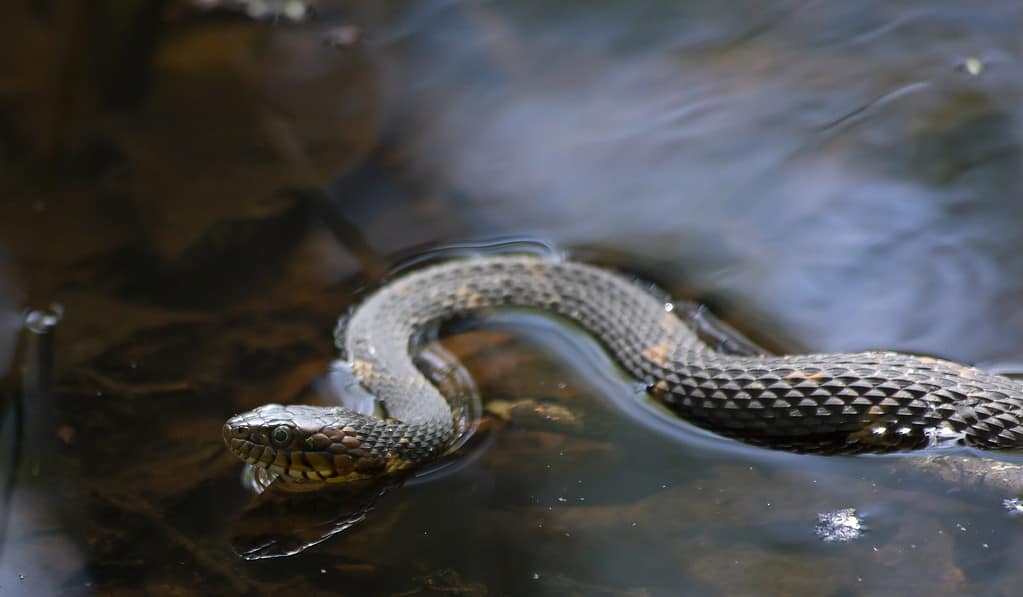
Broad-banded water snake (Nerodia fasciata confluens) swims in the stagnant water of a bayou.
©tornado98/ via Getty Images
Snakes are incredible hunters, with different species having their own unique means of catching their prey. Whether it’s through constriction or venom, snakes are fearsome when they are on the prowl. One example is water snakes, which, unlike other snakes, can hunt in the water. This Instagram post from @cbsnews shows a water snake successfully catching and eating a large catfish. Read here to learn about how water snakes hunt and how they can eat such large prey.
How Do Water Snakes Catch Fish?
Many different snake species catch fish, especially semi-aquatic or aquatic snakes. Given that their habitat is the water, it is important that these snakes have a diet that includes abundant wildlife. So, while it might seem odd that snakes actively hunt for fish, they have adapted over centuries to become exceptionally good at it. Effectively and quickly catching a fish can be difficult, though, and it requires great patience.
Fish-eating snakes more often than not wait for the perfect chance to ambush their target. By staying motionless in the water, they wait for the fish to swim close. Once in range, or in the strike zone, the snake will lunge underwater to catch the fish. Snakes often target the head of the fish for better control, and some species may consume their prey in the water rather than bringing it onto land. This ambush tactic ensures the snake a meal, but how do snakes eat fish that are considerably larger than they are?
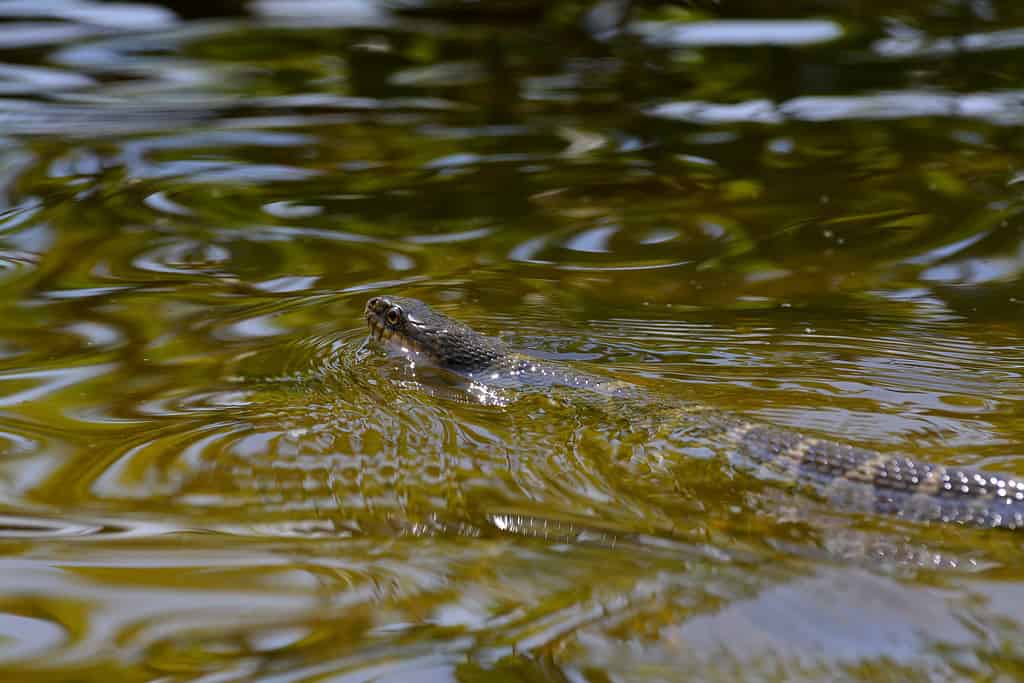
The banded water snake swims in a lake.
©Lincoln Griffith/iStock via Getty Images
How Do They Eat Large Prey?
Snakes are famous for being able to swallow prey much larger than themselves, with some pythons being able to swallow deer. This is due to the jaw of the snake being extremely different from ours, allowing them to consume things unfathomable to human standards. Unlike humans, whose lower jaw is fused, a snake’s lower jaw is connected by a stretchy ligament, allowing it to open its mouth extremely wide. The snake uses its backward-facing teeth to grip the prey and gradually push it into its throat. By slowly inching the prey down, the snake is able to consume it whole without needing to break it apart or chew it. Afterward, the snake’s stomach acid breaks down the prey, and the snake will repeat the hunting cycle when it is ready to eat again. Digestion takes anywhere from days to weeks, depending on the species and climate. At this time, the snake will likely stay hidden and rest.