
Quick Take
- Organized reindeer racing began in Finnish Lapland in the 1950s.
- In modern races, a skier acts as the jockey, holding a harness while the reindeer pulls them across a snow track.
- Elite racing reindeer can run up to around 37 miles per hour during short sprints.
- Today, reindeer racing occurs across the Arctic, including in Finland, Norway, and Russia, and remains closely tied to Sámi and other northern herding cultures.
In Salla, Finland, the freezing air doesn’t stop the excitement. Nearly 1,000 fans gather deep in the Arctic wilderness, shouting encouragement as the smell of hot reindeer soup drifts through the crowd. Moments later, a reindeer explodes down the snow-packed track, pulling a skier behind it at astonishing speed.
Reindeer racing may sound like something out of a fairytale, but across the Arctic it’s a real and highly organized sport. What began in the 1950s as a practical part of forest work has evolved into an international competition that attracts spectators from across northern Europe. Today, the races are not only a spectacle — they are also a cultural tradition closely tied to the heritage of the Indigenous Sámi people.
From Practical Survival to Organized Sport
Reindeer racing traces its roots to Finnish Lapland, particularly communities like Salla, where organized events have been held since the mid-20th century. Before snowmobiles became common, reindeer were the primary way to travel across frozen landscapes. In Norway, this was referred to as snörekjöring or skijoring, meaning “rope driving” or “ski driving.”
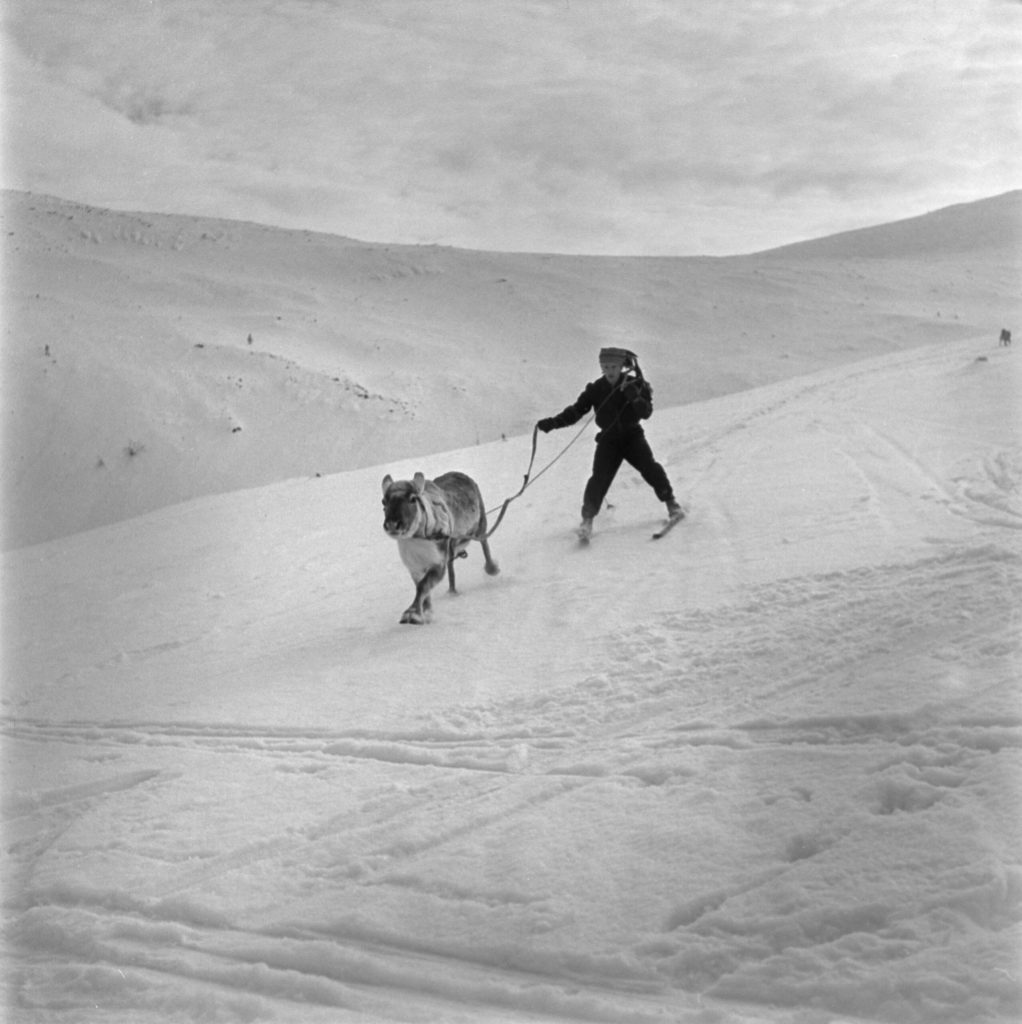
People in Scandinavia have utilized skijoring for hundreds of years.
©U. A. Saarinen / CC BY 4.0 / Wikimedia Commons – Original / License
By the end of winter, herders noticed their animals were in peak physical condition. Informal speed tests soon became a regular form of competition, eventually growing into structured racing events. Today, the sport operates through a formal circuit. Since 2016, the Reindeer Competition Committee has organized the Reindeer Cup, a seasonal series that runs from mid-February through early April. The circuit travels through Arctic towns such as Rovaniemi and Kuusamo before culminating in the prestigious King of Reindeer championship in Inari — a competition with roots dating back to 1959. Over time, what began as a practical necessity transformed into a professional sport that still reflects northern identity and culture.
What Makes a Champion Reindeer?
Not every reindeer is suited for the track. Trainers say the most important quality is what they call the “will to run.” Unlike many racing animals, reindeer cannot be forced to compete; if they do not have the instinct to sprint, they simply refuse to run.
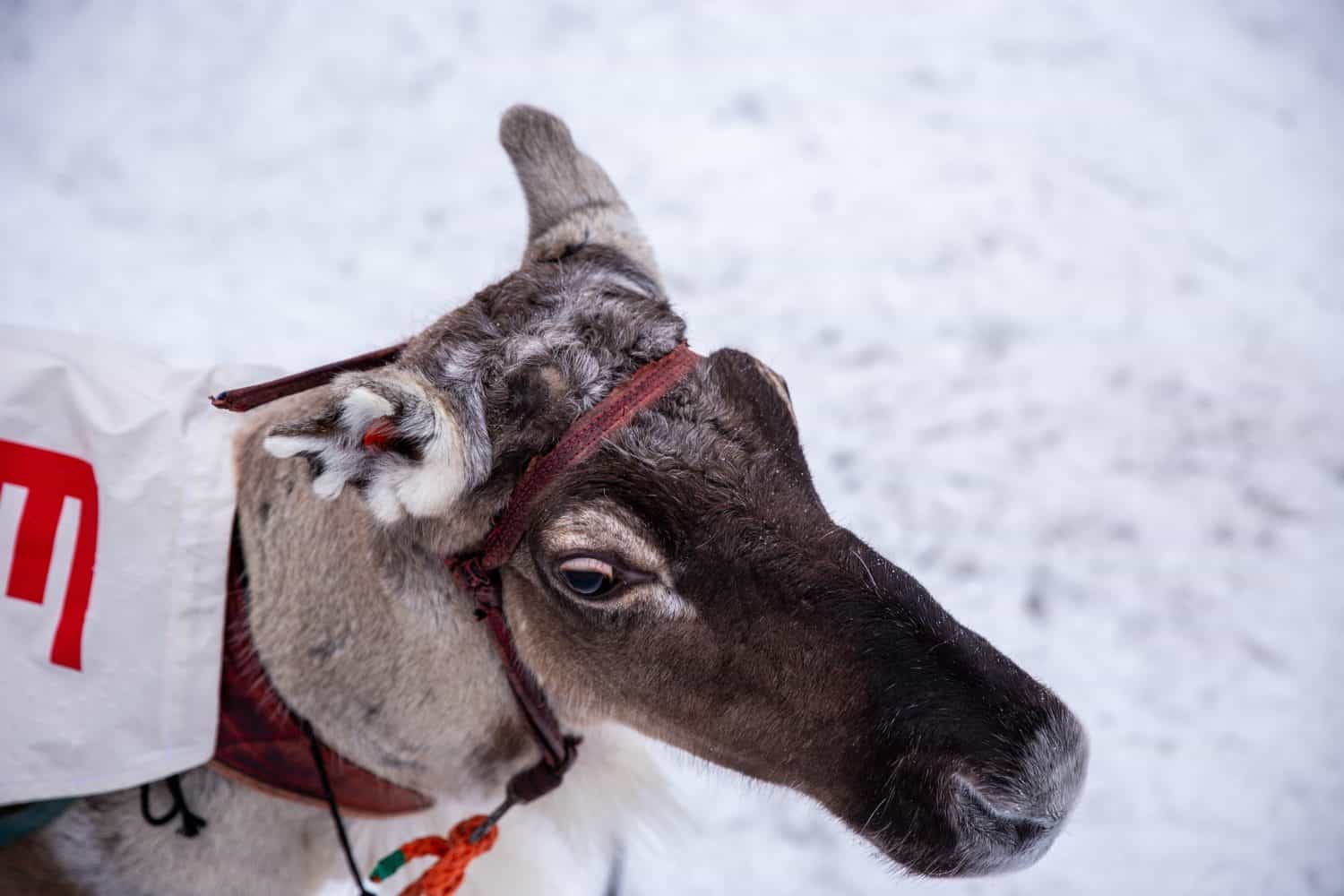
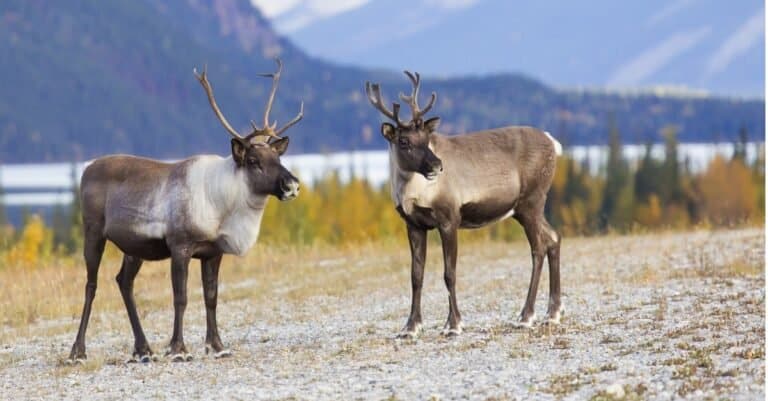
Sometimes the best racers are the least obvious.
©dennisjansen93/Shutterstock.com
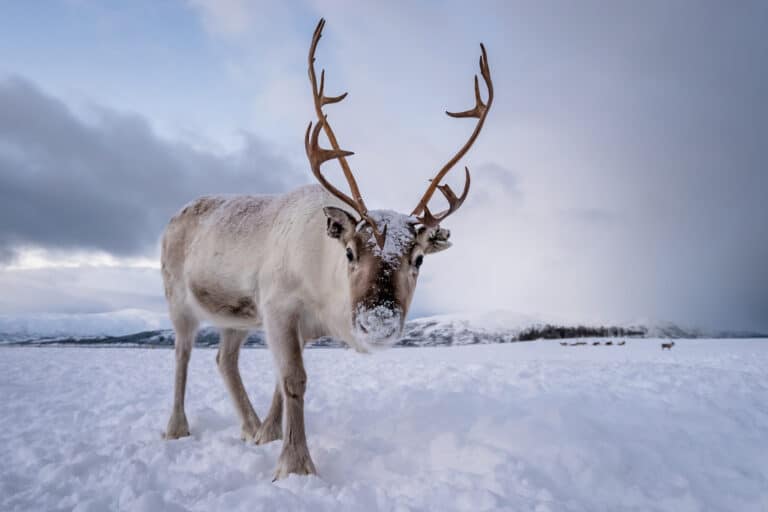
The ideal racing reindeer is physically built for speed and endurance in the harsh Arctic terrain. Their large hooves provide traction on the snow, and their strong, stocky bodies can pull a skier behind them at high speeds. Champions need a large nose with wide nostrils, as well as strong lungs, so they can take in massive amounts of oxygen during intense sprints.
How Fast Can a Reindeer Run?
At full gallop, racing reindeer can reach speeds of about 37 miles per hour. That speed allows them to cover 200 meters in roughly 16 seconds, faster than even elite human sprinters could manage on snow. Because of this speed, safety rules are strict. After crossing the finish line, jockeys immediately release the reins, allowing the reindeer to continue running freely and safely return to a designated herd area.
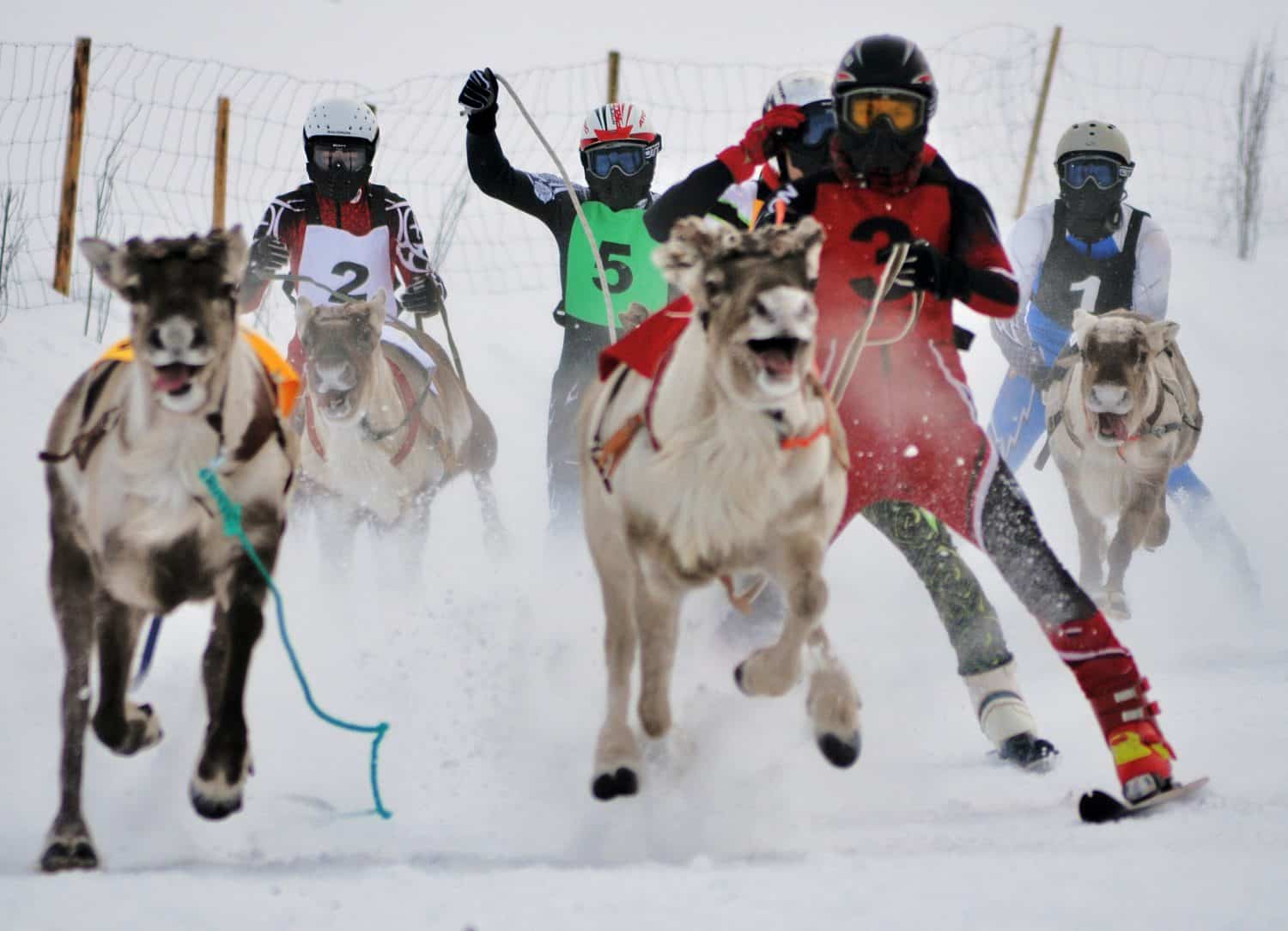
Reindeer races are typically short but intense. During each heat, a reindeer pulls a skier—who acts as the jockey—across a snow-covered track. The skier holds onto a harness and maintains balance as the reindeer pulls them at high speed.
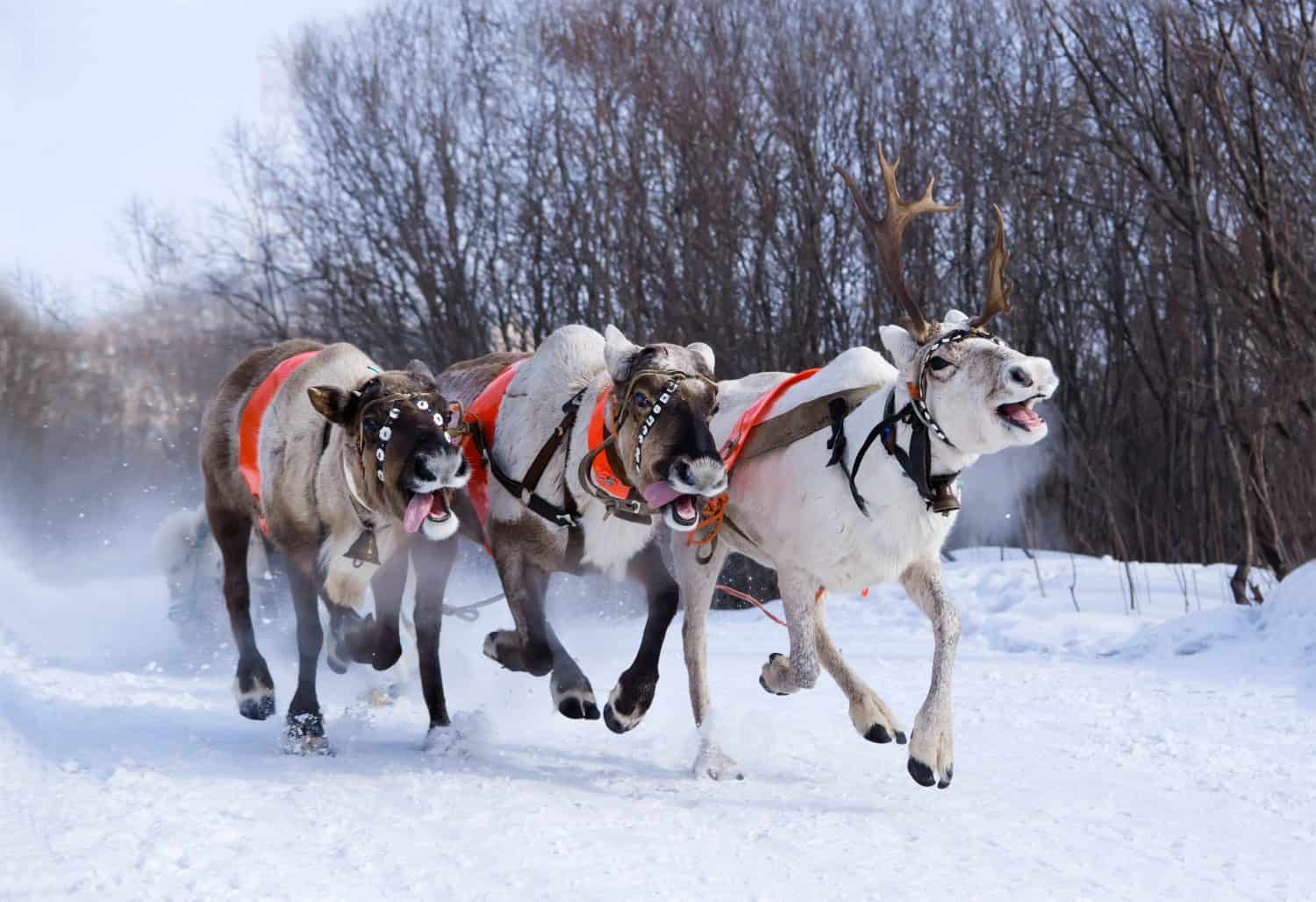
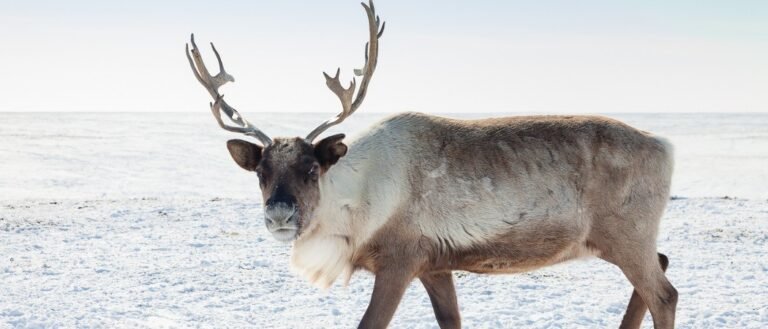
Many reindeer can run faster than Olympic sprinters.
©Chaykovsky Igor/Shutterstock.com
Most races cover one kilometer (0.62 miles), and the fastest time wins. Newer racing reindeer compete in the General Series, whereas the Hot Series is reserved for the top competitors. To qualify for the Hot Series, a reindeer must complete the one-kilometer track in 1 minute and 19 seconds or less. The fastest competitors from these divisions eventually advance to the King of Reindeer championship, which is the sport’s most prestigious title.
Reindeer Jockeys
Reindeer are powerful racers, but their jockeys are also elite athletes in their own right. During the race, jockeys balance on skis while holding a deep squat position to stay aerodynamic. Maintaining that posture while traveling at highway speeds requires tremendous leg strength and balance. Most competitors train regularly through cross-country skiing and practice runs with their reindeer several times per week.
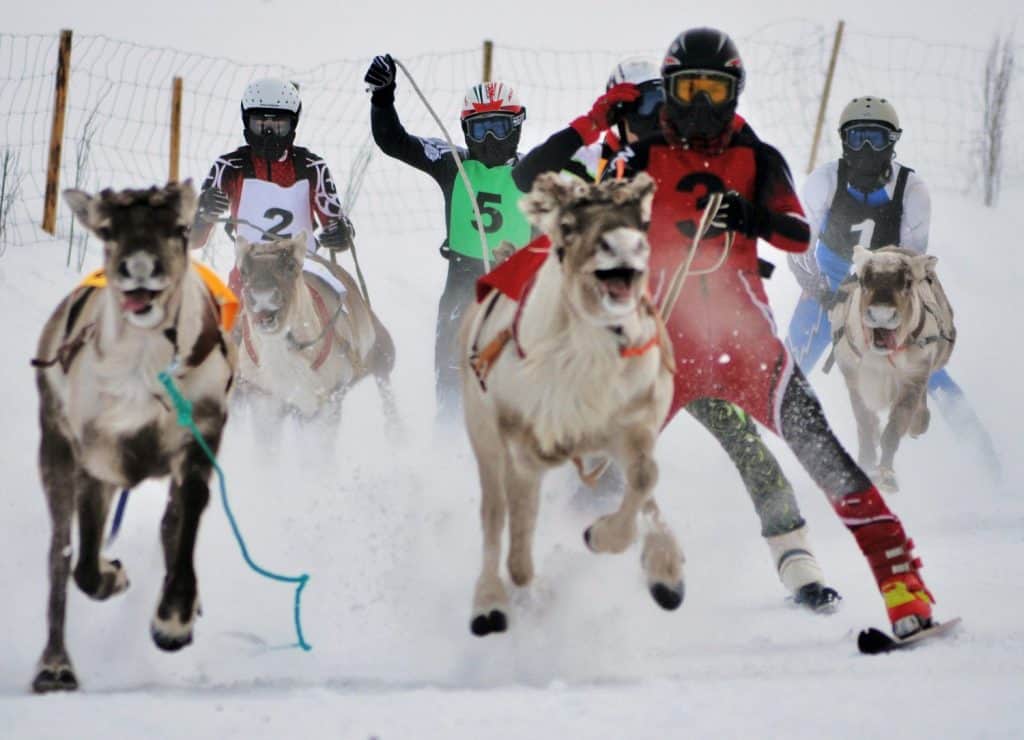
Both men and women compete in the same category, making reindeer racing one of the few winter sports with fully integrated competition.
©Dr. Gilad Fiskus/Shutterstock.com
There are also strict regulations on reindeer racing jockeys. Jockeys must weigh at least 132 pounds; lighter competitors wear weighted jackets to meet this requirement. They also wear specialized racing suits and protective helmets.
The Global Racing Circuit
Reindeer racing occurs across much of the Arctic, though Finland hosts some of the most structured competitions. Finland’s Reindeer Cup is the most organized racing circuit, with multiple events held throughout Lapland each winter. The season ends with the King of Reindeer championship in Inari.
In Norway, reindeer racing is closely associated with Sámi Culture Week. Major races take place in towns like Tromsø and Kautokeino, sometimes even on closed city streets. These events often include traditional cultural activities such as lasso throwing, yoik singing, and communal gatherings inside tent-like shelters called lavvos.
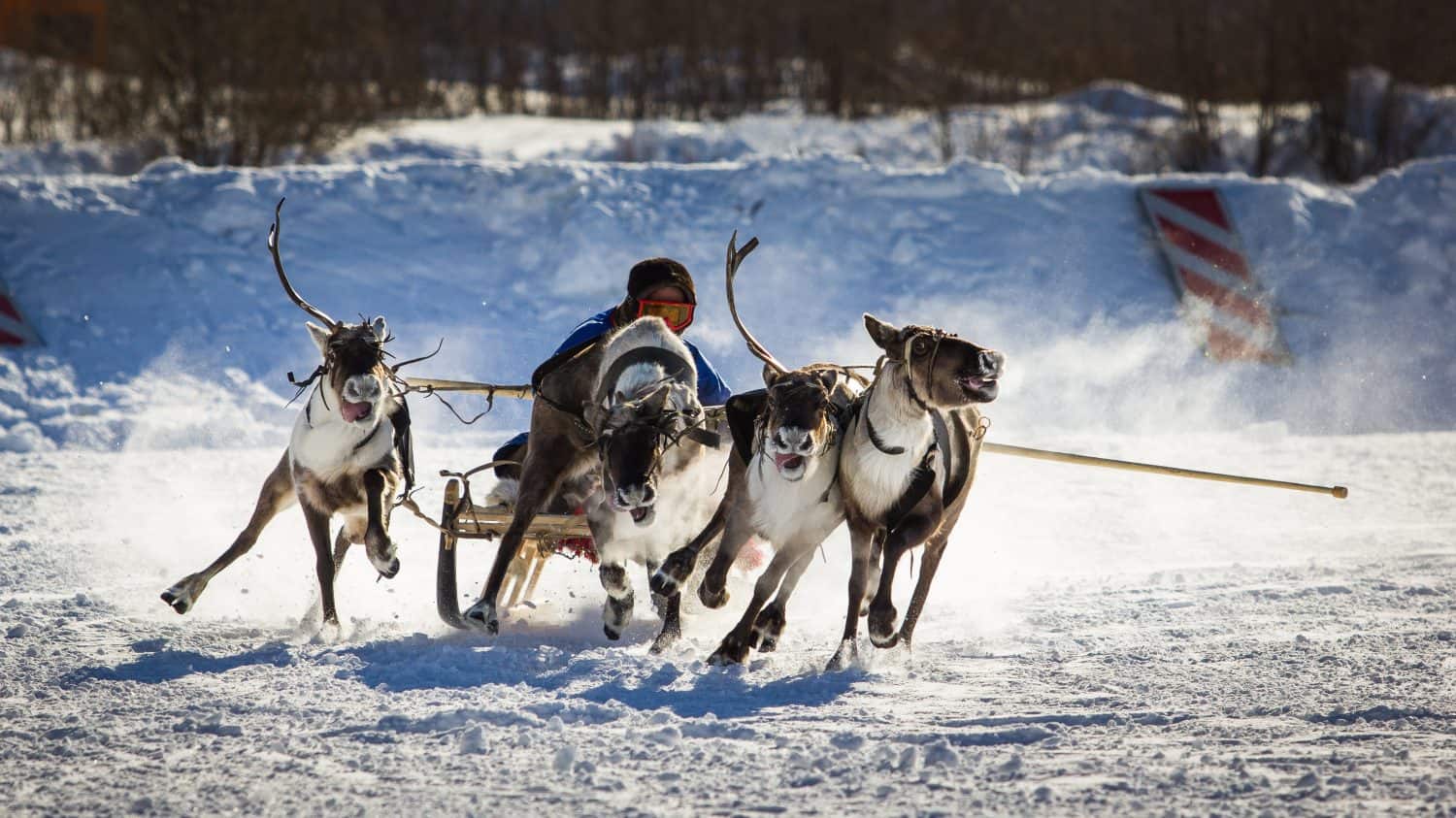
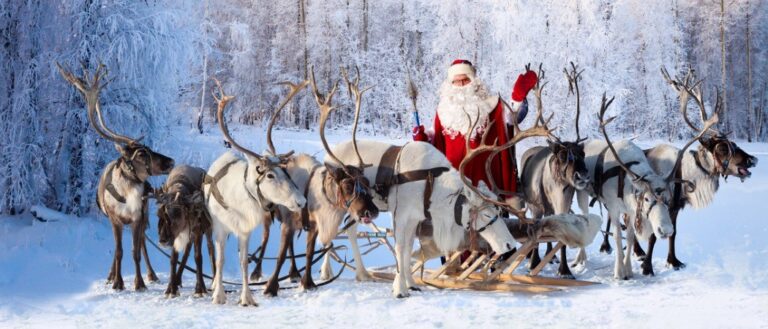
In some countries, racers use sleds instead of skis.
©Serge Reshar/Shutterstock.com
In northern Siberia, the Nenets people hold large races during Reindeer Herder’s Day in Nadym. Participants may travel hundreds of miles across the tundra to compete. Unlike the Scandinavian version, these races sometimes involve sleds instead of skis and are part of larger festivals featuring wrestling, jumping competitions, and other traditional skills.
The Human-Animal Relationship
At its core, reindeer racing reflects a deeper relationship between people and animals in Arctic cultures. In the traditional Arctic economy, reindeer are primarily valued as a practical resource—for their leather, meat, and use in transport. However, reindeer racing completely changes this relationship, transforming reindeer from simply livestock to respected companions and elite athletes.
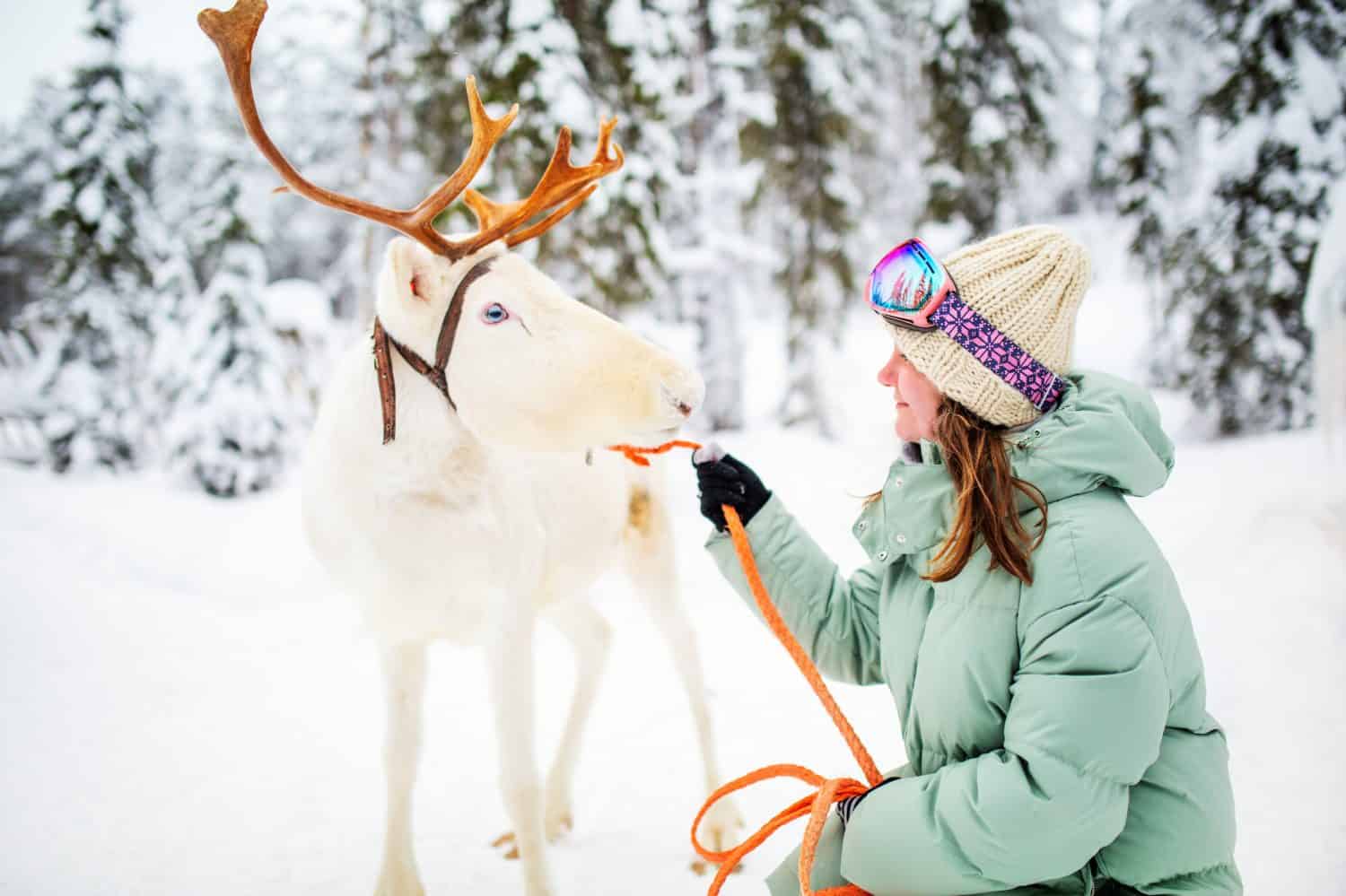
A reindeer and its handler must trust each other in order to safely and successfully compete.
©TravelPhotoBloggers/Shutterstock.com
The relationship between a racing reindeer and its handler involves a deep emotional bond and mutual understanding. Handlers emphasize a gentle training approach built on trust and familiarity, remaining sensitive to the reindeer’s mental and physical state.
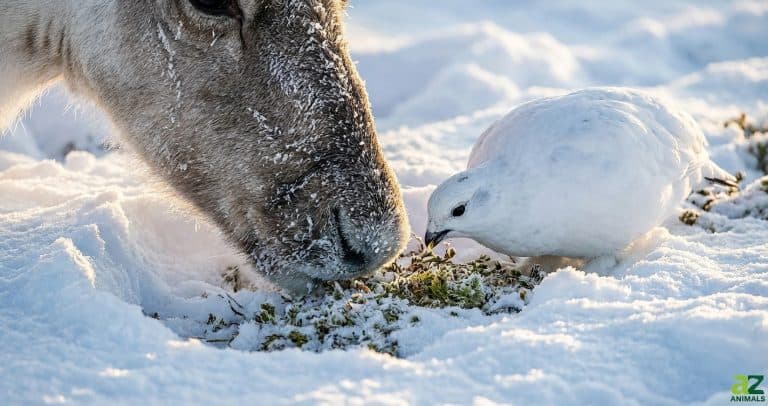
After the race is over, animals are quickly released from their harnesses so they can return to the herd and relax. To celebrate their hard work, many receive a favorite treat: lichen, a natural food they normally forage from trees and rocks.
A Tradition That Keeps Arctic Culture Alive
Reindeer racing is far more than a winter spectacle; it serves as a complex cultural ritual that reinforces Northern identity. For many northern communities, the events help preserve traditional knowledge of animal care, herding, and survival skills that have shaped Arctic life for centuries. Specific skills for training and racing are rarely found in manuals; instead, they are passed down through oral tradition and hands-on apprenticeships from one generation to the next.
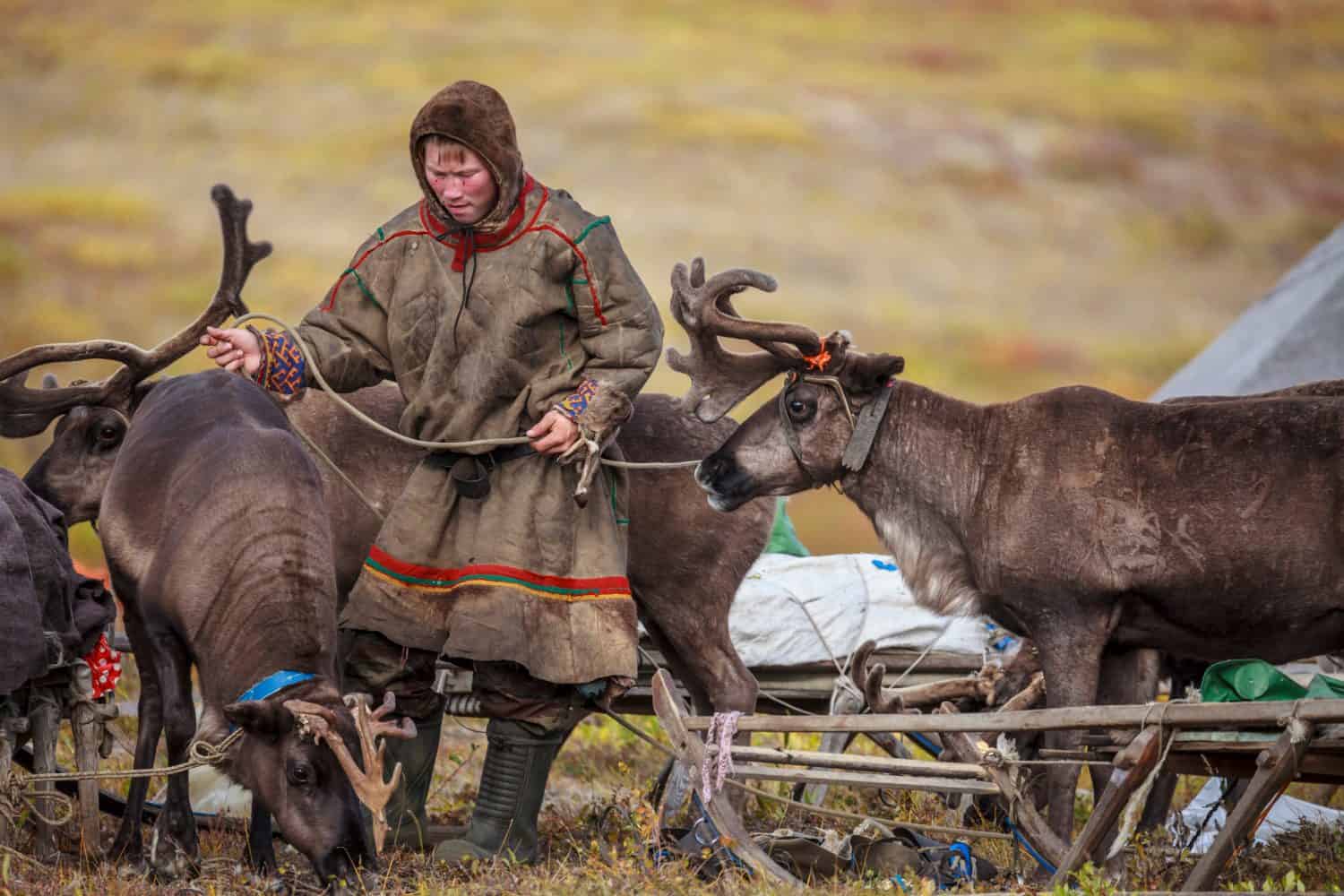
The Sámi have used reindeer as draught animals for centuries.
©evgenii mitroshin/Shutterstock.com
The sport allows reindeer owners living in modern cities to stay connected to their roots, adapting traditional village rituals to a contemporary lifestyle. These events also bring together families, younger generations, and visitors from around the world. Cultural performances, traditional foods, and storytelling are as much a part of the gatherings as the races themselves.
As tourism grows and the sport gains international attention, reindeer racing continues to evolve. Yet at its heart, the tradition remains the same: a celebration of the animals, skills, and culture that have sustained Arctic peoples for generations.