
Quick Take
- In 1975, Idaho codified the Appaloosa as the official state horse, tying a public symbol to Nez Perce endurance and adaptation.
- That designation fuels education, research, and conservation around the Appaloosa, turning a symbol into tangible stewardship of land and heritage.
- The Appaloosa embodies sure-footedness, endurance, and adaptability bred from generations of work.
- Read on to discover how the 1,200-mile trek and the Nez Perce War shaped the breed’s place in Idaho’s story.
Every U.S. state adopts official symbols meant to reflect shared history, values, and identity. Some are chosen for convenience, while others emerge from long public conversations about heritage and meaning. Idaho’s state horse, the Appaloosa, belongs firmly in the second category. The decision to honor this spotted horse was not based on appearance alone. It reflected centuries of human experience with the animal, from Indigenous breeding traditions to ranch life and modern preservation efforts.
Idaho formally adopted the Appaloosa as its state horse in 1975. By that point, the breed had become closely associated with the state through agriculture, sport, and the international reach of the Appaloosa Horse Club. Yet the Appaloosa’s story reaches far beyond legislation. Its roots stretch back to Nez Perce horse culture, westward expansion, forced displacement, and a long fight for survival. The horse Idaho chose as a symbol reflects endurance, adaptation, and a past that still shapes daily life across the region.
From Nez Perce Herds to a Regional Identity
Long before Idaho existed as a state, the Nez Perce people had developed one of the most advanced horse cultures in North America. After acquiring horses in the early eighteenth century, Nez Perce families practiced selective breeding with clear priorities. They favored speed, stamina, intelligence, and calm temperaments, traits that supported long-distance travel, hunting, and trade.
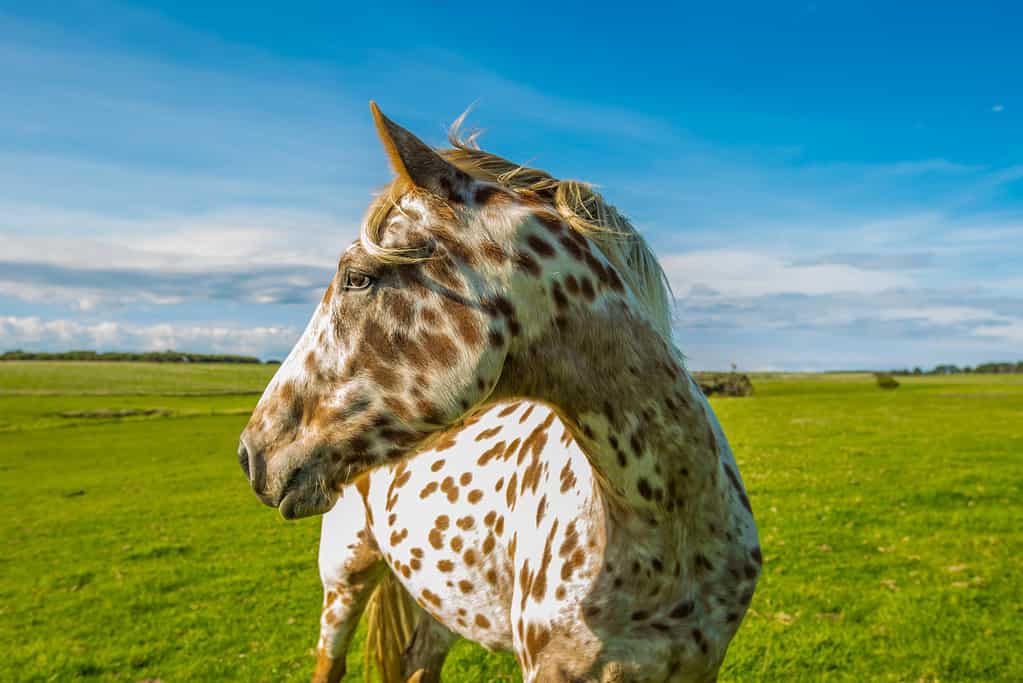
Bred by the Nez Perce long before Idaho was a state, the Appaloosa carries generations of history in every spot.
©Anara55/iStock via Getty Images
From Nez Perce Horse Culture to a Distinct Breed
The Nez Perce were unusual among Indigenous nations for how deliberately they bred horses. While many tribes used horses primarily for transport, trade, or warfare, the Nez Perce practiced systematic selective breeding. They chose animals based on endurance, intelligence, calm temperament, and physical soundness, culling weaker stock and carefully managing their herds.
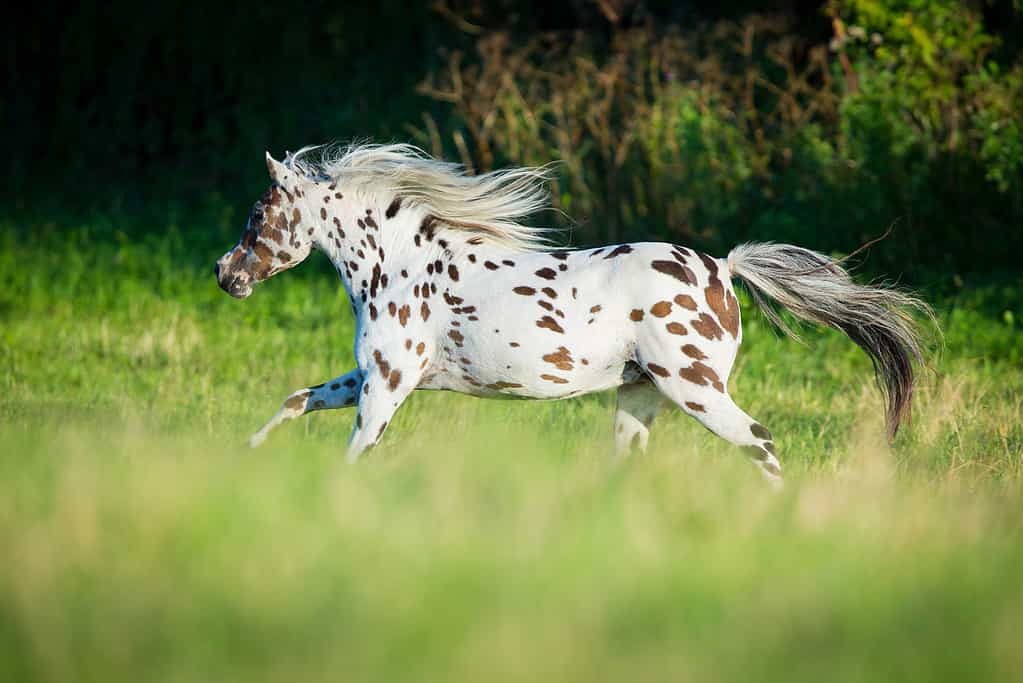
Bred for endurance and reliability, Nez Perce horses were shaped by performance long before their spotted coats drew attention.
©Alexia_Khrushcheva/iStock via Getty Images
This approach resembled modern animal husbandry more than casual ownership. Nez Perce horses were expected to travel long distances, navigate mountains, and remain steady in demanding conditions. These expectations shaped the animals over generations, producing horses known for reliability and stamina rather than sheer size or aggression.
Spotted coats, which later became iconic, were a visible byproduct of this breeding tradition rather than its main goal. What truly distinguished the horses was performance. By the mid-eighteenth century, Nez Perce horses were widely respected across the Plains for their quality and consistency.

How Horses Reached the Nez Perce
Horses were not native to North America when Europeans arrived. They descended from animals brought by Spanish expeditions in the sixteenth century. Over time, escaped and traded horses moved northward through indigenous trade networks, eventually reaching the Columbia Plateau.
The Nez Perce quickly recognized the value of horses and integrated them deeply into daily life. What set them apart was how thoroughly they adapted Old World animals to New World landscapes. Their horses thrived on sparse forage, endured long travel days, and handled extreme terrain with confidence.
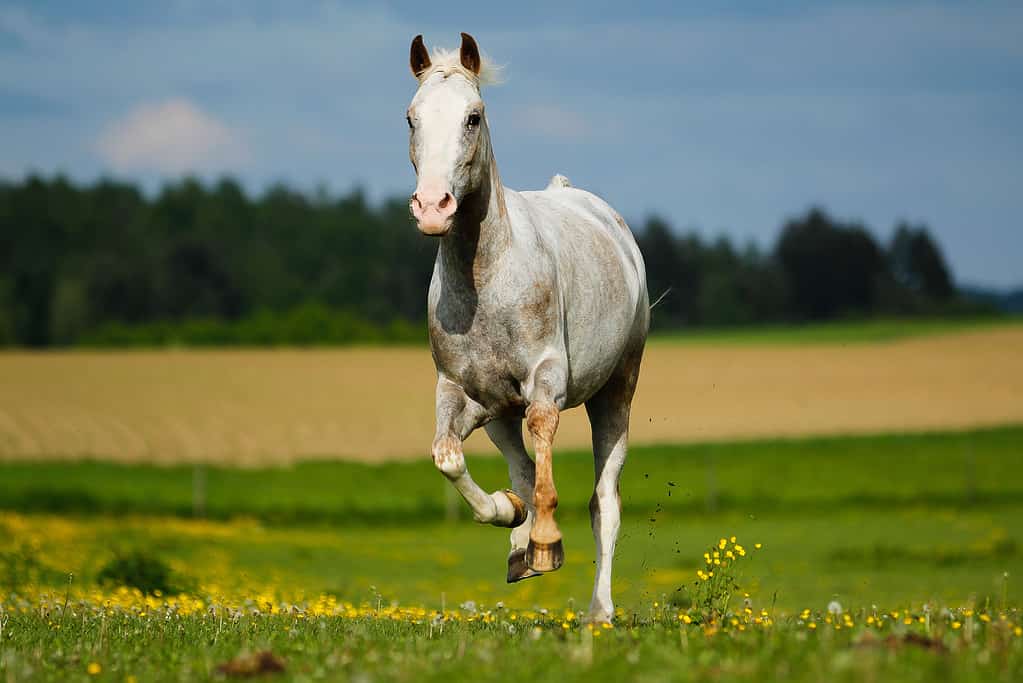
Descended from Spanish horses, Nez Perce herds were transformed into animals built for New World landscapes.
©artofMomentS/iStock via Getty Images
Rather than merely adopting horses, the Nez Perce transformed them. Over generations, their herds developed a consistency that distinguished them from other colonial or tribal horses. These animals reshaped Nez Perce mobility, trade, hunting, and warfare, becoming central to cultural identity.
War, Displacement, and Near Loss
The Nez Perce War of 1877 revealed the full capability of these horses. As Nez Perce families fled forced relocation, their mounts carried them more than a thousand miles across mountains and plains. Military observers repeatedly noted the horses’ speed and endurance, often with reluctant admiration.
After the war, the consequences were devastating. U.S. forces confiscated, sold, or destroyed many Nez Perce horses to prevent further resistance. Carefully managed breeding programs collapsed, and bloodlines refined over generations were scattered or lost.
In the decades that followed, Appaloosa-type horses survived mainly as working ranch animals. They remained useful and durable, but without organized preservation, the breed risked fading into the general horse population and losing its distinct identity.
What Makes an Appaloosa Different
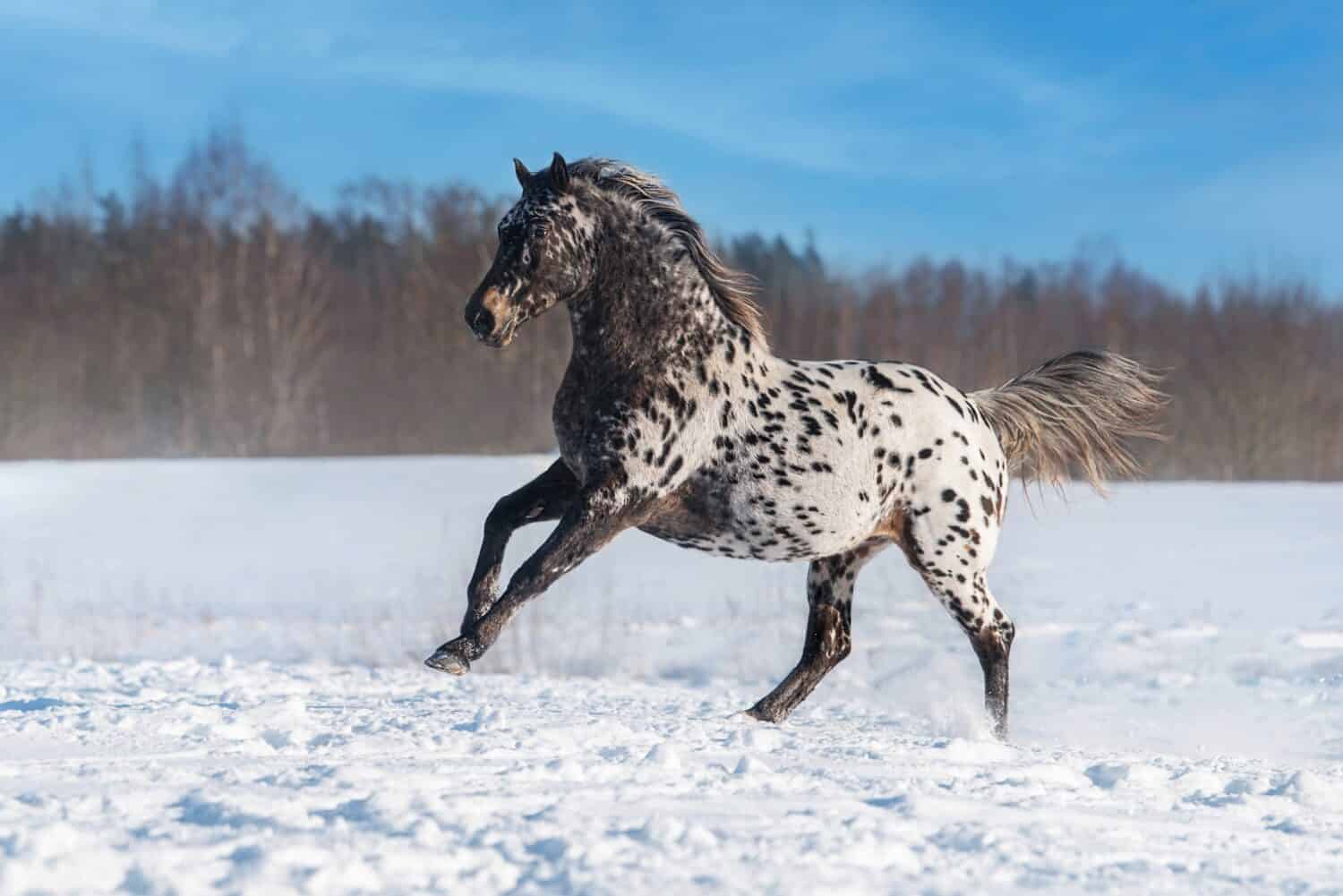
Modern Appaloosas still reflect the traits that mattered most to the Nez Perce. They are known for endurance rather than explosive speed, intelligence rather than nervous energy, and strong hooves well suited to rocky terrain. Many display mottled skin, striped hooves, and visible white sclera around the eyes, features uncommon in most breeds.
Their coat patterns vary widely, from blanket markings to full leopard spotting. While visually striking, these markings are secondary to the breed’s versatility. Appaloosas tend to perform well across many disciplines, including trail riding, ranch work, endurance riding, and competitive events.
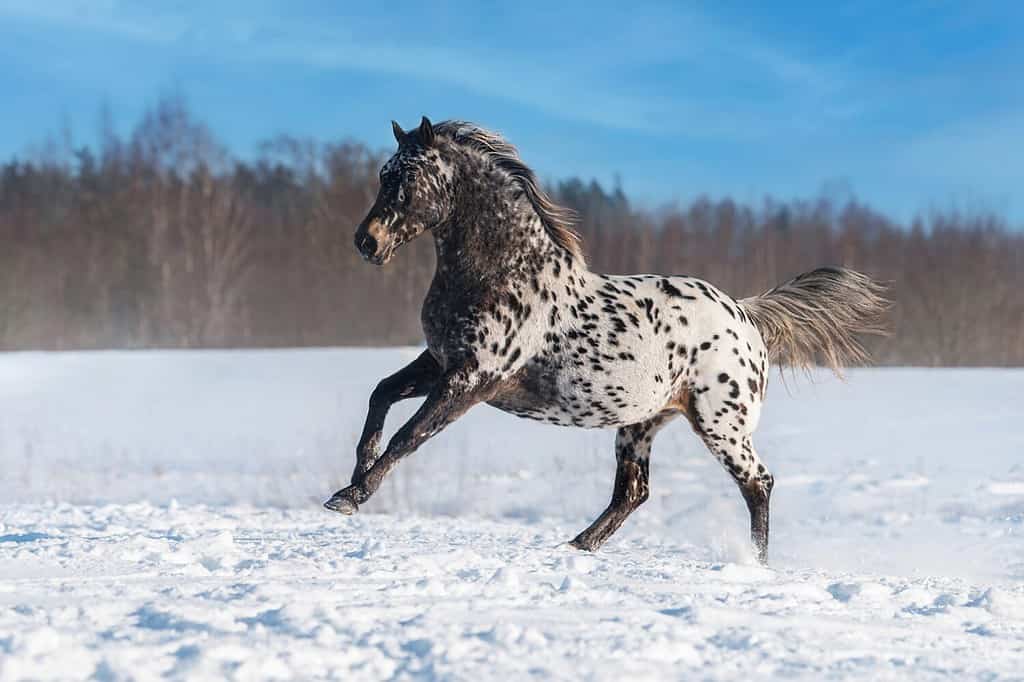
From rocky ground to winter terrain, modern Appaloosas reflect generations of breeding for adaptability.
©Rita_Kochmarjova/Shutterstock.com
Are Appaloosas Rare or in Demand Today?
Appaloosas are not rare, but they remain distinct. They are found across the United States and internationally, valued by riders who prioritize reliability and adaptability. While they may not dominate elite racing or specialized show circuits, they are widely sought for working roles and all-around riding.
Demand for Appaloosas has remained steady rather than trendy. Owners often choose them for practical reasons rather than fashion. That steady appeal reflects the same values that shaped the breed historically: usefulness, durability, and trustworthiness.
Why States Choose Official Animals
States adopt official animals to express shared history and identity rather than simple decoration. These symbols usually reflect species closely tied to local land, labor, or memory. Once adopted, they appear in classrooms, museums, and public materials, helping residents connect daily life to deeper historical stories.
Because they are widely visible, state animals become shorthand for values a community wants to preserve. They invite education, discussion, and a sense of continuity between past and present.
How State Recognition Shaped the Appaloosa’s Future
For the Appaloosa, official recognition reinforced its identity as more than a regional horse. Idaho’s designation elevated public awareness of the breed’s Nez Perce origins and historical significance. While state status did not provide legal protection, it strengthened support for preservation, education, and responsible breeding.
The designation also helped anchor the Appaloosa’s story within Idaho’s broader narrative. As the state horse, it gained cultural weight that encouraged institutions, educators, and historians to present the breed as a living link between Indigenous knowledge and modern stewardship.
Idaho’s Path to Official Recognition
By the mid-twentieth century, the Appaloosa had regained national visibility through organized preservation efforts and growing public interest. Its strong association with Idaho ranching culture and historical ties made it a natural candidate for state recognition.
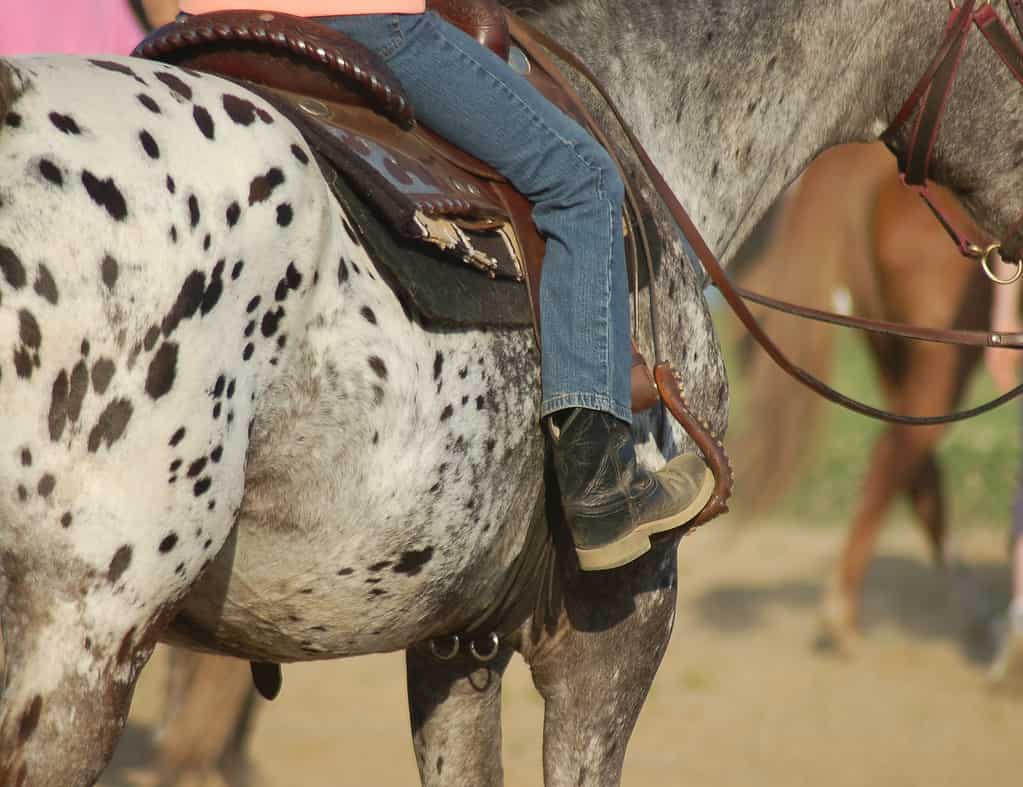
Idaho’s state horse was chosen for its deep connection to land, labor, and history.
©© MelissaAnneGalleries/iStock via Getty Images
In 1975, Idaho lawmakers formally designated the Appaloosa as the official state horse, a decision signed into law by Governor Cecil Andrus. Support came from historians, breed advocates, and residents who believed the Appaloosa reflected Idaho’s landscape and heritage. At the time, few states had adopted official horses, placing Idaho among the earliest to do so. The decision signaled confidence that the Appaloosa could represent the state without reducing its meaning to ornament.
The Appaloosa in Modern Idaho Life
Today, Appaloosas remain common across Idaho. Ranchers rely on them for cattle work, trail riding, and packing in remote areas. Their calm disposition and physical strength make them dependable partners in demanding environments.
The breed also appears widely in competition, including barrel racing, working cow horse events, dressage, and jumping. This versatility keeps Idaho’s state horse visible well beyond the region. Youth programs and riding schools continue to introduce new generations to the breed. These early experiences reinforce the Appaloosa’s reputation as a working partner rather than a novelty.
Nez Perce Perspectives and Living Memory
For the Nez Perce people, the Appaloosa remains part of living culture. Tribal programs emphasize horsemanship as a connection between language, history, and community. In recent decades, renewed efforts have focused on rebuilding breeding programs that reflect traditional values.
Educational initiatives highlight how selective breeding practices praised today originated in Indigenous knowledge systems long before formal registries existed. As Idaho promotes the Appaloosa, more institutions now place the horse within its full historical context.
A Symbol That Still Carries Meaning
Nearly five decades after its designation, the Appaloosa remains a fitting symbol for Idaho. The breed reflects resilience, adaptability, and a deep connection to land and labor. It continues to serve practical roles while carrying historical weight. When understood fully, the Appaloosa is not just a spotted horse or a legislative title. It is evidence of one of the most advanced horse cultures in North America and a reminder that people, animals, and place shape one another over time.