
Quick Take
- What appears to be playful “flirting” is actually a seal using its advanced anatomy and intelligence to interact with its environment.
- Nostril flares and forceful snorts allow seals to clear debris and communicate.
- Tongue “bleps” help seals sense their environment.
- Barking sounds are controlled vocalizations seals use for communication, curiosity, and social interaction.
It’s easy to assume the seal in this video is flirting or goofing off as it flares its nostrils, sticks out its tongue, and makes those unique barking noises. The animal’s expressions feel playful and even human-like.
However, what looks like playful or sassy behavior in a seal is actually a fascinating combination of specialized anatomy and sophisticated communication skills. Seals are highly intelligent mammals with large, complex brains and a strong drive to explore and interact with their environment. What may seem like a dramatic performance for attention is often just an intelligent animal responding to its surroundings.
Watertight Nostrils and Breath Control
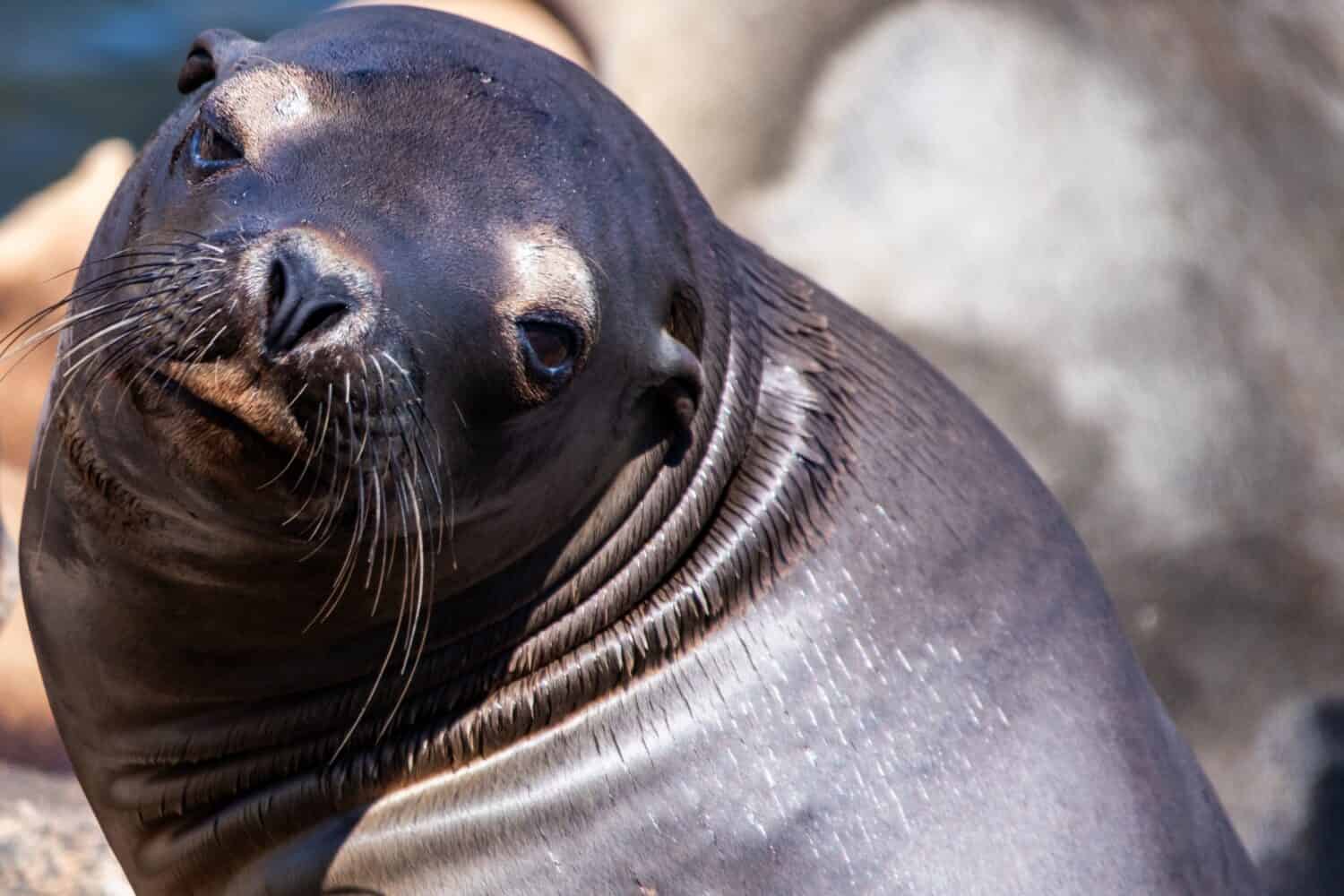
That exaggerated nostril flare and sudden burst of air aren’t just for show — they’re part of a functional and impressive physiological design. Unlike humans, seals are voluntary breathers, which means they must consciously choose to open their nostrils whenever they need to take a breath. Their nostrils automatically remain pinched shut, even when relaxed, to keep water out of their lungs.

Opening the nostrils is not an automatic reflex for a seal — it has to consciously choose to do so.
©iStock.com/belizar73
While on land, seals often blow air forcefully out of their nostrils to clear out mucus, saltwater, or debris, producing a sharp, explosive sound. Sharp snorts or hisses also serve as social signals, helping seals set boundaries with others and investigate their environment.
Before diving, seals forcefully exhale to reduce buoyancy and manage their oxygen more efficiently. Once underwater, their survival depends on an unusual internal monitoring system. While most mammals are driven to breathe by the buildup of carbon dioxide in the body, seals have evolved to ignore this signal. Instead, they rely on an internal oxygen gauge that monitors the massive stores of oxygen in their blood and muscles.
Sticking the Tongue Out
Sticking the tongue out — an action known as a “blep” — is another functional seal behavior rooted in physiology. Similar to cats and dogs, seals often stick out their tongues to sample scents or moisture in the air or to help dissipate a small amount of heat while on land.
Seals also have a specialized mechanism that acts like a “plug,” allowing the tongue to move back and cover the throat, which blocks their airway. This helps to keep water out of their airway and prevent drowning while underwater. On land, they can relax this mechanism, which sometimes causes their tongue to slip out while they rest.
In some cases — especially around humans — seals may learn that making these “goofy” faces earns them positive attention or food from trainers, turning a natural reflex into a playful interaction.

Even at rest, a seal’s nostrils remain sealed to keep water out.
©the_guitar_mann/ via Getty Images
Understanding Seal Vocalizations
One of a seal’s most interesting traits is the distinct “wawa” barking noises they make. Seals and sea lions have a recently discovered direct neural connection between the vocal motor cortex and the brainstem, allowing for voluntary control of vocalizations.
In most mammals, vocalization is controlled by the midbrain and remains involuntary and inflexible. However, the seals’ unusual neurology allows them to bypass this, so they can consciously regulate the muscles used for sound, allowing them to modify calls, learn new sounds, and even mimic human speech.
Depending on the context, these calls can signal curiosity or engagement, social interaction, territorial awareness, or anticipation (especially around feeding time). In other words, seals aren’t making noise just for fun — they are actively communicating.
So… Is the Seal Flirting?
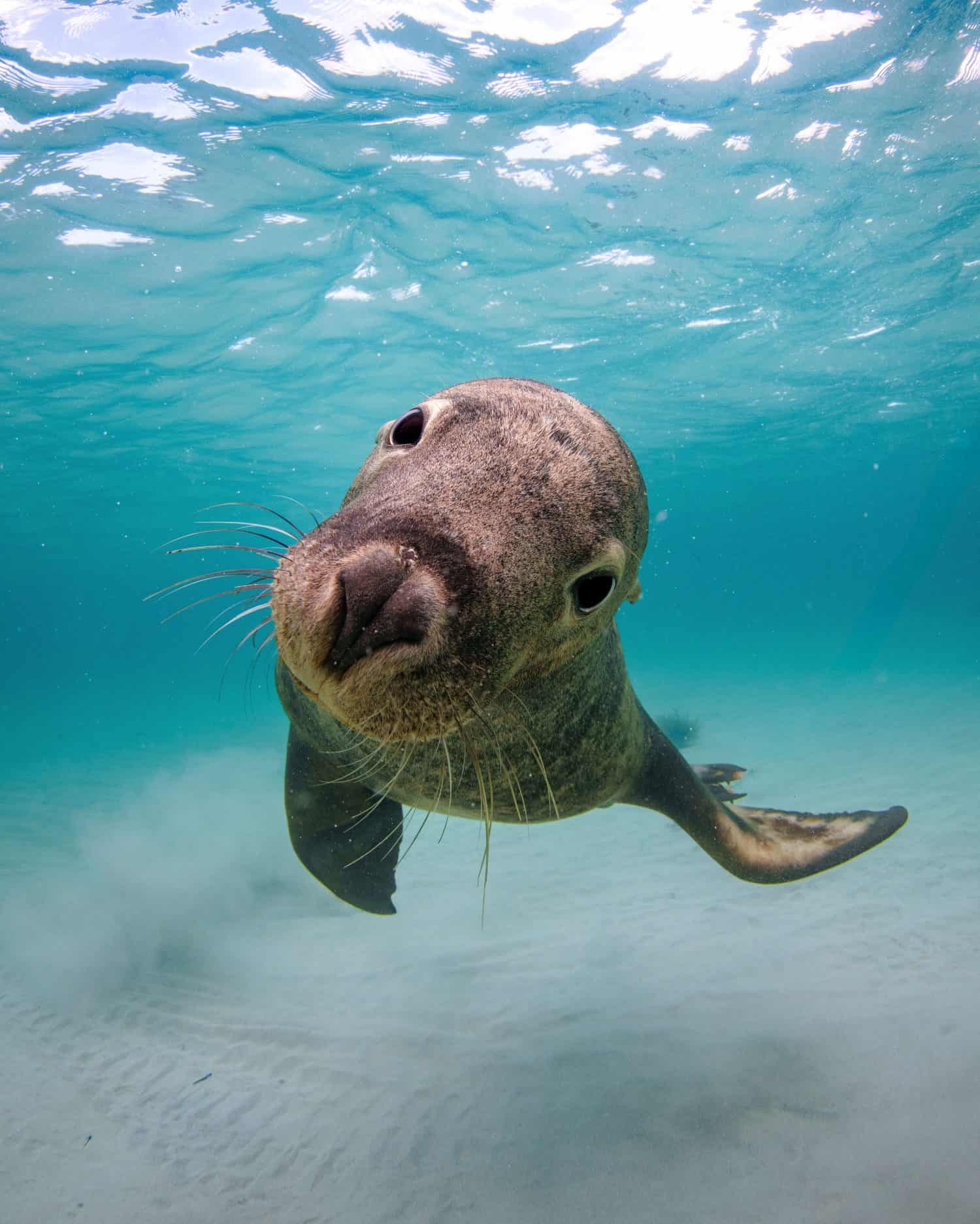
Seals rely on oxygen stored in their muscles and blood when they are underwater.
©Wirestock Creators/Shutterstock.com
When you put all these behaviors together, it is easy to see why we might think the seal in this video is flirting — though the reality is much more interesting. The seal in the video is likely clearing its nose to reset its breathing, staying vocal to engage with those around it, and perhaps even hoping for a snack.
Seals are highly intelligent and active, using their specialized anatomy to navigate and interact with their environment. When a seal appears to be “flirting,” it’s not putting on a show — it’s using its specialized anatomy to communicate, regulate its body, and interact with its environment.