
Quick Take
- Humans can distinguish at least one trillion odors, but we don’t necessarily make full use of that capability.
- For wild animals, where smell is associated with survival, scents may provide life or death information.
- Mammals, especially canids, are master smellers, with larger brain areas devoted to olfaction than other animals.
- For aquatic animals, the same olfaction principles apply, with variability in the quantity of smell receptors among species.
As mammals with large brains, humans experience smell as a powerful sensory experience that’s closely linked with memory. The smell of baking bread may take us back to a moment in Paris. A perfumy scent might bring back memories of a loved one. The smell of baking bread may remind us of a specific moment, such as a visit to Paris. A perfumelike scent might evoke memories of a loved one, while the aroma of popcorn could prompt us to watch a movie. The olfactory receptors in our noses generate impulses that are sent to the limbic part of our brain, which regulates mood, emotion, and memory.
A 2014 study published in Science found that humans can distinguish at least one trillion odors, which is orders of magnitude more than the 10,000 that had been previously estimated. This means our sense of smell is highly capable, able to distinguish more stimuli than our other senses. However, in modern life, we do not fully utilize this ability.
“We have more sensitivity in our sense of smell than for which we give ourselves credit. We just don’t pay attention to it and don’t use it in everyday life,” said study author Andreas Keller in a news release.

Early humans were probably more attuned to their sense of smell.
©Image by <a href="https://pixabay.com/users/camera-man-16096197/?utm_source=link-attribution&utm_medium=referral&utm_campaign=image&utm_content=6162446">Sergio Cerrato – Italia</a> from <a href="https://pixabay.com/?utm_source=link-attribution&utm_medium=referral&utm_campaign=image&utm_content=6162446">Pixabay</a> – Original
Our ancestors likely relied on their sense of smell for tasks that today are minimized, such as evaluating foods found in the wild. As we evolved to walk upright, our noses became farther from the ground, making it harder to detect the scents of animals or flowering grasses. We likely adapted to rely more on vision and hearing, and less on our sense of smell.
As our environments have become less smelly due to increased sanitation and separation from the outdoors, the usefulness of our olfactory system has further diminished. While it’s pleasant to smell fresh-brewed coffee, this sensory experience is not essential for survival.
For animals in the wild, however, smell is frequently linked to survival. Whether for evading an approaching predator or detecting the poisons in a plant, animals encounter situations where a keen sense of smell is life-changing.
Many wild animals have receptors for pheromones, special chemical messengers that serve roles in social communication with other members of their species. Pheromones, which may be released in urine or from specialized glands, play a role in attracting mates or repelling competitors. Pheromones also influence reproductive cycles and relationships, such as the bond between mother and offspring.
While scientists continue to debate the present-day role of pheromones in human behavior, the broad consensus is that their significance in human social interactions has diminished over evolutionary time, such that they now play little or no role.

This tiger is exhibiting a “flehmen” response, opening its lips to detect airborne chemical signals.
©Shivang Mehta/Shutterstock.com
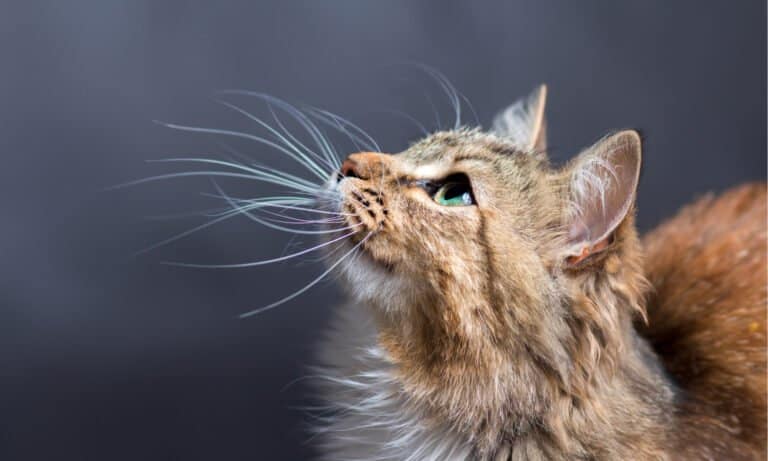
In most other vertebrate animals, pheromones are detected by a tubular organ, the vomeronasal organ (VNO), housed in a bony pocket over the mouth. When pheromones enter through the nasal cavity, they bind with receptors in the VNO (also called Jacobson’s organ and thought to be defunct in humans). If you see a cat curl its upper lip, it’s channeling pheromone molecules into the VNO, in what’s dubbed the “flehmen response.”
From there, signals are sent to areas of the brain involved in reproductive behavior, where they might indicate a female animal’s fertility or warn a male of a nearby competitor.
Mammals as Master Smellers
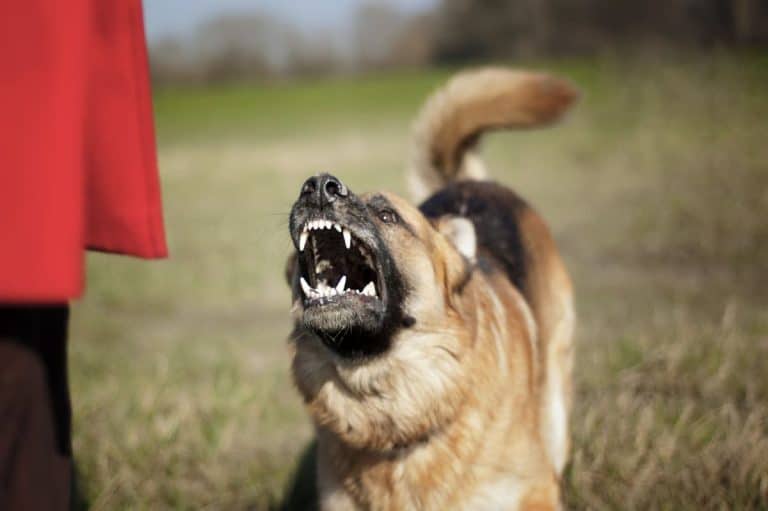
Mammals are the master smellers, with larger brain areas devoted to olfaction than other animals. Canids (predators with canine teeth, such as wolves, coyotes, and foxes) are among the animals with the most powerful sense of smell in the animal kingdom. Their long, moist snouts provide lots of surface area to capture scent molecules, which give them information about prey, mates, and dangerous predators. A fox can detect the scent of food from as far as half a mile away.
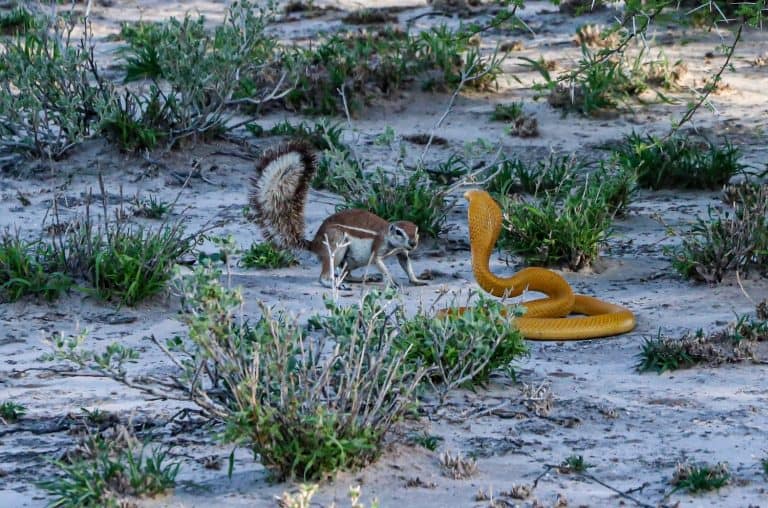
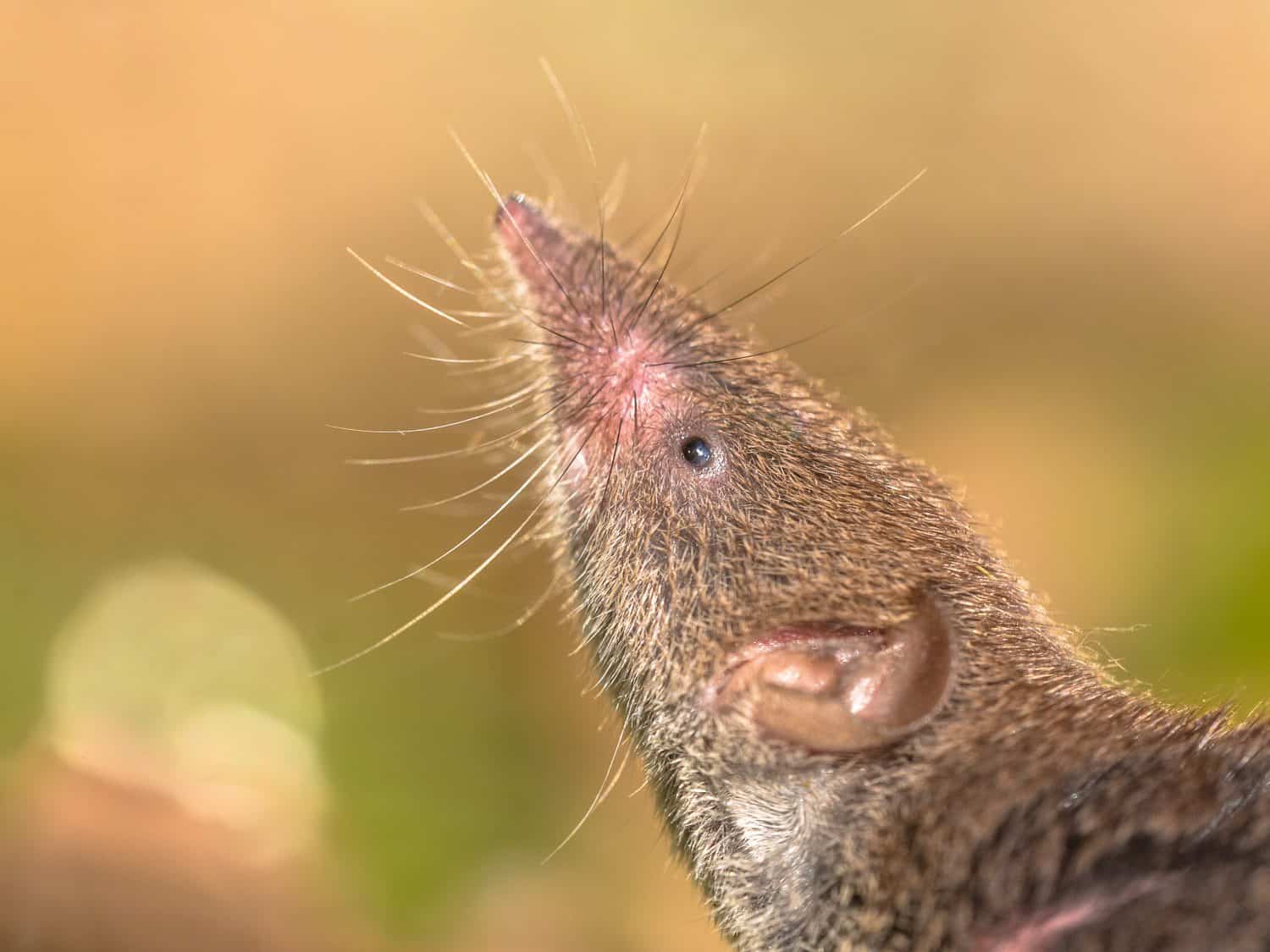
Rodents, such as mice and rats, are also supersmellers; for animals that are nearsighted and mostly color-blind, smell is an essential sense. In a 2011 study published in Proceedings of the National Academy of Science, neuroscientists discovered that rodents can sniff out dangerous carnivores based on a single molecule—kairomone—isolated from carnivore urine. Kairomone is a volatile molecule—meaning it easily becomes vapor—which allows rodents to detect it from a sufficient distance and attempt an escape from the predator.
“It’s been known so long that predator odors are great rodent deterrents, but we’ve discovered one molecule that’s a key part of this ecological relationship,” said study author David Ferrero.
Reptiles’ Sense of Smell
Some reptiles have a vomeronasal organ (VNO) that allows them to smell pheromones emitted by the same species. Snakes, for example, have a large VNO, which is what they’re using for smelling as they flick their tongues in and out. Two different types of chemosensitive receptors in the VNO allow them to smell airborne versus water-soluble molecules. Blind snakes can survive in the wild, according to biologist Michel Milinkovitch, because they rely more heavily on their VNO than on their vision.
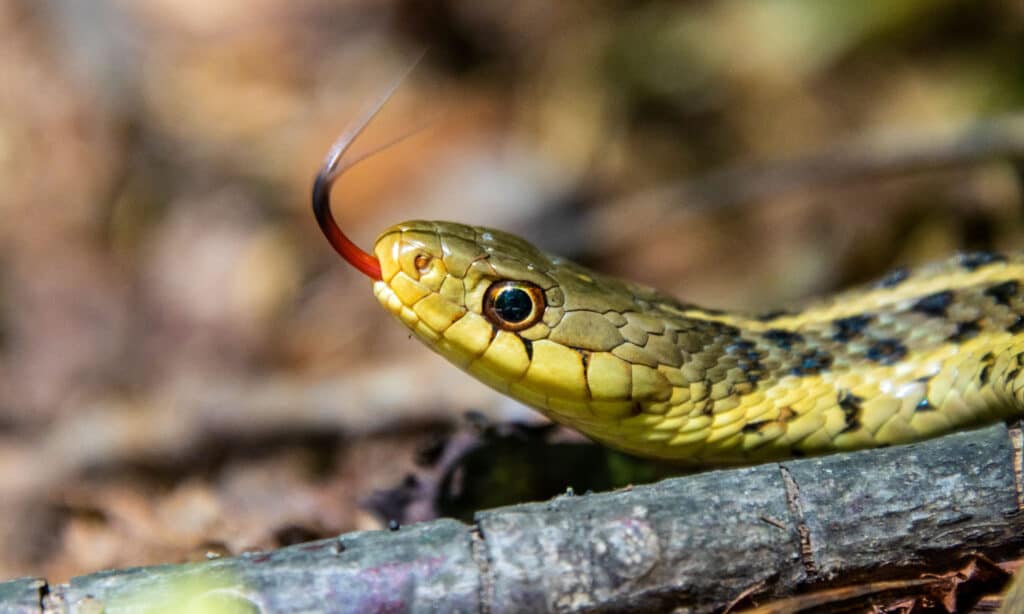
This shorthead garter snake is flicking its tongue to get a whiff of whatever’s in the air.
©Eric Dale/Shutterstock.com
Lizards also flick their tongues to smell chemicals in their environments. A study of ocellated skinks published in Animal Behaviour found that tongue flicking speed increased when the skinks were put in new environments. If their VNO passages were sealed (similar to pinching your nose), their tongue flicking rates declined, and they had trouble eating prey. They could still catch prey, however, suggesting that they locate prey visually but use smell to identify or consume it.
As far as reptiles go, turtles also have VNO organs. But you won’t see a turtle flicking its tongue, and a recent study in the Journal of Veterinary Medical Science suggests that, for smell, they rely mainly on the olfactory cells lining their nasal cavities rather than their VNOs.
What About Birds?
The smelling abilities of birds have long been a subject of debate. Because they have keen vision and hearing, it was assumed that birds’ sense of smell was limited. In the 1820s, the famous naturalist John James Audubon, from experiments with turkey vultures, concluded that they used vision rather than smell to find dead meat. Later experiments refuted his findings, such as in the 1960s when ornithologist Kenneth Stager pinpointed a chemical—“ethyl mercaptan”—that attracts vultures to carrion.
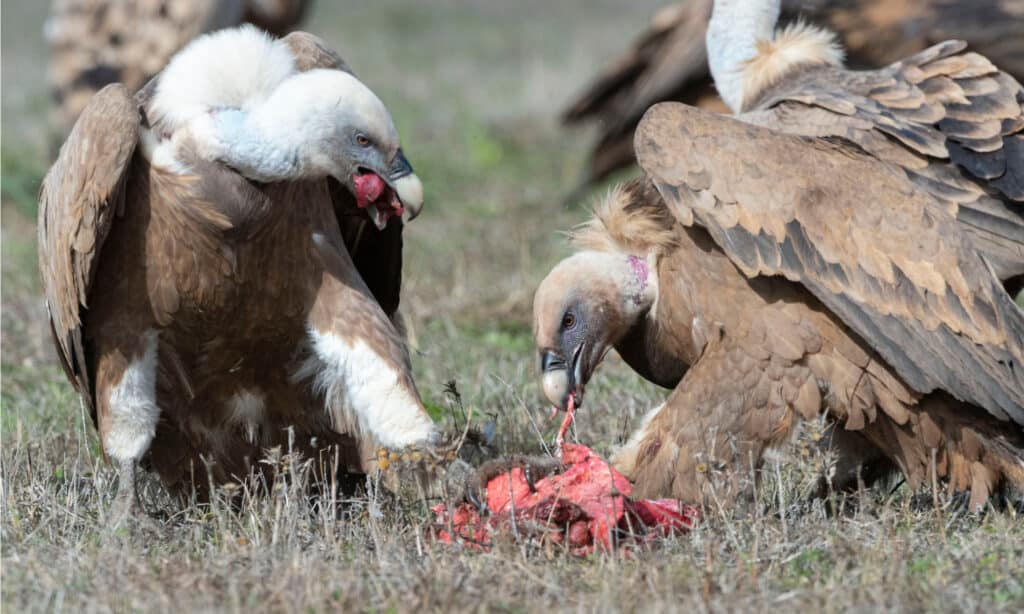
These griffon vultures may have found their dead animal prey by smell.
©Jesus Cobaleda/Shutterstock.com
Today, we know that birds do have a sense of smell, evidenced by their behavior and physiology, such as studies that show bird heart rates rising in the presence of scents. Physiologist Bernice Wenzel cleverly monitored the olfactory cells of birds as they were exposed to scents, and observed a nervous system signal every time they got a whiff of a scent. From vultures to mallards to quails and canaries, Wenzel found responses to scents, as described in a paper she published in the Annals of the New York Academy of Sciences, among others.
Because birds lack VNO organs, they can’t receive scents that way. Birds, however, have other olfactory equipment, including receptors similar to ours, that account for their ability to smell. Behavioral observations indicate that birds rely on smell to forage, recognize family members, and build nests, according to the authors of a study published in Integrative & Comparative Biology.
Smelling Underwater
For aquatic animals, smell is a different experience, relying on scent molecules that are transported by water. However, the underlying mechanism is the same: scent molecules reach the lining of an animal’s nose. When molecules are airborne, they must dissolve in water first, which is why the linings of our nasal passages are moist. When they’re waterborne, however, they’re already dissolved.
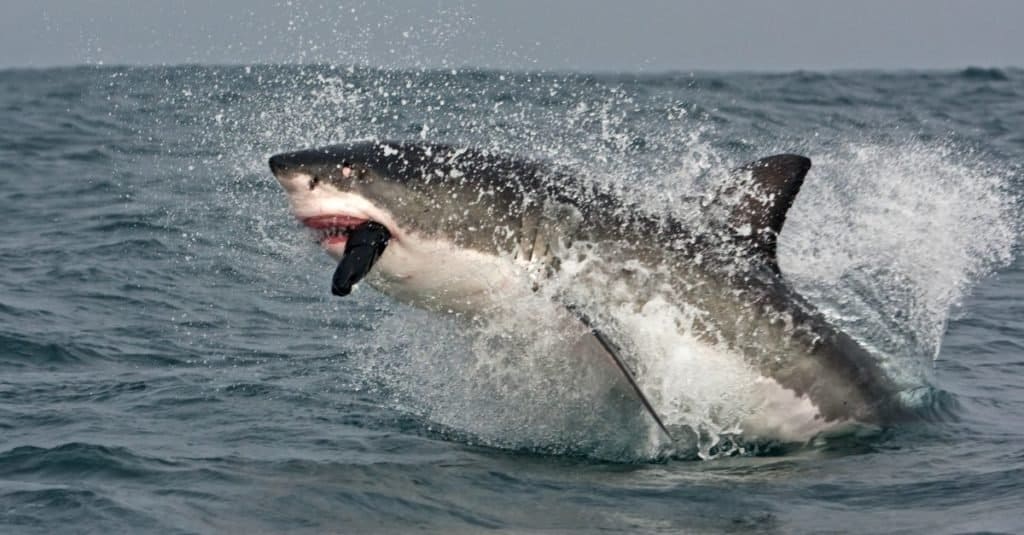
Its sense of smell may have helped this great white shark find a seal to munch on.
©Martin Prochazkacz/Shutterstock.com
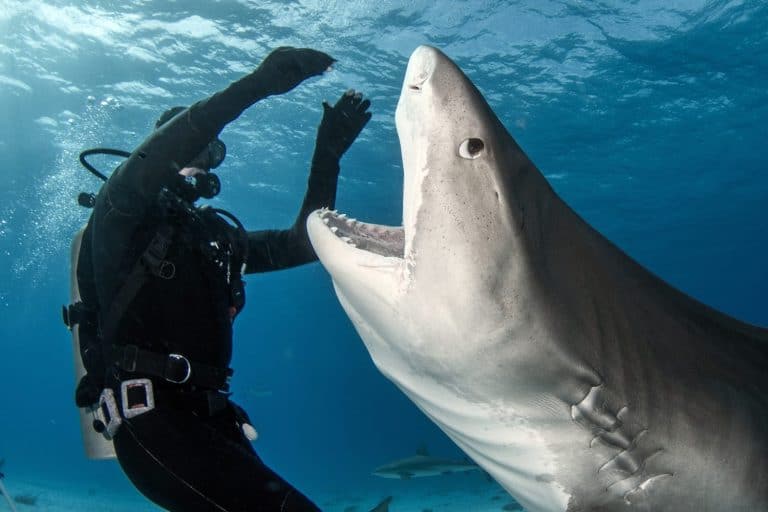
Sharks, famously, have excellent smelling abilities. As a shark swims continuously, water flows through its nostrils, passing across olfactory receptors. Experiences with blacktip sharks have shown that they can smell fish in a concentration as tiny as one per 10 billion parts of seawater, an extremely low concentration that highlights their remarkable sensitivity. You can imagine the usefulness of their keen sense of smell for finding wounded prey in the water.
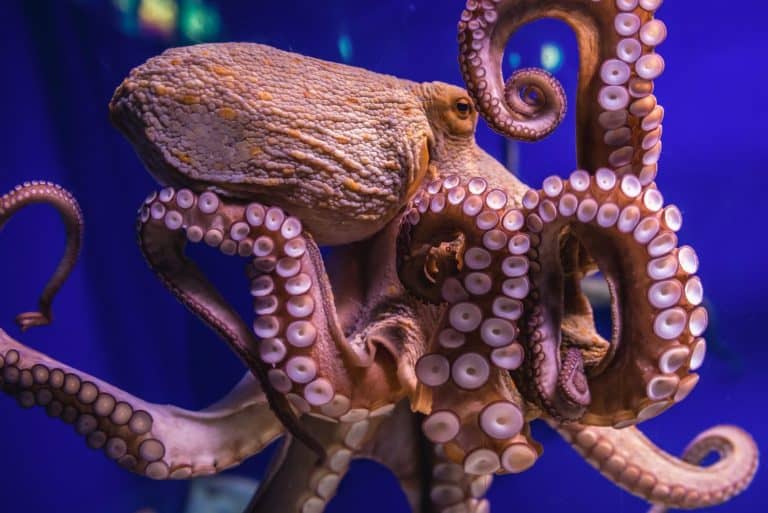
Olfaction is also an important sense for other fish, whether to find food, avoid predators, or recognize relatives. You can see olfactory pits on a fish just in front of its eyes; these house smell receptors. How well a particular fish species can smell depends on the extent of the folded layers of olfactory tissue in the pits.
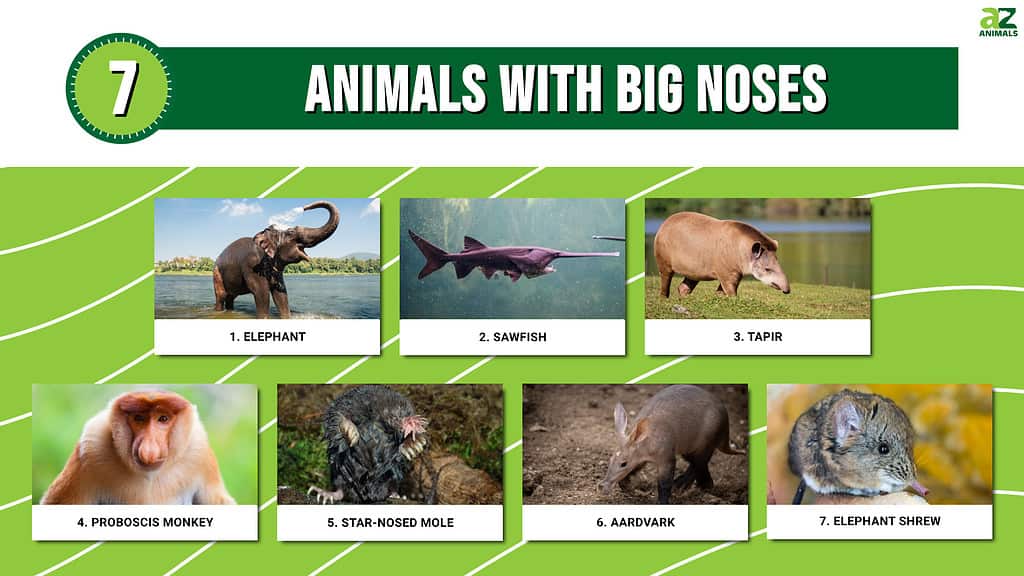
Ranking vertebrate animals by their sense of smell is challenging, especially because different species use various mechanisms to detect and respond to scents. Since we cannot directly assess how non-human animals perceive smells, comparing their abilities is difficult.
The Number of Olfactory Receptors Counts
Arguably, though, humans are poor smellers compared to supersmellers like dogs. The difference in the number of olfactory receptors between humans and other mammals may reflect the greater importance of smell for those other species. Compare humans’ approximately 12 million olfactory receptors with 100 million in rabbits and 1 billion in dogs. Our olfactory epithelium—the area in the back of our nasal cavity that holds all the receptors—is proportionally smaller than that of mice or dogs.
That said, a 2004 study published in PLOS Biology argued that humans (and primates in general) bring more cognitive brain power to smelling than other mammals, suggesting that our reduced olfactory receptors are offset by enhanced higher brain usage. So, while we may not have the strongest sense of smell, we excel at interpreting the scents we do detect!