
Quick Take
- Scientists nearly gave up two days before making one of the most emotional wildlife rediscoveries in modern history. See the last-minute find →
- Local villagers kept telling stories about a bird that scientists had written off as extinct, and as it turned out, the villagers were right. How local knowledge led the way →
- The researcher who finally saw it described the feeling not as triumph but as confronting something mythical, and his reaction was caught on video. Watch the team's reaction →
- This bird hasn't been seen since 1882, and it looks like nothing else alive today, a fact that only deepens the mystery of how it survived. Discover this ancient-looking bird →
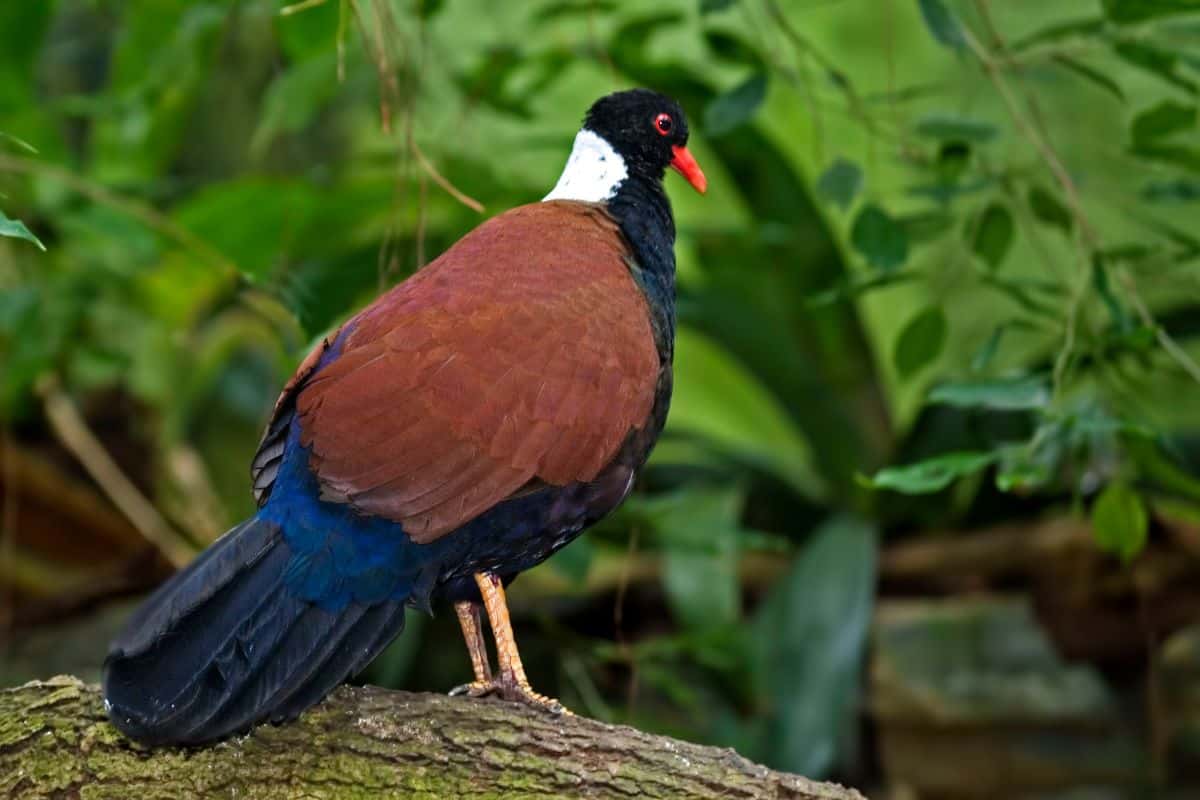
In September 2022, a camera on a forested ridge of Fergusson Island, Papua New Guinea, recorded a large, dark pigeon walking across the forest floor. It was the black-naped pheasant-pigeon, a bird scientists had not documented since it was described in 1882. The team had about two days left on the island.
Continue reading
Expedition member John C. Mittermeier, who leads the Search for Lost Birds program at American Bird Conservancy, said seeing the photos “felt like finding a unicorn.” Four years on, the story of the bird islanders call “Auwo” is still being written, and it has not gotten simpler.
How Local Hunters Led Scientists to the Bird
The rediscovery did not start with luck. Jordan Boersma of the Cornell Lab of Ornithology and conservation biologist Jason Gregg first searched Fergusson in 2019 with local bird expert Doka Nason. They found no trace of the bird, but they did collect hunters’ reports of a bird that matched it.
They returned in September 2022 and spent a month interviewing communities and setting camera traps:
- 12 cameras on the slopes of Mount Kilkerran;
- 8 more where hunters had reported the bird.
The breakthrough came from Augustin Gregory, a hunter from the village of Duda Ununa. He described seeing and hearing the Auwo repeatedly in steep ridges and valleys inland. Following his advice, Nason placed a camera on a ridge at about 3,200 feet, near the Kwama River. That camera took the shots.
Boersma later admitted he had expected less than a one percent chance of photographing the bird. The team’s footage shows the bird walking past the camera, the first images of the species ever recorded.
[YOUTUBE EMBED: https://www.youtube.com/watch?v=5Efd3eAK1N4]
A Pigeon That Acts Like a Pheasant
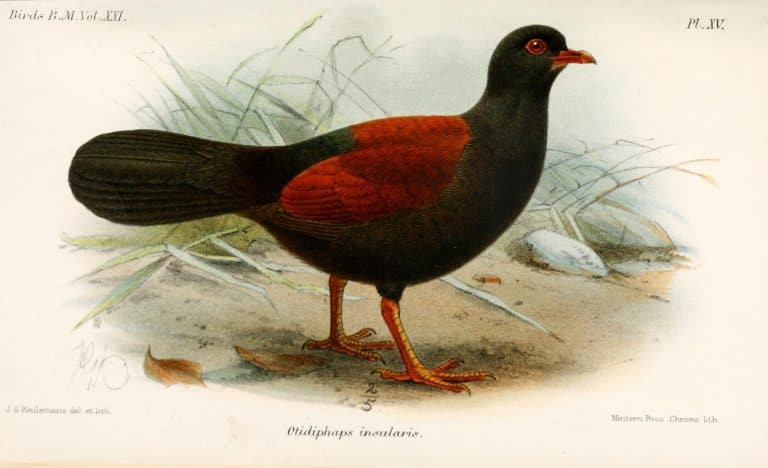
The black-naped pheasant-pigeon, Otidiphaps insularis, is a large, ground-dwelling bird. It has a rust-brown back, a dark head and body, and a flattened, pheasant-like tail that it bobs as it walks. It is a pigeon, but it lives like a game bird, foraging on the floor of hilly rainforest.
Very little is known about it. Before 2022, it was known only from a handful of museum specimens collected in the late 1800s, and no recording of its calls existed. The IUCN lists it as Critically Endangered. The population is thought to be very small and declining, and the rugged inland forest where it was filmed may be its last stronghold.
The Follow-Up Trip That Found Nothing
In June and July 2025, Boersma, Gregg, Nason and colleagues went back to Fergusson to learn more about the bird. They also searched for the long-billed myzomela, a small honeyeater with no formal record since 1988. Their report, posted in March 2026, says neither species turned up on trail cameras or foot surveys, though bad weather cut the fieldwork short.
The authors also warn about resource extraction on the island. In 2022, the main landowner of the area told the team he had just signed a deal with a logging company. For a bird that may survive only in one patch of forest, that could decide its future.
Other lost birds keep resurfacing. In April 2026, an expedition with American Bird Conservancy and Indonesian partners photographed the blue-fronted lorikeet in the cloud forest of Mount Kapalatmada, on Buru Island. It was only the second documented record of the species since it was described from specimens collected in the 1920s.
Each find depends on the same ingredients: people who know the forest, patient fieldwork and cameras left in the right place. For more birds that seem too strange to be real, see these birds that look like mythical creatures.