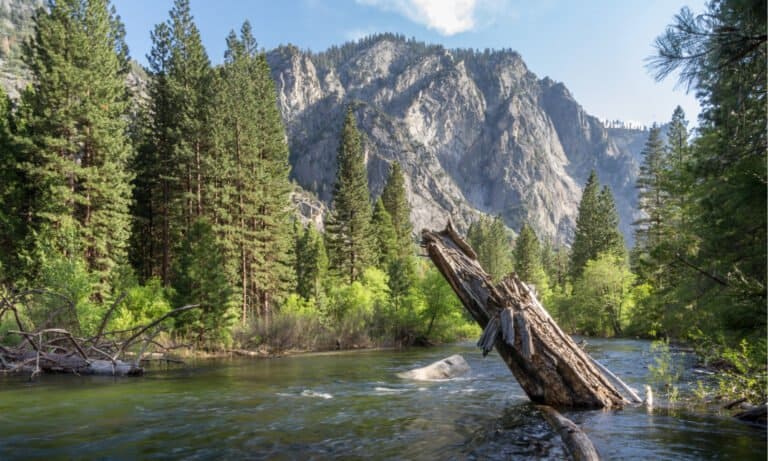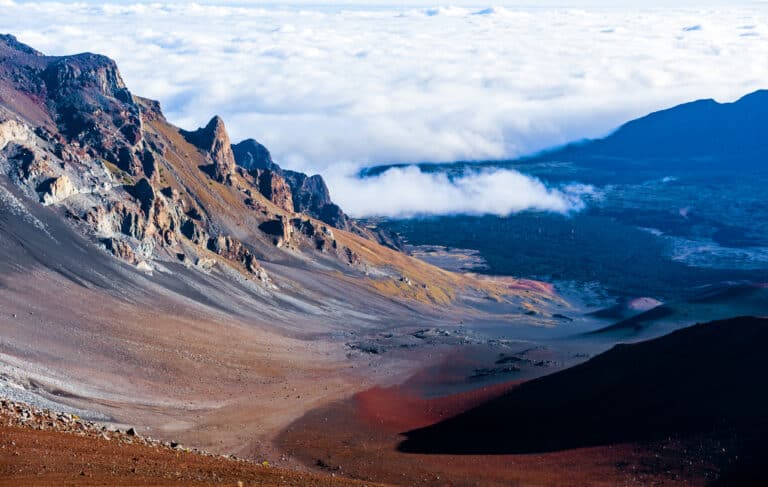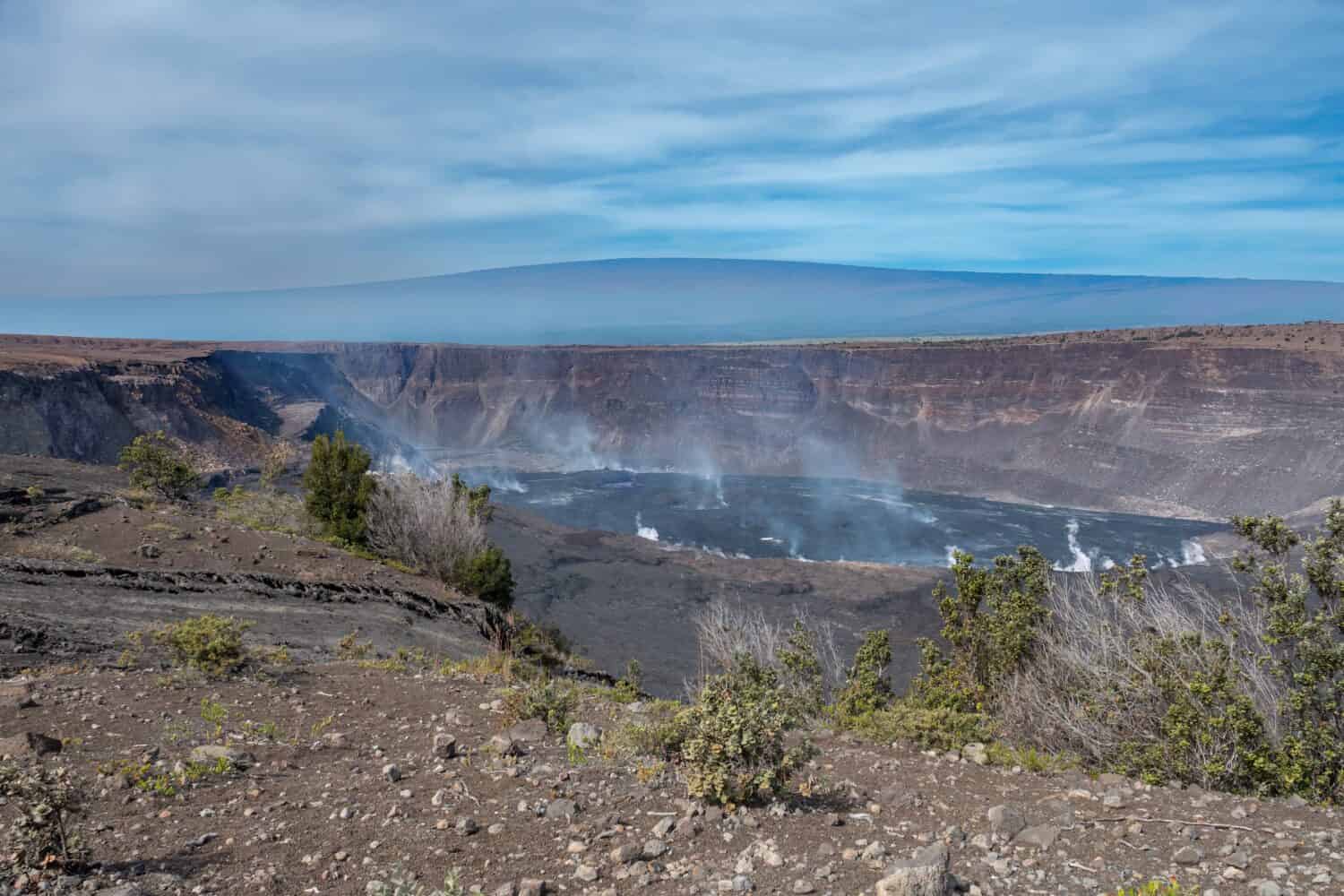

Located on the southeast side of Hawaiʻi’s Big Island, Hawaiʻi Volcanoes National Park covers roughly 523 square miles, which is only slightly smaller than the entire island of O’ahu. This chunk of land is not only horizontally massive but also vertically, ranging from sea level to over 13,000 feet in elevation and spanning six climate zones. The park also lives up to its name, featuring two volcanoes: Kilauea, one of the most active volcanoes in the entire world, and Maunaloa, the largest active subaerial volcano in the world.
Nearly 1.5 million visitors a year show up for the park’s lava flows, volcanic craters, rainforests, and beautiful trails. But one of the park’s lesser-known treasures is its specialist wildlife: birds, bats, insects, turtles, and more, many of which are unique to Hawaiʻi. Read on to learn about these amazing creatures, along with tips for where to look and how likely a sighting might be.
Nēnē (Hawaiian goose)

You have a great chance of spotting a Hawaiian goose on your visit.
©Wunson/Shutterstock.com
The nēnē is Hawai’i’s state bird, a native goose that’s unique to the islands. While still a species of concern (only an estimated 50 nēnē existed in the 1940s), conservation efforts have greatly improved their numbers to the point that sighting one is fairly likely. If you stay alert along the roadsides and trailheads, you have a good chance of spotting one in the open grassy areas or coastal lava benches within the park (nēnē get most of their water from the plants they eat, so they’re able to thrive in these dry, lava-bench areas with little to no freshwater). They’re known to be quite tolerant of humans, but PLEASE keep your distance and DO NOT feed them. Not only can feeding harm them, but it’s also against the law.
ʻApapane
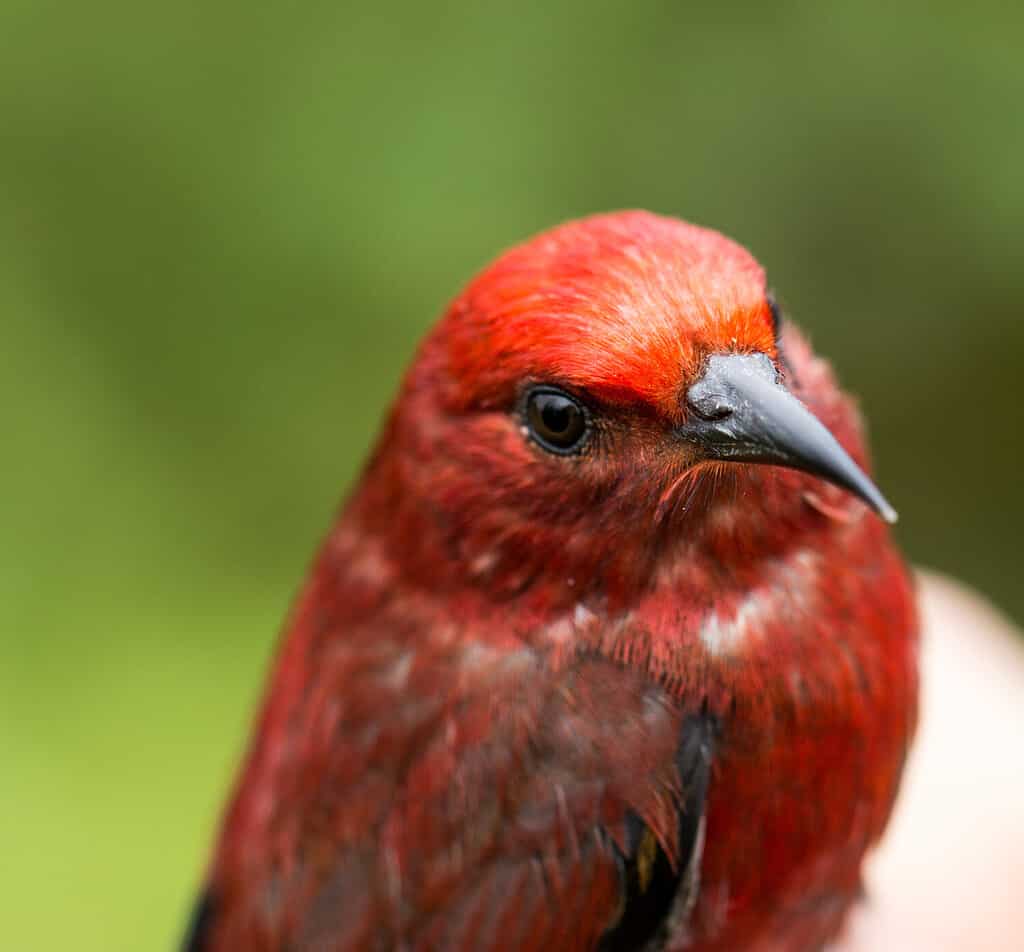
The ‘apapane’s bright red coat makes it pretty easy to spot.
©Evan Austen/Shutterstock.com
Deriving its name from the Hawaiian word for “blood-colored cloak,” the ‘apapane is a bright red-colored native honeycreeper (forest bird) and is one of the more common honeycreepers in the park’s forest zones. Look for them in the higher-elevation forests, such as along Crater Rim Drive or Maunaloa Road, especially early in the morning. Keep your ears open for their varied whistles and trills high in the canopy, and keep your eyes open for that bright red coat (which makes them pretty easy to spot!), and you stand a great chance of seeing one of these vibrant birds.
Hawaiʻi ʻamakihi
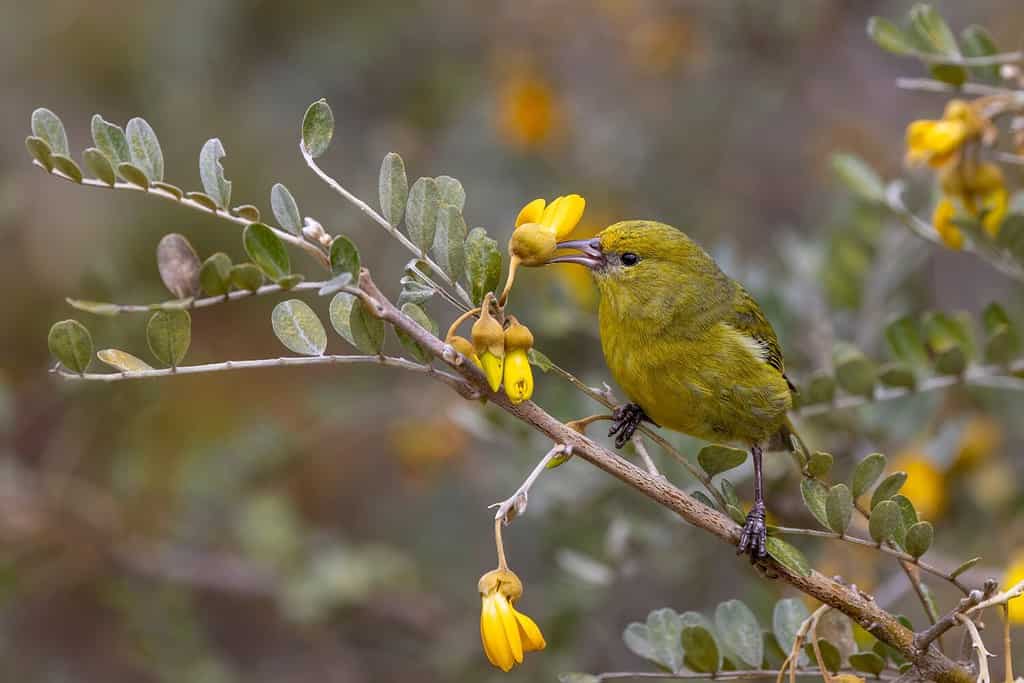
Even if you don’t see an ‘amakihi, you stand a good chance of hearing one.
©Kendall Collett/Shutterstock.com
Another fairly common honeycreeper, the Hawai’i ‘amakihi is a bit less flashy than the ‘apapane, wearing a less eye-catching greenish color. They do, however, have a slightly larger habitat; their unique resistance (at least when compared to other honeycreepers) to avian malaria expands their territory into the lower, more mosquito-heavy elevations. If you’re quietly hiking in the forest, you have a decent chance of seeing one, and an even better chance of hearing one. Listen for their soft buzzy “tzeet” calls and steady movements in the foliage.
ʻIʻiwi
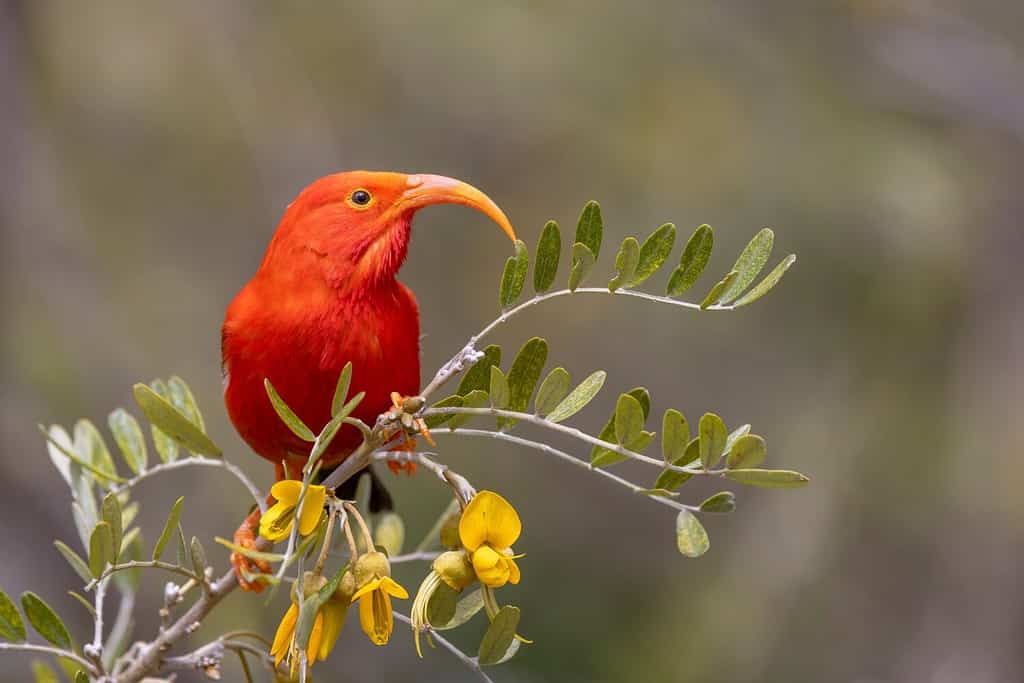
Wealthy Hawaiians used to make beautiful capes out of ‘i’iwi feathers.
©Kendall Collett/Shutterstock.com
A striking scarlet-red honeycreeper with black wings, a tail, and a curved bill, the ‘i’iwi is an icon of the Hawaiian forests. The birds are so beautifully colored that powerful and prestigious pre-European Hawaiians used to make beautiful capes out of their feathers—sometimes requiring over a hundred thousand feathers! They tend to keep to the higher elevations above the 4,500-foot range to avoid disease-carrying mosquitoes. While sightings of the ‘i’iwi are not as common as the ‘apapane, they’re not unheard of. Keep your eyes on the lehua blooms and listen for their squeaky-hinge type song or whistle, and you just might be treated to an i’iwi sighting.
ʻIo (Hawaiian hawk)
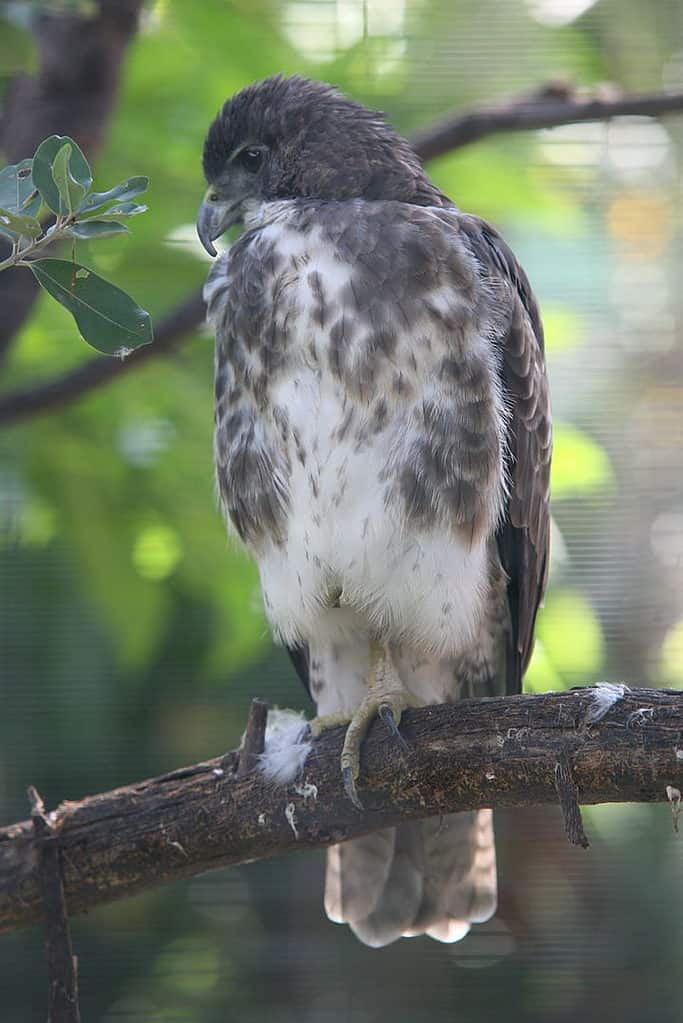
Early Hawaiians considered the ‘io a “guardian spirit.”
The only hawk native to Hawaiʻi, the ’io was traditionally revered as a messenger of the gods, considered an aumakua, meaning “guardian spirit. The ‘io can be found on forest edges, in open fields, sometimes perched in trees, or soaring overhead. They are regularly seen in the park, but are not always the easiest to spot, so bring binoculars, scan open ridges early morning or late afternoon, and keep your eyes peeled for the silhouette of a perched bird.
ʻŌpeʻapeʻa (Hawaiian hoary bat)
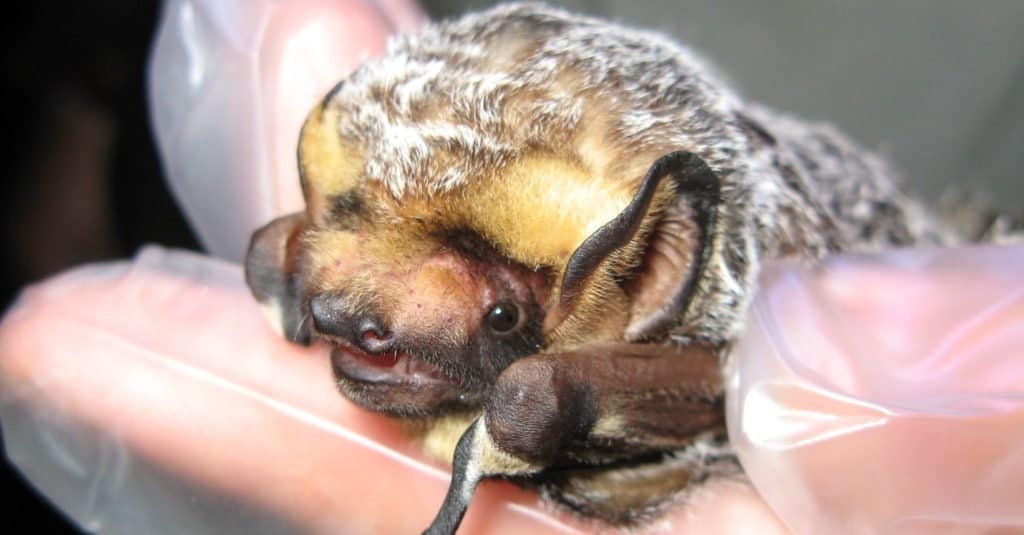
This bat traveled 2000 miles overseas to colonize Hawai’i.
Hawaiʻi’s only native land mammal, the ‘ōpe’ape’a had to fly over 2,000 miles of open Pacific to colonize the Hawaiian Islands, the longest overwater flight to found a new population ever achieved out of 1,300 species of bat (full disclosure: the ‘ōpe’ape’a did get a lot of help from the strong Trade Winds that blow toward Hawai’i, but still!). Sadly, the ‘ōpe’ape’a is an endangered species. Their low numbers, coupled with their elusive and nocturnal habits, make sightings of this little guy a rarity. But if you’re at a forest overlook at dusk (like Waldron Ledge or Maunaloa Strip Road) and keep a keen eye out, you just might see one of these fast aerial hunters silhouetted against the darkening sky.
Green Sea Turtle
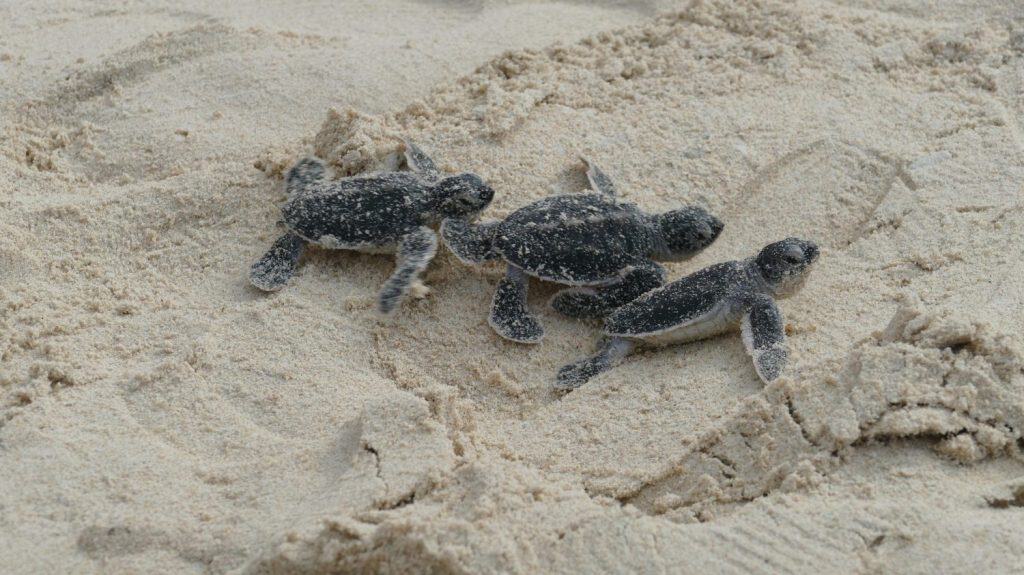
These little guys can grow up to be 400 pounds.
©El Paco 33/Shutterstock.com
While listed as a federally threatened species, green sea turtles are actually a relatively commonly sighted animal in the park, usually spotted feeding in nearshore waters on the Puna coast. And if they are out feeding, they’re kind of hard to miss, as these giants tend to grow anywhere from 150 to 400 pounds! So pay attention near the shoreline, and you’ve got a pretty decent chance of seeing one. But keep a reasonable distance; green sea turtles are skittish, and a quiet sound or even your shadow can cause them to dive or abandon the area.
Nananana Makak’i (Happy-Face Spider)
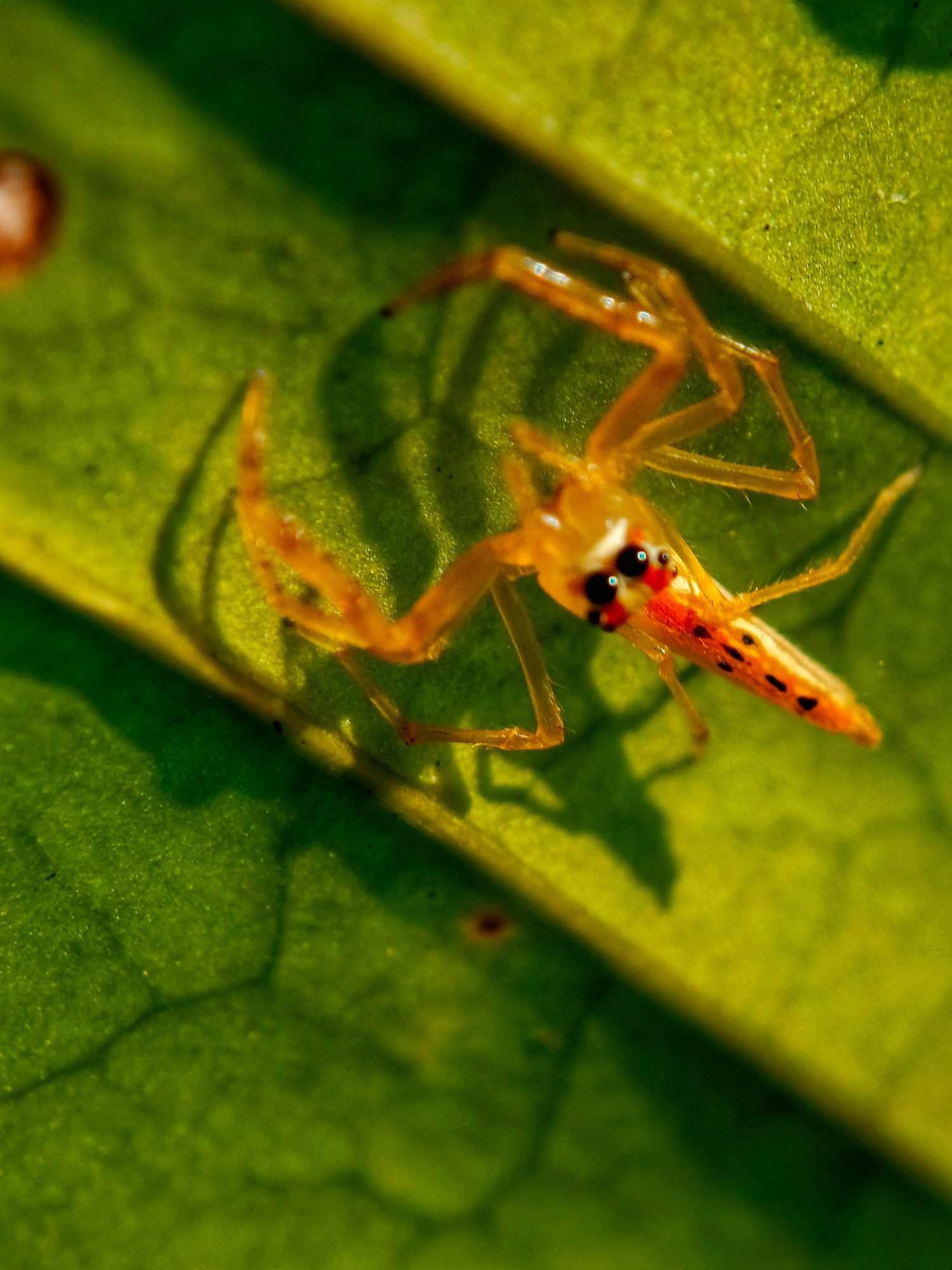
The Hawaiian happy-face spider gets its name from the face-like pattern on its back.
©Vicky Wiedira/Shutterstock.com
Most people probably don’t associate happy faces with spiders! This arachnid actually gets its name from a face-like pattern on its back (although this pattern varies depending on which island the spider inhabits). Sightings are not common, but that’s because they’re small and most people aren’t looking. They like wet-forest areas and tend to stay hidden on the undersides of leaves. So if you’re careful and take the time to flip over some leaves, you might be treated to a nananana makak’i smiling back at you.
Carnivorous Caterpillars
This interesting group of native Hawaiian inchworms is a remarkable exception among caterpillars worldwide in that they’ve evolved to eat insects, as the adjective in their name suggests, as opposed to just leaves. They are incredibly fast attackers, able to catch flies and wasps. Pretty impressive for a caterpillar! They stick to forests where their prey lives, camouflaging themselves on sticks, ferns, and bark while they wait to ambush, making them incredibly difficult to spot. Take your time, be patient, and slow-scan leaves and fern fronds, looking for tiny stick-like inchworms that suddenly move.
Lava-Flow Crickets
This small, wingless cricket species is endemic to Hawaiʻi (specifically the Big Island). They live on freshly cooled lava flows and are possibly the first multicellular animals to colonize new lava terrain after an eruption, feeding on debris and even sea foam that the wind blows into cracks in the lava. Unfortunately, they are extremely specialized and rare even in the best viewing conditions, not to mention their habitat, newly solidified lava, is quite harsh. If you really want to see one, explore recently cooled lava fields (check with the park for safety conditions!) just after dusk, move slowly, and quietly scan with a flashlight.
Common Invasive Species
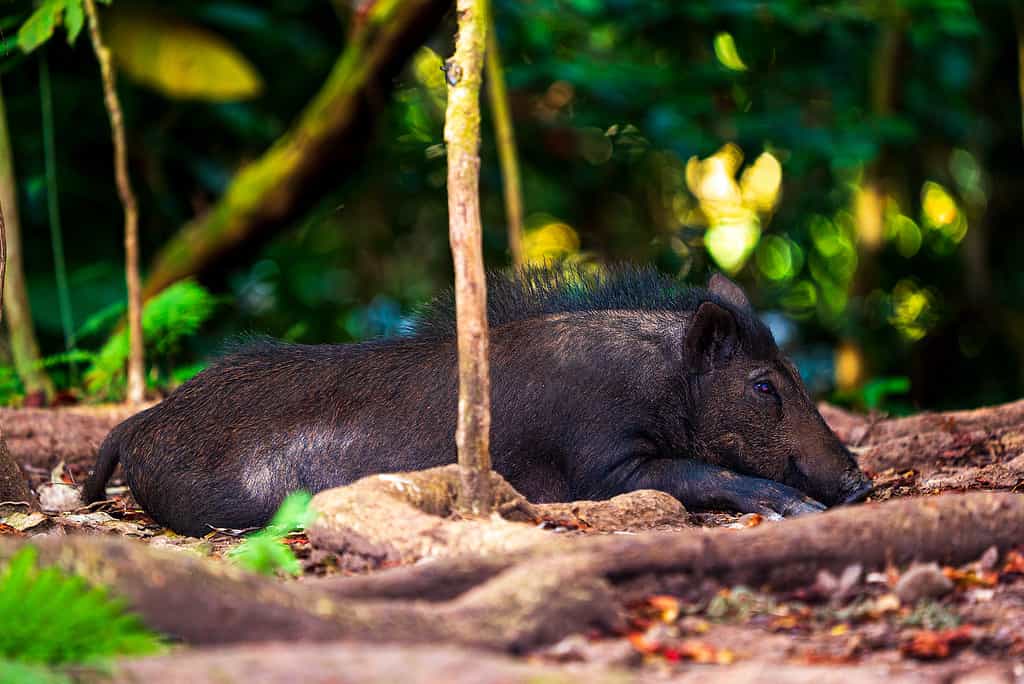
Beware of feral pigs in Hawaii.
©padelphoto/Shutterstock.com
The park is home to many introduced animals that are often more visible than the rare natives. These include: feral pigs, goats, kalij pheasants, mongooses, feral cats, coqui frogs, little fire ants, and a host of others. They can be seen all over the park; on roadsides, open areas, forest edges, and riparian zones. Many of these animals are easy to spot. As with all animal encounters, you’ll want to keep your distance and follow park guidelines.
Have a Great Trip!
Hawaiʻi Volcanoes National Park may be famous for molten lava and dramatic volcanic landscapes, but its wildlife is nothing short of remarkable. From nēnē geese grazing near volcanic craters to tiny lava crickets braving fresh flows, every creature here tells a story of resilience and adaptation—of a remote ecosystem that evolved in isolation. Whether you’re exploring misty rainforests or stark lava deserts, the park reveals how animals have evolved to survive on an island that’s still being born. So bring your binoculars, tread lightly, and take time to look closely. And as always, be safe and respectful of these remarkable creatures.