Quick Take
- One bird's final years were spent nearly featherless, and its famous quip about it still draws laughs.
- A near-fatal attack on a zoo resident didn't end his story. What happened next?
- Some birds are loved so much they get fan mail from around the world, and one even got an obituary.
- Size, nest location, and home turf all hint at who lives longest. The record holders may still surprise you.
Talking about age is taboo in some circles. However, when it comes to birds, talking about their age can be fascinating. Birds don’t get grey hairs, arthritis, or other tell-tale signs of age. What is known about aging in birds is that:
- Larger birds tend to live longer than smaller birds.
- It takes longer-living species more time to reach adulthood.
- Birds that nest in treetops tend to live longer than those that nest on the ground.
- Island dwelling birds tend to live longer.
- Older birds have fewer chicks.
Continue reading to learn about some of the documented oldest birds.
Bald Eagle 629-03142 – 38 Years Old
The oldest bald eagle (Haliaeetus leucocephalus) on record reached an age of 38 years. Bald eagles have made a stunning recovery from a low of 417 breeding pairs in 1963. Bald eagle populations have rebounded, with more than 300,000 bald eagles alive today.
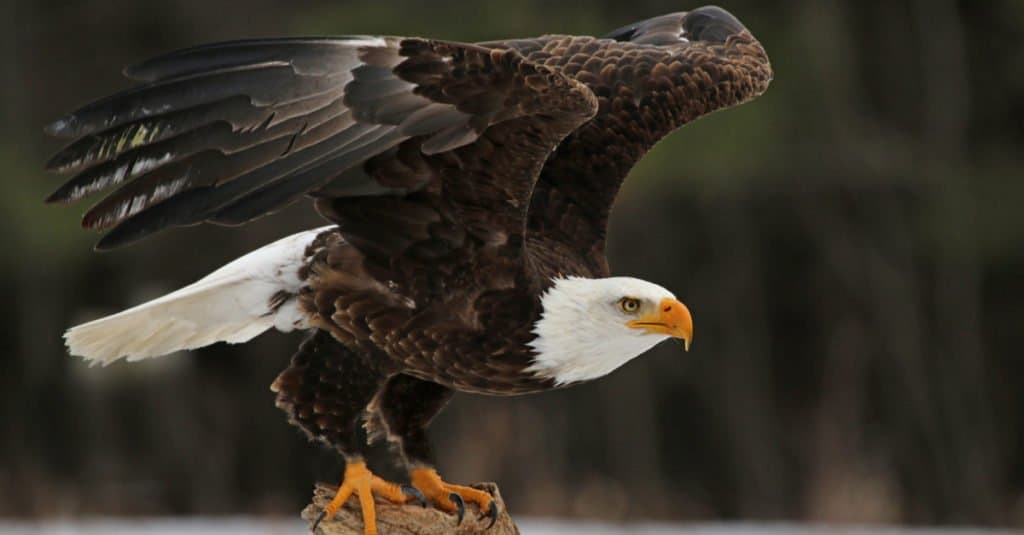
In the wild, bald eagles live for about 20-30 years.
©Chris Hill/Shutterstock.com
The oldest known bald eagle was struck and killed by a car in 2015. It had been born and tracked since its birth in 1977.
Mr. 56 the Chilean Flamingo – 74 Years Old
Mr. 56 is a Chilean flamingo (Phoenicopterus chilensis) who has been a resident at the Bronx Zoo for 36 years. Although Mr. 56 hatched in 1952, he didn’t join the zoo’s flock until 1990. At 74 years old, he holds the title of the oldest bird at the Bronx Zoo and stands as one of the longest-living Chilean flamingos anywhere in the world. Zoo guests and keepers can easily recognize him by the distinct identification band labeled 56 on his left leg.
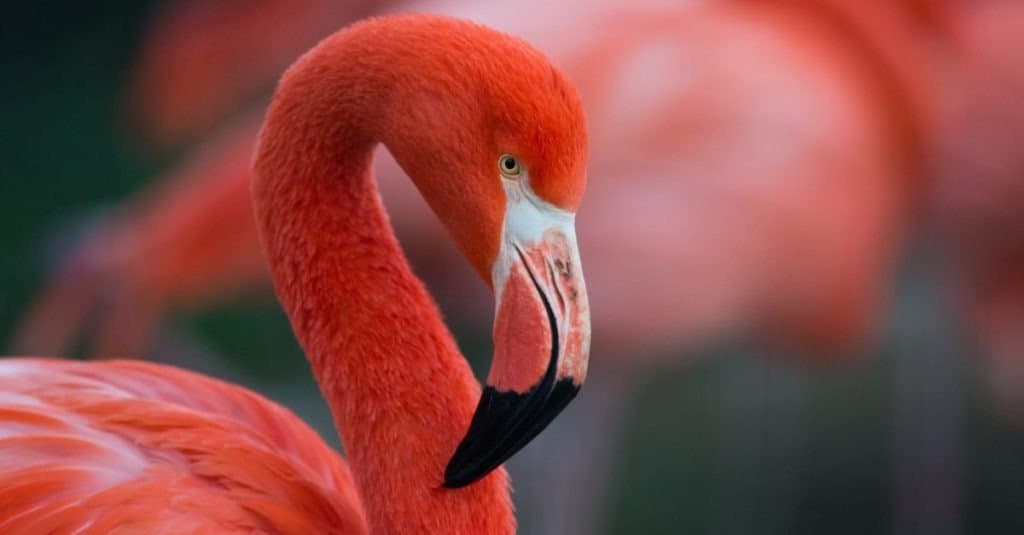
Flamingos average a lifespan of 40 to 50 years.
©Mrinal Pal/Shutterstock.com
The Chilean Flamingo species numbers around 300,000 and will live 40-50 years on average. They can run at speeds of up to 37 miles per hour (mph). Native to South America, this beautiful pink bird can be found in Germany, the Netherlands, Utah, and California. They prefer to make their homes in brackish alkaline lakes.
During day hours, a Chilean flamingo spends up to 30% of its time preening to make sure its feathers are waterproofed and in good condition. Flamingos are sociable birds and will gather in numbers when they nest and feed. To stay together during flight, they will call each other.
Flamingos often stand on one leg to conserve body heat. They will also tuck their head under one wing for warmth.
Chilean flamingos lay only one egg at a time, and both parents will incubate the egg for about three to four weeks. When baby flamingos are five to eight days old, they will gather in groups called a créche of up to 30,000 other adolescents. When it is time for feeding, their parents will call them with an individual call for their offspring. After two and a half to three months, the offspring will be self-sufficient and can then leave the créche.
Wisdom the Laysan Albatross – 75 Years Old
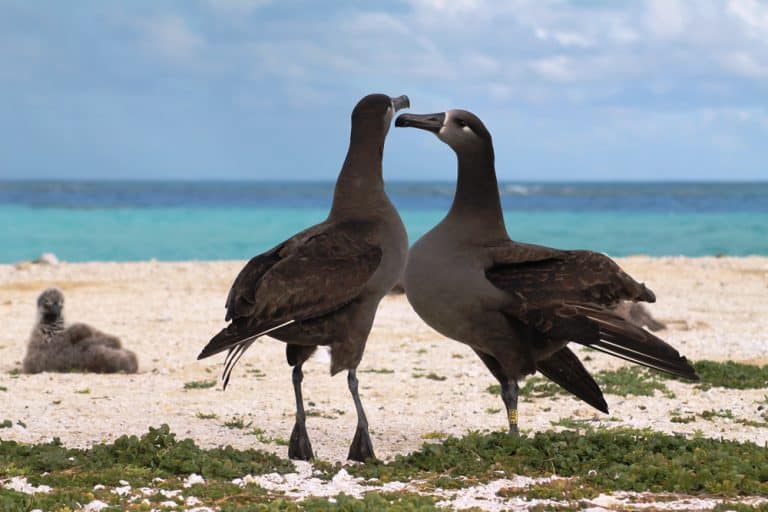
Wisdom is a female Laysan albatross (Phoebastria immutabilis). She is still alive as of 2026 and is estimated to be 75 years old. Wisdom was initially banded and left in the wild in 1956. It was estimated that she was at least five years old at that time. Wisdom lives on the Midway Atoll National Wildlife Refuge near Hawaii. The albatross will spend most of its time soaring over the ocean. It rarely goes to land and does so mainly for nesting.
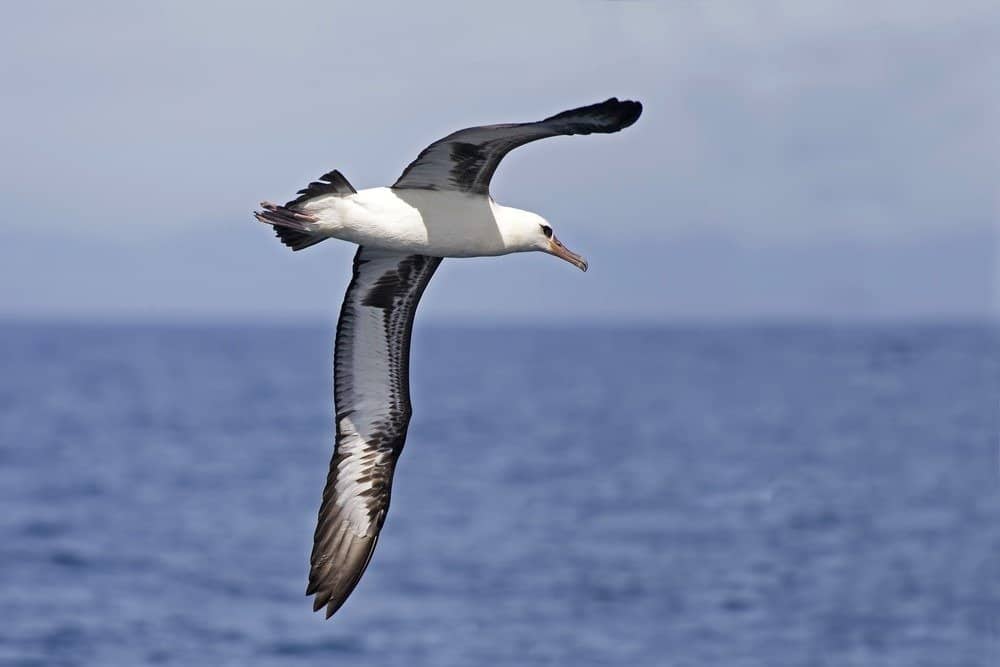
The Laysan albatross has a wingspan of 77- 80 inches.
©Harold Stiver/Shutterstock.com
The Laysan albatross is mostly white on the underside and dark brown to black on the upper side. These seabirds rarely flap their wings. Instead, they will use the wind to glide and airflow patterns to gain altitude. Feeding occurs at night, when they sit on the water’s surface and catch their prey as it comes close to the surface.
It is estimated that there are close to 600,000 breeding pairs of Laysan albatrosses. Both parents will incubate the single egg for 64-65 days before it hatches. Once the egg hatches, parents will take turns foraging for food to bring back to the hatchling for 12-24 days. They do this by regurgitating the food for the baby albatross to then eat. After roughly 165 days, the young albatross is ready to leave the nest.
Thaao the Andean Condor – 80 Years Old
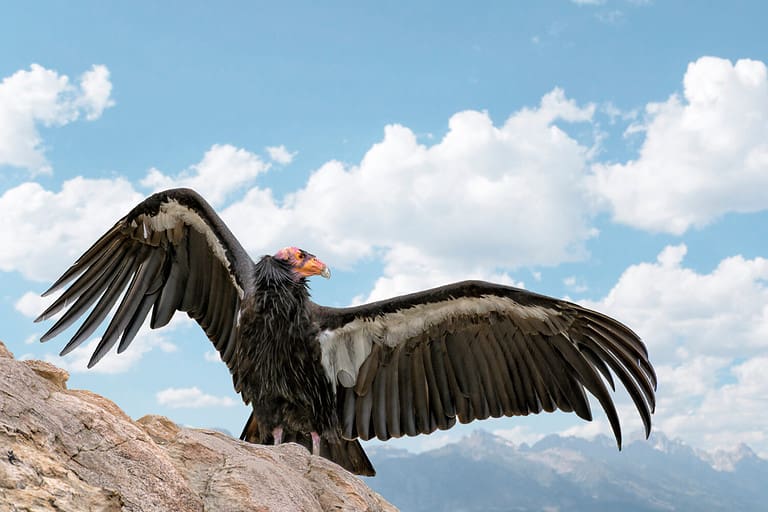
Thaao was an 80-year-old male Andean condor who lived in Bridgeport, Connecticut. He died in 2010. He was part of the earliest tracking history we have on birds. Thaao was born in the wild and joined the Beardsley Zoo in 1993.
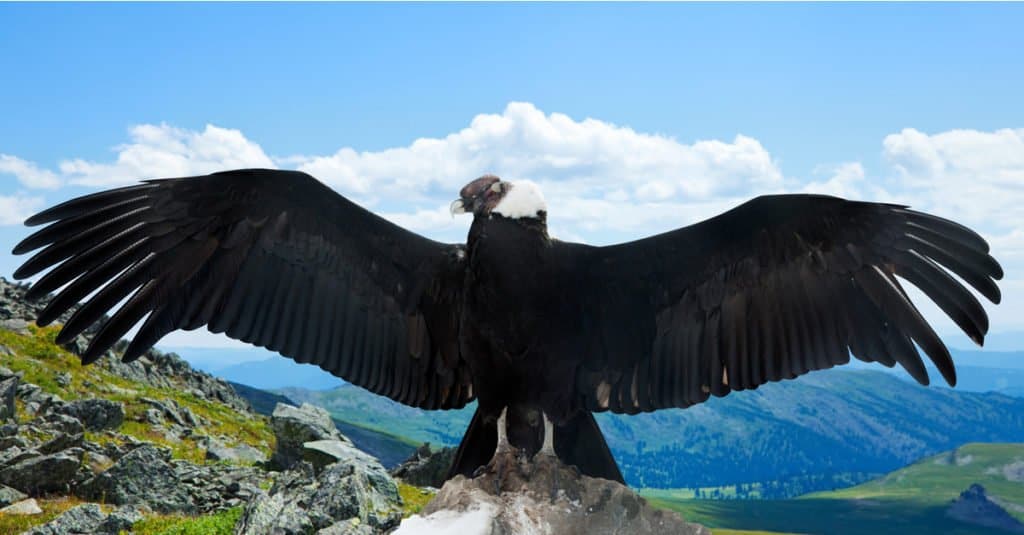
The Andean Condor can change the color of their skin according to their mood.
©BearFotos/Shutterstock.com
The average Andean Condor lifespan is 50 years in the wild. It takes an Andean condor six to eight years to reach maturity. The mature condor lays one egg every two years but if the egg is lost, it may lay a second one in four to six weeks. The incubation period is just shy of two months. Both parents will take part in the first year of the young condor’s life.
Communication for the Andean condor is made up of clicks, hissing and grunts. They do not have a syrinx, which would allow them to vocalize. As the largest raptor and largest flying bird in South America, this condor is a scavenger and eats its prey after it is already dead. They are resistant to harmful bacterias that they may encounter in the rotting flesh.
Greater the Greater Flamingo – 83 years
A greater flamingo (Phoenicopterus roseus) named Greater lived at least 83 years before his death in 2014 at the Adelaide Zoo in Australia. Greater narrowly escaped death in 2008, when he was attacked by a group of young men and teenage boys at the zoo. He lived another six years before he died of old age.
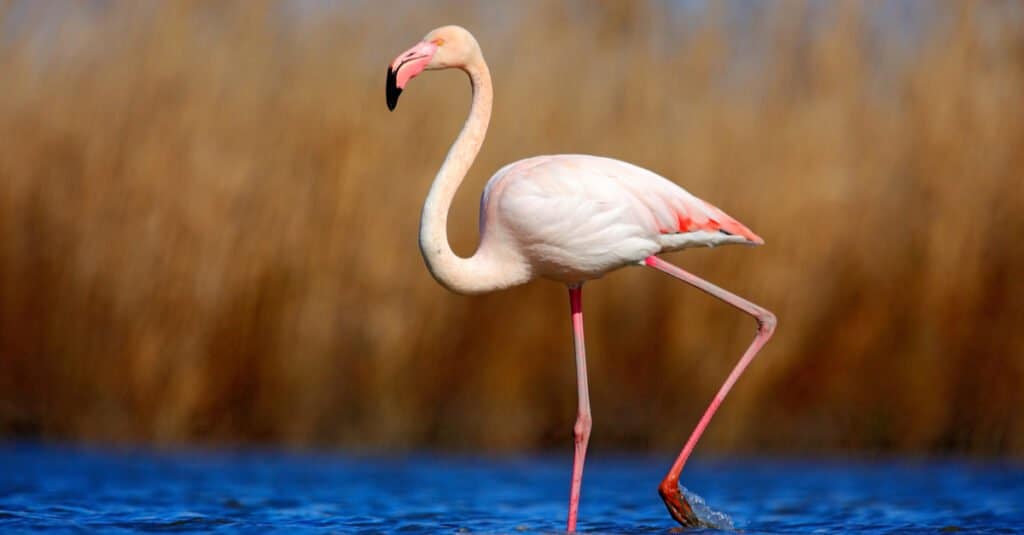
When flamingos flock together, it is called a stand or colony. A colony may consist of up to 20,000 birds, although there have been reports of even larger colonies.
©Ondrej Prosicky/Shutterstock.com
Of the six flamingo species, the greater flamingo is the most common. They are also the largest of the flamingo species. Their large size gives the greater flamingo the ability to wade into deeper waters than other flamingo species.
The greater flamingo is a social bird with a goose-like honking sound. It is louder when they are courting and quieter when feeding. The flamingos will build their nest as a pair, working together. They keep their nest almost five feet away from other nests to protect their young. The partners will stay together for life once they decide upon their mate.
The female greater flamingo will produce a single egg that hatches after 27-31 days, having had both parents help incubate it. The parents will feed the young chick a creamy pink liquid called crop milk for three to four weeks. At 10 weeks of age, the young will fledge, but continue to live in a group called a creche for another month. They are considered fully grown at two years old and can take a mate at three years of age.
Cookie the Major Mitchell’s Cockatoo – 83 Years Old
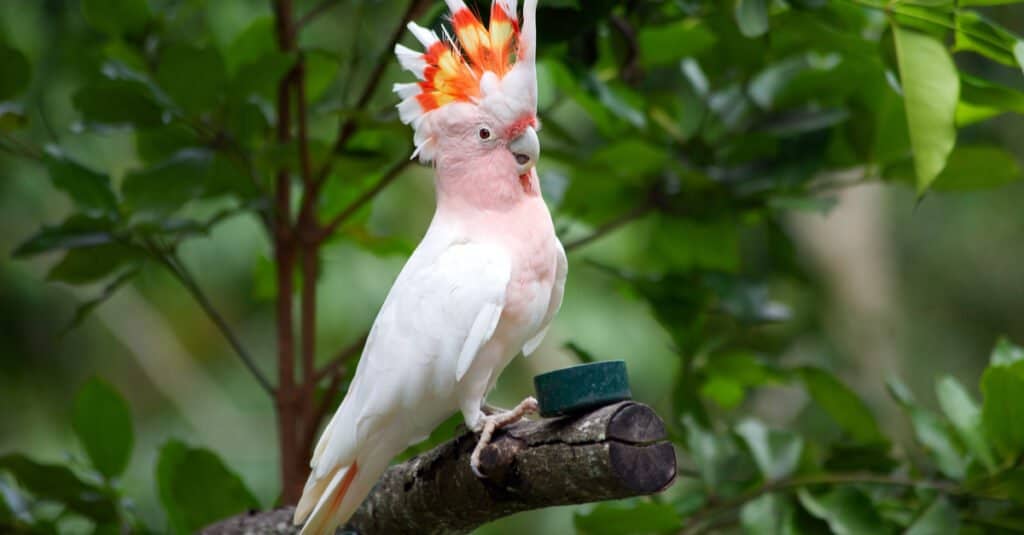
Major Mitchell’s cockatoos can live very long lives.
©Tanya Puntti/Shutterstock.com
Several macaw and parrot species reach advanced ages; however it’s a Major Mitchell’s cockatoo (Cacatua leadbeateri) that the Guinness Book of World Records recognizes as the oldest.
Cookie was a male Major Mitchell’s cockatoo that lived to be 83 years old, dying in 2016 at his home in the Brookfield Zoo, Chicago, Illinois. He has an estimated birthdate of June 30, 1933, and lived until August 27, 2016. Cookie was so beloved that he received gifts, letters, and cards from people around the world.
The Major Mitchell’s cockatoo lives in pairs, near the water. A high-maintenance socialite, this cockatoo likes to interact with its owner or caregivers but not other cockatoos of its species. They bond to their human keepers and become very temperamental when their human is not around.
The bird will show signs of being jealous when their humans pay attention to others more than it. They have been known to nip at the person taking attention away from them. They can be taught tricks like dancing, they whistle or mimic words. If their humans are away for a long period, such as a vacation, they may display forms of self-mutilation as they feel neglected.
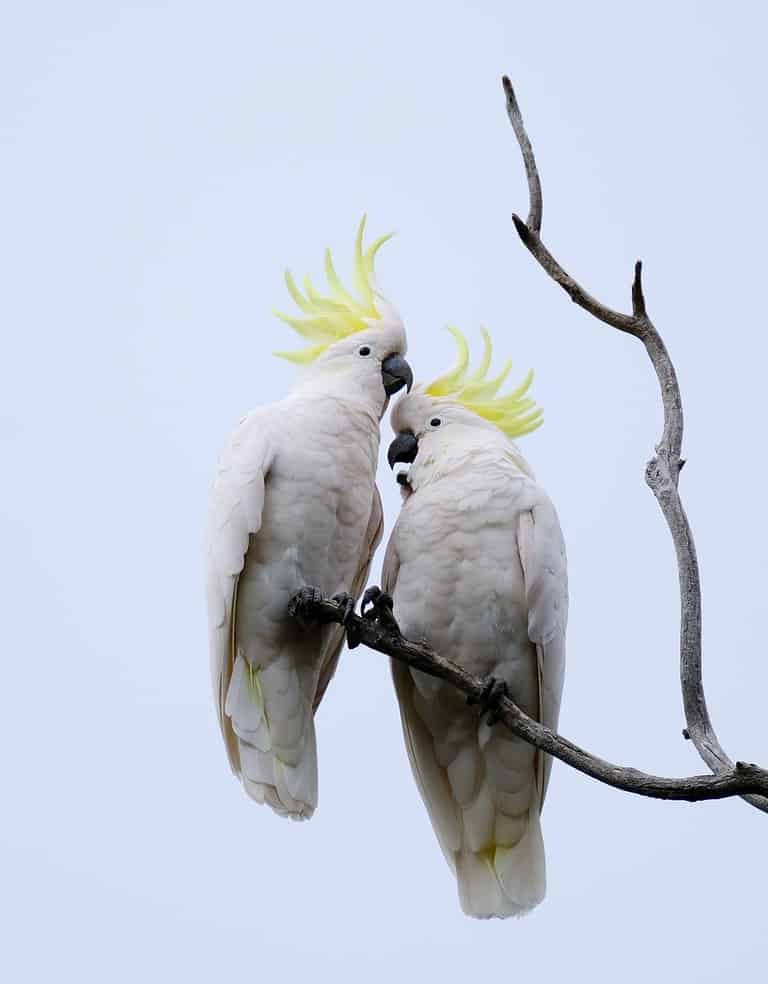
Cocky Bennett the Sulphur-crested Cockatoo – 120 Years Old

Sulphur-crested cockatoos usually live around 70 years in captivity.
©Martin Pelanek/Shutterstock.com
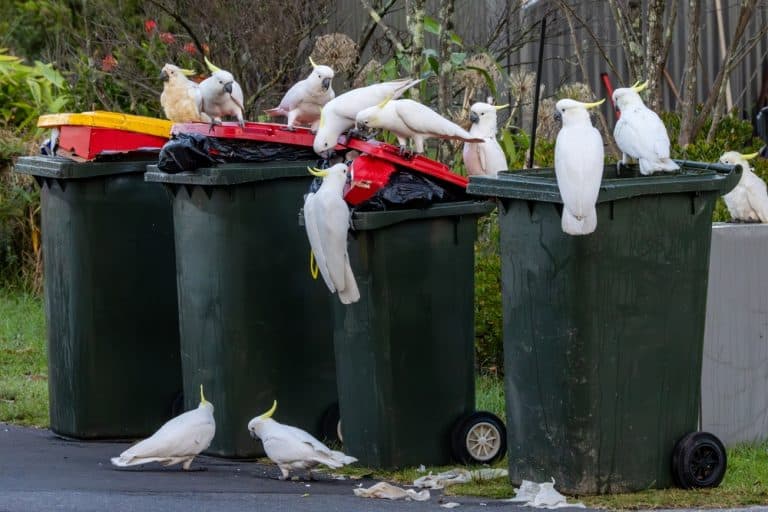
A sulphur-crested cockatoo (Cacatua galerita) named Cocky Bennett is the oldest bird of all time., living to the ripe old age of 120. Reportedly living from 1796 to 1916, this male sulphur-crested cockatoo is reported as the longest-living cockatoo. A beloved pet, Cocky Bennett’s owner even had an obituary printed when he died.
Cocky Bennett traveled the world many times with his owner, Captain Ellis, a merchant seaman. After Ellis died, Cocky was passed on to Ellis’ nephew. Cocky Bennett changed hands a few times, settling in the Sea Breeze Hotel in Sydney, Australia.
Cocky became known as the “Cock of the bar,” and was regularly serving up entertainment with his phrases. Cocky spent the last several years of his life virtually featherless, which inspired his most legendary quotes: If I had another bloody feather, I’d fly.
Fred is another famous sulphur-crested cockatoo who is thought to be 112 years old. Fred is living at the Bonorong Wildlife Sanctuary in Hobart, Tasmania.