
Quick Take
- Venezuela is home to the world’s largest spider, the Goliath birdeater, renowned for its impressive 12-inch leg span.
- Arboreal tarantulas in the Avicularia, Amazonias, Psalmopoeus, and Tapinauchenius genera inhabit the Andes mountain forests in the northwest or the Amazon rainforests in the south.
- 90% of New World tarantulas have urticating setae, but some species, such as Psalmopoeus irminia, do not, relying on their speed and potent venom for defense.
- Thalerommata and Trichopelma are small spiders that excavate silk-lined trapdoor burrows in the ground.
Venezuela is on the northern coast of South America, bordered by the Caribbean Sea. Its diverse geography includes the Andes mountains in the northwest, the Orinoco River Basin across central Venezuela, the Guiana Highlands in the southeast, and the Amazon River Basin in the south. From arboreal species like Avicularia and Psalmopoeus to large, vibrant terrestrial spiders like those in the Xenesthis genus, Venezuelan tarantulas have adapted to fill many different ecological niches.
There are nearly 50 tarantula species in Venezuela. The list below includes currently recognized tarantula species native to the country according to the World Spider Catalog as of December 2025. An asterisk after the tarantula’s name indicates that it is the type species. See our complete list of tarantula species for a comprehensive reference of all tarantula species.

Acanthoscurria Ausserer, 1871
Tarantulas in the genus Acanthoscurria are terrestrial spiders that favor warm, humid conditions. Burrows are frequently found under rocks and fallen logs in rainforests and other forested areas with significant rainfall. They are generally large spiders, with some species reaching leg spans of up to 8 inches. These tarantulas often have dark bodies with light-colored bands at the leg joints and reddish setae on their legs and abdomens. A. cordubensis has a listed distribution that covers all of South America, with certain exceptions, but specific locality information is not given for Venezuela. A. turumban is known from the city of San Martín de Turumbán, Cuyuní River, and Anacoco Island in the State of Bolívar.
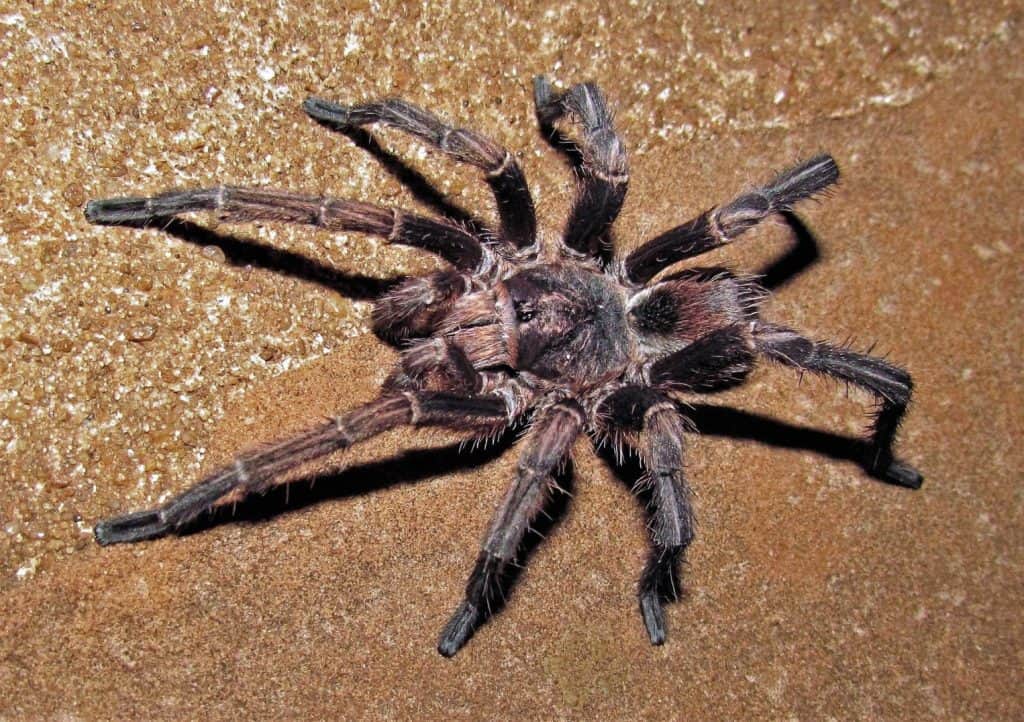
The rusty brown bird-eater, Acanthoscurria cordubensis, is a large spider with a leg span of 7.5 inches or more.
- Acanthoscurria cordubensis Thorell, 1894
- Common name: Rusty brown birdeater
- Distribution: South America, except Colombia, Suriname, Ecuador, and Chile
- Acanthoscurria turumban Rodríguez-Manzanilla & Bertani, 2010
- Common name: N/A
- Distribution: Venezuela
Amazonius Cifuentes & Bertani, 2022
Amazonius is a genus of arboreal tarantulas. A. subcaeruleus was originally described as Tapinauchenius subcaeruleus based on material from the pet trade. In 2025, it was transferred from Tapinauchenius to Amazonius. These medium-sized spiders can reach a leg span of up to 5 inches. Their coloration is generally brown to black. The cephalothorax and abdomen are densely covered with short, dark setae (hairs), with longer, lighter, reddish-colored setae interspersed on the abdomen. Their legs are also covered in short, dense setae. They are found in the lowland rainforest of the Amazon River Basin, located in southern Venezuela.
- Amazonius subcaeruleus (Bauer & Antonelli, 1997)
- Common name: Ghost tree spider
- Distribution: Colombia, Ecuador, Venezuela
Avicularia Lamarck, 1818
Avicularia tarantulas are arboreal, favoring mid-to-upper levels of the canopy in rainforest environments. They are generally small to medium-sized tarantulas, with leg spans measuring 4-6 inches on average. A. avicularia is mostly black with a greenish metallic sheen on its carapace and femora. It has long, dense, pinkish-orange setae, and the end of each leg is pink. A. minatrix has a coppery-colored carapace, a black abdomen with orange lateral spots, dense gold to brown setae with a pink sheen, longer orange guard hairs, and light-colored bands on its legs. A. variegeta is greyish overall, with short setae on its carapace, legs, and palps with a green sheen. It has a dark abdomen with reddish guard setae and pale rings at the distal ends of the legs. Most specimens have grizzled setae on the legs and palps, except for those found in Venezuela.
- Avicularia avicularia (Linnaeus, 1758)
- Common name: Pinktoe tarantula
- Distribution: Venezuela, Guyana, Suriname, French Guiana, Trinidad and Tobago, Brazil, Peru, Bolivia
- Avicularia minatrix Pocock, 1903
- Common name: Redstripe pinktoe, red slate pinktoe, or Venezuelan pinktoe
- Distribution: Venezuela, Brazil
- Avicularia variegata F. O. Pickard-Cambridge, 1896
- Common name: Grizzled pinktoe, brick red pinktoe
- Distribution: Venezuela, Brazil
Bumba Pérez-Miles, Bonaldo & Miglio, 2014
The genus Bumba can be distinguished by type IV urticating setae, which are very short and fine with barbs and pointed tips. These burrowing spiders are generally medium-sized with a leg span between 4 and 6 inches. B. horrida has a fiery red cephalothorax and a black abdomen and legs. It has short, dense, dark setae on its legs and abdomen, giving it a velvety appearance. This tarantula is known from Amazonas Federal Territory, known as Amazonas, Venezuela’s Amazonian region and the southernmost state.
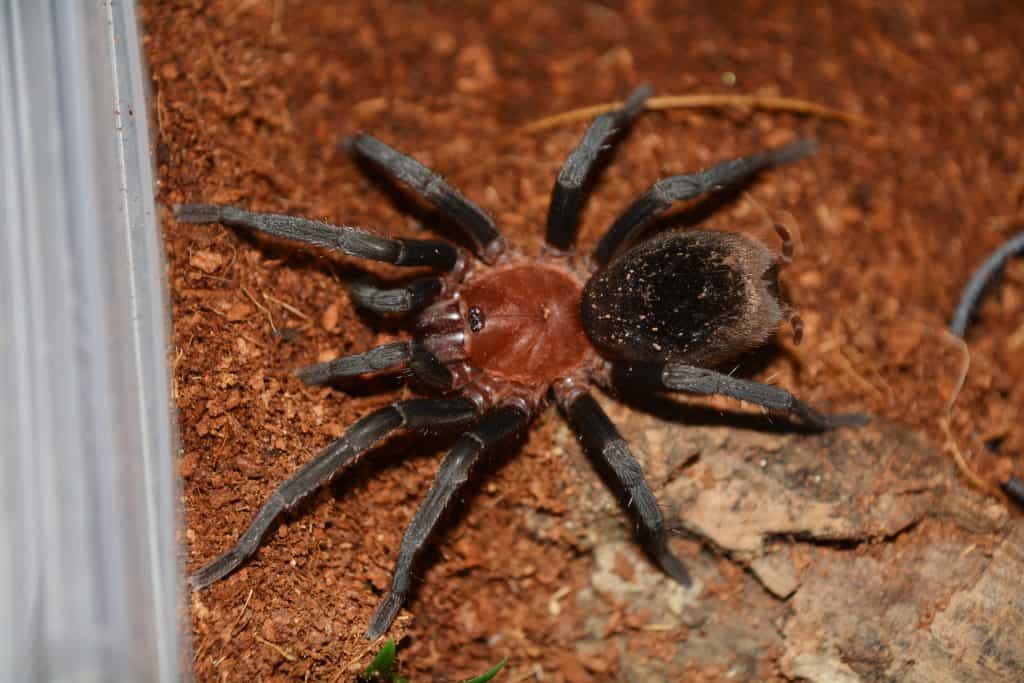
Bumba horrida is known as the Brazilian redhead for its fiery red carapace.
- Bumba horrida* (Schmidt, 1994)
- Common name: Brazilian redhead, Amazon redhead
- Distribution: Venezuela, Brazil
Chromatopelma Schmidt, 1995
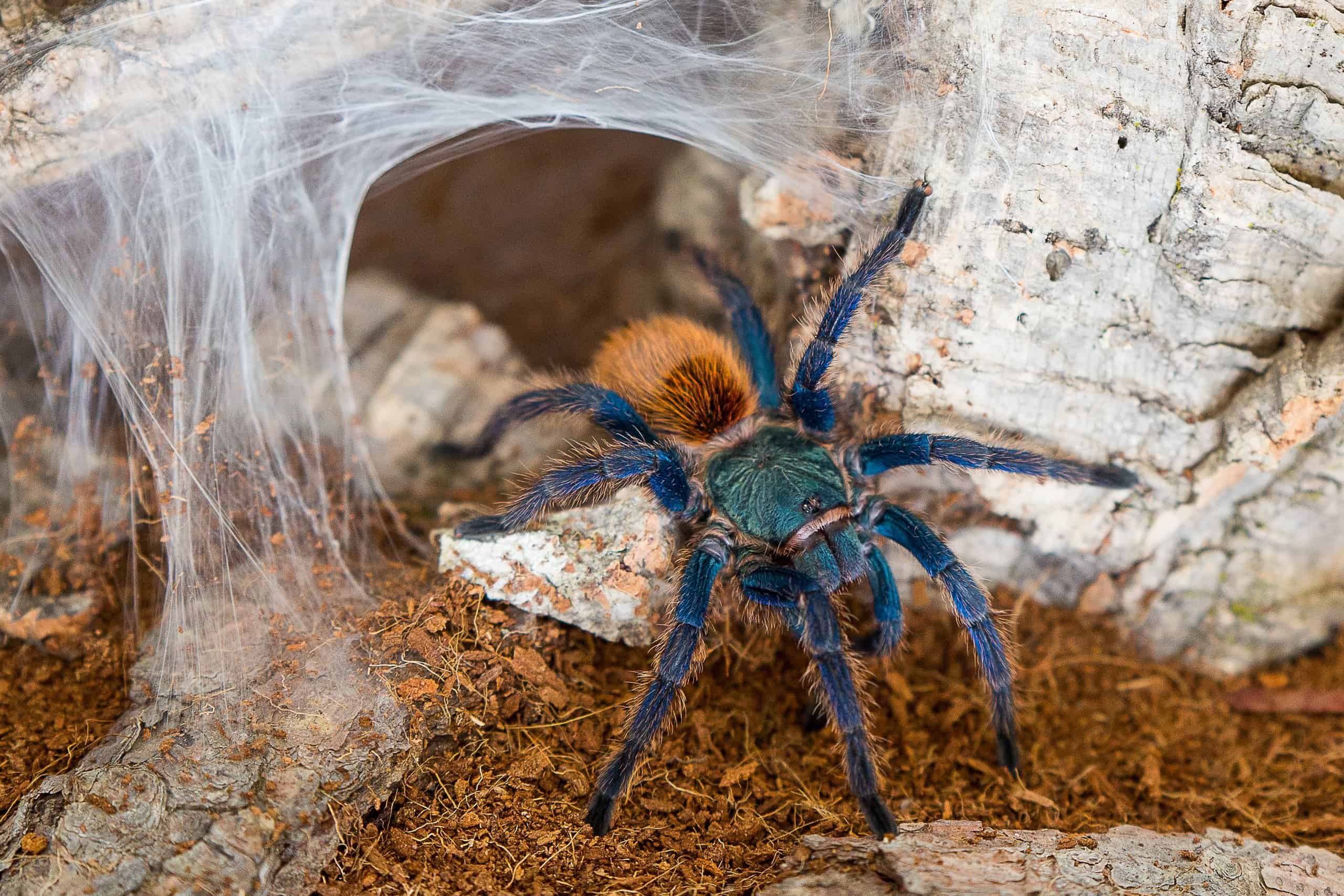
Chromatopelma is a monotypic genus, containing only Chromatopelma cyaneopubescens. This medium to large-sized spider is commonly known as the greenbottle blue tarantula, or the GBB. It is popular in the commercial pet trade due to its striking blue-green carapace, vivid coppery-colored abdomen, metallic blue legs, and long orange setae on its legs and abdomen. C. cyaneopubescens typically excavates heavily webbed burrows under tree roots and shrubs. It is primarily found in the coastal scrublands of the Paraguaná Peninsula, located in Falcón State in northern Venezuela.
- Chromatopelma cyaneopubescens* (Strand, 1907)
- Common name: Greenbottle blue
- Distribution: Venezuela
Cyclosternum Ausserer, 1871
Tarantulas in the genus Cyclosternum are burrowing spiders that are generally small to medium-sized. They favor grasslands and forests in humid, tropical areas. Little is known about the Cyclosternum tarantulas in Venezuela, and species-level identification has proven difficult. The genus is often considered problematic for many reasons, including inaccurate type localities, historically insufficient descriptions, conflicting illustrations, inadequate associations between the sexes, and overlapping species distributions.
- Cyclosternum familiare (Simon, 1889)
- Common name: N/A
- Distribution: Venezuela
- Cyclosternum kochi (Ausserer, 1871)
- Common name: N/A
- Distribution: Venezuela
- Cyclosternum rufohirtum (Simon, 1889)
- Common name: N/A
- Distribution: Venezuela
Cyriocosmus Simon, 1903
Cyriocosmus tarantulas are often small, or dwarf, tarantulas, but some species may grow to medium-sized. Total lengths range from 0.39 inches to 1.25 inches, not including the chelicerae (mouthparts) and spinnerets. Cyriocosmus spiders generally have a uniformly colored carapace or a bicolored pattern of reddish-brown and black covered in short, golden setae. The abdomen is uniformly dark colored or it may have stripes on the sides.It is covered with short, dense, black setae, interspersed with longer, pale setae, and has a glossy, reddish-brown patch of urticating setae. The legs are uniformly hairy and may have pale, longitudinal stripes on the forward-facing side. They can be found in both tropical and non-tropical regions, from lowland rainforests to high elevation areas up to 9,842 feet. Burrows may be found inside or under fallen logs, rocks, or other forest debris.
- Cyriocosmus elegans (Simon, 1889)
- Common name: Trinidad dwarf
- Distribution: Venezuela, Trinidad and Tobago
- Cyriocosmus leetzi Vol, 1999
- Common name: Colombian dwarf tiger, Venezuelan dwarf beauty
- Distribution: Colombia, Venezuela
- Cyriocosmus nicholausgordoni Kaderka, 2016
- Common name: N/A
- Distribution: Venezuela
- Cyriocosmus venezuelensis Kaderka, 2010
- Common name: N/A
- Distribution: Venezuela
- Cyriocosmus williamlamari Kaderka, 2016
- Common name: N/A
- Distribution: Venezuela
Euthycaelus Simon, 1889
In Venezuela, Euthycaelus burrowing tarantulas are found in the Andean Region, specifically in the Cordillera de la Costa and Cordillera de Mérida mountain ranges. E. astutus and E. colonica are both known from San Esteban National Park in Carabobo, while E. norae is known from La Azulita, Merida. Little is known about E. astutus and E. norae, but E. colonica is known as the Venezuelan orange and bronze tarantula in the pet trade. This spider has a bronze-colored carapace, an orange abdomen and femora, and brown legs with pale bands. Its legs and abdomen are covered with light-colored setae. It is a medium-sized spider, reaching a leg span of around 5 inches.
- Euthycaelus astutus (Simon, 1889)
- Common name: N/A
- Distribution: Venezuela
- Euthycaelus colonica* Simon, 1889
- Common name: Venezuelan orange and bronze tarantula
- Distribution: Venezuela
- Euthycaelus norae Guadanucci & Weinmann, 2014
- Common name: N/A
- Distribution: Colombia, Venezuela
Hapalopus Ausserer, 1875
Hapalopus tarantulas are known for the spotted pattern on the sides, top, and/or underside of the abdomen, sometimes also with stripes or speckling on the sides. They are commonly known as “pumpkin patch tarantulas,” as these patterns are often shades of orange and black. H. nigriventris is known from the State of Falcón and has been described as having a red-orange pattern of broken stripes, not spots. H. triseriatus is known from the valley of Lagunillas, part of the Cordillera de Mérida mountain range in northwestern Venezuela. It has been described as having a gold-spotted abdomen. These burrowing tarantulas are found in tropical, dry forests and montane regions.
- Hapalopus nigriventris (Mello-Leitão, 1939)
- Common name: N/A
- Distribution: Colombia, Venezuela
- Hapalopus triseriatus Caporiacco, 1955
- Common name: N/A
- Distribution: Colombia, Venezuela
Holothele Karsch, 1879
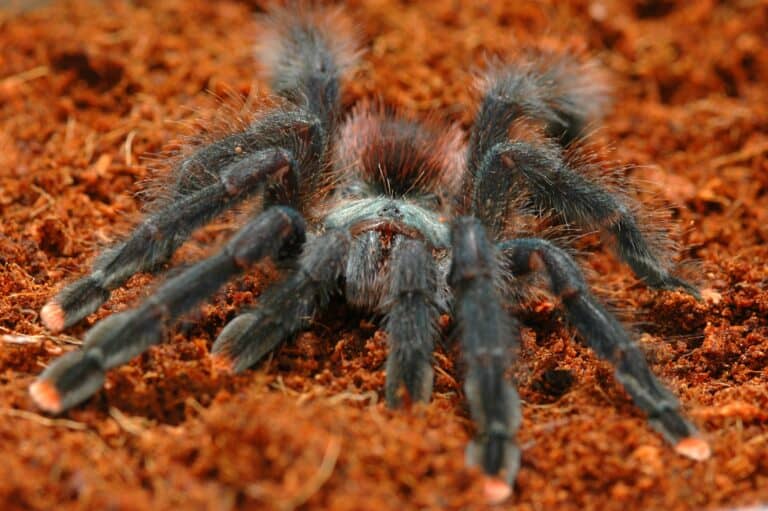
Holothele tarantulas are relatively small burrowing spiders with leg spans typically measuring 3 to 4 inches. H. longipes has a wide distribution in the West Indies and South America and has been recorded in a variety of habitats from near sea level to elevations of over 14,000 feet. The cephalothorax is completely covered in long, pinkish-orange setae. Its abdomen is covered with short, dense, black setae, interspersed with longer orange setae. However, they lack urticating setae, which is uncommon in New World tarantulas. Its dark legs are covered in black setae with patches of orange and blue, and its femora are darker than the rest of its legs. Researchers note that there may be substantial variations in color depending on geographical location.
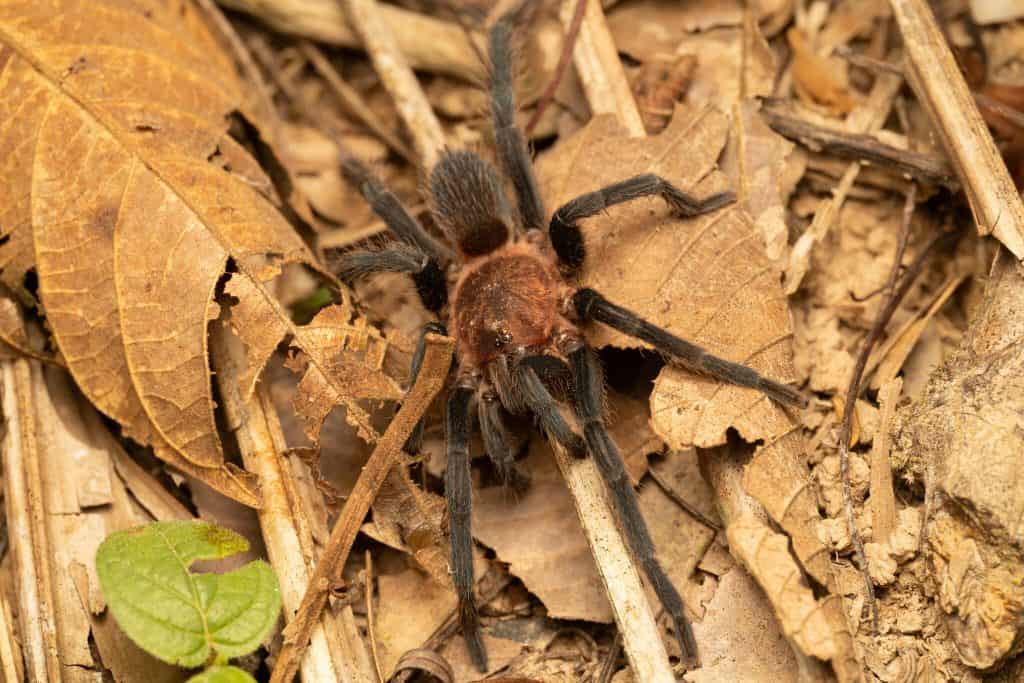
Holothele longipes is also known as the Trinidad pink tarantula.
- Holothele longipes* (L. Koch, 1875)
- Common name: Trinidad pink tarantula
- Distribution: Venezuela, Bolivia, Trinidad and Tobago, French Guiana, Suriname, Brazil
Miaschistopus Pocock, 1897
Miaschistopus tetricus is the only member of the genus Miaschistopus. The holotype specimen indicates it is a small to medium-sized spider, with a total length of around 1 inch. Its longest legs (pair IV) measure up to 2 inches. M. tetricus also has type I urticating setae. Additional aspects of the spider’s ecology and biology are still undocumented. It is known from the region around the capital city of Caracas, in the Caracas Valley of the Cordillera de la Costa mountain range in northern Venezuela.
- Miaschistopus tetricus* (Simon, 1889)
- Common name: N/A
- Distribution: Venezuela
Neischnocolus Petrunkevitch, 1925
Neischnocolus spiders are small burrowing tarantulas that are generally reddish-brown overall. They have short, reddish brown or dark brown setae on their legs, and some species also have cream-colored banding. Their abdomens are dark brown or black with long red setae on the top and sides. Some species may also have slight patterns on the top and/or sides. Neischnocolus can be differentiated from nearly all other genera by the presence of subtype Id urticating setae, which are unusually long. N. weinmanni is known from La Azulita, Apure, Mérida.
- Neischnocolus weinmanni (Pérez-Miles, 2008)
- Common name: N/A
- Distribution: Venezuela
Neoholothele Guadanucci & Weinmann, 2015
Neoholothele tarantulas are terrestrial spiders found in northeastern Venezuela. Both males and females have a dark carapace with golden setae on the cephalic (head) region. Females also have a black and yellow striped pattern on the top of their abdomen. The legs are covered with light brown setae with gold setae on the femora. The holotype specimen of N. incei has a total length of up to 1.17 inches, and the longest legs (pair IV) measure up to 1.31 inches.
- Neoholothele incei* (F. O. Pickard-Cambridge, 1899)
- Common name: N/A
- Distribution: Trinidad and Tobago, Venezuela
Ozopactus Simon, 1889
Ozopactus is a monotypic genus, including only Ozopactus ernsti. This tarantula is described as having a wide, thick, reddish-brown cephalothorax, reddish-brown legs, and a dark abdomen with shaggy, yellow setae. The holotype spider’s cephalothorax measures 0.75 inches in length and its abdomen measures 0.90 inches. Its longest legs (pair IV) measure 1.92 inches. O. ernesti is a burrowing spider, believed to have been found on a mountain ridge near Caracas.
- Ozopactus ernsti* Simon, 1889
- Common name: N/A
- Distribution: Venezuela
Plesiopelma Pocock, 1901
Plesiopelma tarantulas are generally small to medium-sized spiders. The tarantulas in this genus tend to favor mountainous regions. They frequently excavate their burrows under rocks, lined and sometimes covered with heavy silk. P. gertschi was originally described from Barcelona, Anzoátegui in northeastern Venezuela, in the foothills of the Cordillera region.
- Plesiopelma gertschi (Caporiacco, 1955)
- Common name: N/A
- Distribution: Venezuela
Psalistops Simon, 1889
Psalistops was previously in the family Barychelidae (brushed trapdoor spiders) before it was transferred to Theraphosidae in 2020. These spiders dig silk-lined burrows with trapdoors camouflaged using soil, leaves, rocks, wood, or other debris. They are generally small to medium-sized tarantulas and are distinguished by thick scopulae on the tarsi and metatarsi. P. melanopygius is known from the region around Caracas, located in the Caracas Valley of the Cordillera de la Costa.
- Psalistops melanopygius* Simon, 1889
- Common name: N/A
- Distribution: Venezuela
Psalmopoeus Pocock, 1895
Psalmopoeus tarantulas are arboreal spiders that lack urticating setae, relying on speed and venom for defense. They are medium to large spiders, with most species averaging leg spans of 5-7 inches. P. irminia has been documented under bark and in tree cavities in forested areas in the Gran Sabana region near the Venezuelan border. It is a hairy, grey to black tarantula with vivid orange markings on its legs and a tiger-striped abdomen. P. langenbucheri is smaller than most Psalmopoeus species, only reaching up to 4 inches in leg span. Its cephalothorax and abdomen are brown with golden setae, and its abdomen has a darker line down the center. Its hairy legs are brown with red markings. These spiders are known from the northern mountainous region around Caripe, in the State of Monagas in eastern Venezuela.
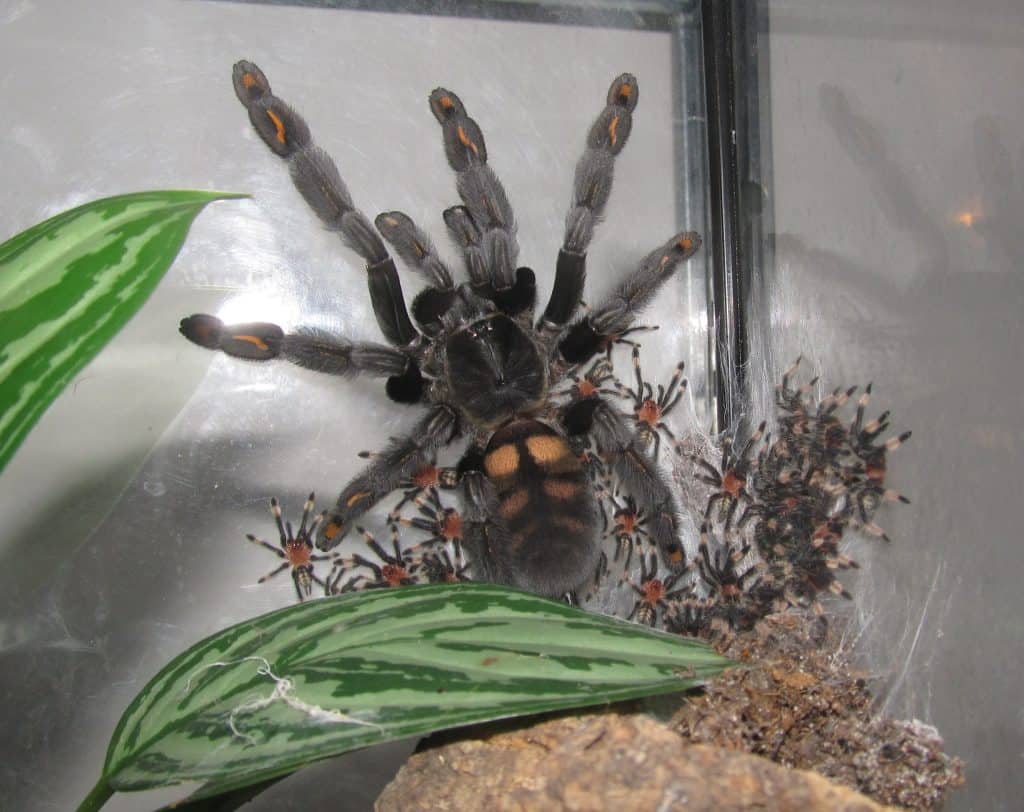
The Venezuelan suntiger, Psalmopoeus irminia, has some of the most potent venom of any New World tarantula.
- Psalmopoeus irminia Saager, 1994
- Common name: Venezuelan suntiger
- Distribution: Venezuela, Guyana, Brazil
- Psalmopoeus langenbucheri Schmidt, Bullmer & Thierer-Lutz, 2006
- Common name: Venezuelan chevron
- Distribution: Venezuela
Schismatothele Karsch, 1879
Tarantulas in the genus Schismatothele are relatively small burrowing tarantulas without urticating setae. Little is known about these spiders outside of taxonomic descriptions. Their distribution extends from the extreme north of the Andes Mountains south to the Amazon rainforest, with the most diversity found along the Andes.
- Schismatothele caiquetia Moeller, Weinmann & Guadanucci, 2023
- Common name: N/A
- Distribution: Venezuela
- Schismatothele inflata* (Simon, 1889) (type)
- Common name: N/A
- Distribution: Venezuela
- Schismatothele kastoni (Caporiacco, 1955)
- Common name: N/A
- Distribution: Venezuela
- Schismatothele lineata Karsch, 1879
- Common name: N/A
- Distribution: Venezuela
- Schismatothele merida Moeller, Weinmann & Guadanucci, 2023
- Common name: N/A
- Distribution: Venezuela
- Schismatothele olsoni Guadanucci, Perafán & Valencia-Cuéllar, 2019
- Common name: N/A
- Distribution: Colombia, Venezuela
- Schismatothele opifex (Simon, 1889)
- Common name: N/A
- Distribution: Venezuela
- Schismatothele timotocuica Moeller, Weinmann & Guadanucci, 2023
- Common name: N/A
- Distribution: Venezuela
Tapinauchenius Ausserer, 1871
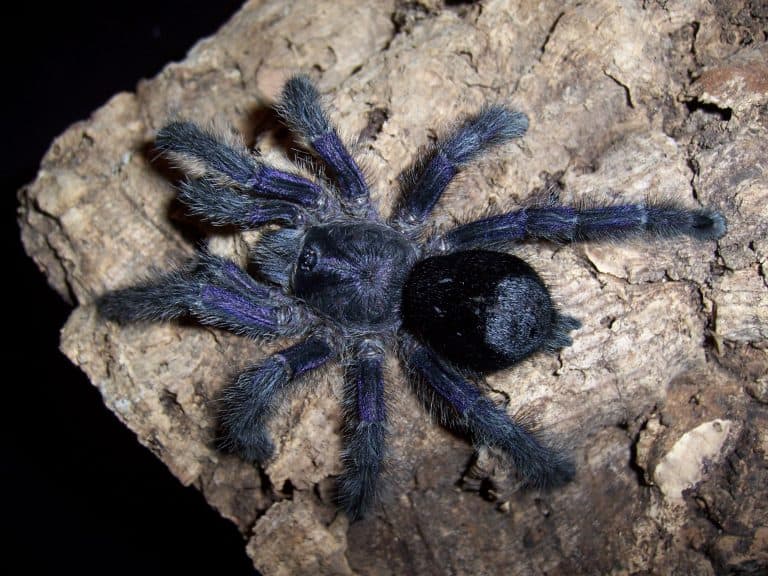
Tapinauchenius tarantulas are medium-sized arboreal spiders, typically reaching a leg span of 4-5 inches. They are frequently found under loose tree bark and in tree cavities in humid forests and tropical rainforests. These spiders lack both stridulatory, or noise-making, organs and urticating setae. They can also be distinguished by the lack of pattern change during development. Juveniles of this genus are a uniform dark grey with bluish tints. T. latipes has a greenish-bronze carapace with a brown abdomen and legs. Its legs are covered in dense, pale setae and have light-colored bands. It is believed to have been found near Puerto Cabello, a city on Venezuela’s northern coast.
- Tapinauchenius latipes L. Koch, 1875
- Common name: Ghost tree tarantula
- Distribution: Venezuela, Trinidad and Tobago, Guyana
Thalerommata Ausserer, 1875
In 2023, Thalerommata was transferred from the family Barychelidae, brushed trapdoor spiders, to the family Theraphosidae. These arboreal tarantulas are very small, rarely exceeding 2 inches in leg span. They are distinguished from other genera by the scale-like iridescent setae that cover their abdomens and sometimes legs, as seen on T. maculata. It can also be distinguished from other Thalerommata species by the scopulae (dense tufts of microscopic hairs) on the tarsi and metatarsi. Its name is derived from the Latin word meaning stained, referring to the stained pattern on its carapace. T. maculata was found in Monagas State on the road between the Guácharo Cave and the town of Caripe.
- Thalerommata maculata Bertani & Raven, 2023
- Common name: N/A
- Distribution: Venezuela
Theraphosa Walckenaer, 1805
Tarantulas in the genus Theraphosa are renowned for their impressive size. Theraphosa blondi, the Goliath birdeater, is widely regarded as the largest spider on Earth by both mass and body length. It measures 4.75 inches in length with a leg span of up to 12 inches. It weighs up to 6 ounces. T. blondi is light to dark brown with long, pale setae on its legs and abdomen. T. apophysis can reach a similar size to T. blondi, but typically does not weigh as much. It has an overall brown body with reddish-orange setae. Juveniles have distinct pale pink tips at the end of their legs. Theraphosa spiders can be found in deep, silk-lined burrows in the rainforest, sometimes under roots or rocks.
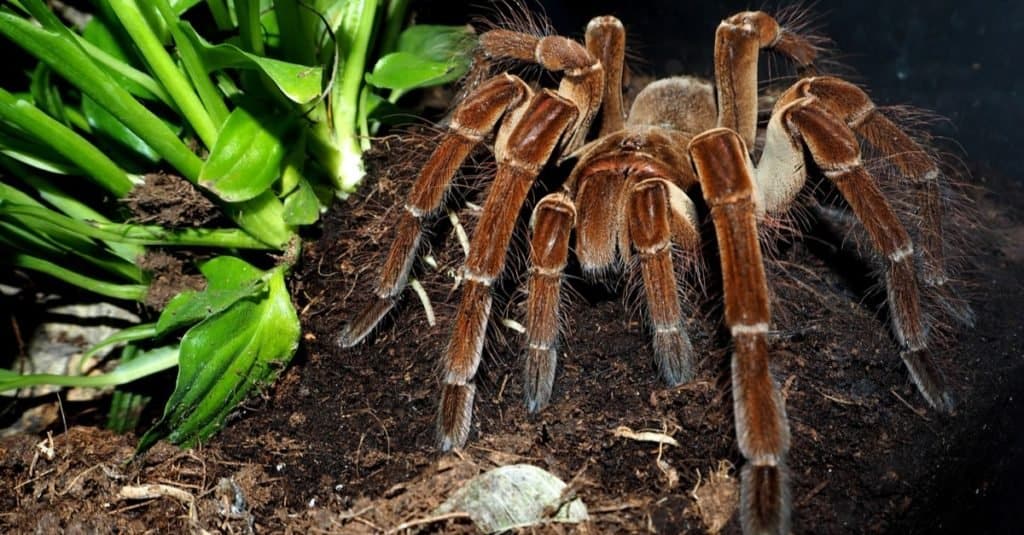
Goliath bird eating spiders do not typically eat adult birds, but they may eat bird eggs or young chicks.
©NataliSel/Shutterstock.com
- Theraphosa apophysis (Tinter, 1991)
- Common name: Goliath pinkfoot
- Distribution: Colombia, Venezuela, Brazil
- Theraphosa blondi* (Latreille, 1804)
- Common name: Goliath bird eater
- Distribution: Venezuela, Brazil, Guyana
Trichopelma Simon, 1888
Trichopelma is a genus of small tarantulas, with the carapace of its largest species measuring between 0.33 and 0.44 inches in length. These spiders are generally shades of greyish-brown to dark brown with a dot pattern on the abdomen. Members of this genus excavate trapdoor burrows in the ground. Aside from type locality, information on specific spiders is scarce. T. coenobita is known from San Esteban National Park in Carabobo State, which is a coastal mountainous region. T. steini is known from the mountain town of Tovar Colony in Aragua State.
- Trichopelma coenobita (Simon, 1889)
- Common name: N/A
- Distribution: Venezuela, Trinidad and Tobago
- Trichopelma steini (Simon, 1889)
- Common name: N/A
- Distribution: Venezuela
Xenesthis Simon, 1891
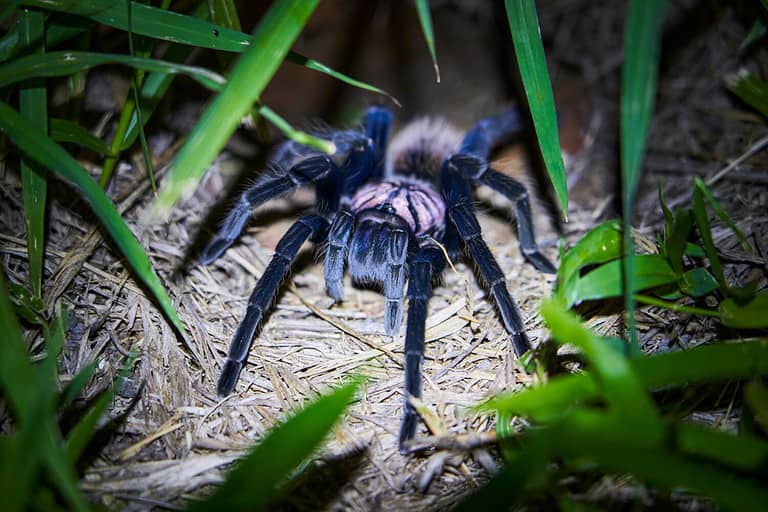
Tarantulas in the Xenesthis genus are large terrestrial spiders, reaching leg spans of 7-9 inches. They dig deep burrows in rainforest or montane forest habitats. These spiders are vibrantly colored and can be distinguished by the extensive scopulae on metatarsus IV. Little is currently known about the appearance of X. avanzadora, but X. immanis and X. intermedia are very similar in appearance. They are black overall with a pinkish-purple starburst on the carapace and reddish setae on the abdomen. They may also have bright pink setae with a blue sheen on their femora. X. intermedia can be differentiated by the length of leg IV, which is over three times the length of its carapace. X. avanzadora and X. immanis are known from Zulia State in northwestern Venezuela. X. intermedia is known from states of Trujillo and Mérida.
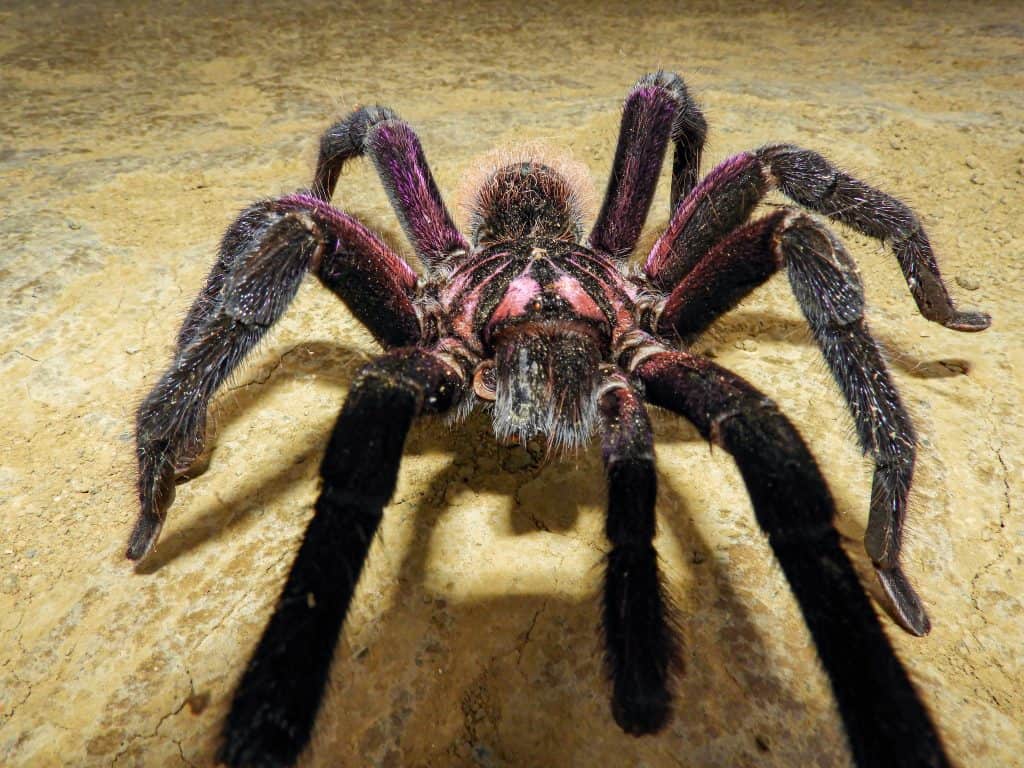
The Colombian lesserblack tarantula, Xenesthis immanis, is a large spider known for its vibrant pink coloring.
- Xenesthis avanzadora Sherwood, Gabriel, Peñaherrera-R., Brescovit & Lucas, 2023
- Common name: N/A
- Distribution: Venezuela
- Xenesthis immanis (Ausserer, 1875)
- Common name: Colombian lesserblack tarantula
- Distribution: Colombia, Venezuela
- Xenesthis intermedia Schiapelli & Gerschman, 1945
- Common name: Amazon blue bloom
- Distribution: Venezuela
Yanomamius Bertani & Almeida, 2021
Yanomamius tarantulas inhabit the Amazon regions of Brazil and Venezuela. Y. waikoshiemi was found in the Alto Orinoco-Casiquiare Biosphere Reserve in Amazonas State. The total length of the holotype female with chelicerae is 1.3 inches. The longest legs measure approximately 1.5 inches. Y. waikoshiemi are distinguished by leg I being the longest. These spiders are generally dark brown with a light border around the carapace. The femora are darker than the other leg segments, and they have indistinct leg rings and longitudinal stripes on the patellae. They also lack urticating setae. These tarantulas live in silk-lined burrows in the forest floor.
- Yanomamius waikoshiemi (Bertani & Araújo, 2006)
- Common name: N/A
- Distribution: Venezuela