
Quick Take
- Polar bears are the world’s largest bear species, but even they usually target prey smaller and easier to overpower than a full-grown walrus.
- Walruses are enormous, heavily defended marine mammals with long tusks, thick bodies, and the ability to move quickly in water, making them dangerous opponents.
- Polar bears mainly hunt seals, though they may scavenge walrus carcasses or occasionally attack young, injured, or vulnerable walruses.
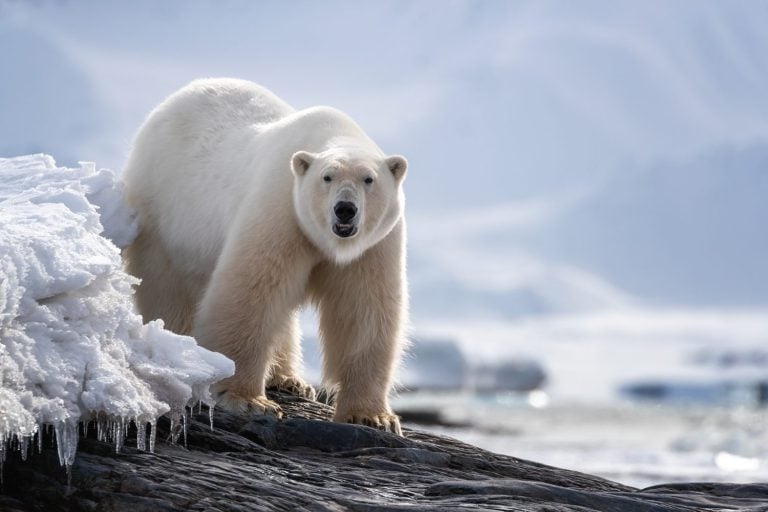
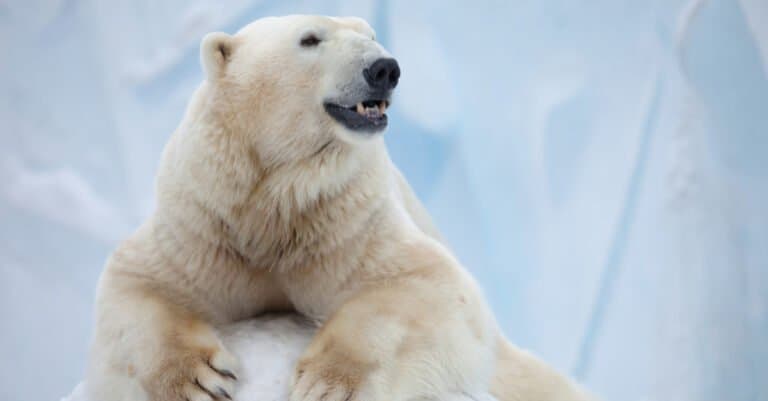
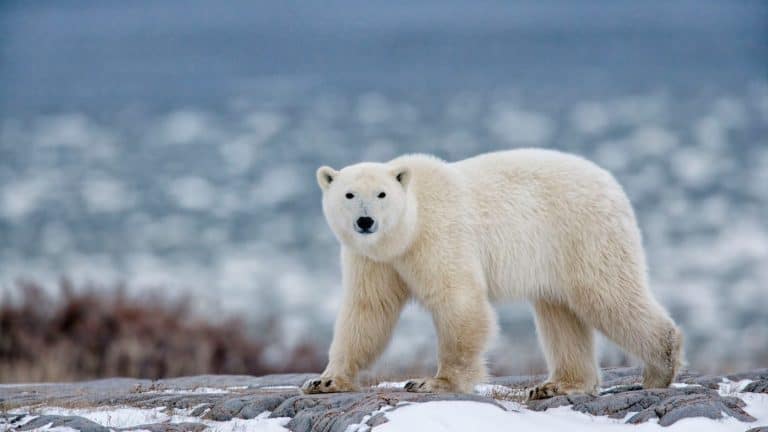
The polar bear is one of the most impressive animals on Earth. It is the largest of the world’s eight bear species, and adult males can weigh from about 772 to 1,433 pounds, with some exceptionally large individuals growing even bigger. But even a predator this powerful does not always go after prey it can easily overpower. In the video above, a polar bear approaches a walrus that is far larger than it looks prepared to handle.
A Polar Bear Faces a Massive Potential Meal
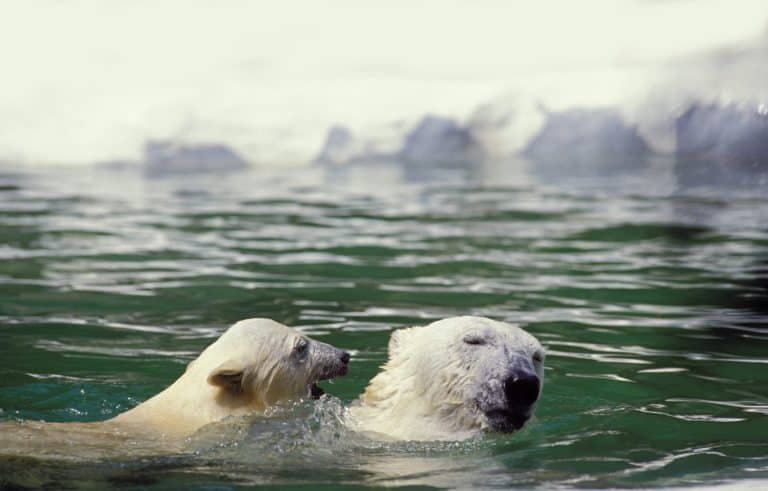
The short YouTube clip at the beginning of this post takes viewers into the Arctic, the polar bear’s natural home. Polar bears live across the circumpolar Arctic, including parts of Alaska, Canada, Greenland, Norway, and Russia. They are highly specialized hunters that depend mainly on seals, especially ringed and bearded seals, for the fat-rich diet that helps them survive in one of the harshest environments on the planet.
At the start of the video, the bear appears to be searching for food. That behavior is typical: polar bears spend much of their time traveling, watching, and waiting for hunting opportunities. While seals are their primary prey, polar bears may also scavenge carcasses and occasionally feed on birds, fish, eggs, or vegetation when more energy-rich food is not available. These items, however, make up only a small part of their overall diet.
Why a Walrus Is Such a Difficult Target
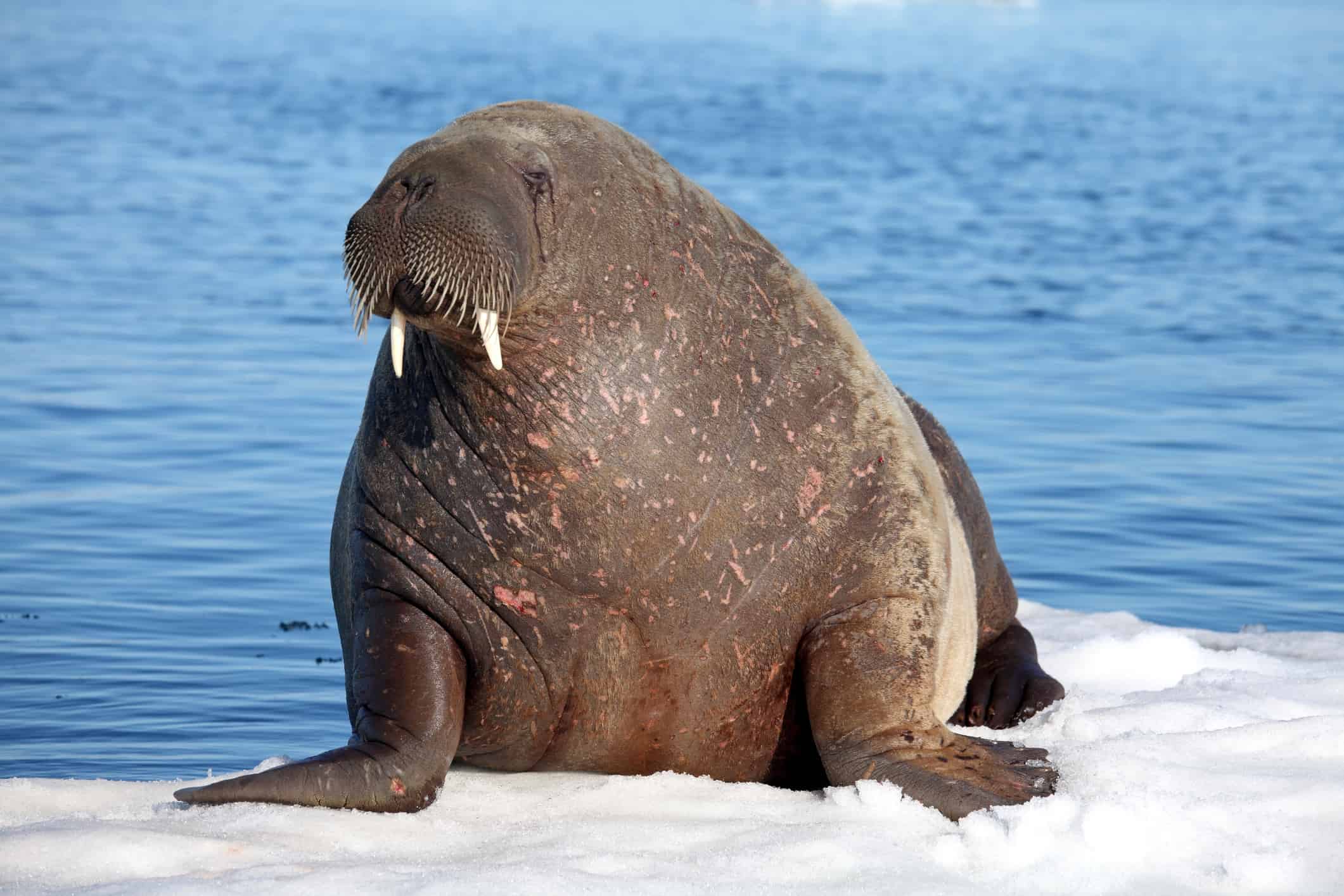
In this clip, the animal ahead is a walrus — a formidable species for any predator to challenge. Polar bears are known to scavenge dead walruses and may sometimes attack calves or weakened individuals, but healthy adult walruses are extremely difficult and dangerous prey. Their size alone makes them intimidating, and their long tusks can inflict serious injuries.
Walrus tusks are actually elongated canine teeth. Both males and females have them, and they continue growing throughout life, reaching lengths of about 3 feet. These tusks are used for defense, dominance, and even helping haul the animals out of the water and onto the ice.
How Big Is a Walrus?
Walruses are among the largest pinnipeds in the world. According to the Alaska Department of Fish and Game, adult males can grow to around 12 feet long and weigh as much as 4,409 pounds, or roughly 2 tons. That means a full-grown male walrus can outweigh most polar bears by a very large margin.
Walruses also live surprisingly long lives. In the wild, they may live up to about 40 years.
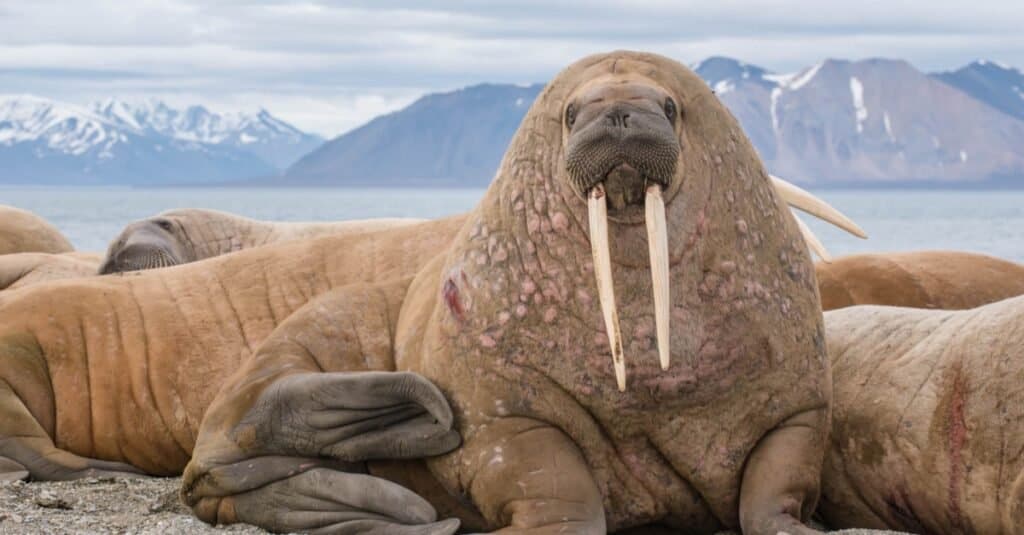
The walrus can live up to 40 years in the wild.
©Mikhail Cheremkin/Shutterstock.com
Size Is Not Their Only Advantage
A walrus’s defenses go beyond sheer bulk and tusks. In the water, walruses are strong swimmers and can move with surprising speed, which makes them even harder for predators to capture. Combined with their social behavior and tendency to gather in groups, these traits make walruses a risky choice for a hungry polar bear.
That is what makes an encounter like this so fascinating. The polar bear may be the largest bear in the world, but size and strength do not guarantee an easy victory. When the target is a walrus, even a top Arctic predator can find itself facing an animal that is simply too big, too dangerous, and too well-defended to become an easy meal.