
There’s nothing like a proper place to raise young, a home and hearth to nurture for the future. Birds build nests for this explicit purpose: to lay eggs, incubate them, and protect chicks until they are old enough to handle life on their own. Nests range from big to small, complicated to simple, but some nests built by birds are incredibly interesting.
Besides rearing and raising young, nests act as important ritual pieces for courtship in some bird species. They even function as roosts for some species. You may think that all birds build nests, and most do, but some risk it by leaving eggs on rocks or in the open air. More deviously, some birds are brood parasites.
This means they lay eggs in nests of other birds, letting these unwitting foster parents raise their young. Many bird species build new nests each year, but some reuse or refurbish old nests for multiple breeding seasons. For the birds on this list, crafting ornate, complicated nests annually seems like a lot of work. As such, let’s show appreciation for some of the most interesting nests in the world.
Flamingos

The Chilean and American Flamingos build volcano-shaped nests out of mud, laying only one or two precious eggs on top.
©Sergey Uryadnikov/Shutterstock.com
There are six flamingo species found worldwide. Each of them builds different nests, with the American and Chilean varieties incorporating mud plateaus for egg incubating. All flamingo species, however, build nests out of mud that look like volcanoes. Once a male wins over a female via an elaborate courting ritual/mating display, the pair heads out into mud or salt flats. There, they work together to build a veritable volcano out of mud.
These nests, relatively unique to the bird world, sit several feet atop the surrounding mud. This not only provides strong stability for the flamingo’s sizable eggs, but it also keeps them safe from rising water levels. Once the mud plateau is finished, the female lays one or two pale eggs on top. From there, both parents take turns incubating the egg until a chick hatches.
Weavers
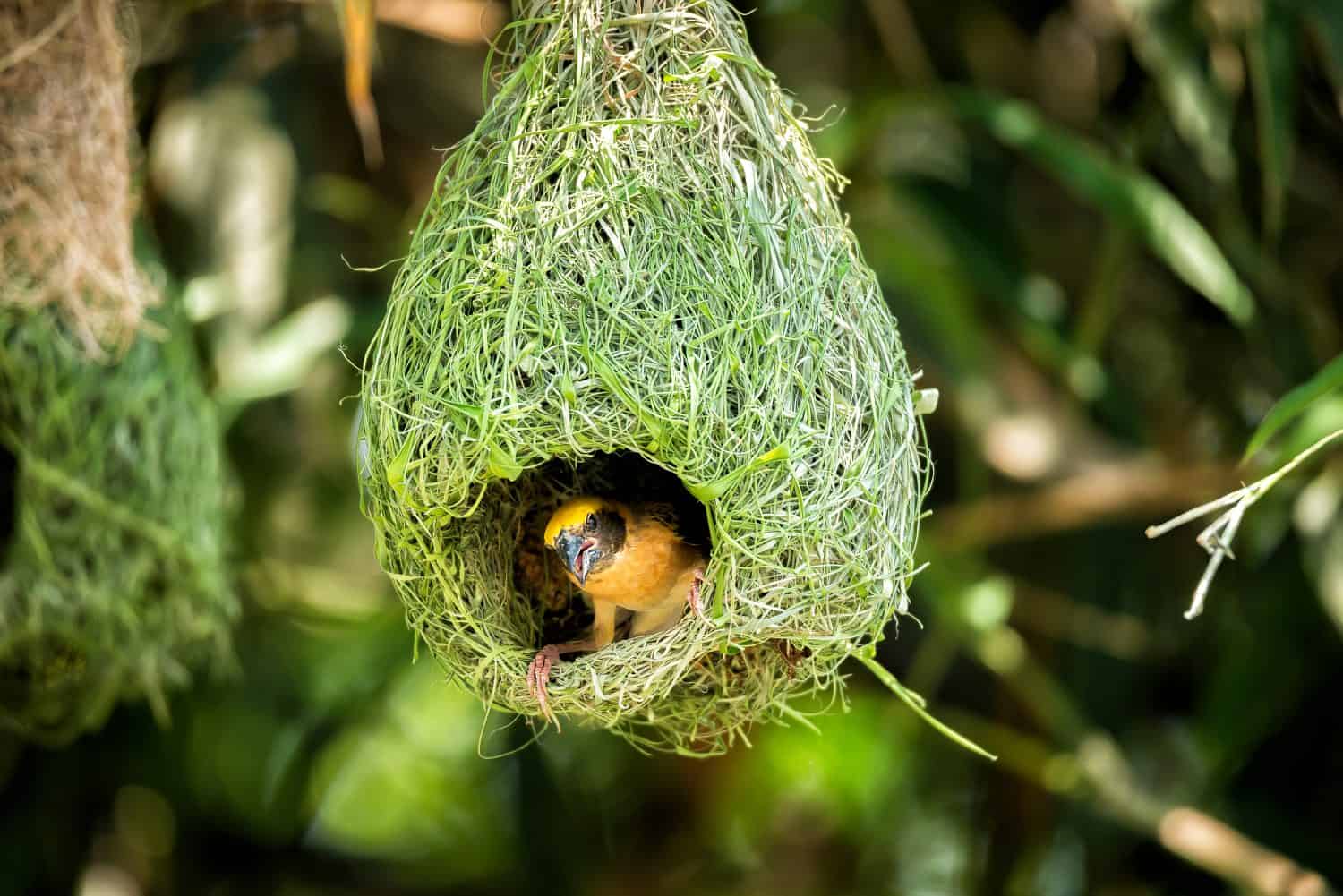
Male weaver birds spin hundreds of plant fibers or strings to build nests in elaborate courtship displays.
©DJ Creative Studio/Shutterstock.com
There are at least a hundred different species of weaver, most of them living in Africa or Asia. Their name speaks to their preternatural ability to spin a yarn. In most weaver species, it is the males who weave incredibly intricate nests out of twigs or plant fibers to attract a mate.
Like a human spinning a sweater out of yarn, male weavers start with a single strand of grass or even string. They knot it to a branch using their beak and claws, and then get to work weaving. Back and forth, they thread hundreds of fibrous strands until a nest takes shape.
It must be big enough for a door that fits the weavers, but not so big that it allows in unwelcome predators. To meet all the specifications, weavers’ nests typically take the shape of an oval with a lower inner chamber. Once complete, the craftsman will flutter his wings to invite a female.
If it’s up to par, she will promptly lay eggs inside. If not, the male must refine his technique and start again. There are even local styles. Tragically, most males never become parents. Even the ones that do must build several nests each mating season.
Bushtits
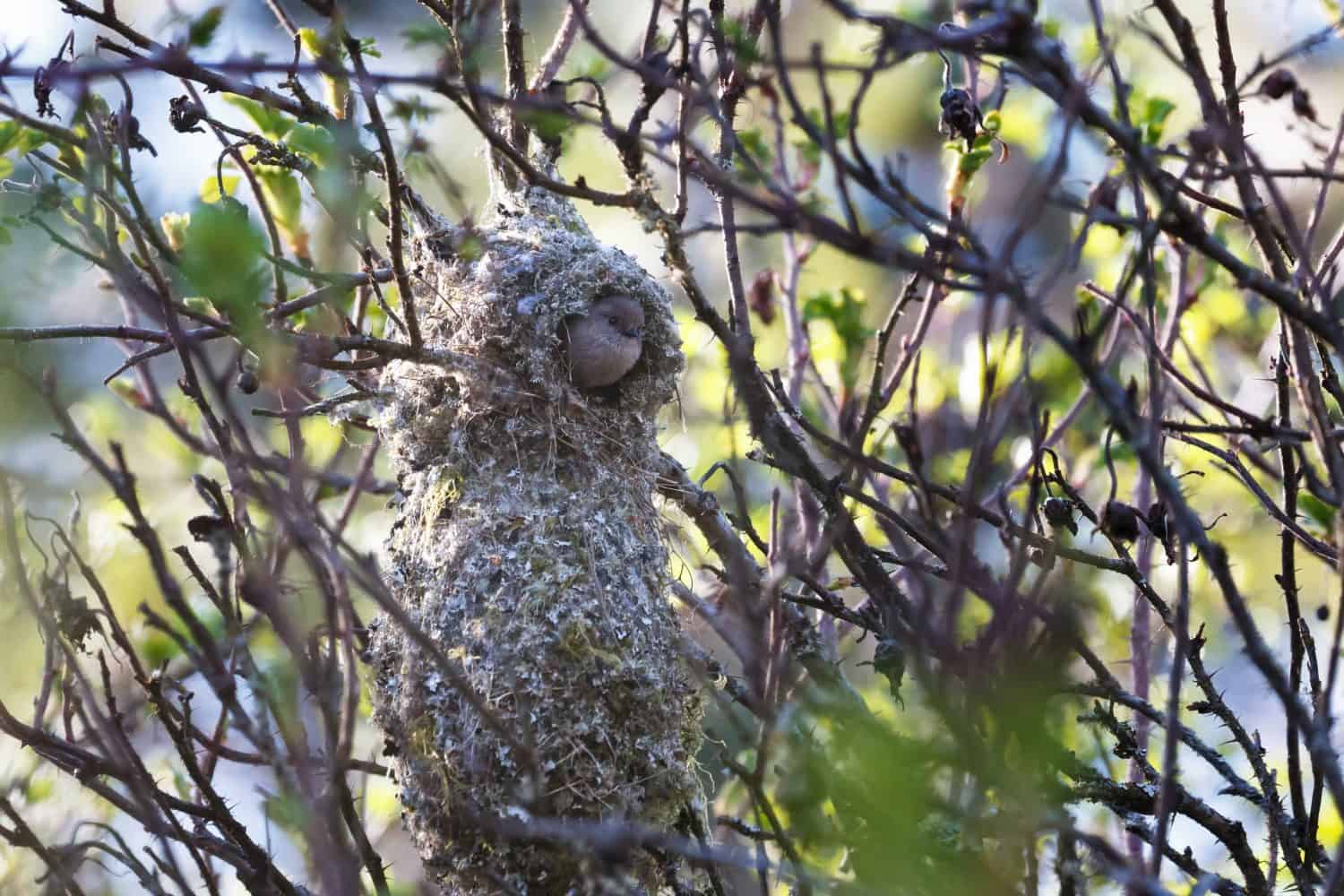
Bushtits often get help from other, non-breeding pair adults to construct their long, thick nests.
©Feng Yu/Shutterstock.com
They say it takes a village to raise a child, and in some ways, the bushtit embodies this proverb. Once a male and female pair bond, they select a suitable nesting site, typically affixed to branches or tree trunks at heights anywhere between a few and a hundred feet. But first, they test each site by hanging a spiderweb. If the site seems suitable, they get to work building their nest.
This construction period can last up to a month. Slowly, the nest, built with spider webs and plant material, takes shape. It often has a long tube-like structure with a hole in the side near the top that leads down to a safe, snug nesting bowl.
They often add feathers, fur, or other thick material for insulation or camouflage. It takes a village because bushtits often get help from unrelated individuals. Once complete, both the breeding pair plus the adult helpers sleep inside. Bushtits are known to reuse their communal nests for two broods, whereas most weavers typically build new nests for each brood.
Jacanas
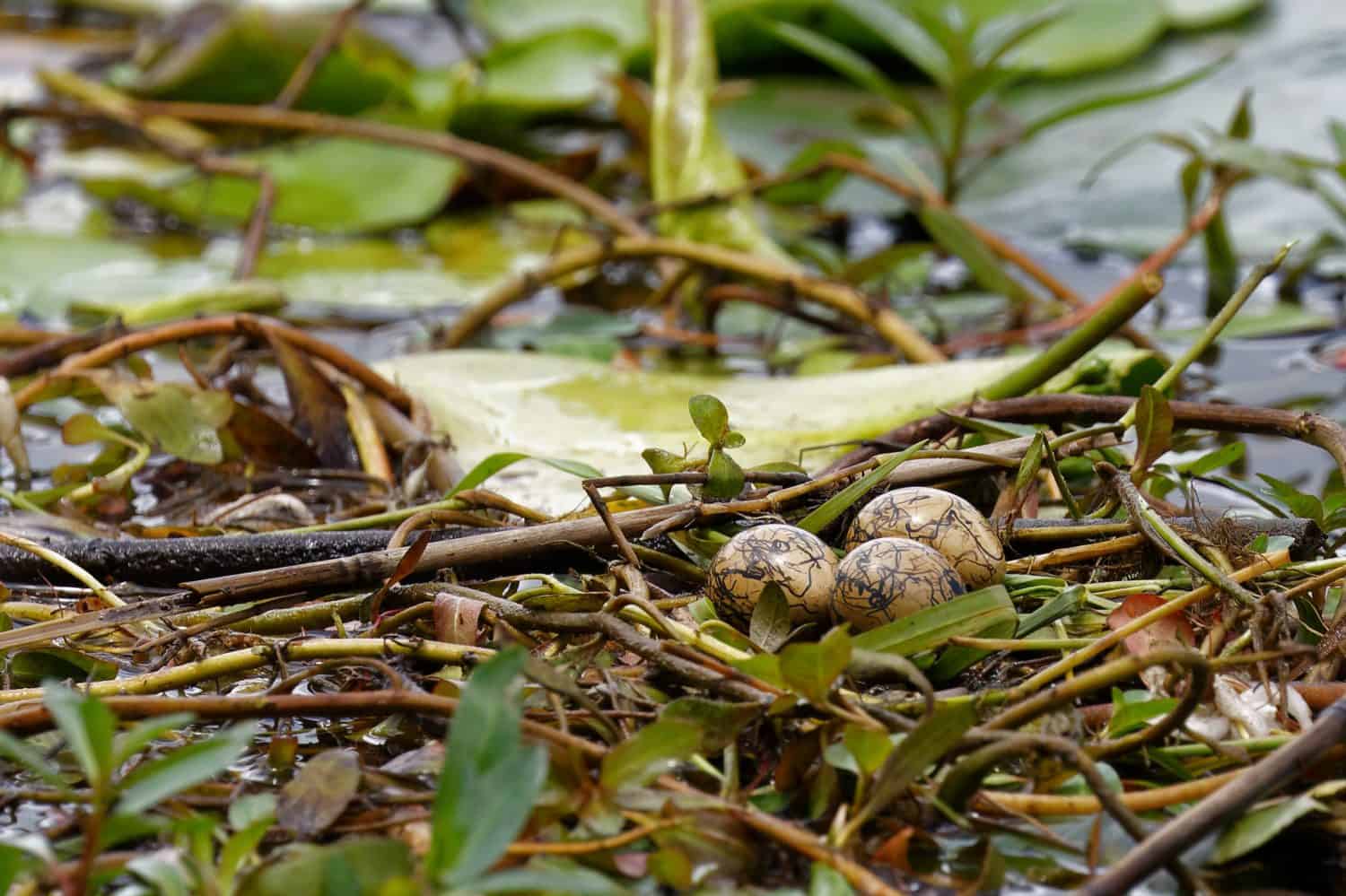
Jacanas are not only incubated on floating patches of vegetation, but the male parents also do all the work.
©Beate Wolter/Shutterstock.com
There are a lot of idiosyncrasies when it comes to the Jacana mating process. These tropical wading birds do things differently when it comes to both mating and egg incubation. Jacanas are polyandrous, which means the females will often have multiple mates and give birth to several rounds of eggs per year.
Once the eggs are out, the males take on the sole responsibility of raising the chicks. This is where it gets more interesting: the male parent builds the nest on floating patches of vegetation and incubates the eggs himself.
Once hatched, the fathers basically shadow the newborn chicks, who take care of themselves from birth. While jacana chicks feed themselves from birth, the male parent provides protection and brooding for several weeks. Periodically, over the next few weeks, the males will scoop them up under their wings. After about forty days, the fathers leave the younglings to embark on their first flights.
Sparrows
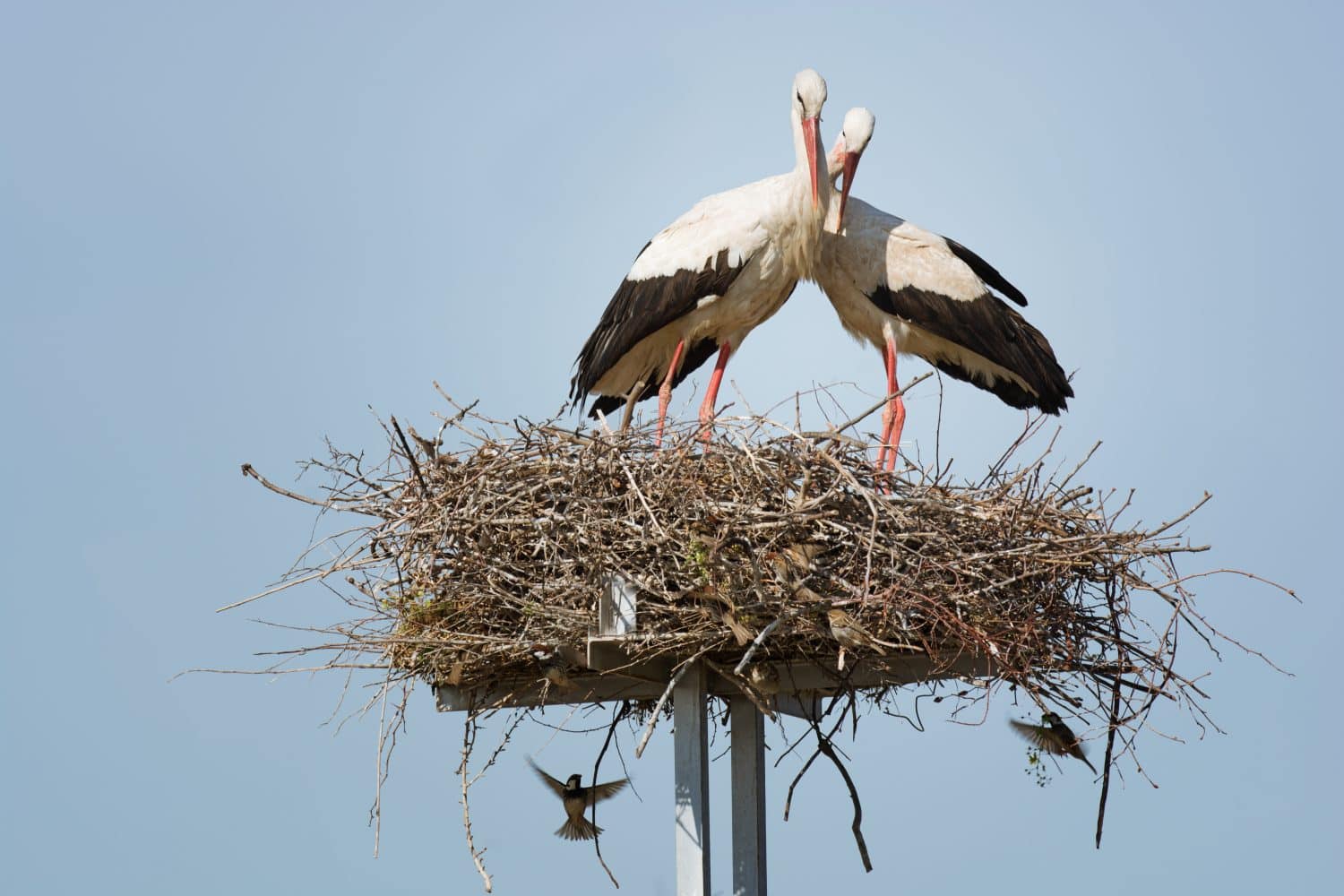
Stork Nests provide helpful home-building material for several types of birds, including sparrows.
©Petia_is/Shutterstock.com
You may be thinking to yourself, “Hey, that’s a picture of a stork nest, not a sparrow’s!” If you look closely, however, you’ll notice two sparrows flying sneakily under the large stork nest. That’s because sparrows are sometimes known to build their nests within larger, more stable stork nests.
That’s because storks build incredibly large, astonishingly complex nests full of massive branches, little twigs, and everything in between. All this far-flung plant matter and detritus creates a little ecosystem teeming with life. Sparrows use the nest’s big open spaces to make little add-on units of their own. Storks don’t mess with sparrows, so their nests provide an additional layer of security for the sparrows.
Sparrows aren’t the only birds to sense opportunity when it comes to stork nests. Several other birds regularly use the nests’ lower layers for domiciles of their own, including starlings, Eurasian jackdaws, black redstarts, and even little owls. Considering the security provided by the storks and the buffet of grubs amid the branches, it’s the perfect place to call home.
Mourning Doves
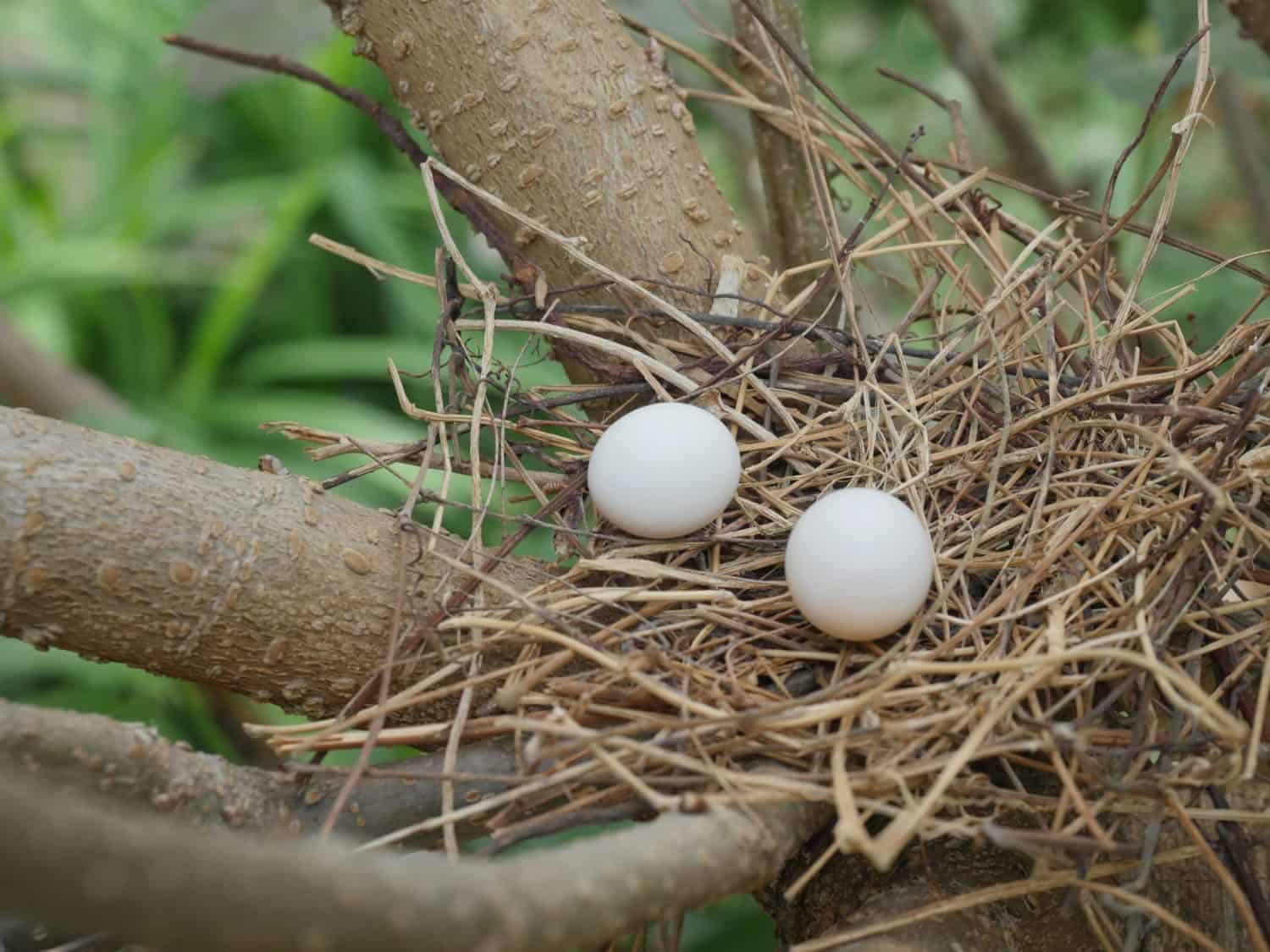
Mourning Doves, like Pigeons, build some of the flimsiest, loosest nests around.
©Huaykwang/Shutterstock.com
As evidenced by this list, many bird species put incredible amounts of time and effort into building their nests. Birds like mourning doves, however, do the opposite. They build some of the loosest, flimsiest nests around. Despite this, mourning doves have become one of the most abundant birds in North America. That’s probably due to how adaptable they are.
This improvisation skill extends to their nest-building. Though they traditionally build nests in trees, mourning doves will build nests in shrubs or bushes. When that fails, they will even build them on the ground. Build is a strong term here, however, as mourning dove nests are pretty makeshift. Often, they consist of little more than a few loose twigs, exposing eggs to predators.
There are two reasons for this. One, mourning doves are very adaptable and will move with the wind, sometimes reusing other old mourning dove nests. They follow the adage, “If it ain’t broke, don’t fix it.” Plus, once eggs are laid, mourning doves spend almost all their time atop the eggs. With their butts protecting them, these birds don’t need much in the way of fancy architecture.
Hamerkops
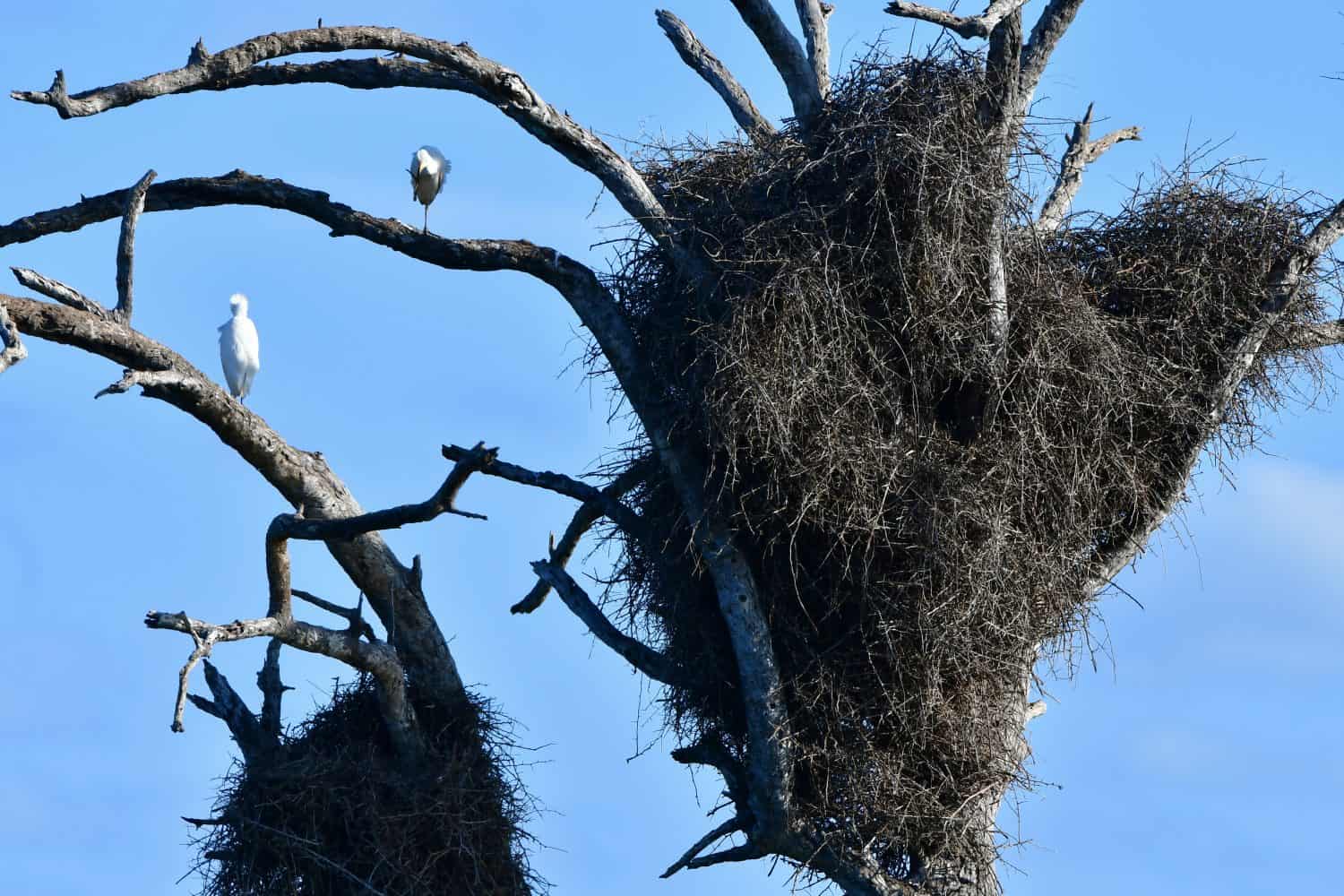
Rain or shine, hamerkops compulsively build massive nests.
©Karel Gallas/Shutterstock.com
Hamerkop is a medium-sized bird found in parts of Africa, Arabia, and Madagascar. Whereas other birds build nests in the form of houses, hamerkops build condominiums. They are famous for their massive nests, which can reach nearly five feet across and support the weight of several birds or small mammals.
The size of these nests may be due to the compulsive need of hamerkops to build them. Pairs of hamerkops build nests incessantly, three to five times a year, regardless of whether they are breeding or not. Typically, they are constructed in the forks of trees over water. Failing that, they can be found on cliffs, riverbanks, on human walls, or even on the ground. Hamerkop pairs begin with a platform that’s spackled with mud. From there, they build walls and eventually a domed roof.
These condo nests can take up to 14 weeks to build, and require thousands of sticks and grasses to bring to fruition. Once young are raised and the nest is abandoned, it’s taken over by other creatures like snakes and genets. Smaller birds often build nests along the outside of hamerkop nests. Owls are even known to force hamerkops out of their own nests and take over. That’s hardly a problem for the hamerkops, who will quickly get to building another one.
Tailorbirds
©Amol V Naik/Shutterstock.com
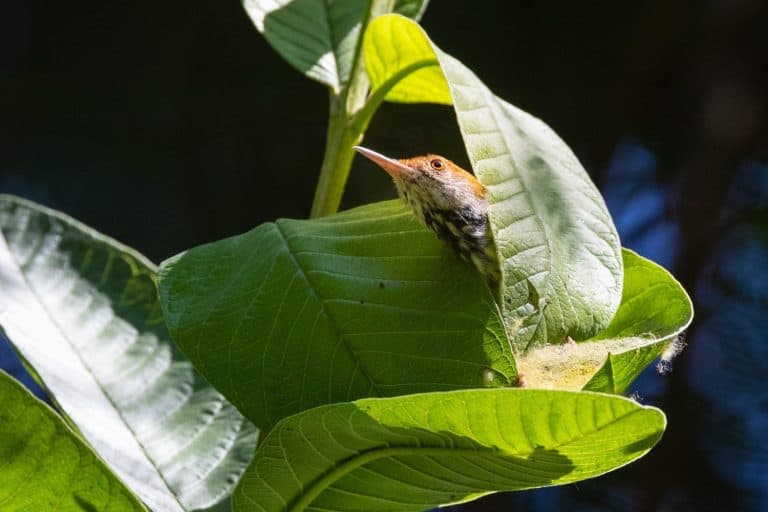
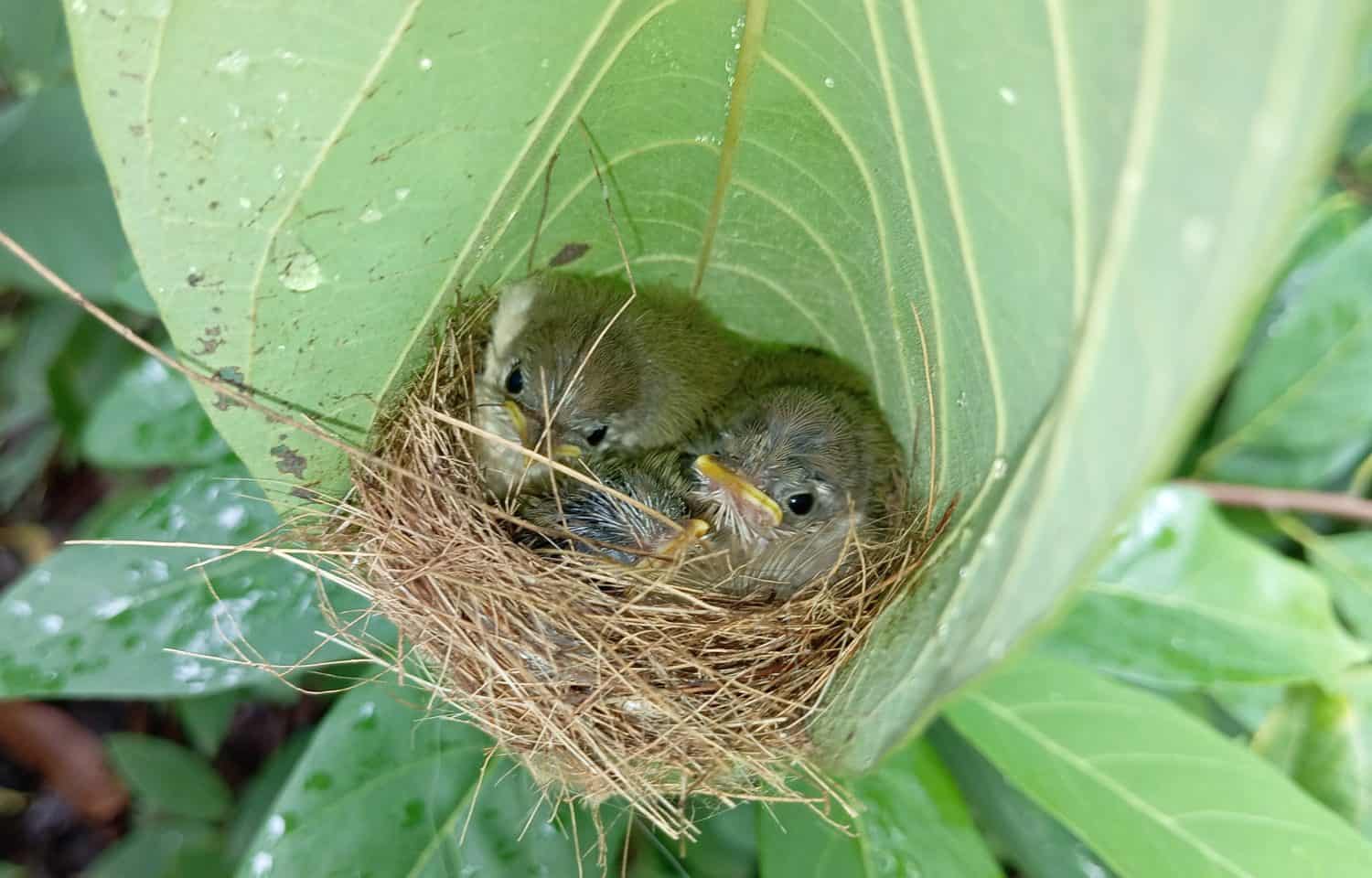
Tailorbirds are found in the tropics, typically in Asia. They are small, brightly colored, and often have a chestnut-like marking on the tops of their heads. They get their name, however, from the fine craftsmanship of their nest building—they stitch a large leaf together and build a nest inside. Like a vegetable wrap, the tailorbird nest is sleek, unassuming, and sturdy. It starts with a female tailorbird, who chooses a strong, sturdy leaf, often in the middle of thick foliage, to hide from predators. Once wrapped around, she pulls the leaf together and makes several tiny holes on its edge with her beak.
She threads plant fibers or even insect silk up to 200 times between the leaf edges, like a suit tailor. This spans the mornings of three to four days. Once it’s fixed, her male mate fills the wrap with grass and fur until a little nest is formed. It even has a little overhang to protect its nascent young from raindrops. You’d never see a tailorbird nest walking by; it’s that artful and sleek.
Bowerbirds
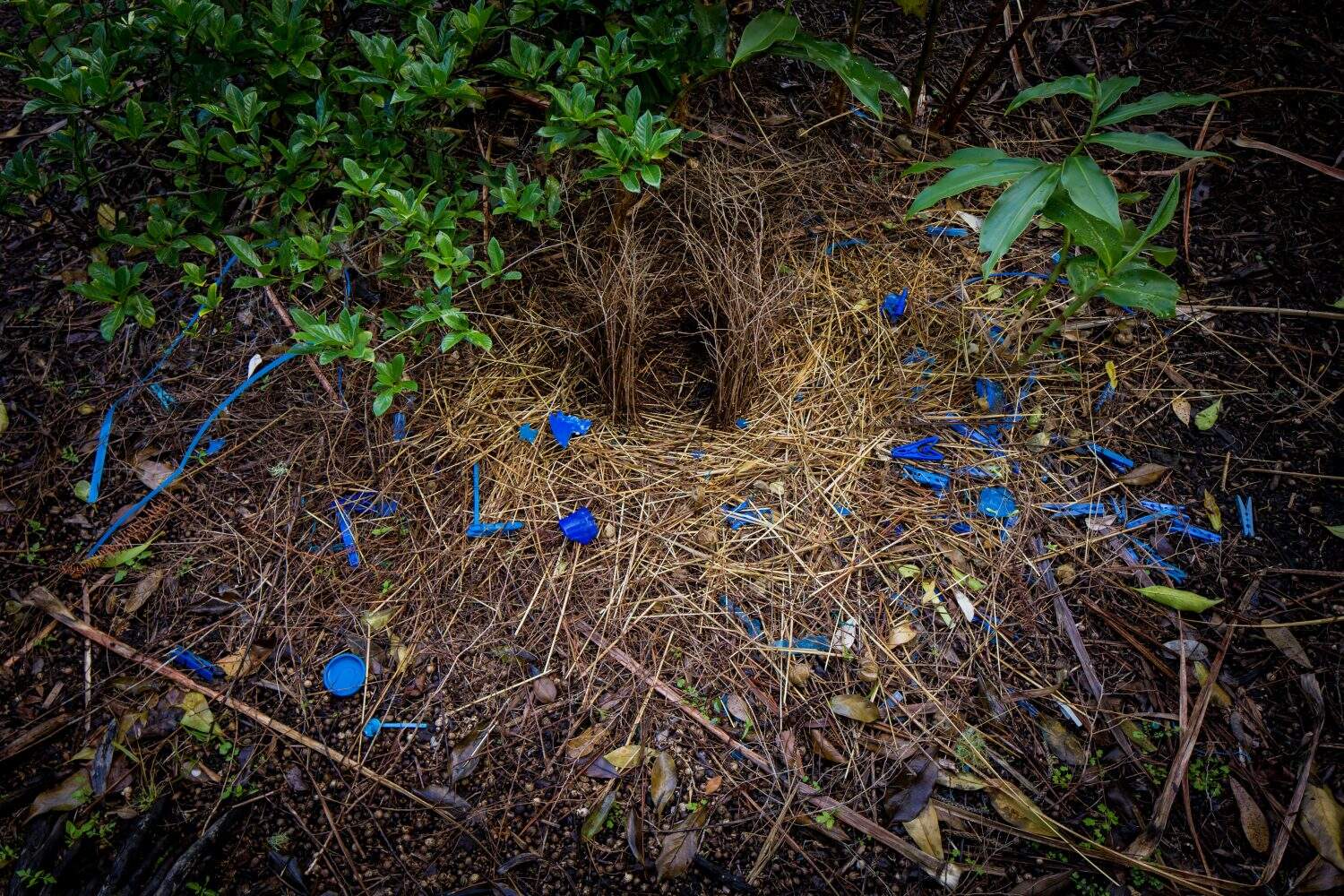
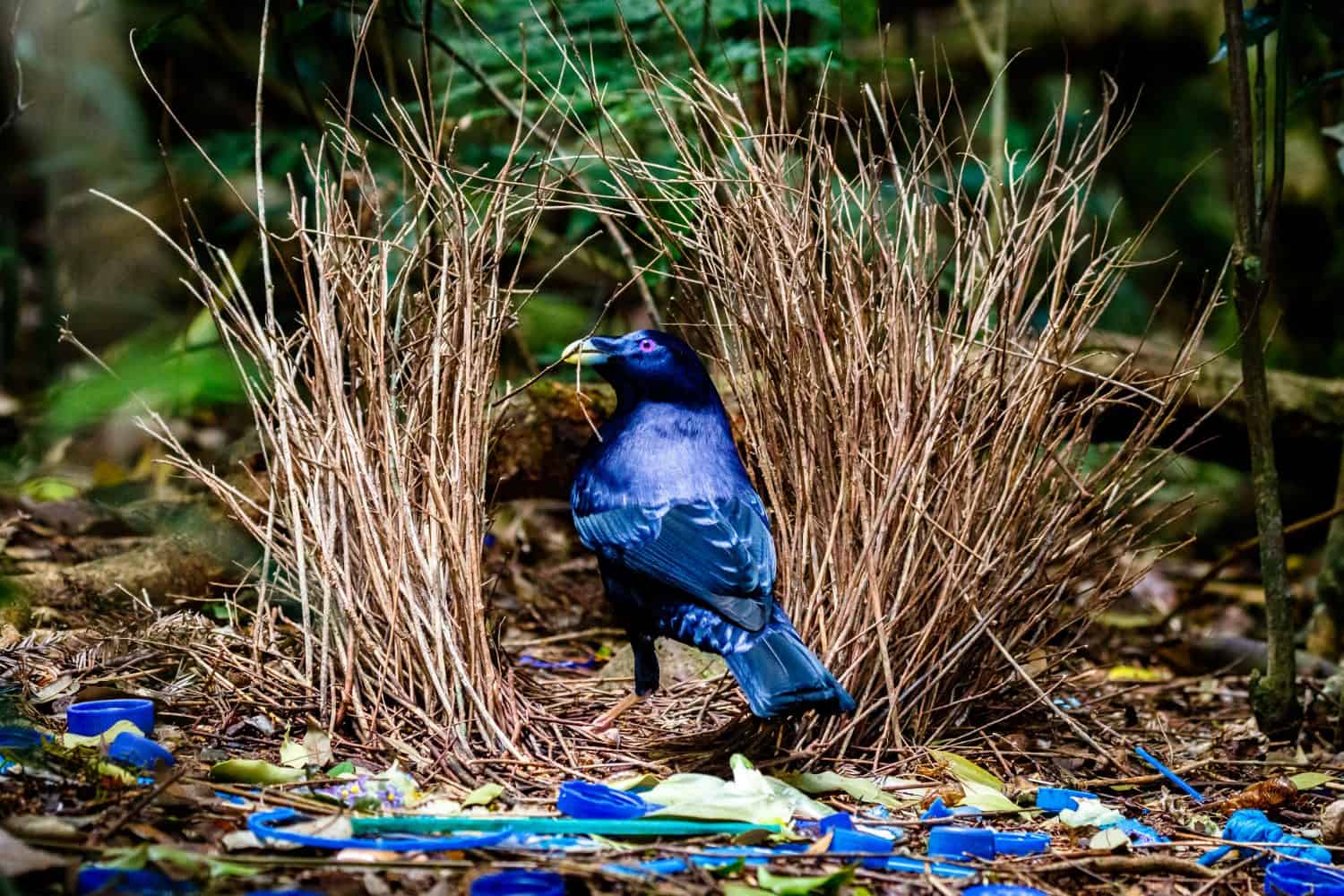
Bowerbirds have some of the most complex mating rituals on earth, most of which require a big nest with lots of colorful decorations.
©kimonofish/Shutterstock.com
One of the most interesting bird nests on earth is built by the bowerbird. Several subspecies of this fanciful bird are endemic to New Guinea and Australia. They have become famous for their intricate, colorful courtship rituals where males build big nests that they decorate with sticks and colorful items. All these accoutrements help male bowerbirds attract a suitable mate; the more colorful, the better.
The two main types of bowerbirds build different styles of nests. Prionodura, Amblyornis, Scenopoeetes, and Archiboldia bowerbirds build maypole-like nests with a heap of sticks coalescing around a young tree. The other types, Chlamydera, Sericulus, and Ptilonorhynchus bowerbirds, build nests that look more like avenues; two heaps of twigs facing upward in the air with a runway in between. From there, the male bowerbirds get to work on the decor. They spend hours upon hours finding random trinkets in a particular color to adorn the area around their nests. Everything from shells and feathers to plastic trash and metal coins will do.
From there, they engage in elaborate mating dances for females, who walk amongst the male displays to pick out a suitable mate. Often, one male gets his pick of the females, leaving the rest high and dry. Scientists aren’t quite sure why bowerbirds have such an intricate and drawn-out mating process. Considering that the males’ involvement in nurture and chick rearing stops after mating, females must derive some benefit in some way from all this pageantry.