
Spanning more than 145,000 acres, including a vast swath of stunning white sand dunes, White Sands National Park is one of the most beautiful spots in New Mexico. The 275-square-mile section is the largest gypsum dunefield in the world, and around 700,000 people visit the park annually to see it. Although the sand dunes are the main attraction, there are still plenty of other things to see and do during your visit. If you love history, then you might want to learn about the fossilized footprints in the park, thought to belong to teenagers from tens of thousands of years ago. Also, whatever you choose to do in the park, you’ll likely come across some animals, and the unique habitat means that there’s a wide range of animals that call White Sands home. Take a look at some of them now!
Barred Tiger Salamander
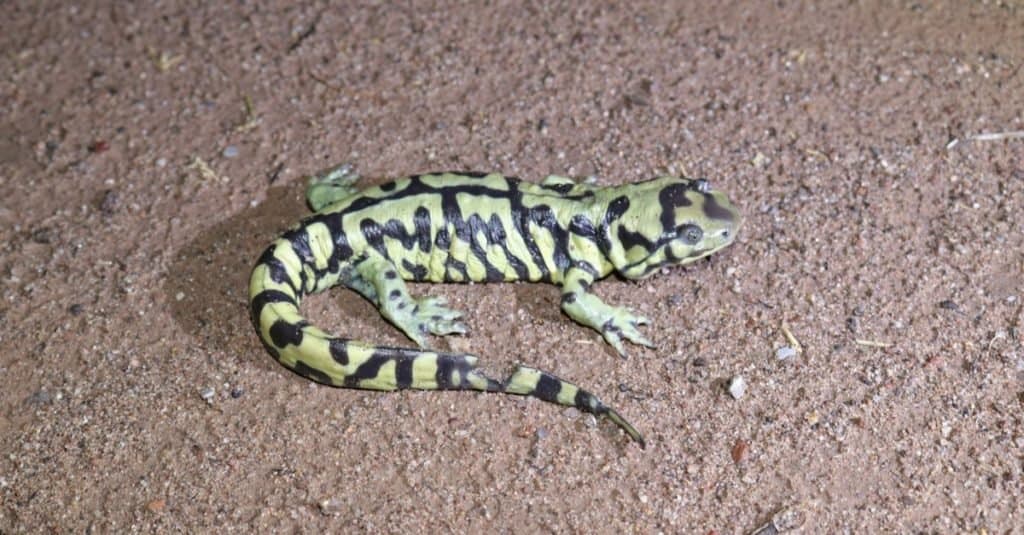
Barred tiger salamanders are named for their black and yellow markings.
©Creeping Things/Shutterstock.com
There’s only one species of salamander in White Sands, and that is the barred tiger salamander (Ambystoma mavortium). These salamanders are approximately 3 to 6.5 inches long and are named for their distinctive black and yellow markings. Barred tiger salamanders have a reputation for eating anything they can catch, including worms and insects. They are found in forests, woodlands, and areas near streams.
Black-Tailed Jackrabbit
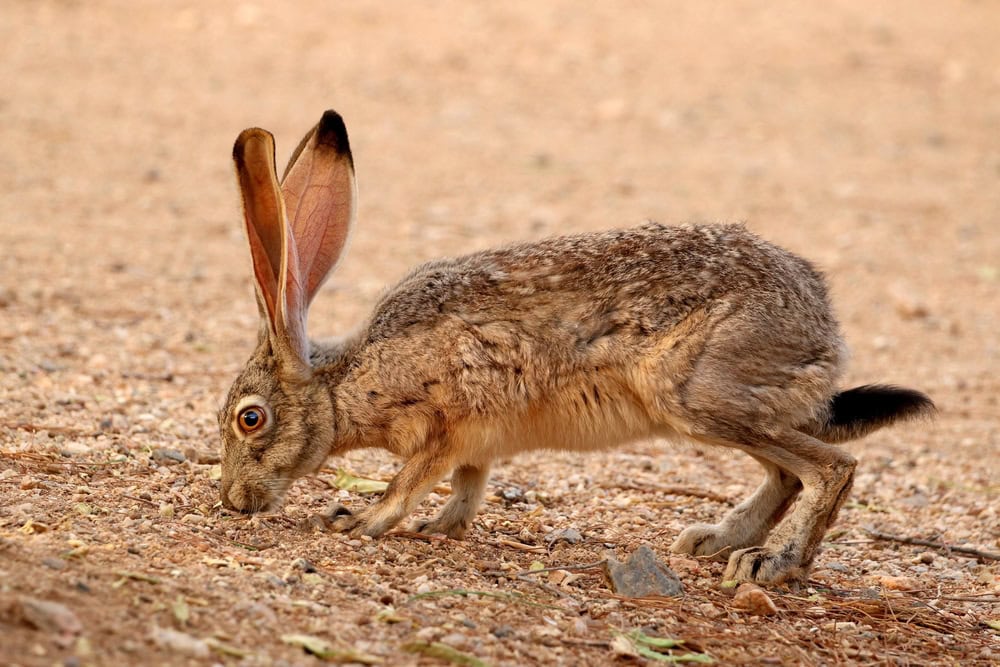
Black-tailed jackrabbits can be recognized by their long ears.
©J Curtis/Shutterstock.com
An animal with a particularly distinctive appearance is the black-tailed jackrabbit (Lepus californicus), which can be recognized by its long ears, which are tipped with black. The upperside of their tail is also black, and the black coloration extends onto their rump in the form of a small black stripe. Black-tailed jackrabbits are preyed upon by animals such as coyotes, hawks, and owls.
Bobcat
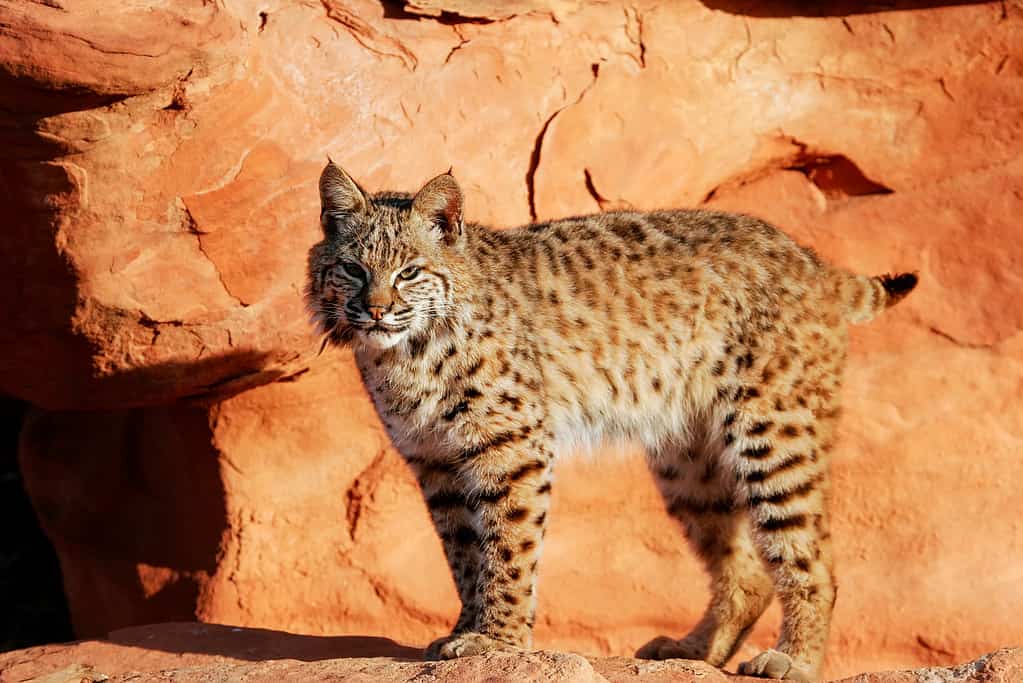
Bobcats are sometimes spotted near the dunefield.
©Don Mammoser/Shutterstock.com
If you’re near the dunefield, then you might be lucky enough to spot a bobcat (Lynx rufus). Bobcats are greyish-brown with black markings. Their most distinctive features are their tufted, black-tipped ears and short tail. Bobcats mainly prey on small mammals such as rodents and rabbits, but they will also hunt other animals, such as birds and deer.
Cactus Wren
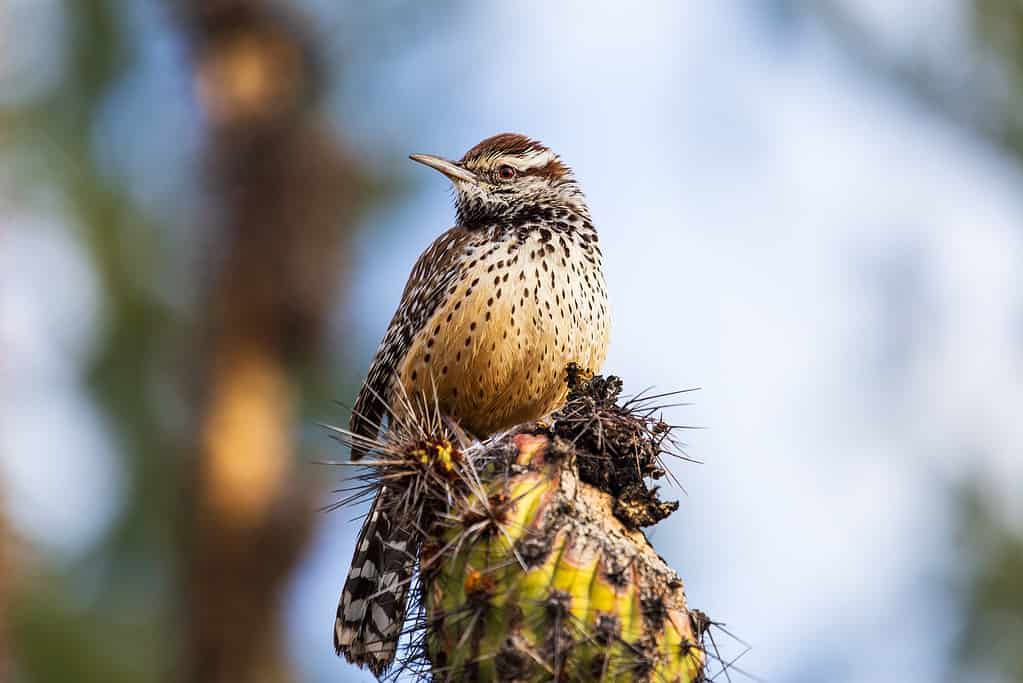
Cactus wrens inhabit White Sands National Park all year round.
©mdesigner125/iStock via Getty Images
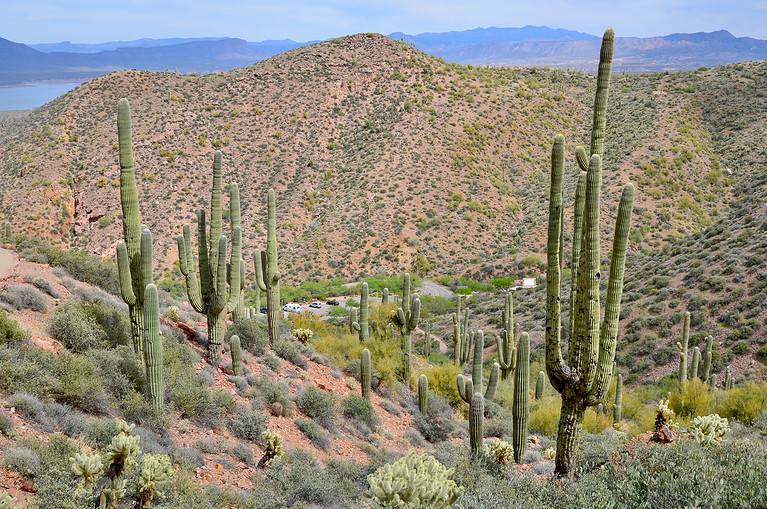
The cactus wren (Campylorhynchus brunneicapillus) is the largest species of wren in the United States. It measures approximately 7 to 7.5 inches in length. As their name suggests, they can be found in habitats where there is plenty of cactus, which they need for nesting. Cactus wrens can be found in White Sands National Park all year round.
Coyote
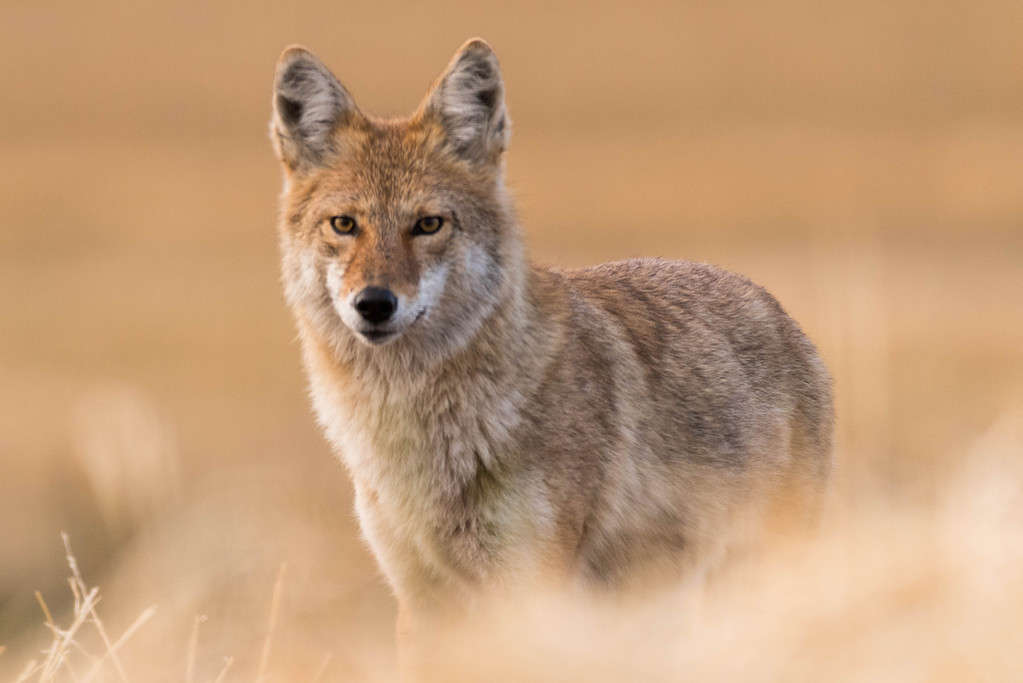
Coyotes live in small family groups.
©hartmanc10/iStock via Getty Images
You can also find coyotes (Canis latrans) around the dunefields, particularly around dawn and dusk. Coyotes don’t live in cohesive packs like wolves, but instead they usually live in small family groups. As a result, they usually hunt alone or in pairs, hunting small to medium-sized animals.
Desert Box Turtle

Desert box turtles prefer arid habitats.
©Creeping Things/Shutterstock.com
The desert box turtle (Terrapene ornata luteola) is a subspecies of the box turtle, which inhabits northern Mexico and the southwestern region of the United States. Desert box turtles prefer arid habitats and can be found at the outskirts of the park. However, you won’t see them during the winter, as they typically hibernate from November to May.
Gopher
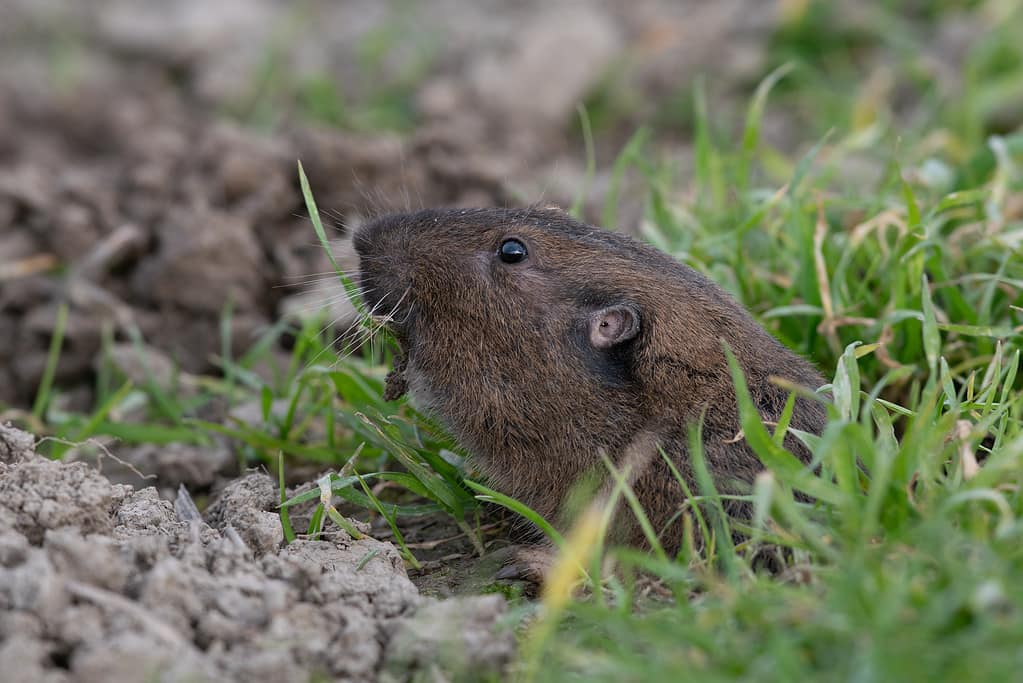
Gophers spend much of their time underground.
©zhuclear/iStock via Getty Images
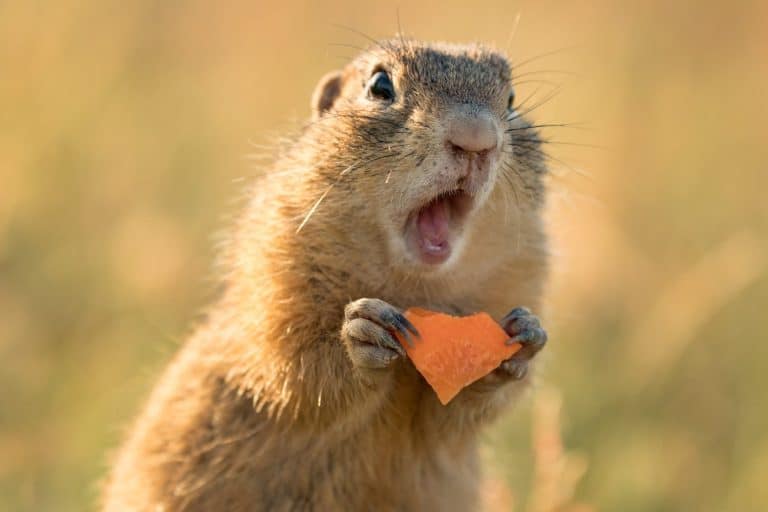
You’ll also find gophers (Geomyidae spp.) in the national park. However, they’re not often seen due to their preference for staying in their burrows. Gophers prefer open habitats with little vegetation. When they do venture out, they often fall prey to animals such as snakes and coyotes.
Great Plains Toad
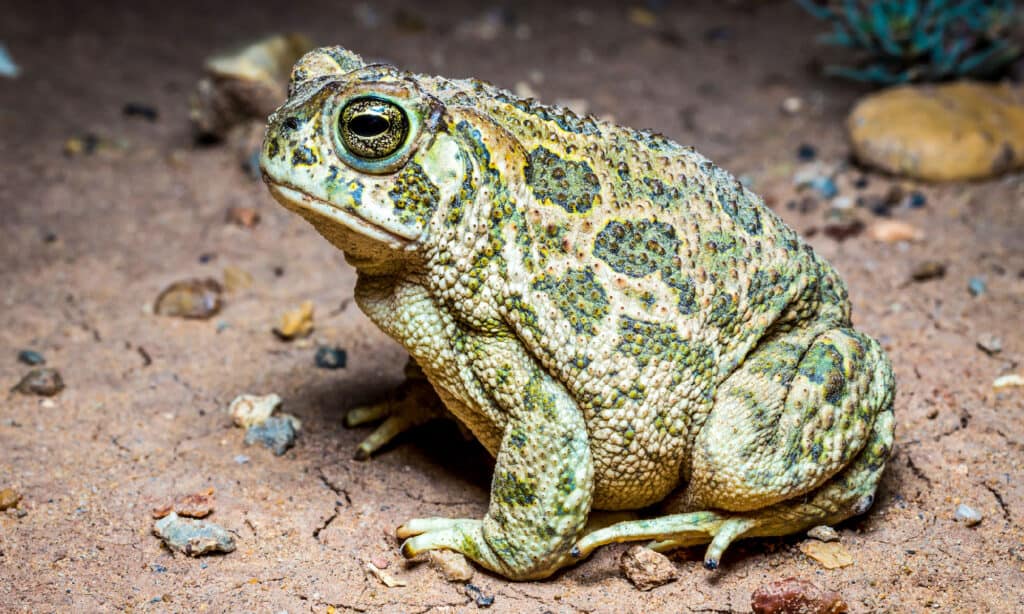
The Great Plains toad can survive in deserts.
©iStock.com/Timothy Cota
You might also spot the Great Plains toad (Anaxyrus cognatus), which is actually capable of surviving in deserts and other arid habitats, as well as those near water. Great Plains toads prey on a range of insects, while they themselves fall prey to animals such as garter snakes.
Hawks
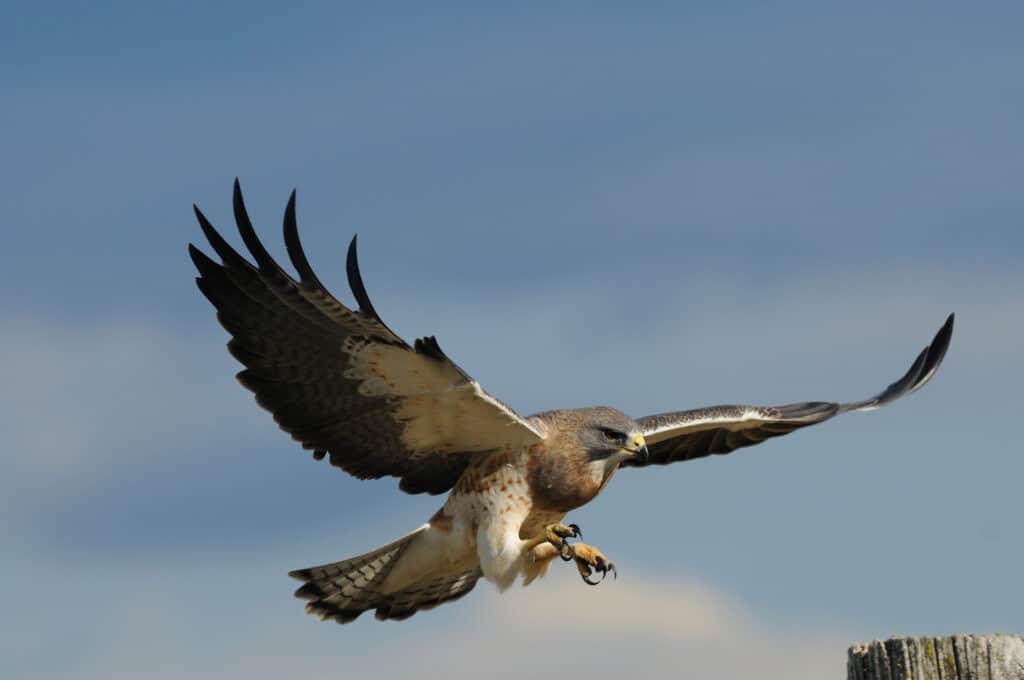
Swainson’s hawks are one of several species of hawks in White Sands National Park.
©Rob McKay/Shutterstock.com
There are three species of hawks in the region — the red-tailed hawk (Buteo jamaicensis), Swainson’s hawk (Buteo swainsoni), and the northern harrier (Circus cyaneus). Although red-tailed and Swainson’s hawks typically nest in trees or shrubs, northern harriers are most often found nesting on the ground. These hawks are excellent hunters and prey on animals such as birds, rodents, lizards, and reptiles.
Horned Lark
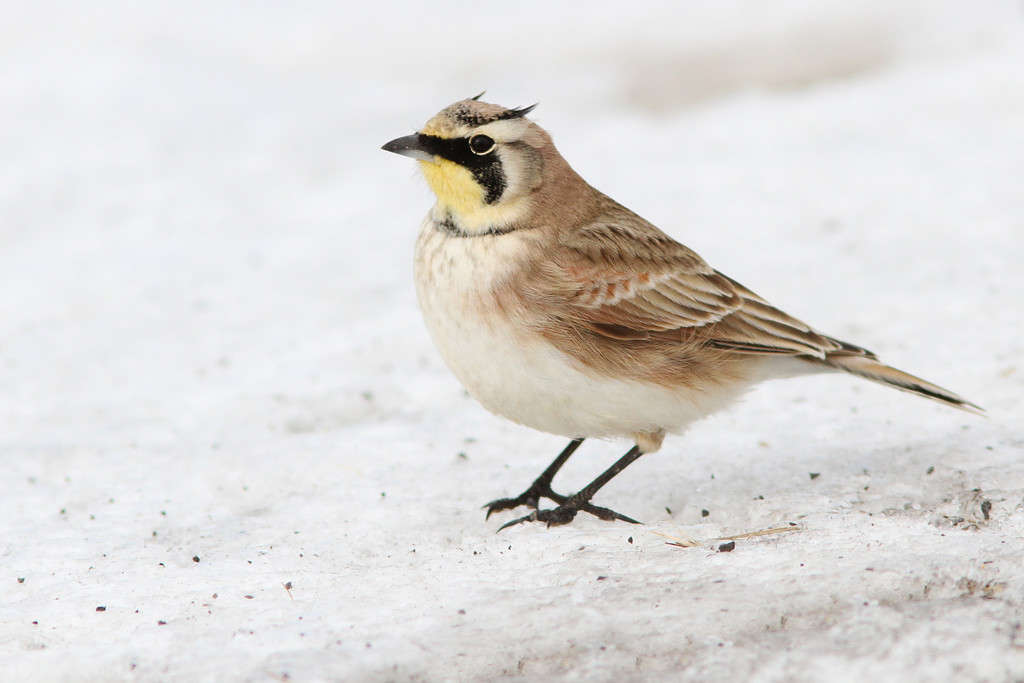
Horned larks inhabit the park all year round.
©mirceax/iStock via Getty Images
Another bird that you’re likely to see is the horned lark (Eremophila alpestris), which inhabits the national park all year round. Horned larks have a striking appearance with their black and yellow faces and black tails. They are named for the small tufts, resembling horns, that males develop on their heads during the summer. Horned larks prefer an open habitat and can usually be observed in the dune fields of White Sands.
Kit Fox
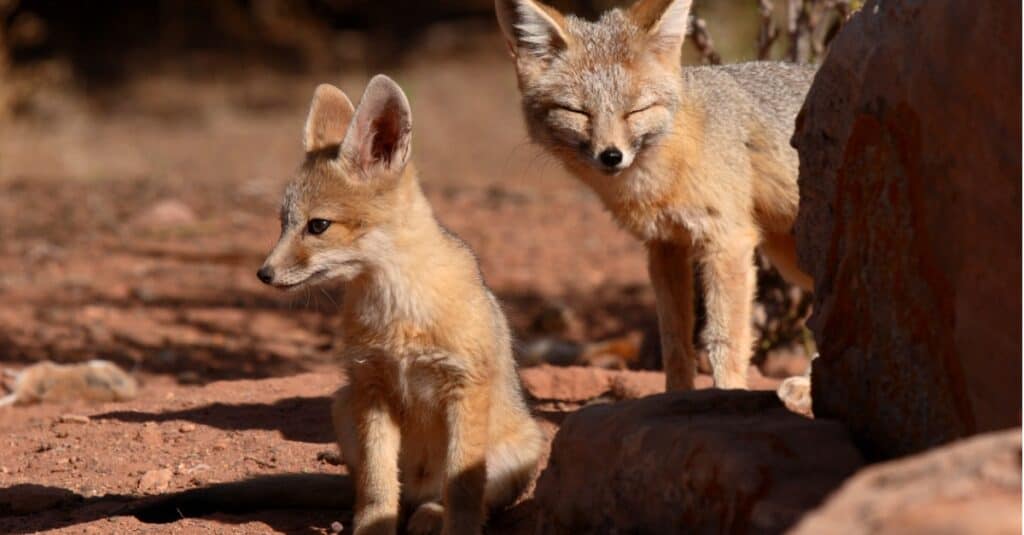
The kit fox is one of the smallest foxes in the world.
©iStock.com/gatito33
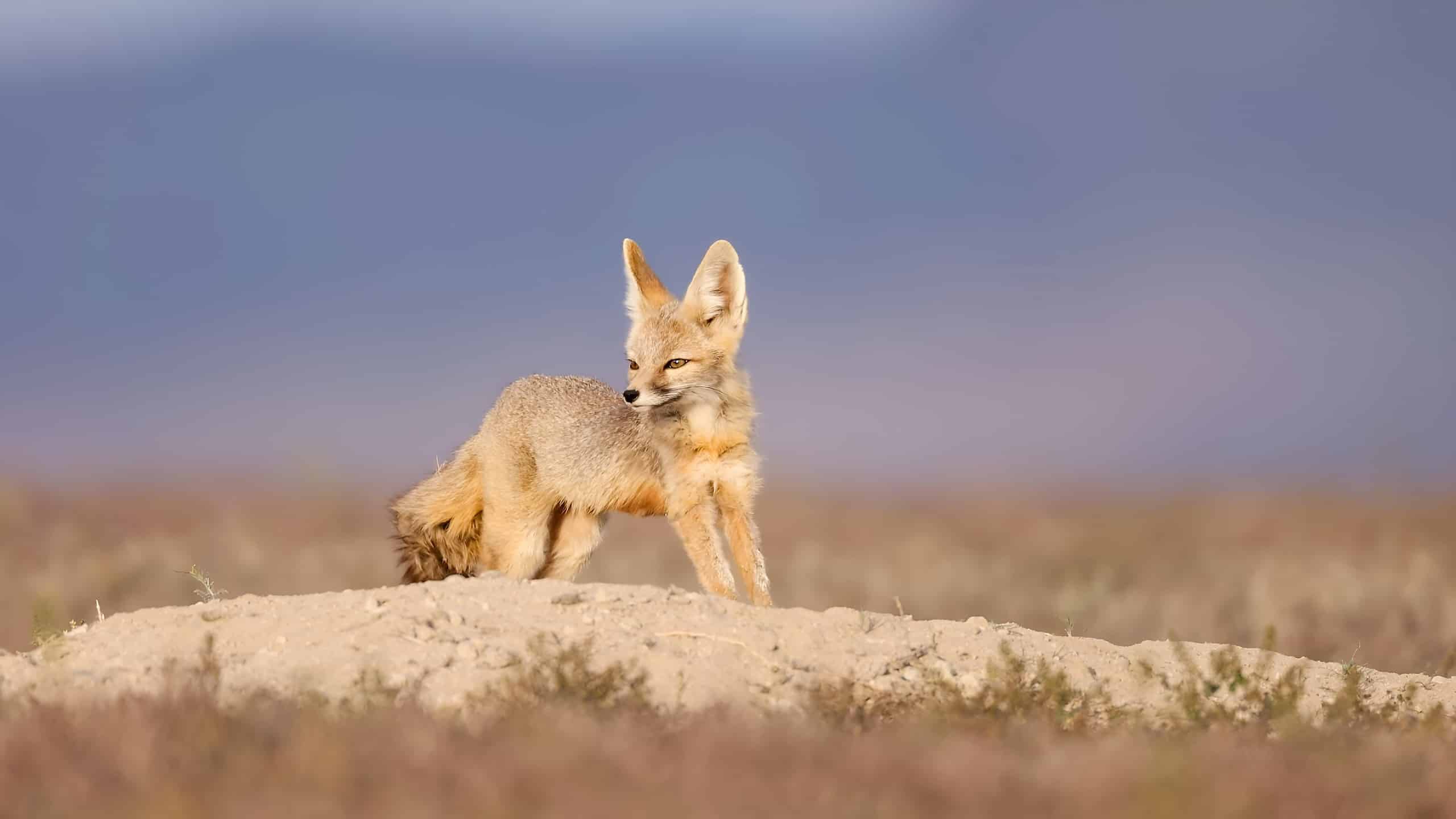
When it comes to foxes, you should be on the lookout for the small kit fox (Vulpes macrotis), which inhabits the dunefields at White Sands. Kit foxes are only around 18 to 22 inches long, with an additional 10 to 12 inches for their tail, making them among the smallest foxes in the world. They are nocturnal and spend the day in their underground dens. Given their small size, they typically prey on smaller animals, such as rodents and insects.
Lizards
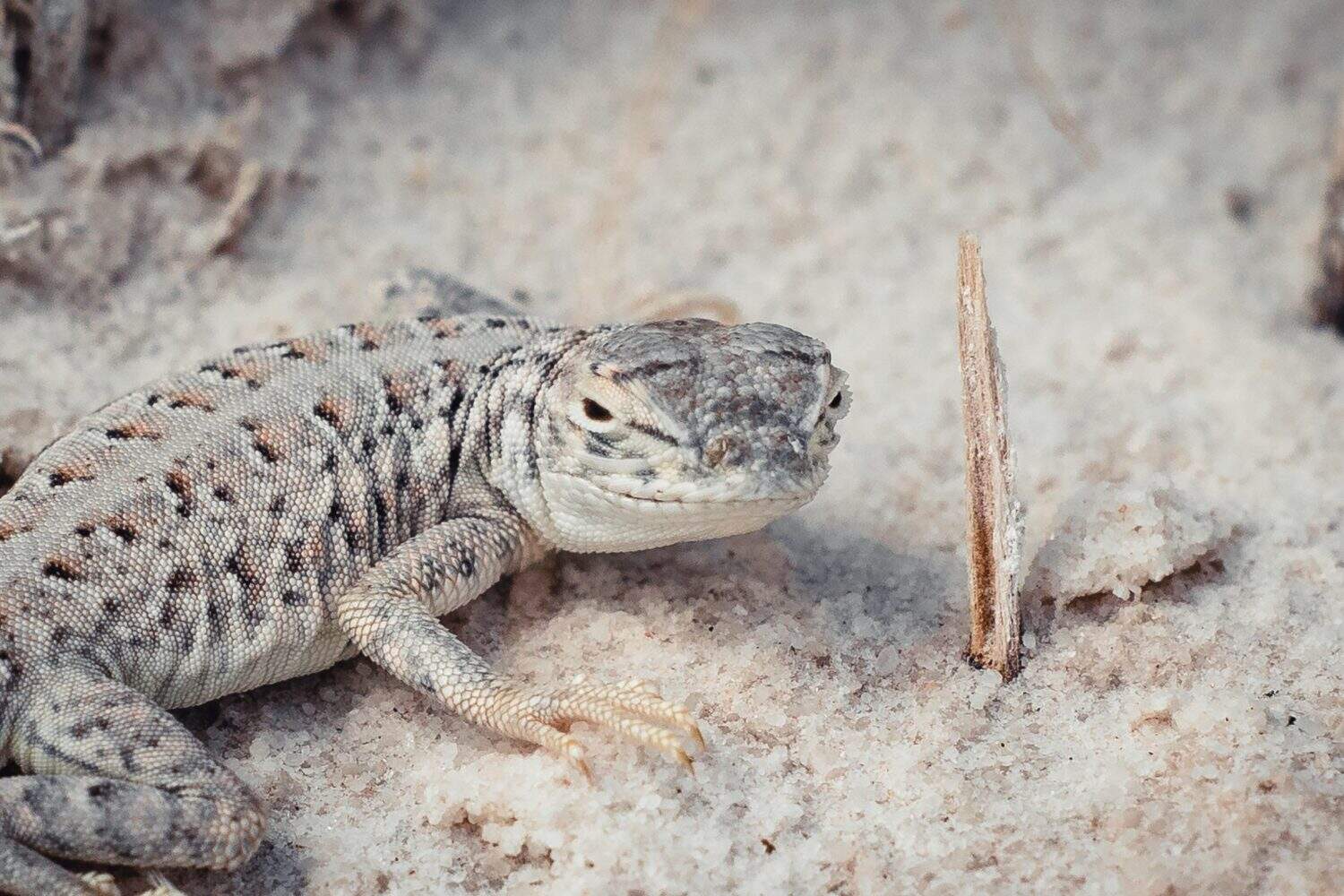
Image: Dustin Lee Thibideau, Shutterstock
©Dustin Lee Thibideau/Shutterstock.com
There are five species of lizards inhabiting White Sands — the little white whiptail, long-nosed leopard lizard, common side-blotched lizard, bleached earless lizard, and southwestern fence lizard. Bleached earless lizards (Holbrookia maculata ruthveni) are a subspecies of the lesser earless lizard. They are only found in the White Sands region, where they favor the white dunefield. Bleached earless lizards blend in well with this habitat, as they are completely white except for black spots on each side of their body.
Loggerhead Shrike
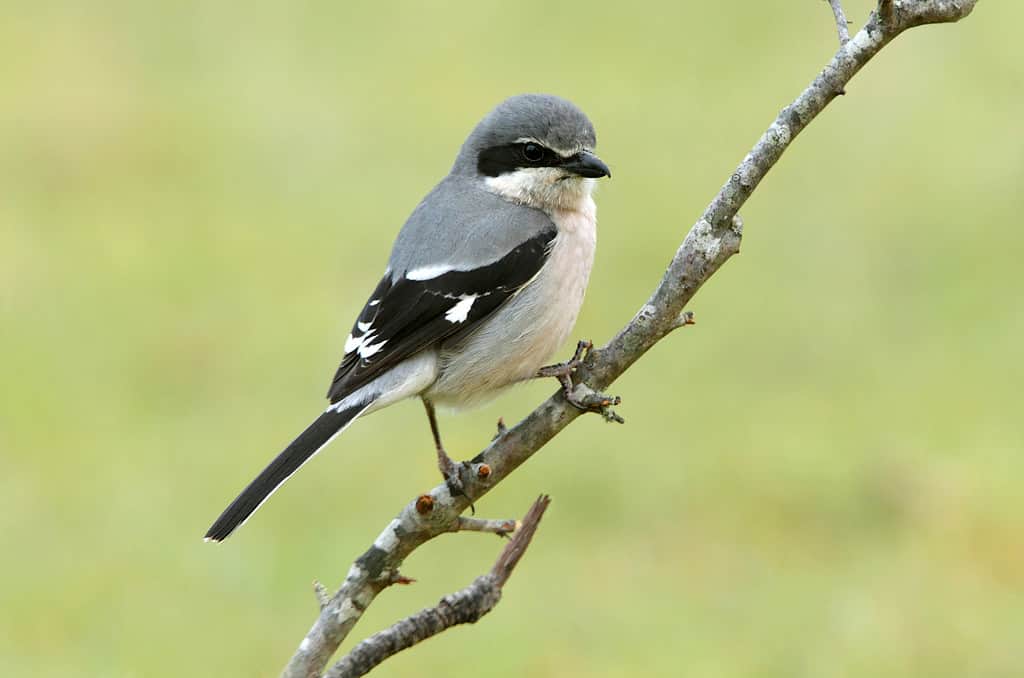
Loggerhead shrikes are nicknamed the “butcher bird” as they impale their prey on sharp objects.
©Cavan-Images/Shutterstock.com
One of the more unusual birds that you might encounter is the loggerhead shrike (Lanius ludovicianus), which also has the nickname of “butcher bird”. Loggerhead shrikes have earned the nickname due to their habit of impaling their prey on sharp objects such as barbed wire or thorns. Despite being only 8 to 10 inches long, loggerhead shrikes are strong and fierce predators, often killing animals larger than themselves, such as bats and rodents.
Northern Mockingbird
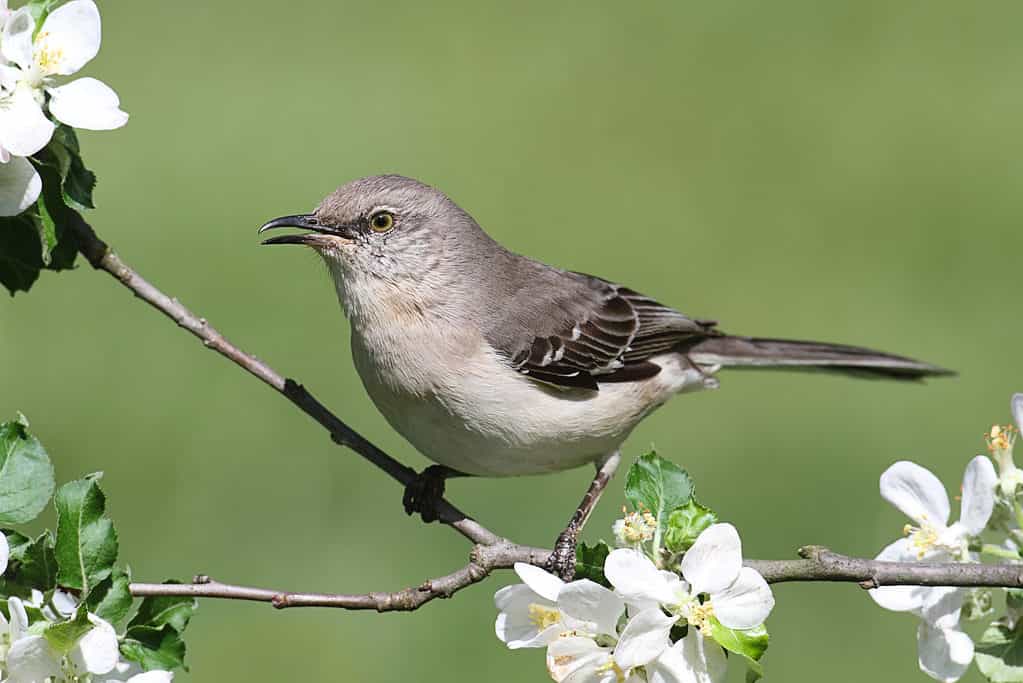
Northern mockingbirds are incredible mimics that copy the songs of other birds.
©Steve Byland/Shutterstock.com
One of the most vocal birds in White Sands National Park is the northern mockingbird (Mimus polyglottos), which is known for its ability to imitate the sounds of other birds. Northern mockingbirds are approximately ten inches long and have grey bodies with a white undercarriage. They are omnivores, but they eat a lot of fruit and seeds, making them important seed dispersers in the environment. Northern mockingbirds tend to prefer open habitats and are present in the national park all year round.
Owls
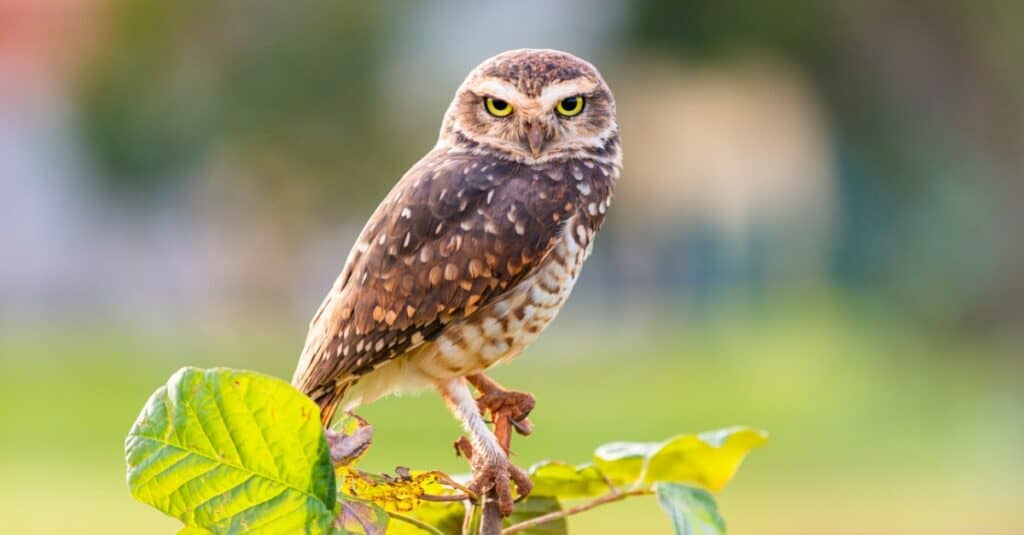
Burrowing owls nest in burrows on the ground.
©iStock.com/Philou73
You’ll also want to be on the lookout for burrowing owls (Athene cunicularia) and great horned owls (Bubo virginianus) as both are present all year round. If you’re out and about during the evening, then you’re more likely to see the nocturnal great horned owl. However, burrowing owls are a species that are most active during the daytime. Burrowing owls are particularly unusual due to their habit of nesting in burrows on the ground.
Pallid Bat
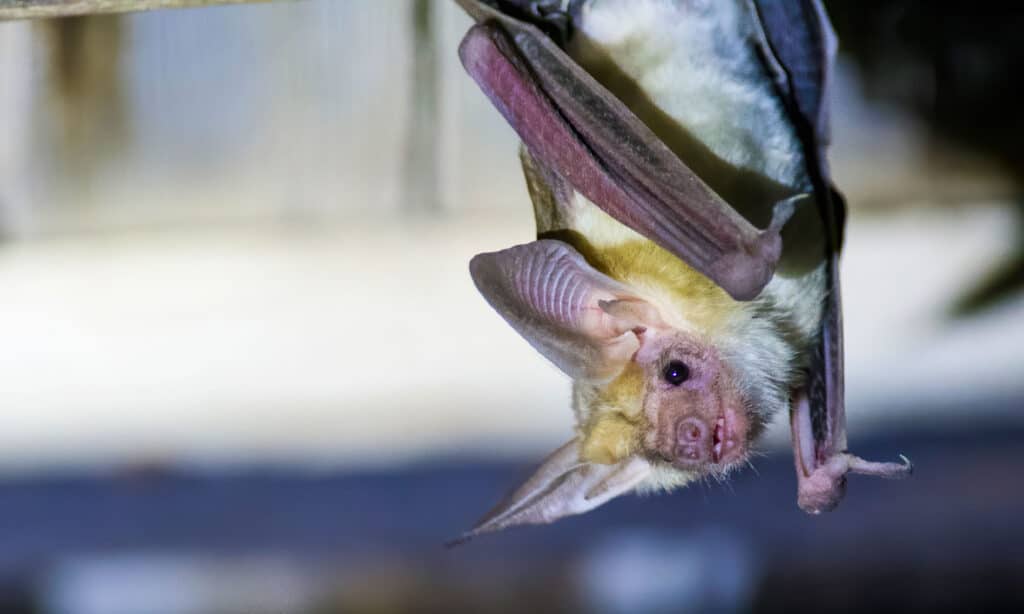
Pallid bats often feed on the ground.
©Amanda Guercio/Shutterstock.com
There are a few species of bats in the region. However, the one that you’re most likely to see is the pallid bat (Antrozous pallidus). Pallid bats are approximately 4.5 inches long, including their tail, but they have a wingspan of around 15 inches. They are often found in arid regions but can also be seen in mountainous areas. They are common in White Sands and can even be spotted around the visitor center. Unlike most other species of bats, which forage in the air, pallid bats are known to feed on the ground.
Porcupine
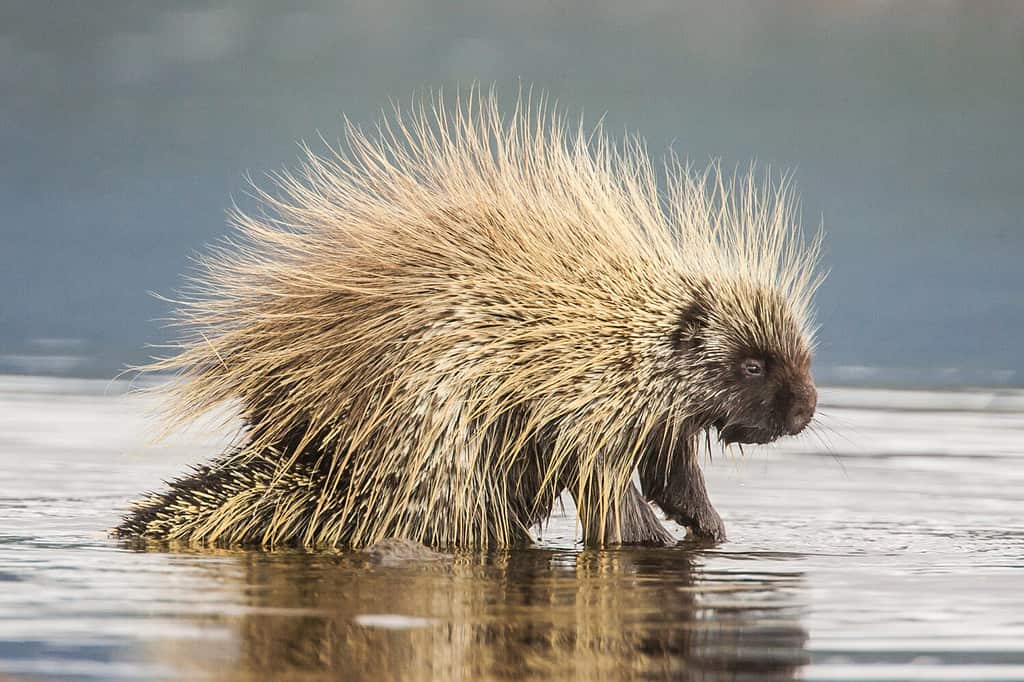
Porcupines can reach three feet long.
©Jukka Jantunen/Shutterstock.com
Another animal that you might see in White Sands is the North American porcupine (Erethizon dorsatum), which inhabits the vegetation at the outskirts of the dunefield. Porcupines are the second largest rodent in North America, reaching up to three feet long, excluding their tail. They are herbivorous and eat a range of berries, leaves, and twigs.
Rio Grande Leopard Frog
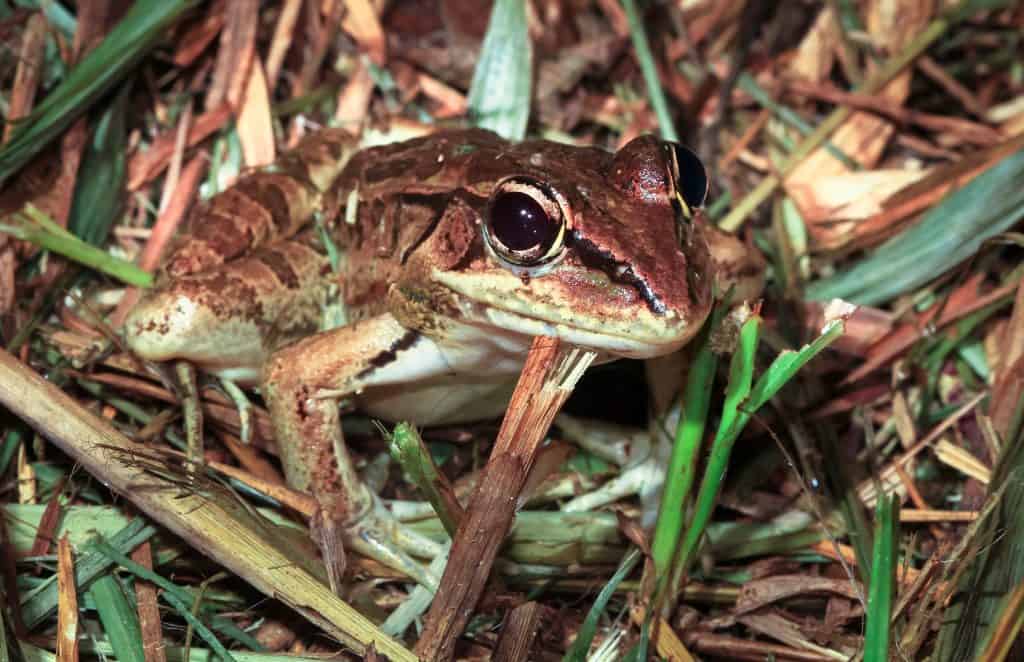
Rio Grande leopard frogs are usually two to 4.5 inches long.
©Kevin Wells Photography/Shutterstock.com
One of the frogs that you might spot is the Rio Grande leopard frog (Rana berlandieri). These frogs are typically two to 4.5 inches long and can be pale green or brown with black spotted markings. Rio Grande leopard frogs are found in most aquatic habitats in the area and prey mainly on insects.
Snakes
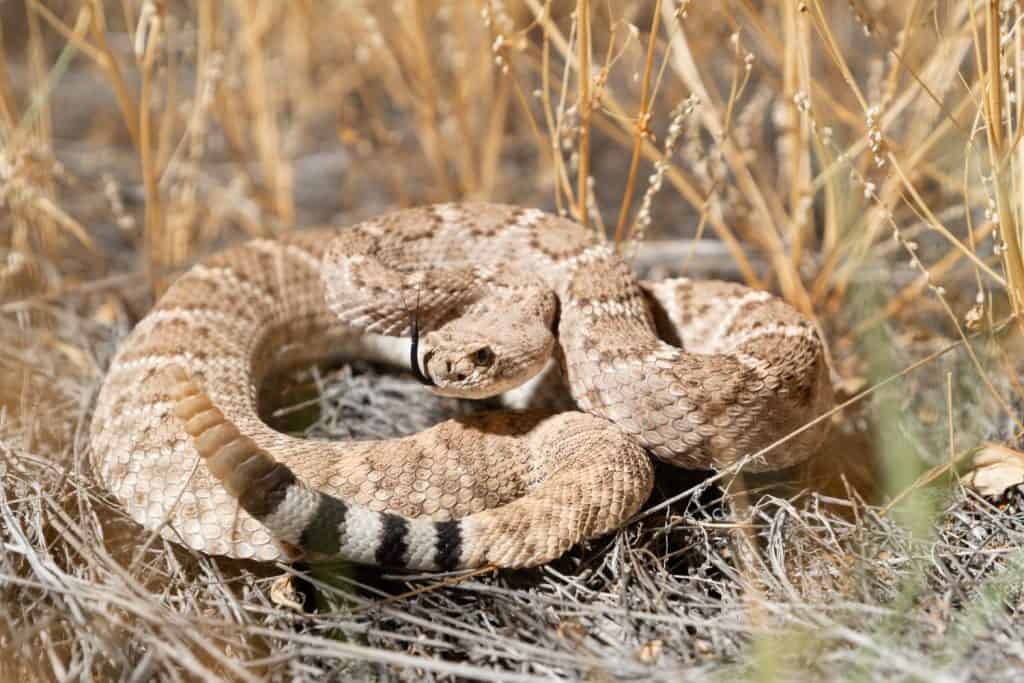
The western diamondback is one of three venomous snakes in the national park.
©Clint H/Shutterstock.com
There are several species of snakes in White Sands National Park, three of which are venomous. The venomous snakes are all rattlesnakes — the western massasauga (Sistrurus tergeminus), the western diamondback (Crotalus atrox), and the prairie rattlesnake (Crotalus viridis). Western diamondbacks are the largest species and can reach up to six feet in length. They’re also one of the more aggressive species, as they will readily strike when they are threatened. Some of the non-venomous species include the Sonoran gopher snake (Pituophis catenifer affinis) and the coachwhip (Masticophis flagellum). The Sonoran gopher snake is a large constrictor which preys predominantly on pocket gophers in the national park.
Spadefoots
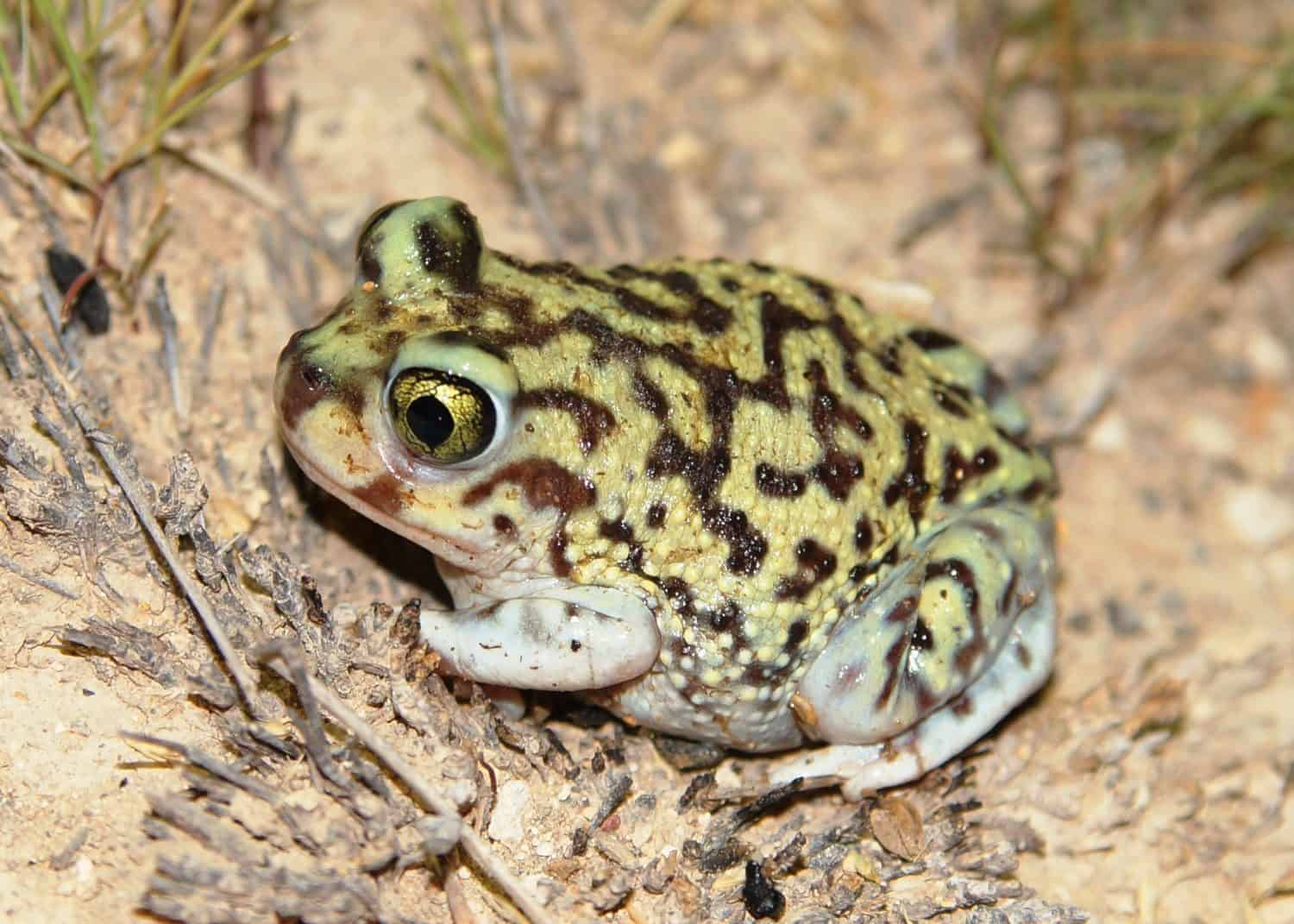
Couch’s spadefoot toads are poisonous to humans and animals.
©Matt Jeppson/Shutterstock.com
There are three species of spadefoot toads in White Sands National Park — Couch’s spadefoot toad (Scaphiopus couchii), the Mexican spadefoot toad (Spea multiplicata), and the plains spadefoot toad (Spea bombifrons). Interestingly, despite their name, they are not actually toads. Instead, they are frogs that have a toad-like appearance. Their name comes from the “spade” that they possess on the underside of each hindfoot. These “spades” are used for digging and burrowing into the ground. Particular care should be taken around Couch’s spadefoot, as it has toxins on its skin that are poisonous to humans and animals.