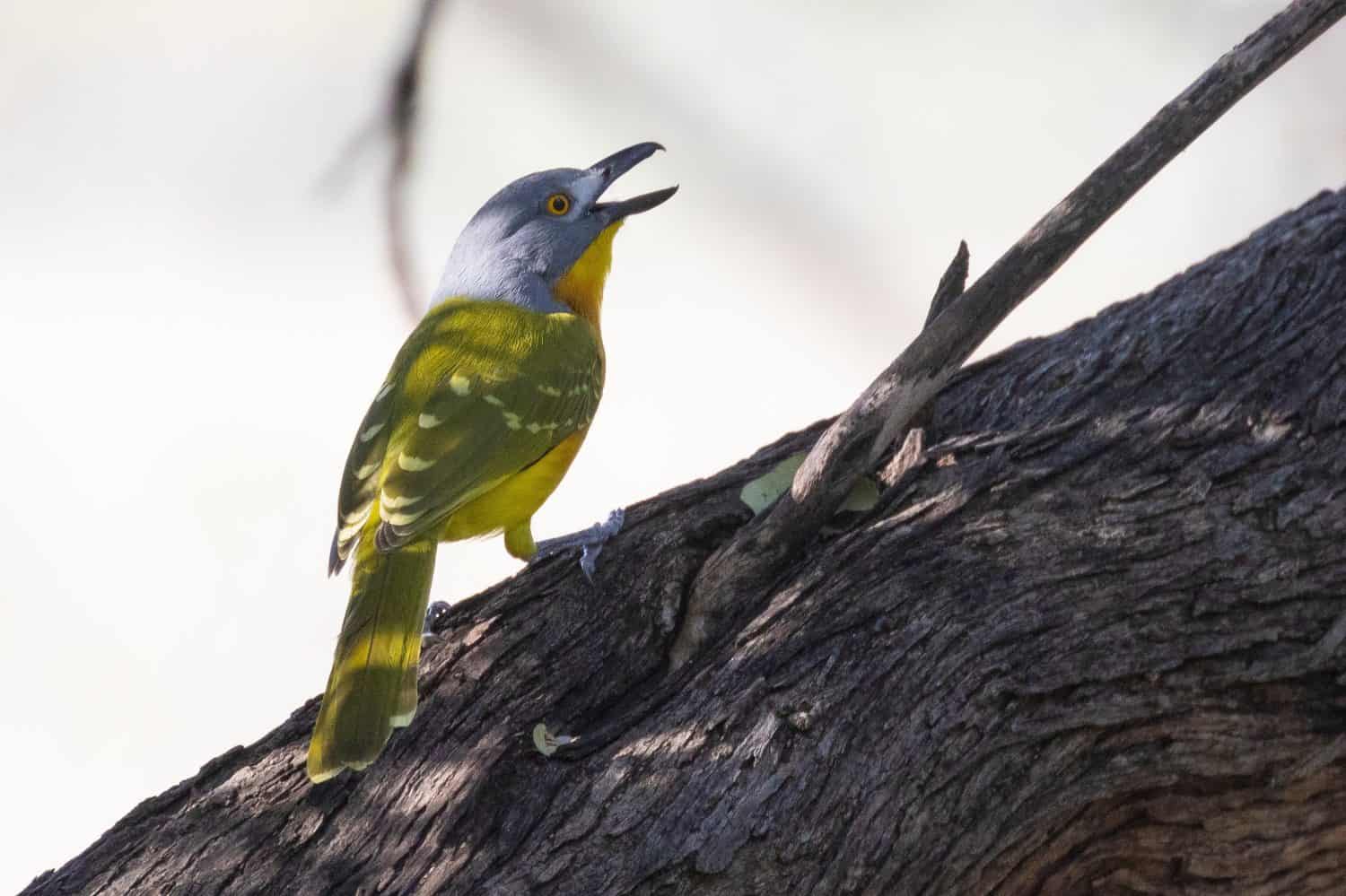

A surprising video comes to us from the YouTube channel, Latest Sightings. In the video, a bird is seen attacking a snake that is at least twice its size. Although snakes are typically the ones to prey on birds, in this situation, the ferocious bird clearly had the upper hand. This battle was waged between an African bird known as the grey-headed bushshrike and a venomous tree snake, called a boomslang.
About the Grey-Headed Bushshrike
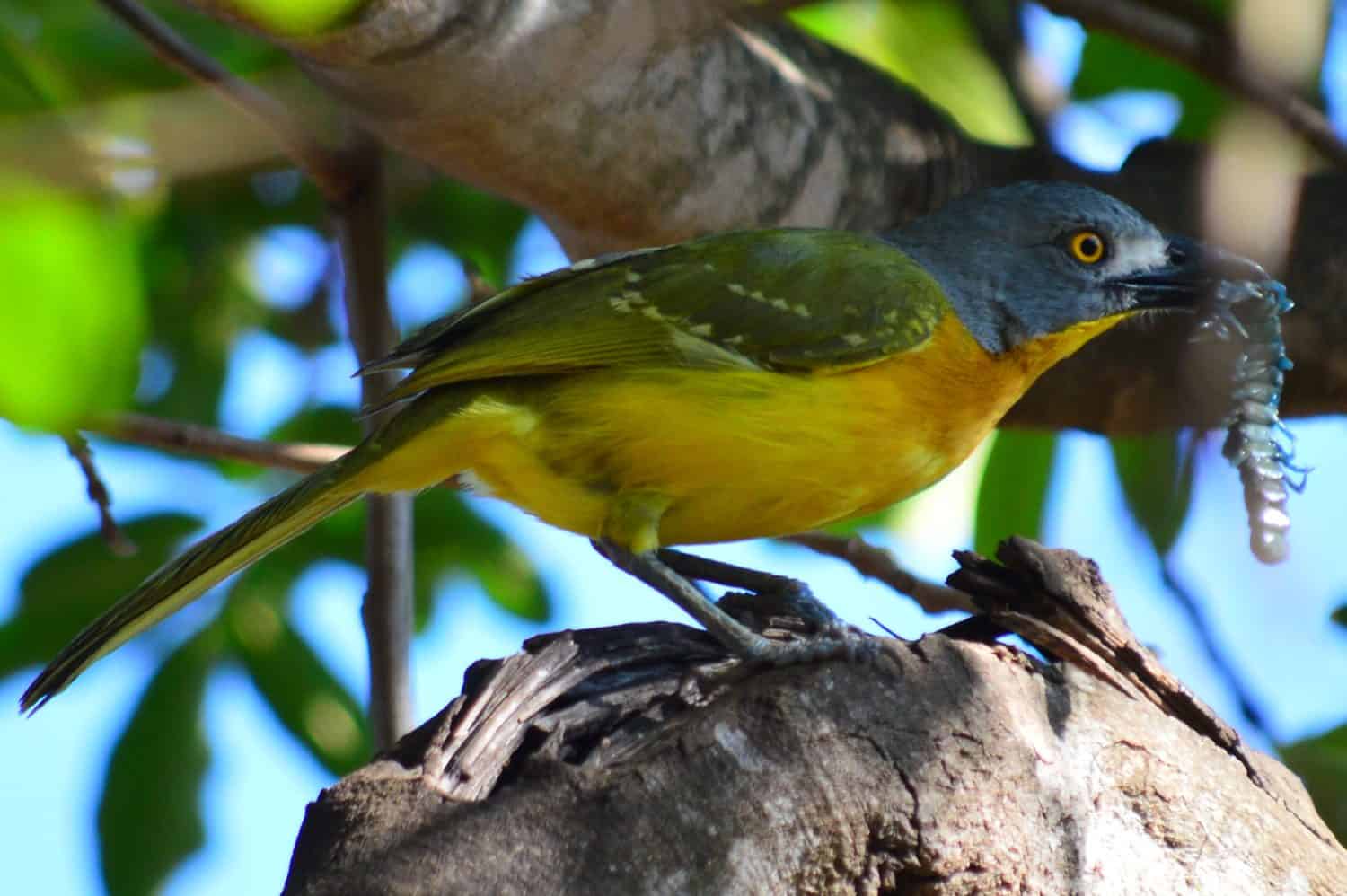
Gray-headed bushshrikes are predatory birds that eat insects and small animals.
©Daniel Kruger/Shutterstock.com
The gray-headed bushshrike (Malaconotus blanchoti) is a species of shrike-like bird that lives in sub-Saharan Africa. Note that bushshrikes can be differentiated from true shrikes in the Laniidae family, although they are closely related. Bushshrikes were once included in the Laniidae family, but now belong to the Malaconotidae family.
The genus Malaconotus within the Malaconotidae family contains six species, all known for their predatory behavior of large insects and small animals. The gray-headed bushshrike, sometimes known as the ghostbird, has a large, sharp beak and mournful, hooting calls.
Bushshrikes are opportunistic hunters and have been reported to prey on a variety of insects and animals, including beetles, grasshoppers, moths, caterpillars, lizards, geckos, snakes, and other birds.
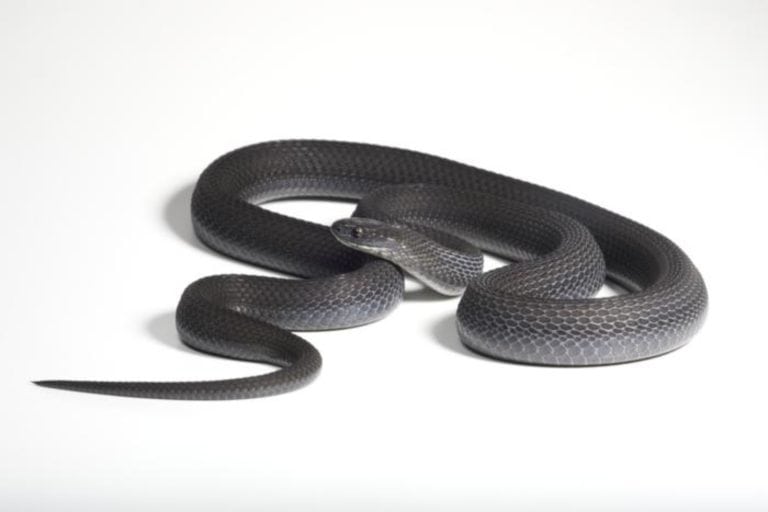
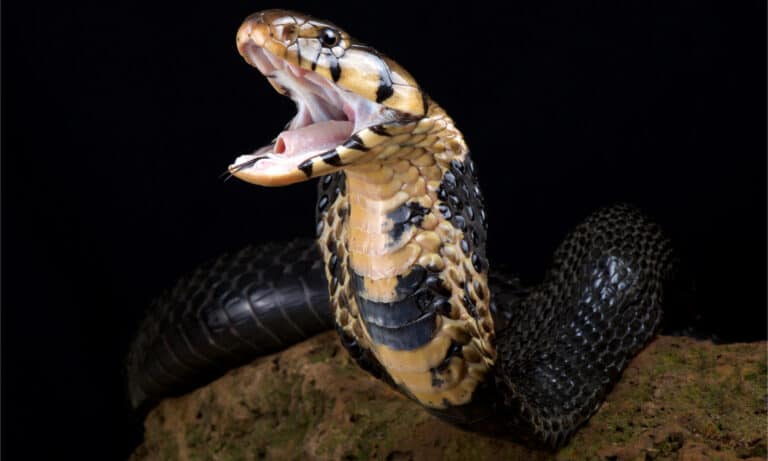
About the Boomslang Snake
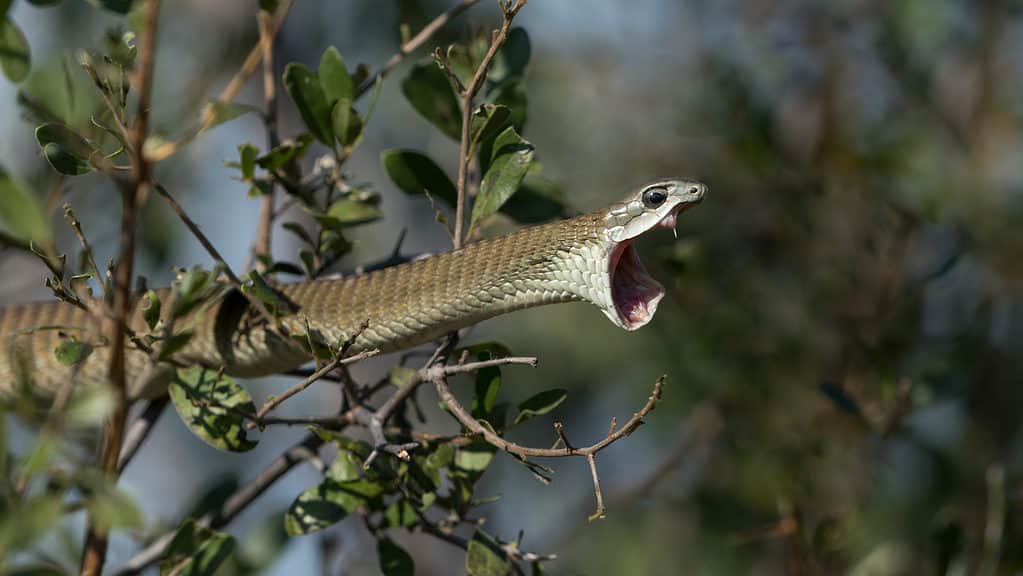
Boomslang snakes are highly venomous, but because of their shy nature, bites from the snake are rare.
©Stu Porter/Shutterstock.com
In the video, the bushshrike is seen attacking a snake that is twice its size. The snake is the venomous boomslang (Dispholidus typus). Boomslangs are tree snakes that live throughout sub-Saharan Africa. They prey on lizards, birds, nestlings, eggs, and small mammals.
The boomslang not only preys on others, but is also preyed upon by predator birds and other snakes. It’s known as a shy snake and will not attack a human unless cornered. Despite having highly toxic venom that is potent enough to kill a person, a bite from a boomslang is rare.
Grey-Headed Bushshrike Against a Venomous Snake
Shrikes are predatory birds, and the gray-headed shrike in the video clearly had the advantage over the snake. Bushshrikes tend to ambush their prey from above. According to the description from the Latest Sightings video, field guide Pieter van Wyk caught a stunning scene on camera between a snake and a bushshrike. The unfortunate boomslang was out of its natural habitat in the trees and, as it lay on the ground, was at a disadvantage to the bird.
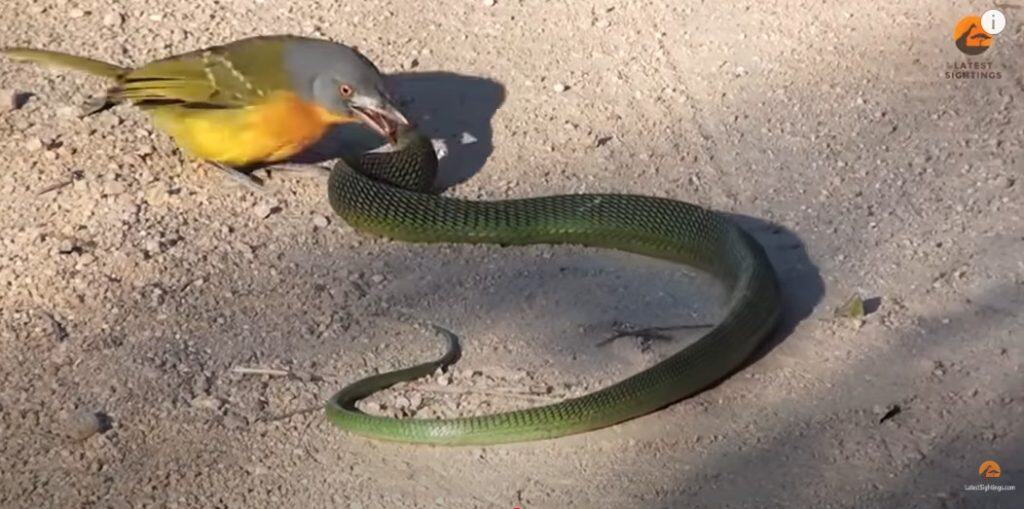
A fascinating video shows a relentless bird as it attacks a venomous snake in sub-Saharan Africa.
©Latest Sightings / YouTu – Original
Van Wyk explained, “It was a sunny day, and I was taking a group of tourists out on a morning drive when I spotted the commotion. It had not even been 10 seconds into our drive. We had barely left the vicinity of the camp.”
Van Wyk continued, “The snake was trying to escape, but the bushshrike was relentless. It would dive down and attack the snake, then fly back up to a nearby branch, only to repeat the process again.”
The Ferocious Bird Went After the Snake’s Eyes
According to van Wyk, “As I was observing this fascinating interaction, I knew well that the snake stood no chance. At this point, the bush shrike had already delivered fatal blows to the snake.”
While watching the video, it becomes apparent that the fast-moving bushshrike was adept at avoiding a fatal bite from the boomslang. Although there is little scientific evidence of bushshrikes attacking snakes by targeting their eyes, that appears to have been the strategy in this particular encounter.
“We watched on for a while, and when the inevitable became clear, the guests requested we leave before the snake actually died, as they could not stomach the sight,” van Wyk continued. “As we were leaving, I couldn’t help but think about what would happen to the snake.
“Deep down, I knew that the snake would most likely not survive the attack. The bushshrike at this point had already blinded the snake and was continuously attacking the snake’s head. Even though I didn’t stay to see the end of the encounter, I was still struck by the power and ferocity of the bushshrike. It is a reminder of the brutal realities of nature and the constant struggle for survival that takes place in the bush.”
Was the Bird Attacking the Snake Defensively, or Was It Planning to Eat It?
According to Biodiversity Explorer, the grey-headed bushshrike will eat almost any animal, as long as it can kill it. Although van Wyk left the scene before learning what ultimately happened between the bird and the snake, it’s possible the bushshrike was planning to eat its kill as soon as the snake was immobilized. Bushshrikes eat their kill by ripping them into bite-sized pieces using their very sharp beaks.
Why Are Bushshrikes Called Ghost Birds?
The gray-headed bushshrike is called “Spookvoel” in Afrikaans, which translates to ‘ghost bird.’ The bird’s call is said to resemble the word ‘Spookvoel’ when spoken aloud and is described as an eerie, ghostly sound.