
Quick Take
- The loggerhead shrike looks like any other songbird. But notice the one feature hidden in its beak and you will find it belongs in the same league as a falcon. See the hooked beak →
- This bird hunts venomous and poisonous prey that would kill most predators, and its kill display is what allows it to safely eat them. How impaling neutralizes toxins →
- A shrike's gruesome larder serves a purpose beyond just food. It doubles as something far more strategic that other birds and animals can't ignore. The larder's strategic purpose →
There’s nothing more calming on a warm spring morning than listening to birdsong. Songbirds flitting through the trees are often associated with peace and tranquility. And this is true of most species–except for the loggerhead shrike.
Compared to other songbirds, the loggerhead shrike is the horror-movie version. Its unassuming appearance hides a sinister hunting method that could give Vlad the Impaler a run for his money. When the loggerhead shrike attacks, it doesn’t just kill and consume its prey. It displays them proudly on whatever spiked surface they can find.
When the Loggerhead Shrike Strikes
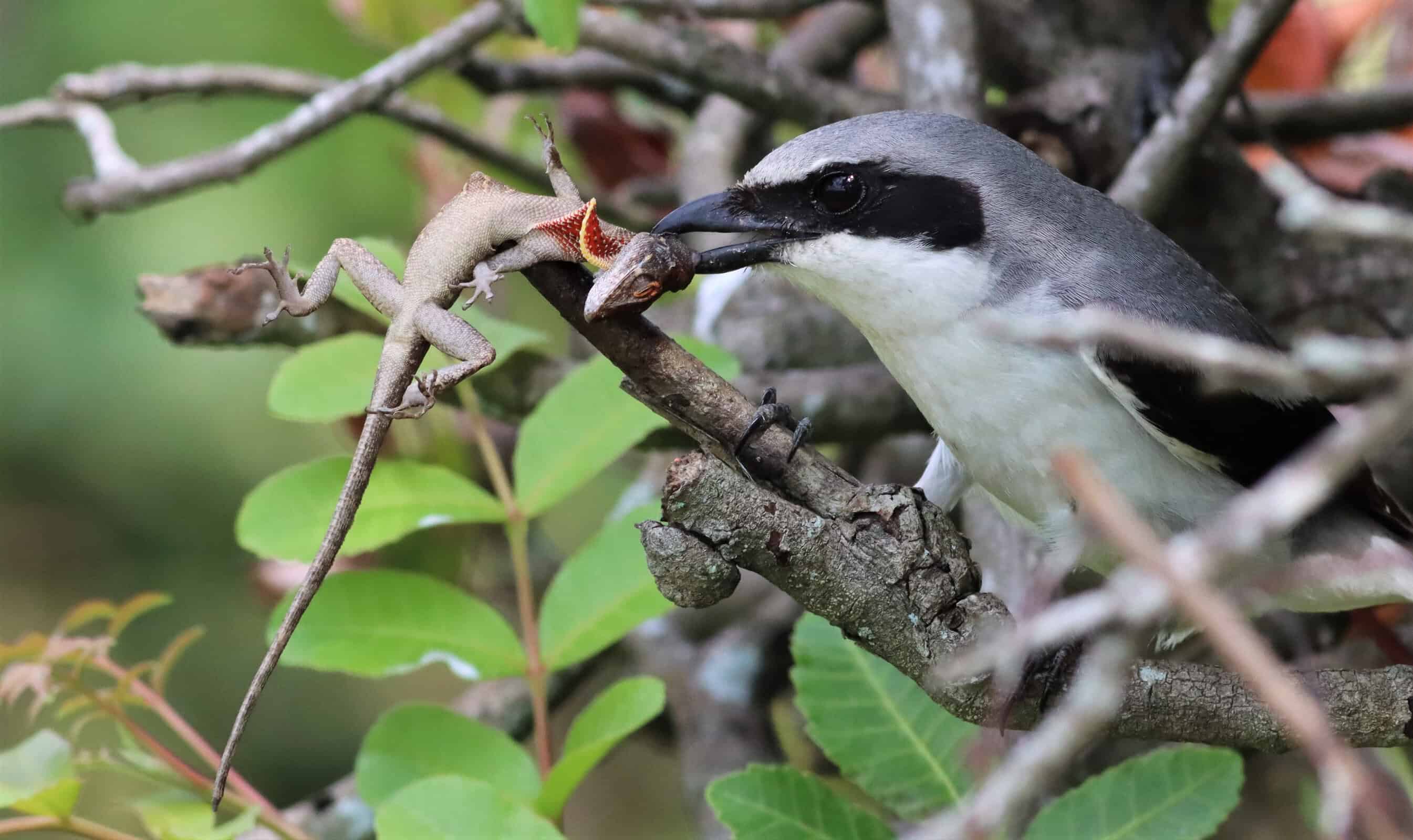
The loggerhead shrike is a beautiful songbird. With a black mask of feathers covering its eyes, gray and white plumage, and a stature of only 7.9 to 9.4 inches, it looks completely innocent. Its deceptive song is punctuated by lyrical trills, rasps, and buzzes. This only serves to convince anyone listening that it’s just your average songbird. But when the loggerhead shrike is ready for a meal, the claws–or, in this case, the spikes–come out.
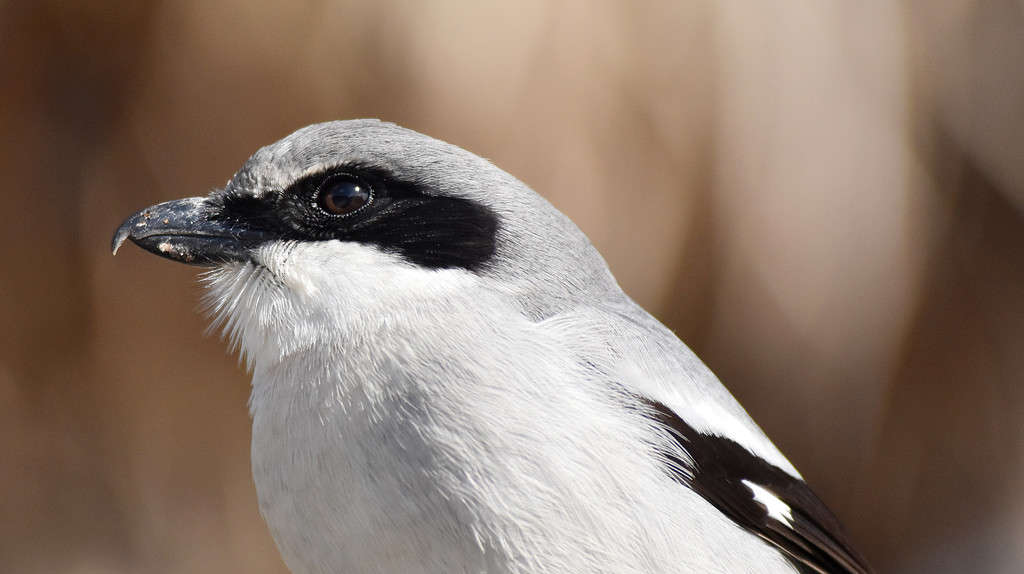
A close-up of a loggerhead shrike.
©holdows/Shutterstock.com
This species lives up to its name as the “butcher bird” and the “butcher of the shrublands” throughout North and South America. The difference between this songbird and others starts with its hooked beak. If you look closely enough, you’ll see a tiny notch that resembles a falcon’s beak. This is called a tomial tooth. And while it’s on a much smaller scale, the purpose of this notch is the same as the raptor’s: to sever the spinal cord of its prey.
This allows the loggerhead shrike to hunt anything from reptiles to large insects and small mammals. It prefers small rodents, but won’t hesitate to take down lizards, snakes, and even other, smaller birds. They’re even known to hunt venomous and poisonous species, thanks to their unique meal prep method.
Impaling Their Kills
After the loggerhead shrike effectively kills its prey, there’s one more step before it’s time to eat. These birds will use anything sharp and spiky to display their kills: thick thorn bushes, pointed branches, barbed wire, and even fence posts. This gruesome display is called a “larder,” and it’s a telltale sign of a loggerhead shrike’s hunting grounds.
It serves as both a warning to other birds in the area and a way to safeguard its meals. Toxic prey, such as grasshoppers and toads, are only safe to eat after the toxin has dissipated. Loggerhead shrikes have learned that leaving their dead prey impaled and out in the open helps decrease this toxicity over time. And as it’s sitting there, it doubles as caution tape for others that might consider stealing its meal.

©Dronenation/Shutterstock.com
When it’s time to eat, the loggerhead shrike rips pieces off its prey while it’s impaled. This makes it easier to eat and allows the birds to hunt larger mammals and reptiles. In the winter and during breeding season, this larder also serves as a cache for nesting females. Shrikes are best known for this sweet, yet morbid, behavior among songbirds.