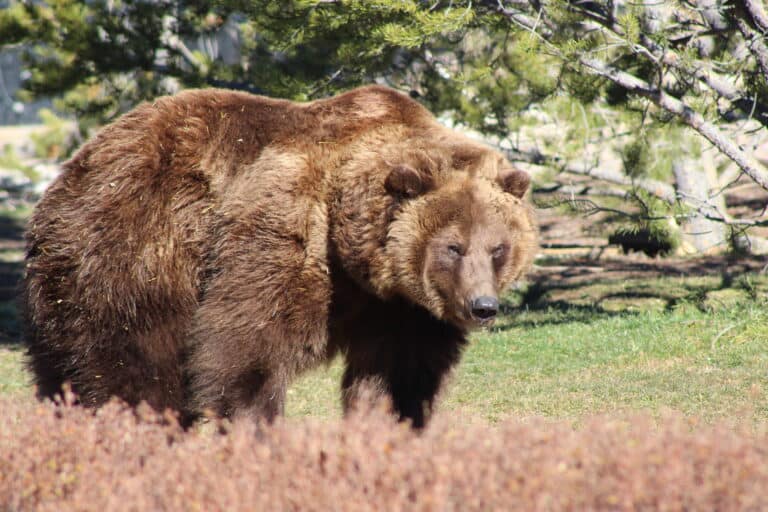
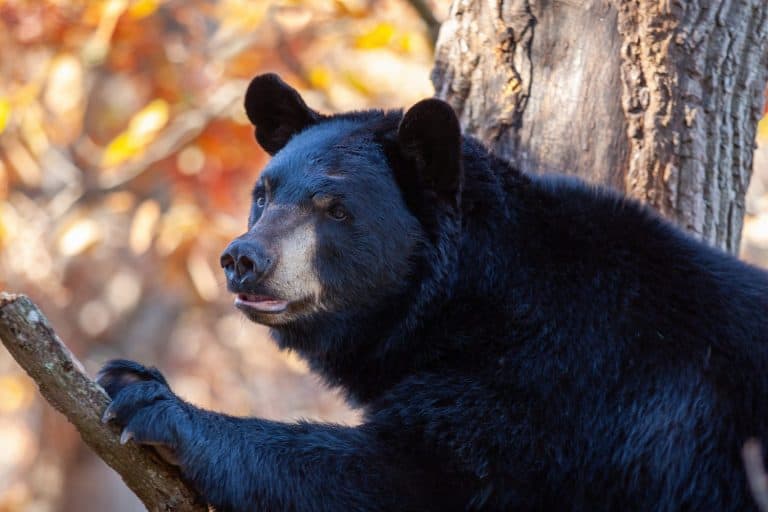
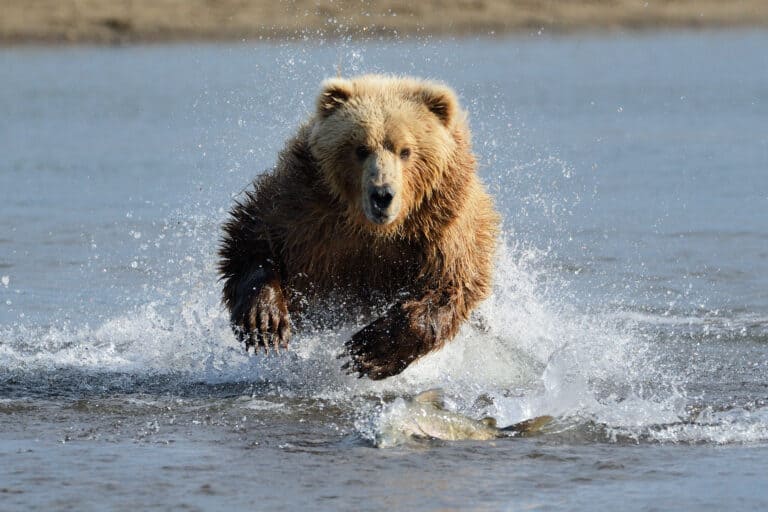
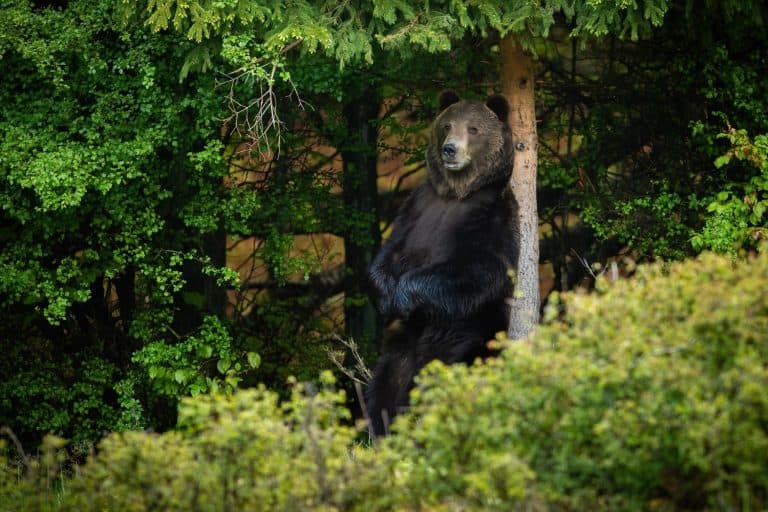
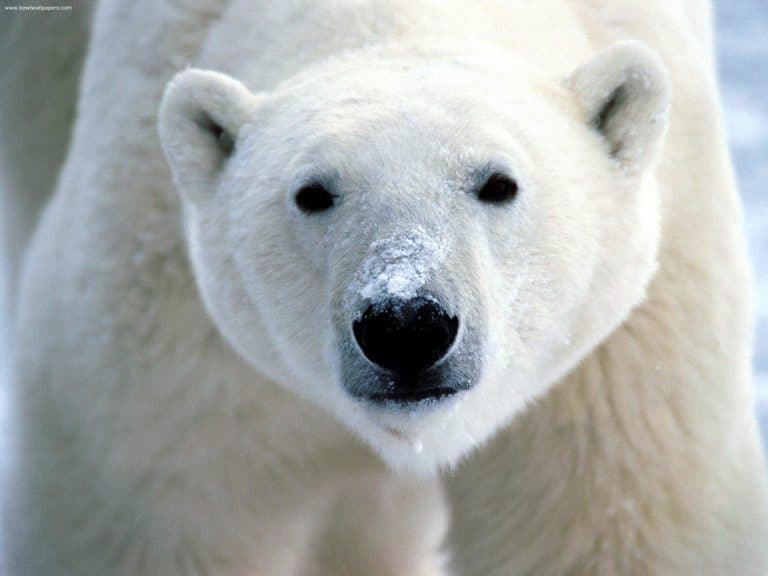
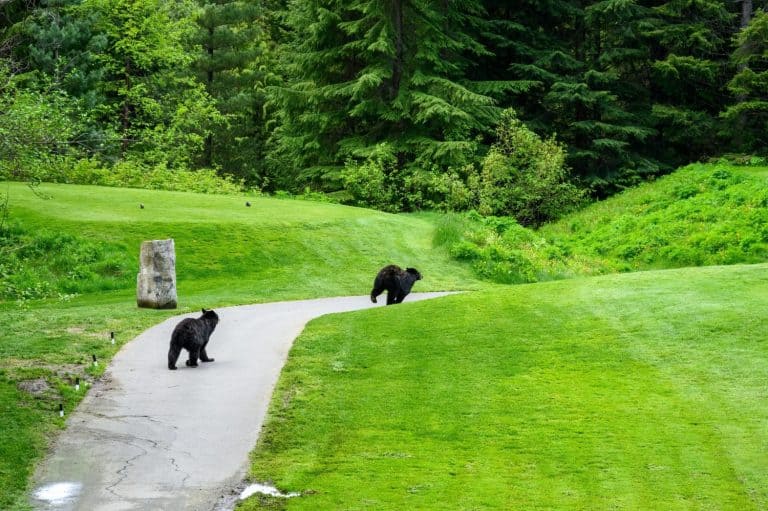
Lions, tigers, and… Sun Bears? Indeed, Sun Bears are one of the rarest and undoubtedly the smallest bear species in the world. In this YouTube video, viewers are treated to an exclusive glimpse of a Sun Bear in its natural, tropical forest habitat. Even the cutest brown bears are large, frightening, and potentially life-threatening. The Sun Bear, however, is really no bigger than a medium-sized dog. Truly, they are uncanny-looking bears. So much so that one in captivity went viral in China a few years ago for its human-like stance, as if it were a person in a costume. Make no mistake: Sun Bears are very real and come equipped with some amazing attributes (besides their small size) that distinguish them from other bears. Let’s learn about them.
Sun Bear Basics

When standing upright, Sun Bears are about as tall as a nine-year-old human child.
©YouTube/bbcearth
Sun Bears (Helarctos malayanus) are the smallest of the bear species in the family Ursidae. They are the only species in the genus Helarctos. Sun Bears have short, stocky bodies and can stand up to about 54 inches (4.5 feet) tall on their hind legs, weighing between 55 and 143 pounds. For comparison, black bears stand up to seven feet upright. Brown bears can reach nine feet on their tippy toes. Sun Bears have large paws, sizable curved claws, short snouts, and round ears. While they are usually jet black in color, their fur can range from red to grey. They get their names from their signature orange or cream-colored patches of fur on their chests.
They live throughout the tropical forests of Southeast Asia, with a range bounded by northeastern India to the north and Indonesia to the south. Sun bears have distinctly inward-turned front feet, strong forelimbs, and flattened chests, which make them perfectly suited for the forest. Indeed, trees are their lifeblood. They can climb better than any other species of bear. At night, they sleep in hollowed-out logs. During the day, they use their long claws to break apart fallen trees to find honey, termites, and other food sources. Speaking of diet, Sun Bears eat practically anything. You can see in this YouTube video how they rip apart logs to find food.
Though Sun Bears seem to prefer fruits, they will eat ants, beetles, seeds, and even small reptiles. This omnivorous diet takes them across large swaths of forest. They have an average range between two and eight square miles. Tigers and leopards are known to predate them, but Sun Bears like to keep things low-key.
Behavior

These tiny bears are elusive and shy, but full of interesting sounds.
©YouTube/bbcearth
Most bears will charge if threatened, and sometimes even seek out trouble. Sun Bears, on the other hand, have gentle, shy, and reclusive natures. Attacks on humans are rare and occur only if the bears are seriously threatened. This timidity led to them being kept as pets in the past. In the wild, Sun Bears are quite solitary, only being seen in mother and cub pairs when grouped. Given their small stature, they will stand on their hind legs to smell and get a better view of the surrounding forest.
The smallest bears in the world make some interesting sounds, too. These vocalizations include grunts, sniffle-like sounds, and even roars similar to those of a male orangutan during breeding season. More rarely, they will emit short barks, especially if they are surprised. Let’s learn more amazing facts about the smallest bears in the world.
Sun Bear Shine

Sun Bears are among the most skilled climbers of all bear species, thanks to their inward-curved feet and flat chests.
©YouTube/bbcearth
As seen in this YouTube video, Sun Bears are tree experts. While other bear species can climb, the Sun Bear’s morphology is specifically designed to scale tall trees with ease. Unlike other bears that hibernate, Sun Bears remain active throughout the year because of the plentiful food available in their habitat.
This allows Sun Bears to mate at any time of the year. Once babies are on the way, female Sun Bears make a ground nest to nurture them after they are born. Upon birth, the cubs are blind and weigh just 11 ounces, which is the weight of a large apple. Sometimes, during rearing, mother Sun Bears will pick up the cubs and walk around like a human.
Sun Bears also have exceptionally long tongues—almost ten inches. Their tongues are so long that Sun Bears hold the Guinness World Record for the “Longest Bear Tongue.” This tongue helps them scoop out honey from beehives or termites from rotting logs.
Conservation Efforts

Sun Bears face threats due to hunting and heavy deforestation in Southeast Asia.
©YouTube/bbcearth
Tragically, Sun Bear populations have fallen by an estimated 35% in the last 30 years. This is likely due to heavy deforestation, climate change, and hunting. In some places, Sun Bears are considered vermin and treated as such. In other places, however, their numbers are affected by both the pet trade and traditional medicine ingredient demands. Surveys conducted in Malaysian traditional medicine stores in 2018 and 2019 found 25% of the surveyed locations selling Sun Bear parts.
All of these factors have led to Sun Bears being listed as “Vulnerable” on the IUCN Red List. Luckily, steps have been taken to protect these adorable bears. Except in Cambodia and Sarawak, Malaysia, hunting Sun Bears is illegal. Furthermore, places like the Bornean Sun Bear Conservation Centre in Malaysia work to help Sun Bear conservation efforts, in tandem with an international captive-breeding program that includes several zoos.
These remarkable little bears help maintain forest health by dispersing seeds, controlling insect populations, and creating shelters for animals such as flying squirrels and hornbills. It’s important that the smallest bears in the world get a chance to thrive before heavy deforestation in Southeast Asia makes that too difficult. As seen in this YouTube video, they are an elusive but special species.