
Quick Take
- Making noise is the go-to bear advice, but at close range what you do with your feet matters more than what comes out of your mouth. Give the bear room →
- The trail you're hiking could be the reason a bear charges, and not necessarily the bear's aggression. See how trails create risk →
- A bear running straight at you isn't necessarily trying to attack, so misreading which kind of charge it is could make things far worse. Understand bluff charges →
- If a black bear actually attacks, the survival instinct most people would reach for is exactly the wrong move. Know when to fight back →
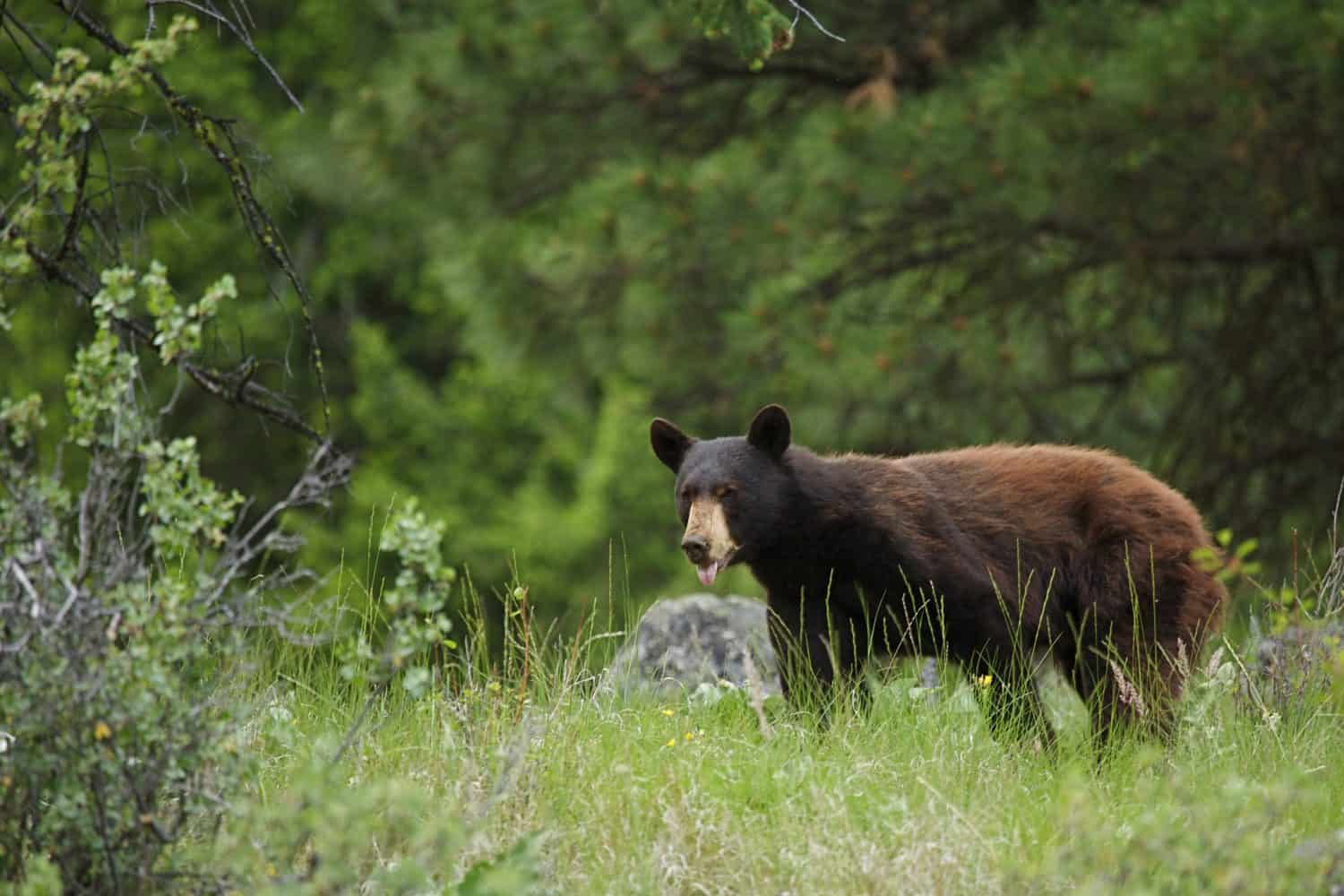
A short video from Mount Wilson in California shows the kind of wildlife encounter that makes your stomach drop: a hiker on a trail, a black bear ahead of him, and then a sudden charge.
At first glance, the clip looks like a simple survival lesson. Make noise. Look big. Don’t run. Hope the bear backs off. But the more useful lesson is that the outcome of bear encounters are mostly about how well you read the situation before it becomes a confrontation.
According to the Los Angeles Times, the Mount Wilson incident involved a black bear on a trail in the Angeles National Forest. No one was injured, and the charge was described as a “false charge.” A California Department of Fish and Wildlife spokesperson advises hikers to make themselves look larger, avoid blocking the bear’s exit, and back away slowly.
That last point may be the most important one.
A Bear Charge Is Not Always an Attack
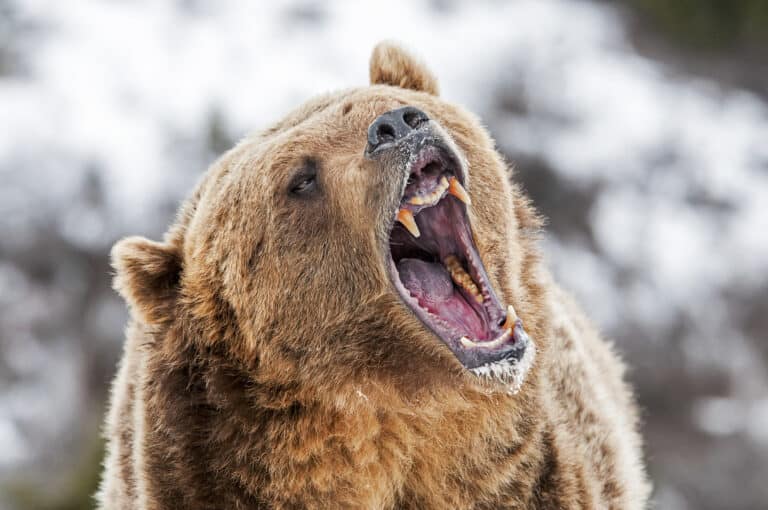
When a bear runs toward a person, most people naturally interpret it as an attack, which is understandable. A charging bear is terrifying.
But in many black bear encounters, the bear may be trying to create space, test the threat, or force a human to move away rather than actually attacking the human. Wildlife agencies often refer to this as a bluff charge or false charge. New Jersey’s Division of Fish and Wildlife, for example, notes that black bears may bluff charge when cornered, threatened, or trying to get food. Their advice is to stand your ground, avoid direct eye contact, slowly back away, and not run.
That does not mean bluff charges are harmless. It means the bear’s behavior has to be understood in context.
A bear on an open hillside with an obvious escape route is one situation. A bear boxed into a narrow trail corridor with a human blocking the way is another. Add cubs, food, surprise, dogs, or a blind turn, and the risk changes fast.
The common mistake is treating every bear encounter like a scripted checklist. Real encounters are messier.
The Trail Itself Can Become the Problem
One reason this video is so instructive is that it appears to happen on a trail, which is exactly where many hikers feel safest because they’re on a clear path and out of the woods.
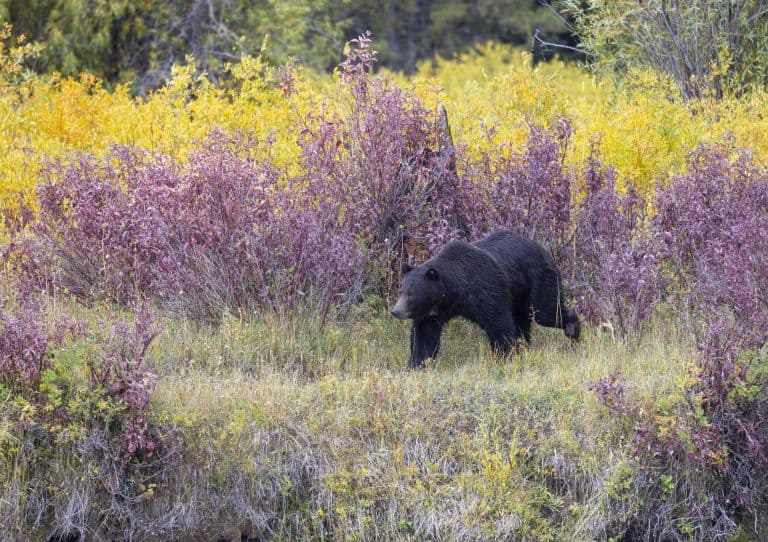
But trails can create a trap-like scenario. A bear and a hiker may both be using the same path because it is the easiest route through steep terrain or heavy brush. If the trail is narrow, the bear may not feel like it has a clear exit. If the person keeps advancing, even while making noise, the bear may interpret that as pressure.
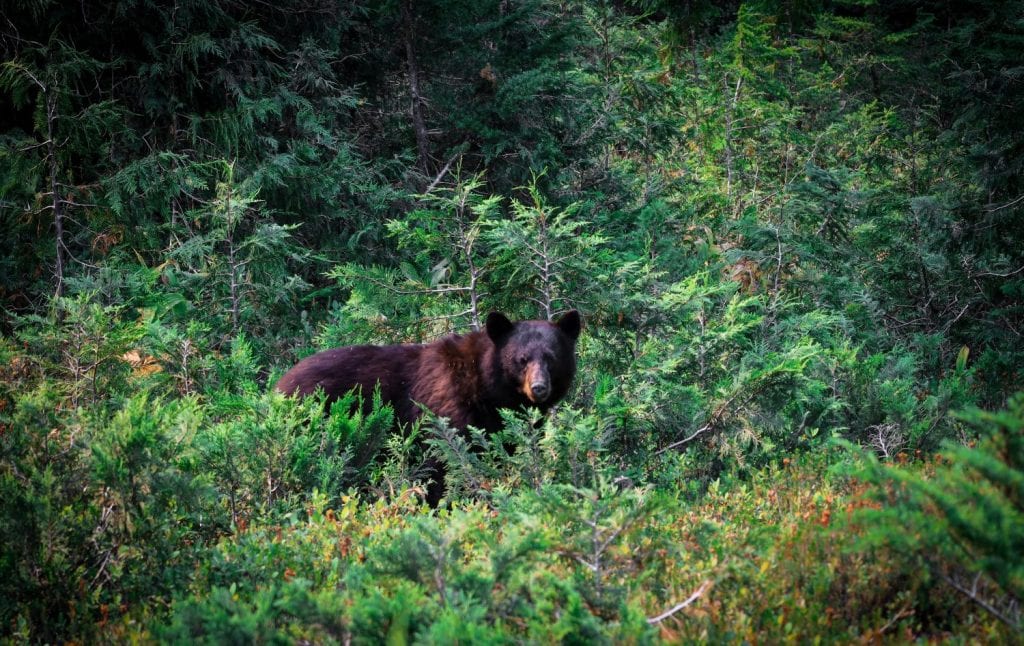
Like humans, bears may prefer the trail as it’s less brushy.
©Jaromir Vanek/Shutterstock.com
That is why “make noise” is not the whole answer. Noise is useful when it helps a bear identify you as human and avoid being surprised. But once you and the bear are already close, your positioning matters just as much as your volume.
The National Park Service advises hikers who surprise a bear to stay calm, speak in a calm and confident voice, avoid sudden movements, avoid direct eye contact, and slowly back away while keeping the bear in view. It also warns not to run or throw food or personal items to distract the animal.
That guidance is less dramatic than yelling and waving, but your goal is not to dominate the bear. Your goal is to de-escalate the encounter while giving the animal room to leave.
Black Bears Are Usually Avoidant, But They’re Not Predictable
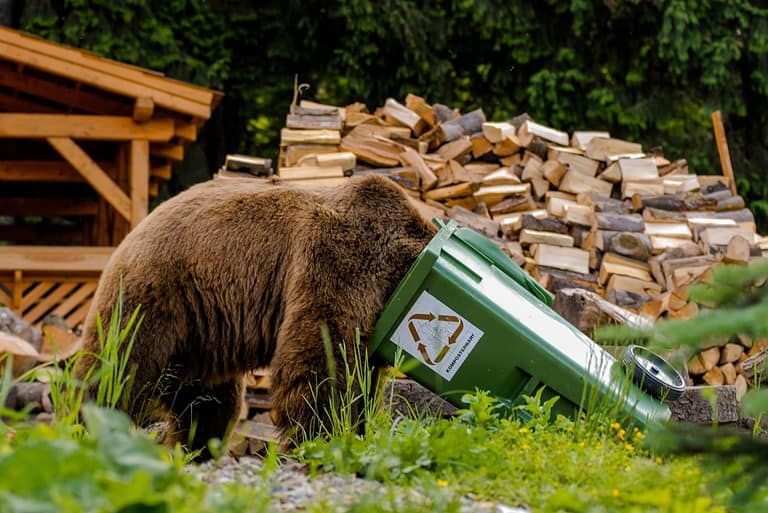
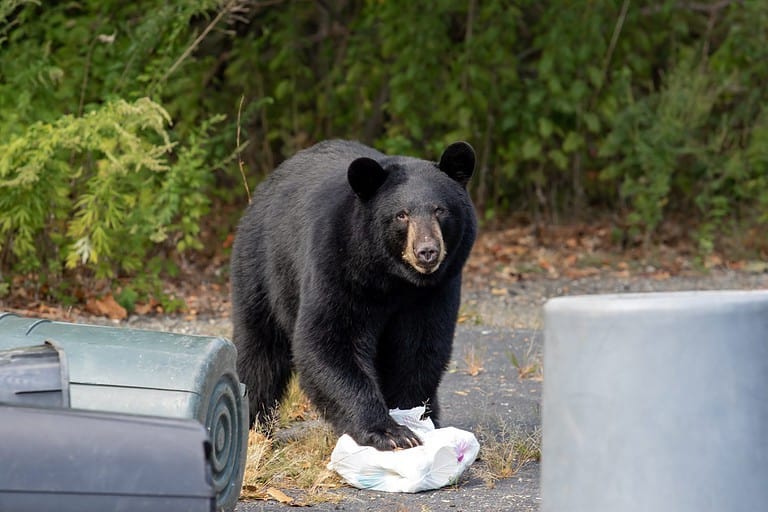
California’s only extant native bear is the American black bear, even when the animal is brown, cinnamon, or blond in color. (California grizzly bears were once plentiful in the state, but they were hunted to extinction; the state flag features a grizzly bear.) Black bears are generally not looking for conflict with humans. California Department of Fish and Wildlife notes that black bears are omnivores that eat a wide variety of foods, including berries, plants, animals, human food, pet food, and trash. The agency also warns that bears can become habituated and lose their fear of people when they find food around humans.
That matters because a bear’s behavior on a trail is not just about wild instinct. It may also reflect previous human contact.
A bear that has learned people drop snacks, leave trash, or panic and abandon backpacks may behave differently from a bear that has had little exposure to humans. Habituation does not automatically make a bear aggressive, but it can make encounters more dangerous because the bear is less likely to retreat quickly.
This is where public advice sometimes doesn’t paint the full picture. “Black bears are shy” is often true. “Black bears are harmless” is not. A large wild animal that feels cornered, surprised, food-conditioned, or pressured can become dangerous quickly.
The ‘Look Big’ Advice Has a Purpose
Advice like “make yourself look larger” can sound silly, but there is logic behind it. You are communicating that you are not prey and not an easy target. Speaking in a calm, firm voice helps the bear identify you as a human rather than a deer, dog, or smaller animal moving through brush.
But there is a difference between looking assertive and escalating. Screaming, charging toward the bear, throwing food, or trying to film from closer range can all make the situation worse.
The National Park Service advises people to speak calmly and confidently, slowly wave their arms, and back away without sudden movements.
Don’t Block the Exit
The California wildlife spokesperson’s advice about not blocking the bear’s exit is important because a bear that can leave usually will. But a bear that feels trapped may try to make you leave.
On a trail, that can mean stepping off to the side if it is safe, backing away to a wider section, or retreating around a bend to reduce pressure. The point is not to “win” the trail. The point is to remove the conflict.
This is also why hikers should be especially careful near dense brush, switchbacks, water sources, berry patches, carcasses, and areas with limited visibility. These are places that can create “surprise” moments or where it’s difficult for either party to escape.
What To Do If You Meet a Black Bear on a Trail
If you meet a black bear on a trail, stay calm and do not run. Speak in a calm, firm voice, and slowly back away while watching the bear. Make space for the bear to be able to get out of the area, and do not approach for the sake of capturing a video.
If the bear continues approaching, stand your ground and be prepared to act more assertively.
If a black bear actually attacks, National Park Service guidance is blunt: Do not play dead. Playing dead may be recommended in some grizzly bear defensive attacks, but it is not the standard advice for a black bear attack.
Try to escape to a secure place if possible. If not, fight back using whatever is available and focus blows on the bear’s face and muzzle.
Mutual Respect for Wildlife
The Mount Wilson video is gripping because it compresses the encounter into a few frightening seconds. As more people hike, film, post, and recreate in wildlife habitat, these moments will keep happening. The answer is not to fear every bear or treat trails like danger zones. It is to understand that wild animals are constantly making decisions based on space, risk, food, and escape.
A bear on a trail is not a photo opportunity. It is a negotiation over distance.
The safest hikers are the ones who notice early, move deliberately, and understand that the animal in front of them is not performing for the camera. It is trying to survive the encounter, too.