
Quick Take
- The suspect negotiated, and her reported demands came in a very specific order.
- One body part does the work of a fifth limb, and it outmeasures the rest of the animal.
- A missing thumb explains the name, and the reason is a surprising one.
- Owning a monkey in Minnesota comes with a legal catch, and a few exceptions apply.
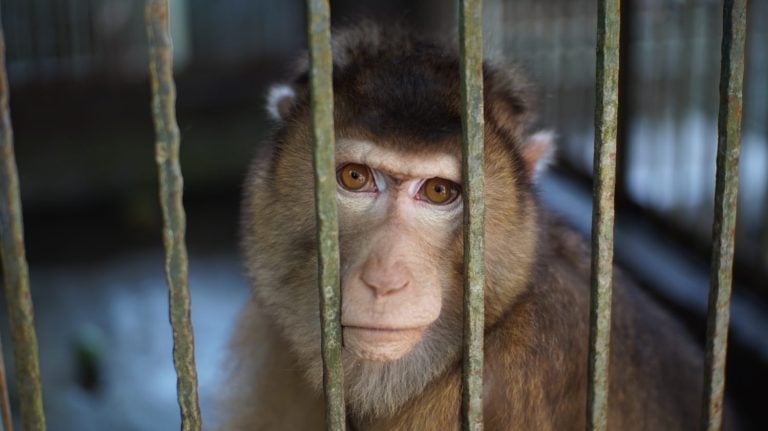
Officers in Albert Lea, Minnesota, went out early in the morning to check a report of a “suspicious character hanging around,” Rochester station KROC reported. The call came Saturday morning, and officers found McNugget, a spider monkey who had gotten loose and was out in the cold, KTTC reported, citing the Albert Lea Police Department.
The department wrote in a Facebook post, ABC 6 News reported, that McNugget was “friendly, cooperative (after some negotiation), and happy to warm up in a squad car,” as FOX 9 quoted the post. According to KROC, the department also noted that she “asked for a lawyer and a banana. In that order.”
Police reunited McNugget with her owner, who officers said was traveling through the area, KROC reported. The two continued home down Interstate 90, and the post had more than 627,000 views by Sunday, according to KELO in Sioux Falls.
What is a spider monkey built for?
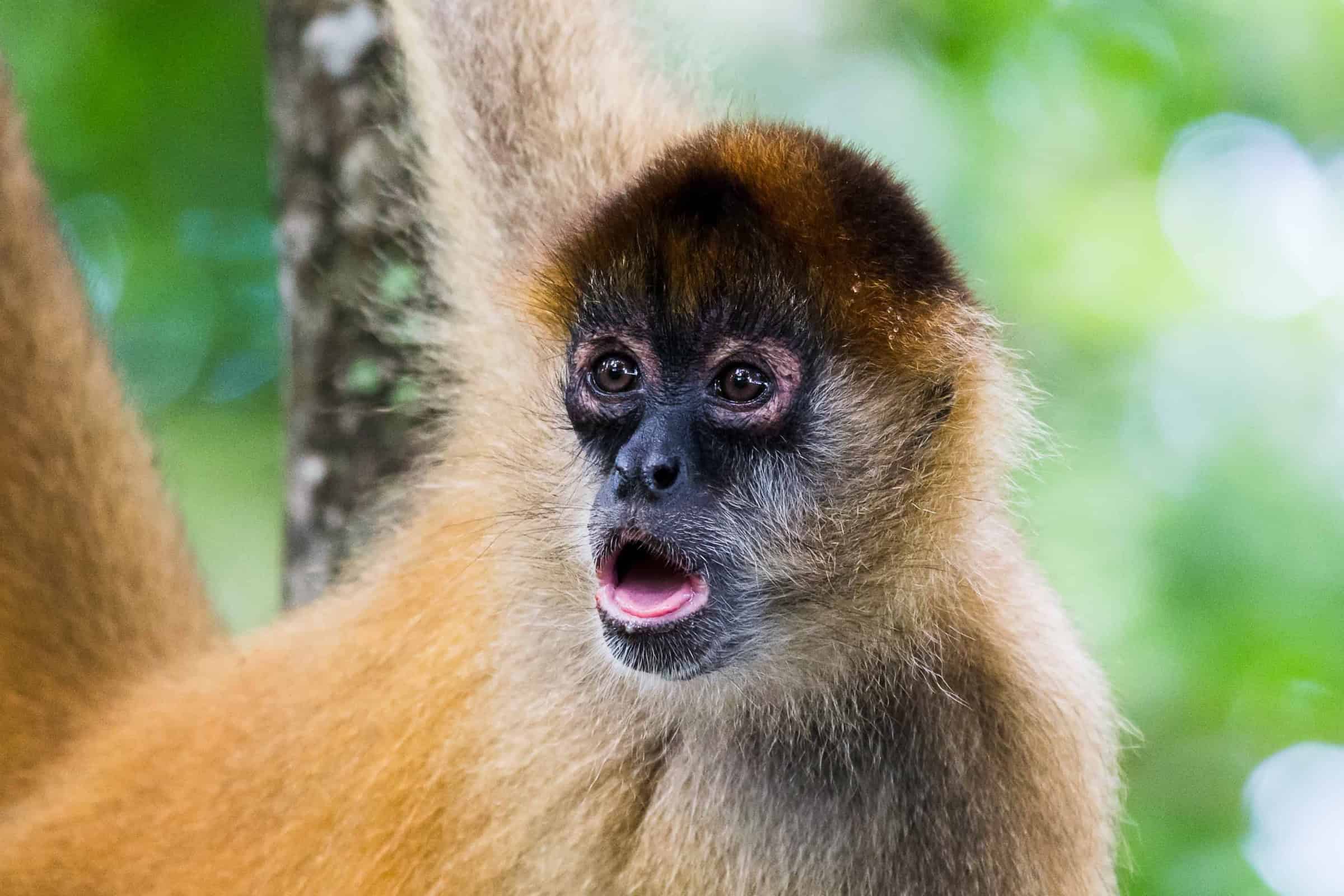
Life high in the trees. Spider monkeys are the genus Ateles, large New World monkeys with long limbs and a light, agile build for moving through the canopy. One species, the Central American spider monkey, lives in mature rainforest and montane forest from the coasts of Mexico south to northwestern Colombia.
Spider monkeys spend most of their time in the middle and upper canopy and often avoid traveling on the ground.
They eat mostly fruit. The Central American species favors ripe fruit, adds some leaves, flowers, nuts, seeds, insects and eggs, and feeds most heavily in the early morning.
What does that tail do?
The tail works as a fifth limb. It is strong enough to support the monkey’s whole body, and a bare pad near the tip grips like a fingerprint.
In the Central American spider monkey, the tail measures 25 to 33 inches. The head and body together run about 12 to 25 inches, so the tail is the longest part of the animal. These monkeys can pick things up with their tails and are often seen hanging by one limb or by the tail alone.
Their hands help too. The thumb is reduced or absent, which turns the hand into a hook for fast swinging. The genus name Ateles comes from the Greek for “imperfect,” a reference to that thumb.
How big do they get, and how long do they live?
A-Z Animals lists female spider monkeys at 15 pounds on average and males at 19 pounds, with tails averaging 2 feet 6 inches.
They can live for decades. The longest recorded captive lifespan for a Central American spider monkey is 33 years, according to the University of Michigan’s Animal Diversity Web. A pet spider monkey can be a commitment that long.
They are also social animals. Central American spider monkeys form groups of about 30 that split into smaller parties to forage.
Can you keep a monkey in Minnesota?
Mostly no. Minnesota law classes all nonhuman primates, monkeys included, as “regulated animals,” and since Jan. 1, 2005, a person may not take possession of one. People who already had a primate then could keep it only if they registered it with local animal control.
The law exempts accredited zoos, wildlife sanctuaries, licensed research institutions and USDA-licensed exhibitors on the move with a circus, carnival, rodeo or fair. Police have not said where McNugget’s owner lives; officers said only that the owner was traveling through the area.