
Quick Take
- Their first IV lasted barely half an hour. What did the nurses try next?
- No hippo formula existed. The zoo's workaround involved a surprising lab.
- A zoo employee's memory from a year earlier led keepers to the one team that could help.
- Back on the hospital floor, one hippo's name started echoing among NICU parents. Find out what they were saying and why.
Darcy Doellman and Blake Gustafson had spent decades on the Vascular Access Team at Cincinnati Children’s, a group of IV nurses that often works with premature babies. In February 2017, they packed their supplies and ultrasound equipment and drove to the Cincinnati Zoo. “Driving over, we both paused and looked at each other and thought: Wait, we are dealing with a hippo! Reality set in,” Doellman told the hospital’s Inspire magazine in 2022.
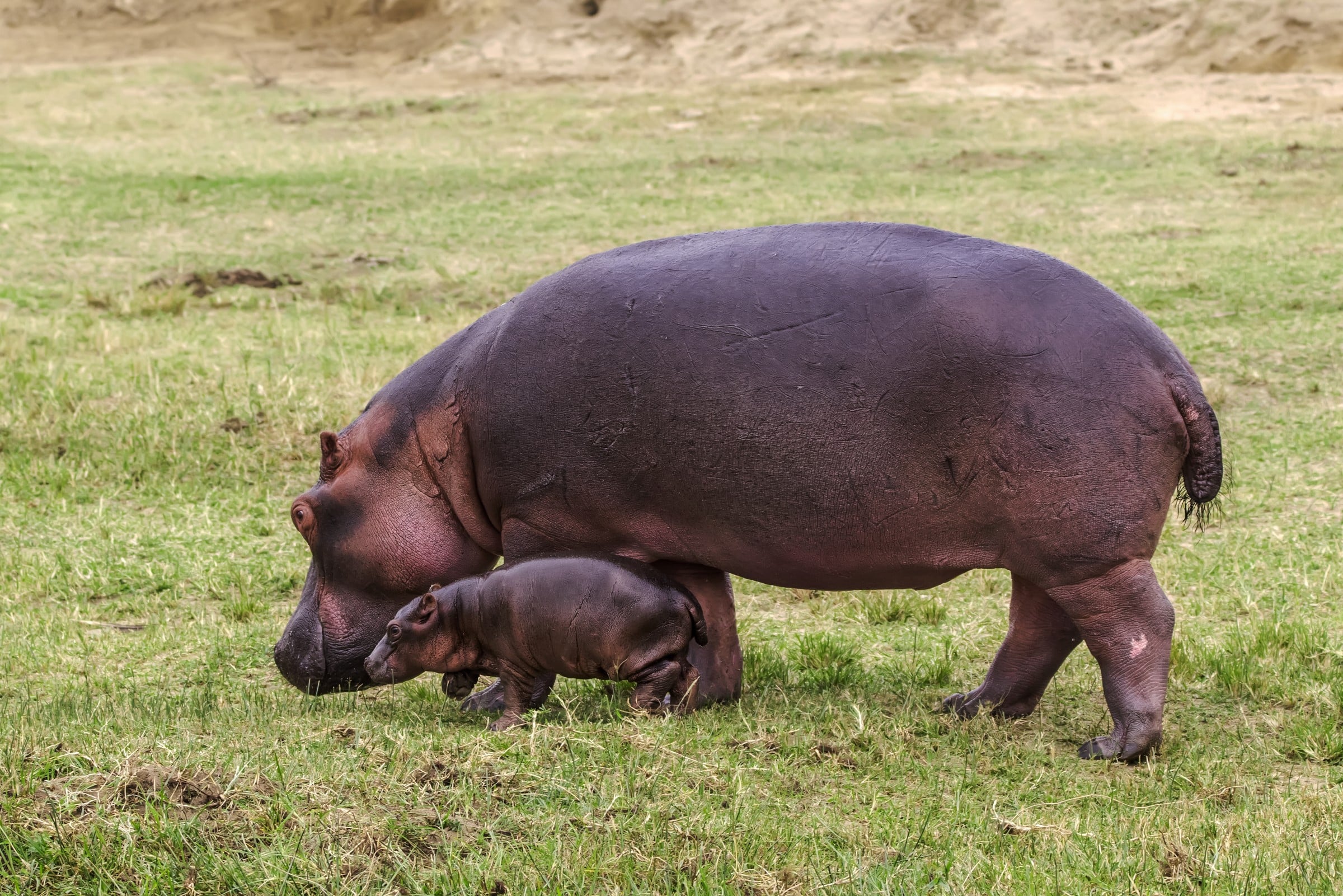
Their patient was Fiona, the Nile hippo born six weeks premature who died this week at age 9. Gustafson recalled finding her on a concrete floor in a cinder block room, pale and on oxygen.
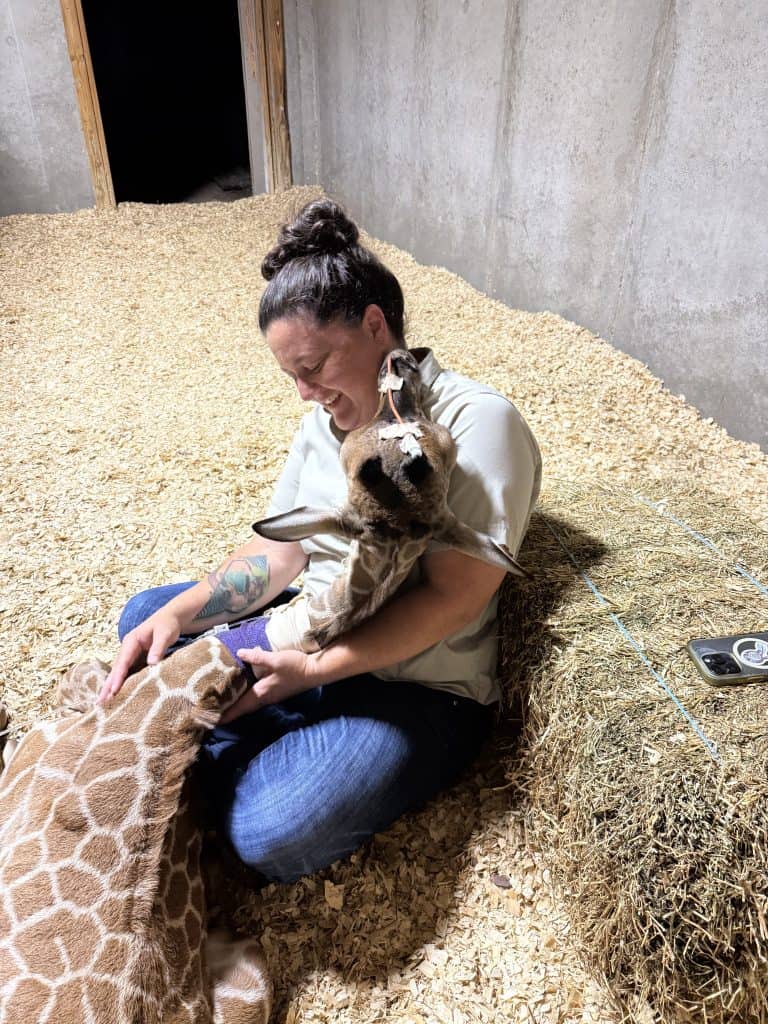
Their first line lasted about 30 minutes before the vein blew, WVXU reported. Gustafson then used ultrasound to set a longer catheter in a deep vein in Fiona’s leg and sutured it in place.
“Five bags of fluid later, Fiona is showing signs of recovery,” Christina Gorsuch, the zoo’s curator of mammals, said at the time. Doellman said the zoo team kept the catheter in for five days.
Back at the hospital, parents in the NICU started saying the hippo’s name. “In our NICU, so many of those parents say, ‘If Fiona can fight, I can fight,'” Gustafson said.
Why was a 29-pound hippo in such danger?
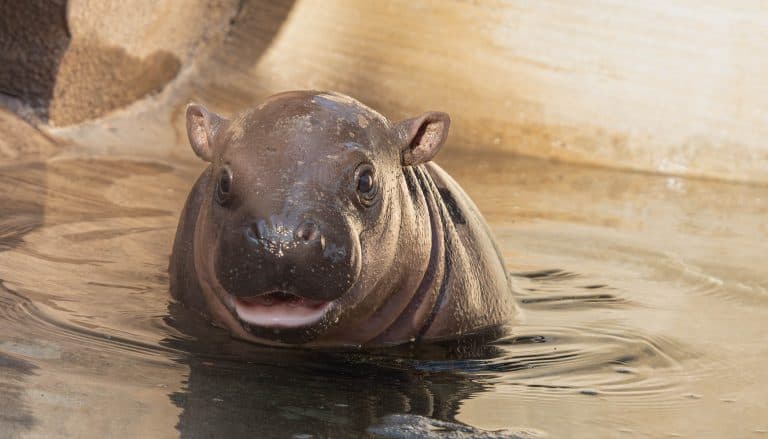
Fiona was born Jan. 24, 2017, at 29 pounds, about 25 pounds under the lowest birth weight on record for her species, according to the zoo. Hippo calves normally weigh 55 to 120 pounds. She could not stand or nurse on her own.
Wendy Rice, who chronicled Fiona’s care on the Cincinnati Zoo’s blog, wrote that body temperature was one of the first problems. Getting too cold would be fatal, so the team aimed for 97 to 100 degrees Fahrenheit. Wild hippos spend up to 16 hours a day in water, but Fiona was not yet strong enough to stay in a pool for long stretches.
What did keepers do?
Keepers turned a room above the hippo building’s boiler into a nursery that held air temperatures up to 90 degrees. It sat close enough to her parents, Bibi and Henry, that Fiona could hear and smell them. The care team rubbed diluted baby lotion over her body every hour to keep her skin from drying and cracking.
No hippo formula existed and Bibi couldn’t produce enough milk, so the zoo sent some of her milk to the National Zoo’s milk repository for analysis and built a formula to match.
Why couldn’t she nurse like a normal calf?
A hippo calf can nurse underwater: its ears fold and nostrils close automatically, and it surfaces to breathe about every 30 seconds, according to the San Diego Zoo Wildlife Alliance.
Fiona was at first too weak to nurse and took every meal through a stomach tube, Rice wrote. She moved to a bottle, then started teething, which most hippos don’t do until several months after birth. Within 72 hours she had all but stopped nursing, and she grew dehydrated and lethargic, with blood work showing her kidneys were affected.
That is when the zoo called the nurses. A zoo employee remembered a Vascular Access Team nurse using ultrasound to start an IV on the employee’s own child the year before Fiona’s birth, Doellman said, and that memory led the zoo to the team.
How did she grow up?
By July 11, 2017, Fiona weighed almost 375 pounds and swam with both Bibi and Henry for the first time, WVXU reported. Weeks earlier, on her first trip outside with her mother, Bibi tried to keep her in the shallow end of the pool and gave up, Rice wrote.
Around her first birthday she weighed 650 pounds, NPR reported. Twenty-seven million people had watched The Fiona Show on Facebook, and hundreds of children born premature had written to tell her: “I made it, and you will, too.” She reached 2,000 pounds in July 2022, according to TODAY.
What did the nurses carry with them?
Doellman said the two nurses spent an hour and a half with Fiona and checked on her every day afterward. “I have every book, stuffed animal, calendar and ornament there is, so I definitely follow her,” Gustafson said. She also said it’s “amazing to see how many people have named their kids Fiona”.
How did Fiona die?
Fiona swallowed a visitor’s knit cap that landed in her habitat by accident on Nov. 8, the Cincinnati Zoo said. She died Nov. 19 after her care team worked around the clock to save her.
“We did not expect this outcome. She fought until she couldn’t anymore,” zoo director Dave Jenike said. She is survived by Bibi and her half-brother, Fritz.