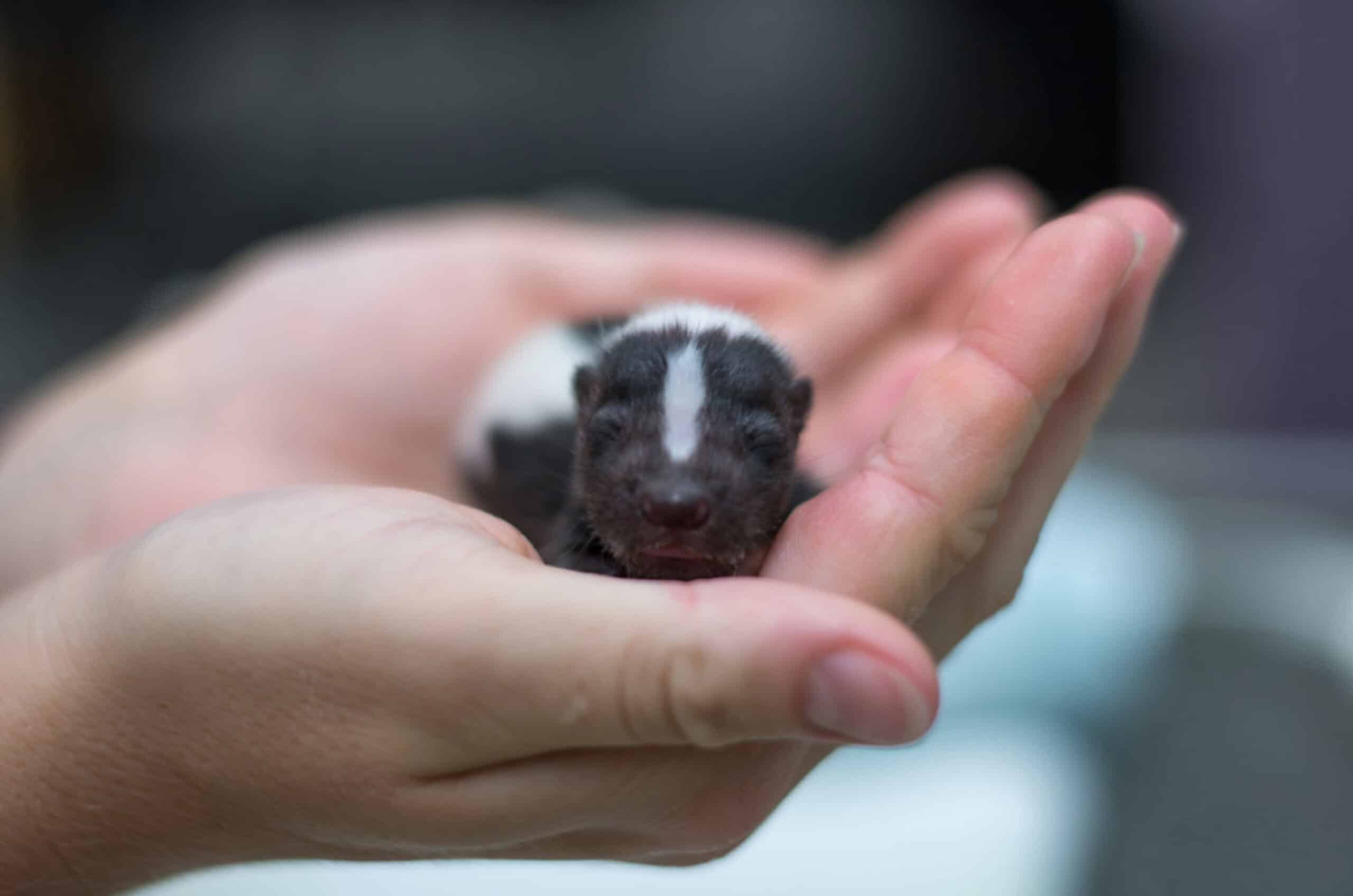

The birth of any animal at the Cincinnati Zoo is a special occasion, but few arrivals are as unique — or as captivatingly cute — as Marshmallow, the Zoo’s new striped skunk kit (Mephitis mephitis). Born unexpectedly via C-section, this tiny black-and-white survivor instantly captured global attention through his darling social media updates, as this video illustrates. To learn more about this adorable and surprisingly sassy little creature, A-Z Animals spoke with Sarah Paese, one of Marshmallow’s dedicated keepers.
Marshmallow’s Birth and Unexpected Fight for Survival
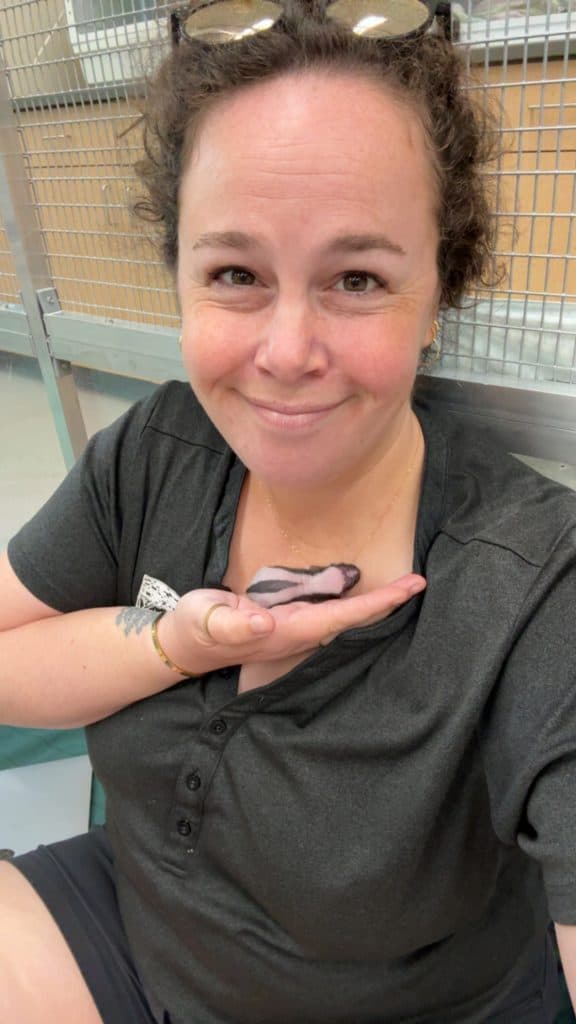
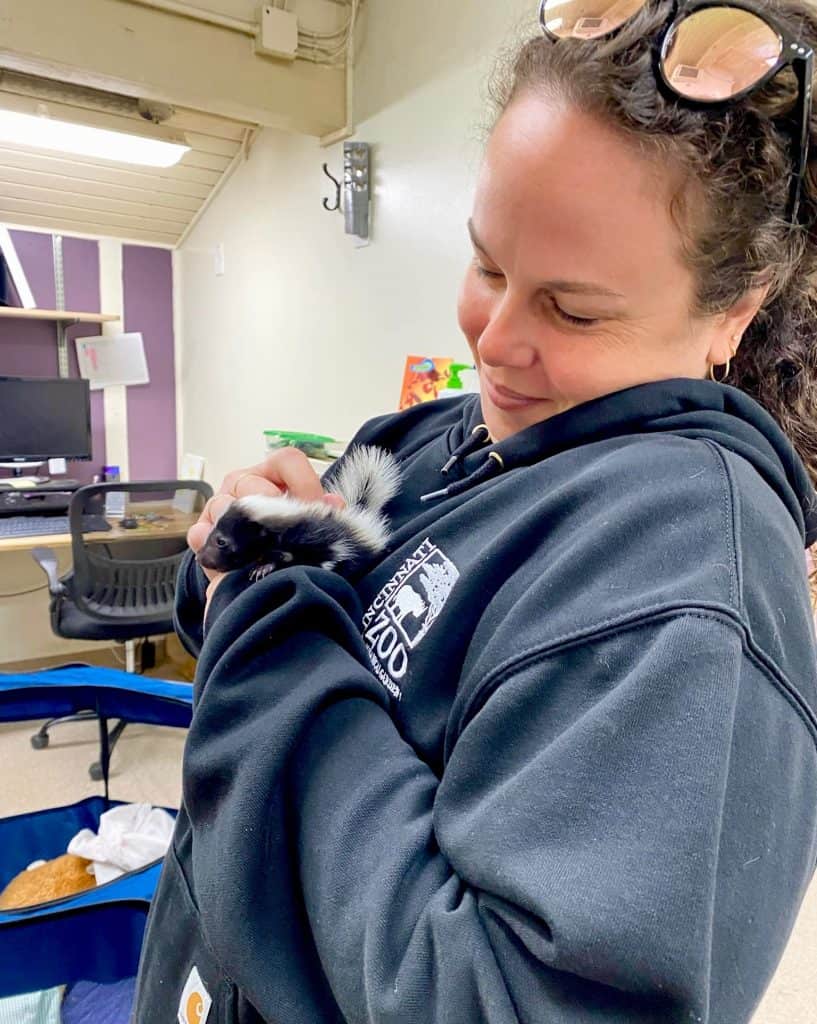
Sarah Paese, Head Keeper of the Animal Ambassador Team at the Cincinnati Zoo, with newborn skunk kit, Marshmallow.
©Photo courtesy of © Cincinnati Zoo & Botanical Garden – Original
Sarah Paese, Head Keeper of the Animal Ambassador Team at the Cincinnati Zoo, told A-Z Animals that Marshmallow was born on July 26, 2025. Despite his incredibly small size — weighing just 29 grams, or about as much as an AA battery — this cute little guy came into the world already sporting the unmistakable black and white stripes of his species.
Baby skunks like Marshmallow are called kits and are born with their eyes sealed shut. Kits spend their first month tucked away in their mother’s den. When they are three to four weeks old, their eyes open, and they begin to rapidly grow and develop.
“Marshmallow is so special to us,” Paese says. “His mom, Lily, is an ambassador animal whom we, the Animal Ambassador Team, raised two years ago, along with her three siblings. She has been meeting zoo guests since she was five weeks old.”
While striped skunks typically have two to ten kits at a time, Marshmallow was the only one in his litter to survive. His mother, Lily, experienced serious birth complications. An emergency C-section was required to save Marshmallow’s life, which is just one of the many things that make him so special.
Keepers Step In as Surrogate Parents
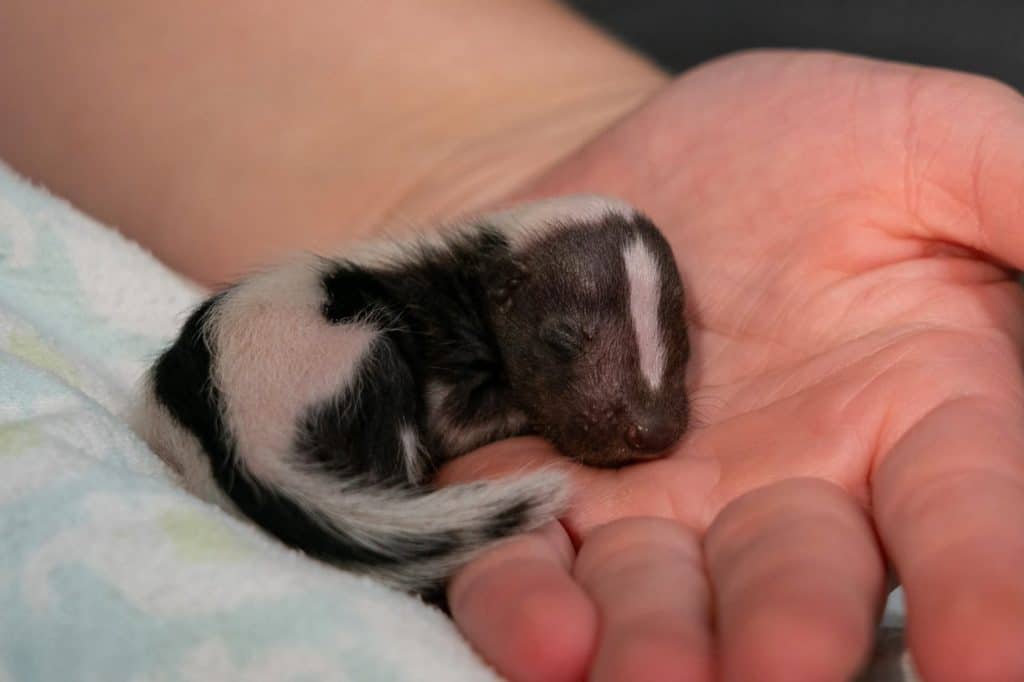
Keepers have developed a strong bond with Marshmallow, helping him to feel safe and secure.
©DJJAM Photo / Photo courtesy of © Cincinnati Zoo & Botanical Garden
Unfortunately, the difficult birth and recovery from surgery left Lily unable to nurse her tiny newborn. However, the dedicated animal team was prepared to step in and assist. Paese explains, “Our team immediately consulted with our vet and neonate specialist to begin hand-raising Marshmallow. He’s Lily’s only surviving offspring, which truly makes this a labor of love for us.”
Hand-raising a newborn skunk kit is an enormous undertaking, especially when the animal is destined to become an important ambassador for its species. Paese explains that Marshmallow’s keeper team spends countless hours with him, working on early socialization and training. Their goal is to build his confidence and resilience so that he can live a comfortable and stress-free life.
Marshmallow has all the confidence and sass of a pampered only child.
Sarah Paese, Head Keeper of the Animal Ambassador Team at the Cincinnati Zoo
How Marshmallow Is Developing His Personality
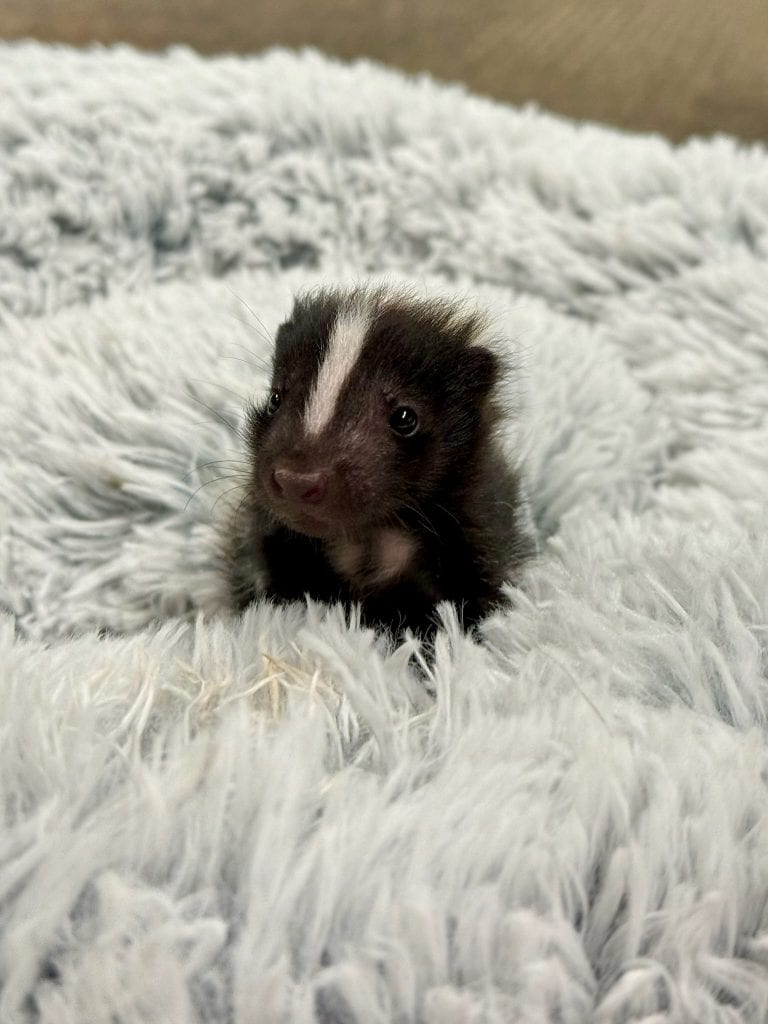
Striped skunks are native to North America.
©Photo courtesy of © Cincinnati Zoo & Botanical Garden
When they are six to seven weeks old, wild skunk kits are weaned and begin venturing out of the den. The small kits often form an adorable single-file line as they follow their mother around. However, since Lily could not nurse or care for Marshmallow, his keepers have stepped in to become his primary teachers. As Paese points out, “He is an imprint, so he sees us as his source for everything — food, play, socialization, comfort, and safety.” Now that he is approaching eight weeks old, his curiosity is also increasing. “He really enjoys exploring new spaces,” Paese adds. “We take him along with us often.” This close interaction is crucial for building Marshmallow’s confidence. It also allows him to learn from the humans who have become his surrogate family.
Bringing Marshmallow along for daily tasks certainly adds an extra dose of cuteness. However, his special charm can quickly become a problem when keepers need to focus. “Everyone is on board with a skunk kit joining our meetings,” Paese admits. “But it’s no surprise that he can be incredibly distracting when he’s stomping on tables or flipping onto his back to play with a new toy.”
The team also takes Marshmallow on walks around the zoo, both to familiarize him with the environment and to allow visitors to meet him. Paese explains that these outings are a win-win for everyone involved. “We love seeing the smiles on all the faces of every person who meets him,” she says. “Plus, he gets to experience novel stimuli, which sets him up for life as an ambassador skunk.”
How Big Will Marshmallow Get?
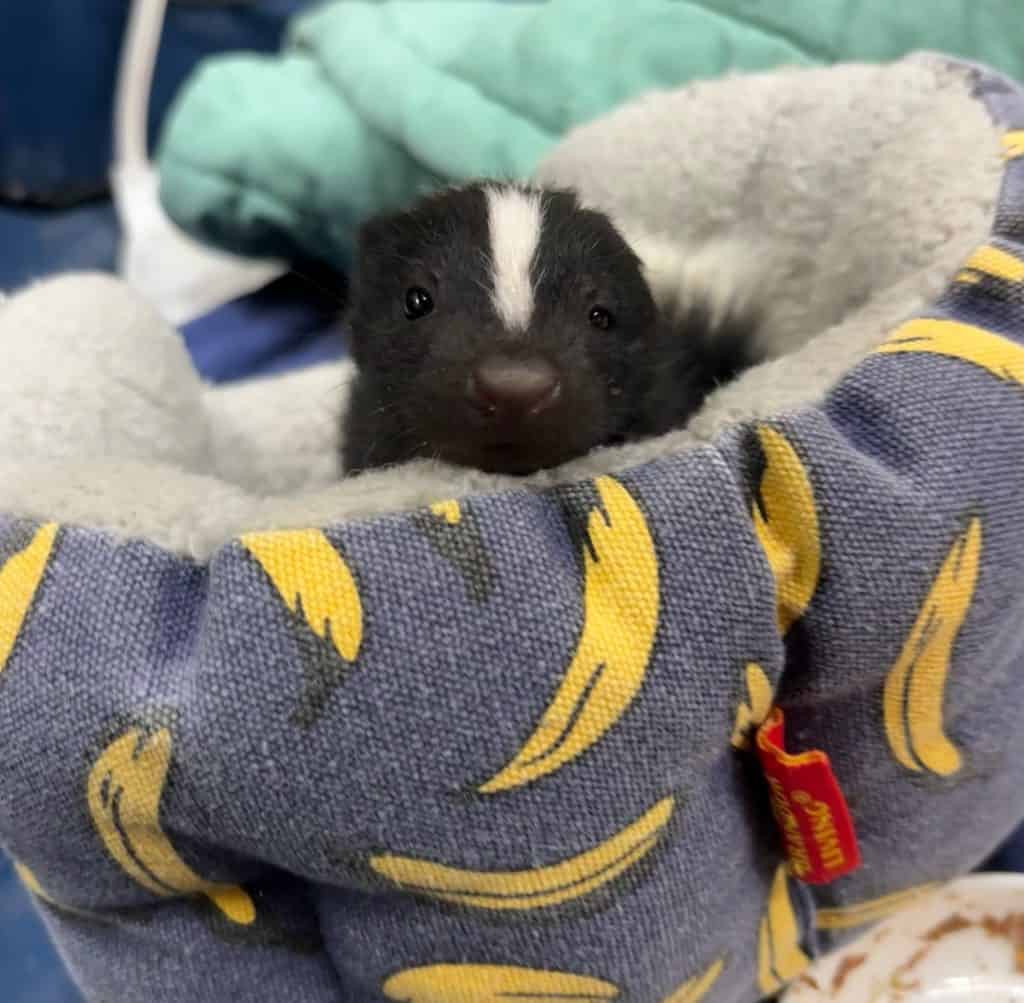
As cute as they are, skunks are wild animals and are not ideal as pets.
©Photo courtesy of © Cincinnati Zoo & Botanical Garden
Like most skunk kits, baby Marshmallow first opened his eyes when he was four weeks old. From that point on, his personality took off like a rocket, as he clearly demonstrates in this video. Paese notes that once Marshmallow could see, “He started working those muscles and gained confidence moving around. Being wobbly on his feet wasn’t a good enough reason for him to withhold some of his big attitude — he was stomping and scooting with the confidence of an adult in no time.”
Predicting Marshmallow’s adult size has become a fun puzzle for his keepers. Striped skunks generally weigh between 1.5 and 13 pounds in the wild. Marshmallow’s father is the largest skunk on the zoo’s Ambassador Team, weighing in at nearly 6 pounds (2,700 grams). His mother, on the other hand, is the smallest at 3.5 pounds (1,600 grams). Initially, Marshmallow’s growth was slow, suggesting he’d take after his mother. However, his weight gain has recently picked up speed. “We are excited to see where his weight settles when he’s all grown up!” says Paese.
A Future Ambassador
Skunk kits enjoy playing and wrestling with their siblings, but since Marshmallow is an only child, he plays with his keepers instead.
©Photo courtesy of © Cincinnati Zoo & Botanical Garden
Marshmallow’s birth is an extra special occasion for his keepers because he will continue his journey as an ambassador at the Cincinnati Zoo. “We’re so excited that he’ll be staying here at the Cincinnati Zoo with one of our fellow ambassador teams so we can visit him,” Paese says. “We know he’s going to thrive with the Children’s Zoo team.”
Filling the role of an animal ambassador takes more than just good looks, and baby Marshmallow is definitely up to the challenge. Even at his young age, he is already showing signs of being a future star. “Marshmallow has all the confidence and sass of a pampered only child,” Paese explains. “He has all of his keepers wrapped around his finger. We anticipate he will fit right into the spotlight when he joins the Children’s Zoo and one day be in the Barnyard Bonanza!”
Is Marshmallow Old Enough to Spray?
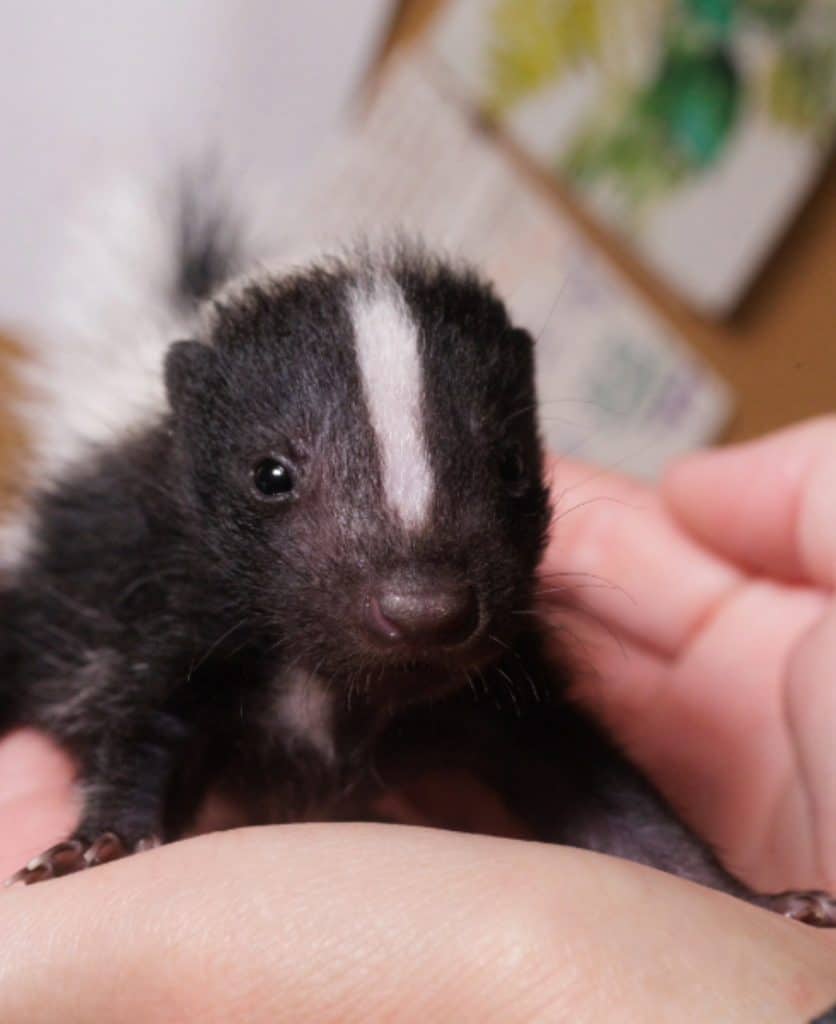
The foul smell of a striped skunk’s spray can cause pain and even temporary blindness.
©Mark Dumont / © Cincinnati Zoo
Although Marshmallow is a skunk, the risk of getting sprayed by this little guy is much lower than you might think. While striped skunks possess the biological ability to release odor from birth, they lack the strength and control to effectively aim their spray until around the time they open their eyes. Paese explains, “Even then, they can’t do a classic aimed skunk spray for a while after that, although it may be earlier than you expect — around four months old!”
Working with skunks might seem like a smelly business, but Paese explains that skunks don’t spray as often as people assume. “A lot of people ask us if we’re worried about Marshmallow spraying us,” she explains. “And our answer is always ‘No.'” The safety and confidence of this adorable little furball are the top priorities of Marshmallow’s team. “Skunks spray as a last resort to get away and survive,” Paese adds. “So we’re not worried because we would never have him in a situation where he feels the need to spray.”
You can see adorable baby Marshmallow at the Cincinnati Zoo and Botanical Garden, and on the Zoo’s Facebook and Instagram channels.