
Quick Take
- India’s Similipal Tiger Reserve is home to the only 6 to 10 known pseudo-melanistic tigers in the wild.
- Black tigers are Bengal tigers with more black fur than orange.
- The Taqpep gene mutation is what causes the dark coloration of these rare black Bengal tigers.
- Both parents of a black tiger must carry the Taqpep gene mutation to have black tiger offspring.
Tigers are some of the most evasive creatures on the planet. They stalk through forests, savannahs, grasslands, and rainforests, going unnoticed by prey until it is too late. However, of all the tigers, there is one that is more elusive than most. It moves through the shadows and light without a trace, all because of its unique coloration. These tigers, known as black tigers, have a large black patch across their backs that trails down to their legs. Incredibly unique and infrequently seen, this rare black tiger has been spotted in India.
Black Tigers Are Only Found in India
Wild tigers can be found in 13 different countries. Of these countries, one is home to 70% of the wild tiger population. That nation is India, where one of the rarest tigers, the black tiger, lives.
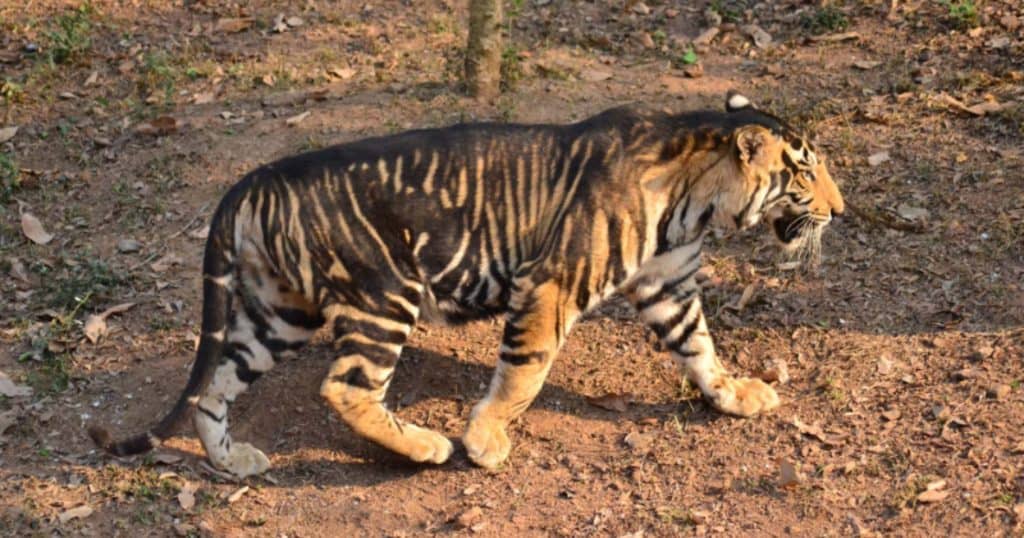
Black tigers are only found in Odisha, India, within the boundaries of Similipal Tiger Reserve.
© – Original
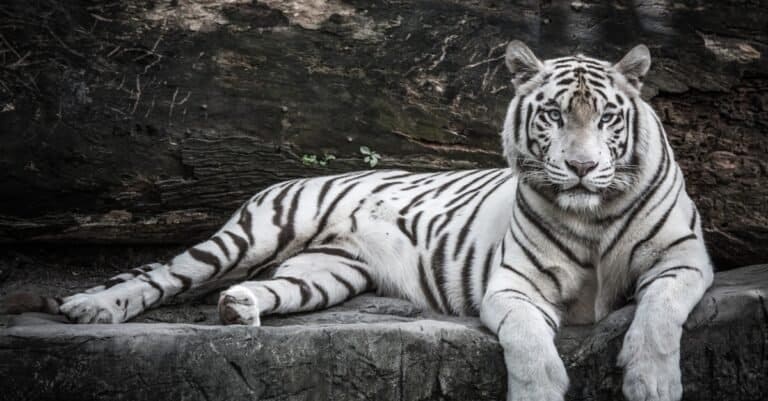
Black tigers are among the smallest tiger populations. Located only within the borders of the Similipal Tiger Reserve in India, fewer than a dozen of these tigers are known to exist. These tigers are not all black, despite their name. Instead, the tigers appear to have black pigmentation melting down their back, while still retaining some orange coloration. Black tigers are Bengal tigers with significantly more black fur than orange fur. The one significant difference between your average orange and black tigers and these remarkably rare cats boils down to genetics.
What Makes These Bengal Tigers Black?
Bengal tigers are known for their brightly colored orange coats with thin black stripes. The black tiger was discovered in 1993, after one was killed in self-defense. Onlookers were surprised to realize the cat looked nothing like the rest of its species.
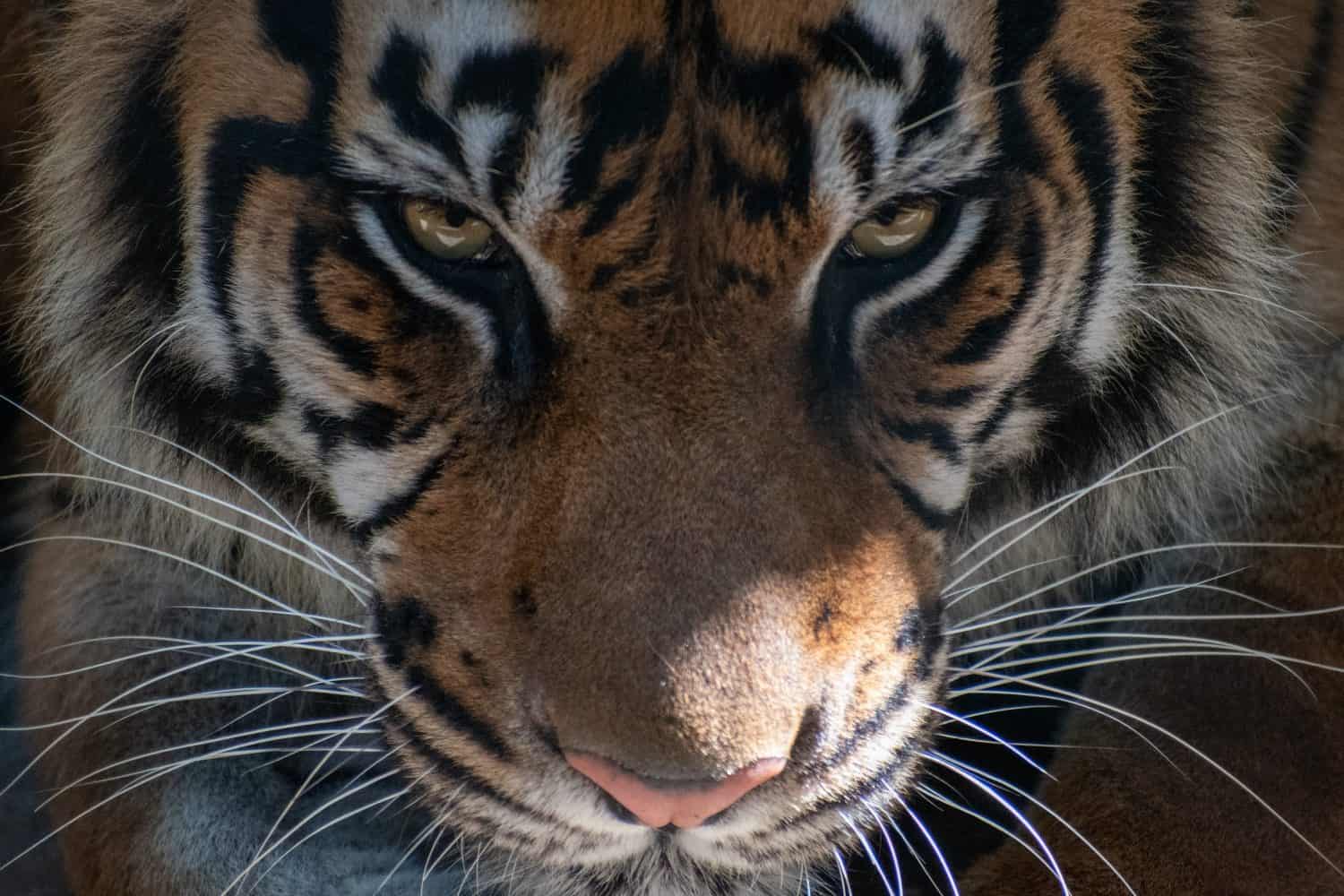
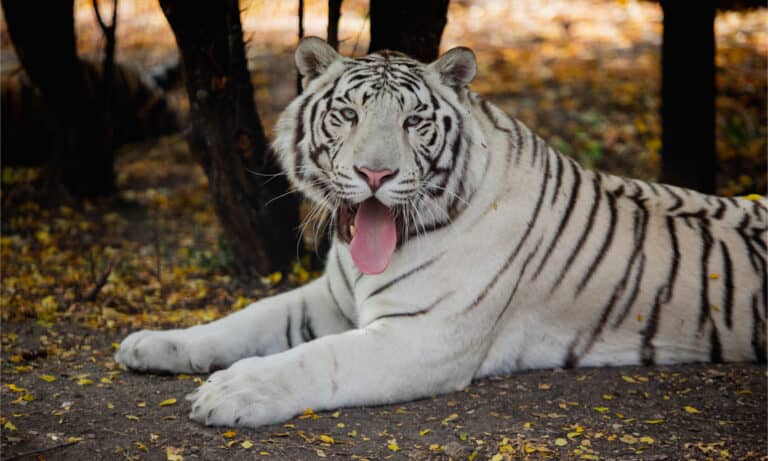
Black tigers are Bengal tigers, like this one, but with a significantly greater amount of black than orange coloring on their fur.
©Glenn R. Thomas/Shutterstock.com
Black tigers are significantly blacker due to the presence of the recessive gene Transmembrane Aminopeptidase Q (Taqpep). Interestingly, the unique coloration allows black tigers to better blend into the forest shadows than regular Bengal tigers.
Black tigers were officially recognized in 2007, when a small population was found in the Similipal Tiger Reserve. These rare animals are often described as melanistic, but they actually exhibit pseudo-melanism, a condition in which unusually high levels of melanin create dark, bold striping while traces of the tiger’s original orange coat remain visible. True melanism would result in an entirely black coat, which is not the case here.
Differences Between Bengal Tigers and Black Tigers
Many assume black tigers are a subspecies of the Bengal tiger. However, despite the different markings on their coats, for all intents and purposes, black tigers are still Bengal tigers.
Due to the genetic diversity of Bengal tigers, some carry a recessive gene. Those born with this Taqpap gene have the potential to create offspring that are black.
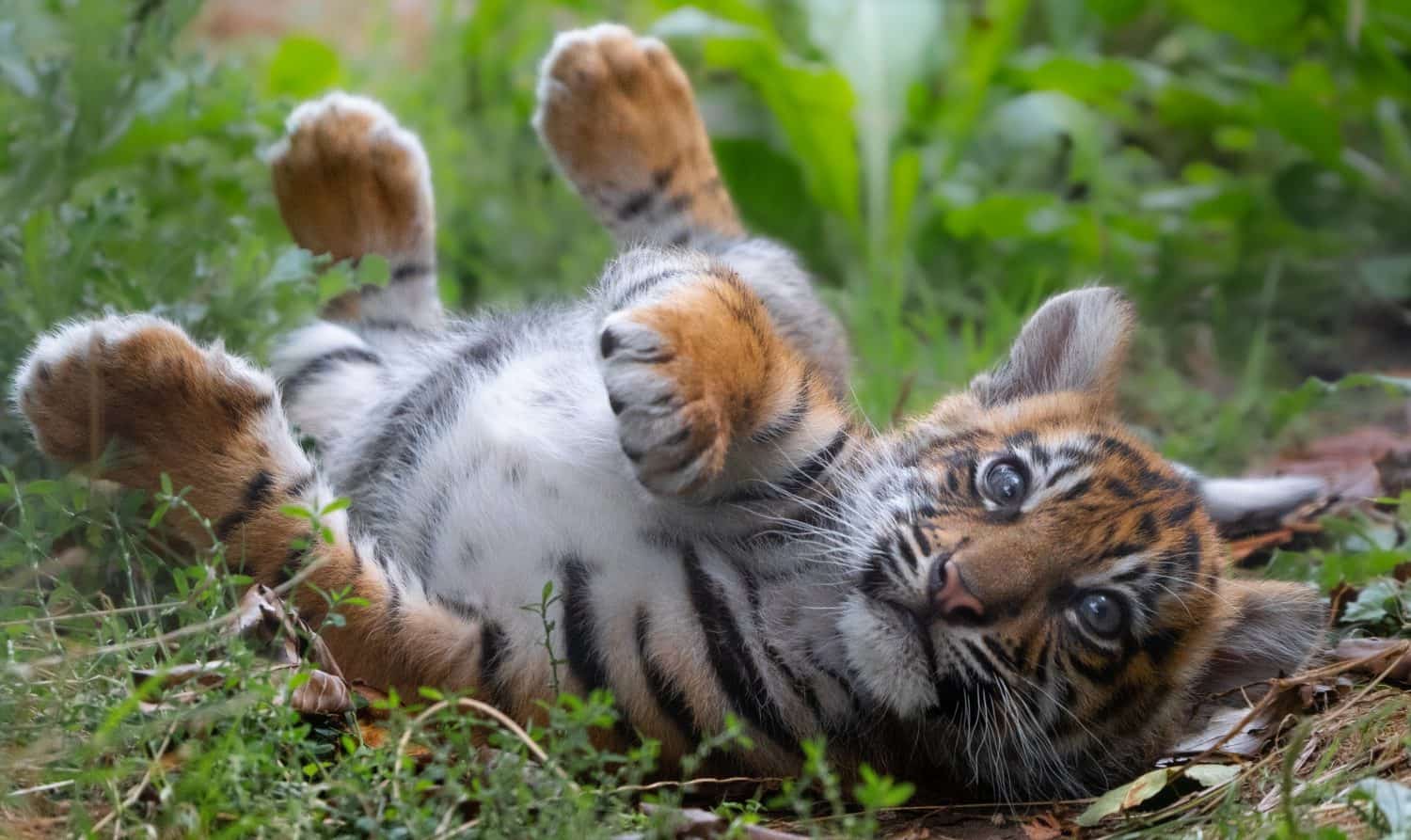
Bengal tigers are born from parents with one or no recessive genes, will have orange fur with black stripes rather than significant amounts of black fur.
©Aidan Stevens/Shutterstock.com
For offspring to be a black tiger, both parents have to carry the recessive gene. This means that the small population of black tigers exists only because they interbreed, which could be a detriment to the tigers’ survival.
Are Black Tigers Endangered?
Because Bengal tigers are endangered, black tigers are as well.
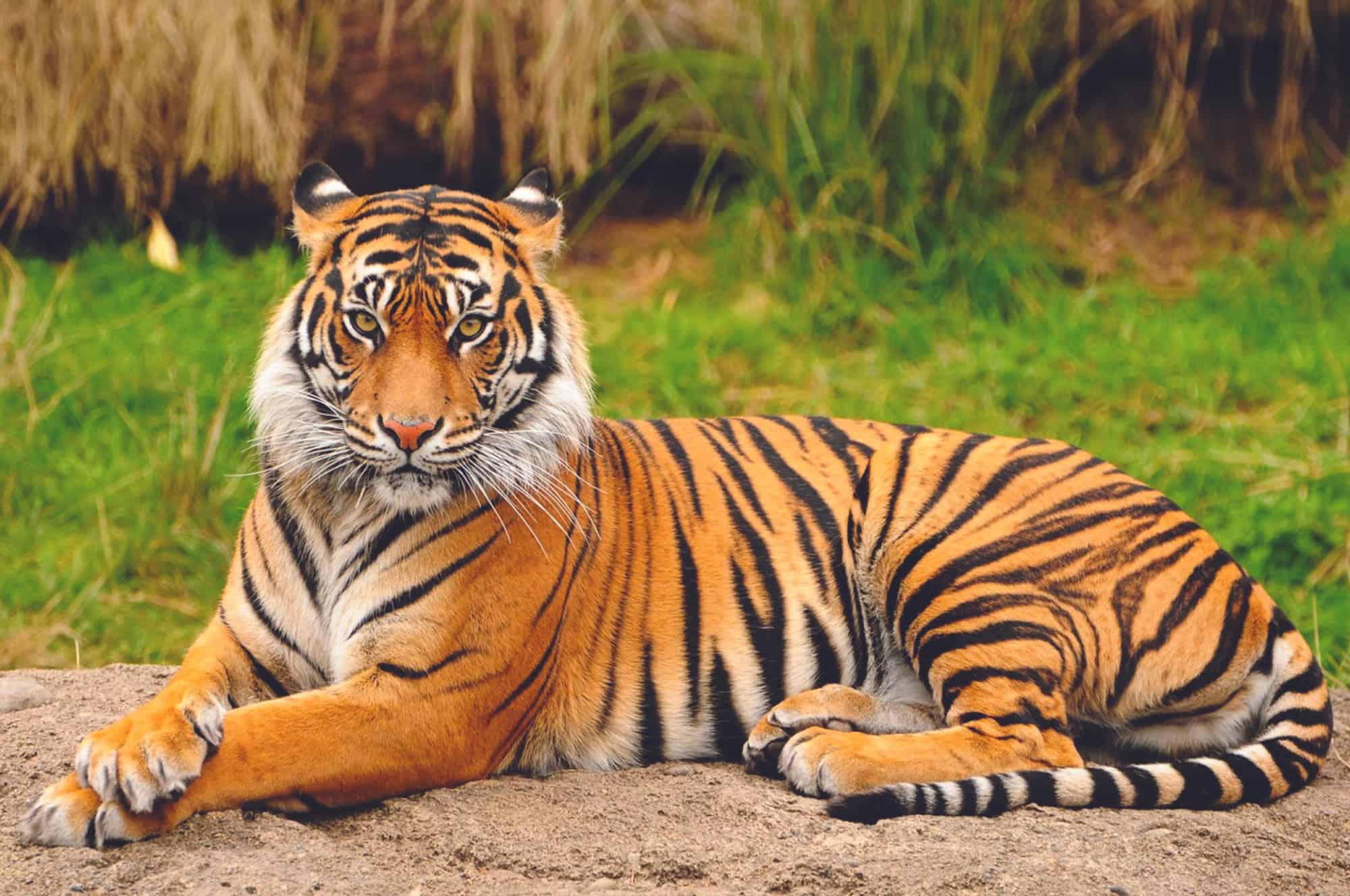
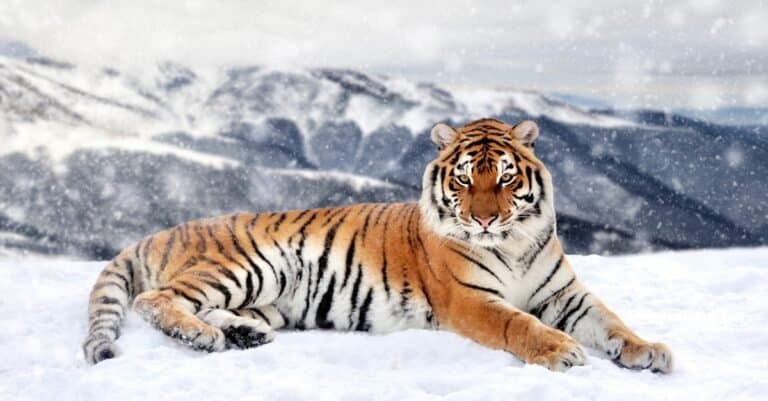
Black tigers and Bengal tigers, like this one, are endangered species.
©iStock.com/Thinker360
In total, it is believed there are between 3,150 and 4,500 Bengal tigers left in the world. The lack of precise estimates underscores how elusive these animals are. Tracking techniques such as camera trapping and DNA analysis of Bengal tiger scat are used to obtain an estimated tiger count.
Scientists believe there are as few as six to 10 pseudo melanistic tigers. While Bengal tigers live in India, Bangladesh, Nepal, Bhutan, Myanmar, and China, black tigers are found only in Odisha, India, in the Similipal Tiger Reserve. This makes black tigers not only endangered, but critically endangered.
Threats Black Tigers Face Today
Black tigers face the same threats that Bengal tigers do. It is because of these threats that tiger populations have reached critically low levels. Without change, it is unclear what the future holds for these big, beautiful cats.
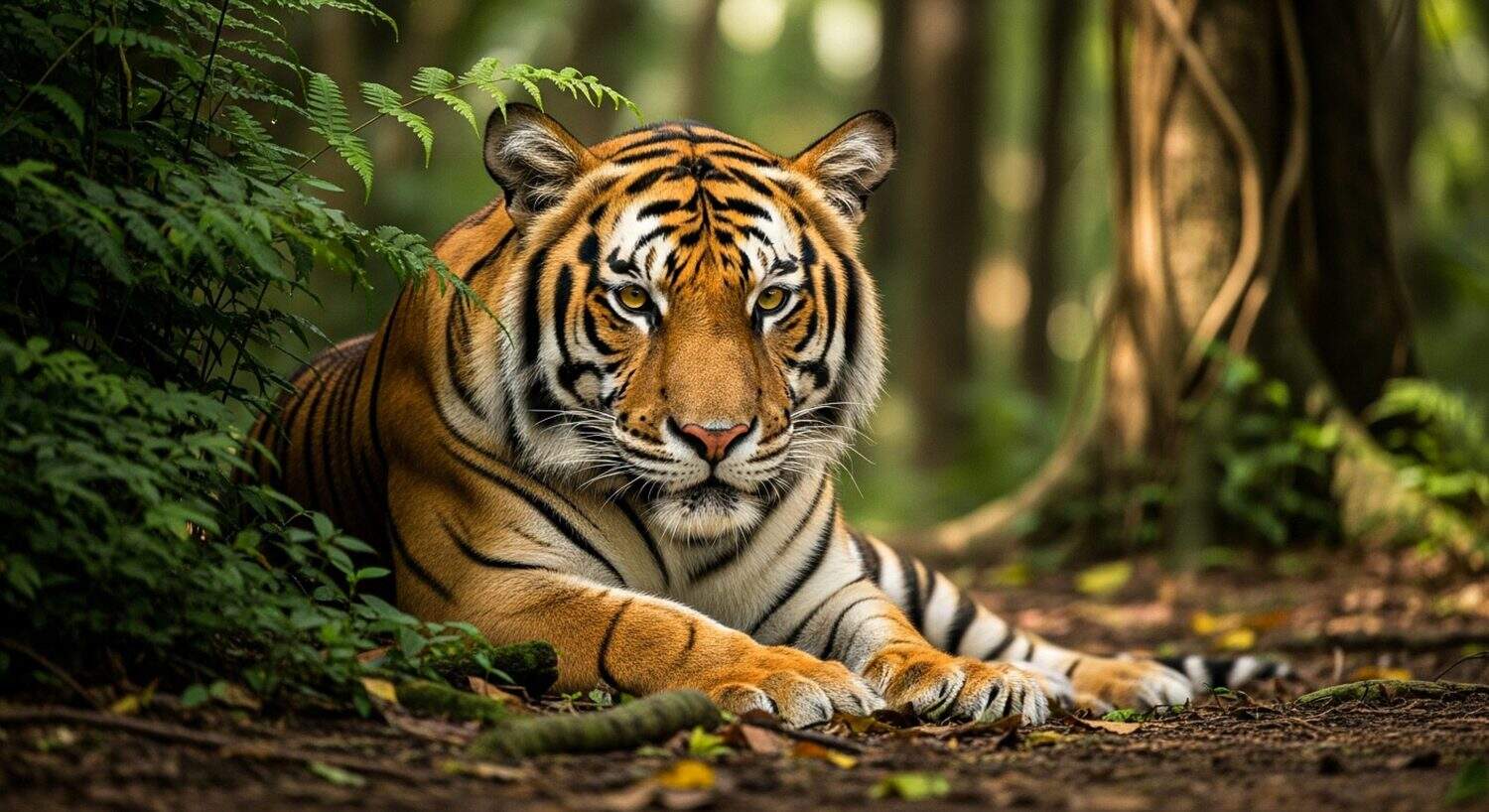
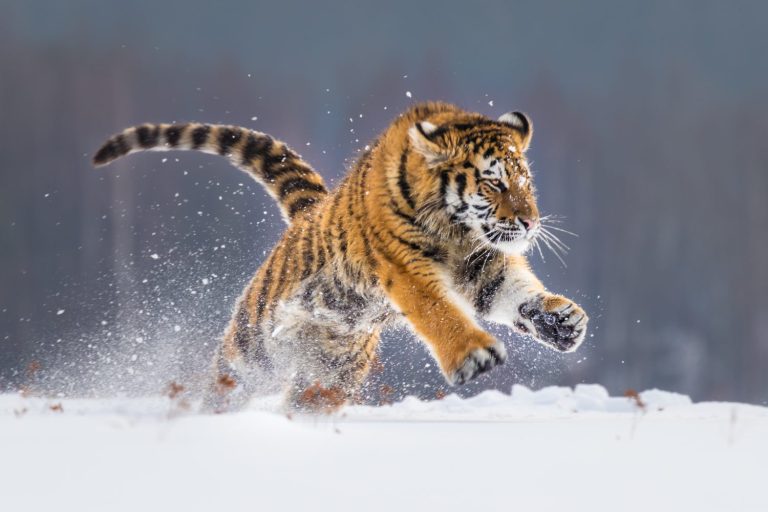
Bengal tigers, like this one, as well as black tigers, share some of the same threats to their survival.
©Savanking/Shutterstock.com
The threats Bengal tigers as a whole face include:
- Habitat loss
- Habitat fragmentation
- Poaching
- Climate change
- Lack of prey
In addition to these, black tigers face an additional threat, which is a lack of genetic diversity resulting from inbreeding. Because the increased amount of black on the tigers’ coats is the result of a recessive trait, it means that both parents need to have the gene to produce black tiger offspring. This is only possible via inbreeding, which means that the more generations of black tigers that exist, the less resistant they are to disease. This puts more stress on the already incredibly tiny black tiger population, further affecting their health and ultimately their survival.
Given how few black tigers exist, spotting one in its natural habitat in India is extraordinarily rare. With the limited number of black tigers, conservationists are calling for action to further protect them from poaching and habitat loss that threaten their very existence. If this is not done, we may lose the black tiger forever.