
Quick Take
- Gray-headed flying foxes and black flying foxes have died in the January 2026 heatwave in southeast Australia.
- Thousands of flying foxes have perished.
- This is most serious for the gray-headed flying fox which is a vulnerable species.
- Mothers with pups are most affected, making it harder for population numbers to recover.
Flying foxes are a type of bat within the Chiroptera order of mammals. There are several different species and, unfortunately, two native Australian species have suffered sudden and dramatic losses recently. We examine why thousands of these large bats have perished in the last few months.
Record-Breaking Flying Fox Deaths
Australian and international news outlets have been reporting on record-breaking numbers of deaths of both grey-headed flying foxes and black flying foxes over the last few weeks. The deaths have been described as the worst mass-mortality event since the ‘black summer’ period, which spanned July 2019 to May 2020. The most severe period occurred between December 2019 and January 2020, when raging fires had a profound impact on Australian wildlife, as well as humans and the economy.
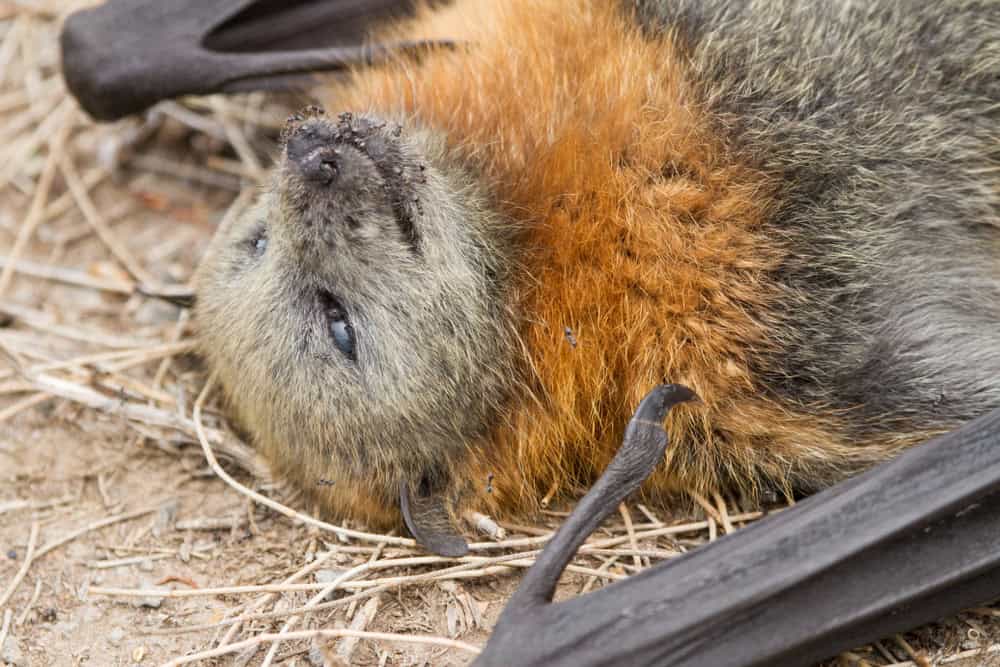
In the heatwave that affected southeast Australia in January 2026, thousands of flying foxes across South Australia, Victoria, and New South Wales perished. The most severely affected were the gray-headed flying foxes, but black flying foxes were also harmed.
What We Know About Gray-Headed Flying Foxes
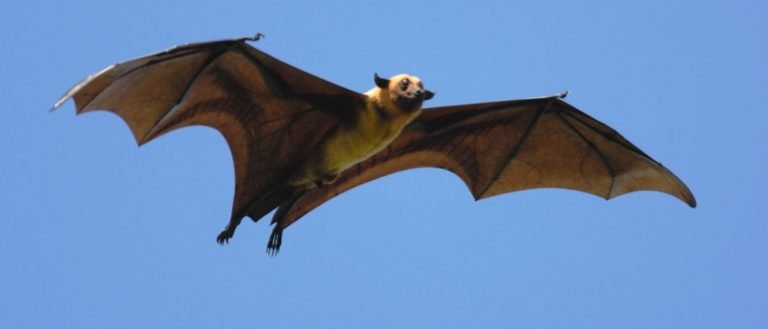
The primary victim of this catastrophe is the gray-headed flying fox (Pteropus poliocephalus), an endemic species of the eastern coast of Australia. Evidence suggests that their range has shifted southward as a response to climate change. They live in rainforests, woodlands, and swamps, where they prefer to roost in the branches of large trees.
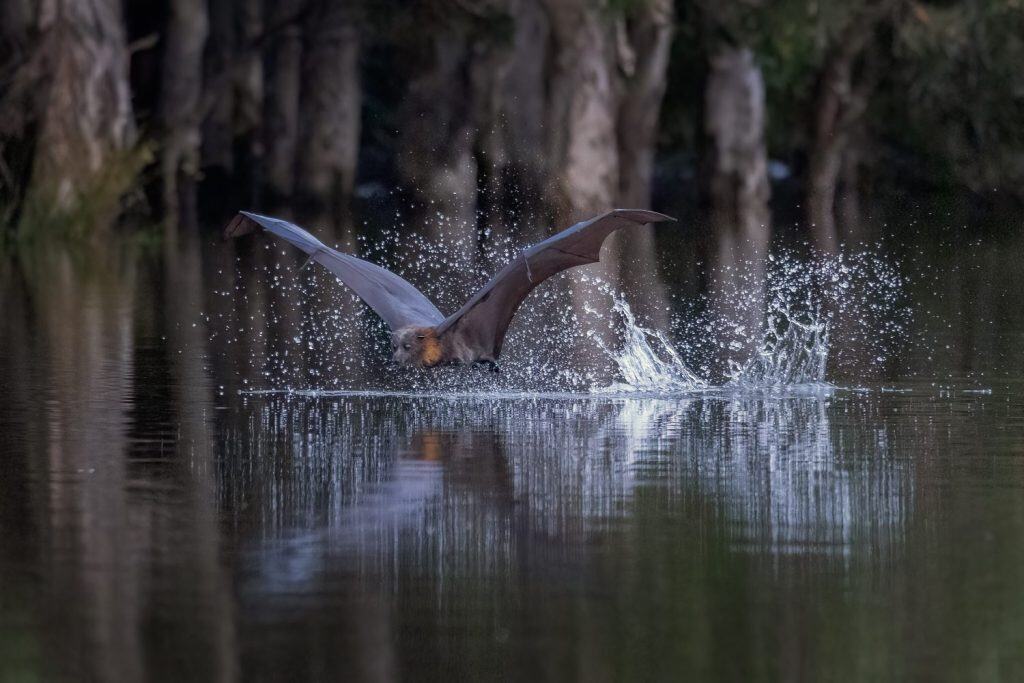
Grey headed flying foxes use their eyes to find food.
©Frank Martins/Shutterstock.com
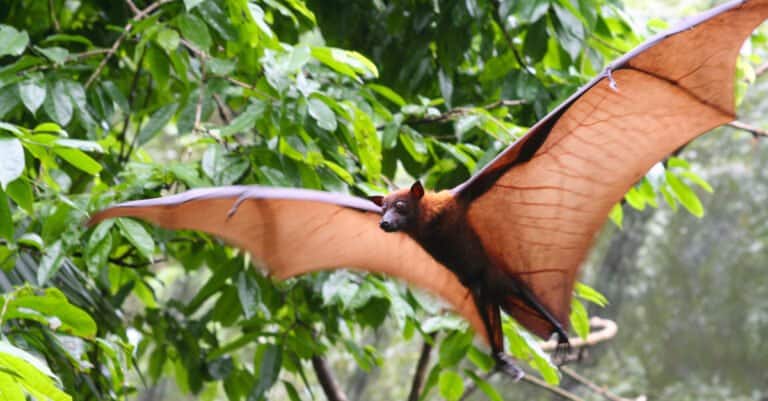
Grey headed flying foxes are the largest bats in Australia and can weigh up to 35 ounces and reach 11 inches in length. Unlike other bats, they do not echolocate, instead use their large eyes to find fruits, pollen, nectar, and bark to feed on. Foraging takes place at night, and they roost during the day. Their complex social arrangements mean that several thousand may gather together, especially during the mating season.
These flying foxes are listed as vulnerable under the NSW Biodiversity Conservation Act 2016, and under the Environment Protection and Biodiversity Conservation Act 1999. Their main threat is the destruction of habitat through deforestation.
Black Flying Foxes in Australia
Black flying foxes (Pteropus Alecto) have also been drastically affected. They are found in tropical and subtropical regions of Australia, but mainly in the coastal areas of the Northern Territory. This species lives in rainforests, eucalyptus open forests, and savanna woodlands. However, they prefer to roost in bamboo, rainforests, and mangroves.
As their name suggests, these bats have a mainly black body and weigh around 23 ounces. They are also nocturnal, spending the night feeding on fruits, pollen, and nectar. During the day, they roost in colonies called camps. They are currently listed as Least Concern on the IUCN Red List and are not listed under the U.S. Endangered Species Act.
Wildlife Catastrophe Unfolding
On Saturday, January 10th, 2026, 500 flying foxes were found dead at Brooks Creek near Dapto, south of Wollongong, according to Australian media reports. A further 170 died at a colony in Figtree.
In an interview for ABC News in this article, bat carer for the wildlife organization WIRES, Storm Stanford, said, “At Wolli Creek — which is mostly grey-headed flying foxes — at least 40 animals died, but a lot of that camp you can’t get to, so that’s just a sample.” She also reported that hundreds of animals died at Windsor, Parramatta, Campbelltown, and in southern areas of NSW like Wagga Wagga.
In this interview for the Guardian newspaper, the director of the Fly by Night bat clinic in Melbourne, Tamsyn Hogarth, said, “We also found countless adults who couldn’t withstand the heat in areas of the colonies that were hotter – like trees with less foliage and shade coverage, and the baking hot clay of the riverbank.”
Overall, it’s estimated that at least 1,000 – 2,000 flying foxes have died in South Australia, with further thousands perishing in Victoria, and up to 1,000 in New South Wales.
Why Did the Flying Foxes Die?
Australia has just suffered a major heatwave. Parts of South Australia and Victoria experienced temperatures as high as 46–47°C, with Melbourne exceeding 42°C and some Sydney suburbs reaching the mid-to-high 40s.
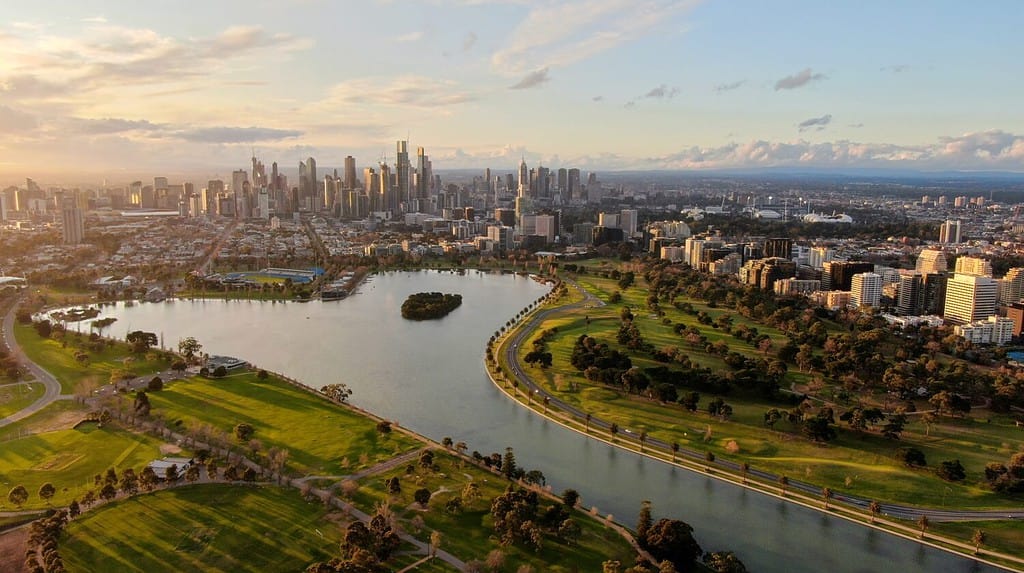
Melbourne has just had a heatwave.
©Asim Buday/Shutterstock.com
The temperatures themselves put the animals under huge amounts of stress; they struggle to keep cool and maintain flight. They also suffer from dehydration and heatstroke. At the same time, the heat reduces the availability of their food sources, such as nectar from eucalyptus flowers. Sadly, because mothers with pups are most affected, it is hard for population numbers to recover.
Wildlife organizations and volunteers did their best to help the struggling animals. The sight of so many bats, either dead or dying, was absolutely devastating. Now, residents are calling for sprinkler systems to be installed at known colony locations to protect the bats from future heatwaves.