Quick Take
- Despite their unwieldy size and seeminglygentle nature, hippos are one of the most dangerous wild animals in Africa.
- It is estimated that hippos kill roughly 500 people each year.
- Hippos will kill other animals, like crocodiles, that enter their territory, especially when protecting babies.
- Hippos and whales diverged from a shared semi-aquatic ancestor around 50–60 million years ago.
Few animals look as calm and harmless as a hippo lounging in the water, but appearances can be deceiving. Dangerously so, in the case of the hippo. Despite their bulky bodies and seemingly lazy nature, these massive animals are considered one of the most aggressive and unpredictable wild mammals in Africa. Their reputation has raised a common question among both travelers and wildlife enthusiasts: do hippos really attack humans, or is their danger exaggerated?
This article takes a closer look at the truth behind hippo encounters, examining when and why these animals turn violent and how often such attacks actually occur. By exploring their territorial behavior, defensive instincts, and real-world cases, we’ll separate myth from reality and explain why getting too close to a hippo can turn into a life-threatening mistake.
Do Hippos Attack Humans?
©PhotocechCZ/Shutterstock.com
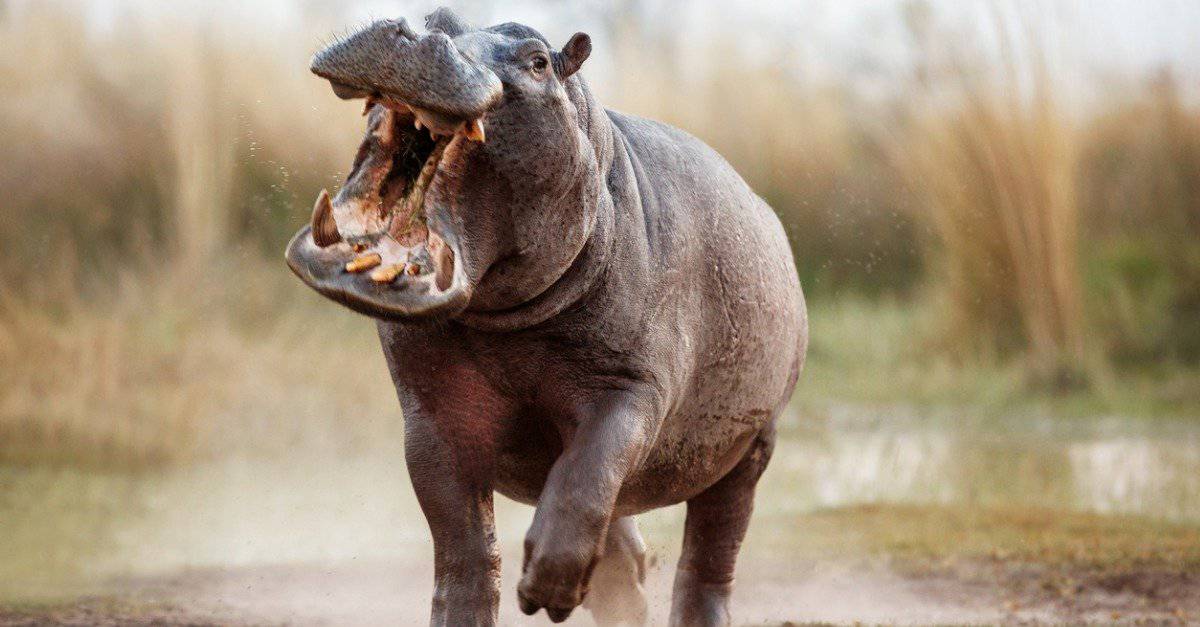
Are hippos dangerous to humans? Hippos do attack humans and are very dangerous. These large river horses (what their name translates to in Greek) are responsible for an estimated 500 human deaths per year in Africa. This number outpaces nearly any other animal on earth. In fact, hippos are known as some of the deadliest land animals in the world, with the mosquito being the overall winner (killing roughly 725,000 people per year). With these sorts of numbers, it’s easy to answer the question: do hippos attack humans? The answer is an unequivocal yes.
How Dangerous Are Hippo Attacks?
©John Carnemolla/Shutterstock.com
Generally, it’s best to avoid hippos totally. If a hippo does happen to attack, the odds of living through it depend on whether you can get away or not. Sadly, if a hippo is able to grab you, the odds of escaping alive are slim.
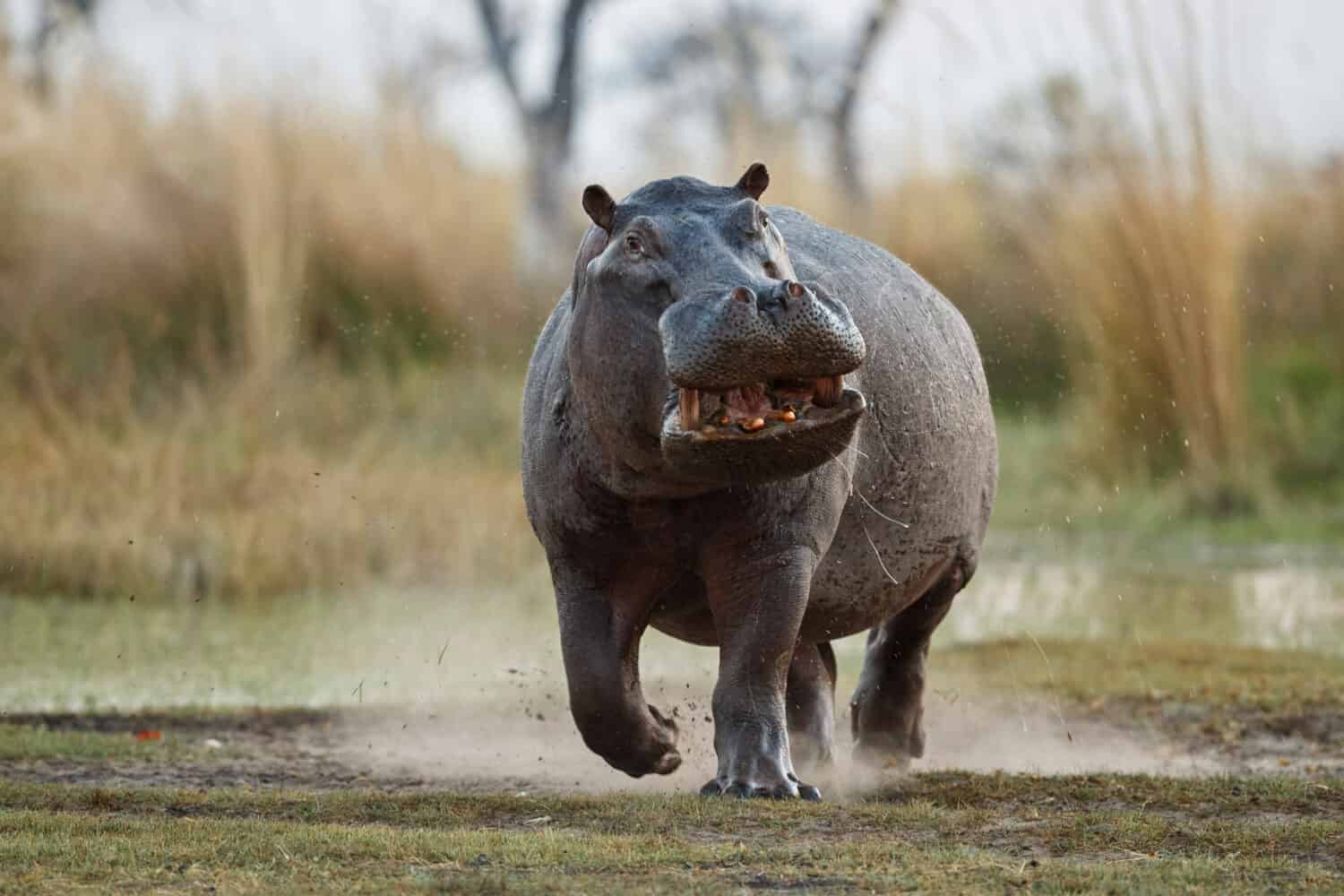
Hippos are most aggressive when defending their territory in the water, though they can also attack on land if they feel threatened or cornered. Despite their stocky legs, an angry hippo can easily outpace a human, averaging 20 mph in short bursts, whereas a human can typically only run 6-8 mph.
Are Hippos Dangerous in the Water?
©iStock.com/abzerit
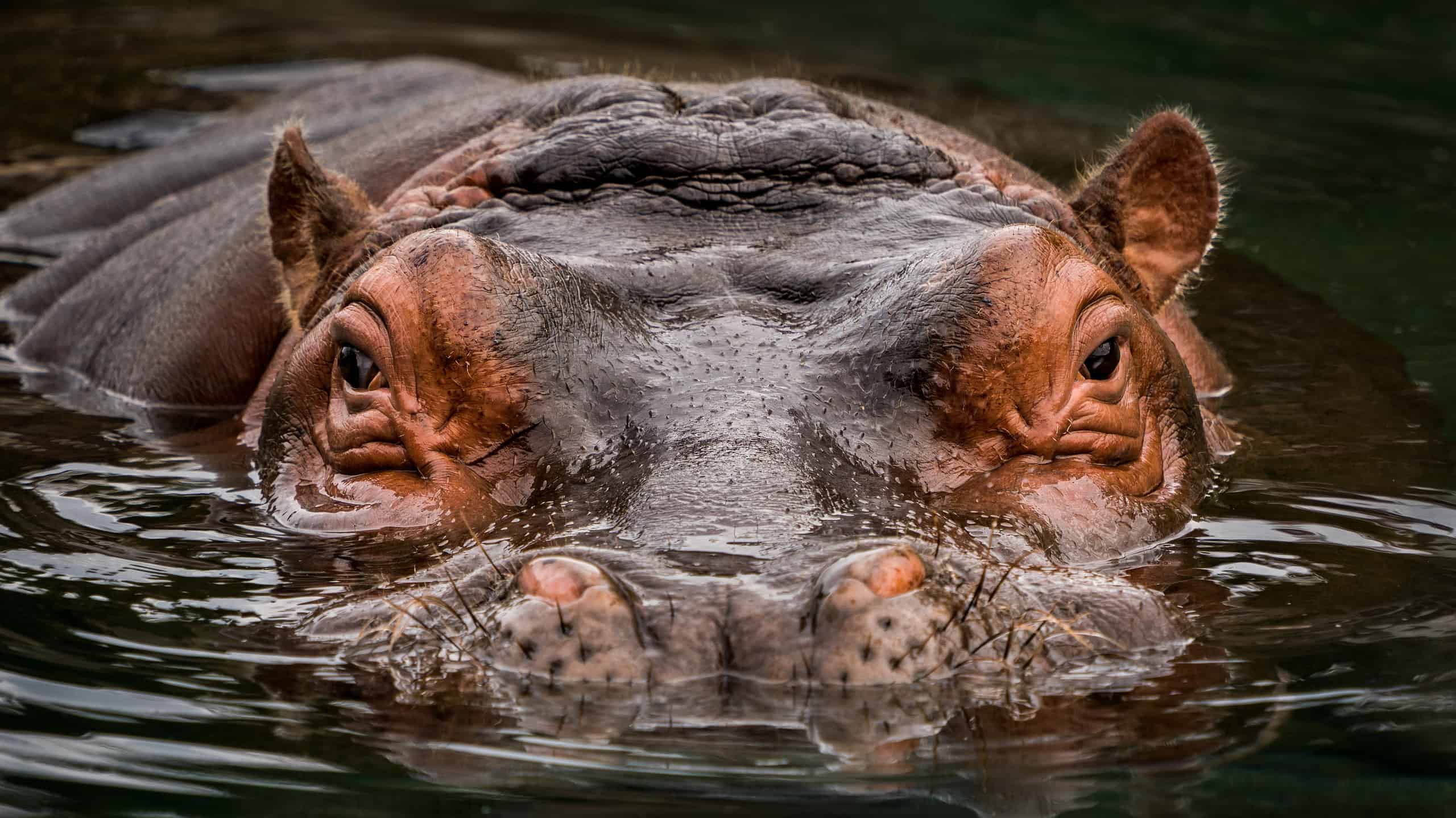
When you enter a hippo’s territory in the water, things can turn nasty fast. Hippos defend specific stretches of river and shoreline rather than a fixed distance from land. In lakes, dominant males may control large areas around preferred resting and feeding spots. They patrol their territory, readily displacing trespassers.
The most common hippo attacks come from the water with humans on boats. Since hippos are submerged, it can be incredibly hard to see them from the surface. If a human floats by while fishing, it’s easy to miss the massive animal at rest. Suddenly, the hippo will launch itself at the boat, usually capsizing it. Once a human is in the water, there is little they can do to stop the attack.
How Hippos Kill
©Larry D. Moore / Creative Commons - Original
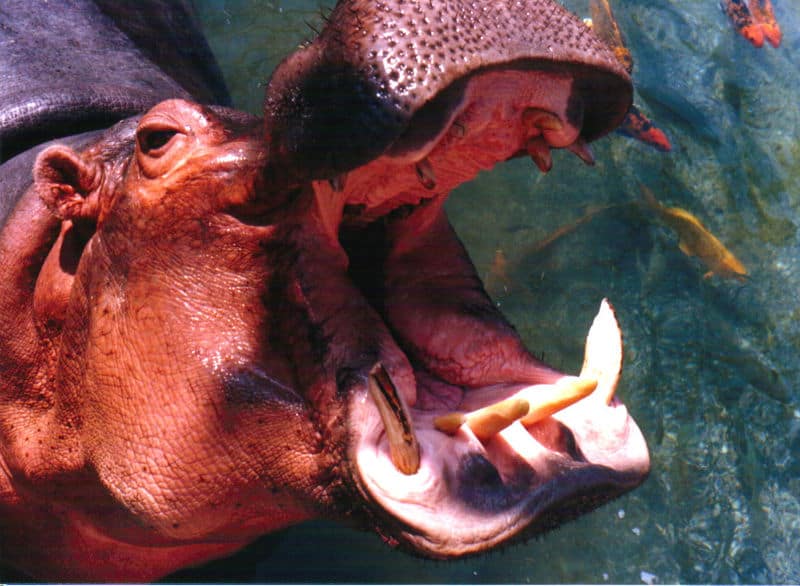
There are a few ways a human can die from a hippo attack. Typically, being crushed or bitten are standard. If the attack happens in the water, drowning is also a possibility.
What Other Animals Do Hippos Attack?
©iStock.com/Alla Tsytovich
Hippos don’t have an ax to grind with humans; they are simply unpredictable and likely to attack an intruder. But are hippos dangerous to other wild animals?
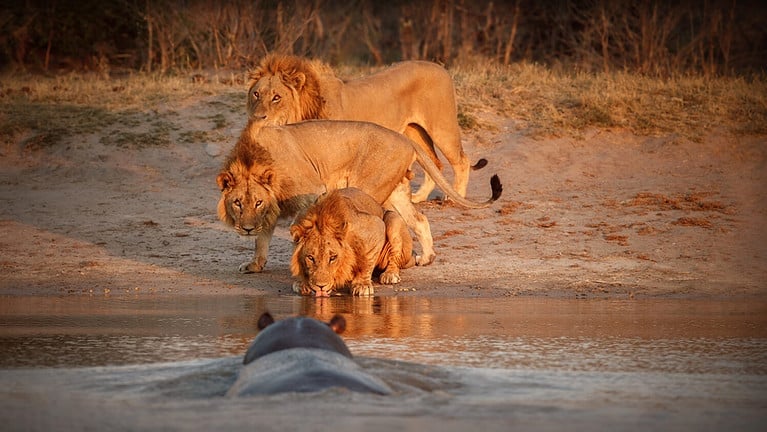
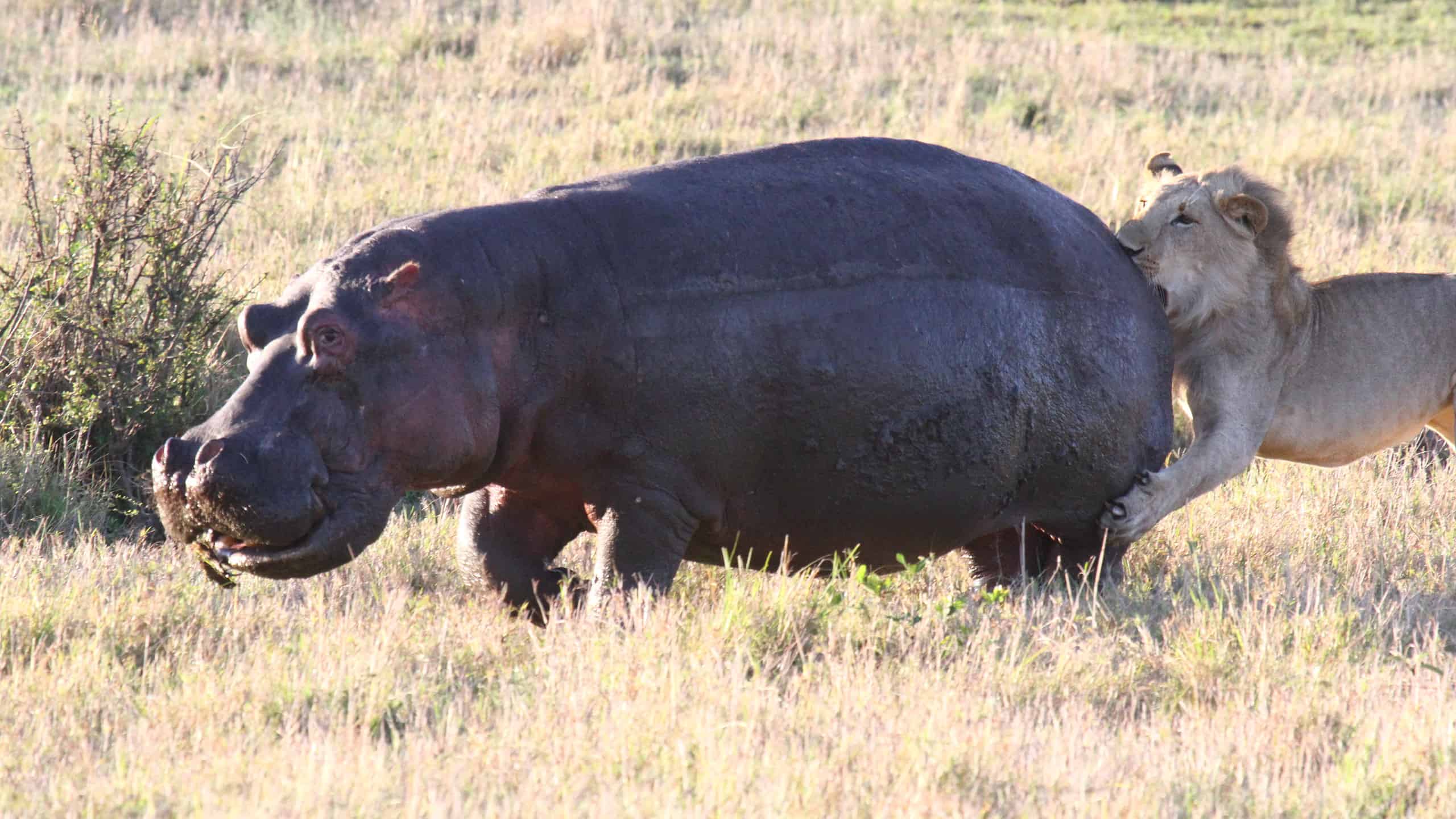
Besides humans, hippos are known to attack lions, hyenas, and crocodiles. Lions and hyenas generally avoid hippos with how easy it would be for a full-grown adult to kill a pack of either of them. Still, there are occasional instances where desperate lions and hyenas will find an isolated hippo and try to kill it. It doesn’t usually result in much, but a hippo doesn’t have a problem defending itself.
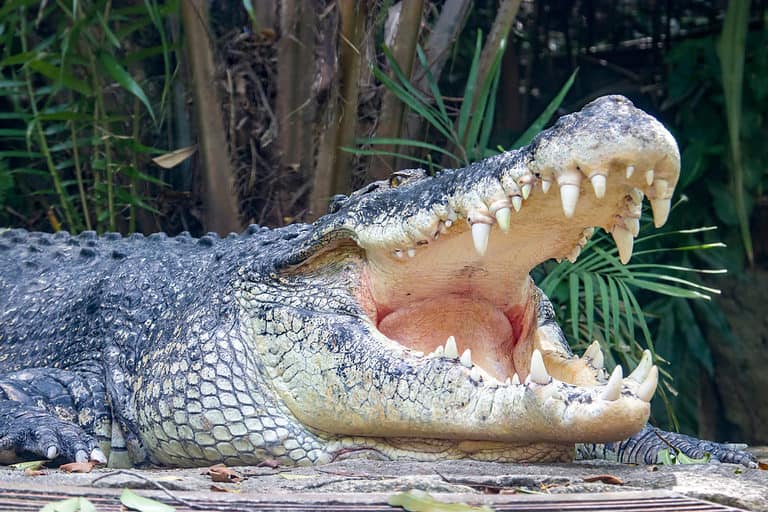
Since hippos and crocodiles share territory, conflict between these two is more common. Generally, there isn’t much friction between the two species. Still, there are occasional instances of violence. If a female hippo has a calf, any encroaching crocodiles are likely to be chased away. If they don’t learn their lesson, it isn’t uncommon for a hippo to outright kill an annoying croc.
What Makes Hippos Dangerous?
©Nick Greaves/Shutterstock.com
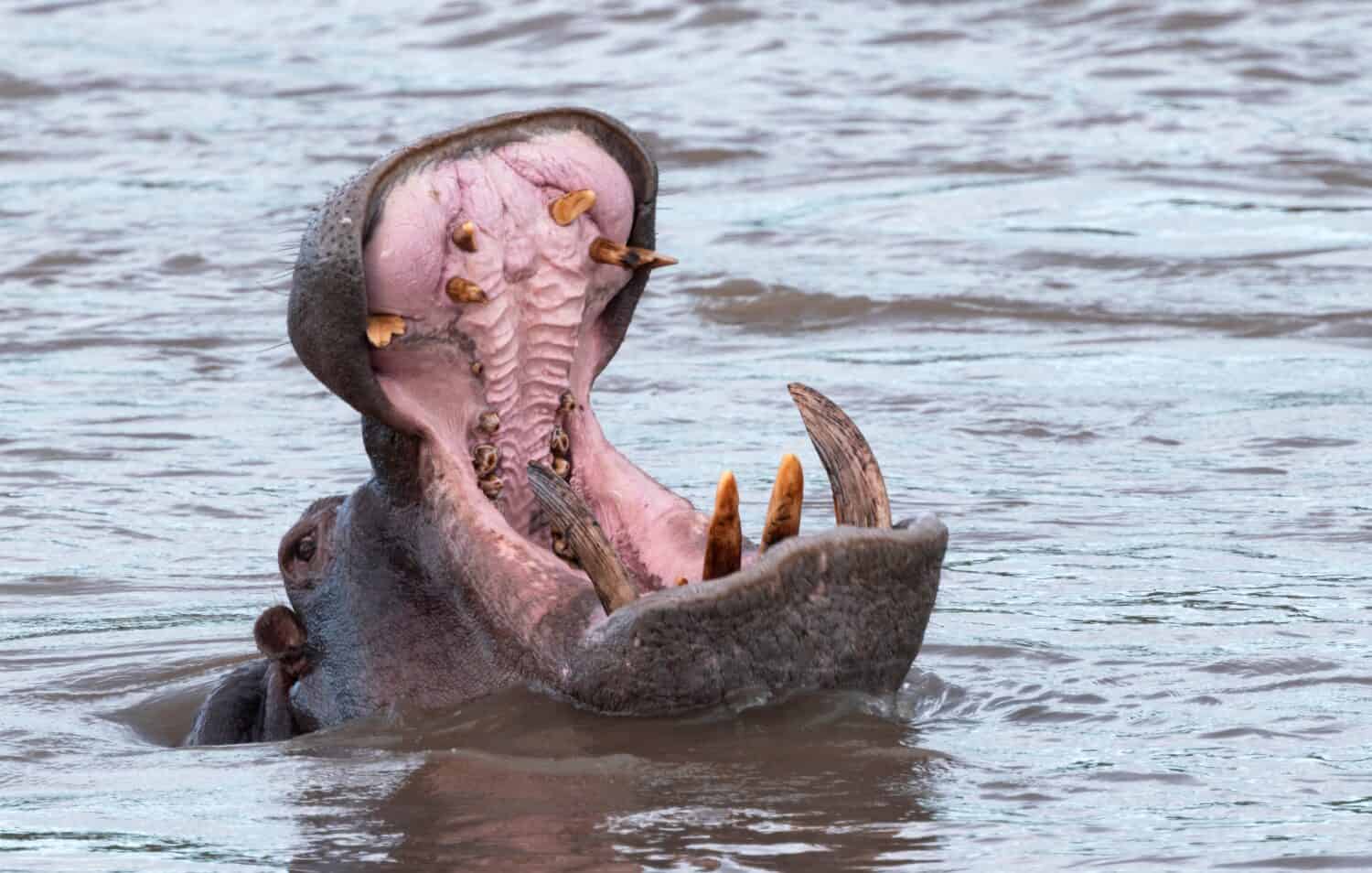
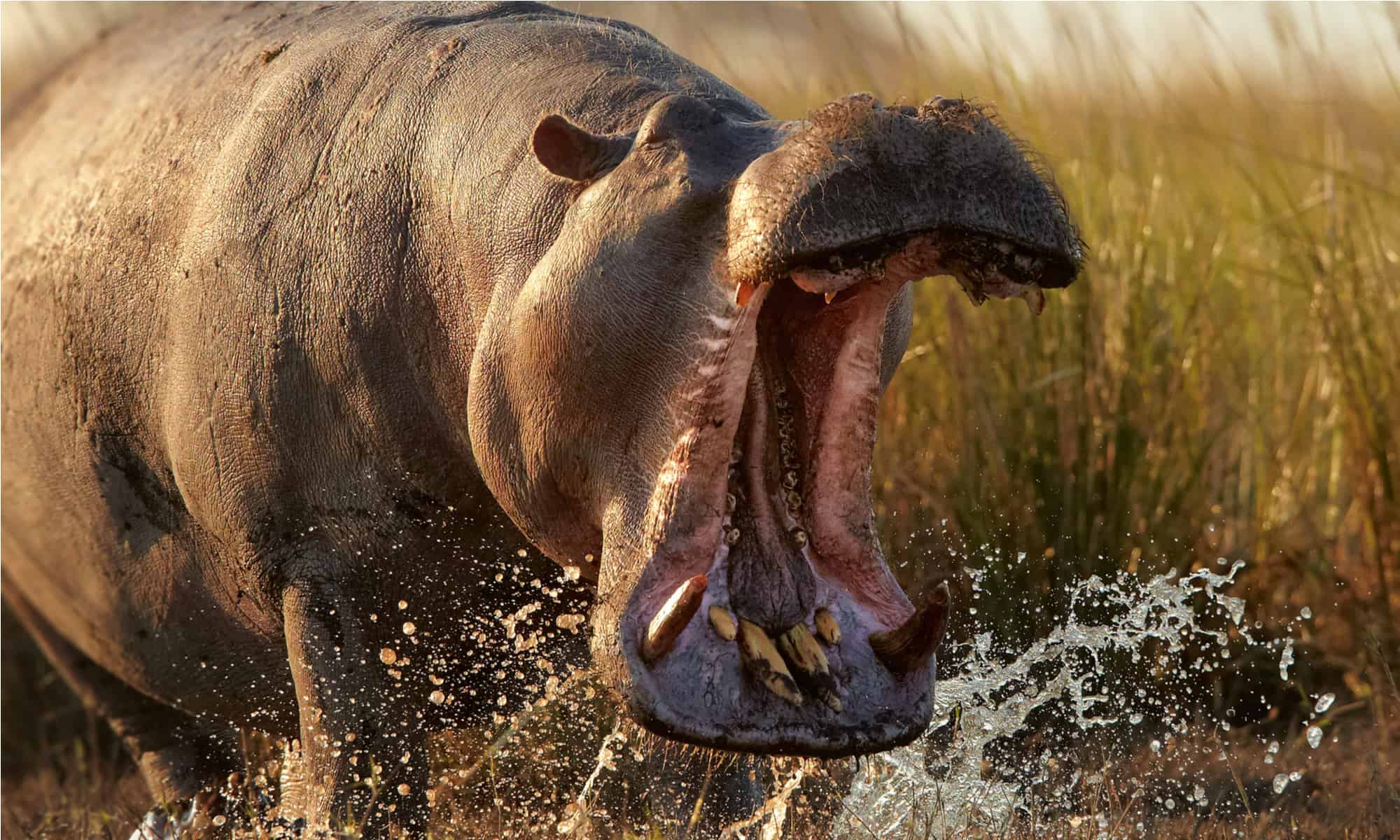
In what way are hippos dangerous? Hippos have two features that make them so deadly: their tusks and their weight.
Hippos have tusks that grow from modified teeth at the front of their mouths. Their incisors (the human equivalent of front teeth) and canines (the sharp teeth at the corner of a human mouth) are modified. Their tusks are made of extremely dense ivory and can grow over a foot long, forming sharp and powerful weapons used to fight rivals and defend territory. They never stop growing and are sharpened when they grind them against one another, making them even deadlier. Hippos use these tusks to fight other males but will also use them to attack intruders.
While tusks are scary, the sheer size of a hippo is enough to make them formidable. On average, they weigh 3,300 lbs, but large males never truly stop growing. Even if they don’t get you with tusks, an accidental bump is enough to break bones, and an all-out attack is enough to kill.
Where Do Hippo Attacks Happen?
©iStock.com/mesut zengin
Hippo attacks happen in Africa, mostly between local populations that subsist from fishing. Sometimes, local fishermen have been attacked several times – and are eventually killed.
Almost all hippo attacks happen when humans venture too close to a shoreline with hippos. Other run-ins happen when humans are floating by them in boats.
How To Avoid a Hippo Attack
©Martin Mecnarowski/Shutterstock.com
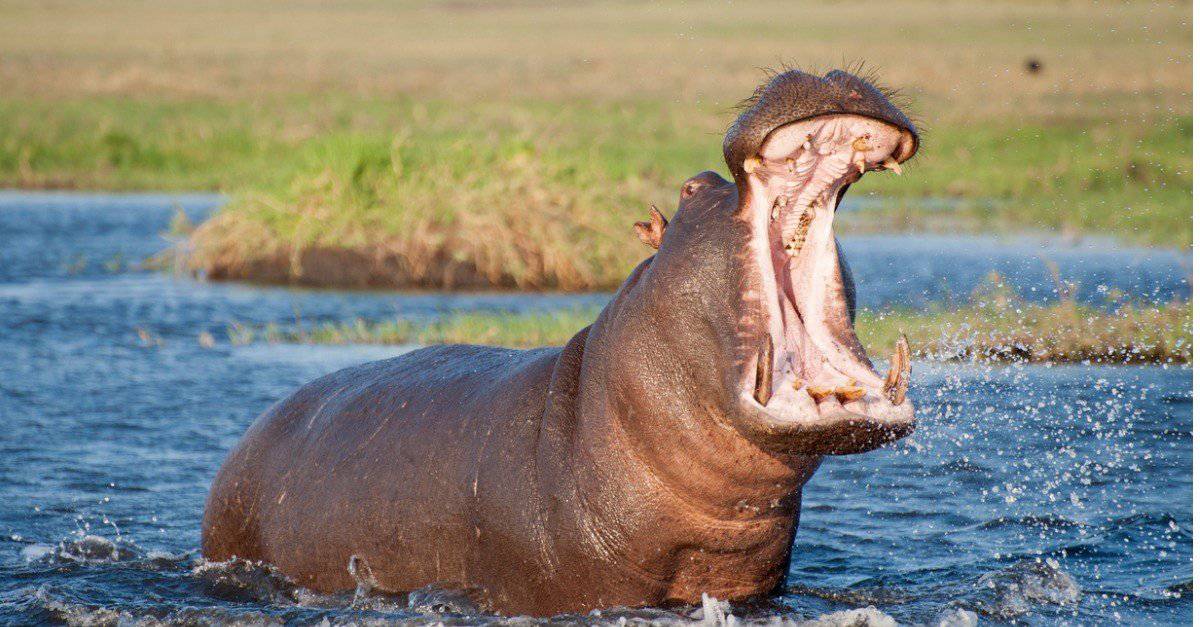
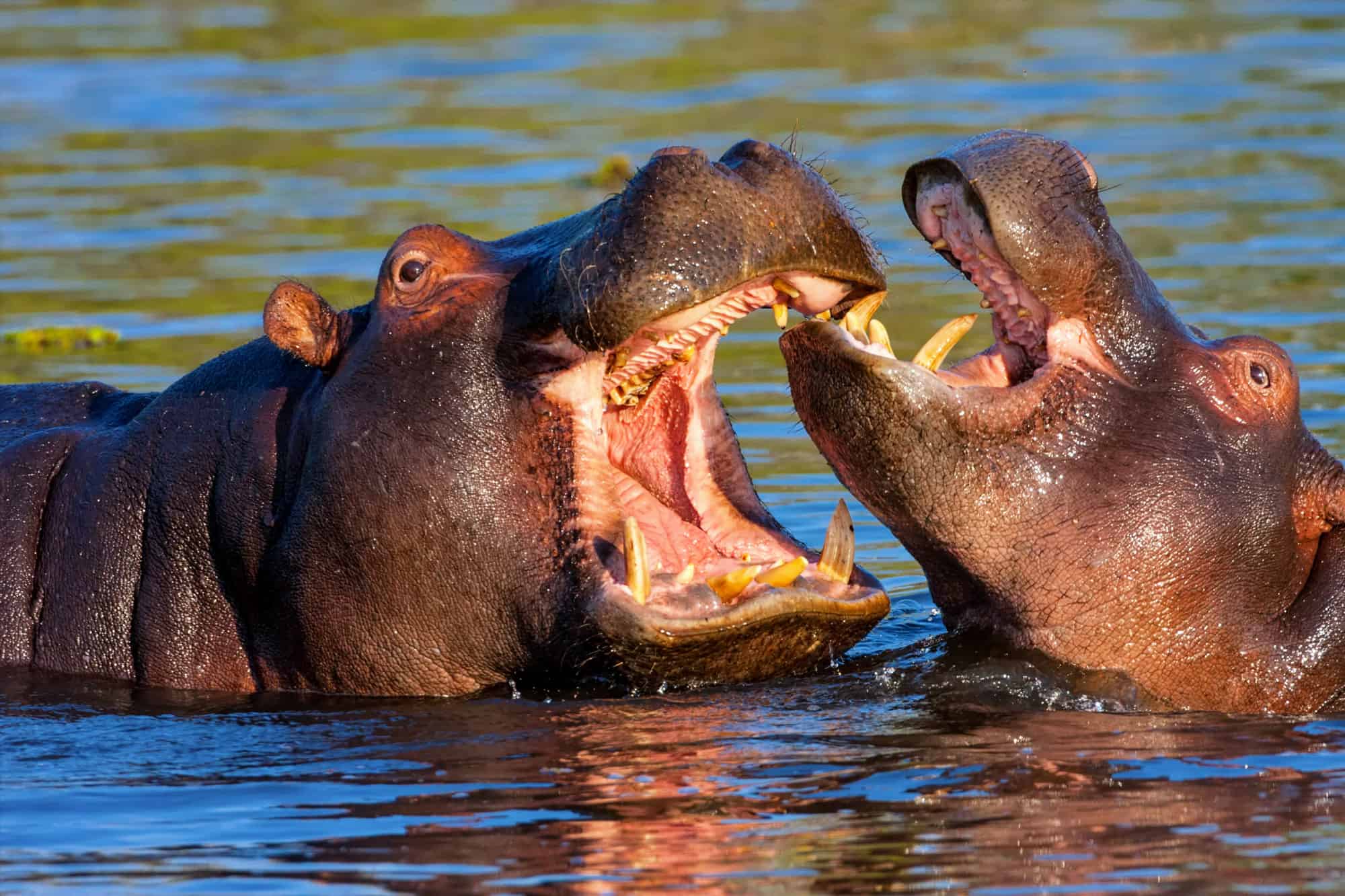
If you aren’t planning to take a trip to any African country which has them anytime soon, you should be ok. However, if you’ve made such travel plans in the near future, however, you would want to avoid any places frequented by hippos. If you spot a hippo, yawning is a sign of aggression and a signal you are too close. If you travel during the mating season, the males can be particularly aggressive. Finally, stay away from calves (if that wasn’t clear). A mother will kill in order to protect her calf.
Interesting Hippo Facts
©PhotocechCZ/Shutterstock.com
- Hippos have a gestation period of 243 days. When a baby hippo, called a calf, is born, they weigh up to 50 pounds.
- This water horse is mostly an herbivore. Hippos eat an average of 80 pounds of grass nightly.
- There are two species of hippos. The common hippo and the pygmy hippo.
- Hippos are able to produce their own sunblock. They have adapted the ability to produce an oily liquid, “red sweat“, that acts as a natural sunblock.
What is the Hippo’s Closest Living Relative?

©ARomadov/Shutterstock.com
When considering a possible living relative of a hippo – you may think of rhinos or elephants – but the closest living relative of a hippo is a whale! Hippos and whales shared a common ancestor that lived about 55 million years ago. This amphibious common ancestor probably had the aquatic skin traits that hippos and cetaceans (whales, dolphins, and porpoises) share.
Hippos and whales diverged from a shared semi-aquatic ancestor around 50–60 million years ago. Unlike most mammals, both groups lack traditional sweat and oil glands. Hippos instead evolved specialized skin glands that produce a reddish-orange fluid with antimicrobial and sunscreen properties. Whales also lost most of what little hair they had while hippos have whiskers, ear hair, and hair on the tips of their tails.