
Quick Take
- Tiger saliva is often called antiseptic, but the truth is more complicated. For tigers, it cuts both ways. See the saliva science →
- One tiger behavior sets them completely apart from almost every other big cat on Earth, and that behavior is not their stripes. Discover their love of water →
- Tiger urine smells nothing like you'd expect, and the scent serves a purpose far more strategic than simply marking turf. Smell the strategic secret →
- Tiger stripes go deeper than most people realize, which is a detail that changes how researchers track them in the wild. Explore the stripe details →
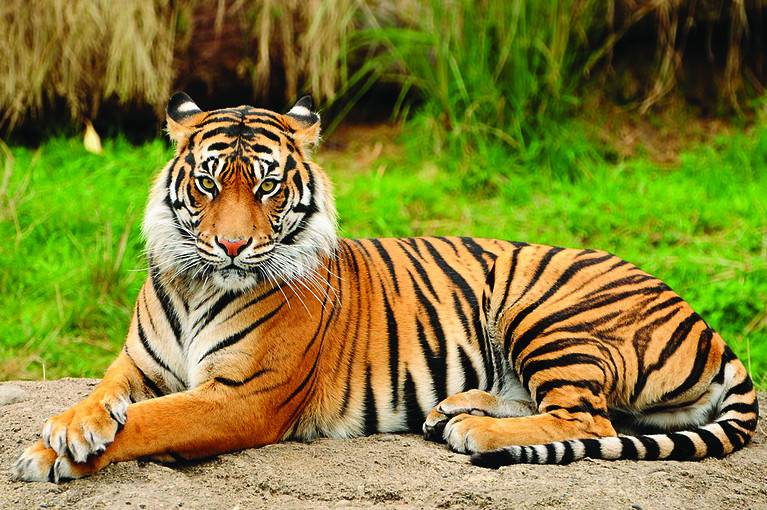
Tigers are the largest members of the cat family and among the most iconic predators on Earth. Recognized instantly by their orange coats and bold black stripes, these powerful felines have long been symbols of strength, courage, and mystery across cultures. Historically, tigers roamed much of Asia, from Turkey to the eastern coast of Russia, but today their range is drastically reduced. In fact, wild tiger populations have fallen by roughly 96% over the last century, with only about 3,900 remaining in the wild. Conservation efforts in countries like India, Nepal, and Russia have shown some success, but the species remains endangered due to poaching, habitat loss, and conflict with humans.
1. Tiger cubs are blind at birth
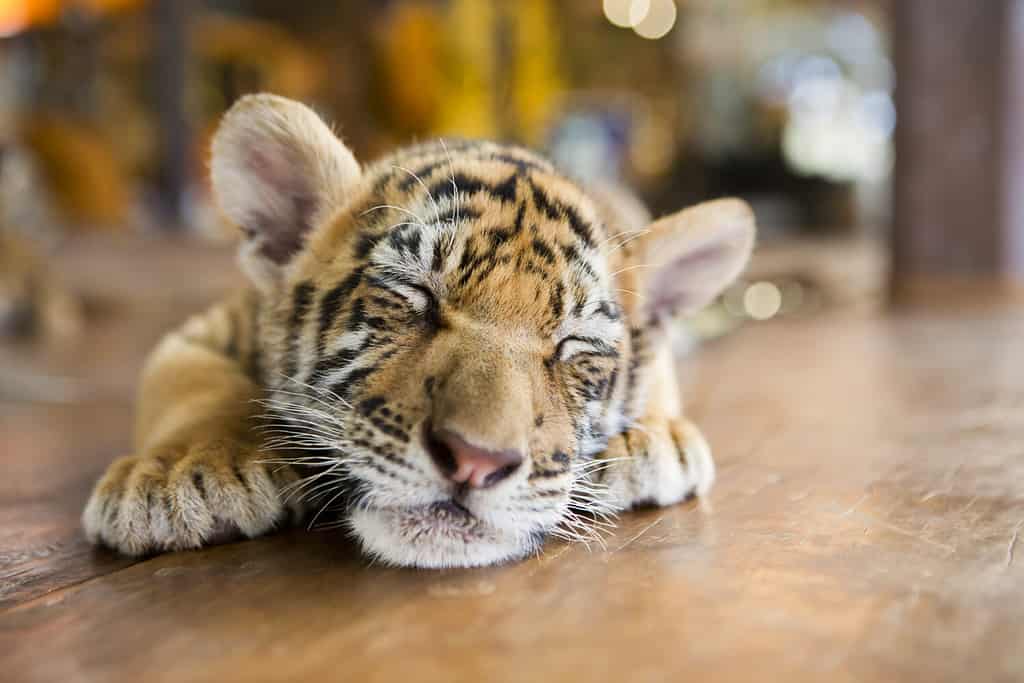
Tiger cubs are born blind.
©Iryna Kalamurza/Shutterstock.com
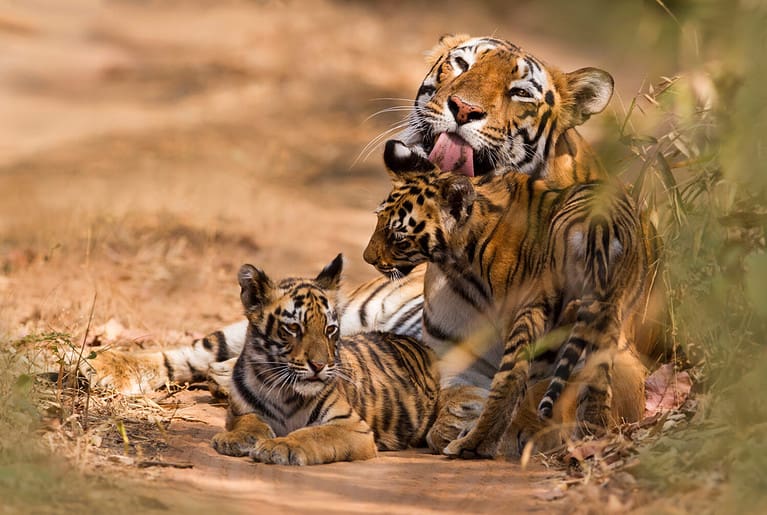
All tiger cubs are born blind, entering the world in complete darkness with their eyes tightly shut. For the first week or two of life, they rely entirely on their mothers’ scent, warmth, and touch for protection and guidance, crawling clumsily through the den to find her. Their eyes usually begin to open after six to fourteen days, though vision remains poor for a while, making cubs especially dependent on their mother’s ability to keep them safe and well-fed. Despite this vulnerability, it is not their lack of sight that makes the cub mortality rate so high (often reaching 50% in the wild). The leading causes of cub death are external threats such as predation by leopards, wild dogs, or even rival male tigers, along with starvation if the mother struggles to secure enough food. In some cases, mothers may abandon weaker cubs to focus resources on those most likely to survive.
2. Tiger saliva can be both healing and harmful
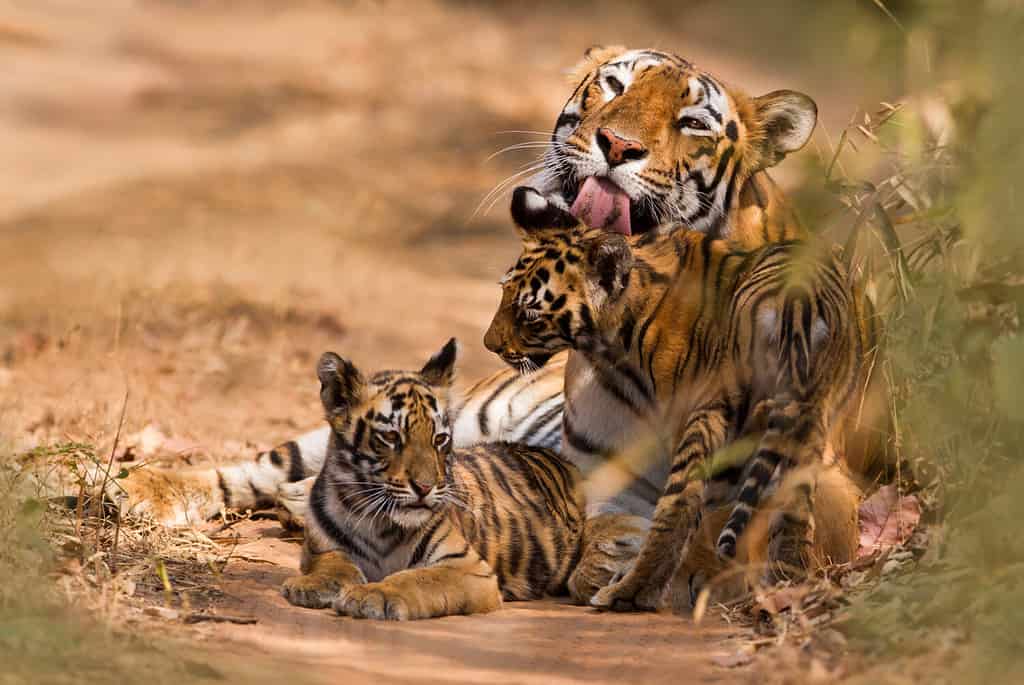
The saliva from a tiger is somewhat antiseptic.
©Anuradha Marwah/Shutterstock.com
Big cat saliva contains enzymes such as lysozyme, which can break down bacterial cell walls and provide mild antibacterial effects. This has led to the common belief that their saliva is “antiseptic,” but that term can be misleading. In a medical sense, a true antiseptic prevents or kills a wide range of microbes and is safe for clinical use—something tiger saliva cannot reliably do. When tigers lick their own wounds, the mechanical action helps remove dirt and debris, while the enzymes may slow bacterial growth, giving the injury a better chance to heal. However, their mouths also harbor potentially harmful bacteria, meaning that excessive licking could actually introduce infections rather than prevent them. Scientists note that while this self-grooming strategy is a useful natural adaptation, it is not comparable to the effectiveness of medical antiseptics or veterinary treatments.
3. Tiger stripes are skin deep
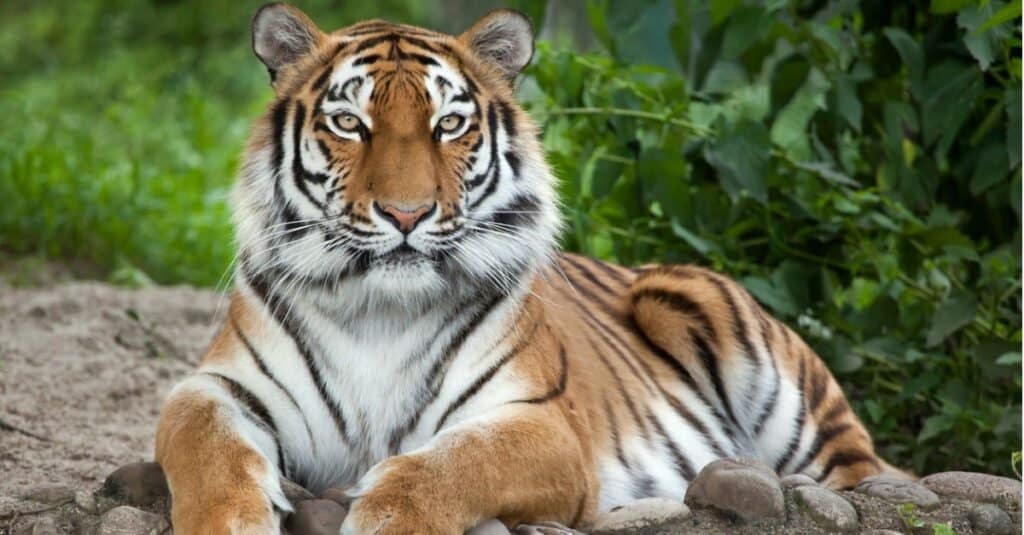
Tiger stripes are extended to their skin.
©iStock.com/wrangel
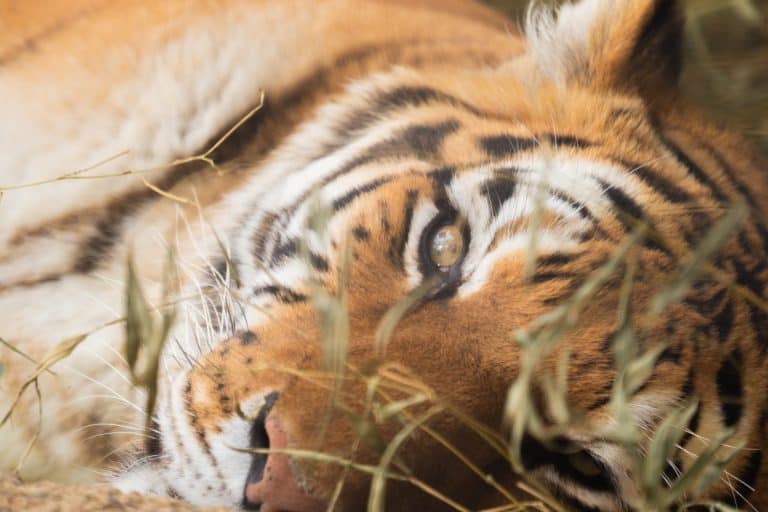
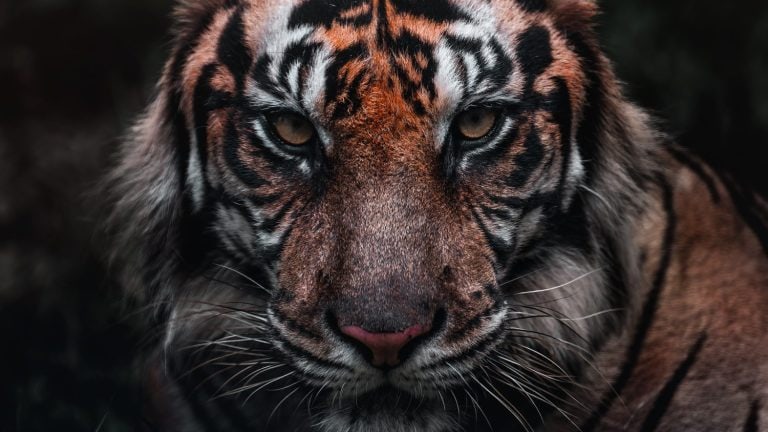
A tiger’s stripes aren’t just on its fur—they extend down to the skin beneath, creating a pattern that remains visible even if the animal were hairless. These dark markings are caused by pigment cells called melanocytes embedded in both the hair follicles and the skin, ensuring the stripes run through multiple layers. Each tiger’s stripe pattern is completely unique, functioning much like a human fingerprint, and researchers often use these markings to identify individuals in the wild. The stripes serve an important purpose beyond aesthetics: they provide camouflage by breaking up the outline of the tiger’s body, helping it blend into the tall grasses and dense forests of its habitat as it stalks prey.
4. Tiger urine smells like the movie theatre
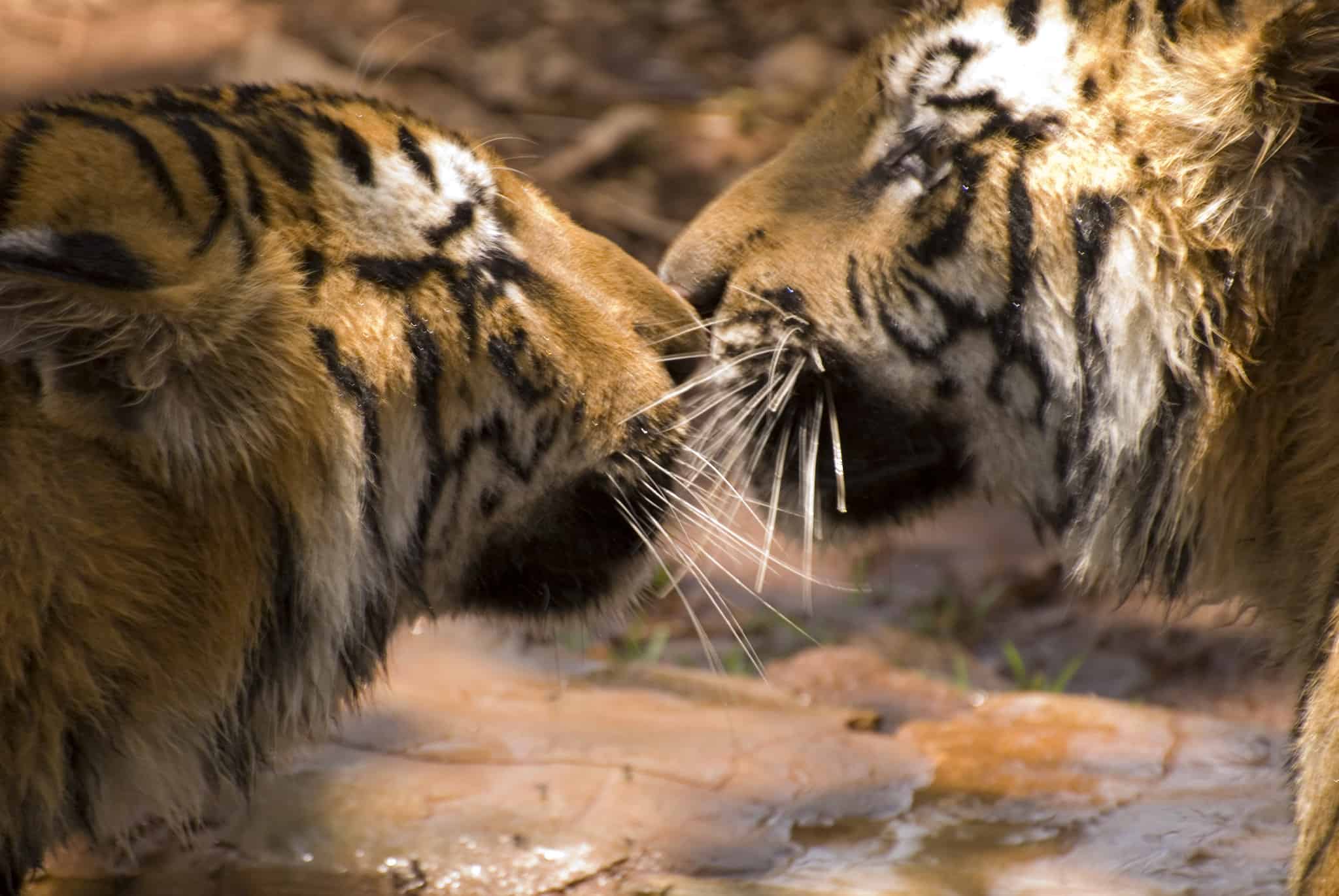
Tiger urine has a surprisingly distinctive odor that many people compare to buttered popcorn. This unusual scent comes from a compound called 2-acetyl-1-pyrroline, which is also found in toasted bread and popcorn. Aside from being pleasant, the smell is actually a powerful communication tool. Tigers spray urine to mark their territory, signal their presence to rivals, and even indicate reproductive status to potential mates. The strong, lingering aroma ensures that the message can be detected over long distances, reinforcing the tiger’s dominance in its range.
5. Tigers are the water babies of the cat world
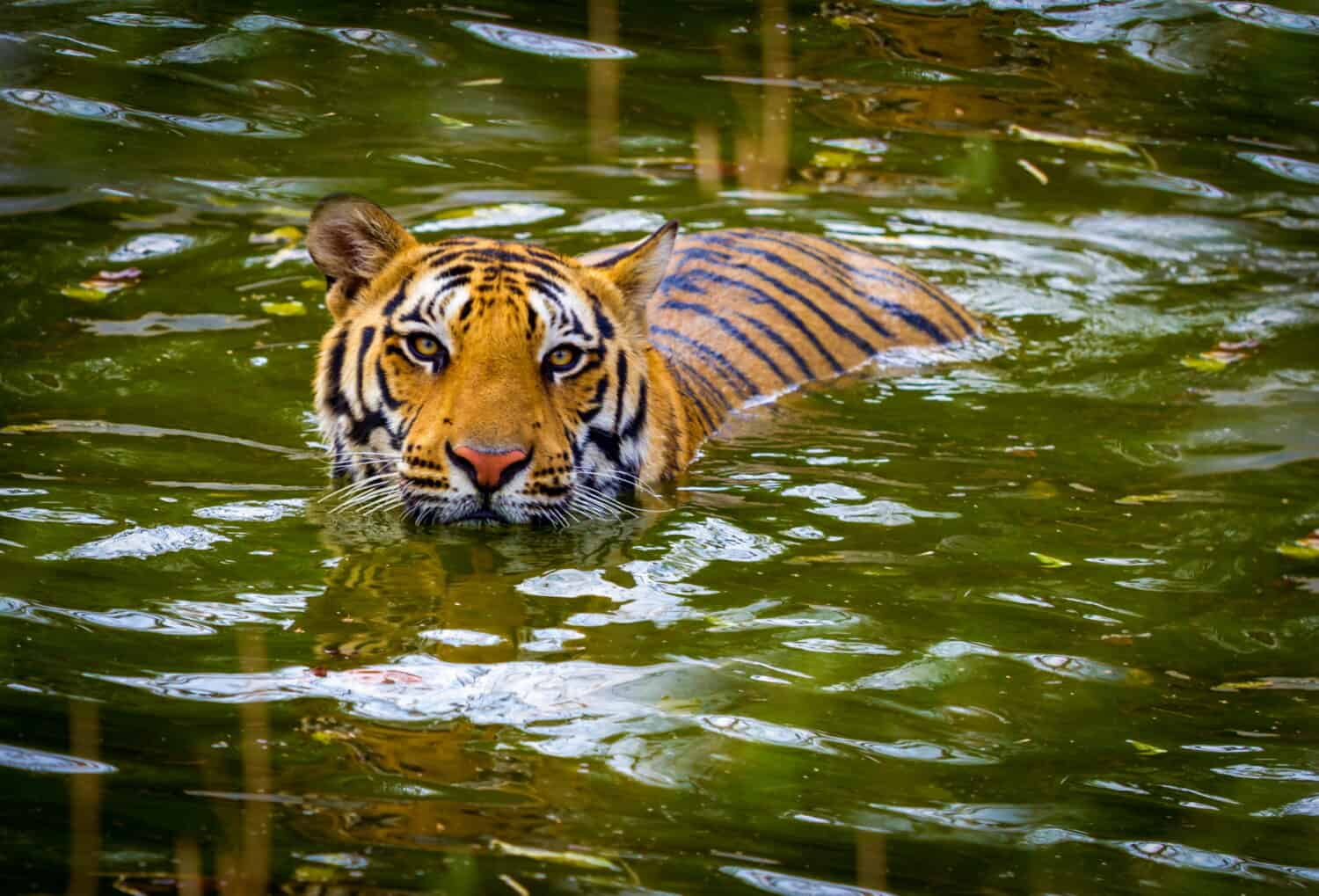
Tigers are great swimmers – and seem to enjoy it!
Image: Glass and Nature, Shutterstock
©Glass and Nature/Shutterstock.com
Unlike most members of the cat family (including your water-adverse feline at home), tigers are natural swimmers and genuinely enjoy being in the water. They often enter rivers, lakes, or ponds to cool off in hot weather, and some individuals have been observed swimming for several kilometers at a time. This love of water also gives them an advantage while hunting, as tigers can silently stalk prey along riverbanks or even ambush animals that come to drink. Mothers are known to introduce their cubs to water at an early age, teaching them to paddle and play in shallow areas. For tigers, swimming is both a practical survival skill and a source of comfort, setting them apart from nearly all other big cats.
6. There are six different subspecies of tigers
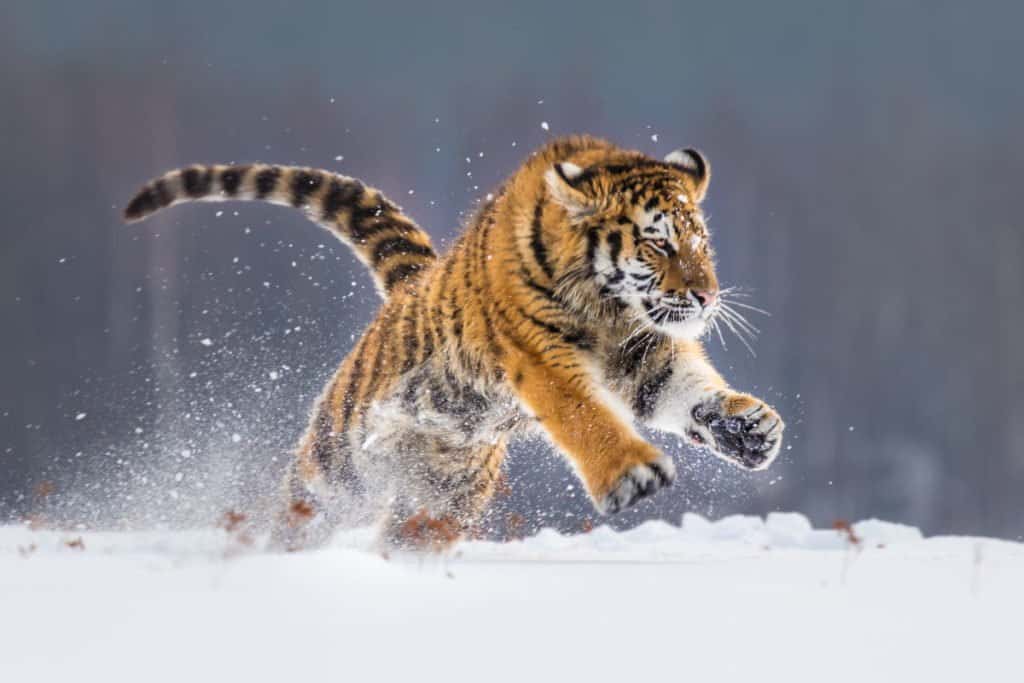
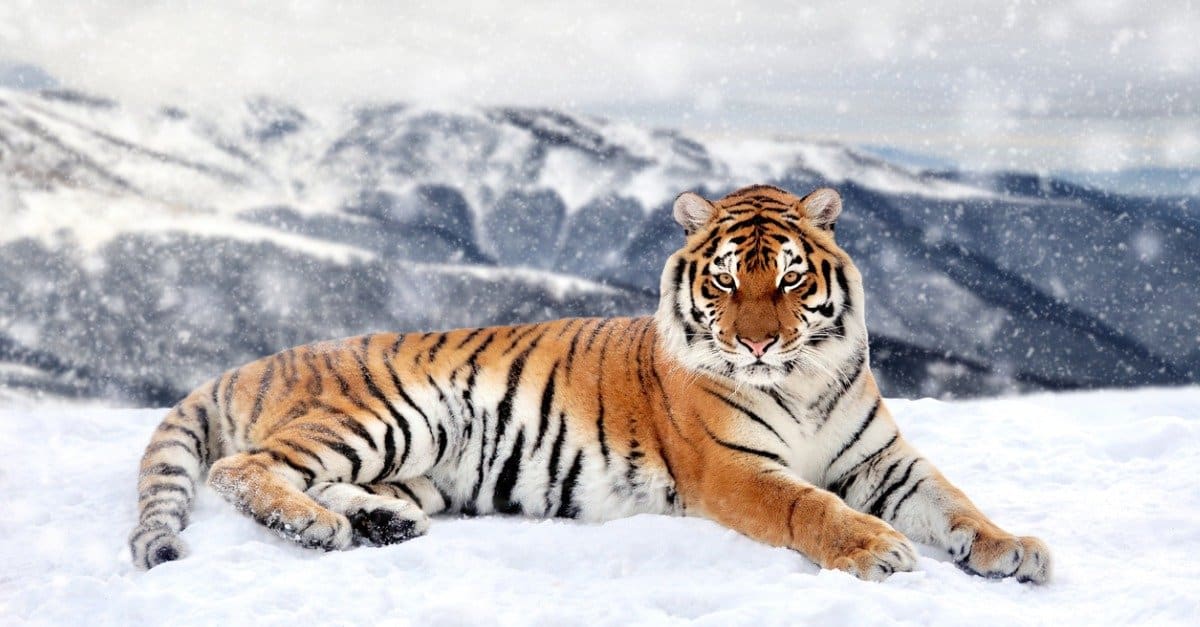
Out of six subspecies, the Siberian tiger is the largest.
©Jan Stria/Shutterstock.com
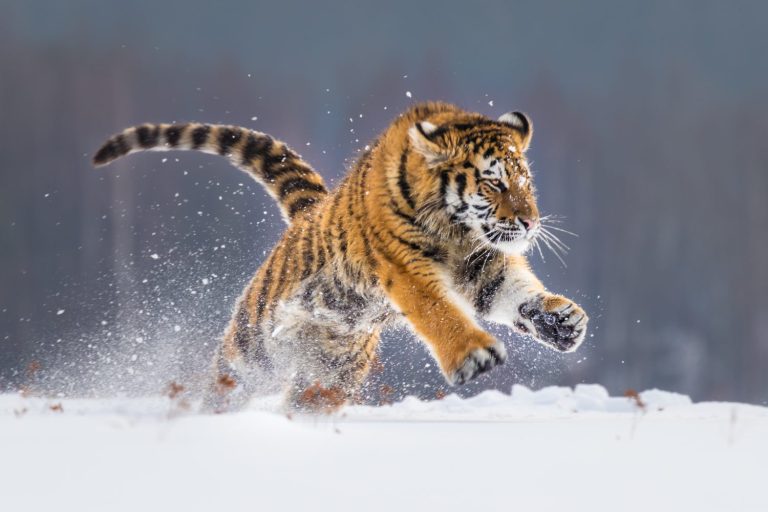
There are six subspecies of tiger: Bengal, Indochinese, Malayan, Amur (Siberian), South China (functionally extinct in the wild), and Sumatran.
The Bengal tiger of India and Nepal is the most numerous, while the Indochinese tiger ranges through parts of Southeast Asia. The Malayan tiger, recognized as distinct only in 2004, is found on the Malay Peninsula. In the Russian Far East, the Amur or Siberian tiger endures freezing winters and is the largest of all subspecies. The Sumatran tiger, the smallest, lives only on the Indonesian island of Sumatra and is critically endangered. Finally, the South China tiger, once widespread in central China, is now functionally extinct in the wild, surviving only in captivity. Each subspecies shows unique adaptations in size, coat thickness, and stripe pattern.
7. Tigers can mate with other big cats
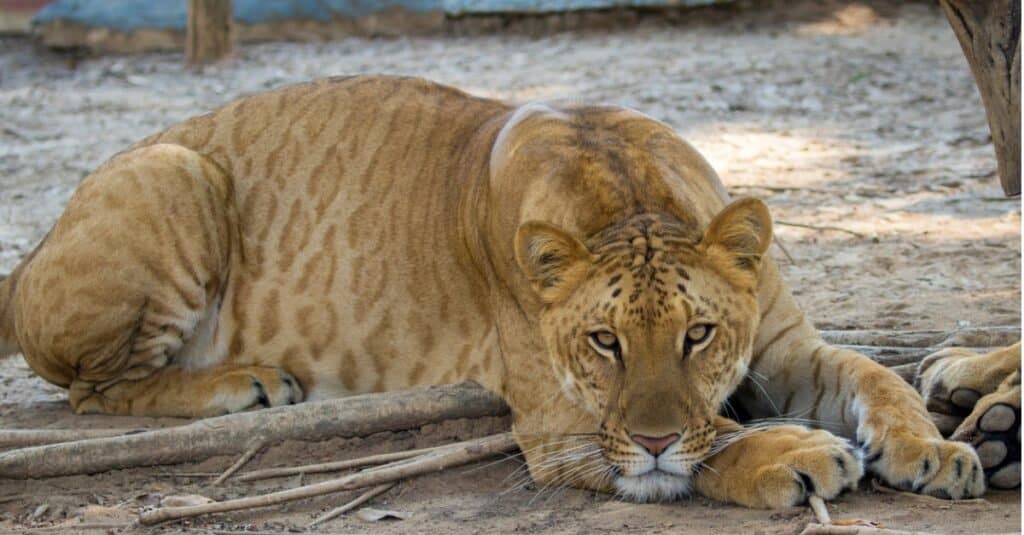
The liger, a cross between a male lion and a female tiger, is the strongest hybrid cat.
©iStock.com/yod67
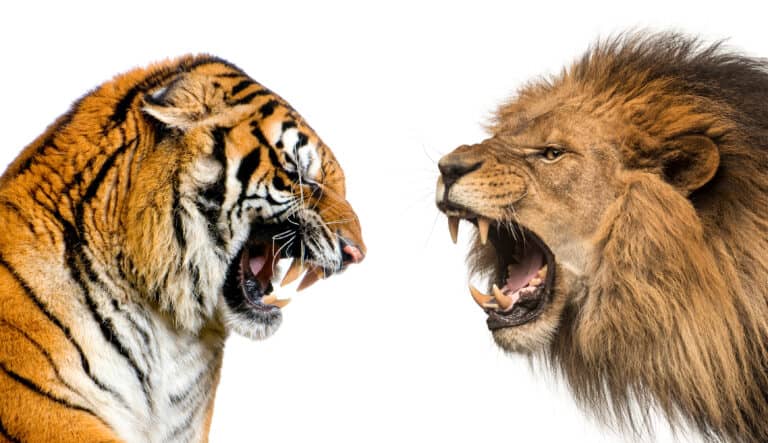
Tigers are capable of interbreeding with other big cats, though this only happens in captivity and never in the wild. When a male lion mates with a female tiger, the offspring is called a liger, which often grows exceptionally large—sometimes bigger than either parent species. Conversely, when a male tiger mates with a female lion, the hybrid is known as a tigon, which is generally smaller than a liger and shows a mix of both parents’ traits. While these hybrids can be fertile in rare cases, crossbreeding is controversial because it serves no conservation purpose, often involves inbreeding, and can lead to health problems. For these reasons, reputable zoos and conservation organizations do not promote or practice the breeding of ligers or tigons, even though they remain a subject of fascination for the public, as well as Napoleon Dynamite.
8. Tigers are loners
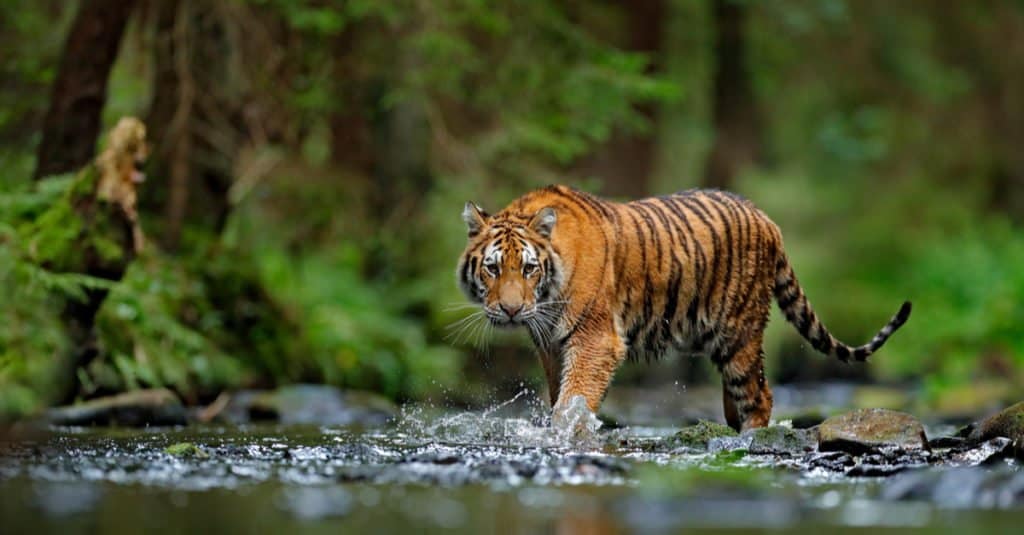
Tigers are usually solitary creatures in the wild.
©iStock.com/Ondrej Prosicky
Tigers are solitary by nature, unlike lions that live in social prides. Each adult tiger maintains its own territory, which can span from 20 to over 150 square miles depending on prey availability and habitat. They use scent markings, scratch marks on trees, and roaring calls to advertise their presence and reduce direct conflicts with rivals. Male and female territories may overlap, but apart from brief mating encounters or mothers raising cubs, tigers generally avoid one another. This solitary lifestyle allows them to hunt more efficiently and ensures that the limited prey within their ranges is not depleted by group living.
9. Tigers are not picky eaters
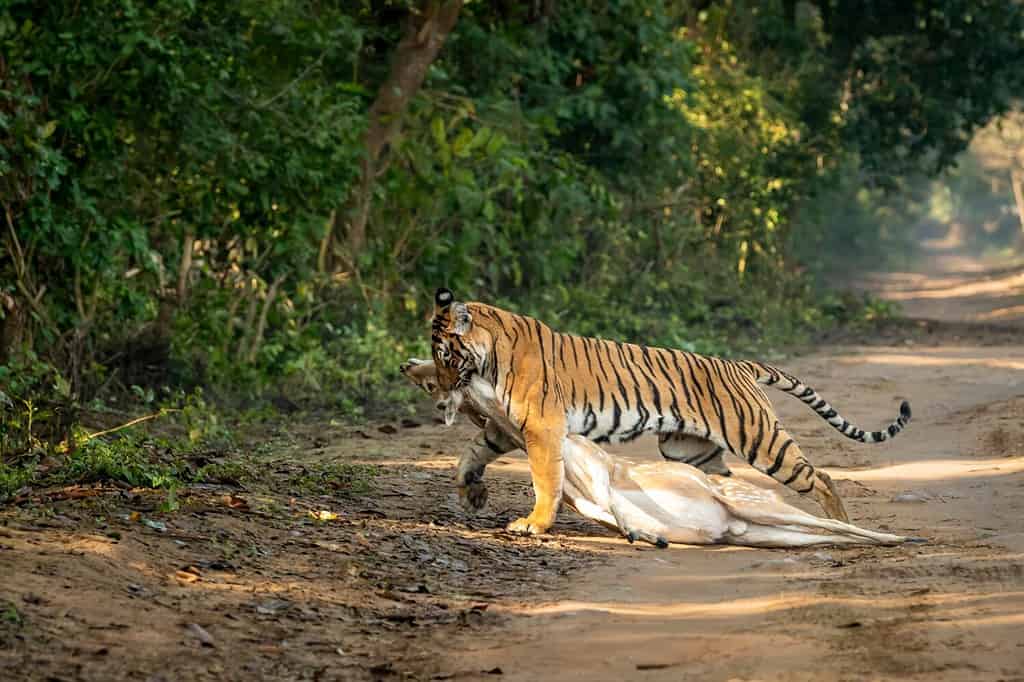
Tigers prefer to make their hunting efforts worthwhile by attacking medium to large prey for a substantial meal.
©Sourabh Bharti/Shutterstock.com
Tigers are obligate carnivores with a diet that focuses on medium to large prey, which provides the calories needed to sustain their massive size and strength. They primarily hunt ungulates such as deer, wild boar, and antelope, but depending on their habitat, they may also take down buffalo, gaur, or even young elephants and rhinos. Opportunistic by nature, tigers will eat smaller animals like birds, fish, or reptiles if larger prey is scarce, and rare cases of predation on leopards or other predators have been recorded. Using stealth and power, a tiger typically ambushes its target, delivering a fatal bite to the neck or throat before dragging the carcass to cover. A single large kill can sustain a tiger for several days, though success rates in hunts are relatively low, making each meal critical for survival.