
Quick Take
- White giraffes owe their unusual appearance to leucism, a rare genetic condition that reduces pigmentation without affecting eye color or behavior.
- Only two known leucistic giraffes are currently confirmed to be alive.
- Leucism does not cause health problems, but the lack of camouflage can increase vulnerability to predators and human threats.
When we think of giraffes, we instantly think of them being the typical combination of dark orange or brown patches surrounded by lighter hair. However, there is a small number of giraffes that have a very different appearance. These giraffes are almost entirely white due to a condition known as leucism. Their unusual appearance has sparked widespread curiosity, leaving people wondering what causes it and what it means for their survival. Keep reading to learn the reasons behind leucism in giraffes and what it means for them!
What Is Leucism?
Leucism is a rare genetic condition that affects the development of pigment cells, resulting in partial or total loss of pigmentation. This makes the skin or fur of an animal much paler than usual, and sometimes even completely white. When it comes to giraffes, leucism affects the development of their traditional brown markings. Depending on the number of pigment cells that are affected, some of their coat patterns and orange or brown coloration may still be clearly visible, albeit lighter than usual, or they may be almost entirely absent.
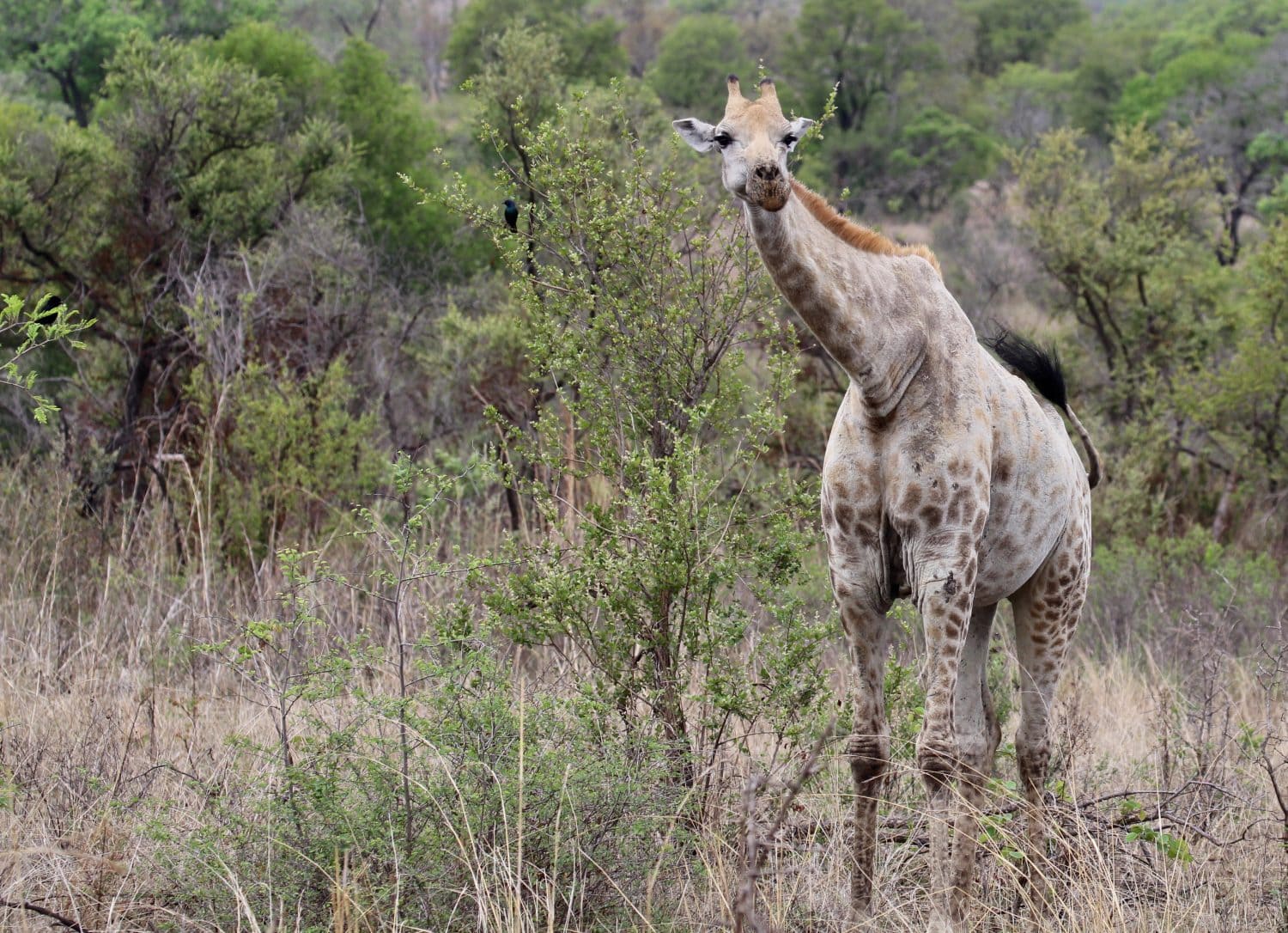
Leucistic giraffes are paler than usual, but their brown patterns may still be visible.
©Beate Wolter/Shutterstock.com
Leucism is sometimes mistaken for albinism, but the two are entirely different conditions. Albinism causes a lack of melanin, the pigment responsible for dark colors, while leucism involves a reduction of all types of pigments. Unlike albinism, leucism doesn’t affect the eyes. This means that leucistic animals don’t have the characteristic red or pink eyes that can be used to distinguish albino animals.
As a genetic condition, leucism only occurs when certain genes involved in the production of pigments do not work as they usually would. Leucism is caused by a recessive gene. Therefore, animals need to receive a recessive gene from both parents in order to display leucistic traits.
How Rare Are White Giraffes?
Leucism is one of the rarest traits in giraffes, with only a handful of confirmed sightings documented. There are currently two known surviving leucistic giraffes in the world, despite widespread claims that only one remains. A leucistic female called Omo lives in the Tarangire National Park in Tanzania and was first spotted as a calf in 2015. There is also an unnamed male living in Kenya’s Ishaqbini Hirola Conservancy. His leucistic mother and younger sibling were killed by poachers in 2020. This has led to him being fitted with a GPS tracker to help monitor him and protect him from the same fate. It is possible that other leucistic giraffes exist in remote areas, but no other sightings have been confirmed.
Leucism is extremely rare because it only appears in animals that inherit a recessive gene from both parents. Animals that receive a recessive gene from only one parent are carriers of the gene but do not display leucistic traits. Even leucistic animals are not guaranteed to have leucistic offspring, as the offspring must also inherit a recessive gene from the other parent. For example, Omo, the leucistic giraffe in Tanzania, has given birth to several normal-colored calves.
Are White Giraffes Different?
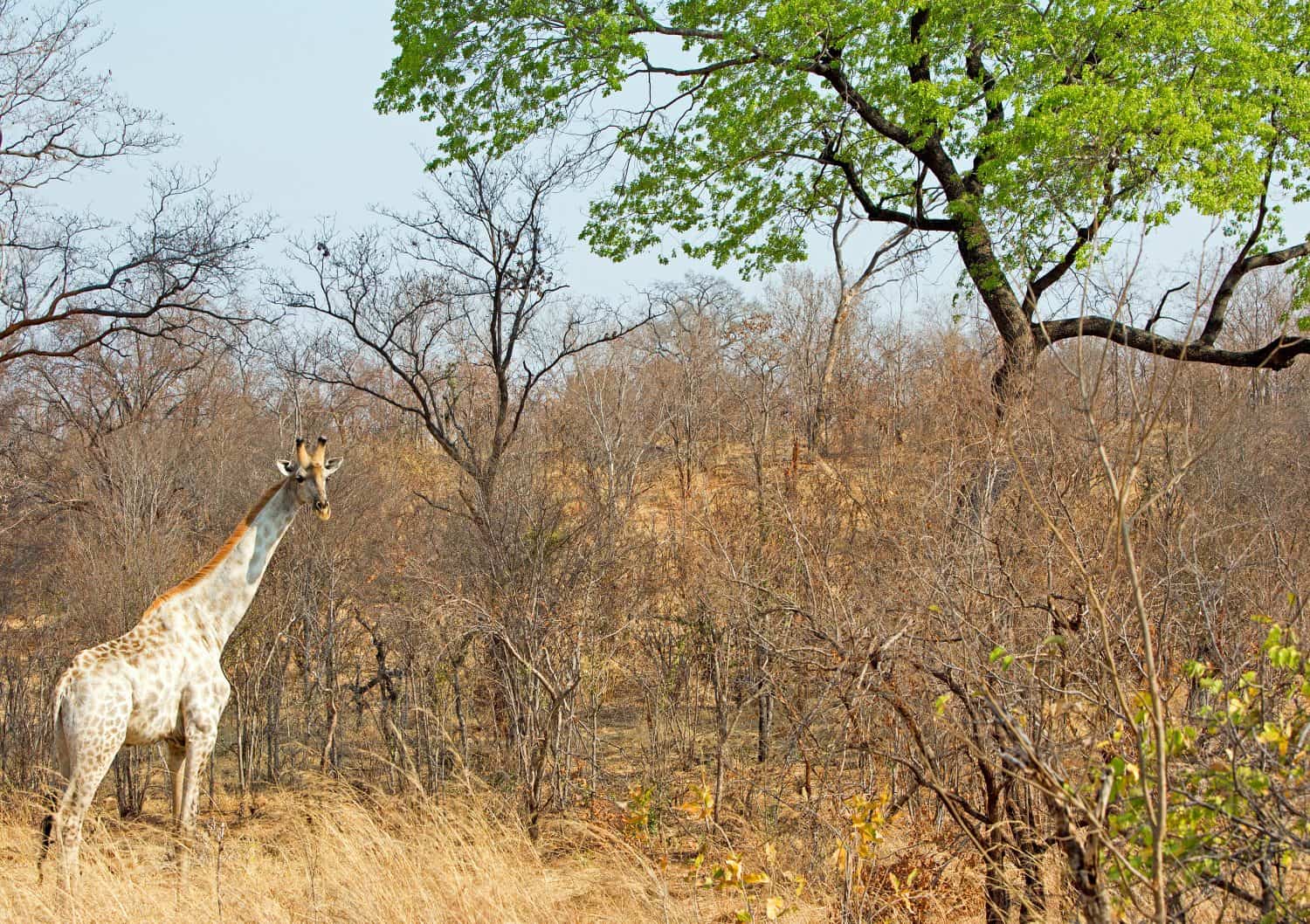
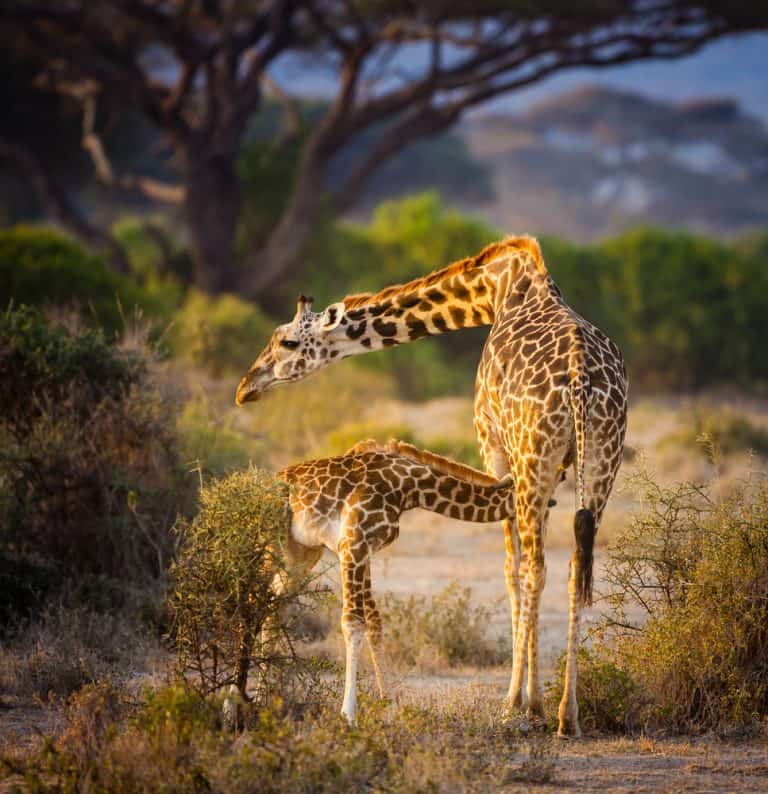
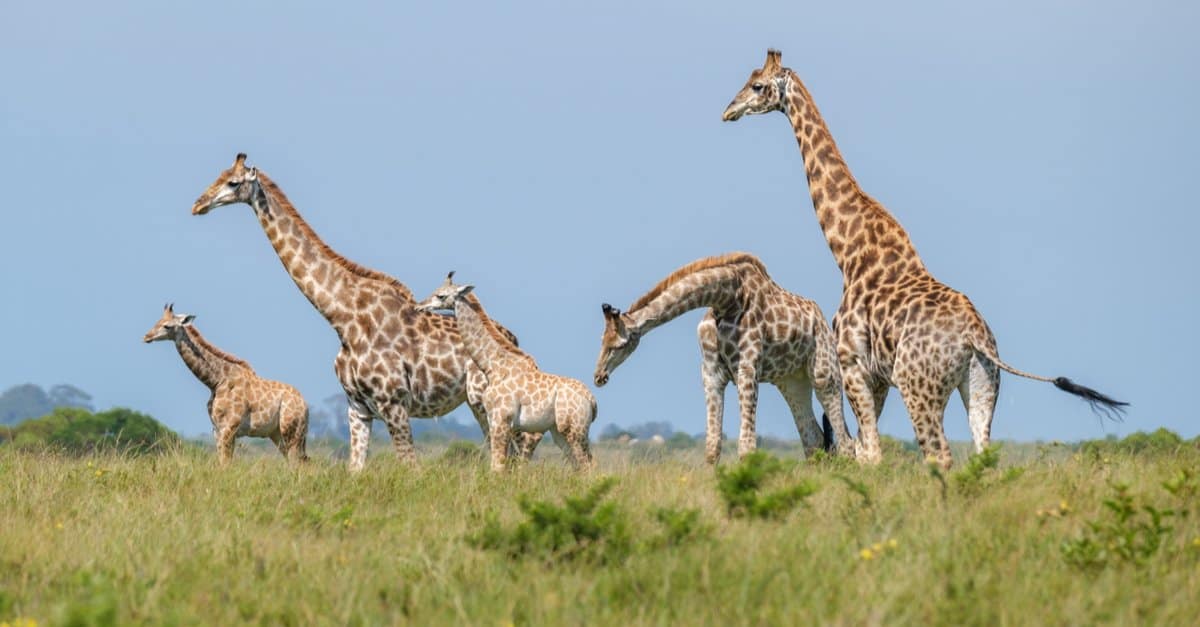
Despite their appearance, leucistic giraffes are not any different from their normal-colored counterparts.
©paula french/Shutterstock.com
Despite their unusual appearance, leucistic giraffes are not any different from other giraffes. The condition only affects the pigmentation cells, causing the giraffe’s different appearance without affecting their behavior or biology. Leucistic giraffes are still the same species. They still feed on the same vegetation, form the same social bonds, and reproduce in exactly the same way as their normal-colored counterparts.
The patterns on a giraffe play a role in temperature regulation. This is because there is a series of blood vessels underneath them that help the giraffe release heat by bringing warm blood closer to the surface. Therefore, it is theorized that the lack of strong pigmentation may make this system less effective and cause the giraffe to have a harder time cooling down. However, there is no evidence that leucism causes any health problems in giraffes or that it significantly shortens their lifespan. As the older of the surviving two, Omo provides clear evidence that leucistic giraffes suffer no adverse effects from being white.
However, their pale appearance does still cause some challenges. Giraffes rely on their patterned appearance to camouflage themselves and help them blend into their surroundings. Without this camouflage, leucistic giraffes may be easier for predators to detect. This puts calves, in particular, at serious risk of predation, as they are so much more vulnerable than adults. Unusual animals also tend to attract more human attention, such as from photographers and tourists, and are often highly valued by poachers, which increases their risk. However, to combat this, they are also more closely monitored, which is why both surviving leucistic giraffes are carefully watched and protected.