One of San Francisco’s unlikely heroes passed away on December 2, 2025, at the age of 30. Claude was one of the city’s most enduring symbols. Even while spending his time tucked away in a large exhibit at the California Academy of Sciences in Golden Gate Park, he exuded a quiet charisma. Claude was an albino alligator with an alabaster-white color and soft pink eyes. Over the years, he became one of the city’s biggest hits, bringing busloads of schoolchildren and tourists alike to the museum. His death has left an alligator-sized hole in the heart of the city.
Alligators can live up to 70 years old in captivity under the right conditions. While it may seem like Claude died pretty young in the grand scheme of things, albino alligators have a tough time in general. They usually don’t live long, especially in the wild. Let’s learn more about this iconic San Francisco symbol. We will discuss his life, how he got to the California Academy of Sciences, and what makes albino alligators so special.
A Short But Impactful Life
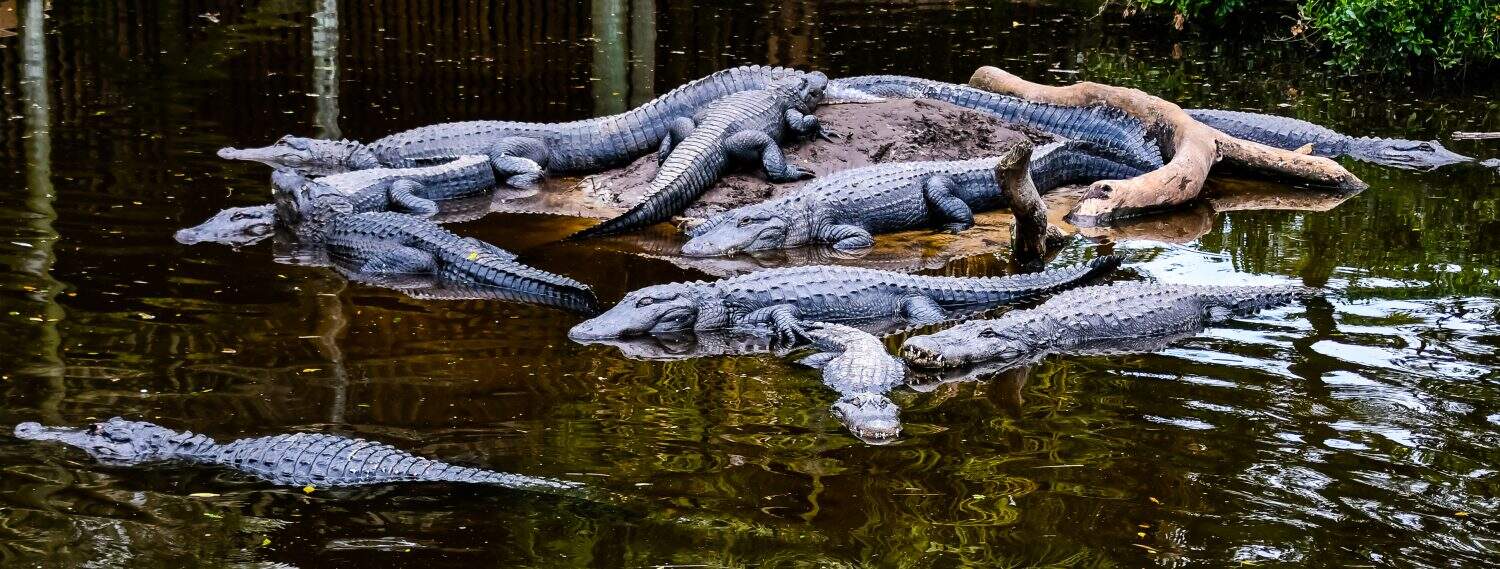
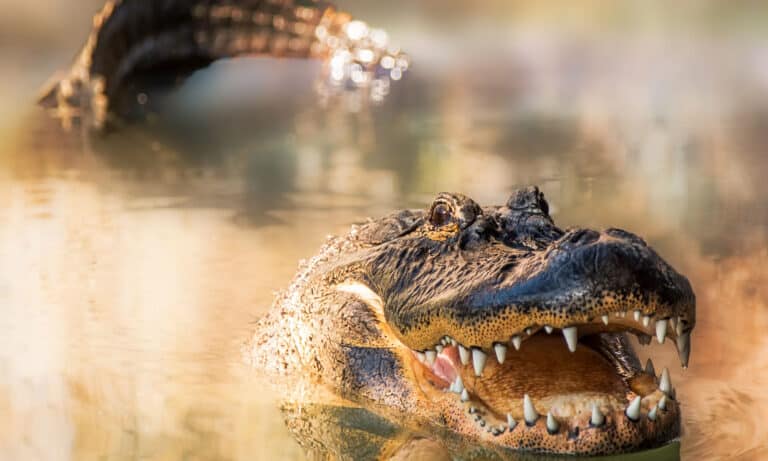
Claude was born in 1995 on a Louisiana alligator farm.
©Sandi Cullifer/Shutterstock.com
When Claude entered this world, he had no idea what kind of celebrity he would one day become. A late Virgo baby, he hatched on September 15th, 1995, at a Louisiana alligator farm. Albino from birth, Claude was, in a sense, lucky to be born on a farm. Due to their poor eyesight and standout coloring, albino alligators do not survive long in the wild. At some point in his early life, Claude was moved to a zoo in Florida, where he spent his first 13 years. Already a gem then, Claude was one of fewer than 200 albino alligators in the world. The year 2008 marked Claude’s foray into public life when he was transferred to the California Academy of Sciences.
He soon became one of the museum’s standout attractions and a treasured symbol of the city. Compared to other alligators, even those living in captivity, Claude lived a life of luxury. He was graced with considerable enrichment in his enclosure and top-of-the-line veterinary care. Claude was greeted by hundreds of adoring fans every day. His profile became so prominent that he appeared in city light rail ads and even made a cameo in a children’s book. The Academy of Sciences launched a 24/7 livestream of his enclosure earlier this year. Luckily, Claude was able to ring in his 30th birthday in September, complete with festivities, speeches, and a custom alligator cake made of fish and ice.
A Community in Mourning

A necropsy has ruled Claude’s death as caused by liver cancer. He was 30 years old.
©YouTube/cbssf – Original
In recent weeks, Claude started showing some troubling symptoms of illness. Not only did his appetite wane, but employees at the California Academy of Sciences noticed his scale color and texture changing. The 10-foot, 300-pound albino alligator was moved out of the public eye and behind the scenes for extra care. He had recently undergone treatment for a suspected infection. After his death, Claude was transported to the UC Davis School of Veterinary Medicine for a full exam and necropsy.
His cause of death has since been ruled as liver cancer. Unfortunately, treatment for this type of cancer is limited. Additionally, predators like alligators are remarkably good at hiding their illnesses. In a statement, the California Academy of Sciences said, “This heartbreaking outcome is not what we hoped for…We know that the magnitude of this loss will be felt in proportion to how beloved Claude was by so many across the Bay Area and beyond.”
The California Academy of Sciences plans to hold a public memorial for the beloved albino alligator. In the meantime, it asks that the public share their messages and memories with his human care team at the museum.
Uncommon Albinos

There are about 100 living albino alligators in the world.
©YouTube/cbssf – Original
Albinism makes a select few alligators some of the most visually striking reptiles in the world. It also makes them some of the rarest; Claude was one of about 100 living albino alligator specimens. Their lack of pigment and pink eyes makes it difficult for them to survive in the wild. That’s why almost all of the known albino alligators live in captivity. Only controlled environments, such as zoos and aquariums, can control lighting, temperature, and diet to the extent that albino alligators require.
They may look like ghosts, but these white alligators function much the same way as their normal-colored counterparts. Nevertheless, their visually striking appearance makes them popular attractions. Claude’s life and passing serve as a reminder that the rarest creatures often suffer the most without intervention.