
Quick Take
- Calliophis bivirgatus is a snake in the Elapidae family.
- Common names are blue coral snake and blue Malayan coral snake.
- It is native to Southeast Asia.
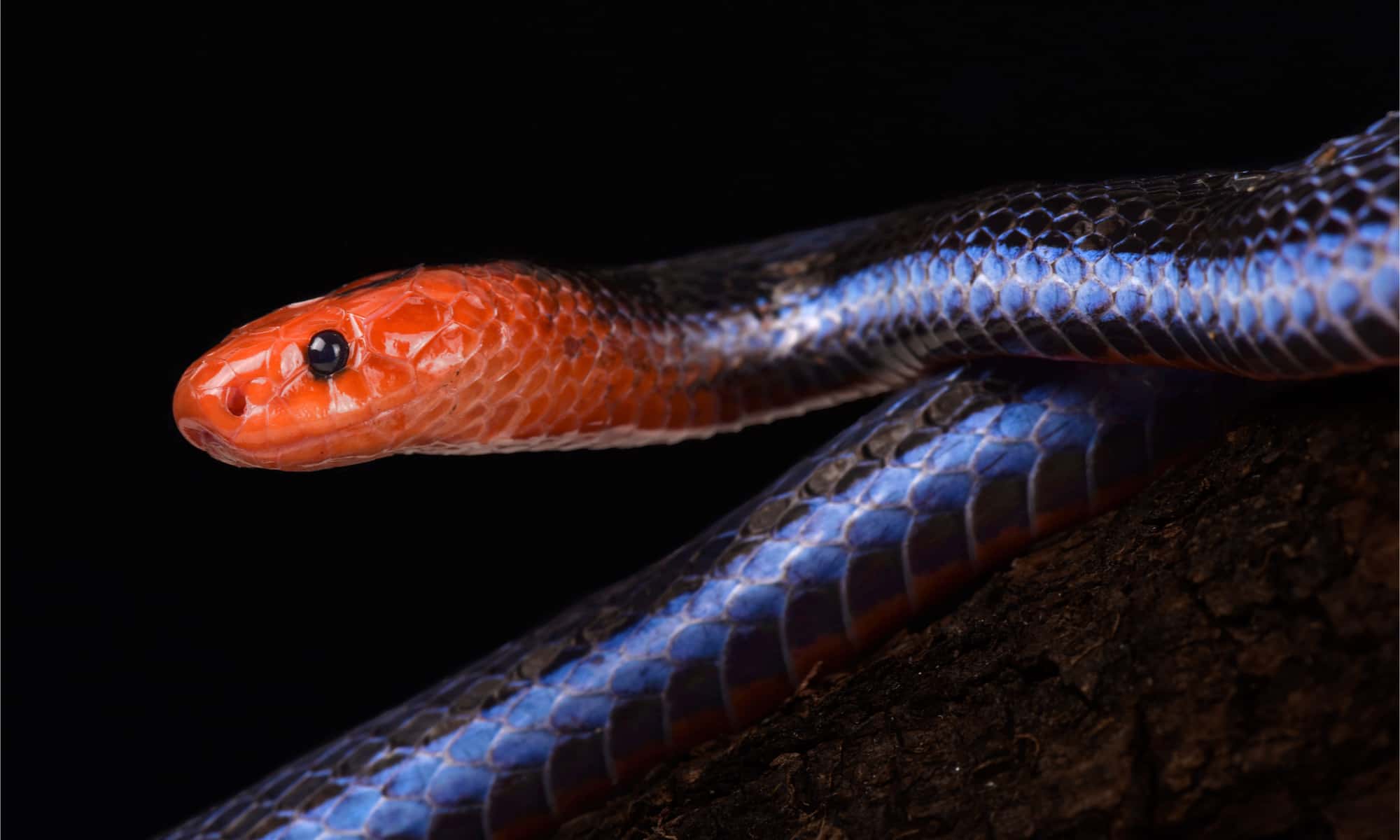
Imagine spotting this gorgeous, highly elusive snake on your trip to Southeast Asia. That’s just what happened to one Instagrammer, as seen in a post from thereptilereportofficial. The striking blue snake with the vibrant red head is the Malayan blue coral snake. As deadly as it is beautiful, this snake’s venom is strong enough to take down other venomous snakes, even cobras. Native to Southeast Asia, the Malayan blue coral snake tends to hide among the leaf litter of the forest floor. If you are lucky enough to spot one, chances are this shy snake won’t attack but will instead flee as fast as it can.
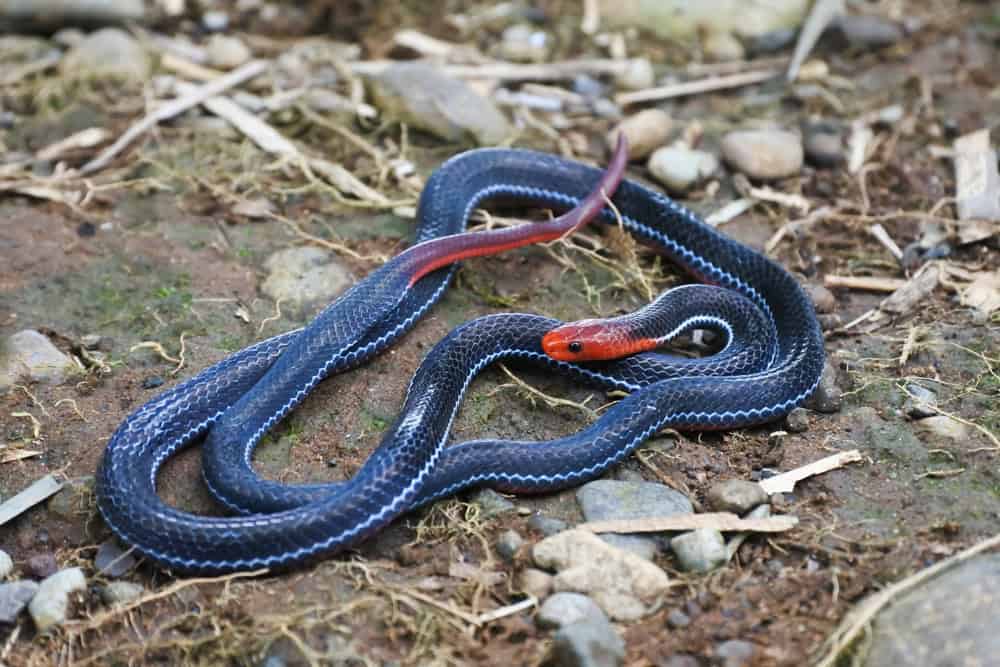
The Malayan blue coral snake is identified by its bright blue body with its red head, tail, and belly.
©Pepew Fegley/Shutterstock.com
About the Malayan Blue Coral Snake: Size and Appearance
The Malayan blue coral snake or blue coral snake (Calliophis bivirgatus) is a species of venomous snake in the Elapidae family. This family of snakes consists of highly venomous snakes, including mambas, sea snakes, and cobras.
Although coral snakes are usually around 2 to 4 feet in length, blue coral snakes are among the largest of the coral snakes. They can grow as long as 6 feet as adults. These vibrant snakes are beautifully colored with red heads, tails, and bellies. The rest of their bodies are dark blue to black. Some of them may have a light blue stripe running along each side. As juveniles, blue coral snakes closely resemble the harmless pink-headed reed snake (Calamaria schlegeli). However, mistaking a venomous blue coral snake for a reed snake could be dangerous.
Where Do Malayan Blue Coral Snakes Live?
Malayan blue coral snakes are terrestrial snakes that are native to Southeast Asia. There are three subspecies:
- C. b. bivirgatus: native to Indonesia
- C. b. flaviceps: native to Burma, Indonesia, Malaysia, Singapore, and Thailand
- C. b. tetrataenia: native to Brunei, Indonesia, and Malaysia
Blue coral snakes can be found at elevations around 328 to 3,609 feet. They are semi-fossorial, which means they have adapted to living underground part of the time and can often be found underneath leaf litter or burrowing in the soil.
A Snake With Potent Venom
Blue coral snakes mainly prey on other venomous snakes. To be able to do this, they have incredibly potent venom. When the coral snake bites its victim, it delivers venom through its extremely long fangs. Scientists have analyzed blue coral snake venom and found that it contains a unique toxin called calliotoxin.
Calliotoxin works by attacking the animal’s sodium channels. Sodium channels are like pathways that open and close to turn nerves off and on. The snake’s venom causes the channels to open and to stay open. The animal’s system goes into shock, and it becomes paralyzed. This all happens very quickly, and the animal is paralyzed almost instantaneously.
Malayan Blue Coral Snakes Are Deadly, But Not Aggressive
The venom is considered medically significant for humans. Because the toxin affects your nervous system, a bite from the snake is incredibly painful. All of your muscles cramp at once, and you become instantly paralyzed. If bitten, there is no available antidote. Despite the extremely potent venom, there have only been two reported deaths from blue coral snake bites. This is likely because the snake prefers to keep hidden. It is more likely to flee back under the leaf litter than attack a human. Sometimes, the snake will stand its ground and hold its red tail erect as a warning.
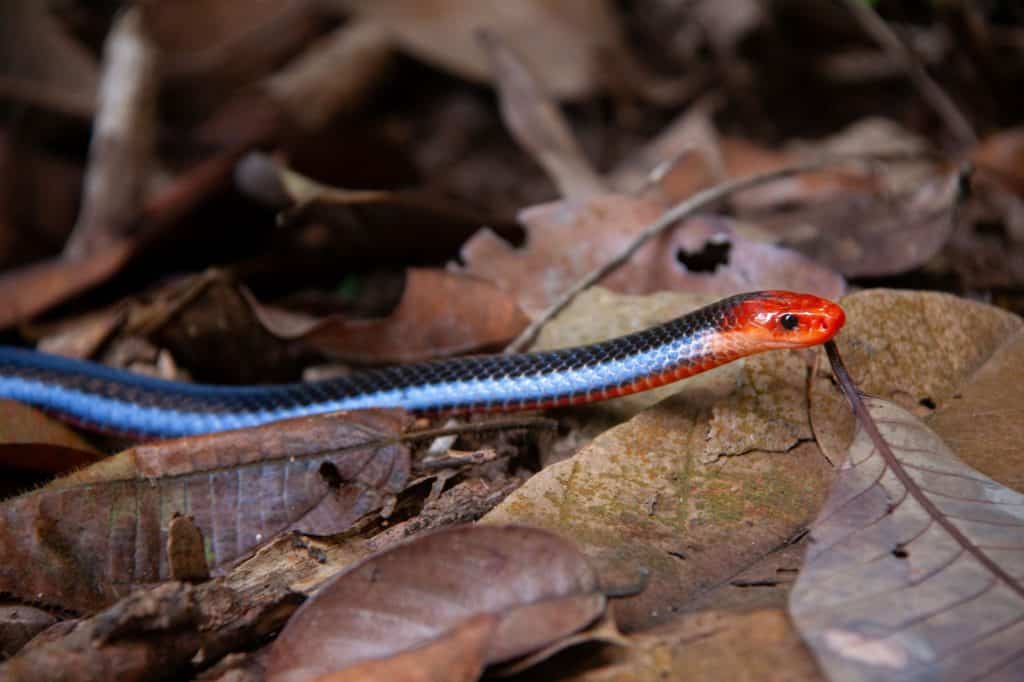
By studying the blue coral snake’s venom, scientists hope to develop new types of pain medications.
©AlexJulius, CC BY-SA 4.0, via Wikimedia Commons – Original / License
Interestingly, scientists are studying the blue coral snake’s toxin not only to develop an antivenom, but also to better understand how the pathways of pain work in the body. By learning how the coral snake’s venom turns pain signals on, scientists hope to create pain medicines that can do the opposite and block pain.
What Causes the Magnificent Coloring of the Blue Coral Snake?
Blue coral snakes, like other coral snakes, have bright colors. These vivid colors are thought to serve an aposematic purpose. Unlike animals that camouflage to hide in their environments, some insects, amphibians, and reptiles have evolved with flashy colors, signaling to others that they are toxic or poisonous. The blue coral snake’s electric blue and red coloring signals to other animals that these snakes are dangerous and not worth the risk to potential predators.

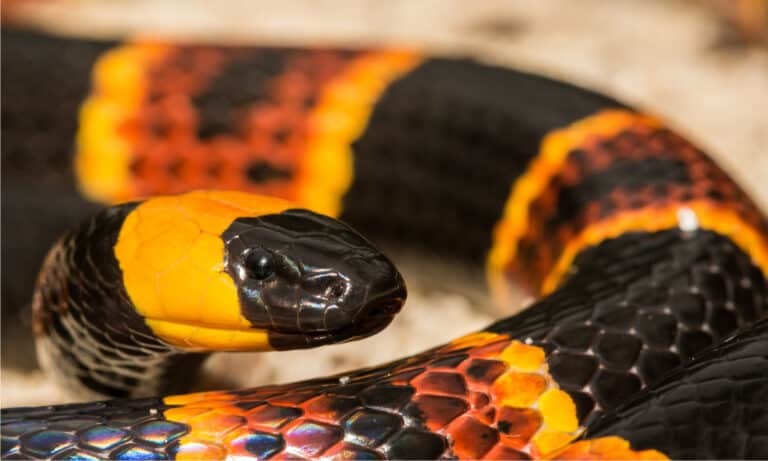
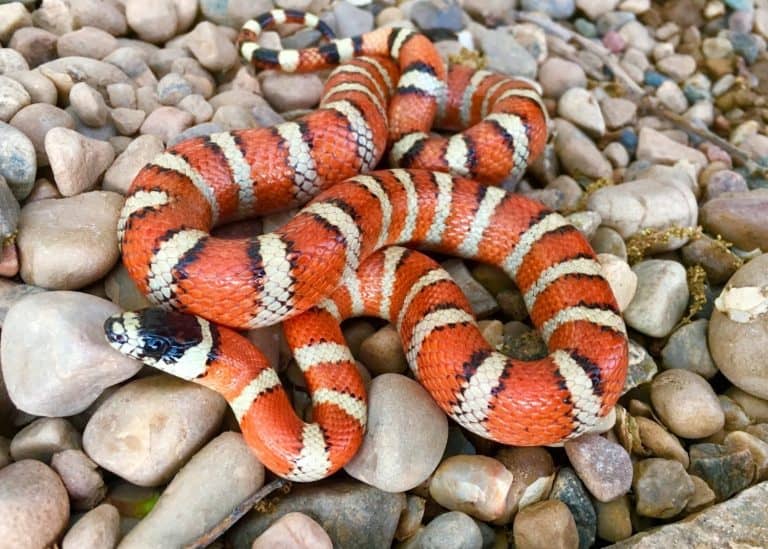
Like the blue coral snake, the Eastern coral snake is brightly colored to warn predators that it is venomous.
©Jay Ondreicka/Shutterstock.com
What, If Anything, Could Prey on Blue Coral Snakes?
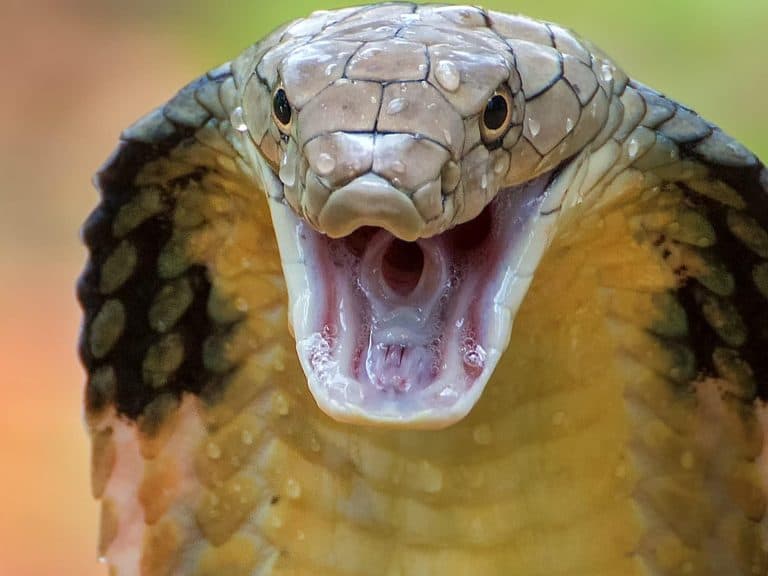
There isn’t much information about which predators threaten blue coral snakes, but it is likely that there are not many. Blue coral snakes may occasionally fall victim to large birds of prey or to other venomous snakes, such as king cobras. Juvenile and newly hatched blue coral snakes are the most vulnerable to predation until they reach their full size.