Quick Take
- Tomales Point is one of many hiking trails in Point Reyes National Seashore in California.
- Hikers on the Tomales Point trail can often view tule elk, a species that was once nearly extinct.
- Depending on the season, a variety of marine wildlife can be seen, too.
- Marine species, including gray whales, Steller sea lions, and elephant seals, among others.
For visitors to Point Reyes National Seashore in California, seeing a rare tule elk is one of the highlights of any visit. Endemic to California, there are fewer than 6,000 of these majestic elk roaming the wild areas of the state. Point Reyes, and more specifically along the Tomales Point hiking trail, is one of the best places to potentially see them. Read on to discover more about this once-endangered species and find out why a visit to Point Reyes should be on any nature lover’s bucket list.
Discover the Tule Elk
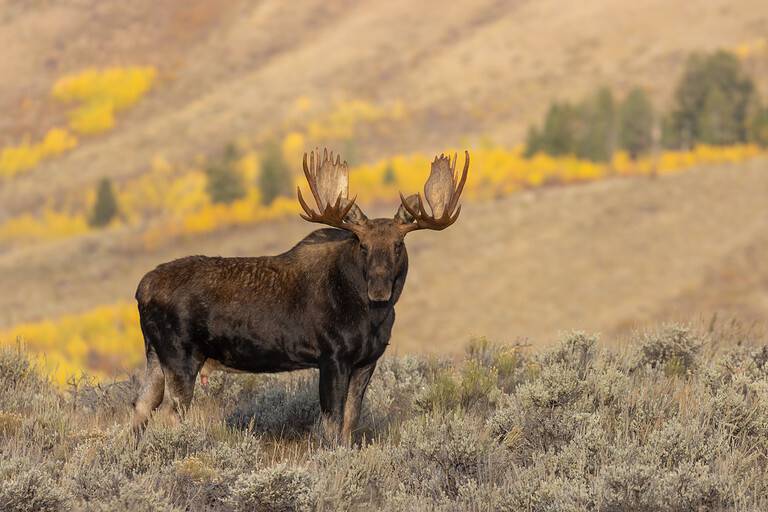
Tule elk, Cervus canadensis nannodes, are the smallest of all North American elk, and they’re found only in California. They’re one of three elk species in the state, the other two being Roosevelt elk and Rocky Mountain elk.
The easiest way to tell tule elk apart from other species in California is by their size. Adult males weigh between 450 and 700 pounds, and females weigh between 374 and 425 pounds. Contrast this with Roosevelt elk, which can top 1,200 pounds for males and 700 pounds for females, making them about 40 percent larger than tule elk. Rocky Mountain elk also outweigh tule elk by a few hundred pounds.
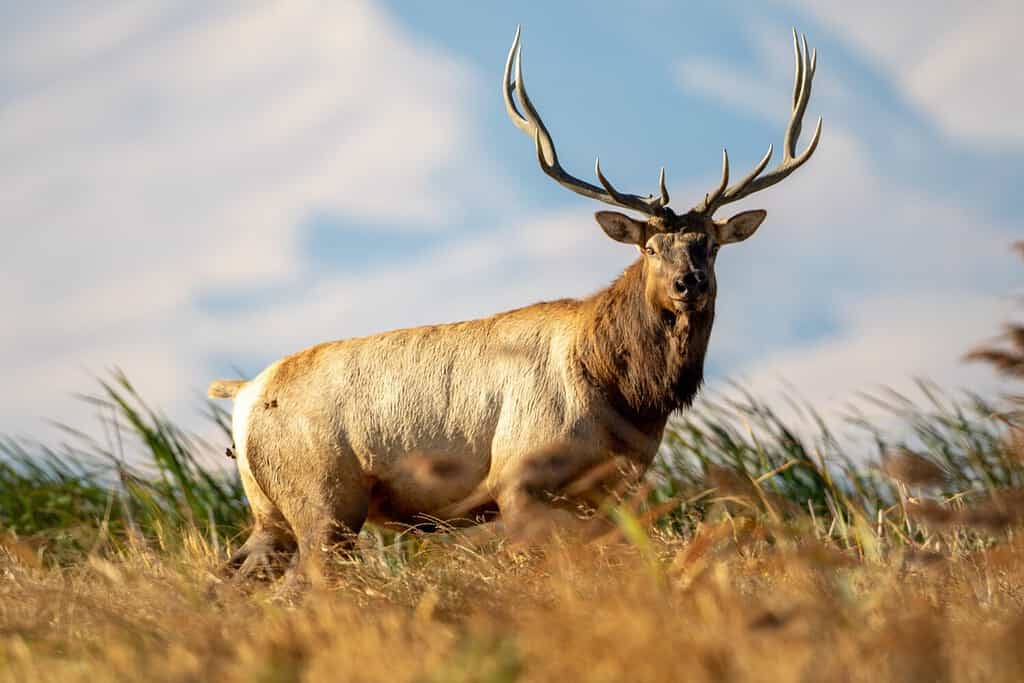
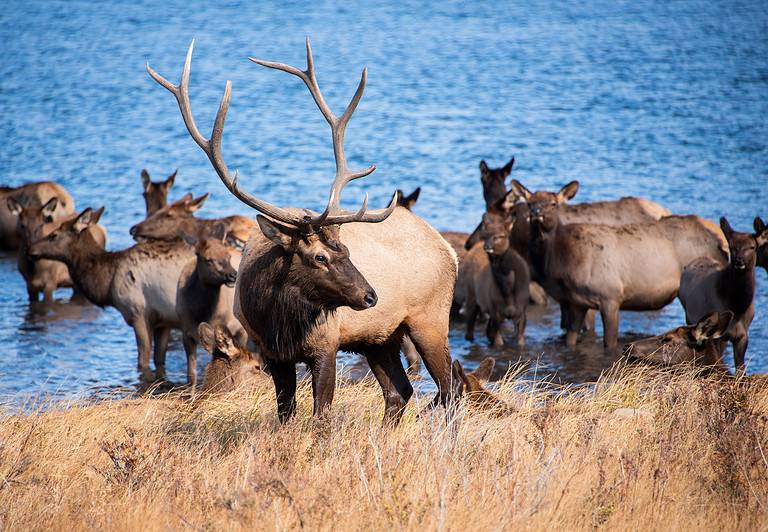
Tule elk are the smallest of the North American elk species.
©RelentlessImages/Shutterstock.com
Besides their smaller size, what makes tule elk really unique is the environment where they like to live. They prefer open country and semi-arid desert conditions. That’s the opposite of other elk species that prefer temperate climates with lots of tree cover.
Tule elk are also a lighter color than other elk species. They have a light beige body color with a darker brown long-haired mane circling the necks of both males and females. Once, tule elks lived all along the central inland and coast of California, from the headwaters of the Sacramento River in the north to the Tehachapi Mountains in the south. However, today, the tule elk population is estimated to be around 5,700, with more than 20 distinct herds across the state.
What Happened to Tule Elk Populations?
Once numbering in the hundreds of thousands and found throughout the state, the species was nearly hunted to extinction by 1870. Hunters valued the elk’s hide and tallow, and the influx of settlers during the Gold Rush also adversely impacted tule elk numbers.
The state eventually stepped in and passed a law to fully protect the remaining elk populations, but it was almost too late. Some sources estimate that by that point, only two to four tule elk remained in the state. Thanks to a rancher named Henry Miller, the few tule elk known to exist were relocated and cared for at his ranch.
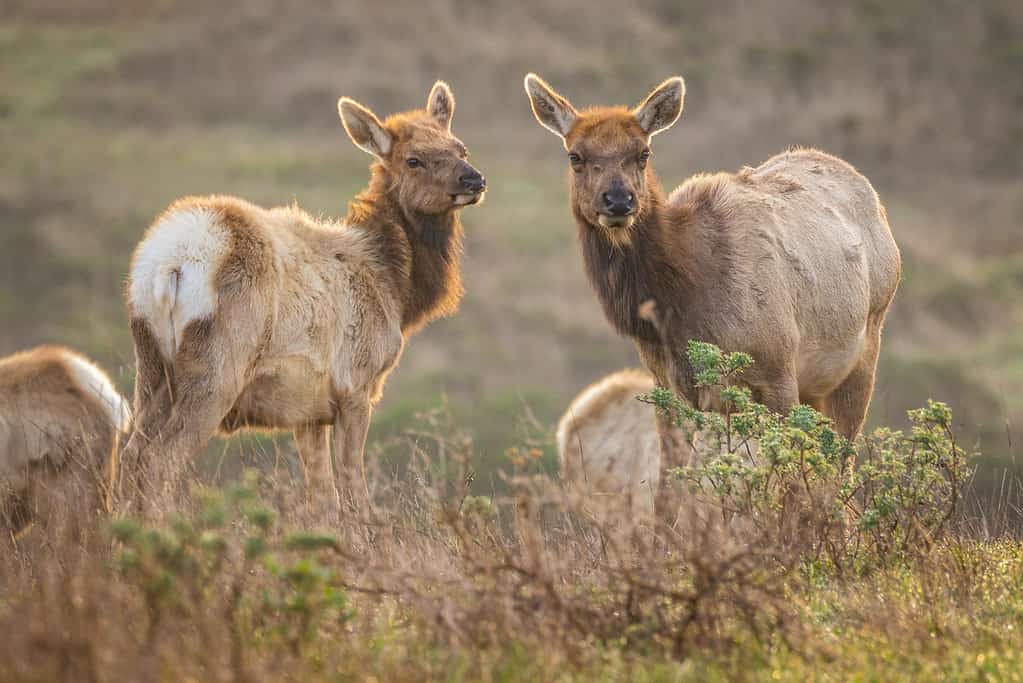
Tule elk in a roadside meadow in the Point Reyes National Seashore.
©Allen Allnoch/iStock via Getty Images
Repopulation efforts continued throughout the 20th century, and eventually herds of tule elk were successfully reintroduced to sites across their natural habitat. Today, one of those preferred locations is Point Reyes National Seashore. Within the national park, tule elk live in several locations, including along Drakes Beach Road and in the Philip Burton Wilderness west of Limantour Road.
But by far, the most popular place to find tule elk is at Tomales Point. You will often see them near the road, grazing freely and seemingly unbothered by curious visitors. The best time to view tule elk at Tomales Point is during rutting season, between August and October.
During rutting season, visitors can often hear the bull elk “bugling” in an attempt to entice female elk to join their harem. There is even the occasional sparring match between dueling bull elk.
Why Are There So Many Tule Elk At Tomales Point?
Part of why you see so many tule elk at Tomales Point is that the habitat is one they really love. In fact, it is part of their historical home before their populations were depleted. There are wide open grasslands, and the coastal fog that regularly blankets the area keeps the elk’s main food source–grasses and shrubs–moist and delicious. Also, there are no predators like wolves or grizzly bears in Point Reyes.
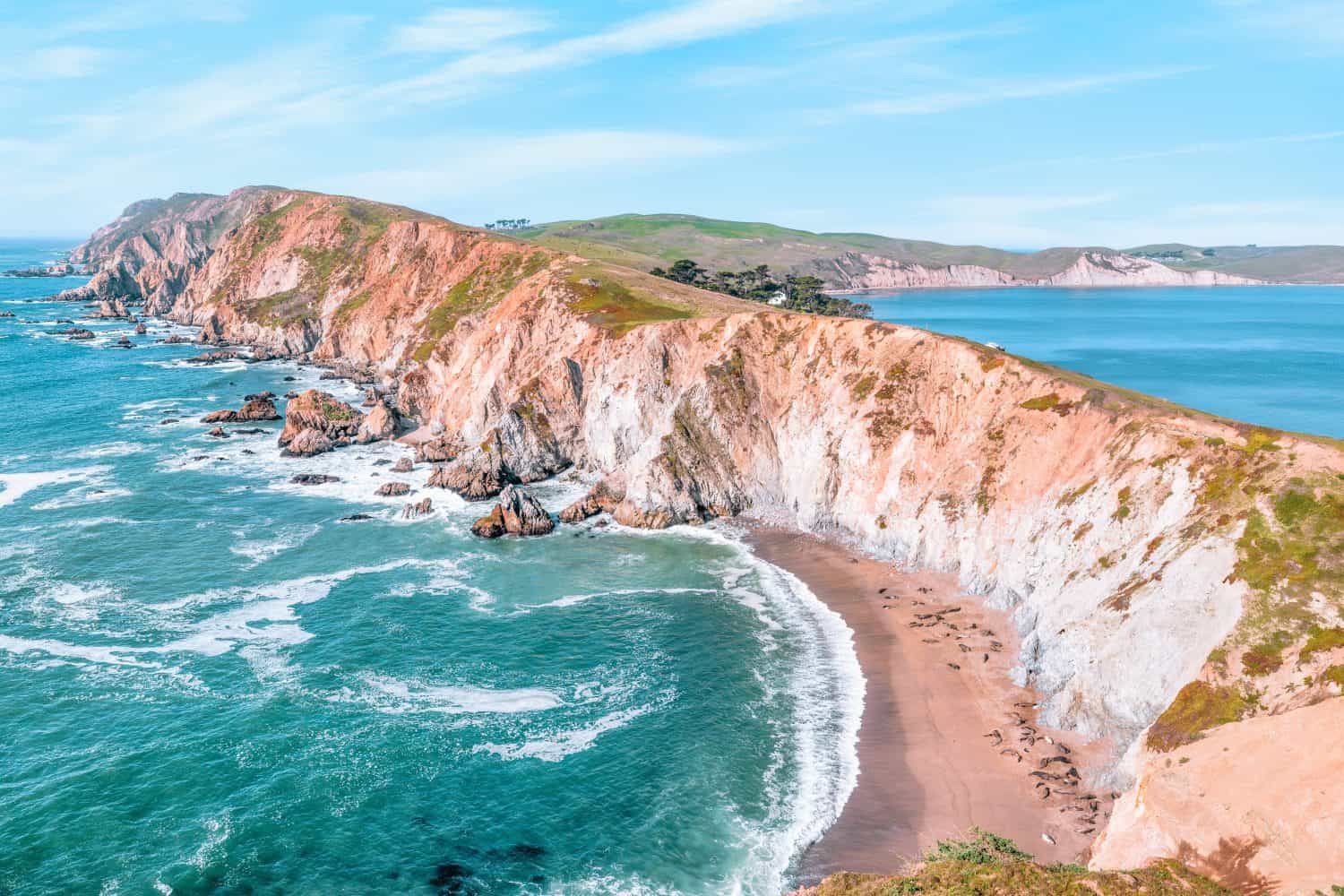
Point Reyes National Seashore is a natural peninsula, making it easy to fence the relocated tule elk population.
©UVL/Shutterstock.com
But the elk’s presence there also has to do with repopulation efforts over the decades. In the late 1970s, the first 10 tule elk were reintroduced to Tomales Point. To keep them from wandering into neighboring farmlands, the National Park Service fenced in the elk’s habitat. This created an “island” with the Pacific bordering three sides and a fence bordering the fourth.
Recently, the fencing policy has changed, thanks to legal battles and public pressure. The National Park Service began removing the fencing. Earl Perez-Foust, a Program Manager at Point Reyes National Seashore, says, “1,000 feet of fencing was removed in December 2024. Since then, we’ve observed elk transit outside of the Tomales Point Reserve, but most of the herd remains within the Reserve.”
Some portions of the fence remain. According to Perez-Foust, “the complete removal of the elk fence will be determined once the wind-down agreement with the adjoining ranch is complete.” He notes that the 2025 Revised Record of Decision provides more information on the fence removal process.
Hiking In Point Reyes National Seashore
Tule elk are just one species you are likely to see when you visit Point Reyes National Seashore and hike one of its many trails. There are approximately 150 miles of hiking trails there, offering diverse landscapes to enjoy.
One trail that is very popular with visitors is the Tomales Point hiking trail. The full trail is a 9.4-mile out-and-back trail that winds along the crest of an open ridge. Visitors are treated to sweeping Pacific Ocean views.
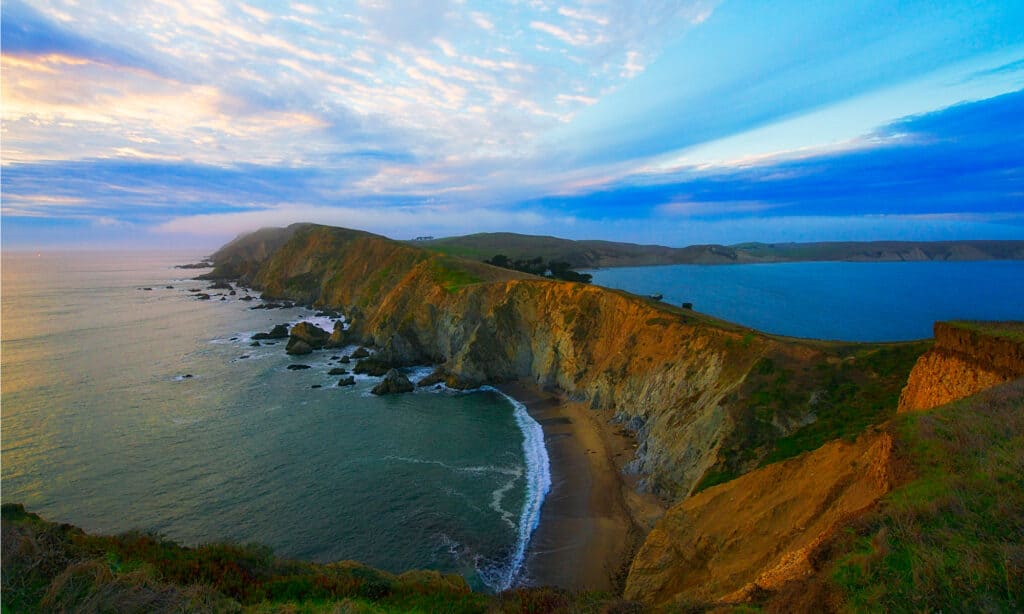
There are approximately 150 miles of hiking trails in Point Reyes National Seashore.
©Xiu Yu Photography/Shutterstock.com
The Windy Gap section of the trail is where you’re most likely to spot tule elk. If that’s your final destination, then the hike is an easy 2-mile round trip. However, going all the way to Tomales Point is your best opportunity to view the diverse wildlife that frequents the shoreline and nearby waters.
Point Reyes has the largest harbor seal colony in California. They are year-round residents here, but the best time to find them is during their spring pupping season and the summer molt season.
Sarah Codde, Public Affairs Officer at Point Reyes National Seashore
What You Might See on Tomales Point
Besides tule elk, park visitors may also see coyotes, bobcats, river otters, black bears, and mountain lions. There are also more than 490 species of birds that have been recorded in the park. That’s more than half the total bird species found in North America.
But Point Reyes is most famous for its marine life. Depending on the season, you might observe massive colonies of elephant seals on the beaches. They gather during mating and pupping season between December and March.
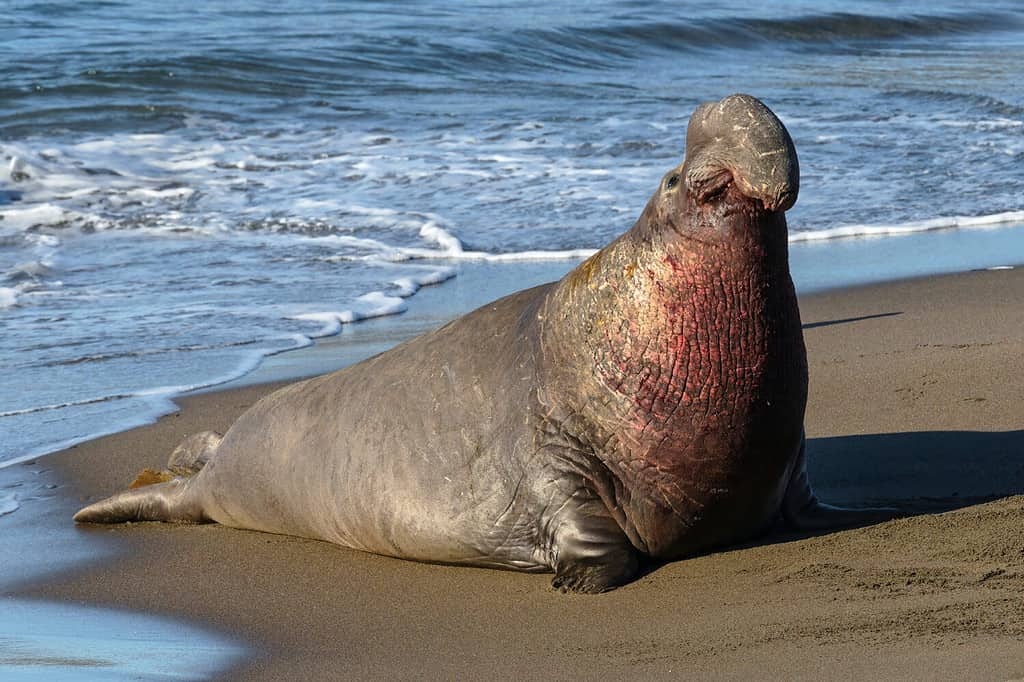
An elephant seal at Point Reyes National Seashore park lies on the beach.
©David Osborn/Shutterstock.com
According to Sarah Codde, Public Affairs Officer at Point Reyes National Seashore, elephant seals can be seen any day of the year, but the best times are during their winter breeding season (December – March) or their spring molt season (Mar-June).
Codde also provides some guidelines for the timing of your visit to see elephant seals. “They can be viewed at the Elephant Seal Overlook (year-round), at Drakes Beach (winter breeding), and at the Lifeboat Station (winter breeding and spring molt),” she says.
There are also both California and Steller sea lions to be seen lounging on rocky outcroppings. Codde says there aren’t very many sea lions at Point Reyes throughout the year, but a small group can be spotted year-round. “The best place to view the small group is the Sea Lion Overlook,” she notes.
What Point Reyes does have more of than any other coastal area in California is harbor seals. According to Codde, “Point Reyes has the largest harbor seal colony in California. They are year-round residents here, but the best time to find them is during their spring pupping season and the summer molt season.”
She says they tend to congregate in remote areas, and advises that the best spot to see them is from the Estero Trail and Sunset Beach Trail. She also suggests kayaking as another way to see the seals when Drakes Estero is open to boating, from July 1 through April 30th. The rest of the year it is closed to all boat traffic to protect the pupping seals.
Codde offers some safety tips to keep both people and marine life safe. She reminds everyone to stay at least 300 feet from harbor seals, 100 feet from sea lions, and 25 feet from elephant seals at all times. You should also keep your dog leashed at all times.
How can you tell if you’re too close? “If an animal notices you and raises its head, then you are too close, and you should immediately back away,” Codde advises.
Whale Watching In Point Reyes National Seashore
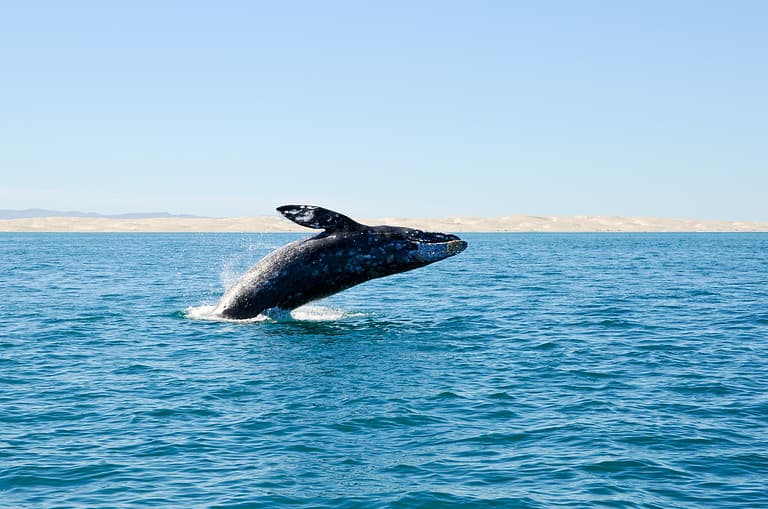
Farther out to sea, during annual whale migrations, visitors to the park might catch a glimpse of these gentle giants making their way to and from their northerly and southern seasonal habitats. Gray whales and humpback whales are the two species most often seen in Point Reyes.
The best time to see gray whales, according to Codde, is during their spring migration up to their feeding grounds in the Arctic, between March and May. They tend to travel closer to shore, and you will often see moms with their calves.
Humpback whales are most often seen during summer and fall as they migrate north, Codde says. They are renowned for their breaching, when they propel most of their bodies out of the water. “They land with a big splash,” Codde notes. “It is a great sight to see!”
Codde says the best spots to view passing whales are the Point Reyes Lighthouse, Chimney Rock Trail, and Tomales Point Trail. She cautions, though, that the area tends to be very windy and foggy. She advises, “Try to pick days that are not too windy and are clear,” she says. “And if you come in the spring months, we have docents stationed at the Lighthouse who can help you spot whales and share more information about them.”
What to Bring When You Visit Point Reyes National Seashore
One thing you’ll want for sure when visiting the park is a pair of binoculars. It’s the best way to view tule elk during rutting season when they tend to stay away from the roadside. You’ll also appreciate binoculars when it comes to checking out marine life, either passing by in the open ocean or lounging on the shoreline below.
If you’re planning to hike anywhere in Point Reyes National Seashore, the best place to start planning is on the park’s official hiking page. There, you’ll find great information about rules and regulations for hiking in the park.

Binoculars are a must when visiting Point Reyes National Seashore.
©AnSuArt/Shutterstock.com
When it comes to being prepared for your hike, you’ll want to dress for the current weather and also be ready for changing conditions. Ocean fog can roll in fast, turning a warm, sunny day into a damp, chilly experience. Layers are advised.
Also, be sure to bring plenty of drinking water. Streams and other natural sources of water in Point Reyes could be contaminated with Giardia lamblia, a microscopic parasite that causes severe intestinal illness. You can treat natural water by boiling, filtering, adding iodine, or using a chemical purifier, then safely drink it. You can also buy bottled water at the visitor centers and campgrounds within the park.