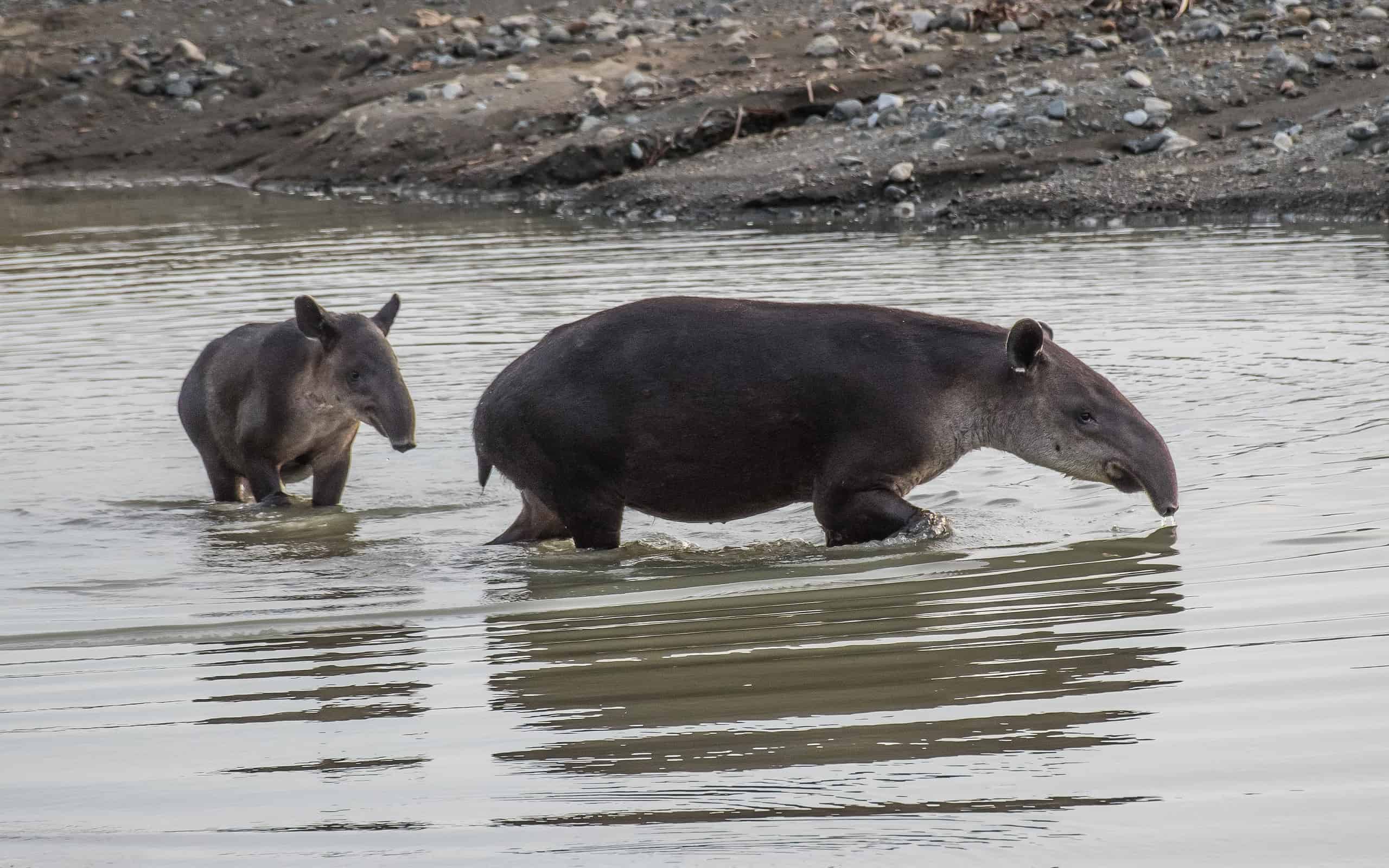

The tapir is an unusual animal with a long history. It’s hard to miss, thanks to its stocky body and distinctive trunk-like snout. Even though tapirs live on land, your best bet for finding one is to look near water. As this YouTube video shows, these animals love the water, but their frequent dips are not just for fun; they’re also vital for their survival.
Nature’s Ancient Oddball
Tapir populations are declining due to habitat fragmentation, destruction, and hunting.
©YouTube/Smithsonian Channel – Original
Tapirs are often called “living fossils” because they have changed very little since the Eocene Epoch, which was between 56 and 33.9 million years ago. There are four species of tapirs on Earth today, found in South and Central America, Sumatra, and Malaysia. They typically live in grasslands or wooded areas, often close to water sources like ponds, rivers, and lakes. Unfortunately, all four species — the South American tapir (Tapirus terrestris), Malayan tapir (Tapirus indicus), Baird’s tapir (Tapirus bairdii), and mountain tapir (Tapirus pinchaque) — are classified as either vulnerable or endangered by the International Union for Conservation of Nature (IUCN).
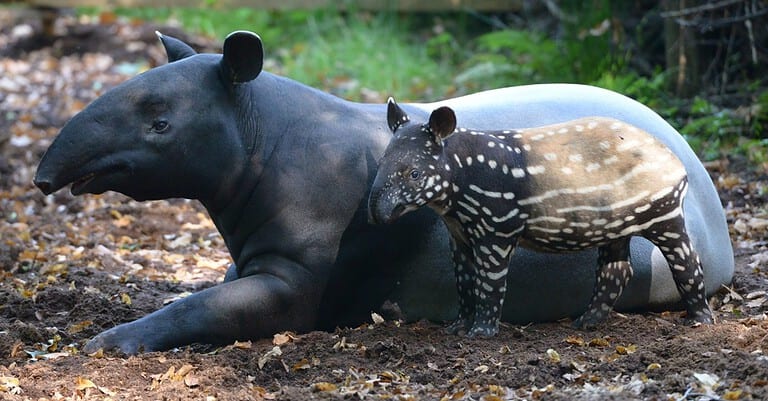
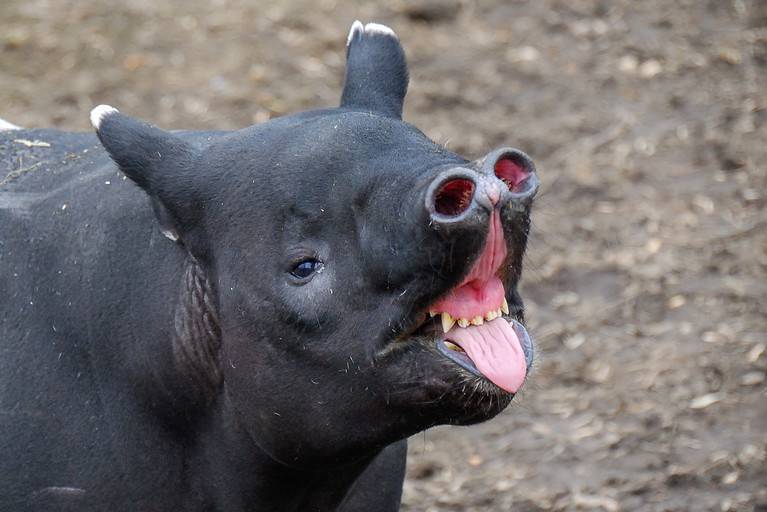
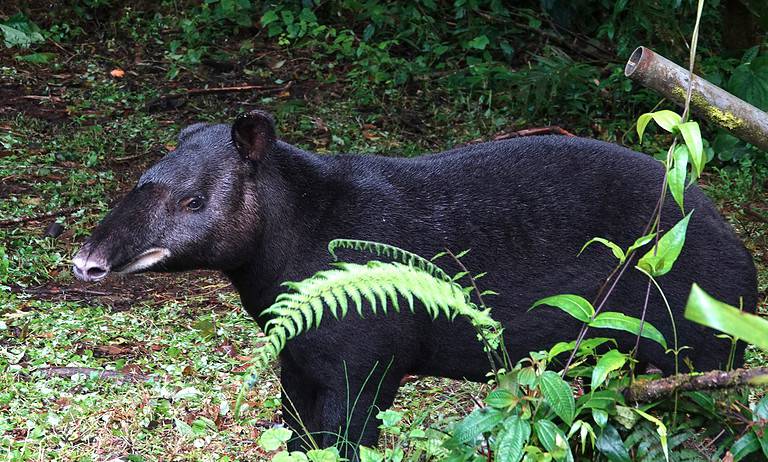
Tapirs are related to horses and rhinos. They have stocky, barrel-shaped bodies, tough skin, and bristly hair. Their most distinctive feature is their prehensile trunk, which works much like an elephant’s. This “trunk” is actually an extended nose and upper lip. Because it is prehensile, tapirs can move it around much like an arm or hand. Tapirs use their short trunks to grab leaves and other plants to eat. Despite their bulky appearance, tapirs are surprisingly agile on both land and in water.
Why Tapirs Love the Water
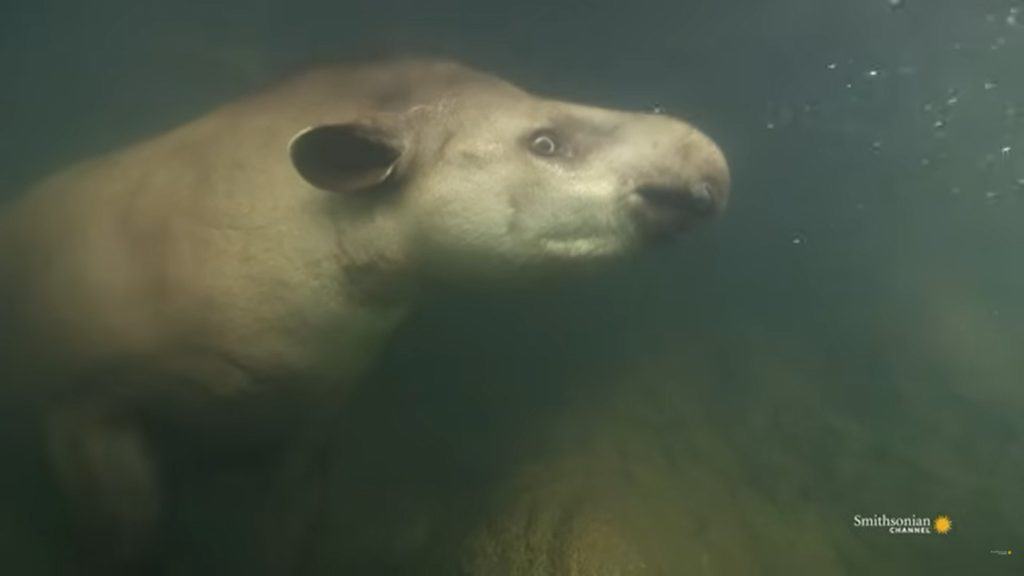
Tapirs are very shy animals.
©YouTube/Smithsonian Channel – Original
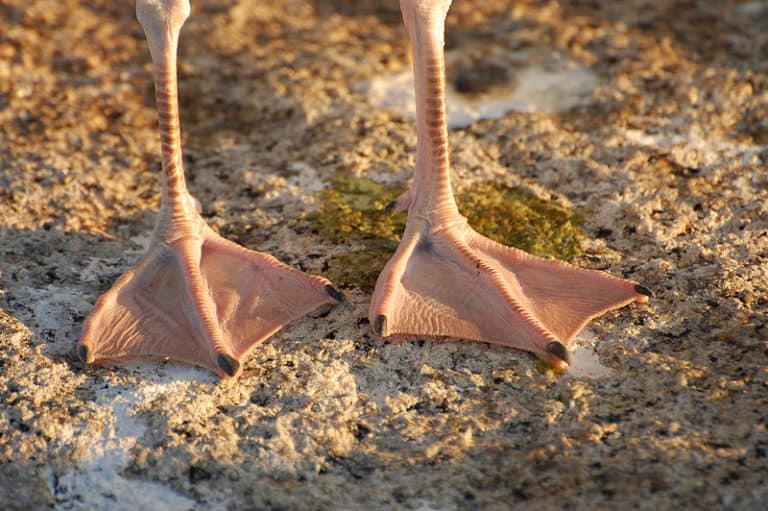
Tapirs are foragers and primarily seek food at night when temperatures are cooler. During the day, they prefer to rest in shady spots or cool off in the water. Their large, splayed toes are particularly useful for navigating slippery or muddy river bottoms, providing traction as they wallow in the mud to keep cool. As seen in the YouTube video, tapirs enjoy spending time in the water, not only for play and foraging for aquatic plants but also to escape the heat. The water also helps wash away bothersome insects, and sometimes small fish assist by removing parasites from the tapirs’ bodies.
What Makes Tapirs So Good in the Water?
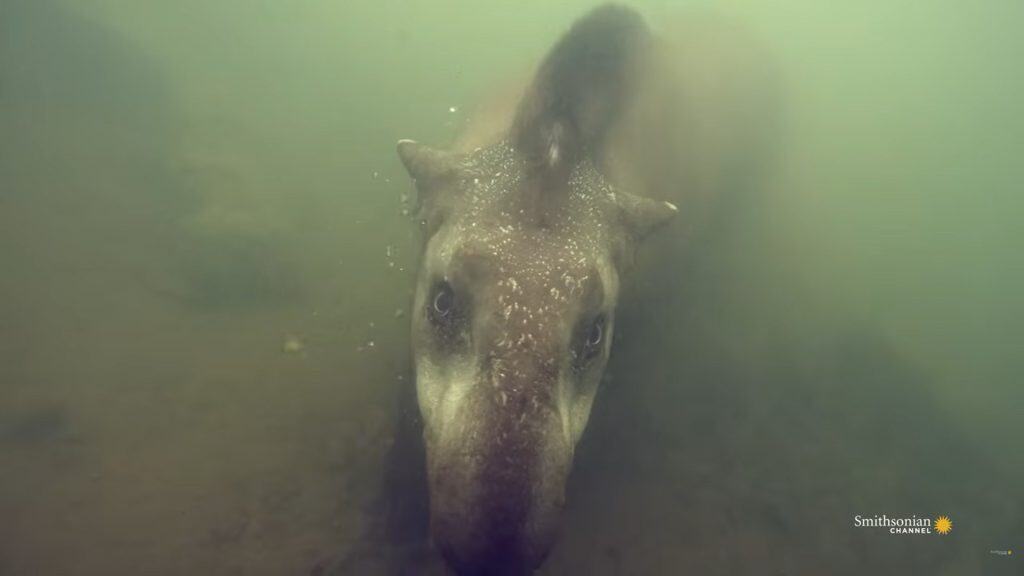
Tapirs are intelligent animals with high concentrations of neurons.
©YouTube/Smithsonian Channel – Original
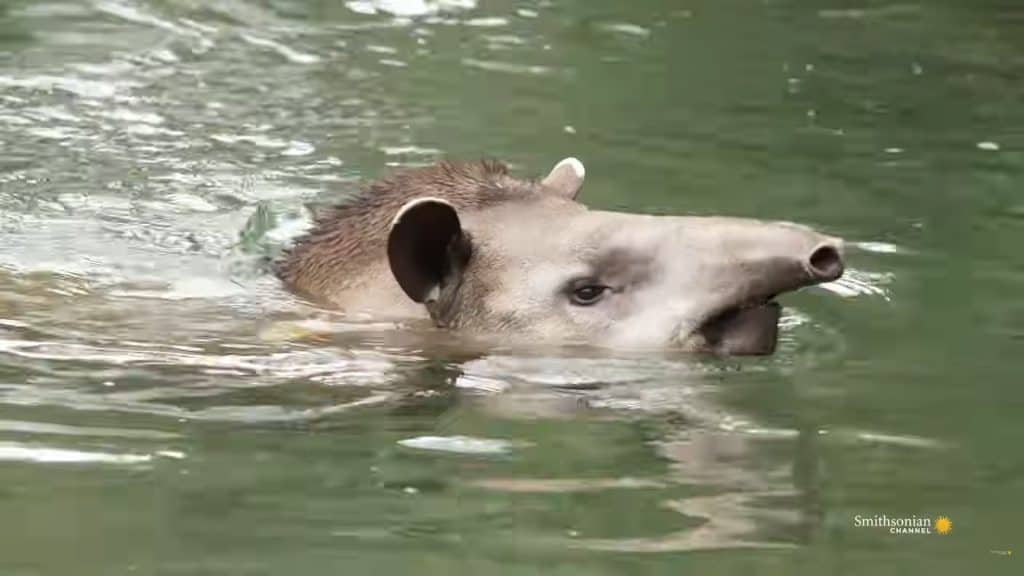
When tapirs dive, they can hold their breath and sink to the bottom, walking along the riverbed in search of tasty plants. A tapir can hold its breath for several minutes; however, this isn’t always necessary because of its natural “built-in” underwater breathing apparatus: its trunk. This serves as a convenient snorkel, allowing the tapir to remain submerged for extended periods while still breathing air from above the water’s surface.
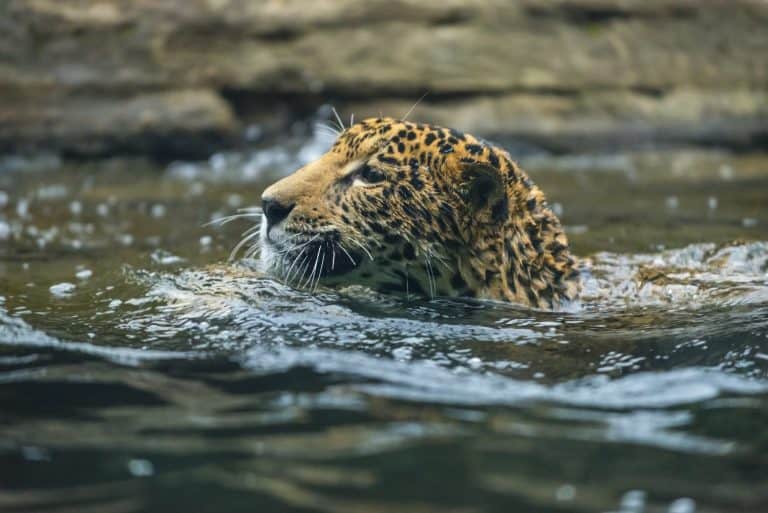
For tapirs, swimming is not just recreational; it is also a crucial way to escape predators such as jaguars. While jaguars can also swim, they do not sink like tapirs and cannot hold their breath underwater for as long. Young tapir calves learn to swim when they are still quite small. This skill is especially important for them, as young tapirs are the primary targets for predators. Adult tapirs, with their large size, bristly hair, tough skin, and powerful kicks, are much less appealing to predators.