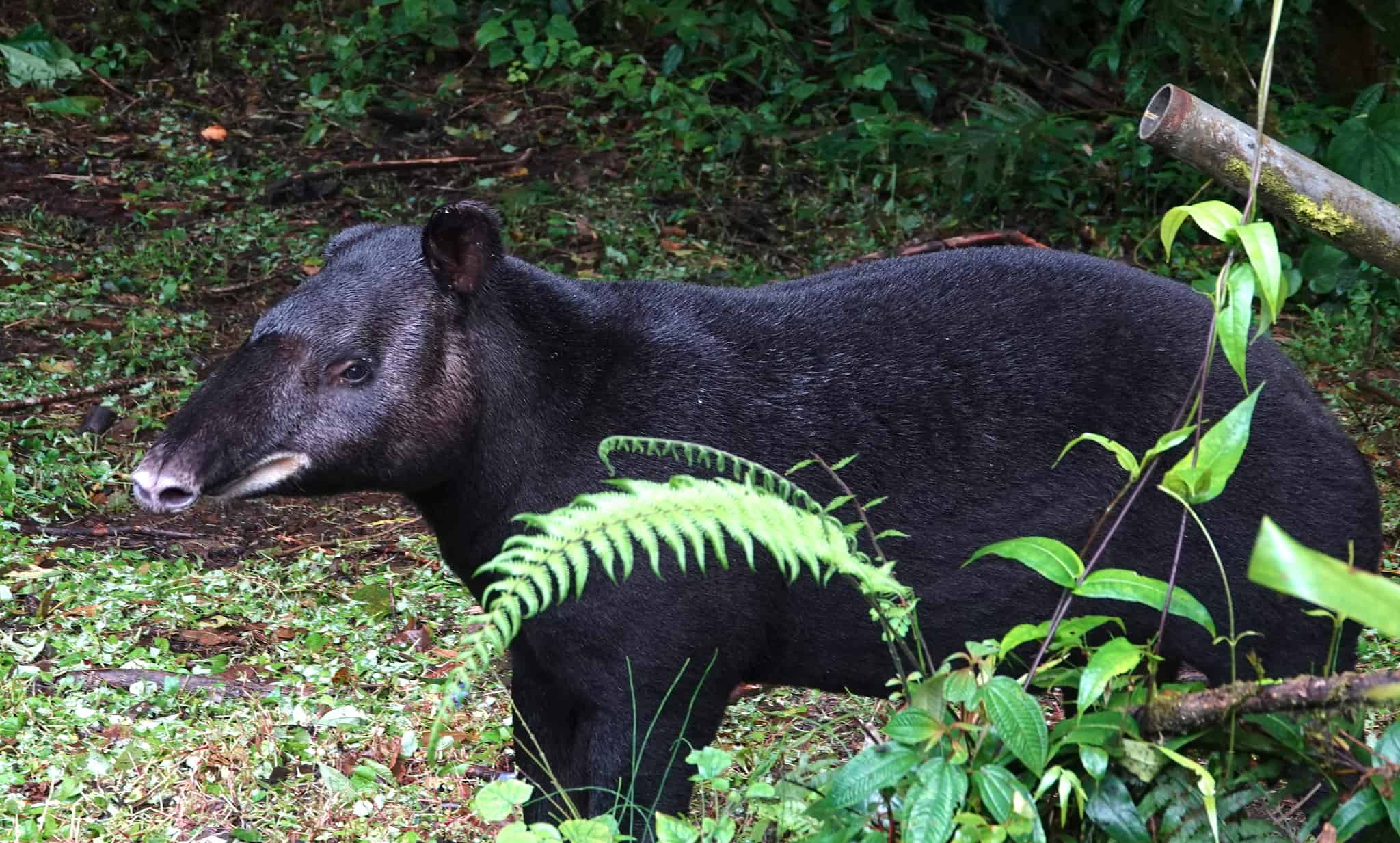

We’ve all seen elephants using their trunks to play at zoos or on videos online, but have you ever seen a tapir’s trunk? Tapirs are animals native to Central America, South America, and Southeast Asia, and have small trunks. This post by @lazoo shows a tapir named Mojito sniffing around with its trunk. Read below to learn about the ways a tapir uses its trunk!
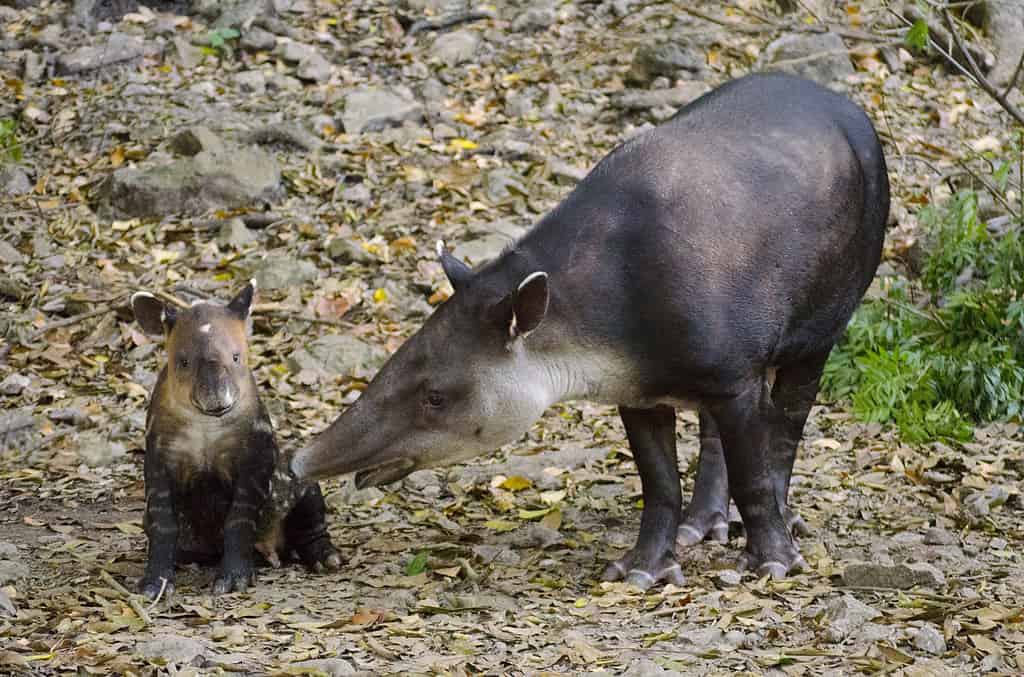
Tapir breeding (Tapirus bairdii)
©hugocorzo/iStock via Getty Images
How Do Tapirs Use Their Trunks
Tapirs use their trunks for many different reasons! The versatility of the appendage helps tapirs survive by assisting with foraging and defense. Their flexibility helps to grasp objects, improving their range of motion and abilities. Foraging for food is an important use of the trunk. Using their trunks, tapirs can grasp onto branches, leaves, or fruits that hang from trees and bushes. Without this appendage, tapirs would have a harder time getting the food that they need to survive. Tapirs eat a variety of foods, such as leaves, grasses, and fruits like figs and mangoes.
Another way that tapirs use their trunks is in swimming. While they don’t use their trunks to move while swimming, the trunks can act as snorkels! Tapirs swim with their head submerged underwater. Using their trunks as a snorkel lets them swim farther and more easily. They are also able to use their trunks for defense in this way. While they don’t offer much in terms of self-defense, tapirs can use it to submerge themselves underwater when a predator approaches. This way, they can out-swim and out-breathe their predators!
The tapir in the video is using its trunk to smell. Tapirs have a good sense of smell, which helps them find food, navigate, and communicate. They can navigate through nature by sniffing out sources of water and food, helping them stay alive and healthy. However, their way of communicating may seem a bit gross to humans. Tapirs communicate territory and reproductive status through urine marking, allowing them to signal their presence to other tapirs.