
Quick Take
- One jaguar's underwater attack strategy defies everything we assumed about how big cats ambush prey, and the angle of approach is the last thing you'd expect. See the attack technique →
- A second jaguar found a launching platform that no camera trap had ever captured a big cat using before, and the location was not the riverbank. Meet Ousado and Medrosa →
- Jaguars can hold their breath longer than nearly every other big cat, yet the footage reveals they are pushing even that limit in ways researchers did not anticipate. Explore their breath-holding limits →
- Wetlands do more than simply benefit jaguars. They may be the single factor separating thriving populations from collapse, and the data from Porto Jofre makes the case hard to ignore. See the wetlands data →
It’s no secret that jaguars are comfortable around and even in water, but new footage has captured just how efficient they can be in an aquatic environment. These powerful and athletic felines will take down just about any prey they come across, and water is no barrier to them. Jaguars hunting on land is an incredible sight, but seeing them hunt in water is even more impressive!
Monitoring Jaguars in Porto Jofre
The Jaguar Identification Project is dedicated to the long-term study and conservation of jaguars in Brazil’s Pantanal. They mainly rely on citizen scientists to build up a database of individual jaguars and understand their behavior. With the help of the Edges of Earth team—modern explorers who conduct in-field expeditions—they set up a camera trap grid to estimate the jaguar population in the Porto Jofre area of Brazil. The goal was to assess how these magnificent predators are adapting to their rapidly changing ecosystem.
The team spent a week exploring the area’s rivers and looking for signs of jaguars. These big cats are at the top of the food chain here, and the other animals know it! A capybara warning bark is often a signal that the jaguar is in the area.
How Can Jaguars Hunt in Water?
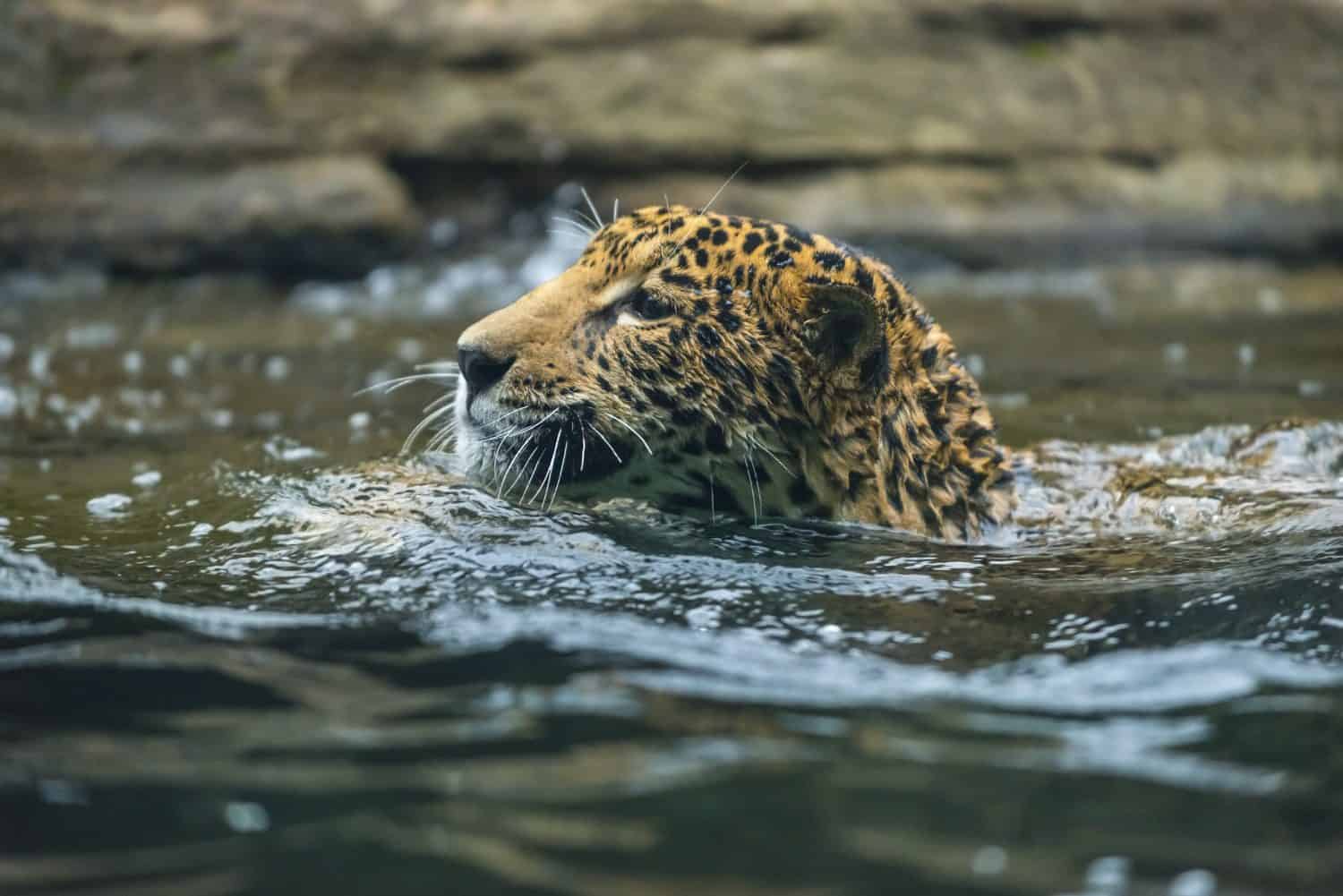
Jaguars are good at taking full advantage of their environment. They live in South America’s rainforests, wetlands, and river systems, so water is a big part of their daily life. One has even been spotted swimming across the Panama Canal!
Generally, they wait near riverbanks and strike their prey, dragging it into the water. Some enter the water to dive for fish and turtles. They can hold their breath longer than most other big cats, and the rosettes on their coat give them perfect camouflage against the dappled water.
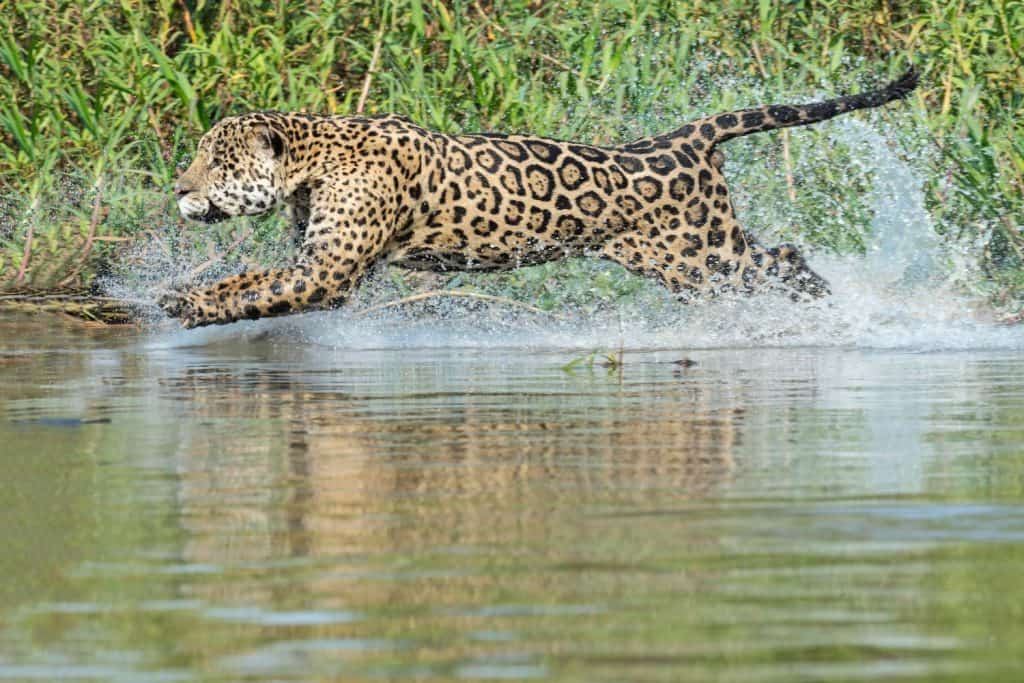
Jaguars do not view water as a barrier.
©imageBROKER.com/Shutterstock.com
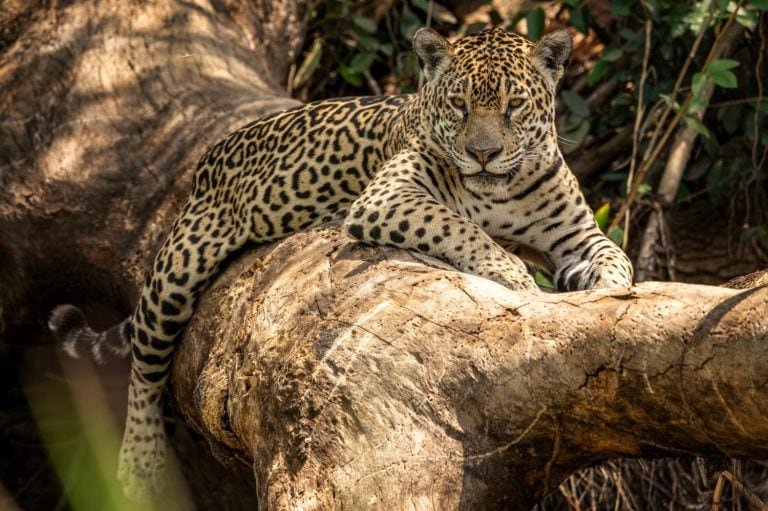
In Brazil, however, the team saw two jaguars use the most impressive aquatic skills recorded to date to hunt their prey. One, named Ousado, even dived deep under the water so that he could stealth-hunt a caiman from below! Another, named Medrosa, used treetops as a diving platform to launch herself at unsuspecting prey in the water.
Jaguars are known for being highly adaptable and flexible hunters. In a dynamic ecosystem, they will use their physical abilities and skills to hunt wherever they can. Jaguars have large paws and strong limbs, which make them very efficient swimmers. They are also intelligent and will learn from their mistakes, refining their aquatic hunting skills.
Jaguars and Wetlands
Research has shown that wetland areas have higher densities of jaguars. In Brazil’s wetlands, jaguars are not currently classified as endangered, but they are considered Near Threatened overall and still face significant threats in the Pantanal. For these big cats, a river can provide life-saving food during droughts and serve as a refuge during fires. As human pressures increase, it is vital to protect these habitats so that jaguars can thrive.