
Quick Take
- The huia's male and female looked so different that scientists made an embarrassing mistake, and that mistake hints at something remarkable about how these birds survived. Explore the huia's dimorphism →
- A single ceremonial gift to British royalty accidentally set off a chain of events that wiped out an entire species. See the Duke's fatal gift →
- One naturalist shot a huia, wrote lovingly about its beauty, and later mourned its disappearance, never once connecting the dots.
- The Māori had worn huia feathers for centuries without threatening the bird, yet outsiders doing the same thing proved so destructive. See why outsiders proved destructive →
Cultural appropriation isn’t just harmful to the communities that are affected — it can also cause lasting damage to native animals. One famous example happened in New Zealand, when a royal visit sparked a fashion trend that led to the extinction of a fascinating bird species called the huia (Heteralocha acutirostris). It goes to show how careful we must be when following trends that can harm animals.
What Made the Huia Songbird Unique?
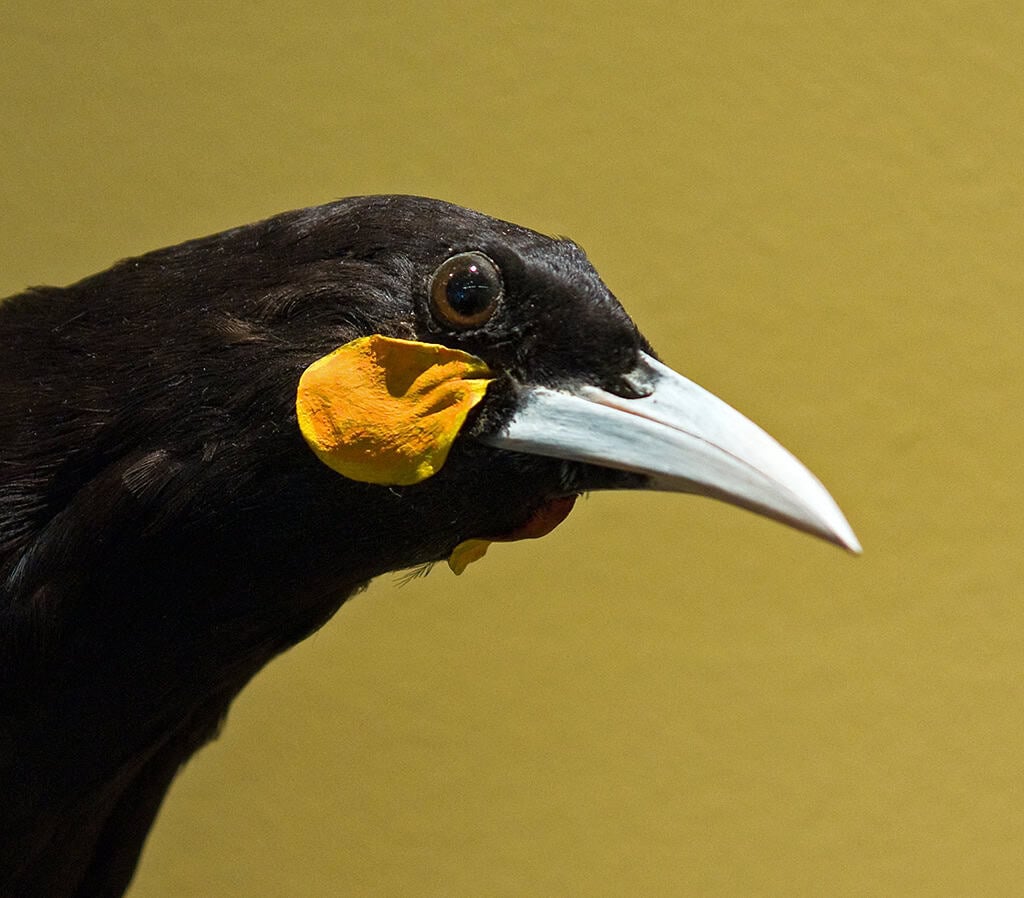
One of New Zealand’s native songbirds, the huia was known for its large size — it was 45 to 47 centimeters long and weighed 300 to 400 grams — and for its beautiful black feathers with white tips at the end.
One of the most interesting things about these birds is how obvious it is to tell the difference between males and females. They had the most extreme sexual dimorphism in beak shape of any known bird species on Earth, according to New Zealand Geographic. In fact, they were so different that they were mistakenly thought to be two different species altogether at first!
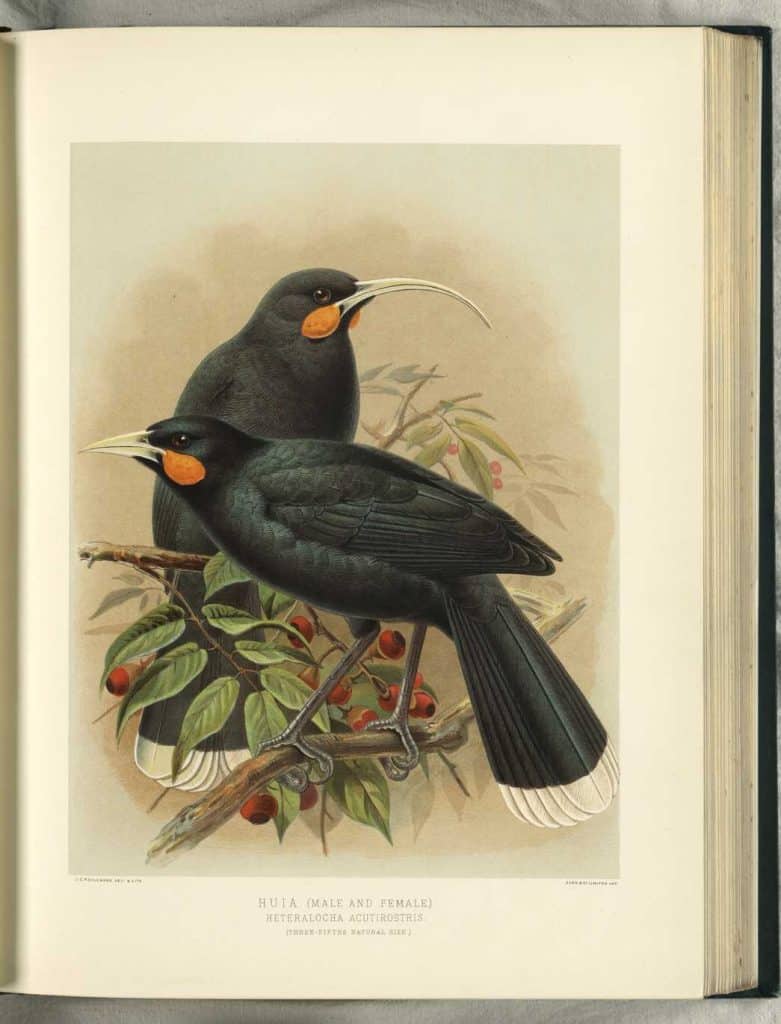
Male and female huia had very different beaks, which allowed them to work together to secure food.
©By J. G. Keulemans, in W.L. Buller's A History of the Birds of New Zealand. Published 1888/Wikimedia Commons – Original
Female huia had a long, thin, and elegantly curved bill that was 85-104 mm long, whereas male huia had a heavier, less-curved bill that was only 54-60 mm long. The males used their shorter beaks to chisel wood, so the females could then use their beaks to easily grab food from deep crevices. Talk about a perfect pair!
The Māori people honored these incredible birds, which were so in sync with each other. According to the Museum of New Zealand, Māori people would use huia feathers to showcase their high rank. Those of high status and chiefly rank could wear huia feathers in their hair or even wear whole skins in their ears, signaling their elevated position to others. However, this tradition took a turn when British royalty inadvertently caused a fashion craze for these birds.
The Duke of York’s Fated Fashion Statement
In 1901, the Duke of York visited New Zealand, where a high-ranking Māori woman presented the British royalty with a huia feather from her own hair, according to New Zealand Geographic. This was a gift meant to honor the royal, as Māori people would send the feathers as gifts or trade them for other valuables. But the respectful gesture accidentally sparked a global frenzy.
Once other people saw how beautiful huia feathers were — and how cool it was that a royal wore them as an accessory — they wanted in on the trend too. This opened the door for poachers to hunt the birds, stuff and sell them, and pluck their feathers to wear in hatbands — a gross display of cultural appropriation that imitated the Māori people and caused devastating harm to the native ecosystem.
Others wanted the birds for their own collections. According to New Zealand Geographic, Austrian taxidermist Andreas Reischek took 212 pairs of huia birds as specimens for the Natural History Museum in Vienna between 1891 and the early 1900s. While it may be interesting to see the preserved birds today, the loss of so many individuals to create these collections was not justified.
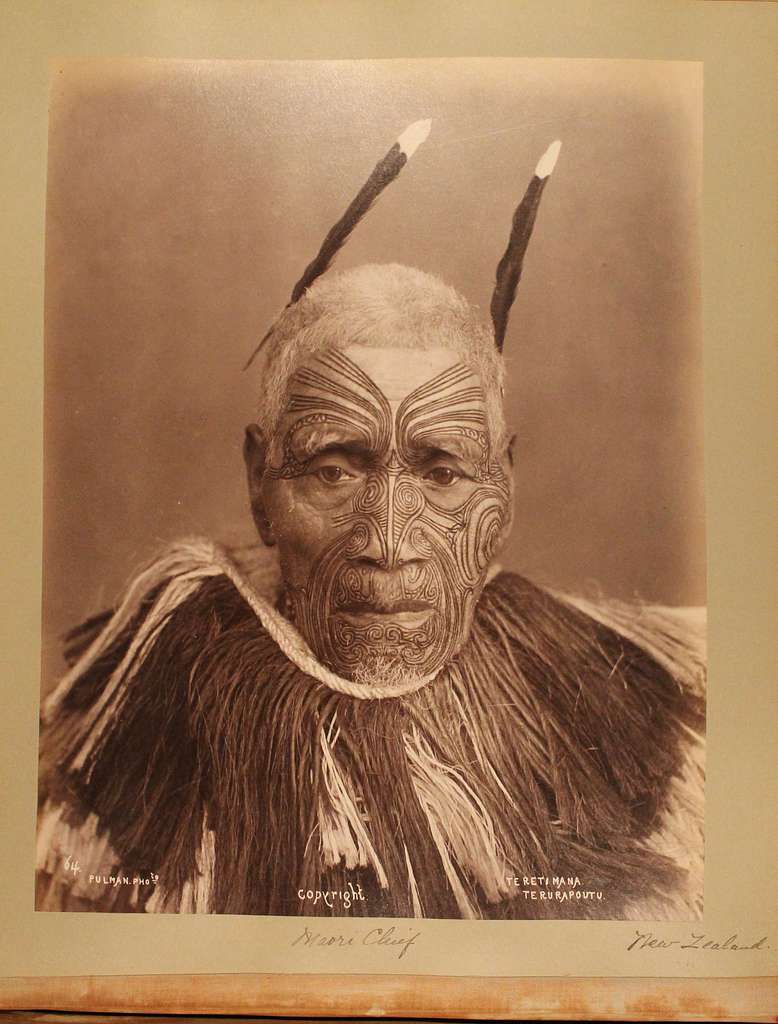
Maori chief, Teretimana Terurapoutu, wore huia feathers in this portrait taken in 1891.
©National Park Service/Picryl – Original
Naturalist Sir Walter Buller, another person who killed and collected huia birds, wrote about coming across the huia while on an expedition with a Māori tour guide. “In a few seconds, without sound or warning of any kind, a huia came bounding along, almost tumbling, through the close foliage of the pukapuka, and presented himself to view at such close range that it was impossible to fire,” Buller wrote, per New Zealand Geographic. “This gave me an opportunity of watching this beautiful bird and marking his noble bearing, if I may so express it, before I shot him.”
Buller’s account highlights how some naturalists appreciated the beauty of huia while also viewing their lives as disposable. Even though he later lamented the rapid disappearance of the huia, he was partly responsible for their decline.
It’s Too Late to Save the Huia
Another thing that led to the extinction of this special bird was the destruction of forests and habitats that the birds needed to survive. By the time the Māori people realized the birds were disappearing, it was too late to save them.
Now, many of New Zealand’s native bird species are protected by government conservation efforts, and some are listed under the Convention on International Trade in Endangered Species (CITES). However, not all native birds have the legal protection that comes with a CITES listing.
Still, nothing can be done to reverse the extinction of the huia, leaving an evolutionary void in New Zealand that serves as a lasting reminder of the harm humans can cause, even through seemingly simple actions like wearing a feather in a hatband. It’ll certainly make you think twice before wearing or promoting any fashion trends that use real animal parts.