
Quick Take
- Bruce's missing beak should have made him easy prey in a dominance fight, yet it may actually be the source of his power. How his beak became a weapon →
- His rivals don't just submit to Bruce. They serve him in a way researchers usually only see in chimpanzees. See how rivals serve Bruce →
- Alpha animals typically carry the highest stress in the group, but Bruce's biology reveals something unexpected about what it costs to stay on top. Bruce's surprising stress levels →
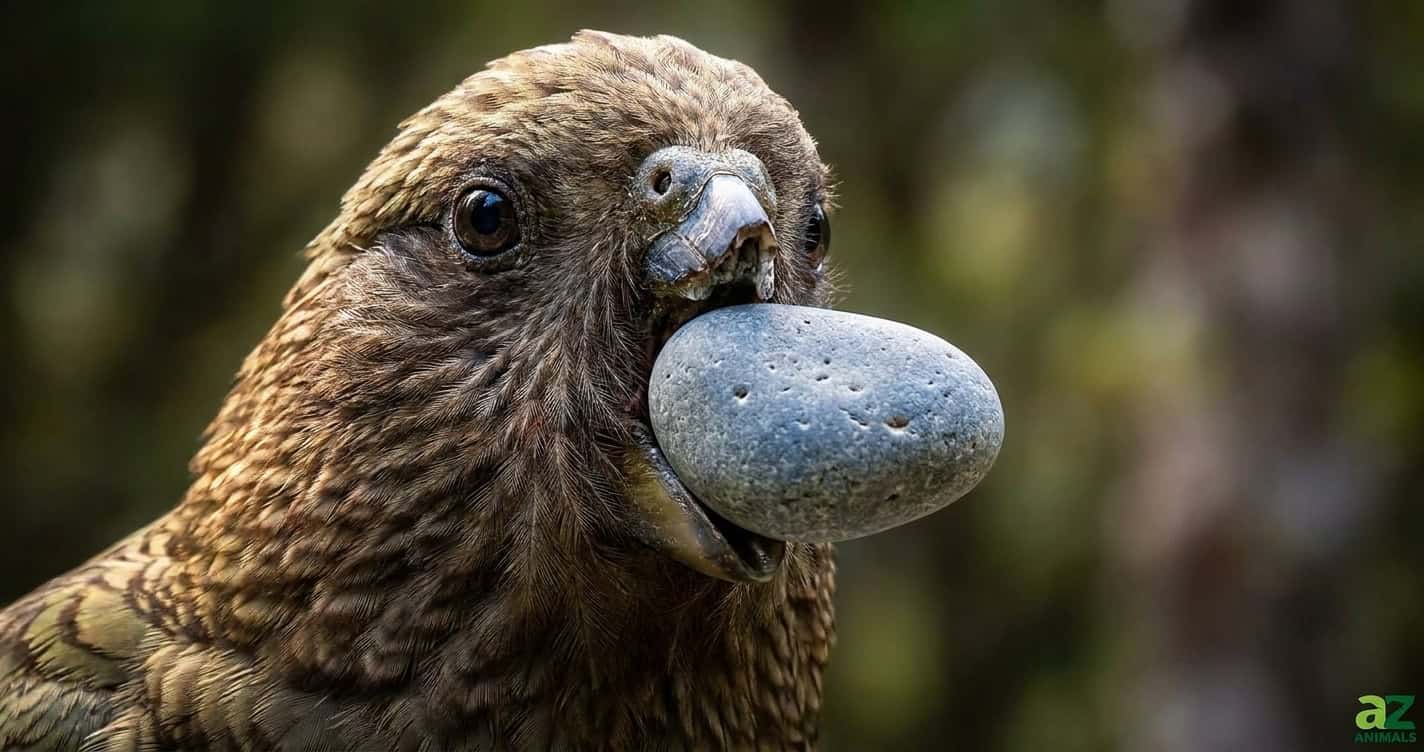
- Ruling the flock isn't even Bruce's most inventive move. He solved a personal problem using tools. Bruce's pebble grooming trick →
At the Willowbank Wildlife Reserve in New Zealand, the large aviary’s lush canopy of trees casts dappled sunlight over the stream flowing below. It is a favorite spot for the Reserve’s kea parrot flock.
Among them is a male kea parrot named Bruce who is single-handedly proving to the world that being disabled doesn’t mean being disadvantaged.
What Makes Bruce Unique?
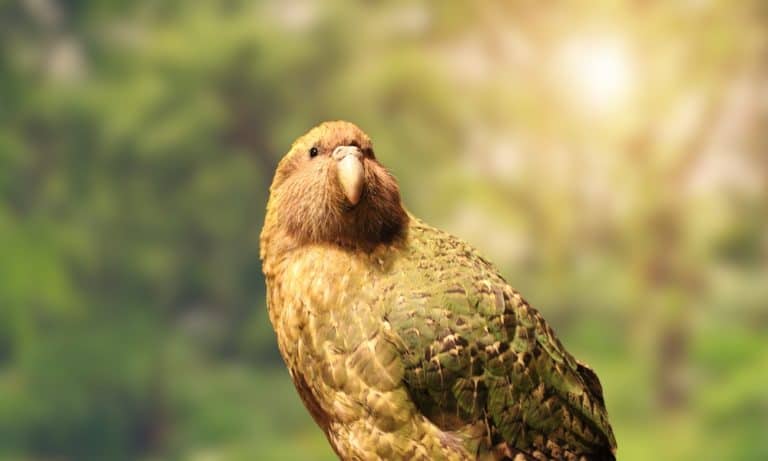
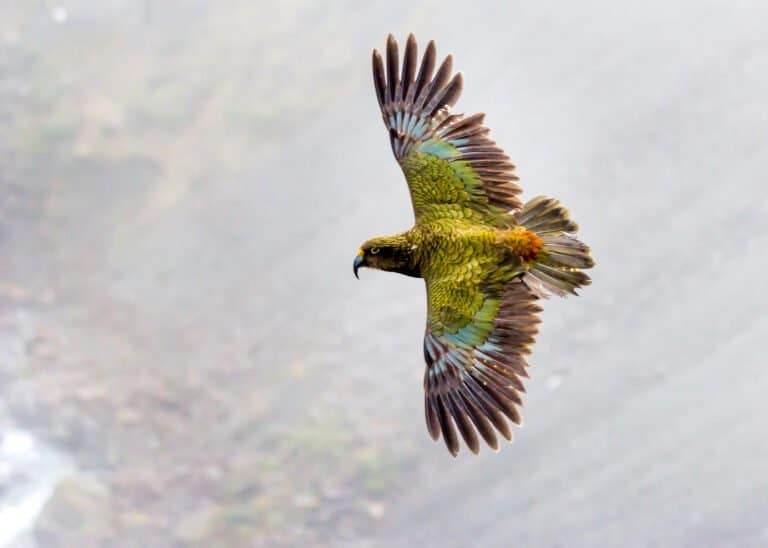
Kea parrots are a large parrot species native to New Zealand. Unlike most other parrot species, they prefer mountainous terrain to tropical rainforests. They have stocky bodies and a drab olive green to brown coloration on their backs and outer wings. Their colorful orange hues are only visible when they spread their wings.
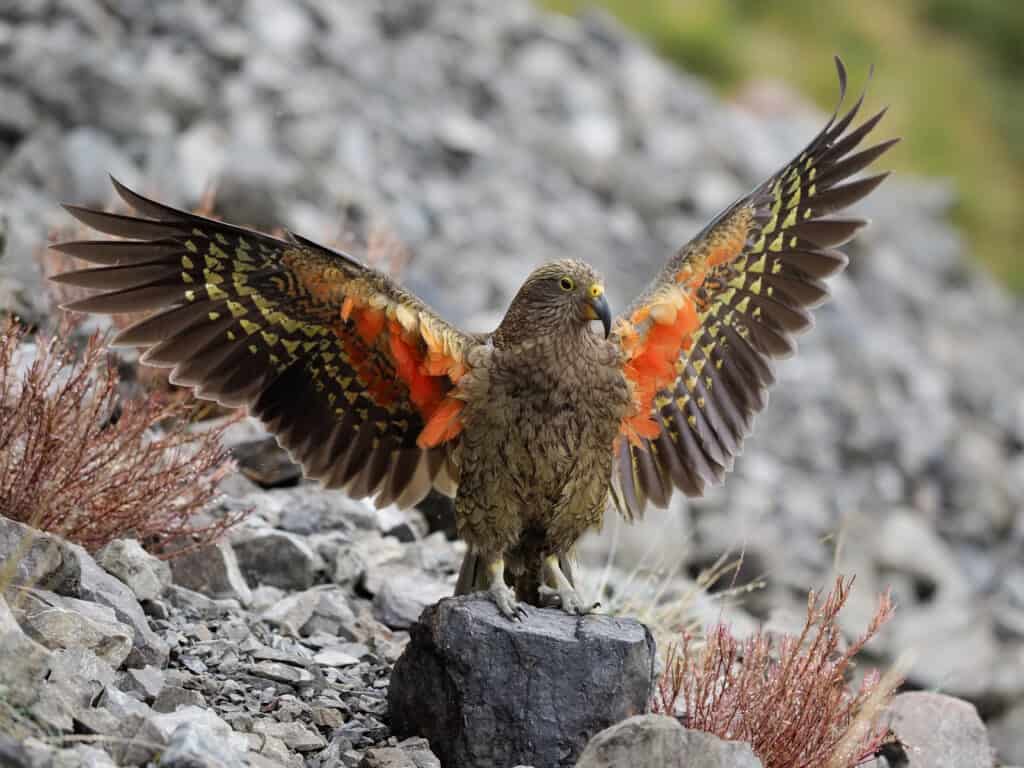
Kea parrots live in mountainous terrain unlike most other parrot species that prefer tropical rainforests.
©Robert L. Sanson/Shutterstock.com
They’re one of the most intelligent birds in the world, intensely curious and able to solve problems. They’re known to use their large, razor-sharp upper beak as a tool to help them investigate. This should put Bruce at a significant disadvantage among his peers.
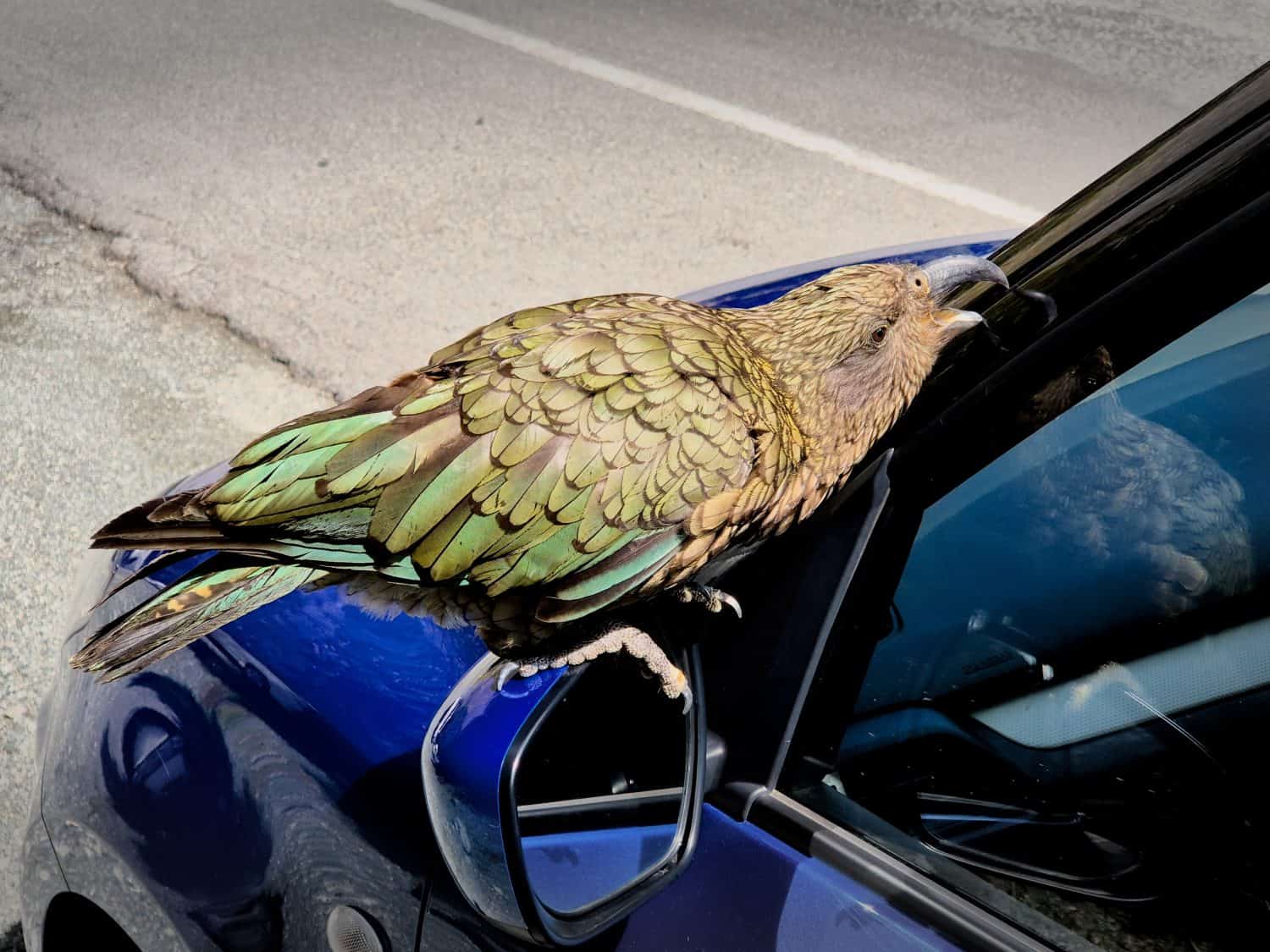
Kea parrots use their large curved beaks as a tool to investigate anything they’re curious about.
©Immer Weiter/Shutterstock.com
Bruce is missing half of his upper beak.
That alone should relegate him to the lowest standing among his group of fellow kea parrots (called a circus due to their playful and chaotic nature). Kea parrots have a very strong social hierarchy that is determined by acts of dominance like squawking and fighting. With only half a beak, you’d think Bruce would lose every fight he gets in.
Just the opposite is true. Bruce wins and, as a result, is the alpha male of his flock.
Bruce Defies All Odds
Male birds rise within a flock through fighting challenges. If they rise high enough, they’ll claim the alpha title. Alex Graham, a behavioral ecologist at the University of Canterbury in Christchurch, and his colleagues have been studying Bruce to figure out how he achieved alpha status.
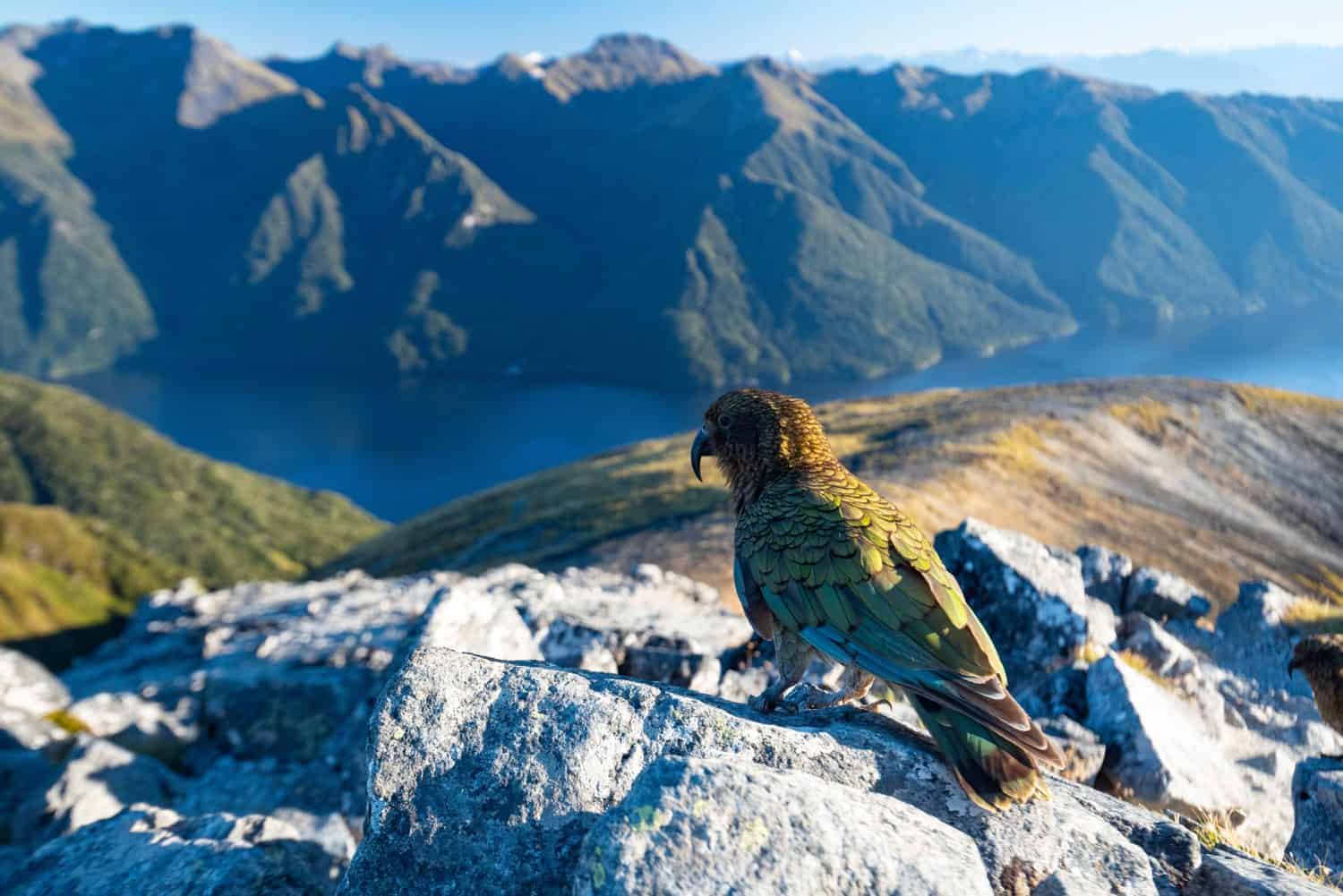
Kea parrots prefer mountainous terrain to tropical rainforests.
©Martin Vlnas/Shutterstock.com
Graham and his team recorded 162 physical dominance interactions among the nine males in Bruce’s circus. Bruce engaged in 36 of those interactions. He won every single time.
He is the first known disabled animal to achieve top status within a group without help from an able-bodied peer. It appears Bruce’s position is due to an unusual fighting technique.
How Bruce Achieved Alpha Status
Typically, kea parrots rely on kicking to repel challengers. Bruce, however, added a second technique that proved even more effective. While he did kick like other parrots, he also put his deformed beak to use.
He developed a unique jousting method that involves striking other birds with his fully formed lower beak. Grabham’s team filmed an additional 109 interactions between Bruce and other males and captured the unusual behavior.
While Bruce kicked slightly more often than he jousted, when he did joust it was far more effective at repelling his attacker than kicking. He was able to ward off rivals 73 percent of the time with jousting compared to just 48 percent of the time when he kicked.
The Privileges of Being Alpha
Bruce’s hard work to achieve alpha status comes with quite a few perks.
Some, like getting first dibs on the best food, are an expected part of being the circus leader. Grabham’s team observed the aviary’s feeders for four weeks. During that time, they watched Bruce eat first 83 percent of the time. In four instances, they saw the other birds give Bruce 15 minutes of uninterrupted feeding time at all four feeders before the rest of the flock swooped in to eat his leftovers.
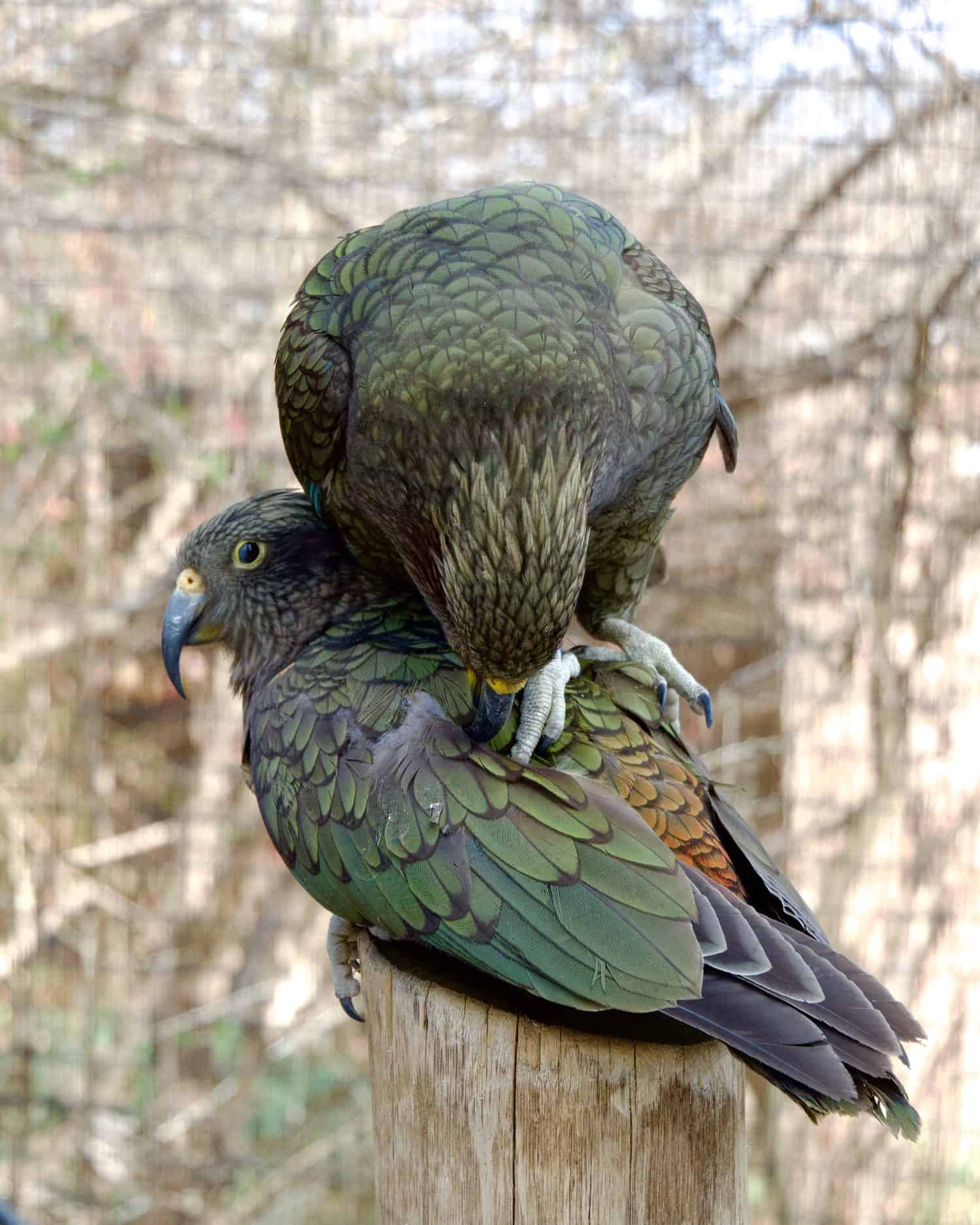
Kea parrots typically only groom their mates.
©iampaese/Shutterstock.com
One much more surprising benefit is that the lower-ranking males preen Bruce, helping him clean parts of his deformed beak that he can’t reach. Usually, kea only preen their mates. In Bruce’s case, though, the lower a male’s rank, the more preening that male did for him. The researchers note that this behavior mirrors the hierarchical grooming observed with chimpanzees.
Does Bruce Struggle to Retain His Title?
Most surprising, though, is that Bruce doesn’t seem to be bothered by maintaining his alpha status. Typically, in many other animal societies, the top alpha has to constantly defend his position, which causes higher levels of stress in the alpha animal.
Scientists measure animal stress by studying specific metabolites called glucocorticoids, which in birds are detected through droppings. When Bruce’s feces were measured, though, his glucocorticoids were unexpectedly low. Grabham’s team can’t be sure why, but they have at least one theory.
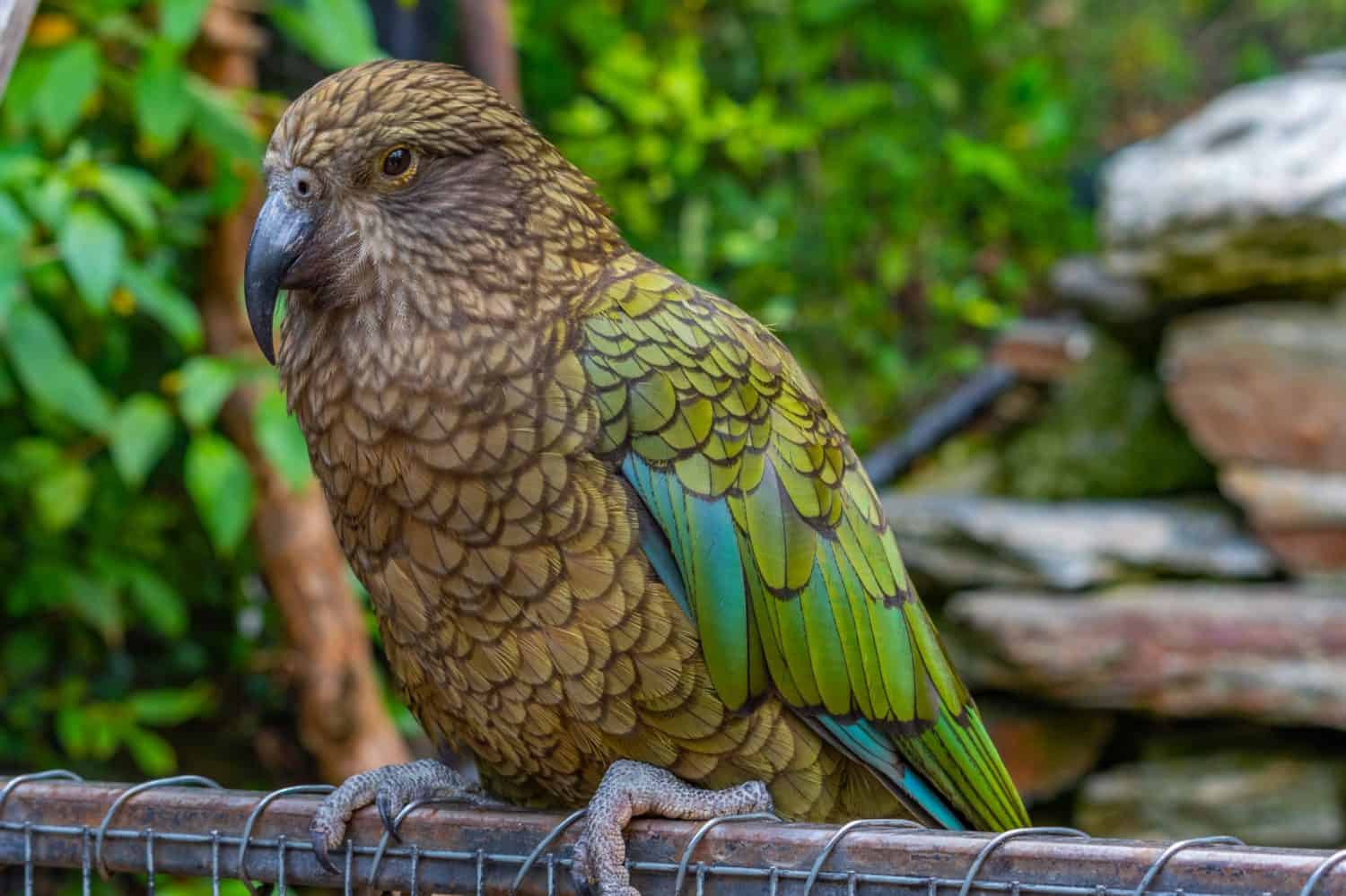
The alpha male kea parrot typically gets first dibs on all food.
©trabantos/Shutterstock.com
“He knows that he isn’t going to be followed around and beaten up or bullied or chased,” Grabham said in a recent news story.
The team isn’t sure Bruce would be so chill if he lived in the wild rather than Willowbank’s protected aviary. In the wild, kea circuses are fluid with birds joining and departing throughout the year. The Willowbank kea circus is quite static, so Bruce’s standing as top parrot isn’t challenged by any newcomers.
Bruce’s Other Innovation
Rising to alpha male among the Willowbank kea circus is just one of Bruce’s disability success stories.
Researchers studying him in 2021 observed a novel grooming technique Bruce invented. Since preening his feathers was impossible without a full top beak, Bruce started using pebbles as a grooming aid.
Bruce the kea parrot is showing the world that being different doesn’t have to mean living a limited life.