
Quick Take
- Setting a blue marlin hook at the wrong moment is the most common mistake anglers make, and doing so guarantees you lose the fish. Blue marlin hook-setting tips →
- One fish on this list doubles as the preferred bait to catch another fish on this list.
- Virginia's most underrated summer catch doesn't exist in nature. It was engineered, and it fights harder because of it. Meet the engineered hybrid →
- One panfish on this list is so predictably social that finding a single one guarantees you a full cooler. Find schools of crappie →
Summer fishing in Virginia is a dream. You can chase wild trout in cool mountain streams in the morning and reel in powerful red drum in the salty waters of the Atlantic by sunset. This state gives you every kind of fishing trip you could ever want in one sunny season. From extra-large marine fish to small panfish species, fishing Virginia in the summertime is dreamy. Continue reading to learn about some of the best saltwater and freshwater fish to catch in Virginia this summer.
Blue Marlin
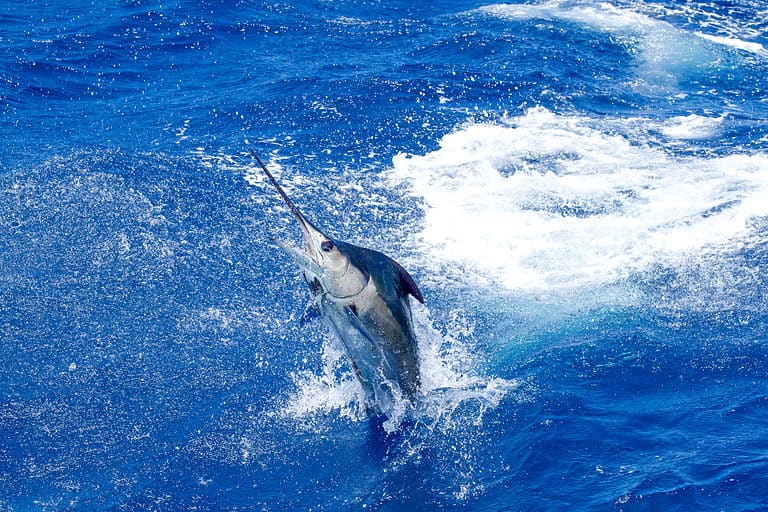
Go all out this summer and try your hand at catching a mighty blue marlin (Makaira nigricans). This tenacious species is known to take hours to reel in.
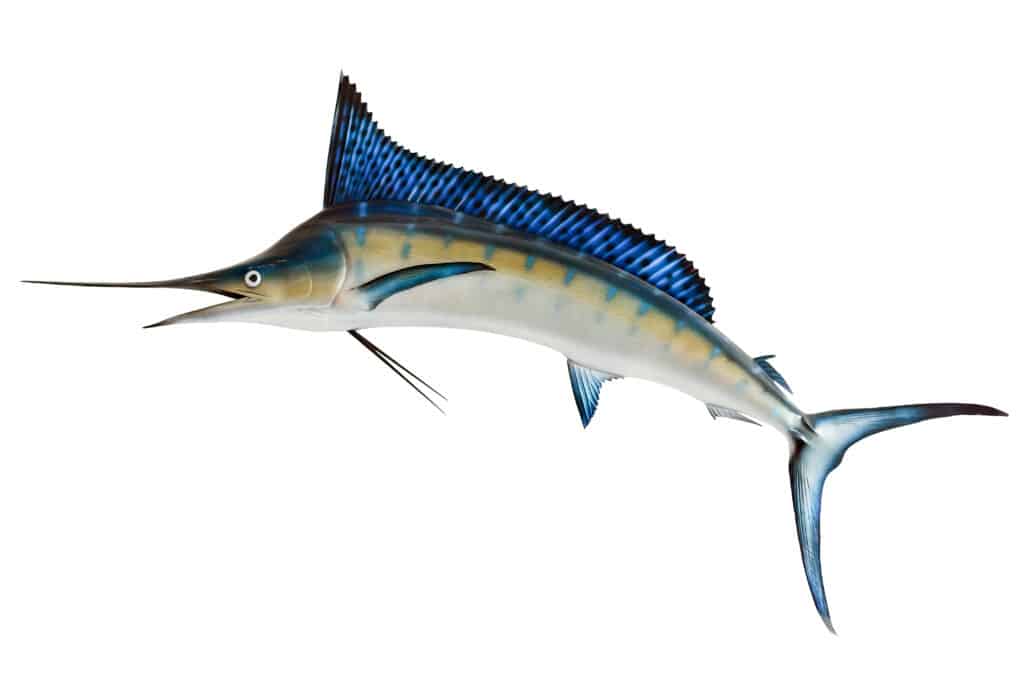
Blue marlin can fight on the line for hours.
©Hayk_Shalunts/Shutterstock.com
An average blue marlin is about 11 feet long and weighs between 200 and 400 pounds.
Preparation is key to success. You’ll need to travel several miles offshore to catch a blue marlin, so be sure to check the weather for possible storms. The last thing you want is to travel far out, only to turn back because of lightning.
Many anglers use live bait, but artificial lures are also effective. Blue marlin will respond to whatever prey they are currently feeding on, so you can catch bait from the ocean and use it immediately.
Once a marlin bites, let it run with the hook for a short time before setting it. When you’re ready, set the hook firmly and prepare for a challenging fight. The blue marlin is famous for putting up a big fight that can last hours.
Swordfish
Another large fish lurking off the coast of Virginia is the swordfish (Xiphias gladius). Be prepared for a fight, as these massive fish can weigh over 1,000 pounds.
Swordfish are found in offshore waters and estuaries both day and night. Once you catch your first one, you’ll be hooked, as they are one of the most exciting species for big game fishing. Success often depends on understanding their behavior.
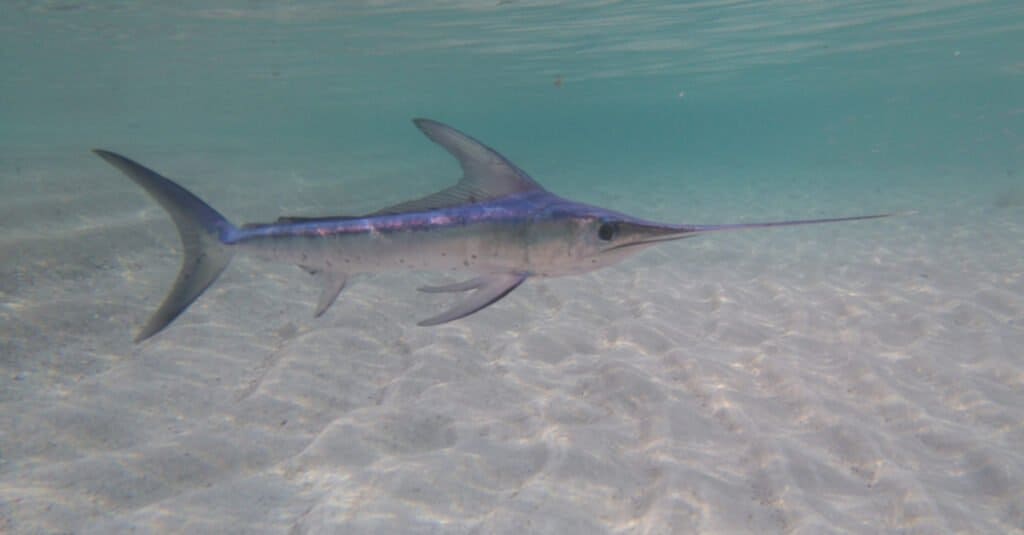
Swordfish can weigh over 1,000 pounds.
©SVITO-Time/Shutterstock.com
Swordfish respond well to bait such as squid or mahi-mahi bellies. Once you pick your bait, pay close attention to the rigging process. You’ll need to secure the bait so it doesn’t fall off when it’s far beneath your boat. You’ll also need to set it up so the bait swims straight rather than spinning.
The type of hook you use will affect how the bait sits and moves in the water. The Mustad 7691 is a popular choice because its closed throat requires less pressure to penetrate, making it easier to set the hook securely.
Mahi Mahi
Another saltwater fish to target is the mahi-mahi (Coryphaena hippurus), also known as dorado, dolphin, and dolphin fish. They’re lean fish with a mildly sweet flavor. Whether you’re a new or experienced angler, it’s a gamefish you’ll have fun going after.
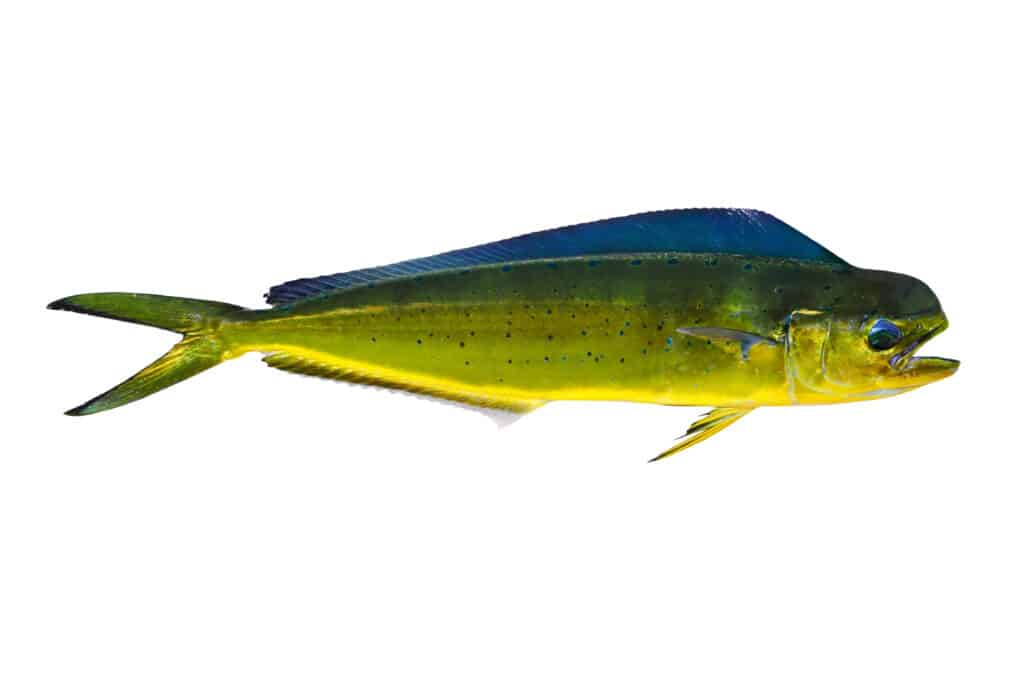
Mahi Mahi are closer to the Virginia shoreline during summer, but they are not reliably caught from shore.
©lunamarina/Shutterstock.com
Some of the best baits include cut fish of all varieties, ballyhoo, and squid. Some of the best lures for mahi-mahi include diving plugs, spreader bars, daisy chains, and soft plastic jigs. They are muscular fish, and it’ll take some strength to reel one onto the boat.
Professional anglers suggest using durable tackle and bringing backup tackle just in case. You’ll also want a heavy-action rod for the best results. The leader size can be between 40 and 80 pounds of fluorocarbon. If you’re using bait circle hooks, stick to sizes 9/0 or 6/0, which are the most common.
Finally, if you’re trolling for mahi-mahi, use a 30-50 pound class rod and reel.
Bluegill
Are you ready to catch one of North America’s most popular and widespread panfish species? Then target the bluegill (Lepomis macrochirus). It’s one of the best freshwater fish to catch in Virginia this summer, and they are so numerous that angling doesn’t negatively affect their populations.
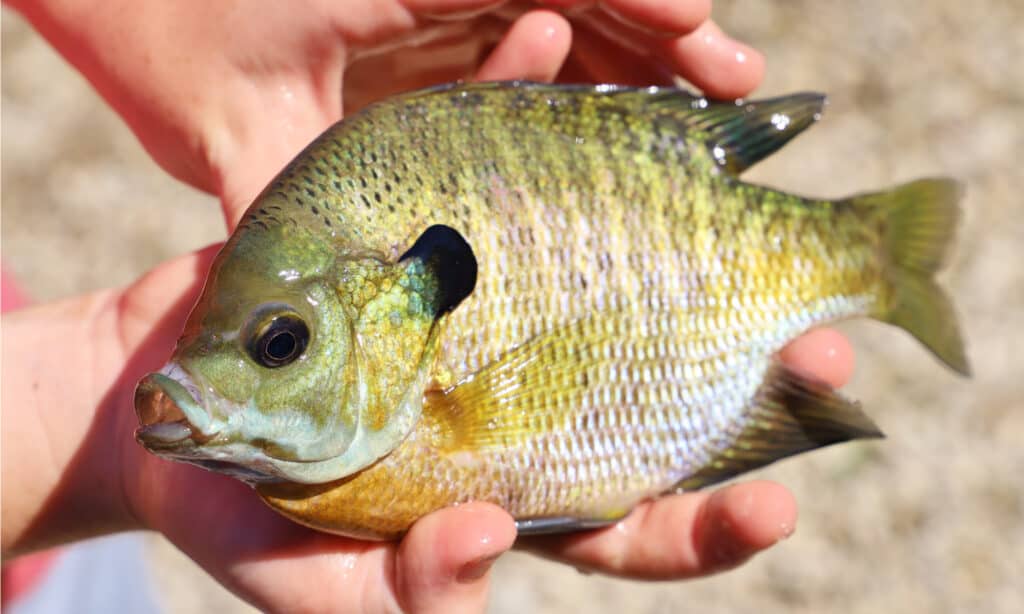
Bluegill is a type of sunfish.
©Stacey Ann Alberts/Shutterstock.com
The bluegill is one of the largest sunfish in North America. On average, they weigh half a pound. However, with the right combination of food, cover, and spawning grounds, bluegill can exceed two pounds in weight.
Bluegills prefer oxygen-rich water, and they’re particularly active during the summertime. Their habitats include weedy lakes, slow-moving streams, ponds, and the backwaters of rivers. During the summer, bluegill can spawn up to three times. That means there will be plenty of them for you to catch.
Black Crappie
Would you like to catch a cooperative and great-tasting fish? Then you should target the black crappie(Pomoxis nigromaculatus). Black crappie are one of the best panfish species in the entire state. One of the reasons they’re so popular has to do with their tendency to congregate. Crappie live in large, dense schools. Once you find one, you’ll have no trouble reeling in several, one after another.
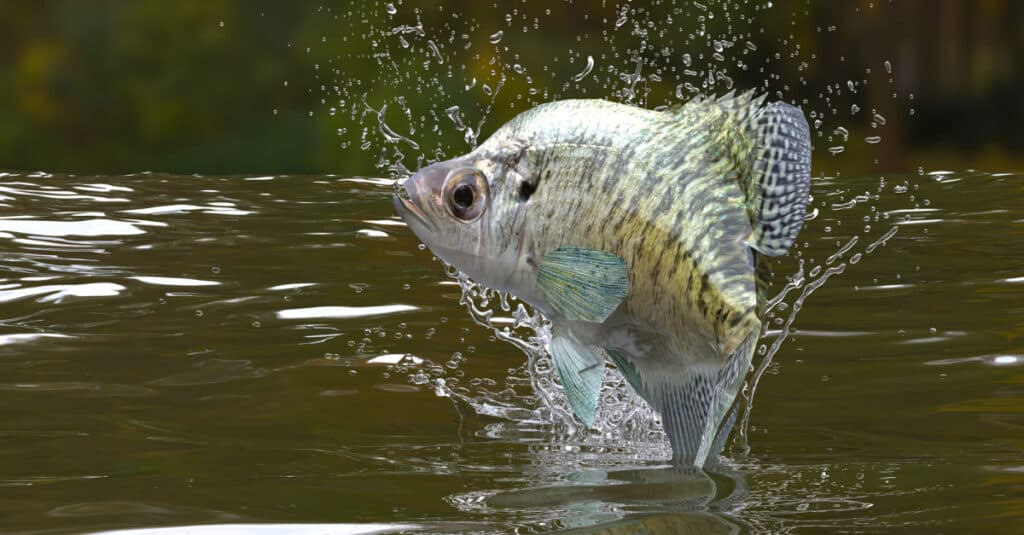
Crappie swim in large, dense schools.
©iStock.com/bbevren
In Virginia, the average adult black crappie typically grows to 8 to 12 inches in length and weighs between 0.5 and 1 pound.
Saugeye
The saugeye (Stizostedion vitreum x S. canadense) is a popular freshwater sportfish created by crossing a female walleye with a male sauger. It is valued for its ability to tolerate warmer, more turbid waters than purebred walleye. The saugeye is a heavily camouflaged fish with tannish-yellow to golden sides marked by distinct, dark blotches running down its back.
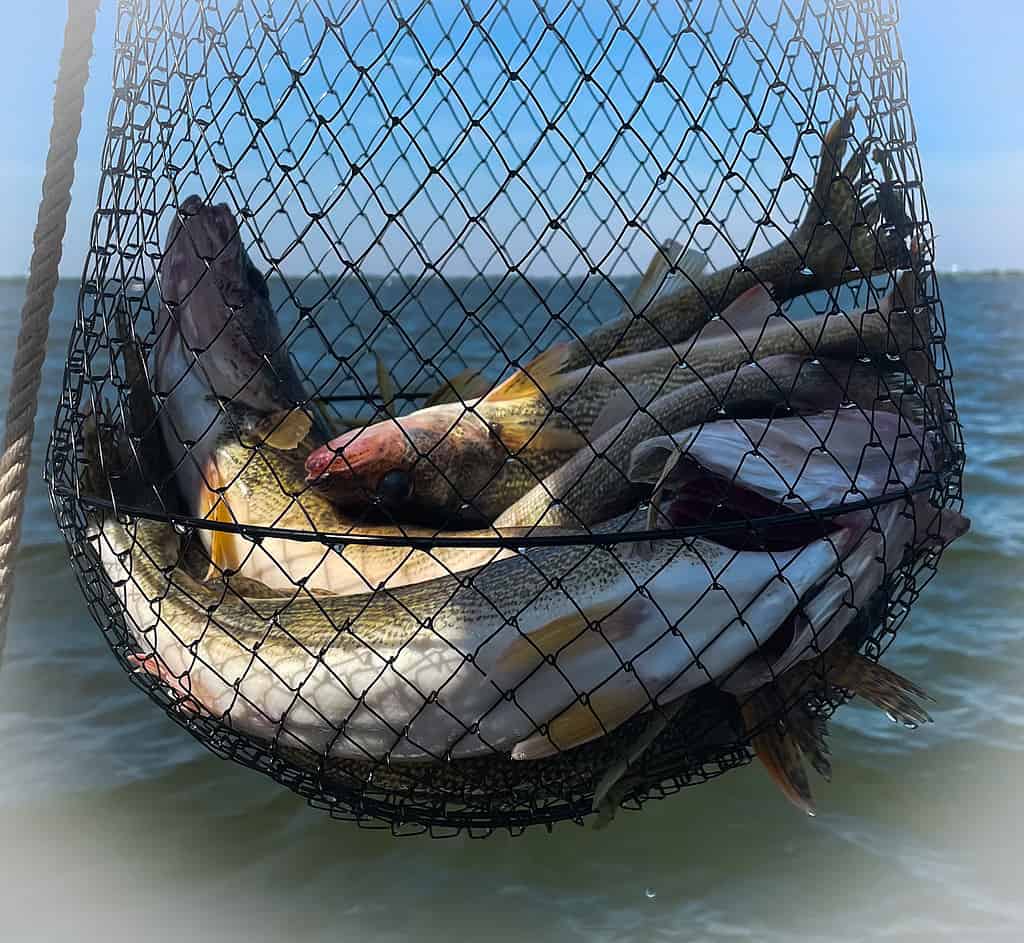
The saugeye, developed in Ohio, is a splendid example of hybrid vigor.
©John Grieshop/iStock via Getty Images
In Virginia’s highly productive waters, mature saugeye average 12 to 18 inches in length and 1 to 2 pounds in weight, though they can grow up to 6 pounds, with the current state record being 6 pounds, 8 ounces, caught in Lake Gaston in 2023. Anglers looking to target this hard-fighting species can find them in select Virginia waters, including Burke Lake, Chesdin Reservoir, and watersheds such as the Appomattox, James, Potomac, Upper Dan, Upper Roanoke, and York.