
Quick Take
- Sharks may be learning to use your fishing boat as a personal buffet, and NOAA has gathered evidence showing how they're doing it. See NOAA's findings →
- One of fishing's most popular conservation trends may be accidentally training sharks to steal your catch. Explore the learning behavior question →
- In most depredation incidents, anglers never see the shark, and that makes identifying the real culprit stranger than you'd expect. See who the real culprits are →
- Conservationists argue the entire depredation crisis might not be what anglers think it is, and their reasoning is hard to dismiss. Read the misperception theory →
For anglers, reeling in the big one is the goal of every fishing trip. When the strike hits and the reel starts spinning, the adrenaline kicks in, and landing the fish becomes the singular focus. It can be a long fight to bring in the prized catch, and things don’t always go as planned.
But there’s one thing worse than the fish wriggling off the hook: pulling the catch into the boat and realizing that most of it is missing, with only a head or chewed-up carcass left. Somewhere along the way from hooking it and reeling it in, a hungry shark got to your catch first.
Anglers call this “getting taxed.” Scientists have a different name for it – depredation. It’s been a problem for as long as fishing the open ocean has been a thing. But recently, complaints about sharks stealing the catch have grown. Enough noise is being made about the phenomenon that one government agency is building a national plan to figure out what’s behind the increase.
What Is Shark Depredation?
When it comes to sharks and fishing, depredation simply refers to when a shark eats or damages a fish already hooked, before an angler can land it. Besides being a frustration for anglers, it also causes economic losses when expensive fishing tackle is lost or damaged by the hungry shark.
How Common Is Depredation?
Depredation has been happening for as long as anglers have been casting hooks into the sea. Famous author Ernest Hemingway even wrote about it when describing his countless fishing trips in tropical waters.
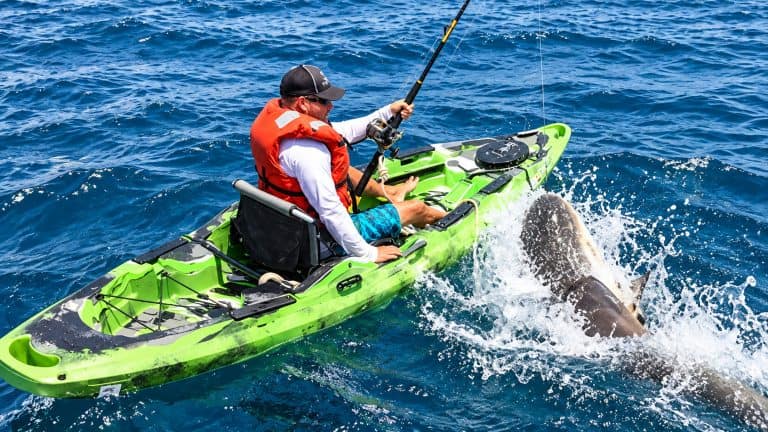
A national survey from 2022 revealed that 77 percent of anglers have experienced depredation. Yet most incidents go unnoticed until the partially eaten fish is brought to the surface. That same survey notes that in nearly 80 percent of depredation incidents, the shark never comes to the surface. In my own experience losing a catch to a shark, the only sign was a change in line pressure, which alerted me that something had gone wrong.

The Florida Keys are one region where shark depredation is common.
©Stephan Langhans/Shutterstock.com
In terms of where depredation happens most often, one study suggests that the southeast U.S. and Florida Keys showed a consistently high rate of depredation throughout the year, regardless of the season. A different survey of anglers reported depredation across all five Gulf Coast states – Texas, Louisiana, Mississippi, Alabama, and Florida.
One charter captain operating out of Palm Beach, Florida says depredation happens on “every other trip,” especially when fishing for bottom-dwellers like amberjack. He’s changed his fishing habits almost entirely because of it.
Which Sharks Are Most Likely Doing This?
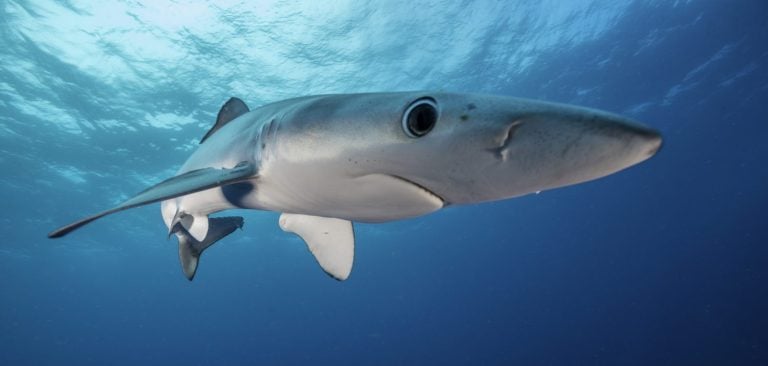
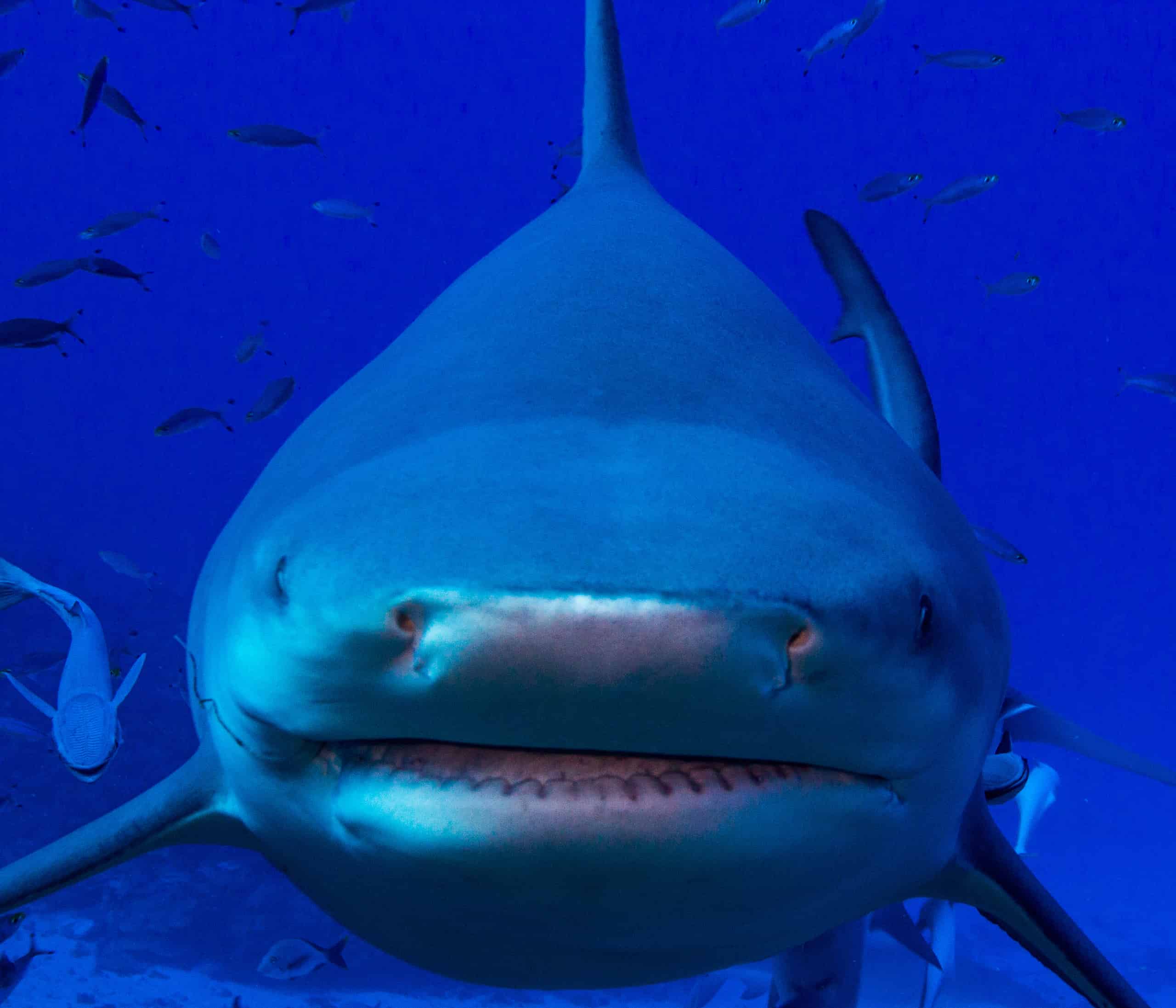
DNA swabs from chewed-up fish carcasses show that bull sharks are involved in the majority of depredation activities, according to the South Atlantic Fishery Management Council. The National Oceanic and Atmospheric Administration (NOAA) confirms that bull sharks are the primary culprit, but also notes that sandbar sharks are often involved – at least when it comes to Atlantic snapper and grouper.
Bull sharks are known for thriving in both saltwater and freshwater environments. They also like to stay close to shore. Sandbar sharks are medium-sized sharks that live in shallower, coastal areas. For anglers who stick close to shore, these two shark species are often found nearby.
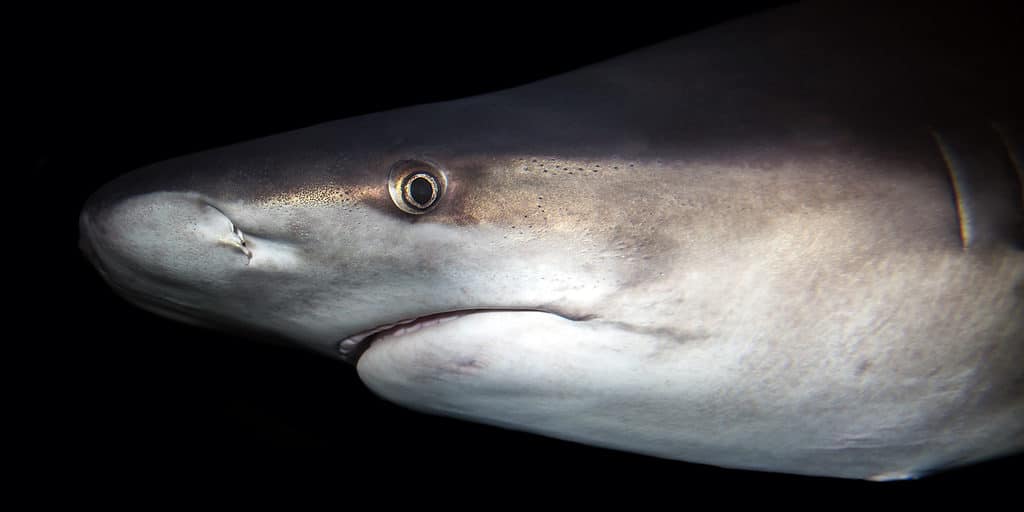
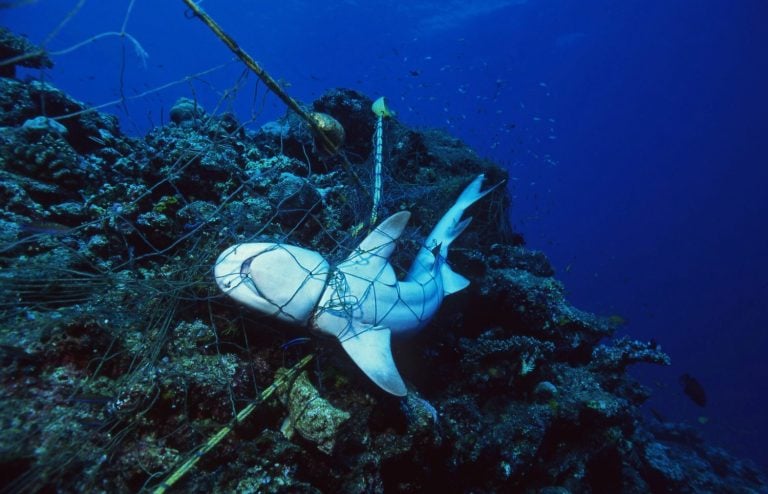
Sandbar sharks are one species often involved in depredation attacks.
©iStock.com/Schnapps2012
Regardless of which shark species is responsible, anglers are understandably frustrated. This frustration has led some to protest ongoing shark conservation efforts, which in turn caught the attention of NOAA and prompted the agency to launch a fact-finding investigation.
How Is NOAA Responding?
No scientific evidence exists to support any conclusions about the increase in depredation events. At best, there are a series of open questions that NOAA is studying.
Are there more sharks? Shark management and repopulation efforts have been ongoing for decades in the areas where depredation events are high. For some species, like Atlantic blacktip sharks, the efforts have succeeded. Populations are up. But for others, like dusky sharks, continued protections are needed.
For sandbar sharks, their actual population numbers remain unknown. A new stock assessment began in May 2026, with results expected in early 2027.
Are sharks getting smarter? NOAA says there is emerging evidence that shows individual sharks may learn from repeated experiences with fishing boats. They may be able to associate the sound of running engines or the sound of lines being reeled in with an easy dinner nearby. Additionally, when anglers discard undersized fish, the sharks may realize snacks are easy to come by if they just follow the boat.
Are more anglers changing behavior? The popularity of fishing is growing, as is the preference for catch-and-release practices. These trends may be teaching sharks that following fishing boats makes finding their next meal easier than hunting on their own.
Is it just misperception? Conservationists are quick to point out that, at least in the case of sandbar sharks, the known population increase data doesn’t align with the increase in reported depredation events. They suggest that anglers’ perceptions may be skewed, leading them to believe depredation is increasing, even though there is no supporting data.
Next Steps for NOAA
NOAA is developing a national strategic plan built around answering the questions above. In addition to the new sandbar shark stock survey, NOAA is also working with commercial long-line fishermen to set up listening stations and tag sharks with acoustic tracking devices. This will help NOAA scientists track shark movements and observe their patterns over a one-year period.

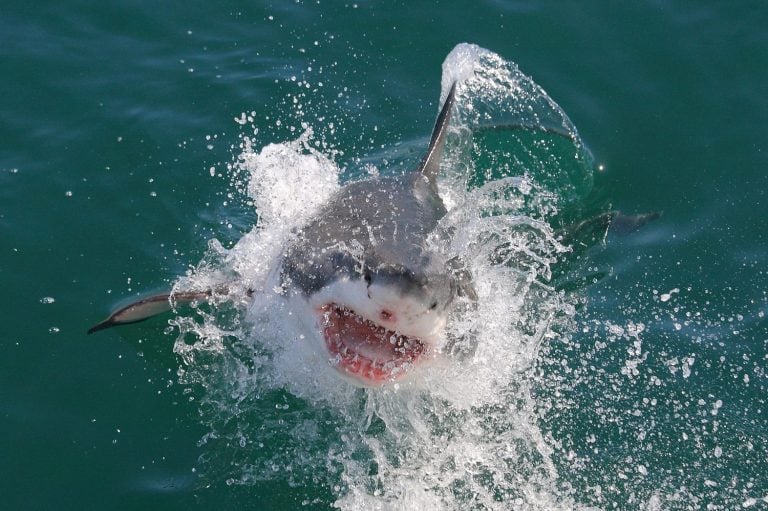
Bull sharks are most often involved in depredation attacks.
©Fiona Ayerst/Shutterstock.com
NOAA is also working with state agencies, universities, and private researchers to test tools like electromagnetic devices or certain metals that may keep sharks away from fishing gear and their catch. It is uncertain whether either of these strategies will be practical or cost-effective.
NOAA is also considering changes to shark catch limits in the Atlantic and Gulf waters. The goal is to align shark catch limits with the latest scientific data and create more flexibility for commercial and recreational fishermen.
While depredation has caused a long-running conflict between anglers and conservation efforts, these steps by NOAA are adding scientific rigor to the development of data-based solutions. NOAA has pledged transparency as findings come in.