
Quick Take
- Tuna's conservation status is probably not what you think, and the real numbers behind their survival story are more surprising than the headlines suggest. See the survival numbers →
- Someone once paid over $3 million for a single fish, and the reason has almost nothing to do with the tuna itself. Unpack the auction strategy →
- Tuna's migratory routes expose a fundamental flaw in how the world tries to protect them. Explore the policy gaps →
- The can of tuna in your pantry connects to a choice that affects which species survive, yet most shoppers have no idea they're making it. Understand your pantry choice →
World Tuna Day on May 2 highlights a group of fish that supports diets, jobs, and entire coastal economies. Tuna appear in sushi counters, school lunches, and home kitchens across the United States and beyond. At the same time, some species face heavy pressure from large-scale fishing and rising global demand. Bluefin tuna, for example, can grow longer than a compact car and reach speeds of 45 mph, yet they remain vulnerable to modern fishing methods and uneven regulation. Learning how tuna live, how they are caught, and how they can be managed helps ensure that oceans stay productive and that future generations can still rely on this important food source.
Types of Tuna and Where They Live
Several species of tuna are found across the world’s oceans, each adapted to different conditions but sharing a highly migratory lifestyle. The best-known include bluefin, yellowfin, bigeye, albacore, and skipjack tuna. Among these species, skipjack, yellowfin, and albacore are the most important for everyday consumption, while bluefin and bigeye command higher prices in premium seafood markets.
Bluefin
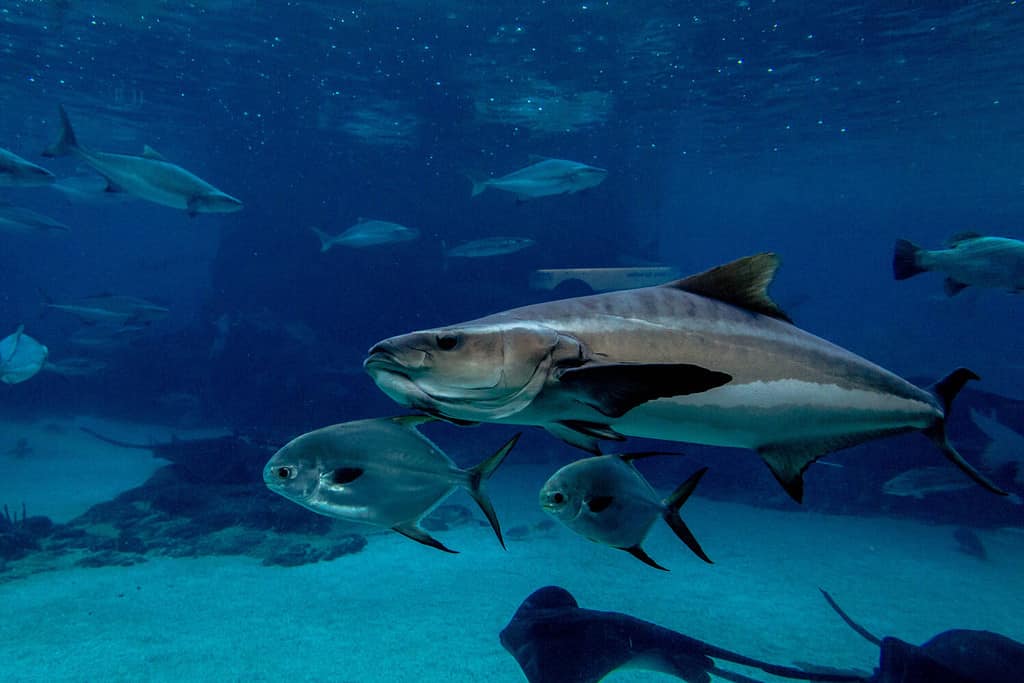
Bluefin tuna can grow as large as a compact car.
©Shaun Robinson/Shutterstock.com
Both the Atlantic and Pacific species of bluefin tuna prefer temperate to cooler waters and are among the largest and fastest bony fish in the sea. Individuals can exceed 13 feet in length and weigh more than 2,000 pounds. Their bodies are built for speed, clocked at up to 45 mph, with powerful muscles and a specialized circulatory system that allows them to maintain elevated body temperatures. This lets them hunt effectively in colder regions and travel long distances between feeding and spawning grounds.
Yellowfin
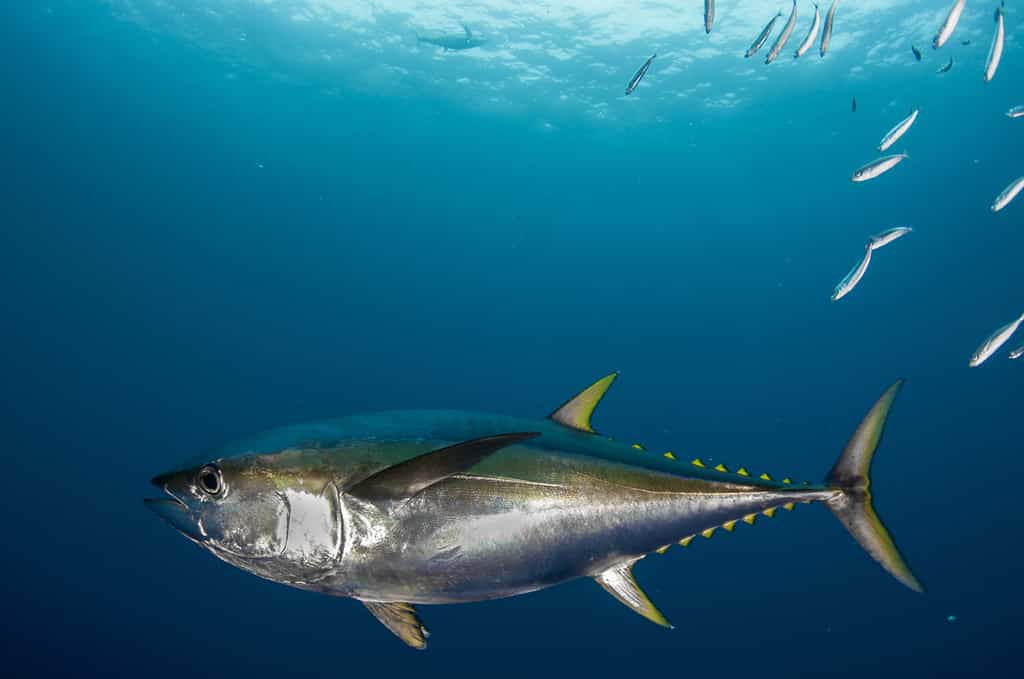
The aptly-named yellowfin tuna is a commercially profitable species.
©Shane Gross/Shutterstock.com
Yellowfin tuna are found in tropical and subtropical waters worldwide and are known for their speed and agility. They often travel in large schools and are a major target for commercial fisheries. Their firm texture makes them popular in fresh and frozen markets, including sashimi and grilled dishes.
Skipjack
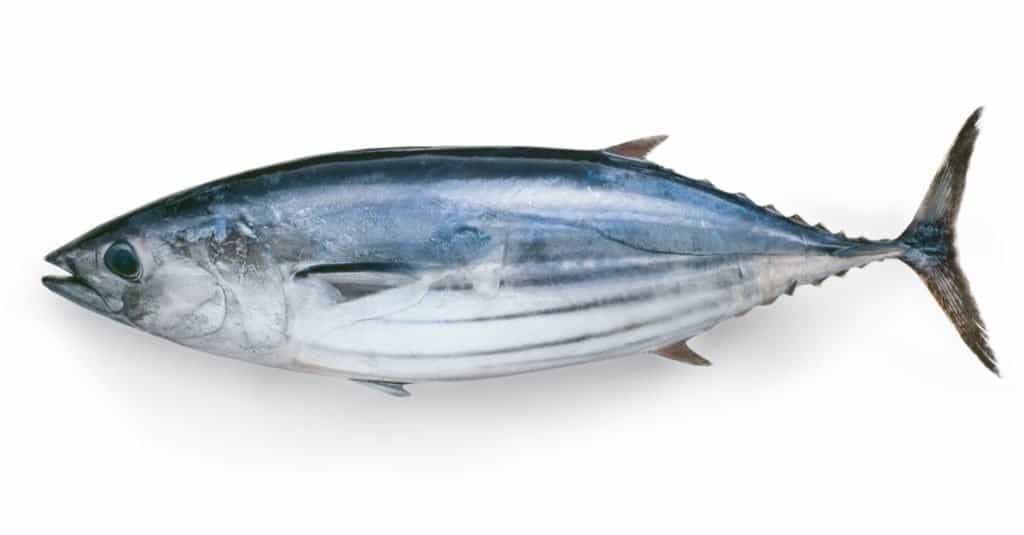
Swimming in large schools near the surface makes skipjack tuna easier to catch.
©funny face/Shutterstock.com
Skipjack tuna are smaller and more abundant than most other species. They inhabit warm waters and tend to stay closer to the ocean surface, forming dense schools. Skipjack is the most commonly caught tuna worldwide and is widely used in canned “light tuna” products.
Bigeye
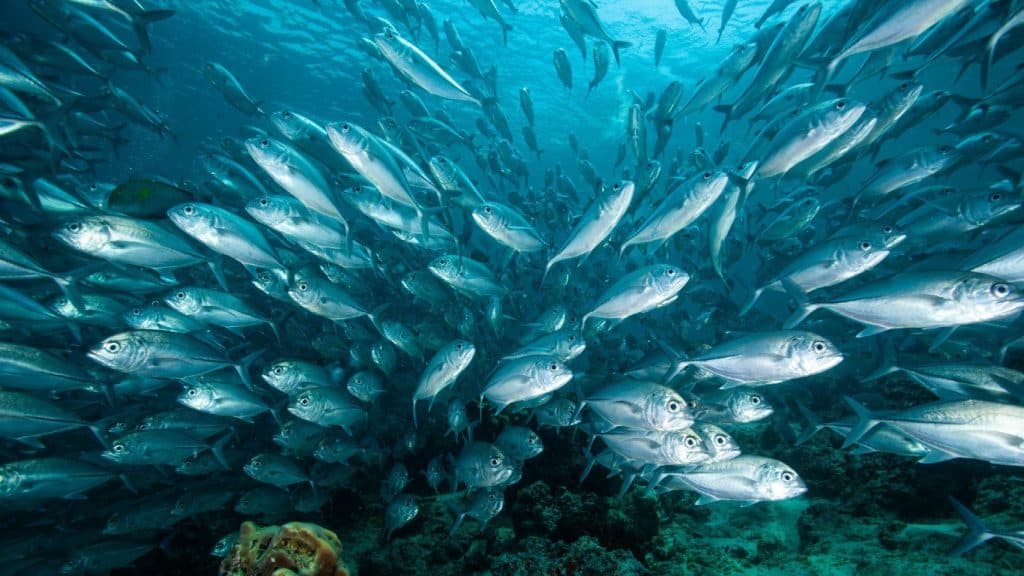
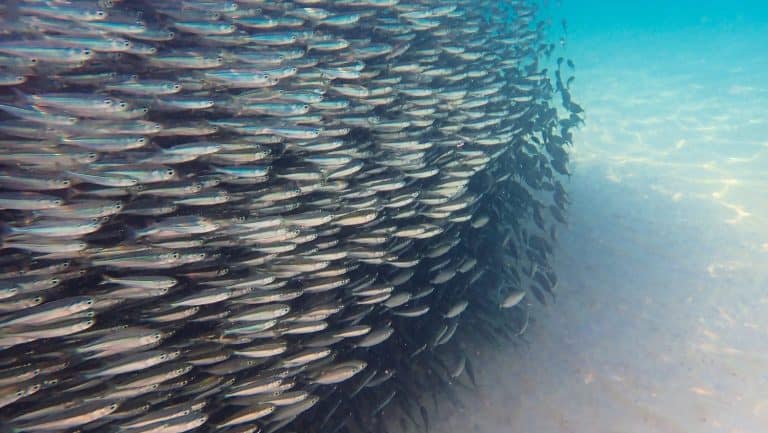
A dense school of bigeye tuna.
©LuffyKun / Getty Images
Bigeye tuna live in similar regions to yellowfin but spend more time in deeper, cooler waters. They can tolerate lower temperatures at depth and often move vertically through the water column. Bigeye are highly valued in sushi markets because of their rich, fatty flesh.
Albacore
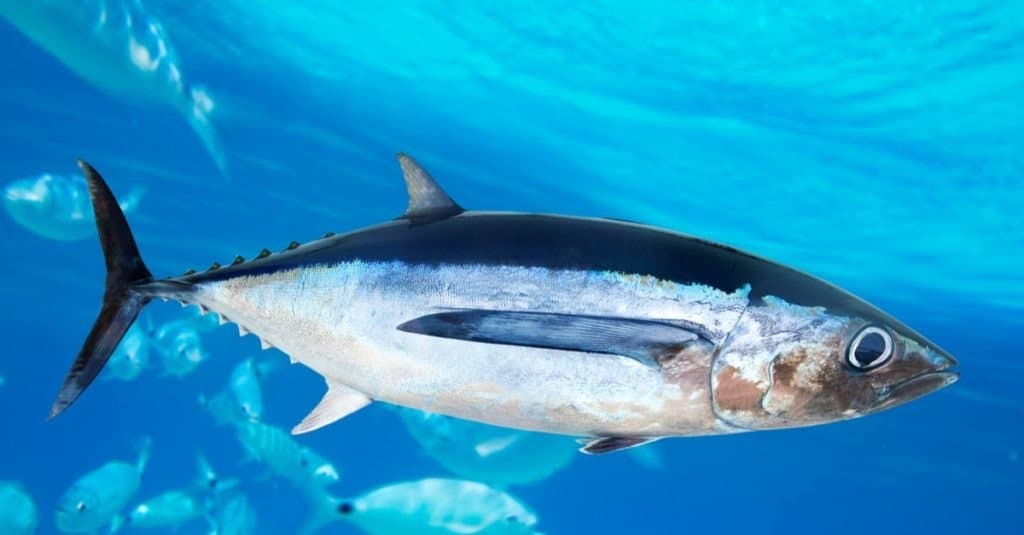
Lighter-colored meat makes albacore a popular canned tuna in the United States.
©lunamarina/Shutterstock.com
Albacore tuna prefer cooler open-ocean waters and are known for their lighter-colored meat. They are commonly sold as “white tuna” in canned form, especially in the United States. Albacore are also caught for fresh markets, though they are less prominent than yellowfin or bigeye in the high-end seafood trade.
Ecological Role of Tuna
Tuna play a central role in marine ecosystems. As mid-to-top predators, they feed on smaller fish and squid, helping regulate those populations. At the same time, they serve as prey for larger animals such as sharks, billfish like marlin, seabirds, and marine mammals, including dolphins and orcas. Because they connect multiple levels of the food web, changes in tuna populations can ripple through entire ocean systems, affecting species that rely on them either directly or indirectly.
Life on the Move Across Oceans
Tuna belong to a group known as highly migratory species. Instead of staying near one coastline, they travel across entire ocean basins. Atlantic bluefin often feed in northern regions during warmer months, then move south to spawn in warmer waters. Other species follow similar patterns. Yellowfin and skipjack tuna track ocean currents and prey, moving across the Pacific and Indian Oceans in large schools. These migrations can cross multiple management zones governed by different organizations. When one region enforces strict limits but another does not, the overall effort can fall short. Effective conservation depends on coordination that follows the fish rather than political boundaries.
Economic Importance Around the World
Tuna support a global seafood industry worth billions of dollars each year. Recent estimates indicate that between 5.8 million and 7.5 million metric tons of tuna and related species are harvested annually, depending on whether tuna-like species are included. This supply feeds a wide range of markets, from high-end sashimi to affordable canned products that provide protein to millions. Many coastal communities depend on tuna fishing for income and employment. When stocks remain healthy, these fisheries can operate for decades. When they decline, the effects ripple through supply chains, from fishermen to retailers to consumers. Sustainable management is therefore not only an environmental issue but also an economic one.

Internationally, tuna plays an important role as a staple in the diets of coastal communities, as well as a luxury food item for certain species and in specific contexts.
©Space_Cat/iStock via Getty Images
Why Would Anyone Pay Millions for a Single Fish?
Some tuna, especially large bluefin, can fetch extremely high prices in certain markets. At major auctions in Japan, individual fish have sold for millions of dollars. For example, in January 2026, a single bluefin tuna reportedly sold for 510 million yen (about $3.2 million). While this may seem excessive, these purchases are often driven by more than the value of the meat alone.
A single large bluefin can be divided into hundreds of servings, particularly high-end cuts like otoro, which command premium prices in top sushi restaurants. Even so, buyers do not always expect to make a direct profit on the fish itself. Instead, these record-breaking purchases function as a form of global advertising. Winning a high-profile auction brings international attention, strengthens a restaurant’s reputation, and attracts customers willing to pay more for a recognized name.
These headline sales also reflect the premium placed on fatty tuna used in sushi and sashimi. Although most tuna sell for much less, the publicity surrounding these extreme prices can create strong incentives for aggressive fishing. In some cases, it can encourage illegal activity, such as exceeding quotas or misreporting catches. Strong monitoring and enforcement are needed to keep markets fair and prevent overexploitation.
Conservation Status of Tuna
The conservation status of tuna is more stable than many people assume, though it still varies by species and region. As of early 2026, about 74 percent of the 23 major commercial tuna stocks are at healthy abundance levels, according to the International Seafood Sustainability Foundation. In addition, none of these stocks is currently classified as overfished. By total catch, roughly 97 percent of tuna harvested worldwide comes from stocks at healthy levels, and nearly all comes from fisheries that are not actively overfishing. These figures reflect improvements in management over the past decade, particularly for species such as bluefin and bigeye that previously faced more serious pressure.
Even so, this progress does not mean all concerns have been resolved. Some populations have only recently recovered, and continued oversight is necessary to prevent setbacks. Conservation efforts focus on setting science-based catch limits, protecting spawning grounds, and reducing bycatch from large-scale fishing operations. International cooperation remains essential because tuna move across national boundaries.
Industrial Fishing Methods and Their Effects
Modern tuna fishing often relies on large-scale methods designed to capture high volumes efficiently. Purse-seine nets can encircle entire schools of fish, while longlines extend for miles with thousands of baited hooks. These techniques can be effective but also carry risks for marine life. In some regions, purse-seine fishing has historically targeted tuna that swim beneath dolphins, especially in the eastern tropical Pacific. This practice led to high dolphin mortality in the past, though improved regulations and “dolphin-safe” practices have reduced those impacts significantly. Still, purse-seine nets, particularly when used with fish-aggregating devices, can draw in a wide mix of species, including juvenile tuna, sharks, and other non-target fish.
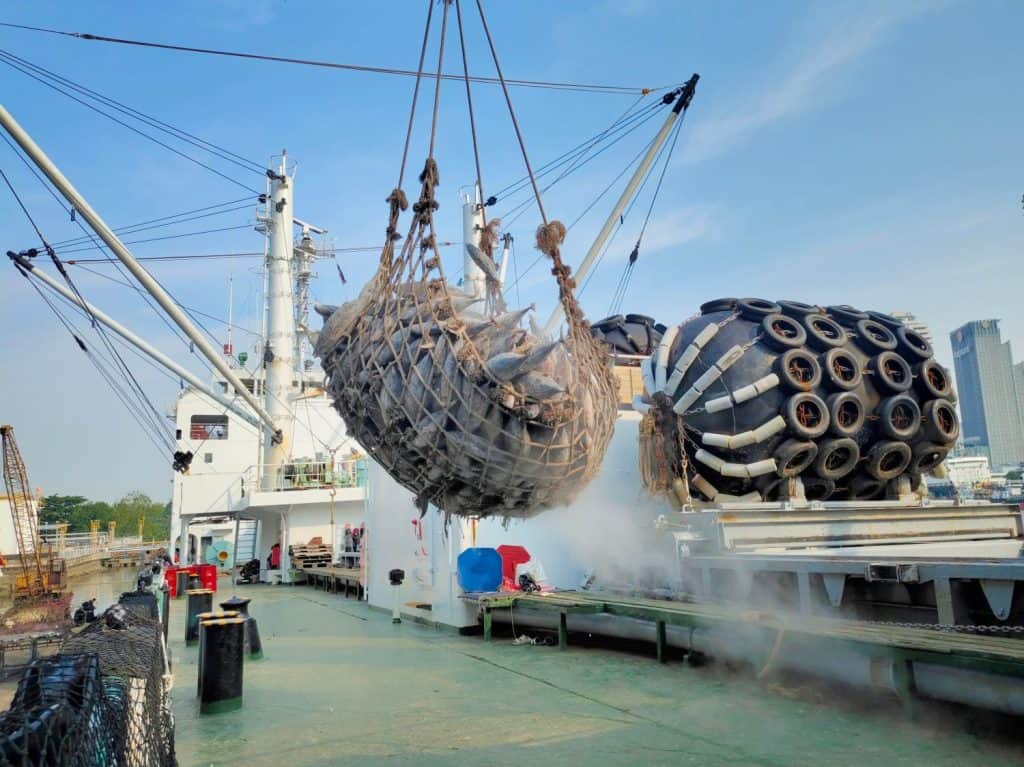
Industrial tuna fishing operations can snare many species unintentionally.
©Roylan Tkg/Shutterstock.com
Longline fishing presents a different challenge. The baited hooks can catch animals that were never intended targets, including sea turtles, seabirds, and large predatory fish. Many of these animals die before they can be released. When these methods are used repeatedly in productive fishing zones, they can disrupt food webs and reduce the number of breeding adults in vulnerable species.
Alternative Fishing Methods
Alternatives to these methods are gaining attention as more selective and lower-impact options. Pole-and-line fishing, for example, catches tuna one at a time and greatly reduces unintended catch. Handline and troll fishing also offer more controlled approaches, allowing fishermen to target specific species and sizes. Some fleets are improving gear design, such as using circle hooks to reduce turtle bycatch or modifying fishing times and depths to avoid seabirds. While these alternatives may result in smaller catches per trip, they can support long-term sustainability by protecting ecosystems and allowing tuna populations to replenish.
Illegal Fishing and Its Consequences
Illegal, unreported, and unregulated fishing remains a major challenge. High-value species such as bluefin attract illicit activity because strict quotas can create black-market opportunities. In regions with limited enforcement, fish may be mislabeled or sold outside legal channels. This type of activity undermines honest fishermen and distorts scientific data used to manage stocks. It can also connect to other issues, including document fraud and poor labor conditions on some vessels. Addressing illegal fishing requires better tracking systems, stronger port inspections, and cooperation among nations.
Defining Sustainable Tuna Practices
Determining whether tuna fishing is sustainable involves several factors. Scientists look at population size, fishing pressure, and the impact of fishing gear on other species. Some experts also consider broader issues, such as fuel use and working conditions. Certification programs like those from the Marine Stewardship Council aim to identify fisheries that meet certain standards. These programs often promote methods that reduce bycatch and protect marine habitats. While no system is perfect, certifications can guide consumers and encourage improvements across the industry.
International Cooperation and Policy Efforts
Because tuna travel across vast ocean distances, international agreements play a central role in their management. Regional fisheries management organizations set catch limits, monitor fleets, and sometimes close areas during spawning seasons. The United Nations recognized the importance of tuna by establishing World Tuna Day in 2016. This designation encourages governments, industry groups, and conservation organizations to share data and promote responsible practices. Progress has been made in some regions, but ongoing cooperation remains essential.
Consumer Choices and Their Impact

You can help promote sustainable fishing by selecting products with clear ethical sourcing information.
©Christopher Stokey/iStock via Getty Images
Individual choices can influence how tuna is sourced and managed. Selecting products with credible eco-labels or clear sourcing information helps support fisheries that follow better practices. Choosing species like skipjack for everyday meals can also reduce pressure on more vulnerable populations, such as bluefin. Supply chain transparency enables consumers to understand where their seafood comes from and how it was caught. Over time, consistent demand for responsibly sourced tuna can push the industry toward higher standards.
Tuna as a Renewable Resource
Tuna are strong swimmers and resilient fish, but they are not immune to sustained pressure. Continued demand, combined with illegal fishing and uneven regulation, poses ongoing risks. At the same time, science-based management, improved fishing methods, and informed consumer behavior offer a path forward. Treating tuna as a renewable resource rather than an unlimited one can help maintain their populations. With careful stewardship, these fish can continue to support ecosystems, economies, and diets around the world.