
Quick Take
- One city's worst problem accidentally became a flamingo buffet. What was on the menu?
- Tides once refreshed these waters. Now they're doing the opposite.
- The same thing that drew the flocks may be driving them away.
- Pollution isn't the only danger on the flamingos' list, and one threat comes from tourists.
Many birds migrate for the winter. However, they typically migrate to locations far from large populations of people. This is not the case for greater and lesser flamingos. These birds choose to flock to a megacity, becoming Mumbai’s surprising winter visitors annually.
Flamingos Winter in Mumbai
Mumbai is a city of 22.5 to 25 million people. With the city’s hustle and bustle, it hardly seems like a good place for birds to spend the winter. Yet, lesser and greater flamingos migrate here annually, thanks to the wetlands surrounding the city.
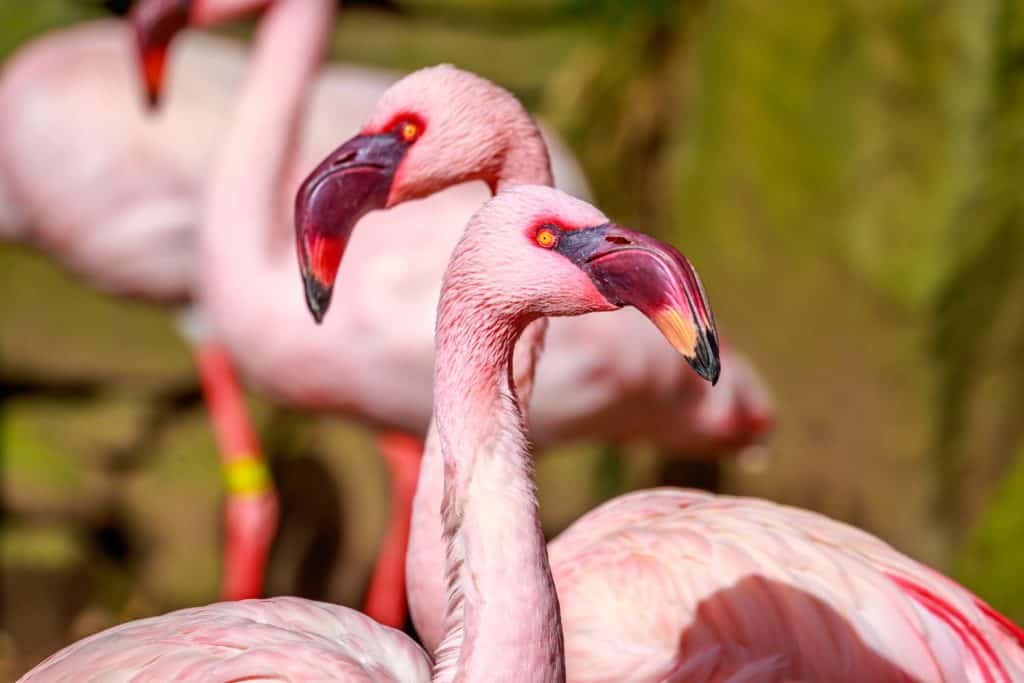
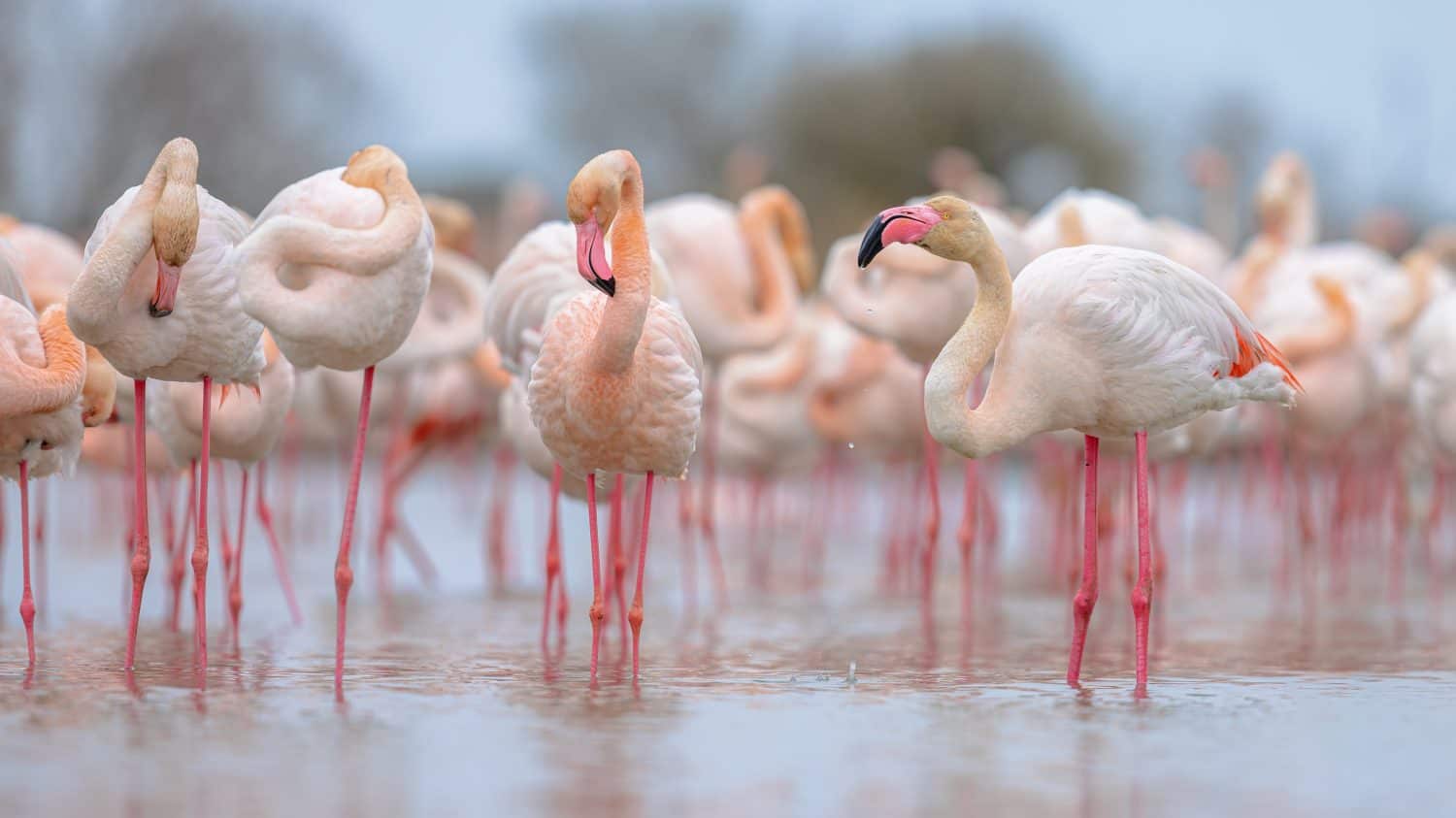
Greater and lesser flamingos have been wintering in Mumbai for decades.
©Png Studio Photography/Shutterstock.com
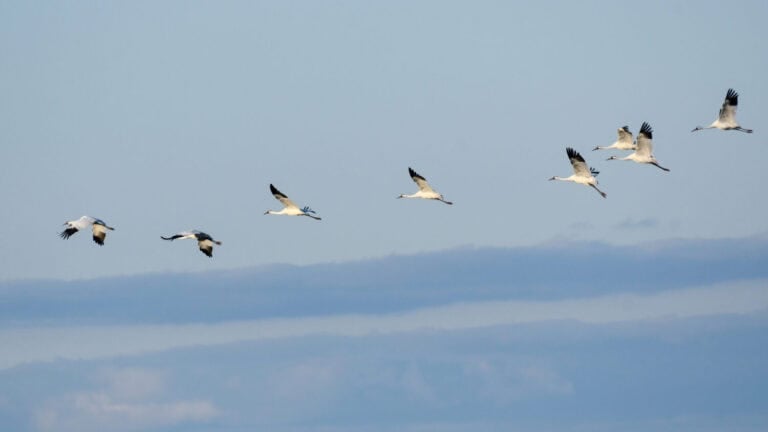
From late November to early December, flamingos return to Mumbai for several months during the winter. The flamingos follow the Central Asian Flyway, a migration corridor that spans 30 countries and connects the Indian Ocean to the Arctic Ocean. While flamingos stop and feed at several locations, the largest flocks are typically observed at Thane Creek, Sewri mudflats, and DPS Flamingo Lake.
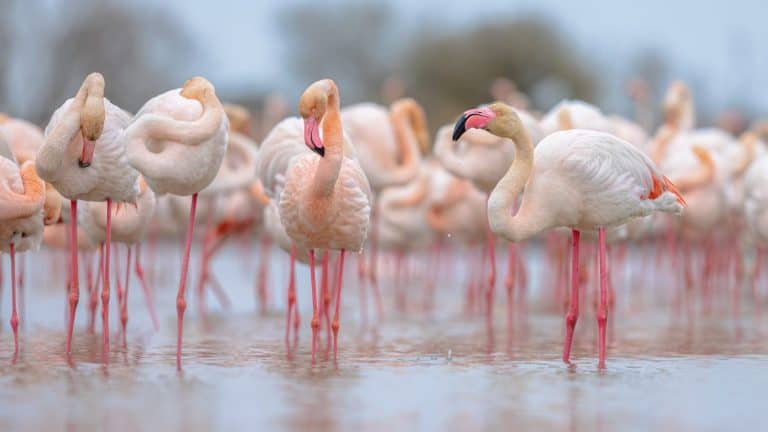
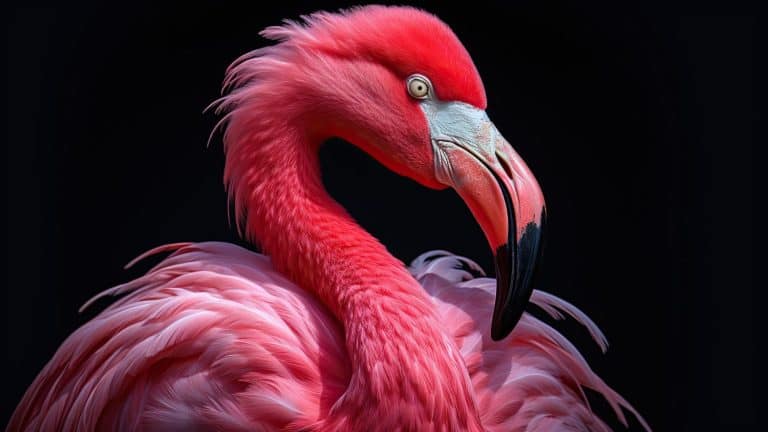
When the flamingos come to Mumbai, they tend to be gray. This changes rapidly as they use their beaks, with structures called lamellae, to filter water and consume algae. By the end of the wintering season, which lasts until approximately May, the flamingos are vibrant pink and orange, indicating that ample food was available during their months in Mumbai’s wetlands.
How Mumbai Inadvertently Created a Feeding Paradise for Flamingos
Beginning in the 1970s, Mumbai expanded. However, the infrastructure was not in place to keep sewage and polluted water from entering Thane Creek and other waterways. Consequently, the wetlands that surrounded Mumbai became polluted.
The pollution was problematic for many animals living in the wetlands. The water pollution changed the ecosystem, causing some populations to decline. But for the lesser and greater flamingos, the waterways became beacons on their migration path, eventually leading to thousands coming to winter in the region.
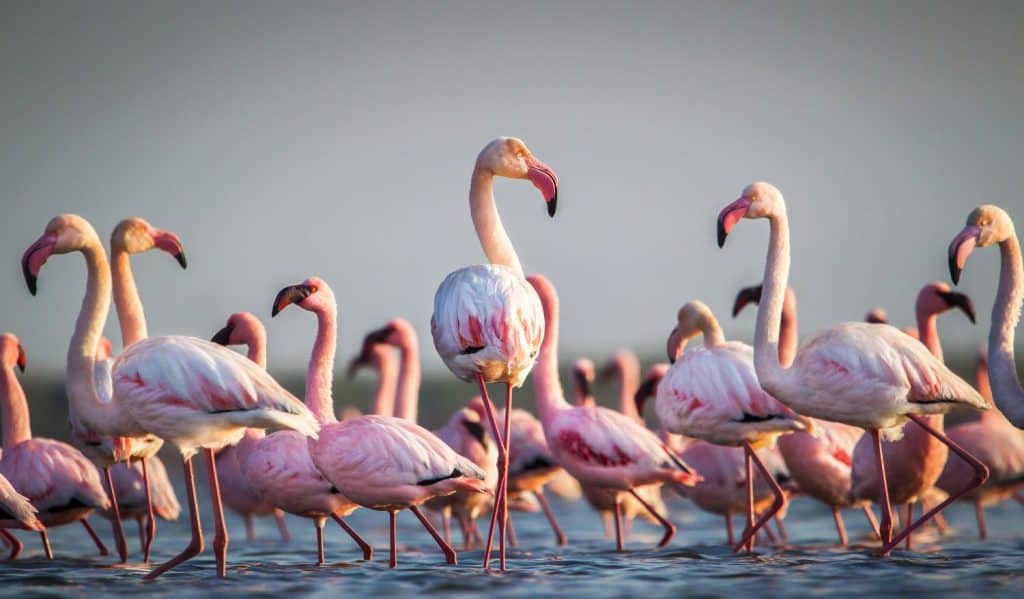
Flamingos came to Mumbai after polluted water caused blue-green algae to rapidly grow.
©John Michael Vosloo/Shutterstock.com
The reason the greater and lesser flamingos flourished in Thane Creek and other wetlands was the increase in blue-green algae. The same pollution that led to the demise of some wetland creatures created a winter wonderland for the flamingos. Because the pollution acted as fertilizer for the algae, neither species had to compete with the other for food. There was plenty of algae to go around.
Eventually, the blue-green algae in the warm, brackish water caused flamingos to permanently alter their migration patterns, making Mumbai their chosen wintering grounds for decades.
What Cause an Increase in Flamingos in Recent Years?
Since the 1980s, flamingos have been wintering in Mumbai. But in the last few years, their population has increased dramatically. However, the reason for the huge spike in population is not a good one.
Beginning in 2019, researchers and bird enthusiasts alike observed a spike in the wintering flamingo population. That year alone, the population rose from between 30,000 and 40,000 to 120,000. Eventually, it became the norm to see 200,000 flamingos wintering in the region. This increase was attributed to higher levels of untreated sewage and pollution in Thane Creek.
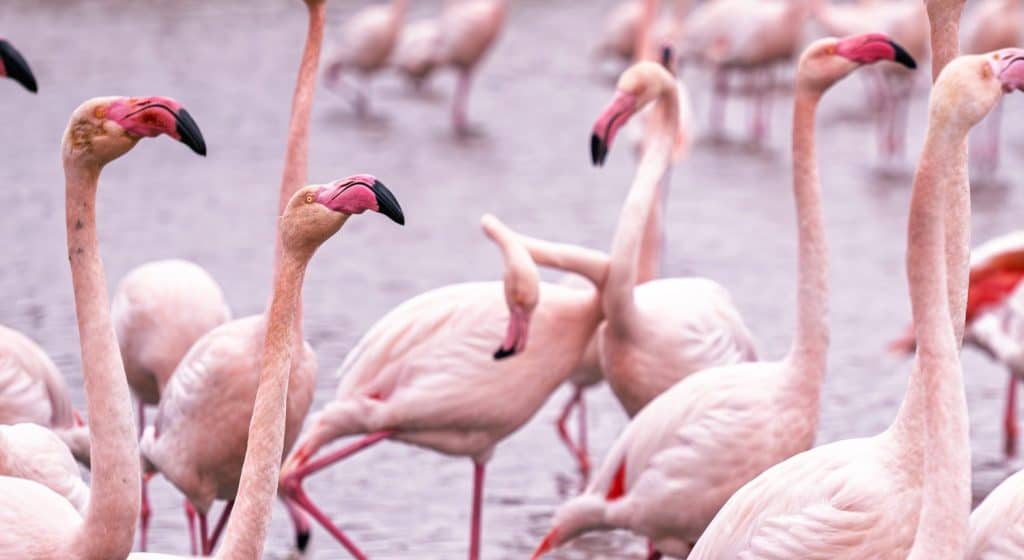
As brackish water remained stable amid tidal flows and blue-green algae blooms, hundreds of thousands of flamingos began to winter in Mumbai.
©Bruno M Photographie/Shutterstock.com
The pollution caused large blue-green algae blooms to grow. This is the main food source for lesser flamingos and part of the diet for greater flamingos, which also feed on crustaceans, insects, and other aquatic invertebrates.
With the increase in blue-green algae, the flamingos came in droves. However, that trend seems to have ended. Pollution will eventually overwhelm the ecosystem, forcing flamingos to look elsewhere for food.
Infrastructure May Lead to a Decline in Flamingo Populations in Mumbai
The single reason flamingos have returned to Mumbai in smaller numbers in 2026 is pollution. While polluted water initially worked in the flamingos’ favor by creating the algae they feed on, increased infrastructure has degraded water quality. Consequently, there is simply not enough food to sustain flamingo populations as they were in the past. This is why the population dipped in 2026 from 200,000 to approximately 25,000.
25,000
flamingos wintering around Mumbai
- the norm after 2019
- 200,000
- 2026, approximately
- 25,000
- Change
- down 88%
As a result of infrastructure development, tidal flow in the waterways where flamingos winter has changed. Between urban development, dredging, and building roadways across waterways, the water has become stagnant. The tides that used to refresh the waterways can no longer do so. Instead, they bring in more pollution through polluted creek water.
How development changed the tides
- Urban development, dredging, roads Roadways were built across waterways.
- Water becomes stagnant Tidal flow in the wintering waterways changed.
- Tides can no longer refresh The tides that used to refresh the waterways can no longer do so.
- Tides bring in pollution They bring in more pollution through polluted creek water.
The pollution has gotten so bad that the Navi Mumbai Environment Preservation Society and NatConnect Foundation found the total dissolved solids in DPS Flamingo Lake to be nine times over the “permissible inland water limit.” This means a toxic habitat has been created as a result of “sewage, industrial waste, and urban runoff.”
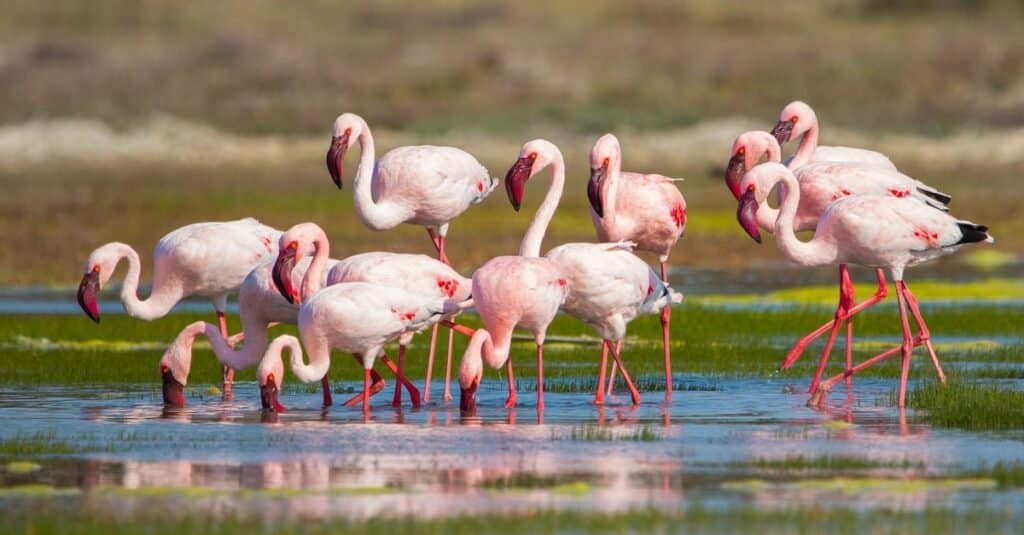
The very pollution that attracted flamingos to Mumbai may be the reason they are retreating from the region.
©Roxane 134/Shutterstock.com
With conditions like these becoming the norm rather than the exception in Mumbai, the days of flamingos coming to the region to winter may be numbered.
Other Threats to Flamingos Wintering In Mumbai
While disruption to tidal inlets is one of the biggest threats to flamingos wintering in Mumbai, it is not the only threat the birds face. With the cumulative effects of water degradation in places like Thane Creek, Sewri mudflats, and Delhi Public Pond, flamingos may not migrate to the region in the coming years.
The threats to flamingos wintering in Mumbai are as follows:
- Sewage and wastewater continuing to flow into waterways is beginning to degrade the water to the point where food is becoming scarce
- Plastic debris is being observed in mudflats in record amounts
- Changes in sea level threaten mangroves, a key location where flamingos roost
- Boat tourism scaring the flamingos, causing them to abandon feeding locations
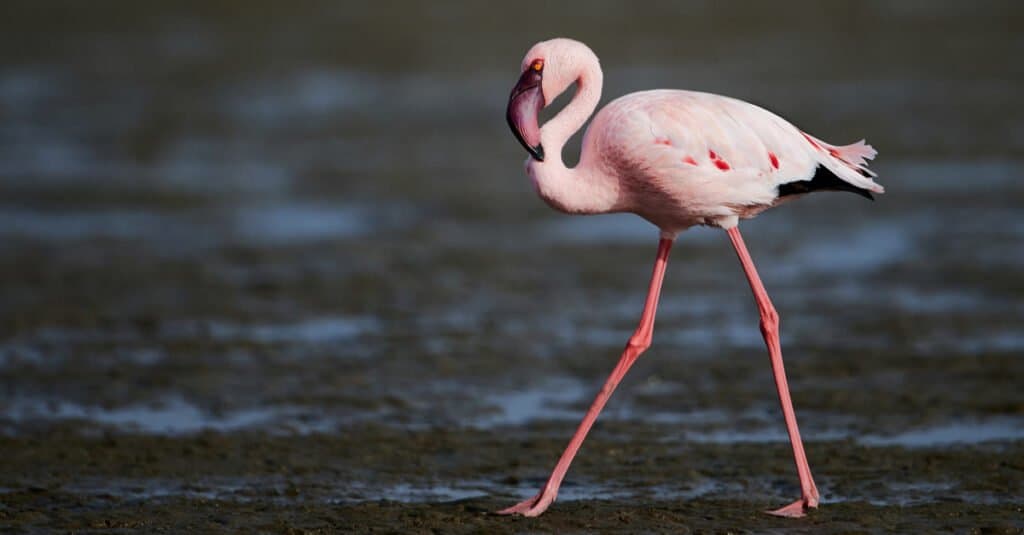
Outside of polluted water, plastic debris, boat tourism, and changes in sea level may lead flamingos to stop coming to Mumbai.
©mikex4/Shutterstock.com
If these issues persist, flamingos simply will not return to Mumbai. When that happens, it signals that the ecosystem has reached the tipping point at which it can no longer sustain animals that depend on wetlands. This is incredibly alarming for flamingos, who rely on “a narrow range of water chemistry and salinity conditions that sustain the algae, diatoms, and microscopic invertebrates forming their food base.”
Some flamingos have already chosen to seek alternative waterways along their migration route. If Mumbai does not want to lose all its wintering flamingos, change is needed and must happen now, before it is too late to improve water conditions in the region.