
Quick Take
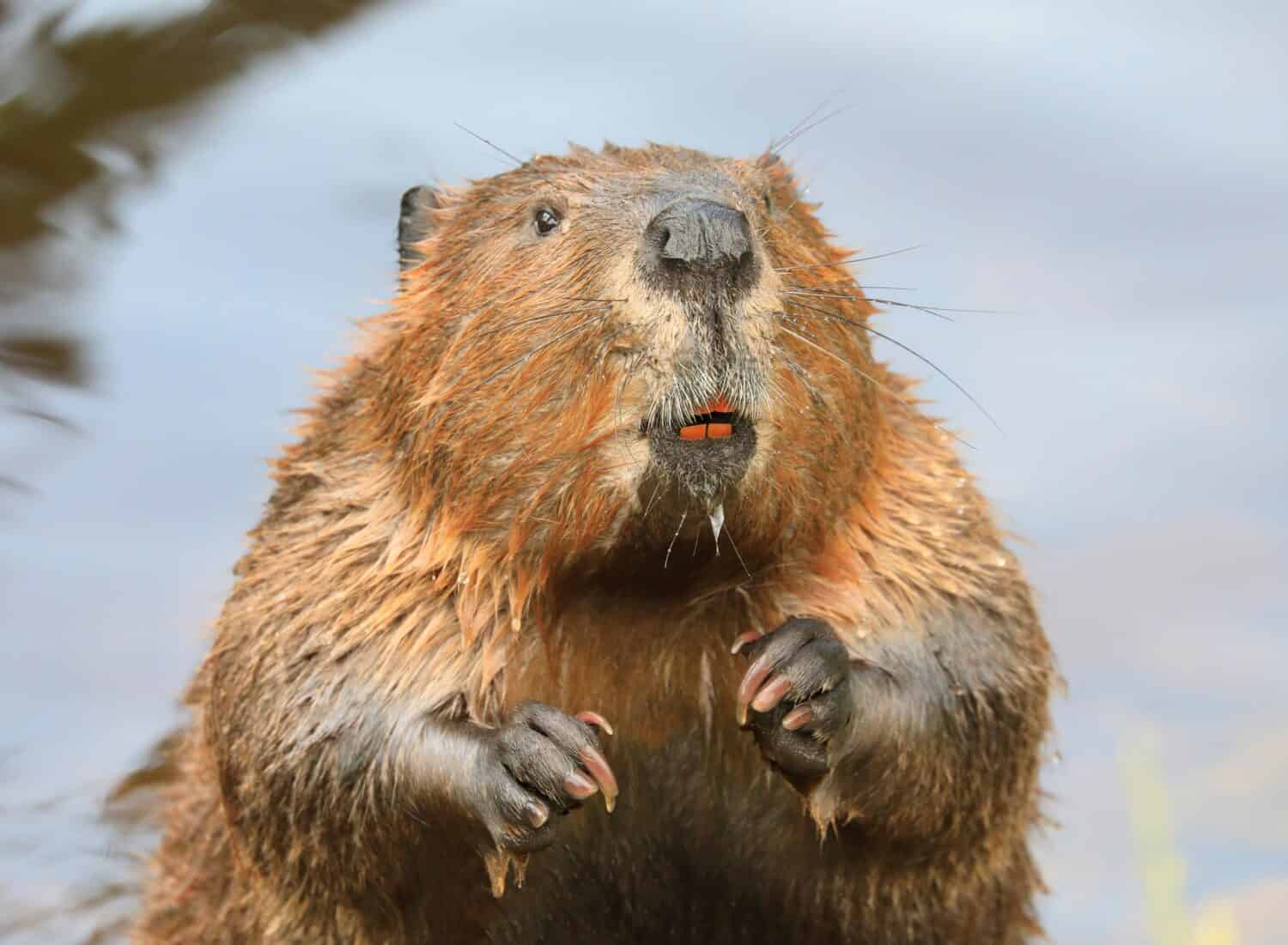
- Oregon officially named the American beaver as its state mammal in 1969 after long informal symbolism.
- Beavers are ecosystem engineers whose dams slow streams, create wetlands, and raise groundwater in Oregon.
- In the 1800s, beaver pelts fueled the fur trade, with Hudson’s Bay Company forts along the Columbia River.
- Read on to discover how modern management balances salmon habitat benefits with flood risks from beaver dams.
Oregon calls itself the Beaver State, a designation that reflects more than symbolism. Long before lawmakers made the beaver the official state animal, these animals shaped Oregon’s rivers, wetlands, and settlement patterns by building dams that slowed water and created fertile valleys. Trade in beaver pelts was an early foundation of the economy of the Pacific Northwest. Beavers appeared early on state coins, seals, and the flag, signaling how closely it was tied to Oregon’s identity. Naming the beaver as the state animal simply formalized a relationship that had already defined the region.
From Informal Emblem to State Animal
The beaver functioned as an unofficial symbol of Oregon long before it received legal recognition. During the territorial period, it appeared on locally minted gold coins known as beaver money, created in response to gold shortages. The animal also featured prominently on the territorial seal, representing trade, labor, and settlement. By the early twentieth century, the beaver had become so closely associated with Oregon that it appeared on the reverse side of the state flag, adopted in 1925.
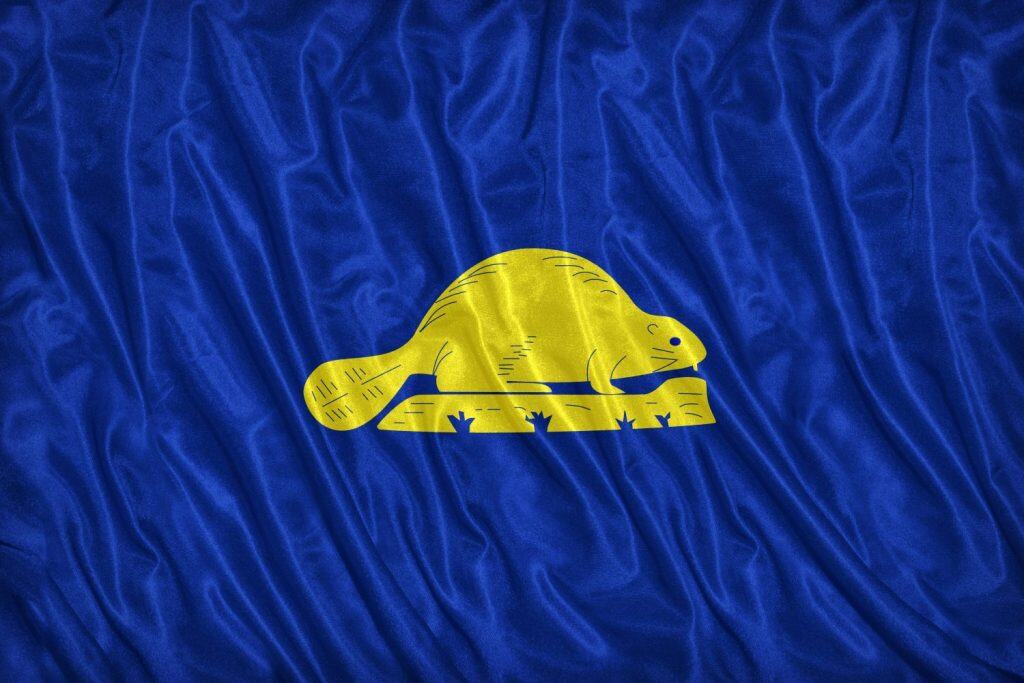
The reverse of the state flag of Oregon features an image of a beaver on a log.
©Wasan Ritthawon/Shutterstock.com
Despite this long-standing symbolism, Oregon did not officially name the American beaver as its state animal until 1969. The move followed public discussion sparked by a newspaper editorial noting the absence of an official state animal. Support from state leaders helped the proposal pass quickly. Rather than introducing a new symbol, the designation confirmed one that residents already recognized. The decision reflected how cultural symbols often gain legal status after generations of use.
Beaver Fur, Trade, and Population Decline
Beaver pelts played a central role in Oregon’s early economic history. In the nineteenth century, demand for felt hats made from beaver fur drew traders into the Pacific Northwest. Companies such as the Hudson’s Bay Company established forts and trade routes along major rivers, including the Columbia. Pelts became a form of currency, and trapping expeditions helped map interior regions later used by settlers.
This intense exploitation led to sharp population declines. By the late 1800s, beavers had disappeared from many watersheds due to unregulated trapping and habitat disruption. The collapse of beaver populations altered river systems as dams failed and wetlands dried up. At the time, these ecological effects received little attention. The decline later became an early example of the consequences of unchecked resource use.
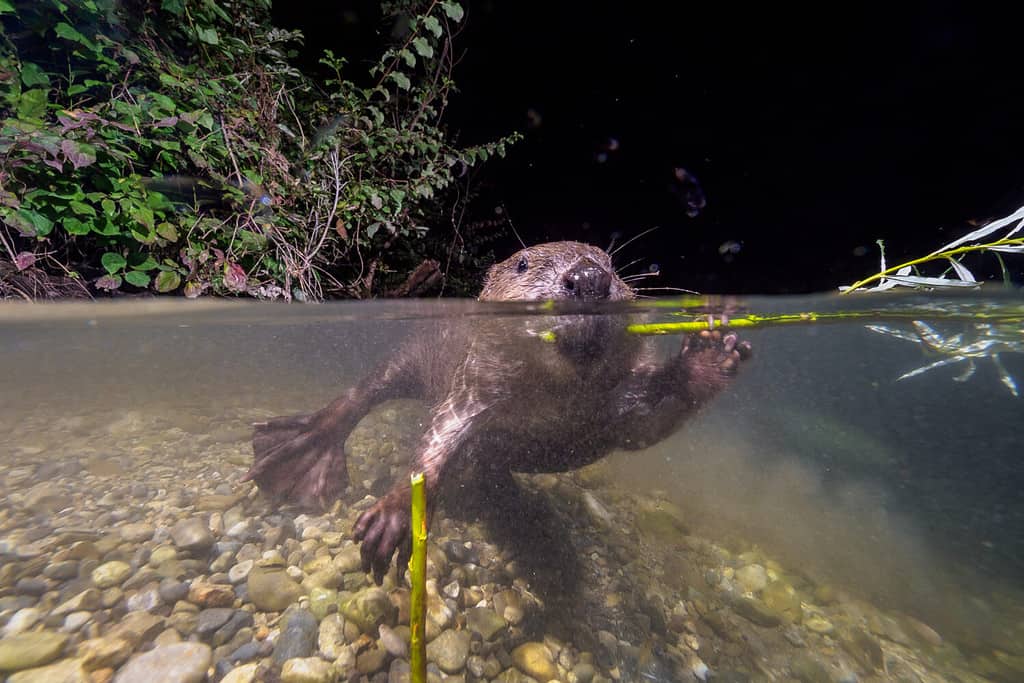
The water resistant properties of beaver fur made it a popular material for felt hats in the 19th century.
©benny337/Shutterstock.com
Recovery, Protection, and Changing Values
Beaver populations in Oregon began to recover during the twentieth century as fur demand dropped and trapping regulations took effect. Reforestation and improved land management restored suitable habitat, allowing beavers to return to many streams. Today, the species is widespread across the state and managed under state wildlife regulations, with protections that balance conservation and land use needs.
This recovery reflects a broader shift in how wildlife is valued. Where beavers were once seen mainly as commodities, they are now managed with attention to their ecological role. Oregon’s approach recognizes the species as part of functioning ecosystems rather than simply a resource to be harvested, aligning the state animal with modern conservation priorities.
Why Beavers Build Dams
Beavers build dams to create deep, still water that protects them from predators and gives them reliable access to food. A pond allows beavers to swim rather than walk on land, where they are slower and more vulnerable. Deep water also keeps the entrance to their lodge submerged, making it harder for predators like wolves or bears to reach them.
Dams also help preserve winter food supplies. Beavers cache branches underwater near their lodge so they can eat during colder months. Still water prevents ice from freezing all the way to the bottom, keeping that food accessible. In short, dams are not random constructions; they are carefully built survival tools that shape the surrounding landscape to meet the beaver’s needs.
Smart Lumberjacks
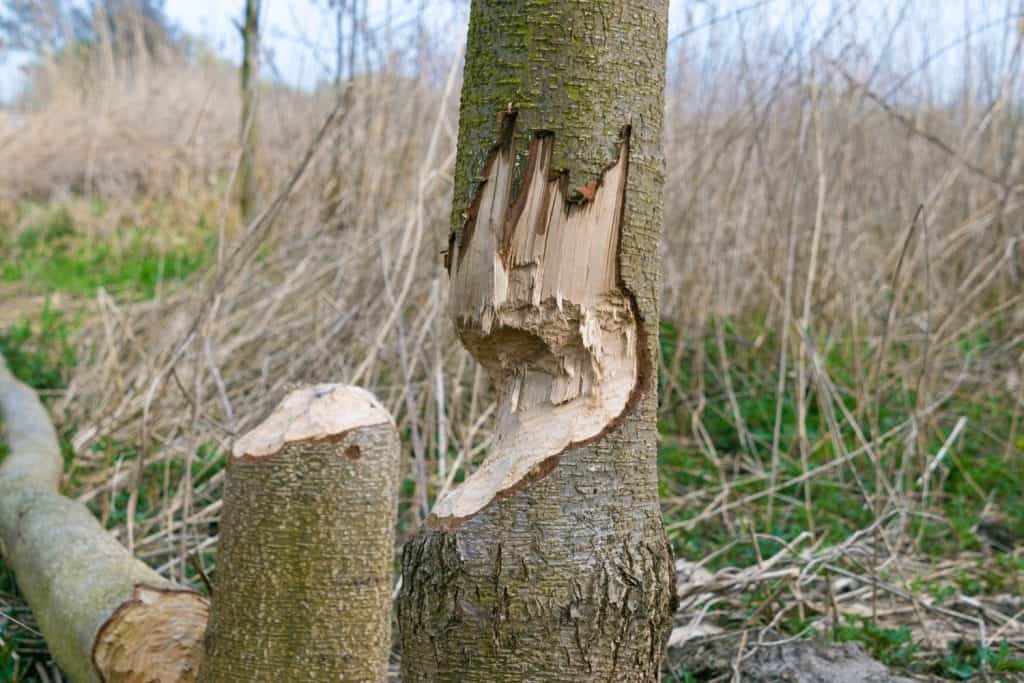
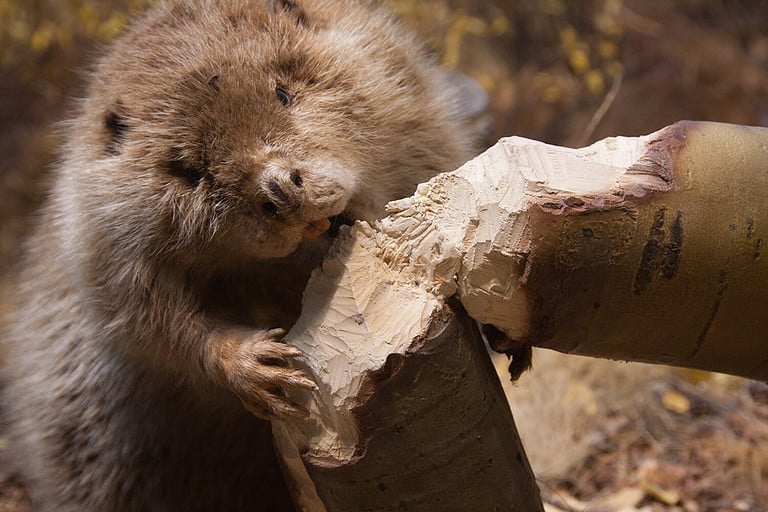
Beavers have been known to chew through tree trunks as wide as 24 inches.
©bykot photo/Shutterstock.com
One of the more fascinating details of beaver behavior is how they know when to move out of the way as a tree begins to fall. Beavers do not rely on sight alone. As they chew through a trunk, they pause frequently and listen for subtle creaking or cracking sounds. These noises signal internal stress in the wood and tell the beaver which direction the tree is likely to fall. When the sounds change or intensify, the beaver quickly retreats to safety, often slipping straight into the water.
Beavers are capable of cutting down trees much larger than many people expect. While they usually prefer smaller trees between two and six inches in diameter, they have been documented felling trees over 24 inches wide. These larger trees can take days or weeks to bring down and are often worked on gradually rather than in a single effort.
Even so, beavers tend to choose species like willow, aspen, cottonwood, and birch, which are softer and easier to chew. Larger trees are often targeted when they offer valuable food or building material close to water.
Beavers’ Effect on the Ecosystem
Beavers are often described as ecosystem engineers because their dams reshape water systems. By slowing streams, dams spread water across floodplains, reduce erosion, trap sediment, and raise local groundwater levels. The wetlands created by these structures support a wide range of plants and animals and help streams retain water during dry months. Eventually, beaver ponds can silt up and become meadows sustaining grazing animals like deer.
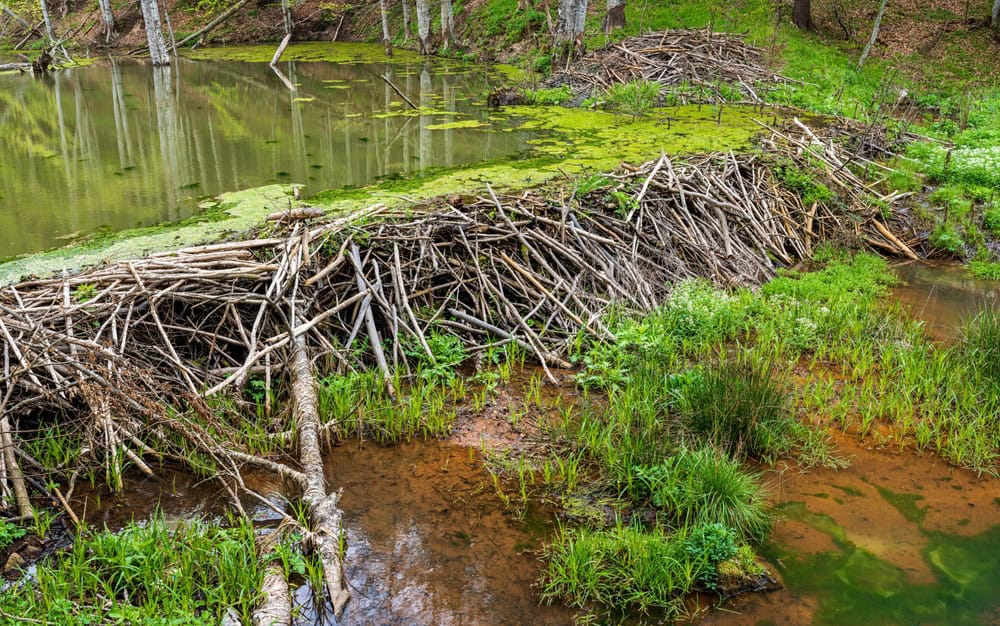
By damming streams to make ponds, beaver have a significant impact on forest ecosystems.
©krstrbrt/Shutterstock.com
These effects have become increasingly important as Oregon faces drought, wildfire risk, and warmer temperatures. Beaver-created wetlands can slow fires, cool water, and sustain vegetation during extreme conditions. The same traits that once made the beaver valuable to the fur trade now support long-term watershed stability, reinforcing the relevance of the state animal in a changing climate.
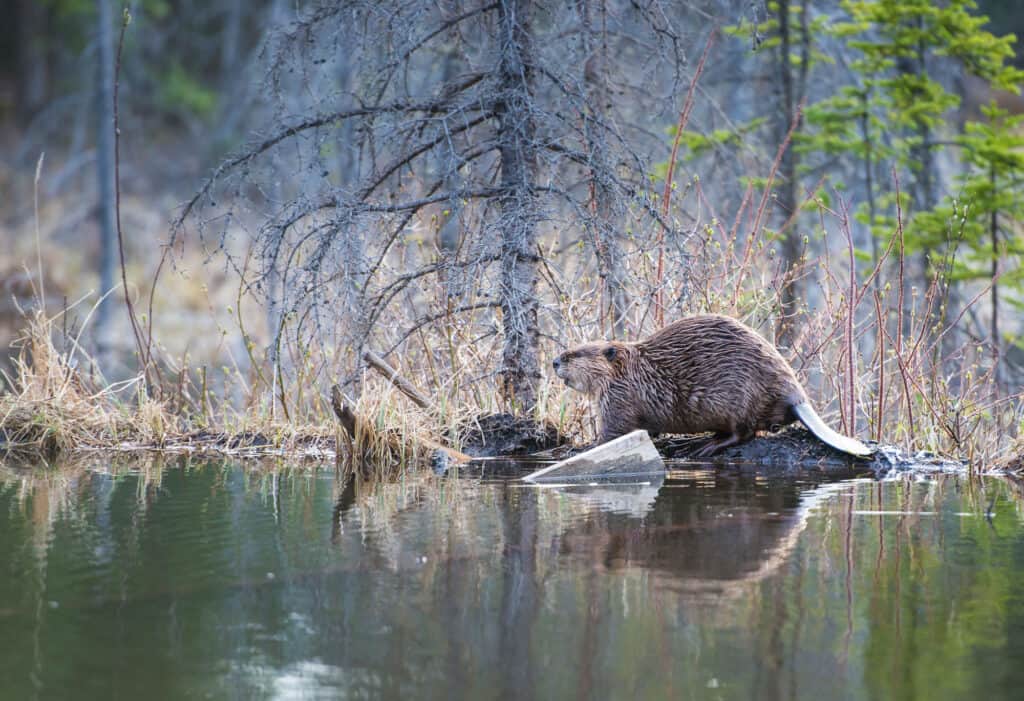
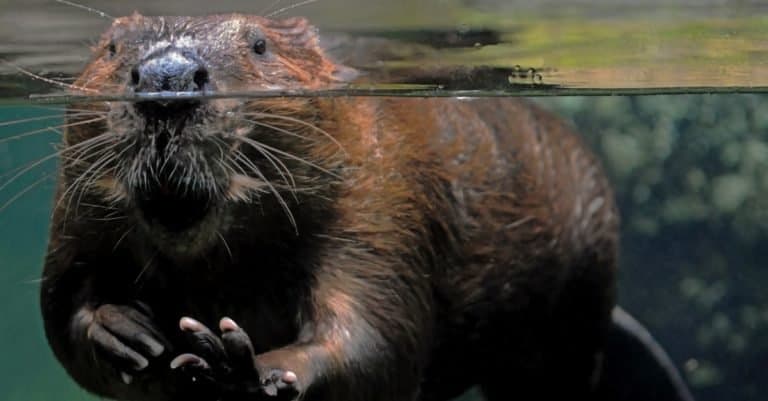
In modern Oregon, beavers are valued not as commodities but for their ecological role.
©iStock.com/Jillian Cooper
Beavers, Fish, and Human Communities
Beaver dams often benefit salmon and trout by creating calm nursery habitat for young fish. Ponds provide cover, moderate water temperatures, and offer refuge during floods. While fish passage concerns exist in some narrow channels, many restoration efforts now use beaver dam analogs to encourage natural processes while addressing movement needs.
Beavers also live in cities and suburbs across Oregon, including in parks and urban streams. Their presence can cause flooding or tree damage, but many communities now rely on nonlethal management tools such as flow devices and tree protection. Public education has helped shift attitudes from removal toward coexistence, making the state animal a familiar presence in some neighborhoods.
When Beaver Dams Become a Nuisance
Beaver dams are often praised for their ecological benefits, but there are times when they create real problems for people. Dams can flood roads, agricultural fields, septic systems, and residential areas, especially when beavers move into drainage ditches, culverts, or irrigation canals. In these settings, even a small rise in water level can cause costly damage or safety hazards. Because of this, wildlife agencies or local governments may remove dams or install water-control devices to regulate flow without fully destroying the structure.
Dam removal is usually a last resort. In many regions, permits are required before interfering with beavers or their dams, since the animals are protected wildlife. When removal does happen, it is often paired with relocation, exclusion fencing, or flow pipes that reduce flooding while allowing beavers to remain. These approaches recognize that beavers are not being destructive out of malice; they are following instincts that evolved to keep them safe.
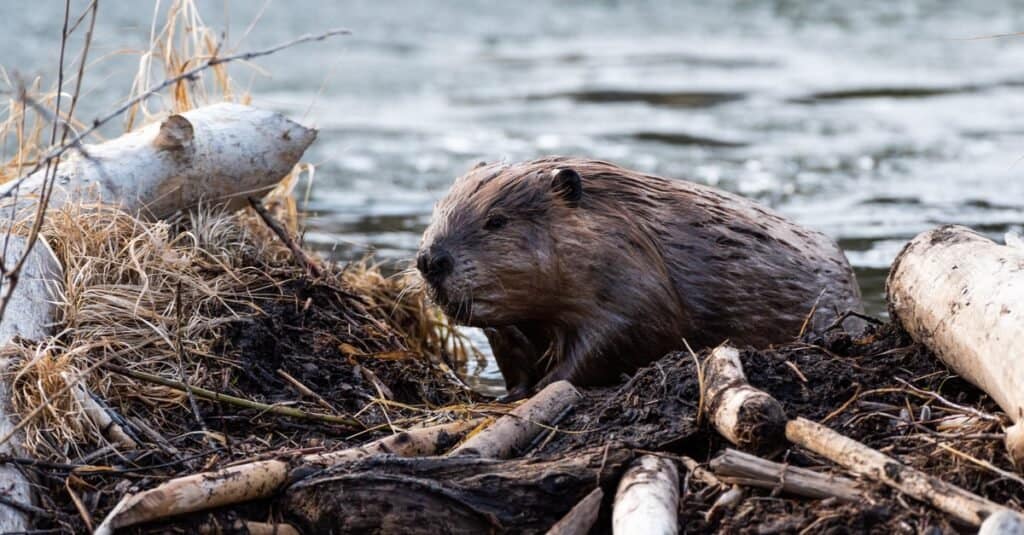
Beaver dams can flood large areas in inconvenient places and sometimes have to be removed.
©Dan-Pepper/Shutterstock.com
The Animal That Built Oregon
Oregon’s decision to name the beaver as its state mammal reflects a relationship shaped by geography, history, and shared survival. Long before official designations, beavers influenced where water flowed, where wetlands formed, and where people eventually settled. Their pelts fueled early trade, their image marked coins and flags, and their engineering quietly built the landscapes that supported farms, towns, and transportation routes.
Today, as Oregon faces drought, wildfire, and shifting climate conditions, the beaver’s ability to store water and support healthy ecosystems has taken on renewed importance. The state mammal is not just a symbol of the past, but a living reminder that Oregon’s natural systems and human communities have always been connected to the work of this industrious animal.