
Quick Take
- The northern cardinal secured its place as Indiana’s bird by inhabiting the state year-round.
- The 1933 legal statute referred to the bird as the “Red Bird or Cardinal,” acknowledging the common name many residents already used.
- Settlement patterns and forest clearing were required for this bird to thrive.
- Indiana utilized a nature study campaign to ensure the final selection carried essential moral weight.
The northern cardinal seems an obvious choice for Indiana’s state animal. Its vivid red feathers stand out against winter snow, while its clear whistles carry across yards and woodlots during quiet months. What feels obvious today, however, grew out of a specific moment in Indiana’s history. The decision was shaped by changing landscapes, organized citizen interest, and a desire for hopeful symbols during a period of hardship. When Indiana adopted the cardinal in 1933, the bird already lived close to people’s homes and routines. That closeness, more than appearance alone, explains why the cardinal became a lasting emblem of the state.

A Scarlet Newcomer
During Indiana’s early statehood, the northern cardinal was far less common than it is today. The species favored warmer climates farther south and appeared only sporadically in parts of the Midwest. As settlement patterns changed during the nineteenth century, so did the birds’ range. Forest clearing created open edges, farms introduced hedgerows, and towns added gardens filled with shrubs and small trees. These changes produced an ideal habitat for cardinals, which thrive in transitional spaces rather than deep forests.
By the late nineteenth and early twentieth centuries, cardinals began expanding steadily northward. Bird feeders also played a role. As more households put out seeds during winter, cardinals gained reliable food sources that allowed them to survive colder months. By the 1920s, the bird had become a regular sight across Indiana. Its presence shifted from novelty to familiarity, making it part of daily life for rural families and town residents alike.
The 1933 Decision
Indiana formally named the cardinal its state bird in 1933. The General Assembly acted during a period when lawmakers were defining several official symbols. The statute referred to the bird as the “Red Bird or Cardinal,” acknowledging the common name many residents already used. This legal recognition came at a difficult time. The Great Depression weighed heavily on Indiana, affecting farms, factories, and small businesses.
State leaders wanted symbols that felt accessible and encouraging. The cardinal fit that goal. It lived year-round in Indiana, appeared across the entire state, and required no explanation for residents who already saw it outside their windows. Lawmakers could point to a bright, cheerful-looking living creature that endured winter without leaving and remained visible when many other birds disappeared. That steadiness carried emotional meaning in an era defined by uncertainty.
How Schoolchildren Helped Shape the Choice
The movement toward selecting a state bird did not come from legislators alone. In the early twentieth century, nature study became a popular part of classroom education. Teachers encouraged students to observe local wildlife and discuss its role in the environment. As part of these lessons, children in many states voted on their favorite birds.
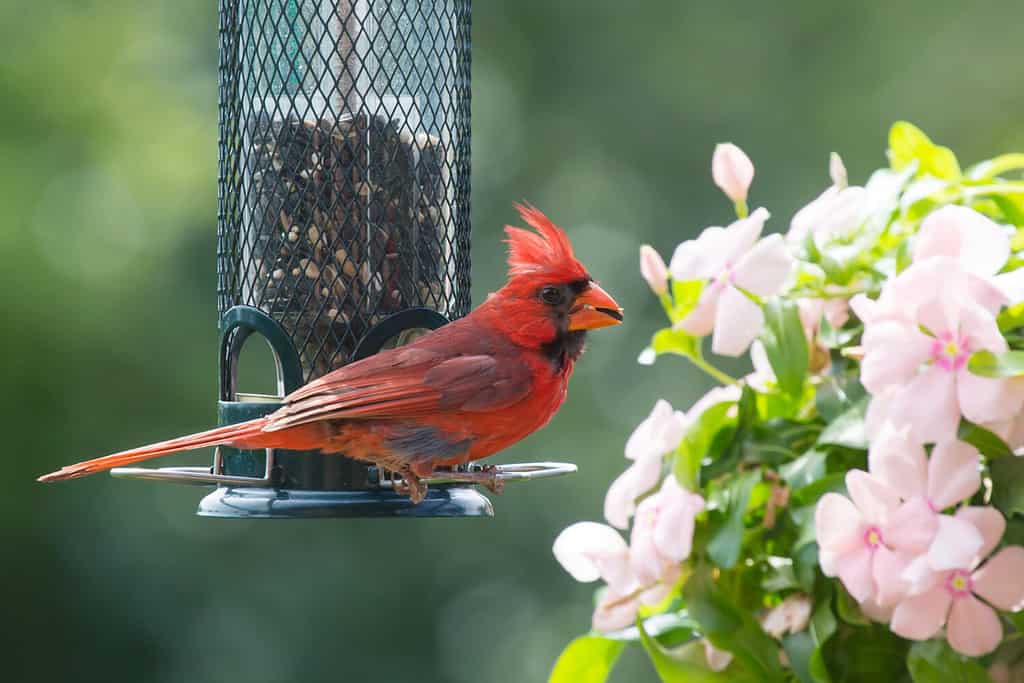
Seen regularly at family feeders, the northern cardinal became a favorite among Indiana students participating in early nature study programs.
©Ami Parikh/Shutterstock.com
In Indiana, educators and conservation groups gathered student votes and shared the results with lawmakers. The cardinal consistently ranked high in these informal polls. Children recognized it easily and associated it with home rather than distant wilderness. Many saw cardinals at family feeders or nesting in nearby shrubs. That familiarity gave the bird strong support among young voters, which added moral weight to the campaign. When legislators cited public backing, they could honestly say the choice reflected voices from classrooms across the state.
A Bird That Stayed Through Winter
One reason the cardinal stood apart from other candidates was its refusal to migrate. Many popular songbirds leave Indiana during winter, heading south in search of food. Cardinals remain close to their breeding territories year-round. They forage in dense cover, hop along the ground beneath feeders, and shelter in thick shrubs when temperatures drop.
This behavior mattered symbolically. A state bird that vanished for months each year would have felt incomplete, a “fair-weather friend” so to speak. The cardinal’s winter presence offered something residents could rely on. Males often sing on clear winter days, their calls carrying across frozen fields and suburban streets. These moments reinforced the idea that life persisted during harsh seasons. The bird’s year-round residency aligned well with Indiana’s image of endurance and continuity.
Color, Song, and Recognition
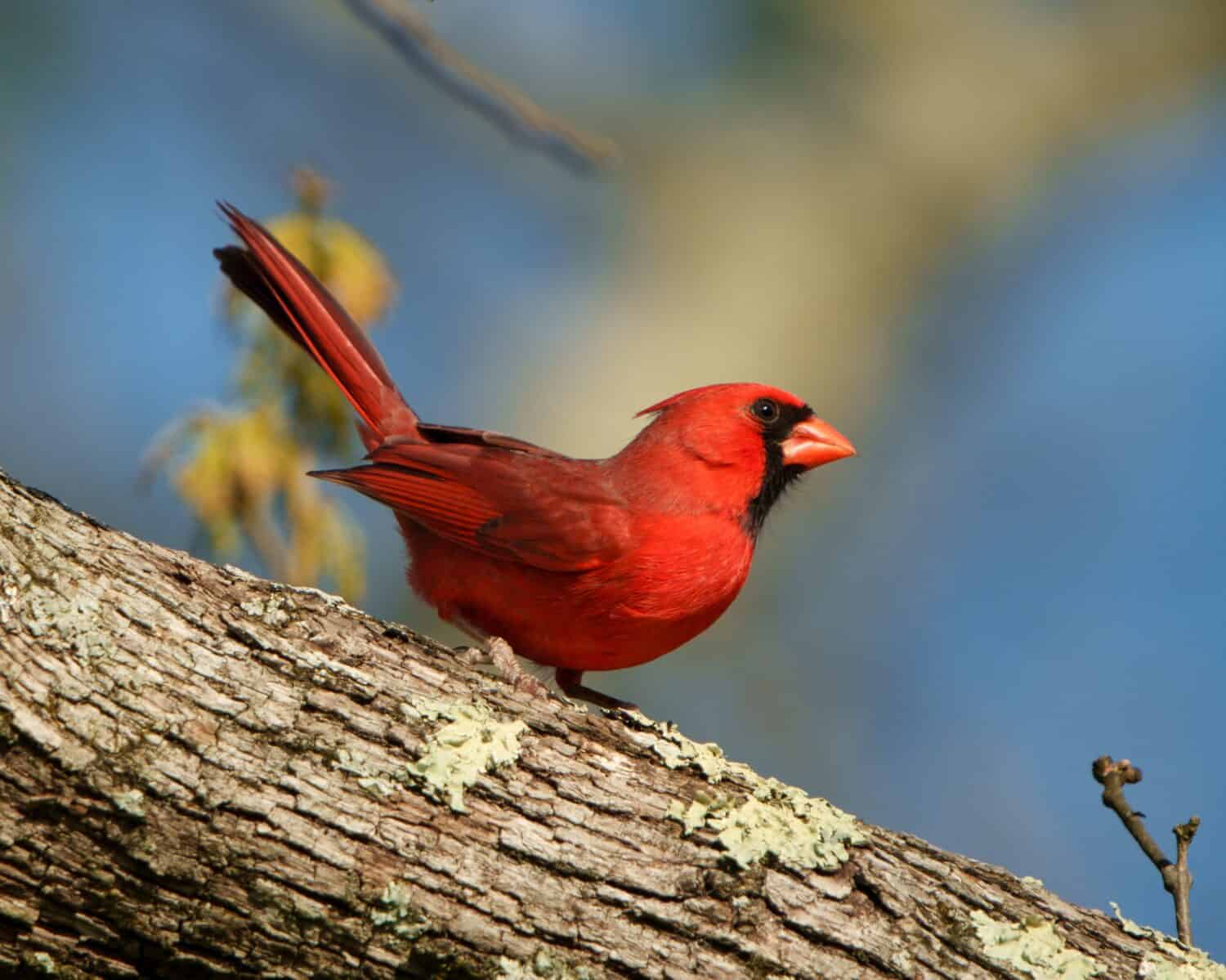
Appearance played a role in the cardinal’s popularity, but recognition mattered more than decoration. Male cardinals display red plumage with a black mask and raised crest, while females show softer brown tones with red accents. The contrast makes pairs easy to identify, even for people with limited bird knowledge.
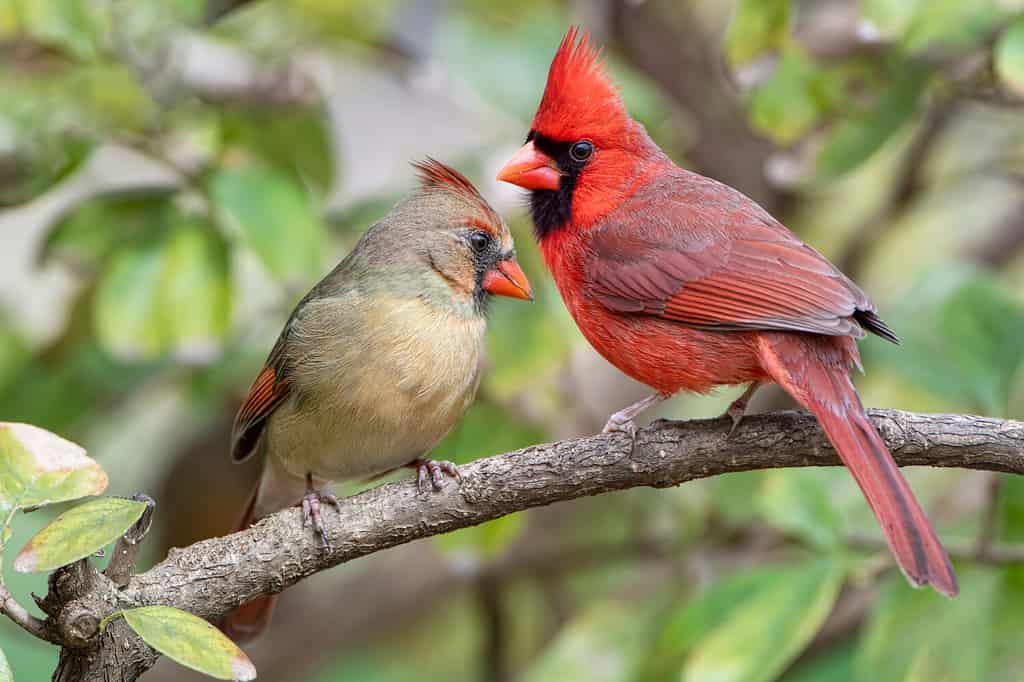
The contrasting colors of male and female cardinals made the species easy to recognize, even for people with little bird knowledge.
©Bonnie Taylor Barry/Shutterstock.com
Sound also contributes to recognition. Cardinals sing clear, repeated whistles that vary slightly by individual but remain easy to distinguish. Because the species sings across much of the year, its voice becomes part of the background rhythm of Indiana neighborhoods. These traits helped residents feel a personal connection to the bird. It did not require special knowledge or equipment to notice, which made it a natural symbol for a state built around small towns and shared routines.
A Regional Symbol With Local Meaning
As of 2026, Indiana is one of seven states that recognize the northern cardinal as their state bird. The others are Illinois, Kentucky, Ohio, North Carolina, Virginia, and West Virginia. (An interesting but unintentional coincidence of these states sharing this state bird is that all of them except North Carolina were part of Virginia’s earliest colonial territorial claims).
Sharing their state bird has never weakened Indiana’s attachment to the cardinal. Instead, it emphasizes regional connections. The bird links neighboring states through common landscapes and climates while still appearing in Indiana-specific contexts such as school mascots, municipal seals, and community logos. The cardinal’s familiarity across state lines supports its role as a unifying symbol rather than a competitive one.
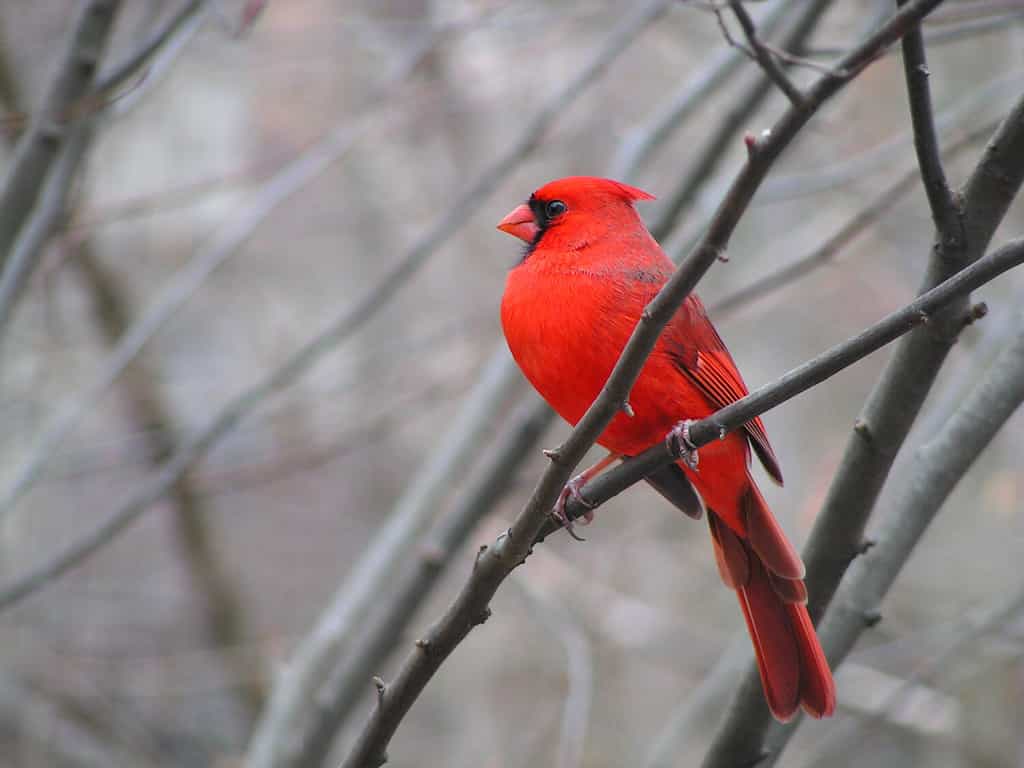
Living alongside people in ordinary landscapes, the northern cardinal remains a quiet symbol of resilience and shared identity in Indiana.
©Mary Terriberry/Shutterstock.com
Daily Life With Cardinals
For many Indiana residents, cardinals are part of everyday observation rather than special outings. The birds readily visit platform and hopper feeders filled with sunflower or safflower seeds. They often feed on or near the ground, hopping beneath shrubs where spilled seeds collect. This behavior makes them easy to watch from kitchen windows and porches.
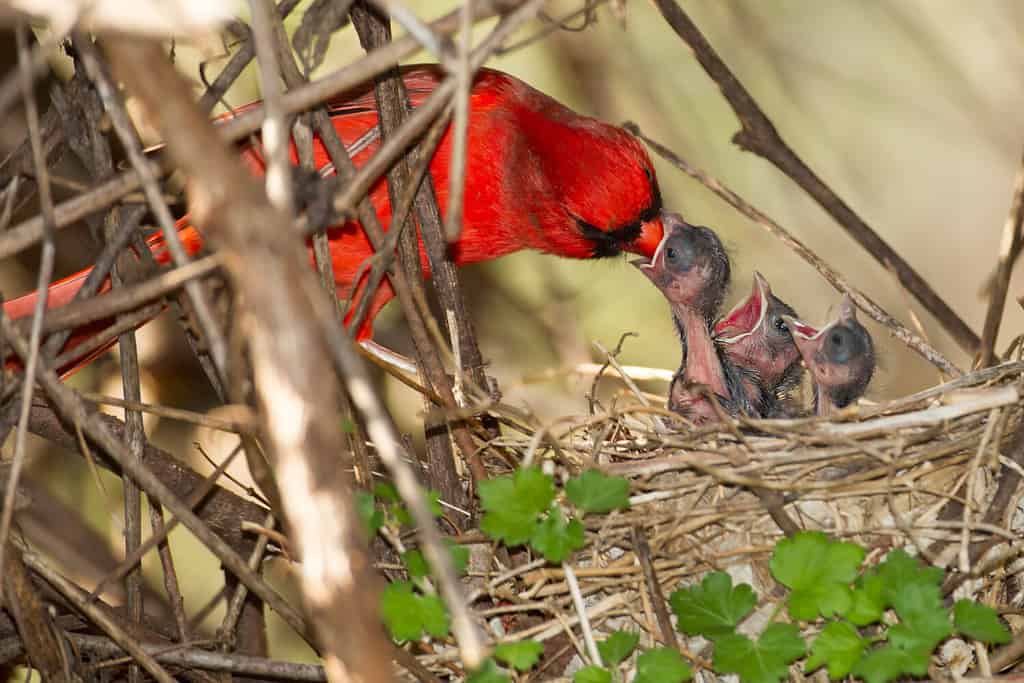
By nesting close to homes and caring for their young in nearby shrubs, cardinals become familiar presences in everyday Indiana life.
©Agnieszka Bacal/Shutterstock.com
Nesting habits also place cardinals close to people. They build cup-shaped nests in dense bushes, small trees, and hedgerows. Females lay several speckled eggs, and both parents participate in feeding nestlings. These visible life stages deepen familiarity. Residents may watch fledglings learn to fly or hear young birds calling from cover. Such repeated encounters turn the state bird into a shared neighbor rather than a distant emblem.
Cardinals and Indiana’s Landscapes
The cardinal’s success reflects Indiana’s landscape patterns. The bird favors edge habitats where fields meet woods or where natural growth blends with human planting. Indiana’s mix of farmland, towns, roadways, and forest fragments creates extensive edge environments that support cardinal populations.
Diet flexibility also contributes. Cardinals eat seeds, fruits, and insects. During breeding season, insects provide protein for growing young. At other times, seeds and berries sustain adults. By consuming weed seeds and dispersing plant seeds, cardinals influence local vegetation patterns. Their insect consumption benefits gardens and crops by reducing pest numbers. These ecological roles align with Indiana’s working landscapes, where agriculture and wildlife exist side by side.
Legal Protection and Population Stability
Since its designation as state bird, the northern cardinal has remained common in Indiana. The species is protected under the federal Migratory Bird Treaty Act, which prohibits killing or capturing these birds without permits. This protection helps ensure stable populations across the state. As of 2026, long-term surveys indicate that cardinal numbers are stable or increasing in Indiana and across much of their range.
Backyard feeding, winter shelter, and adaptable habitat use support this trend. Conservation groups encourage residents to maintain shrubs, native plants, and natural cover rather than relying only on open lawns. Such practices benefit cardinals while also supporting other wildlife. The bird’s continued abundance reinforces its role as a symbol of resilience grounded in ordinary care.
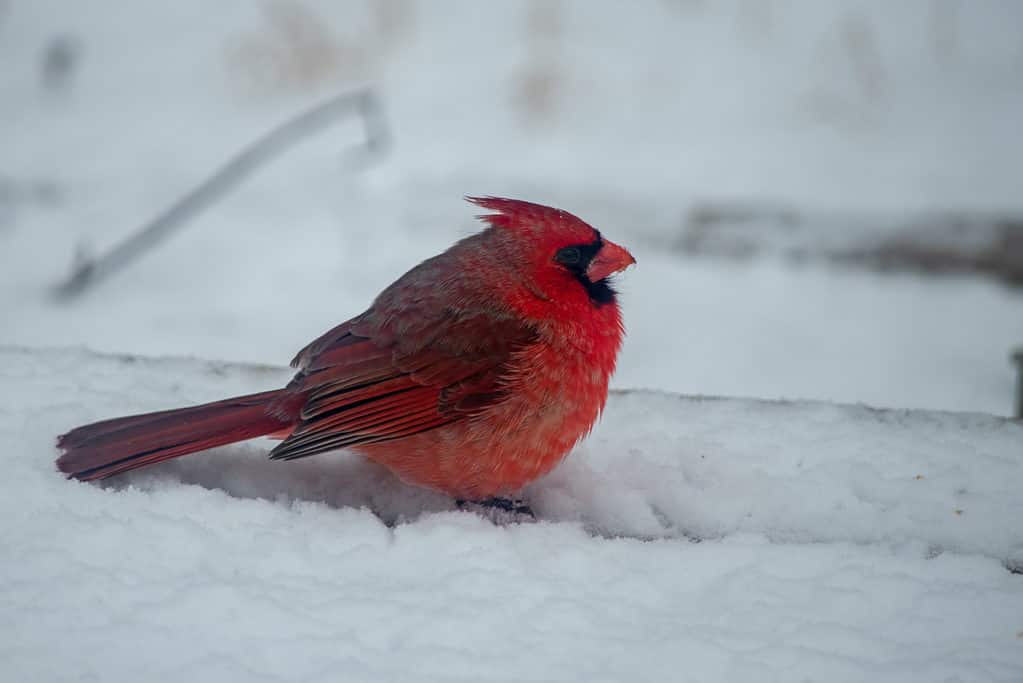
Protected under federal law and supported by adaptable habits, the northern cardinal remains a common sight in Indiana even through winter.
©iStock.com/Diane079F
Where to See Cardinals in Indiana
As of 2026, cardinals can be found throughout Indiana, with especially consistent viewing in suburban neighborhoods, parks with mixed woodland edges, and rural areas with hedgerows and shelterbelts. Suburban neighborhoods with mature shrubs and trees attract pairs year-round. Parks with mixed woodland edges also provide reliable habitat. Even city green spaces often support cardinals, particularly where landscaping includes dense plantings.
Rural areas offer another viewing opportunity. Hedgerows along fields, creek corridors, and farmyards with shelterbelts draw cardinals in all seasons. Winter is often the easiest time to spot them, since bare branches reveal feeding activity and the males’ blood-read feathers are unmistakable. Summer views may require patience, as foliage provides cover, but songs often give away a bird’s location.
How to Attract Cardinals to Your Yard
Attracting cardinals does not require specialized equipment. Feeders placed near shrubs give birds a sense of security. Sunflower and safflower seeds are reliable choices. Providing water, especially during winter thaws, increases visitation. Cardinals prefer ground-level or low feeders rather than hanging tubes. Feeders should either be placed within a few feet of a window, or 10 feet or more away. This will prevent some bird strikes on windows, as birds need space to slow down or speed up when flying near feeders. It’s in this “middle distance” zone that birds can become most confused.
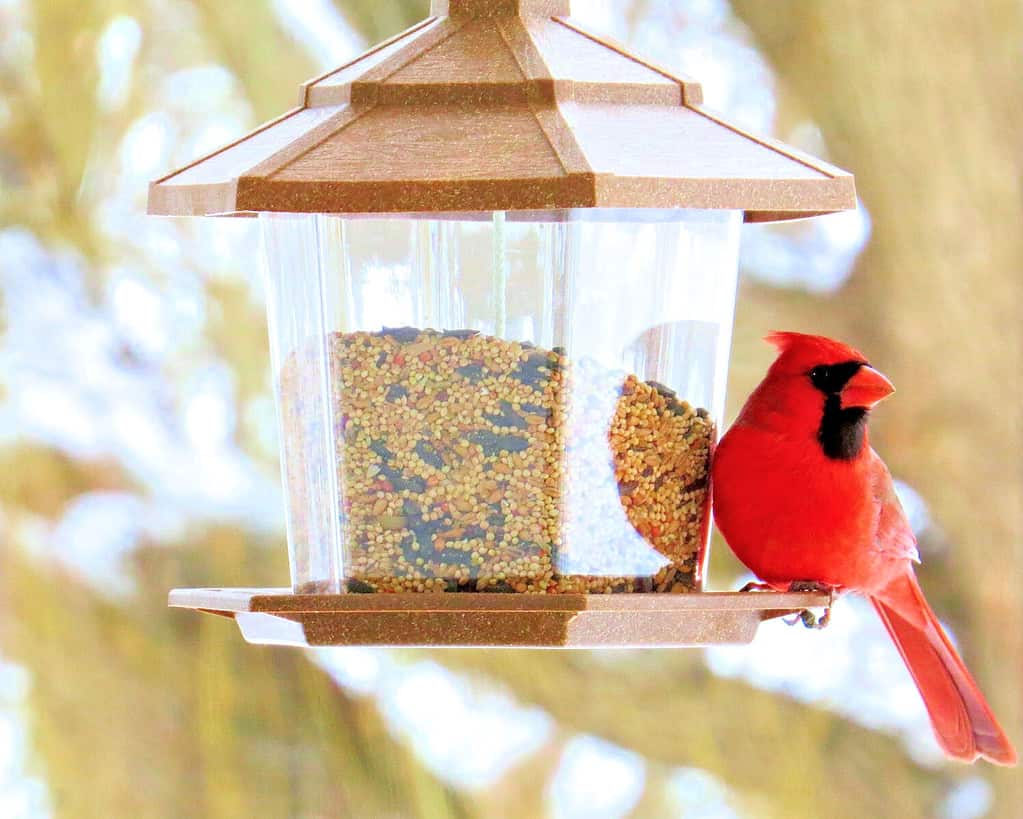
Simple feeder placement and nearby cover help attract cardinals into everyday backyard spaces.
©MLHoward/Shutterstock.com
Landscaping choices matter as much as feeders. Dense bushes offer nesting sites and shelter from predators. Native shrubs that produce berries provide natural food sources. Leaving some leaf litter on the ground supports insects, which feed young birds during spring. These simple practices create conditions that allow residents to observe the state bird up close across seasons.
Does the Symbol Still Fit Today?
Nearly one hundred years after its adoption, the cardinal continues to match Indiana’s identity in practical ways. As of 2026, the bird remains the official state bird and is present through winter, reflecting steadiness rather than seasonal change. It thrives in rural and urban spaces alike, mirroring the state’s mix of farmland and growing cities. Cultural meaning also persists. Seeing a cardinal during winter still carries emotional weight for many residents, serving as a reminder of continuity during difficult periods. The bird’s adaptability reflects Indiana’s ability to adjust to economic and environmental change while maintaining local character. These qualities explain why the symbol has endured without revision.
A Redbird Worth Remembering
Indiana selected the northern cardinal at a time when shared symbols mattered deeply. The bird’s adoption drew support from classrooms, conservation advocates, and everyday observation. Its close relationship with people, rather than rarity or spectacle, secured its place in state identity.
Today, the cardinal continues to live alongside Hoosiers in yards, parks, and field edges. Its presence links past and present, carrying a story shaped by ordinary landscapes and collective choice. Through steady visibility and familiar song, the state bird remains a quiet reminder of resilience rooted in daily life.