
Quick Take
- Hammerhead worms often reproduce through fragmentation, allowing a single individual to start an entire population without a mate.
- Many invasive populations show extremely low genetic diversity, meaning they are essentially clones of one another.
- Their ability to regenerate, hitchhike in soil, and prey on abundant earthworms has helped them spread across multiple continents.
We’ve all lifted a rock or flowerpot and found a long, slimy worm underneath. But have you ever done so and found a long, slimy worm with a head shaped like a shovel or a hammer? If you have, you probably did a double take. Hammerhead worms look like something dreamed up for a low-budget 1980s sci-fi movie. They glide across sidewalks after rainstorms, stretch more than a foot long in some cases, and can regenerate from pieces of their own bodies. But here’s the strangest part: many of the hammerhead worms spreading across the United States and other parts of the world don’t need a mate to reproduce. In fact, they’re essentially clones of one another.
That “lack of a father” might sound like a weakness. After all, genetic diversity is key to survival, right? But for hammerhead worms, cloning has actually turned out to be one of their greatest strengths. It’s helped them quietly invade new continents, establishing entire populations from a single individual.
But how does it work? Let’s dig in.
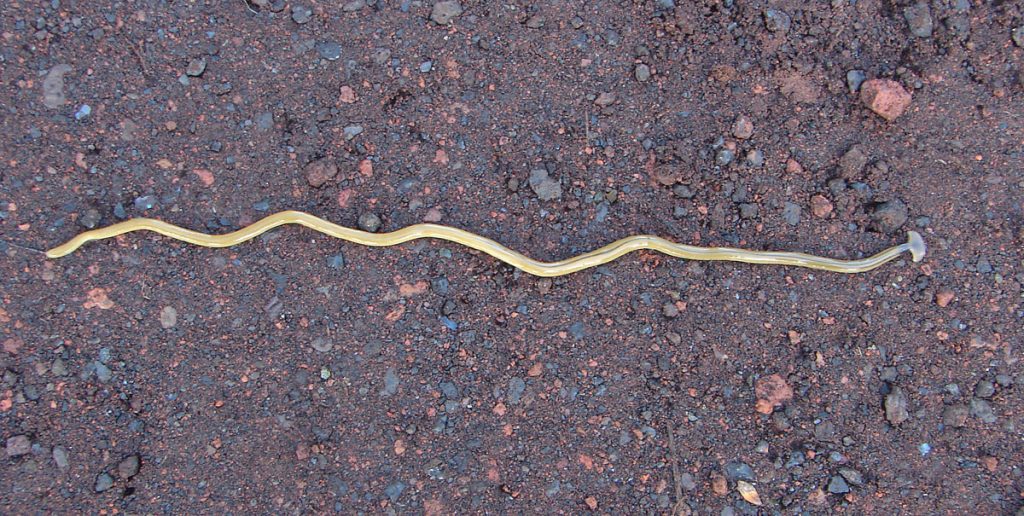
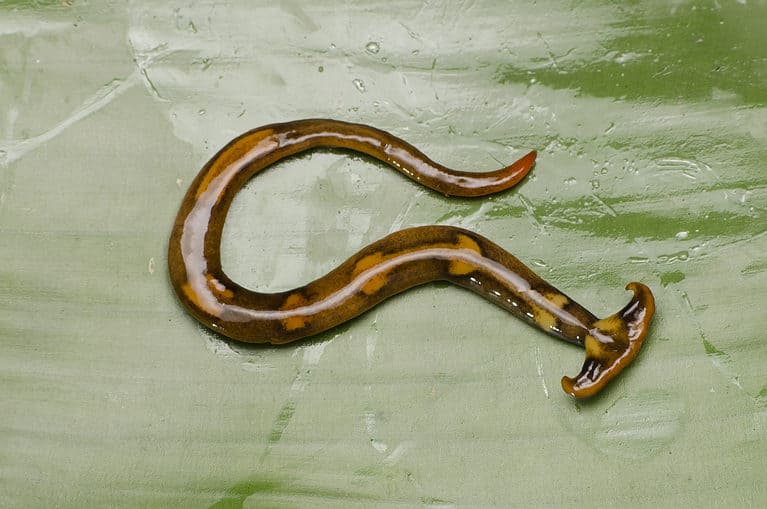
Some hammerhead worm species can grow more than 12 inches long and are native to Southeast Asia before spreading worldwide through the nursery trade.
©Dick Culbert from Gibsons, B.C., Canada – Original / License
First of All, What Exactly Is a Hammerhead Worm?
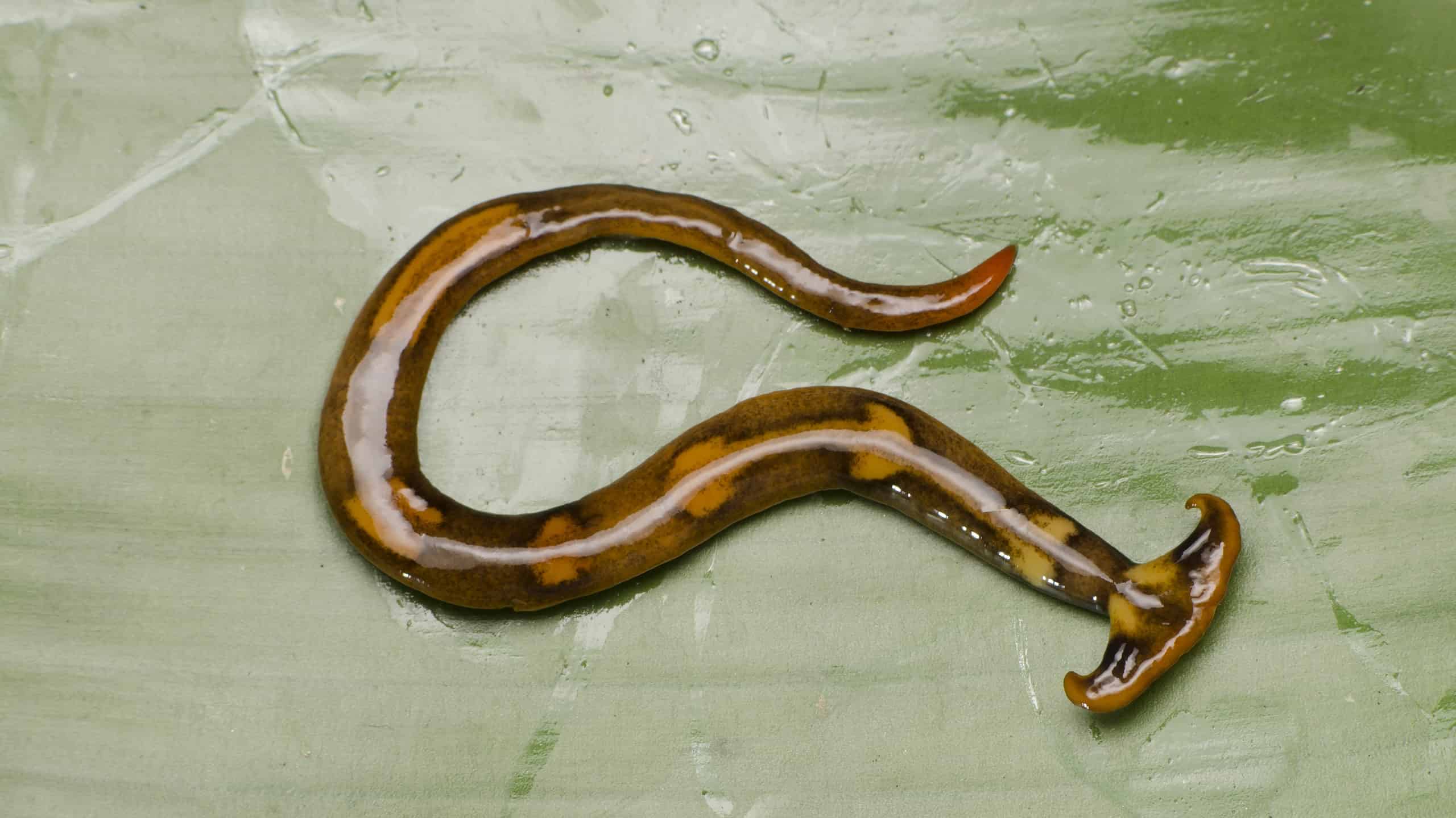
Hammerhead worms aren’t true earthworms. They’re terrestrial flatworms, part of a broader group known as land planarians. Their bodies are long, flattened, and often striped in shades of brown, tan, or black. They have a wide, fan-shaped head, which is where their name comes from.
Some species can grow more than 12 inches long. Others stay closer to a few inches. They’re native to Southeast Asia, but they’ve been reported in North America, Europe, Australia, and elsewhere. According to researchers who’ve tracked their spread, these worms likely traveled the globe in the soil of potted plants and nursery stock.
If you’ve bought landscaping plants, you’ve potentially helped move them around. They don’t require much. A moist clump of soil and a steady food supply is all they need to thrive.
The Weird Way They Reproduce
Most animals rely on sexual reproduction, which mixes DNA from two parents and creates genetic diversity. Hammerhead worms technically have reproductive organs, and some species can reproduce sexually. But many invasive populations don’t rely on sex at all.
Instead, they use fragmentation.
Here’s how it works. A hammerhead worm anchors its head and tightens its body. This starts a complicated biological process called fission, ultimately resulting in the tail end breaking off. That detached piece wriggles for a bit, then begins to regenerate a new head. Meanwhile, the original worm regrows its missing tail. In a matter of weeks, you’ve got two worms where there used to be one.
Research on some species of hammerhead worms has shown that invasive populations often consist of genetically identical individuals. In some regions, scientists have found almost no genetic variation among specimens. That’s a strong sign they’re reproducing primarily through cloning rather than sexual mixing. It’s the biological equivalent of copying and pasting themselves.
The Power of Starting From One
In the world of invasive species, there’s a concept called propagule pressure. It’s a relatively simple concept, basically saying the more individuals introduced to a new area, the better the odds of establishing a population.
But hammerhead worms cheat that system.
Because they can reproduce asexually, it only takes one worm to start an invasion. A single individual in a nursery plant shipped from Asia to the United States can settle into a garden, begin fragmenting, and slowly build a local population. There’s no need to find a mate. There’s no waiting around for the right conditions to reproduce sexually.
That dramatically increases the odds of success. Many species fail to establish in new environments because they arrive in too small numbers. Hammerhead worms don’t have that problem. They just need a lone worm.
From a purely mathematical standpoint, cloning is incredibly efficient. If one worm splits into two, and each of those splits again, the population can grow quickly without ever involving a second genetic line.
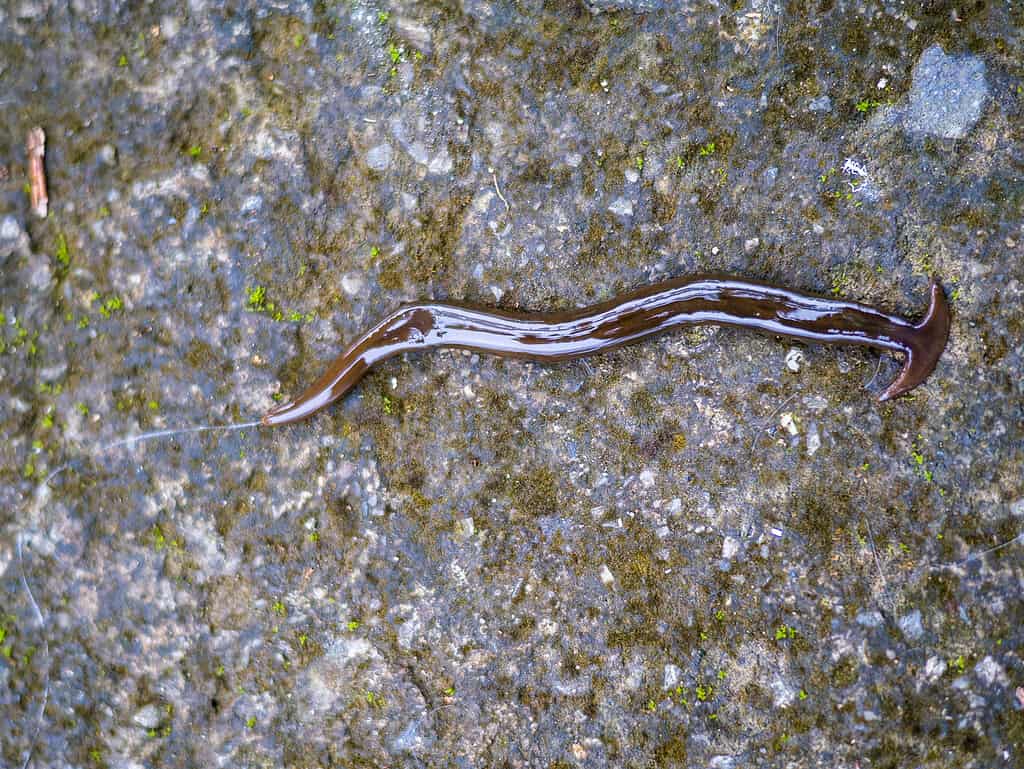
Because they reproduce asexually, just one hitchhiking worm in a potted plant can establish a new population.
But Isn’t Genetic Diversity Important?
Usually, yes. Genetic diversity gives populations the raw material to adapt. When environments change or new diseases appear, some individuals might have traits that help them survive. In a genetically uniform population, everyone has the same strengths and weaknesses.
So how do hammerhead worms get away with near-zero diversity?
Part of the answer is that they’re invading environments that already suit them. Many of the regions where they’ve spread have mild, humid climates similar to their native habitats in Southeast Asia. Greenhouses, irrigated lawns, and shaded gardens create perfect conditions.
They’re also generalist predators. Hammerhead worms feed primarily on earthworms, which are abundant in many soils across North America and Europe. Some species will also consume slugs and other small invertebrates. Because they’re not picky eaters, they don’t rely on a single prey species.
If you can eat what’s already there and the climate suits you, you don’t need a lot of genetic experimentation.
Another advantage in some species is the production of tetrodotoxin, a potent neurotoxin also found in animals like the pufferfish. The toxin helps them subdue prey, particularly earthworms, while also possibly helping to deter predators.
For an invasive species, having a built-in chemical defense is a big plus. Native predators may not recognize them as food, or they may learn quickly that biting one isn’t a great idea. This further reduces the need for genetic diversity. If you’re well-armed and few things eat you, you’re in a strong position.
The Ecological Ripple Effect
Hammerhead worms primarily prey on earthworms, and that’s where things get complicated. Earthworms play an important role in soil health. They aerate soil, break down organic matter, and help cycle nutrients. In agricultural and garden settings, they’re often considered beneficial.
If hammerhead worms significantly reduce earthworm populations, there could be impacts on soil structure and fertility. Research is ongoing to determine the scale of that impact. In some ecosystems, particularly in parts of North America where earthworms themselves are non-native, the picture gets even more complex.
If you should find one, experts generally recommend avoiding direct contact. Their toxin isn’t known to pose a serious risk through casual contact, but wearing gloves is still a good idea. Because cutting them can lead to regeneration, simply chopping them up isn’t effective.
Some state agencies suggest placing them in a sealed bag with salt or vinegar to ensure they’re killed before disposal. Checking guidance from local extension offices is wise, since recommendations can vary.
And if you’re buying plants, inspecting soil and roots before planting can help reduce the chances of introducing unwanted hitchhikers.
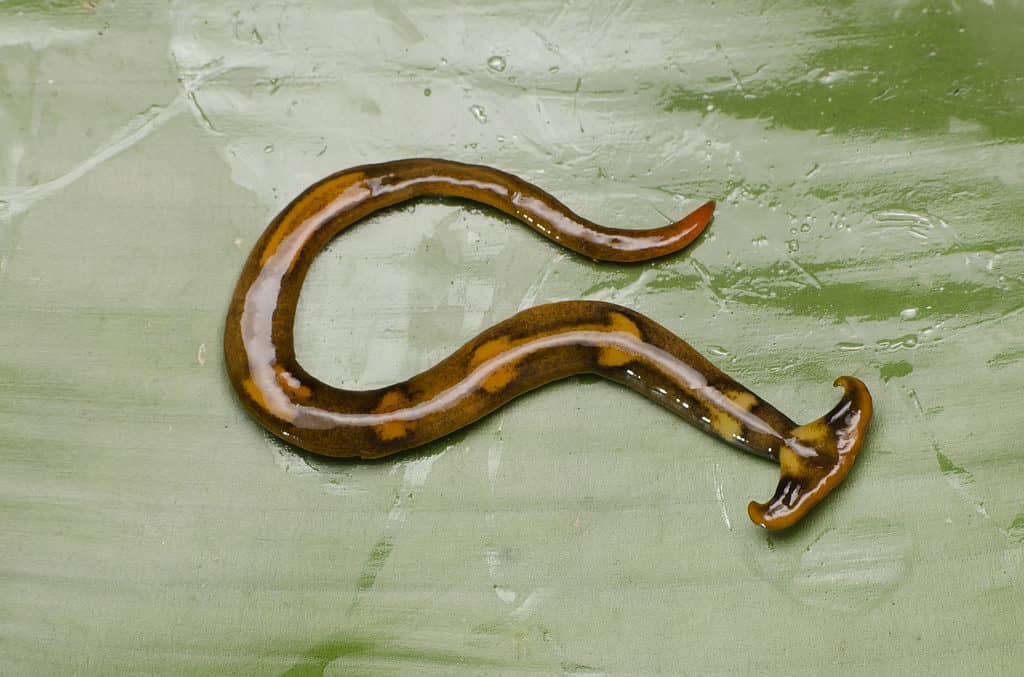
A single hammerhead worm fragment transported in soil can regenerate and become the founder of an entirely new regional population.
©zaidi razak/Shutterstock.com
Clone Armies
With the modern ease of global trade, the planet has become a network of highways for small organisms. Hammerhead worms are master hitchhikers. The nursery trade is a major pathway. Soil attached to ornamental plants, sod, or landscaping materials can harbor fragments or whole worms. Because even a small piece can regenerate, it doesn’t take much to start a new colony.
In many parts of the United States, reports of hammerhead worms have increased in recent years. While some of that may be due to greater public awareness and social media sharing, researchers have documented established populations in multiple states.
Cloning means every successful hitchhiker can become a founding ancestor of an entire regional population. One stowaway can build an army of identical twins.