
Quick Take
- Midleg fans act as flexible “leaky paddles,” generating thrust even with water flowing through.
- Hydrophobic leg hairs exploit surface tension, allowing insects to push without sinking.
- Different mechanical strategies suit different habitats: drag-based paddles for moving water, surface-tension thrust for calm water.
When we think about creatures skimming across water, images of birds landing or frogs leaping come to mind. But some of nature’s most astonishing feats take place at a scale often smaller than a pea—where insects not only walk on water, but also sprint, row, and glide across the surface like tiny aquatic athletes. Recent research on the mechanics of these motions provides fascinating insight into how biology solves a tricky physics problem: how to push against a liquid surface that yields under force.
A 2025 study in Scientific Reports reveals how two kinds of semiaquatic bugs use very different leg designs to generate thrust and move across the surface of water. One “rows” across the water as if its body were a boat and its legs were paddles; the other actually walks right on top of the water, almost as if performing a miracle.
Moving Across Water Is a Special Challenge
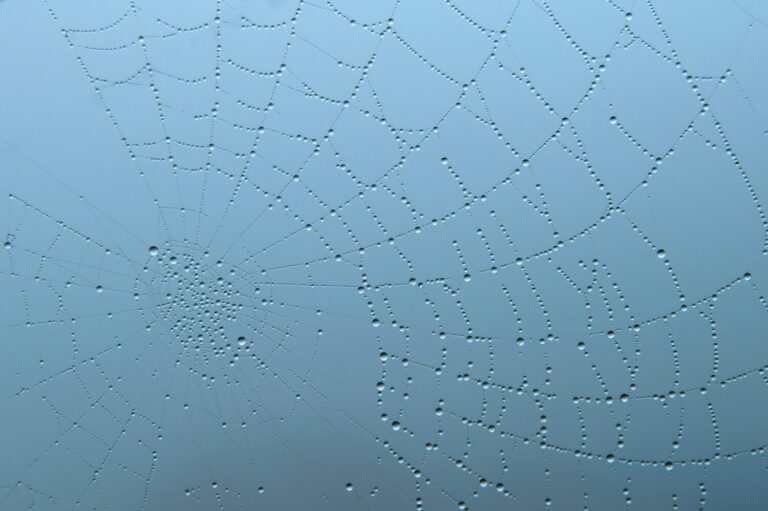
The surface of the water behaves differently from the water below. At the boundary where water meets air, molecules stick together, a property called surface tension. At a human scale, this effect is so tiny that we don’t even notice it. But at insect scales, where bodies often weigh fractions of a gram, surface tension can act almost like a stretchy, elastic film.
Something light and hydrophobic (water-repelling) can sit on it without breaking through. Insects that seem to walk on water exploit this effect wonderfully. Their long, thin legs distribute weight over a wide area, and tiny hairs on their legs repel water, trap air, and prevent wetting. This combination allows the insect’s legs to depress the surface slightly without sinking.
However, surface tension alone isn’t enough to move an animal forward. To accelerate or sprint, a bug must generate thrust by pushing back against the water. This is where the mechanics become especially interesting.
Hydrophobic leg hairs let water striders push against surface tension without breaking through.
©Stephan Morris/Shutterstock.com
In the 2025 research on distinct kinematics and micromorphology for symmetrical rowing and sliding on water—in plain terms: different ways of moving and tiny body features that allow movement across water’s surface—scientists compared two semiaquatic insects that use the pair of legs in the middle of their six legs (midlegs) in different ways to generate propulsion.
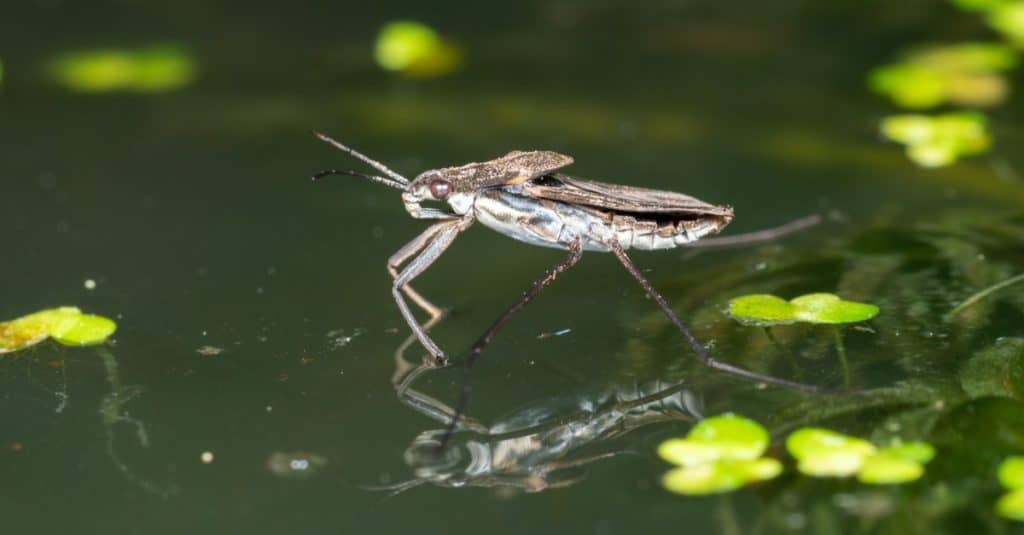
Rhagovelia distincta (sometimes casually referred to as a “ripple bug”) uses a “midleg fan” like an oar blade to push against the water. The other insect in the study, Gerris latiabdominis (a type of water strider), doesn’t have a fan but rather dense hydrophobic hairs on its legs that push against the water surface.
The Midleg Fan: Nature’s Oar
Before we go any further, let’s describe what exactly a “midleg fan” is. It’s a structure on the midleg made from a cluster of extended, tiny hair-like projections (setae) that, when spread out, form a paddle-like fan. When the ripple bug extends this fan into the water during a stroke, the fan increases the area that contacts the liquid. More area means more force can be generated for the same push, just like how the wider an oar blade is, the more effective it is at rowing a boat.
Midleg fans aren’t perfect oars. Real oars are rigid, solid blades that push a large volume of water backward, in turn pushing the boat forward. The bug’s fan isn’t solid—there are tiny gaps between the setae, allowing water to leak through the fan structure. That’s why researchers call it a “leaky paddle.”
A paddle that lets water leak through it might sound useless. If the water slips past the fan instead of being pushed backward, how does the insect move forward? The answer is simple: the bug doesn’t need to trap every drop of water; it just needs to push some of it backward. Even though water flows through the gaps, enough is still pushed behind the insect to create forward movement.
Think of it like swimming with your fingers together as opposed to spread apart. Spreading your fingers allows water to pass through, making your hand less effective than if your fingers were held together. (Spread fingers would still propel you forward, just more slowly and less efficiently).
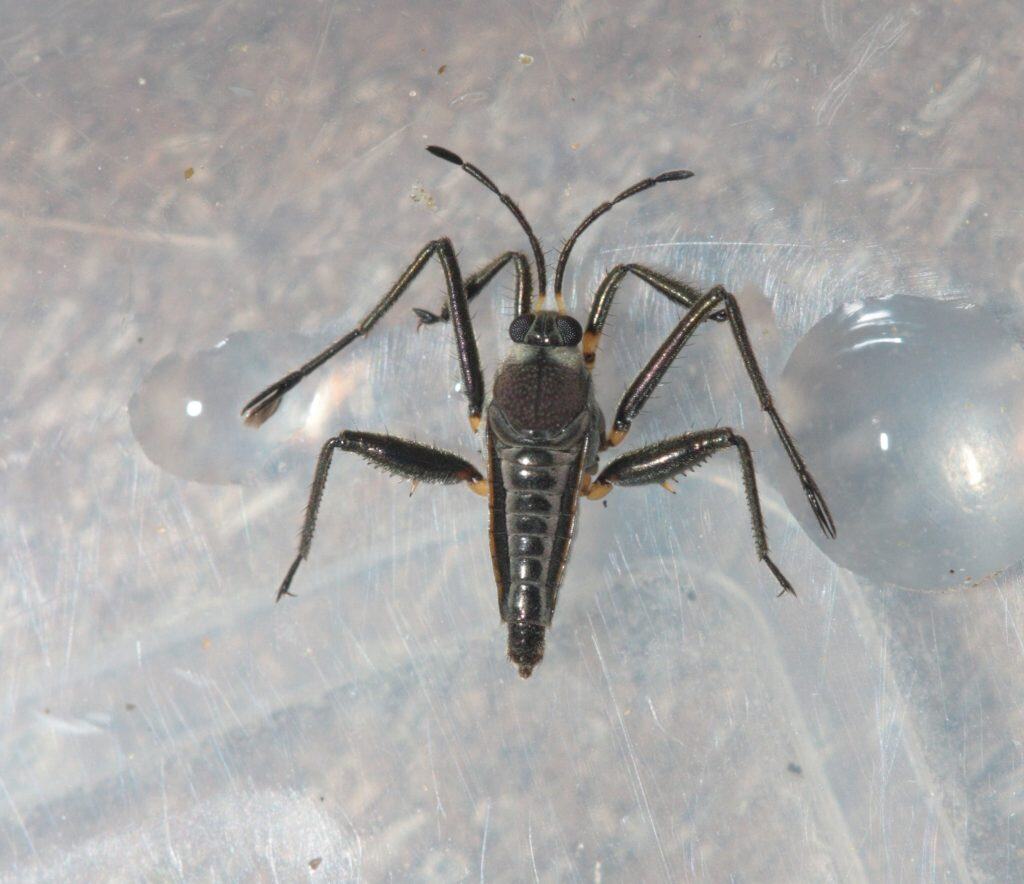
The ripple bug spreads its midleg fan, pushing water backward to propel forward.
©James Bailey, CC BY 4.0 , via Wikimedia Commons – Original / License
The timing and arrangement of the tiny hairs that make up the fan play a role as well. They’re flexible enough to open and close during each stroke, but stiff enough to push water backward when it counts. With a series of quick, repeated strokes, each small push adds up, letting the insect skim smoothly across the surface even without a solid paddle.
Hydrophobic Hairs and Surface Tension Thrust
Gerris latiabdominis, the water strider, uses a different mechanical approach. They don’t totally rely on displacement of water as the “rowing” ripple bug does. Instead, they deform the surface in a way that transfers momentum. Instead of a paddle or fan blade, the water strider’s midlegs are covered in a dense layer of setae. Each of these tiny hairs repels water and traps air, preventing the leg from getting wet and keeping it buoyant on the surface.
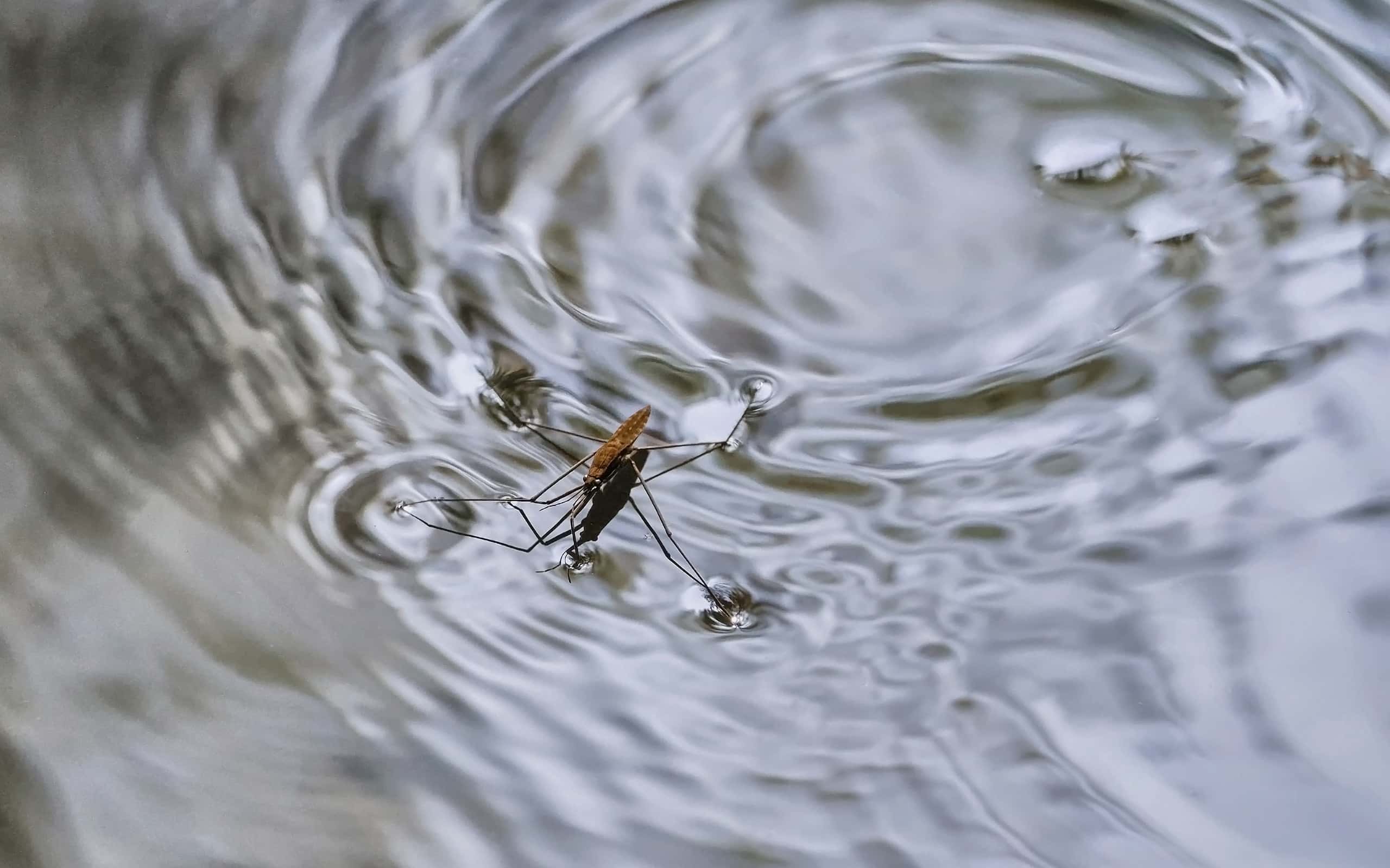
Not only does it keep the leg dry and buoyant, but the setae also increase the surface area in contact with the water without breaking through the surface. This allows the insect to deform the surface by making little dimples in it, and then it pushes against those dimples. The reaction force from the surface tension generated by these dimples is then oriented backward, providing thrust. Think of it like a trampoline. If you press down and back on the surface, the elastic forces in the trampoline push you upward and forward. For water striders, the surface tension acts like that trampoline, and the leg hairs let them push against it without falling through.
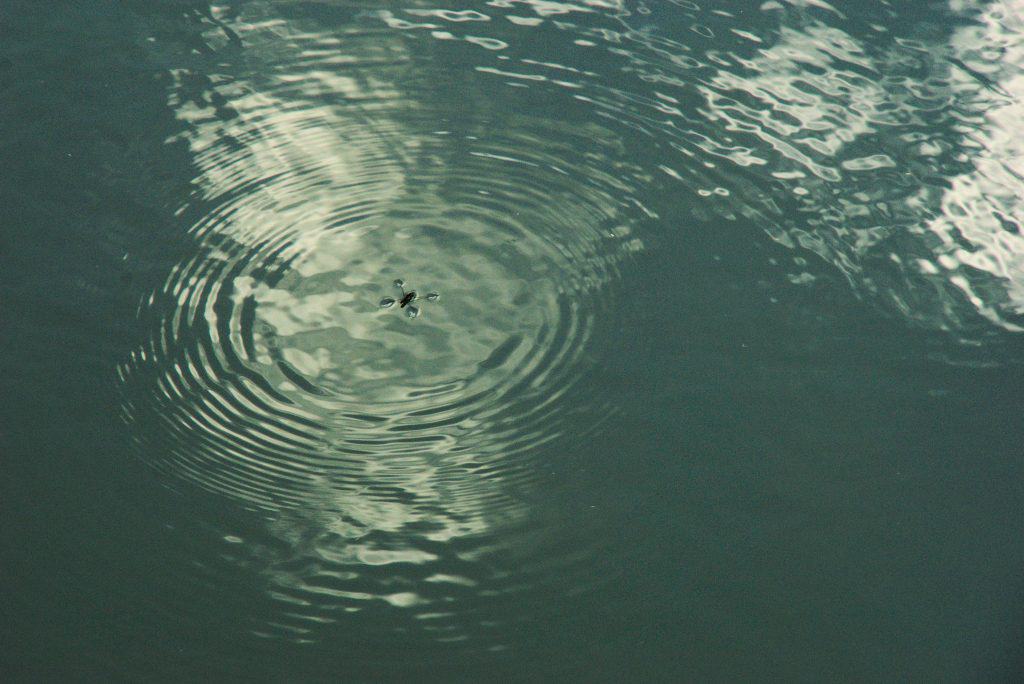
Water strider legs deform the surface, generating thrust by pressing against tiny dimples.
©neil.dalphin, CC0, via Wikimedia Commons – Original / License
Nature’s Engineering Lessons
Both the midleg fan and the hydrophobic hair strategies solve the challenge of generating propulsion on a liquid surface with very different mechanical designs adapted to different environments and evolutionary histories.
- Drag-based propulsion with leaky fans is especially effective in environments where a larger force is needed over short strokes, such as in faster-moving waters. These fans increase interaction with the water and let the insect push ahead like a tiny rowboat.
- Surface tension-based thrust with hydrophobic hairs works best in still water, where breaking the surface isn’t desirable and where leveraging the elastic behavior of the water’s surface allows motion with minimal penetration.
Engineers are taking notice. The ability of these flexible yet effective paddles to generate thrust, along with the way surface tension can be harnessed for motion, is inspiring new designs in small aquatic robots and surface-traversing devices that mimic the efficiency of living insects. These “bio-inspired” machines could one day explore environments beyond the reach of wheels and propellers.
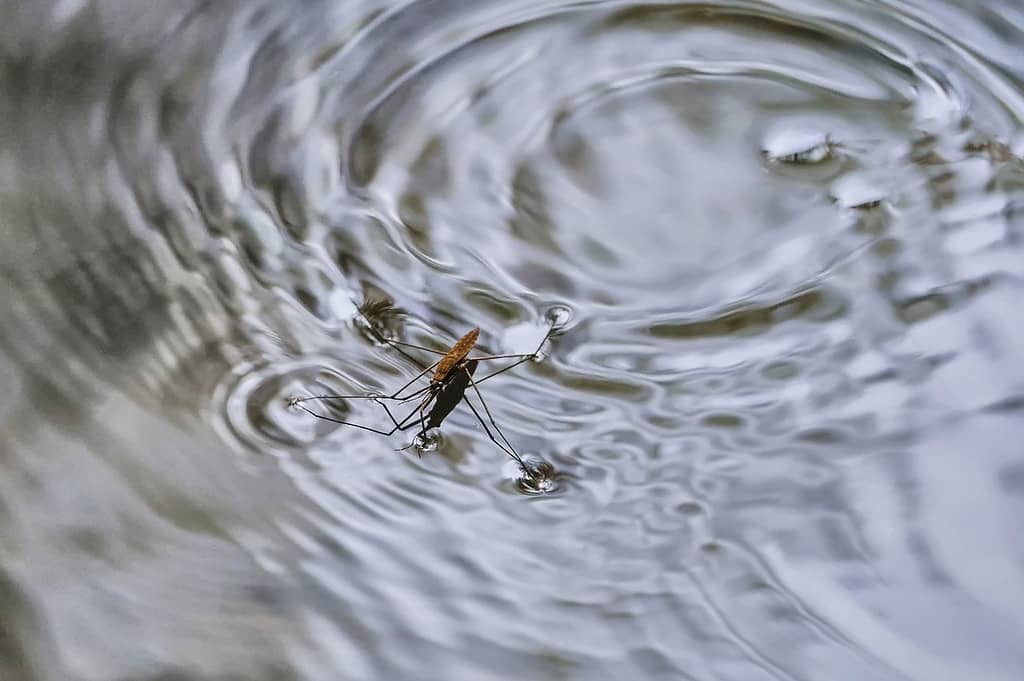
By pushing water or bending its surface, insects master motion atop a liquid world.
©JanMiko/iStock via Getty Images
Small Legs, Big Physics
From tiny ripple bugs rowing with leaky paddles to water striders skating effortlessly on surface tension, these insects turn physics into performance art. Each stroke, each hair, each ripple is a carefully engineered move that lets them conquer a world that, for us, is impossible to stand on, let alone move across. Nature’s solutions may be small, but they’re brilliantly inventive. Even the tiniest creatures can teach us big lessons about motion, mechanics, and the art of staying afloat.