While sea otters spend the majority of their time in the water, river otters will often run and play on land. This leads to some interesting behavior that reminds us of fun childhood games: the “run and slide.” Little Leaguers will run and slide into home base, and kids will slip and slide in the summer, but river otters will do this fun (and speedy) activity at any time of the year. Yes, this includes sliding around in the snow!
Wildlife videographer Tammy Ascher shared a video on Instagram of otters sliding across a frozen lake — something we would need a sled to do. “This River Otter did this run ’n slide through the slush on top of a frozen lake for over a mile,” Ascher wrote in her caption. She explained that she ran along the edge of the lake to film this fast-moving otter.
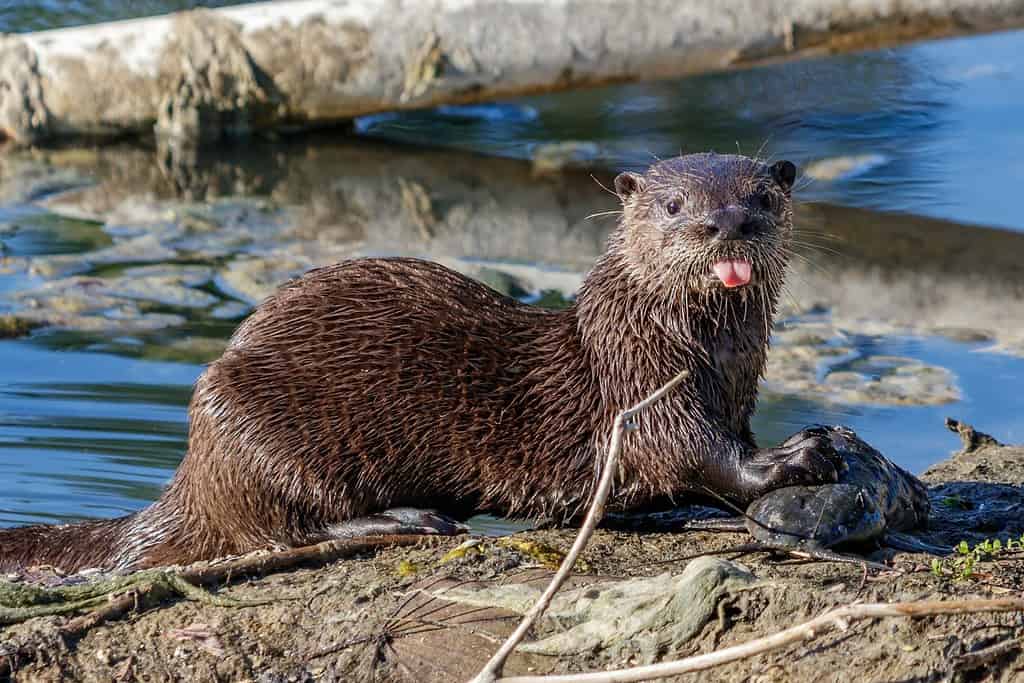
River otters use their hind legs and tail to propel themselves forward when running and sliding on land.
©Microfile.org/Shutterstock.com
“I ran ahead of it multiple times and hid behind trees so I wouldn’t spook it, then waited for it to pass in front of me,” Asher wrote. “Determined to get to its destination, this River Otter kept its course and ignored me most of the time. 😄”
In the incredible clip, which has 1.1 million likes, a river otter is on its stomach as it pushes its body forward with its hind legs. Its head, stomach, and front legs remain flat on the ground while its rear end, hind legs, and tail do all the work to propel the otter forward through frozen slush on top of the solid lake.
After running for a bit, the otter flattens its entire body and glides along the top of the ice. Then, it resumes its running position and begins moving again.
Why Do Otters Run and Slide?
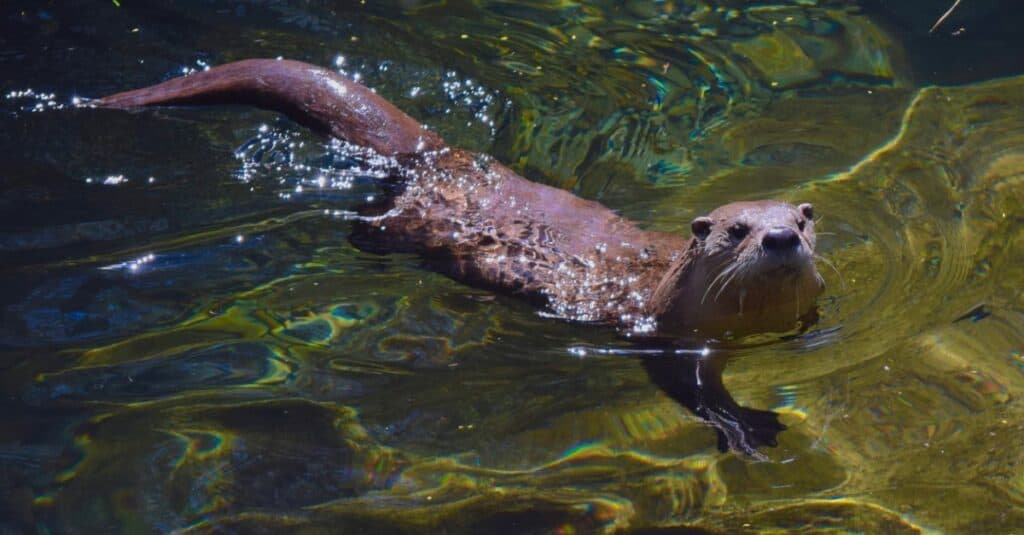
River otters can spend time both on land and in the water.
©iStock.com/Kathryn Farley
Located primarily in Canada and the United States, the North American river otter (Lontra canadensis) is a semi-aquatic mammal that lives in ponds, marshes, lakes, rivers, and estuaries in cold and warm areas. They are typically between 3 and 5 feet long and weigh between 10 and 30 pounds.
River otters are well-adapted to various environments. Their long, narrow bodies and webbed feet help them swim efficiently, while their strong legs aid movement both on land and in water, according to the National Wildlife Federation (NWF). Their thick double coat protects them from the cold, and their strong tail helps them move through the water quickly. They use their long whiskers to help them detect prey and their clawed feet to grab slippery fish to eat. They can even hold their breath for up to 8 minutes!
On land, they are just as efficient. River otters can run up to 15 miles per hour and slide even faster. They love playing in snow and mud, chasing their tails, and burrowing in snow with their young, which is both a way to have fun and a way to let young otters practice hunting.
Do They Only Run on Icy Surfaces?
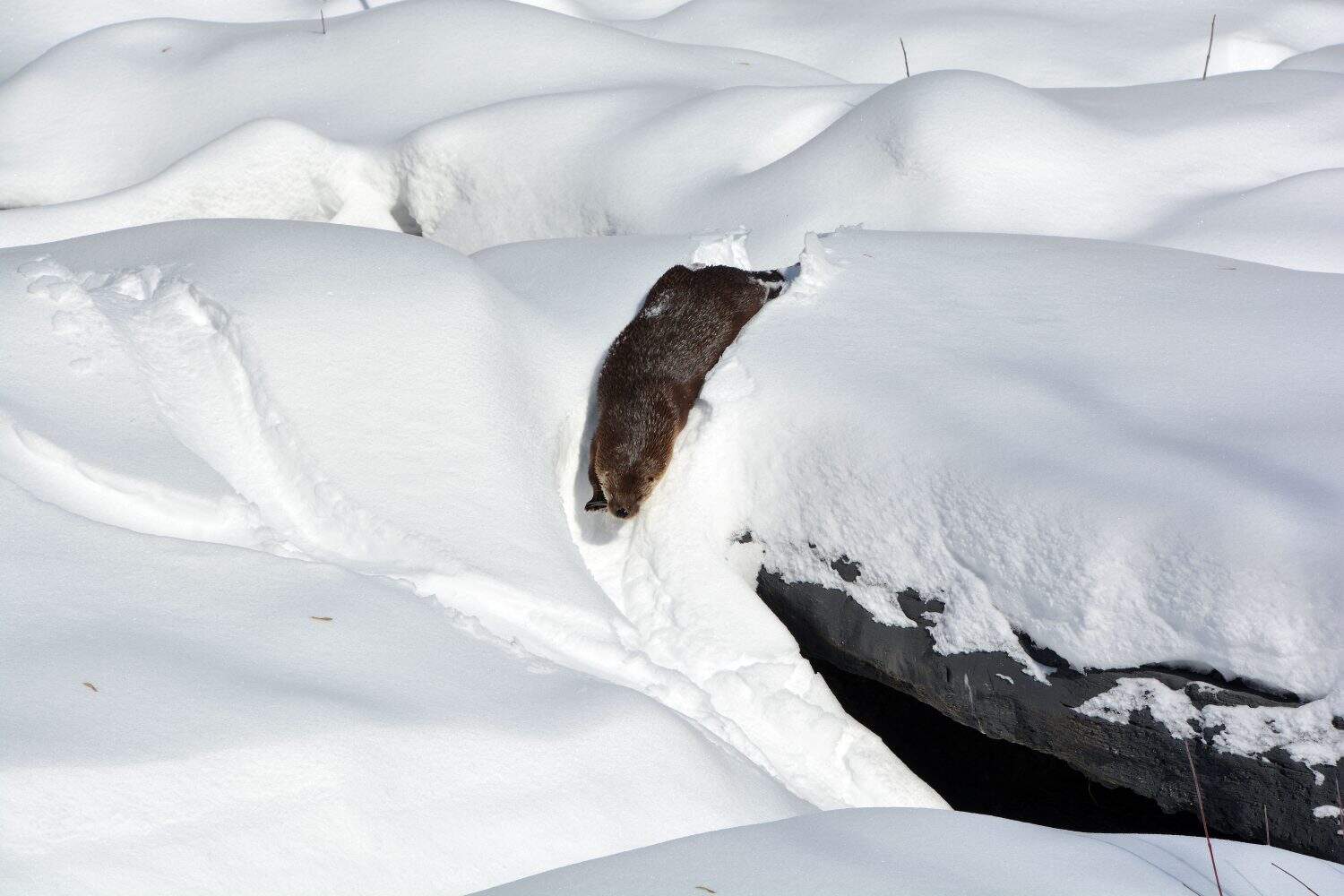
Sliding in the snow is a more efficient way to travel than simply running or swimming alone.
©meunierd/Shutterstock.com
If there isn’t much ice or snow where otters live, they will take advantage of mud and other slippery surfaces to perform the run and slide. It’s not just fun; it also helps otters conserve energy! Because this creature has such a high metabolism and must eat frequently, sliding helps them save their energy and cover more distance with less effort, which is a winning combination.
Experts have found that the fur on otters’ stomachs makes it easier for them to slide. Otters’ dense underfur and longer guard hairs trap air and help repel water, keeping their skin dry and insulated as they slide. It also creates air pockets that insulate the otters’ skin against the cold, even more effectively than a winter coat. Otters will also secrete oil to keep their fur smooth and slippery.
How to Spot Otter Tracks
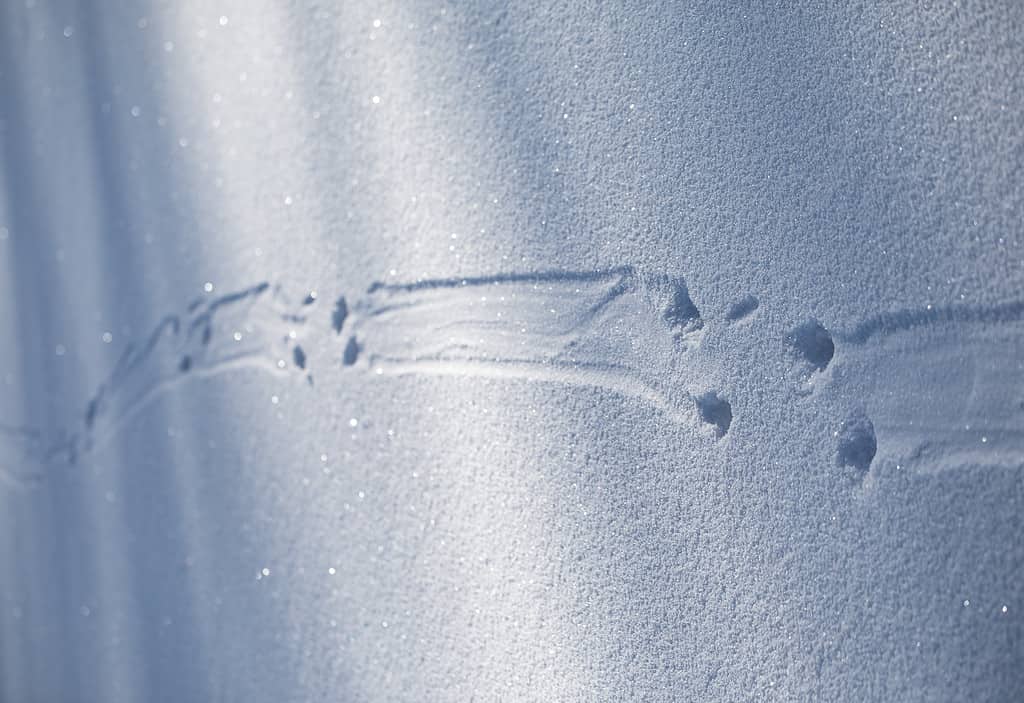
Otters will leave distinct tracks of running and sliding.
©Roland Oster/Shutterstock.com
If you want to see an otter in the wild, then look for their distinct tracks. Because otters will slide on their bellies in mud or snow, they can create obvious marks with their bodies. On riverbanks, they will leave marks up to 8 inches wide, and in the snow, the marks can be up to a foot wide.
The slides may last for a while if it’s downhill, as otters will just keep gaining momentum. On level ground, however, there will be some footprints mixed in with the slide as the otter pushes itself forward. When they aren’t swimming, running, or sliding, otters also enjoy rolling around. They might roll in marshes and along the edges of water, leaving flattened areas behind. Much like humans, otters will run for fun and to get places faster. The sliding is just an extra step that makes traveling distances even easier.