
Many homeowners confuse groundhogs and gophers because they are similar and are both common yard pests. These two rodents can cause major destruction to gardens, vegetation, foundations, and underground pipes, among other things. However, they’re actually quite different animals that require different pest control approaches.
Before hiring pest control experts to address your groundhog or gopher issue, it’s important to identify the correct culprit. Here are some key differences between a groundhog and a gopher.
Groundhog vs. Gopher: Appearance

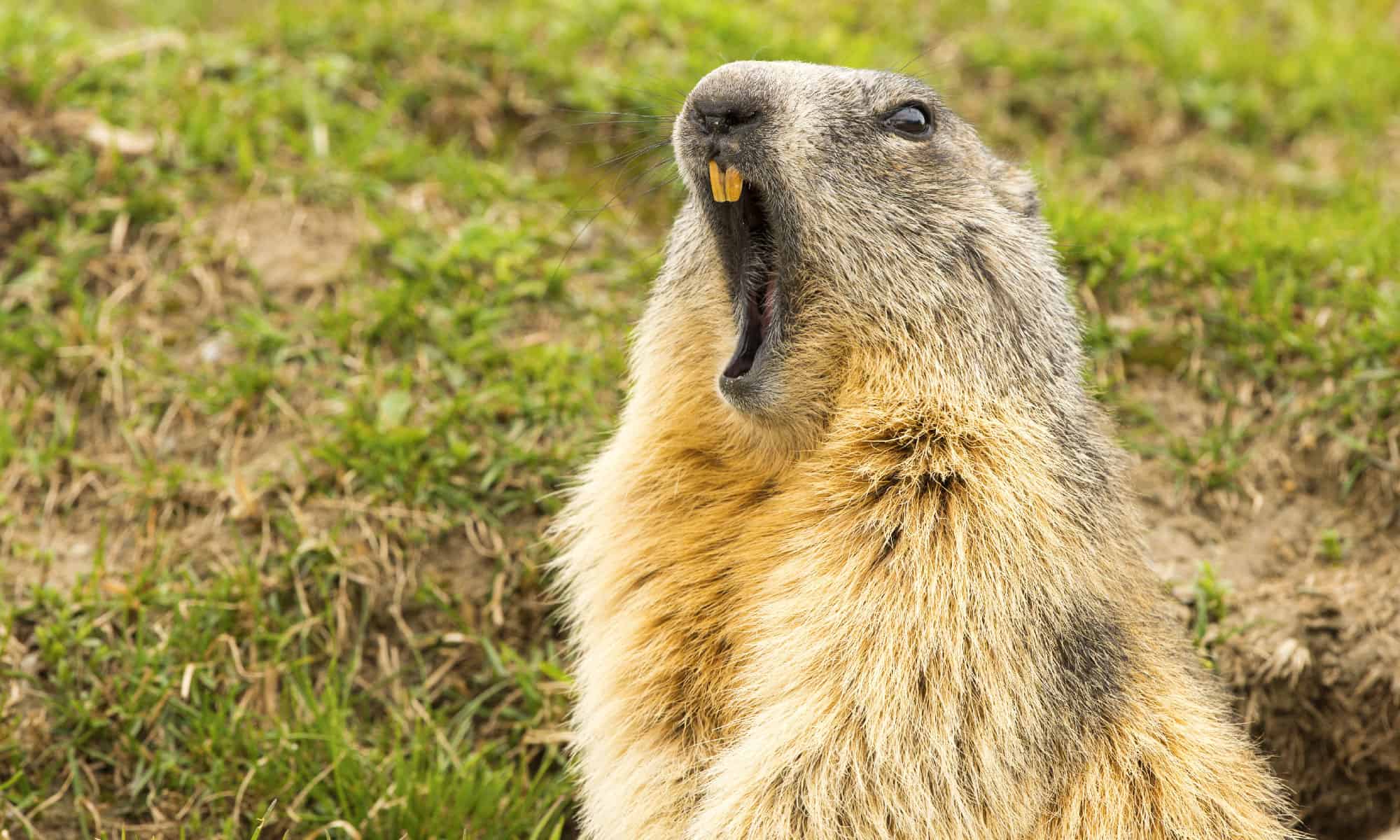
Gophers are smaller, thinner creatures than groundhogs.
©paha1205/Shutterstock.com
Groundhog Appearance
Groundhogs tend to be larger and stockier than gophers, which is a key distinguishing feature when comparing the two animals.
“When identifying a groundhog, I look for a stocky, almost beaver-like body with a bushy tail, short legs, and coarse brown or grizzled fur,” says Tony King, pest control expert and owner and manager of The Pied Piper. “They have a rounded head and a much more robust look than most people expect.”
Additionally, groundhogs have white teeth that typically aren’t visible unless their mouths are open. They also lack cheek pouches—something the gopher has.
Gopher Appearance
According to King, gophers actually look nothing like groundhogs. For one, they’re much smaller creatures.
“They’re slender, with soft brown fur, small eyes, and unmistakable large cheek pouches used to gather food,” he says. “Their tails are much shorter and not bushy, and overall, they have a more ‘rodent-like’ appearance compared to the chunkier, more solid-looking groundhog.”
Gophers also tend to have yellow or brownish teeth that protrude from their mouths.
When identifying a groundhog, I look for a stocky, almost beaver-like body with a bushy tail, short legs, and coarse brown or grizzled fur.
Tony King, pest control expert and owner and manager of The Pied Piper
Groundhog vs. Gopher: Size
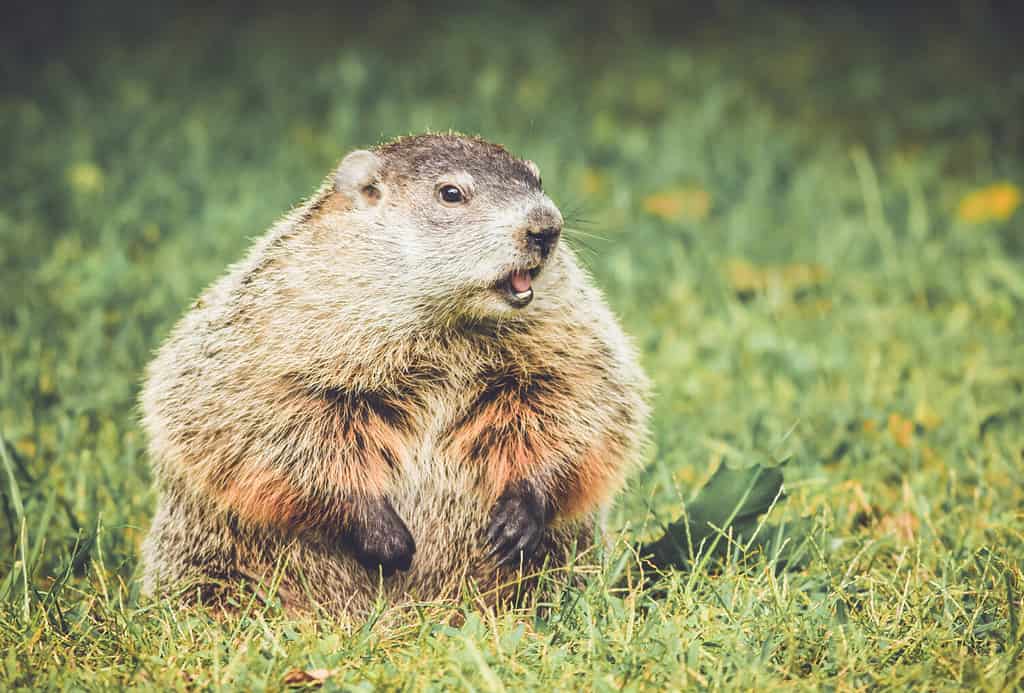
Groundhogs are much larger and stockier than gophers.
©Rabbitti/Shutterstock.com
Groundhog Size
As mentioned earlier, groundhogs are larger than gophers by several inches and several pounds.
“One of the quickest ways in which I differentiate them is by size,” says King. “Groundhogs are large animals and thus usually weigh between 5 and 12 pounds, sometimes even more in suburban areas when food is abundant. They usually reach lengths of about 16 to 20 inches, not including the tail. “
Gopher Size
Despite what many believe, gophers are actually small animals. Of course, they might not be as tiny as other rodents like mice, but in relation to groundhogs, they’re not nearly as big. Some even compare their size to large rats.
“Gophers … are tiny in comparison [to groundhogs], usually only about 5 to 10 inches long and often weighing only a few ounces,” says King. “When a homeowner tells me they saw a ‘small brown burrowing animal,’ I know immediately we’re likely dealing with a gopher and not a groundhog.”
Groundhog vs. Gopher: Diet

Gophers and groundhogs share a similar diet but have different feeding styles.
©eumates/Shutterstock.com
Groundhog Diet
Groundhogs and gophers might share a similar diet, but their feeding styles vary greatly, which is often a giveaway when distinguishing between the two animals.
“Groundhogs are general herbivores that will consume everything from clover and grasses to vegetables such as lettuce, beans, and carrots,” says King. “They also consume a great deal at one sitting, which is how they can wipe out gardens so quickly.”
Gopher Diet
On the other hand, gophers’ feeding habits tend to be a bit more destructive underground. For example, they can feed on underground wires, cables, and pipes.
“Gophers are very different feeders, focusing mostly on roots, tubers, and bulbs, often right from underground,” King explains. “That’s why plants suddenly wilting or disappearing from below is almost always a sign of gopher activity rather than a groundhog problem.”
Groundhog vs. Gopher: Behavior
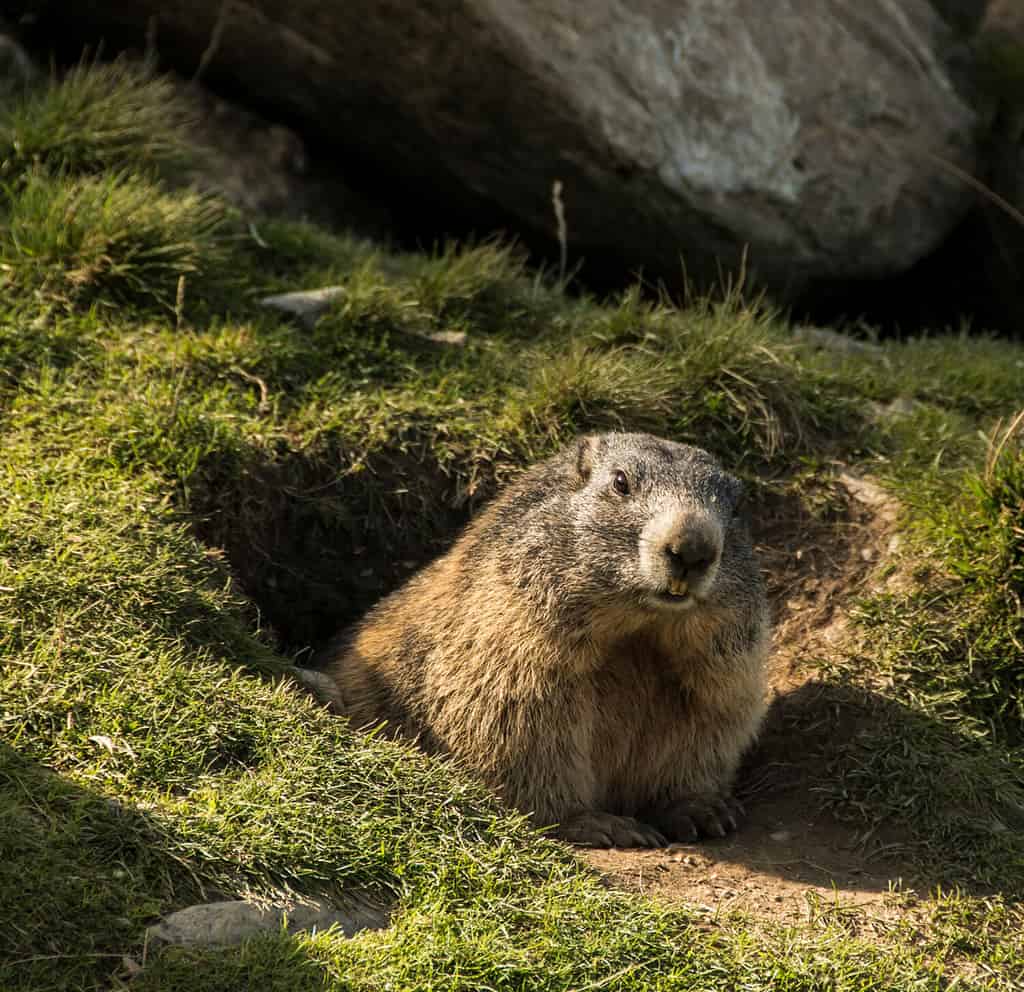
Groundhogs are known to dig large holes.
©Mitch Shark/Shutterstock.com
Groundhog Behavior
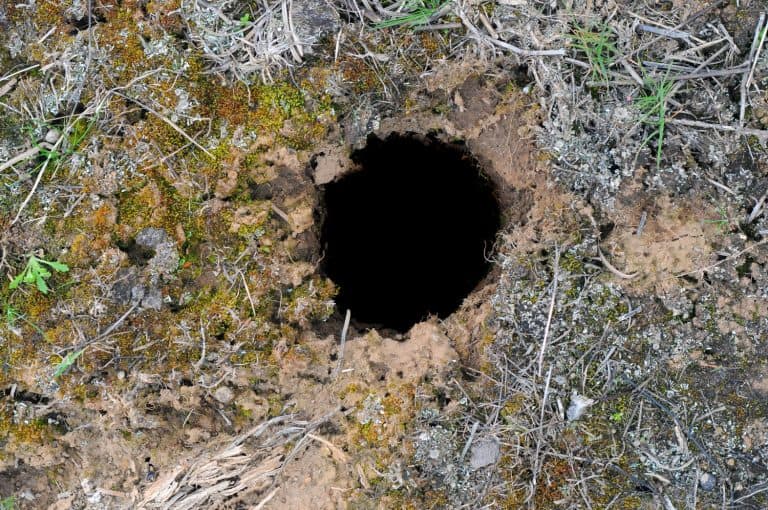
According to King, both groundhogs and gophers are burrowing animals. However, their behaviors vary greatly. For one, groundhogs typically create larger, more obvious burrow entrances than gophers. These can cause damage to foundations and lead to a host of issues, including erosion and disrupted water flow.
Additionally, groundhogs are active at different times than gophers.
“Groundhogs are diurnal, meaning they’re active during the day, and they frequently come above ground to sunbathe, forage, or simply explore,” says King. “Groundhogs also tend to be solitary but occupy larger territories.”
Gopher Behavior
Gophers are also known as solitary creatures, but they tend to create extensive tunnel networks. These can damage roots and underground cables.
“Gophers are much more reclusive and remain underground most of the time, moving from tunnel to tunnel and rarely surfacing except to push out soil,” says King. “The visible nature of groundhogs compared to the hidden behavior of gophers plays a big role in how homeowners perceive the infestation and how we approach control.”
If you’re trying to determine whether you have a groundhog or a gopher problem, pay close attention to the type of damage left behind. Gophers tend to be messy, leaving mounds of loose soil in their paths, which are sometimes shaped like fans or crescents.