
Quick Take
- Britain's only native lizard fits in your hand, yet somehow the country ended up yielding one of the most startling crocodilian fossils ever found. See where it was found →
- This ancient croc was named after a knight of Arthurian legend, and the reason why reveals something unexpected about how it moved. Discover the Arthurian name →
- Two ancient land crocs lived in the same deposits, but only one turned out to be a brand-new species. Explore the key distinction →
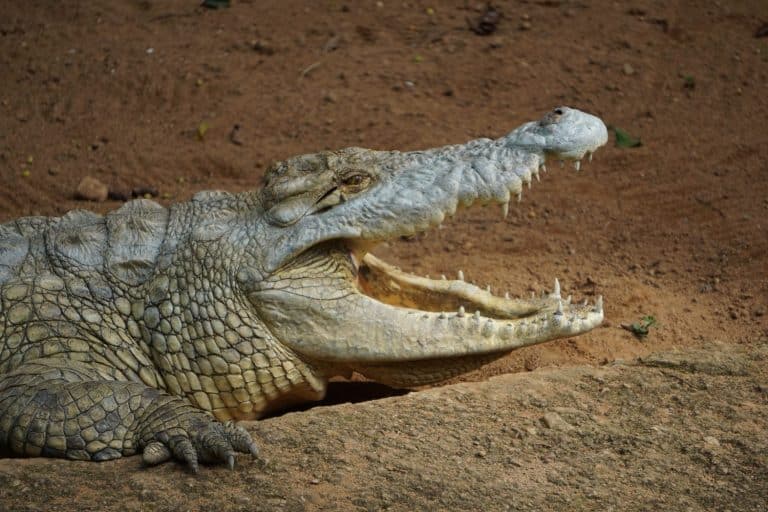
Crocodiles are pretty scary creatures. The bigger they are, the more worrisome they become. The last thing you want is for them to be fast. That makes the latest crocodilian fossil a startling find. It’s described as a ‘reptilian greyhound’ and was found in Britain, of all places. This is a country where the only native lizard is 15 inches long and rarely seen.
Greyhound Crocodile Found in Britain
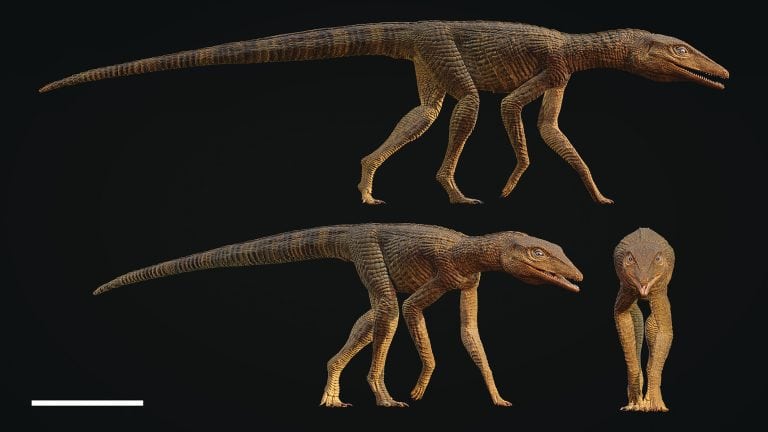
A new species of crocodylomorph (a group including crocodylians and their extinct relatives) that raced around what we now call the United Kingdom has been described in a new scientific paper. The astonishing creature has been named Galahadosuchus jonesi. The first part of the name comes from Sir Galahad, a knight renowned in Arthurian legend for his moral uprightness. The connection is that this croc has an upright stance. The second part of the name honors Mr. David Rhys Jones, a schoolteacher at Ysgol Uwchradd Aberteifi in Cardigan, Wales. He taught physics to the lead author of the paper and fostered his love of science.
Where Was the Reptile Found?
The remains were found in a series of fissure deposits that span both the English and Welsh sides of the Bristol Channel. The scientific name for this area is the ‘Late Triassic–Early Jurassic fissures’. They are rich in remains of smaller-bodied animals. Some animals that died on the surface were washed into caves and were covered in sediment. Other animals found in the area include mammaliamorphs, fish, and other reptiles.
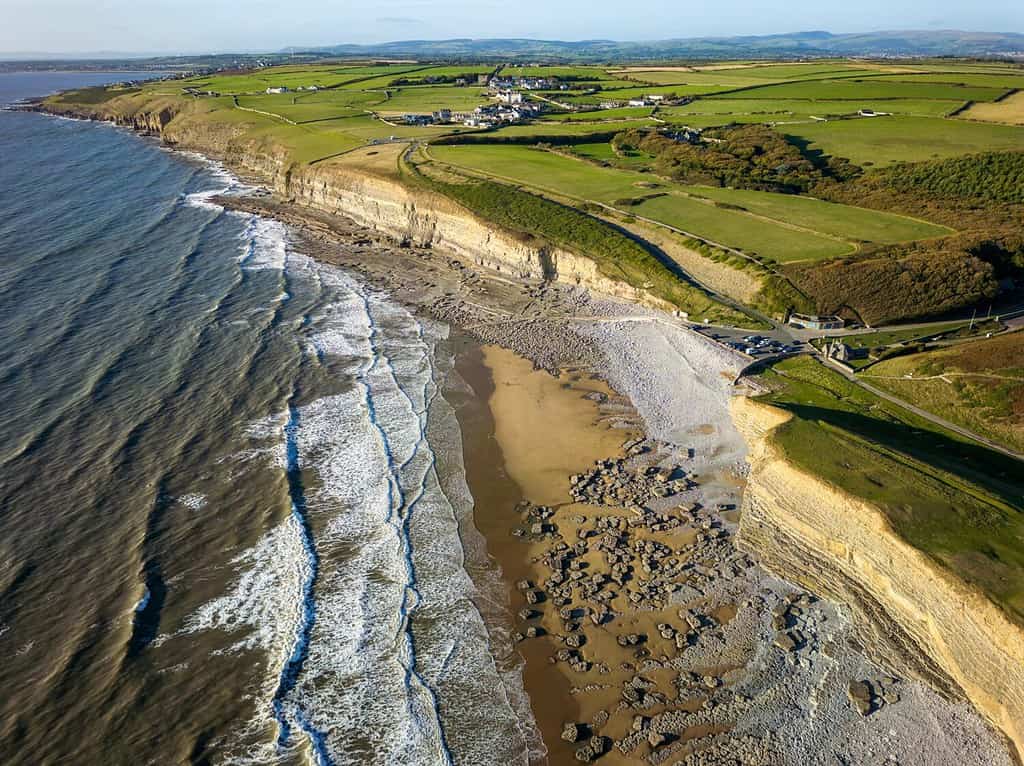
The Bristol Channel area of the UK has yielded some interesting fossils.
©Richard Whitcombe/Shutterstock.com
The Late Triassic–Early Jurassic was a significant time in the Earth’s history. Around 201.3 million years ago, the climate started to change, resulting in a mass extinction event. The exact cause is not known, but it may have been connected with massive volcanic activity under what we now call the Atlantic Ocean. Sea levels rose, and the oceans became more acidic. Life on land was profoundly affected. All Triassic archosaurs, apart from dinosaurs, pterosaurs, and crocodiles, went extinct. The Triassic is an interesting period as it forms the transition between the late Palaeozoic Era and the Mesozoic Era, when the archosaurian reptiles, including the dinosaurs, dominated.
Crocodylomorpha, of which Galahadosuchus jonesi is one, first appeared in the fossil record in the Late Triassic. Their remains have been found in countries as far apart as South America and Europe.
Ancient, Fast, Crocodiles
Among the reptiles found in these deposits was a crocodile-like animal called Terrestrisuchus gracilis. Like Galahadosuchus jonesi, it had long, slender legs and would have lived its entire life on land.
The evolutionary relationship between these early crocodiles is fascinating. Speaking in this press release about the discovery, Ewan Bodenham, PhD student at the Natural History Museum, London, and UCL, lead author of the new paper, said: “So we conducted a detailed anatomical description of this specimen, making comparisons to other early crocodiles to determine if it was another specimen of Terrestrisuchus or if it was something new.”
The team concluded that they did indeed have an entirely new species in front of them. Analysis of the bones indicated that it walked on all fours and had an erect rather than a sprawling posture. Its long limbs suggest that it could have moved much faster than modern-day crocodiles.
How Fast Can Modern Crocodiles Move?
Unlike Galahadosuchus jonesi, modern crocodiles live both on land and in water. In fact, they spend most of their time lurking below the surface of the water. When they decide to swim, they can generate a lot of speed. Crocodiles can reach speeds of up to 18 mph in water, which is about 12 mph faster than a human swimmer. They use their powerful tails to propel themselves through the water.
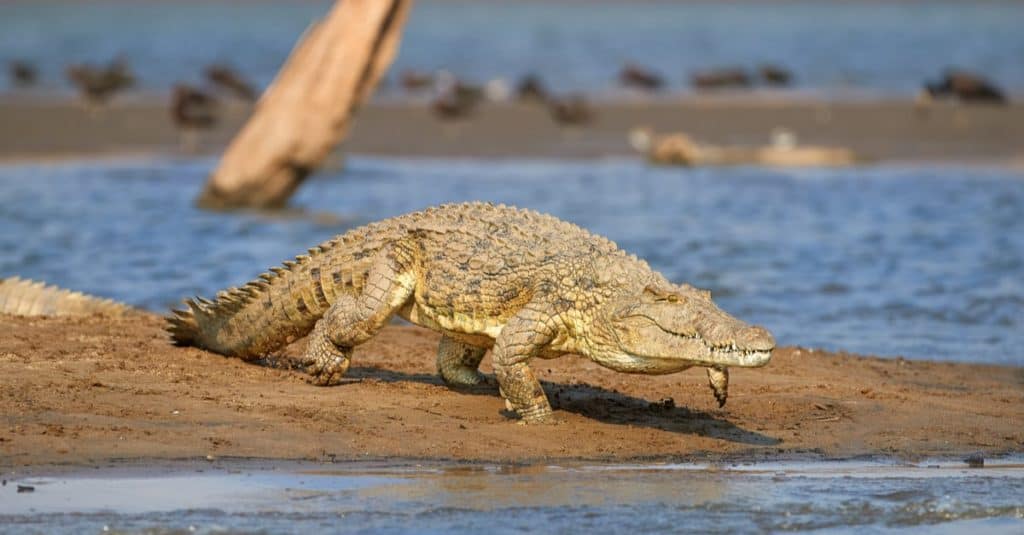
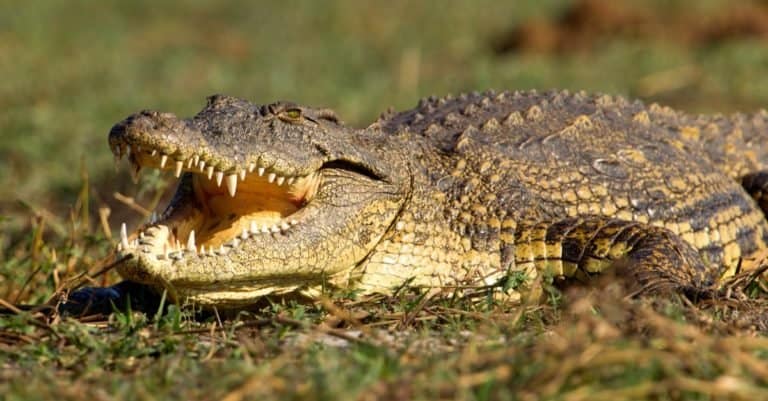
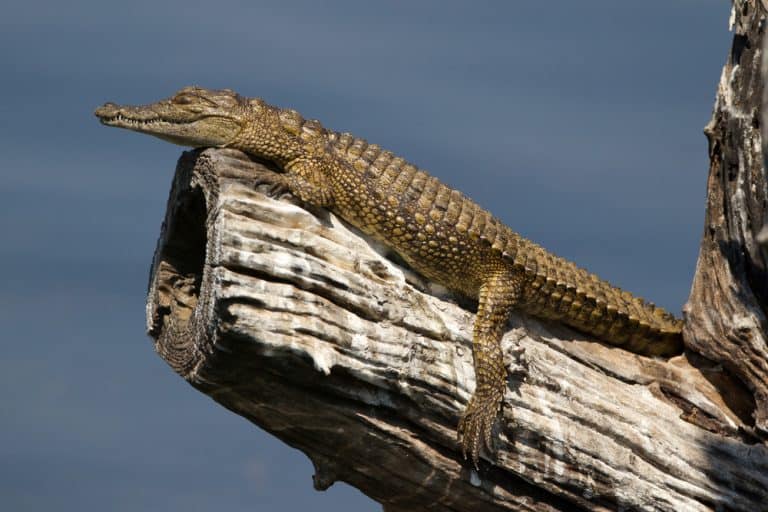
Crocodiles today have stumpy legs.
©Martin Mecnarowski/Shutterstock.com
Modern crocs are adapted for a semi-aquatic lifestyle and are not built for running on land like Galahadosuchus jonesi. A modern croc has short and stumpy legs and doesn’t look much like a greyhound. Nevertheless, they can reach speeds of up to 11 mph (about 18 km/h) in short bursts, which is much faster than most people expect. When they have to run fast, they gallop much like a horse. They are able to arch their backs and propel themselves forward on both sets of legs simultaneously. This is also how a dog runs.
It is rare, however, to see a croc running. They generally only put this much energy into moving if they are pursuing prey or getting away from a threat. Their preferred methods for getting about on land are crawling and sliding. Their legs are so short that they can lie flat on their smooth, armored bellies and slide forward by pushing with both their front and rear legs at the same time. If they need to, they can also bring their feet inwards under their bodies, lift their bellies, and adopt a high gait. This allows them to reach speeds of 1-2 mph without putting in too much effort!